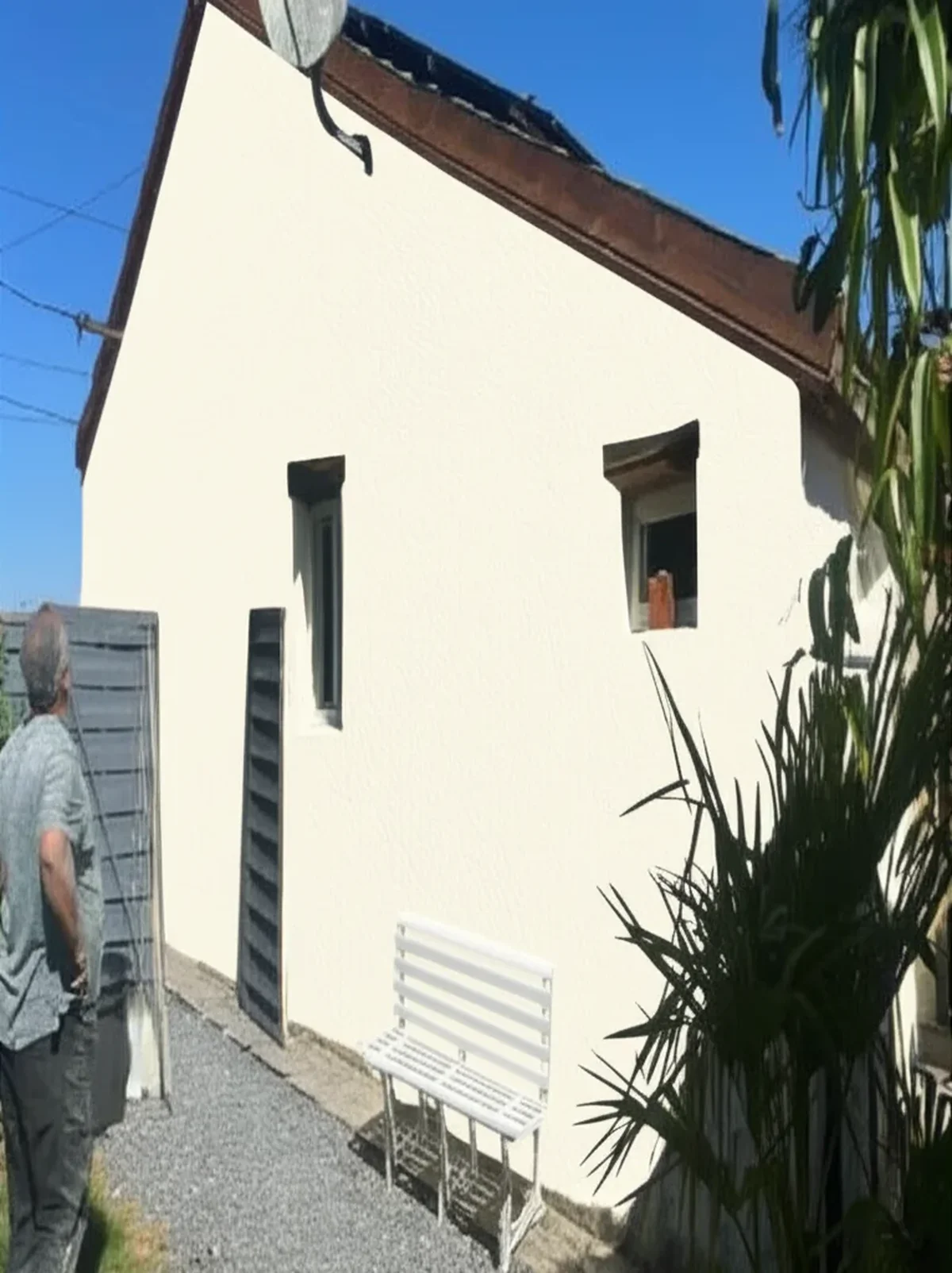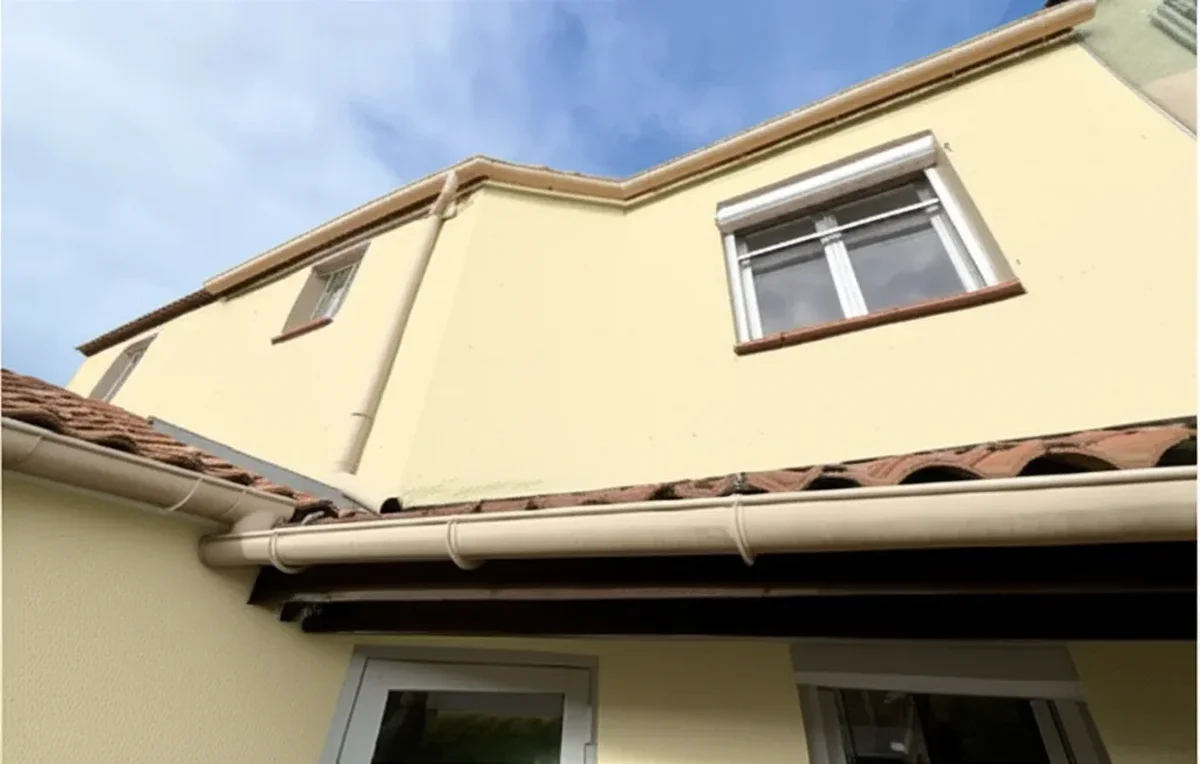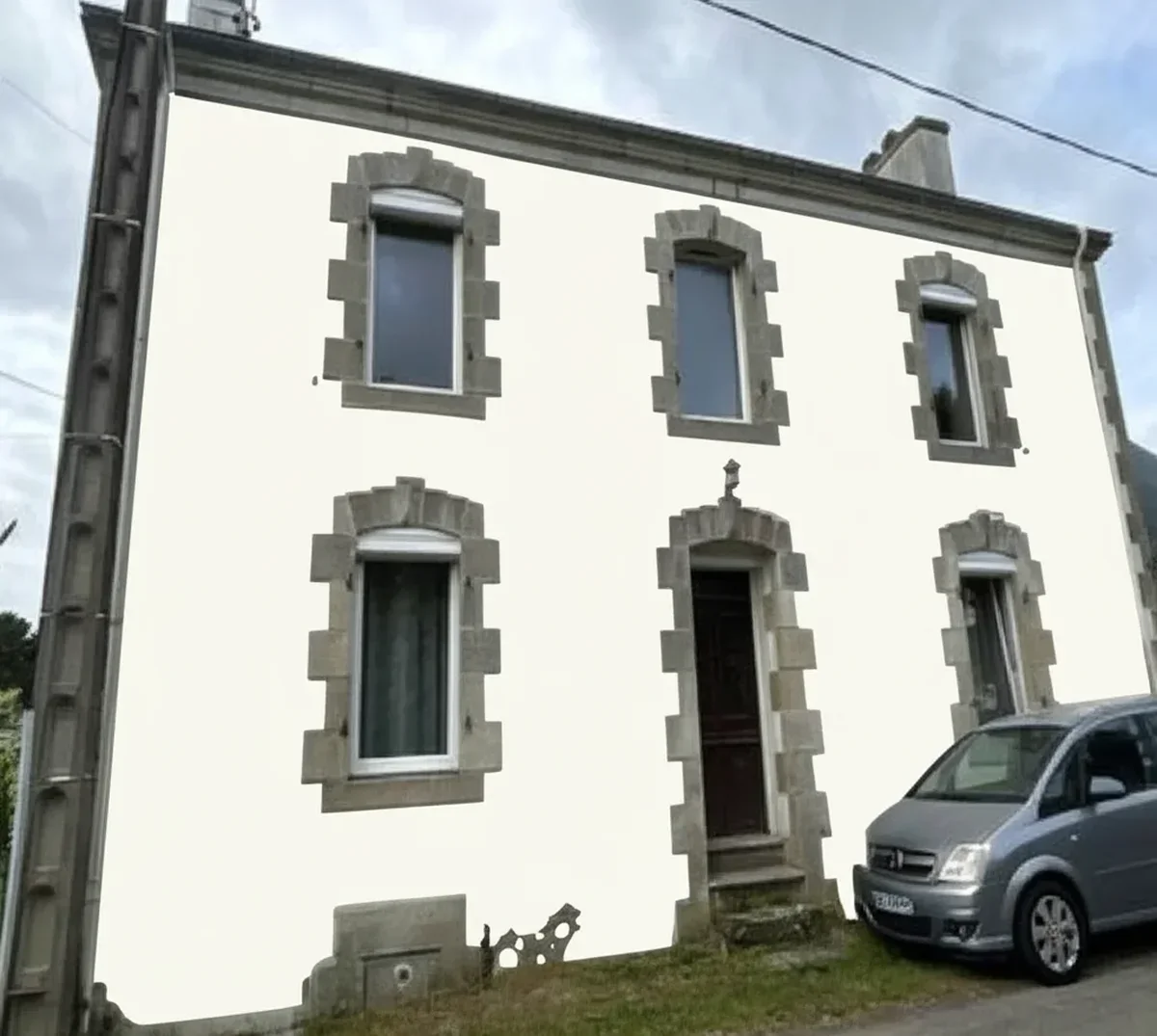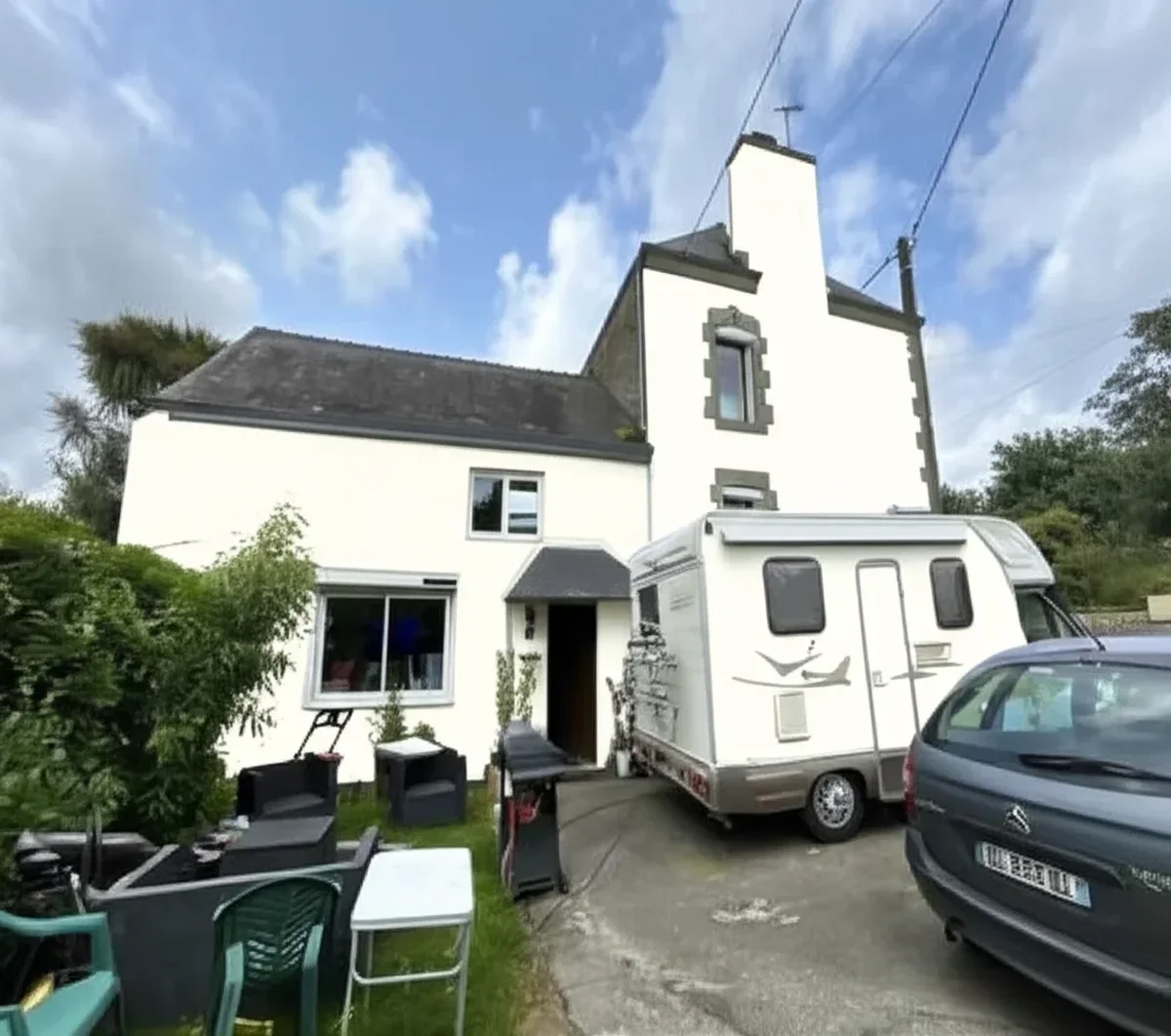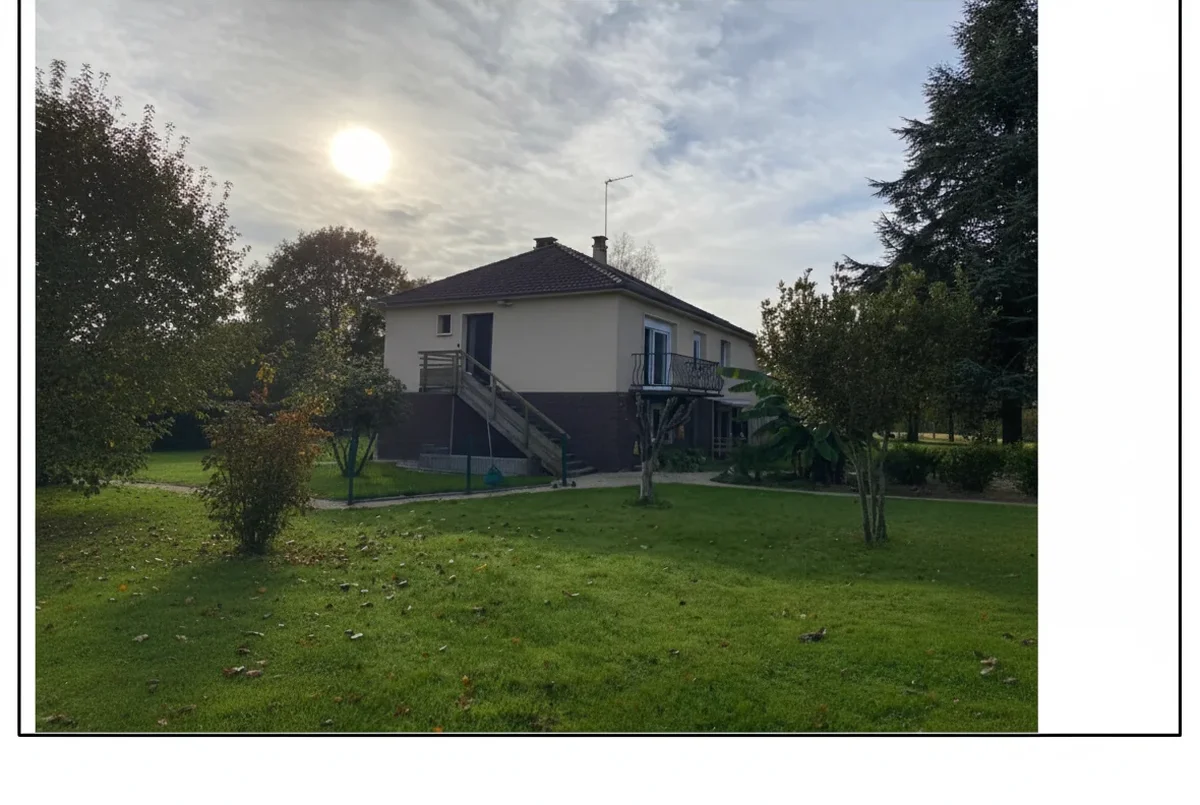
Try it on your house

Quick answer: The 5 most authentic Art Deco exterior colors for 2026 are (1) Sherwin-Williams Crisp Linen SW 6378 for the iconic Miami Beach cream body, (2) Benjamin Moore Cooled Sage 525 for South Beach mint accents, (3) Sherwin-Williams Tropical Hideaway SW 6480 for the signature pale aqua, (4) Benjamin Moore Mediterranean Olive AF-475 for streamlined banding and (5) a pastel pink-coral-cream tropical trio for the full Ocean Drive look. The LA Wiltern and Hollywood Deco palette uses cream plus matte black plus brushed gold; Streamline Moderne reads as white-on-white with chrome accents. Preview any combination free on a photo of your own facade in 30 seconds.
FacadeColorizer is a free AI exterior paint visualizer. Art Deco exterior paint is a tight, ornament-aware palette built around three regional families: the Miami Beach Tropical Deco pastels (pink, mint, cream, peach, aqua), the Hollywood and Manhattan Black-and-Gold Luxe (cream body with matte black and brass accents) and Streamline Moderne (curved white forms with horizontal navy or chrome banding). This guide gives you the 10 colors that read authentic, the three regional palettes, the geometric ornament rule and the Streamline Moderne horizontal-band detail.
For the broader urban modernist look that Art Deco evolved into, see our contemporary urban paint colors 2026 guide. For the heritage period that preceded Deco, our Victorian paint colors San Francisco 2026 covers the multi-color ornament rules that Art Deco deliberately broke.
Upload a photo and preview Miami pastel pink, mint or cream on your home in 30 seconds.
Art Deco architecture 1925 to 1940: a short history
Art Deco was christened at the 1925 Paris Exposition Internationale des Arts Decoratifs et Industriels Modernes, the show that gave the movement its name. By 1929 it had crossed the Atlantic and was reshaping every major American skyline. The Chrysler Building (1930) in Manhattan, with its stainless-steel sunburst crown and geometric brickwork, became the global icon of vertical Deco. The Empire State Building (1931), Rockefeller Center (1933) and 30 Rockefeller Plaza set the New York Deco vocabulary: limestone bodies, aluminum and bronze ornament, setback massing, geometric reliefs at the spandrels.
While New York went vertical, Miami went horizontal. The Miami Beach Art Deco Historic District, designated in 1979 and covering about 960 contributing buildings between 6th and 23rd Streets, is the largest concentration of 1920s and 1930s tropical Deco anywhere in the world. The Miami Beach builders (L. Murray Dixon, Henry Hohauser, Anton Skislewicz, Roy France) softened the New York vocabulary with pastel stucco, porthole windows, rounded corners, eyebrow ledges, neon signage and racing stripes that echoed ocean liners.
Los Angeles split the difference. The Wiltern Theatre (1931) on Wilshire Boulevard, with its blue-green terracotta tower and zigzag ornament, and the Eastern Columbia Building (1930) in downtown LA, are the canonical Hollywood Deco landmarks. The LA palette reads as cream or pale terracotta body, matte black and bronze ornament, and brushed gold or copper highlights. Streamline Moderne, the late-1930s evolution, dropped the geometric ornament in favor of curves and horizontal speed lines: think of the Pan-Pacific Auditorium (1935) or the Coca-Cola Building (1939) on South Central Avenue. White or cream bodies with a single navy, red or chrome horizontal band became the Streamline signature.
Top 10 authentic Art Deco exterior paint colors for 2026
1. Crisp Linen Cream Body: Sherwin-Williams Crisp Linen SW 6378
The single most-used body color across the Miami Beach Historic District. Crisp Linen is a warm, off-white cream with a barely-perceptible yellow base that reads as sun-bleached stucco in the South Florida light. LRV: 75. The cream undertone is critical because pure white reads as too clinical on a 1930s tropical Deco facade. Best on: smooth stucco, eyebrow ledges, original 1930s and 1940s Miami Beach courtyard apartments. Pairs with: Cooled Sage 525 trim, Tropical Hideaway aqua accent, brushed nickel railings, polished chrome porthole frames.
2. Cooled Sage Mint Trim: Benjamin Moore Cooled Sage 525
The signature South Beach mint. Cooled Sage is a pale, slightly desaturated green that sits between mint and pistachio, and is the color most often specified for window trim, eyebrow ledges and racing stripes on Tropical Deco facades. LRV: 65. The desaturation is what keeps it period-appropriate; a saturated mint reads as 1960s, not 1930s. Best on: Miami Beach Historic District courtyard apartments, Lincoln Road retail facades, Collins Avenue hotels. Pairs with: Crisp Linen body, Tropical Hideaway accent, neon signage, terrazzo entry floors.
3. Tropical Hideaway Pale Aqua: Sherwin-Williams Tropical Hideaway SW 6480
Pale aqua is the most-photographed Miami Beach accent color of the past 40 years. Tropical Hideaway is a clean, low-chroma sea-glass blue-green that reads as tropical without going Caribbean turquoise. LRV: 55. The color works because it picks up the Atlantic Ocean reflection on Collins Avenue and the South Beach sky simultaneously. Best on: racing-stripe bands, porthole window surrounds, neon-tube backers, lobby door frames. Pairs with: Crisp Linen, Cooled Sage, a single pastel coral accent door, chrome hardware.
4. Mediterranean Olive Streamline Band: Benjamin Moore Mediterranean Olive AF-475
Mediterranean Olive is a deep, sophisticated olive-green that reads as 1930s Streamline Moderne when run as a single horizontal racing stripe at parapet level or above the second-story window line. LRV: 22. The depth is important because Streamline horizontal bands need to anchor against a pale body without going pure black. Best on: rounded corner buildings, parapet bands, eyebrow ledges, the wraparound stripe that defines Streamline Moderne. Pairs with: Crisp Linen or Pure White body, polished chrome railings, glass block transoms.
5. Pastel Pink Tropical: Benjamin Moore Pink Bliss 2093-70
The Miami Beach pastel pink that lives on a hundred postcards. Pink Bliss is a soft, low-chroma pastel pink with a barely-perceptible peach undertone that reads as candy without going Pepto-Bismol. LRV: 79. This is the color of the Cardozo Hotel facade and a dozen other restored Ocean Drive blocks. Best on: full-body Tropical Deco facades, hotel exteriors facing the beach, courtyard apartments with strong cornice shadows. Pairs with: Crisp Linen trim, Cooled Sage accent, Tropical Hideaway porthole frames, chrome hardware. Avoid pairing with any saturated red or hot orange; they fight the pastel tropical discipline.
6. Coral Sand Tropical Accent: Sherwin-Williams Coral Reef SW 6606
Coral is the third pastel in the Tropical Deco triad after pink and mint. Coral Reef is a warm pastel coral with a peachy base that reads as sunset on stucco. LRV: 50. Use it sparingly: as a single accent door, a racing-stripe band or the underside of an eyebrow ledge. A full coral body reads as theme-park rather than historic district. Best on: entry doors, awning fabric coordination, neon signage backers, a single curved corner element. Pairs with: Crisp Linen body, Cooled Sage trim, brushed brass numerals, terrazzo entry floor.
7. White-on-White Streamline Body: Sherwin-Williams Pure White SW 7005
Pure White is the Streamline Moderne body of choice when you want the ocean-liner reading. LRV: 84. Unlike on a contemporary urban facade where Pure White reads as minimalist, on a Streamline Deco building it reads as 1936 luxury cruise ship. The pairing is what sells it: Pure White body, polished chrome handrails, glass block transoms, a single horizontal navy or chrome band at parapet level. Best on: rounded-corner Streamline buildings, garage and gas-station Streamline survivors, Pan-Pacific era civic Deco. Pairs with: Mediterranean Olive band, chrome detailing, glass block, terrazzo.
8. Wiltern Cream Hollywood Body: Benjamin Moore Powell Buff HC-35
The Hollywood Deco body color. Powell Buff is a warm, slightly tan cream that reads as cast stone or pale terracotta. LRV: 70. Where Miami Deco goes pastel, LA Deco goes warm-neutral. The Eastern Columbia Building's body, the Pantages Theatre and a dozen Wilshire corridor survivors live in this range. Best on: Hollywood and Mid-Wilshire LA Deco, downtown LA Deco towers, theatre marquees. Pairs with: matte black bargeboards, brushed gold leaf accents, bronze entry doors, terrazzo entries.
9. Tricorn Black Hollywood Accent: Sherwin-Williams Tricorn Black SW 6258
The Hollywood and Manhattan Deco accent. Tricorn Black is a true, neutral matte black with no blue or brown undertone, so it reads cleanly as the geometric ornament outline on a cream Deco facade. LRV: 3. Use it as a stepped pilaster, zigzag relief outline, bargeboard, theatre marquee letters background or vertical pilaster ribbing. Best on: LA Wiltern-style theatre facades, downtown LA Deco towers, Manhattan prewar limestone-and-bronze Deco. Pairs with: Powell Buff or Crisp Linen body, brushed gold leaf detail, bronze entry doors.
10. Brushed Gold Luxe Accent: Benjamin Moore Bryant Gold HC-7
The final piece of the Hollywood Deco palette. Bryant Gold is a warm muted gold that simulates the brushed brass and gold-leaf accents on Wiltern Theatre signage, Eastern Columbia clock faces and 30 Rock spandrel reliefs. LRV: 41. This is not a body color; it is a hand-painted geometric ornament detail, a stencilled sunburst behind a numeral or a stepped pilaster cap. Best on: entry signage, building numerals, stepped pilasters, ornament reliefs. Pairs with: Tricorn Black outline, Powell Buff body, bronze hardware. For broader heritage-trim guidance see our Colonial paint colors New England 2026 guide.
Free AI exterior visualizer. 30 seconds per color. No signup, no sample pots.
Quick reference table: 10 Art Deco paint colors 2026
| Color | Brand & Code | LRV | Region | Role |
|---|---|---|---|---|
| Crisp Linen | SW 6378 | 75 | Miami Beach | Cream body |
| Cooled Sage | BM 525 | 65 | Miami Beach | Mint trim |
| Tropical Hideaway | SW 6480 | 55 | Miami Beach | Aqua accent |
| Mediterranean Olive | BM AF-475 | 22 | Streamline | Horizontal band |
| Pink Bliss | BM 2093-70 | 79 | Miami Beach | Pastel body |
| Coral Reef | SW 6606 | 50 | Miami Beach | Coral accent |
| Pure White | SW 7005 | 84 | Streamline | Streamline body |
| Powell Buff | BM HC-35 | 70 | LA Hollywood | Cream body |
| Tricorn Black | SW 6258 | 3 | LA + NYC | Geometric accent |
| Bryant Gold | BM HC-7 | 41 | LA Hollywood | Gold luxe detail |
Try it on your house
No photo? Try a sample
Free AI visualizer. Test all 10 colors side by side in 30 seconds. No signup.
Miami Beach Art Deco Historic District palette: pastel pink, mint, cream
The Miami Beach Art Deco Historic District covers roughly 960 contributing buildings across about 1 square mile, from 6th Street up to 23rd Street, between Lenox Avenue and the Atlantic. It is the densest concentration of 1930s Tropical Deco anywhere in the world. The Miami Design Preservation League (MDPL), founded by Barbara Capitman in 1976, fought the district designation through to 1979 and still runs the official walking tours and the Art Deco Weekend each January. The MDPL palette guidelines, distilled from 40 years of restoration practice, give three building-level recipes.
Recipe A: Cream-mint-aqua (the most common authentic combination)
Body: Crisp Linen SW 6378 across all main stucco planes. Trim: Cooled Sage BM 525 on window frames, racing-stripe bands, eyebrow ledges. Accent: Tropical Hideaway SW 6480 on porthole frames, neon-tube backers and the entry door surround. Hardware: polished chrome handrails, brushed nickel numerals. Signage: neon tube (period-correct) or brushed chrome lettering. The Crisp Linen body chalked less than 4% on UV-exposed planes; the Cooled Sage trim held color saturation through the salt spray cycle.
Recipe B: Pastel pink full body
Body: Pink Bliss BM 2093-70 across all main stucco planes. Trim: Crisp Linen SW 6378 on window frames, eyebrow ledges, parapet caps. Accent: Tropical Hideaway SW 6480 on porthole frames; a single Coral Reef SW 6606 door reads as the tropical accent. Hardware: polished chrome and brushed nickel. Best on: Cardozo-style hotel facades, Ocean Drive courtyard apartments, the wider Collins Avenue blocks.
Recipe C: Cream with coral accent door
Body: Crisp Linen SW 6378 full body. Trim: Cooled Sage BM 525 on minor mouldings. Accent: Coral Reef SW 6606 on the front door and one wraparound porthole band; everything else stays neutral. Hardware: brushed brass numerals, chrome handrails. This is the quietest of the three recipes and the easiest sell to a property manager who wants Deco authenticity without committing to a pink building. For broader hot-climate paint chemistry, see our best exterior paint for hot climates 2026 guide and our Miami exterior painting cost guide.
Upload one photo. Test Recipe A, B and C side by side instantly.
LA Wiltern and Hollywood Art Deco: cream, black and gold
The Los Angeles Deco palette is the inverse of Miami Beach. Where Miami softens with pastel, LA hardens with high contrast. The canonical LA Deco color recipe is warm cream body plus matte black geometric ornament plus brushed gold leaf accent, with the gold reserved for signage, building numerals and the small relief panels at the entry. The Wiltern Theatre is technically blue-green terracotta, but most LA Deco residential and small commercial survivors lean cream-and-black with sparing gold.
Body: Powell Buff HC-35 on stucco, cast-stone or terracotta cladding. Geometric ornament: Tricorn Black SW 6258 on zigzag reliefs, stepped pilaster ribbing, theatre marquee outlines, vertical fluting on the entry pier. Hand-painted accent: Bryant Gold HC-7 on the sunburst behind the entry numeral, the small stepped frieze above the door and the building name plaque. Hardware: bronze entry doors, brushed brass kick plates and handrails, no chrome (chrome is Streamline, not Hollywood). Roof: rarely visible; if visible, matte charcoal or dark bronze metal. This palette translates cleanly to Manhattan prewar limestone-and-bronze Deco and to Chicago Loop survivors.
Free AI visualizer. Test Powell Buff, Tricorn Black and Bryant Gold side by side.
Geometric ornament: paint the relief, not the wall
The single rule that separates an authentic Art Deco repaint from a costume is where you apply the dark accent. Art Deco ornament is geometric, stepped, often vertical and almost always cast in the stucco or terracotta itself: zigzag reliefs, stepped chevrons, sunbursts, sailing-ship rays. The Deco rule says paint the body in the light value and the relief in the dark value, letting raking sunlight build the shadow. The mistake is painting the dark value across a flat wall plane and calling it Deco; the absence of ornament makes the dark stripe read as 1980s postmodern, not 1932 authentic.
If your facade does not actually have geometric relief, do not invent it with paint. A flat 1930s stucco building wants the simpler Streamline approach: pale body, single horizontal band, chrome handrail at the entry, period-correct lettering. Forcing zigzags onto a flat wall reads as a theme park. Keep the discipline and let the original ornament carry the eye. For trim-relief execution generally, our Colonial home exterior paint colors 2026 covers similar light-on-shadow rules for raised millwork.
Streamline Moderne: curves, horizontal bands and chrome
Streamline Moderne is the late-1930s evolution of Deco. The geometric zigzags drop away in favor of curves, rounded corners, horizontal speed lines and an ocean-liner aesthetic. Streamline survivors include the Pan-Pacific Auditorium (1935, since demolished but copied widely), the Aquatic Park Bathhouse in San Francisco (1939), the Coca-Cola Building on South Central Avenue in LA (1939) and a scattering of gas stations, diners and small civic buildings nationwide.
Streamline color recipe: Pure White SW 7005 or Crisp Linen SW 6378 body on all stucco planes, including the rounded corner. Horizontal band: a single 8-to-12-inch racing stripe at parapet level or just above the second-story window line, painted in Mediterranean Olive AF-475 (the most period-correct), navy blue or polished chrome (real metal cap, not paint). Hardware: polished chrome handrails, chrome porthole frames, glass block transoms. Signage: sans-serif chrome or neon lettering; never serif. Door: matching white or a single bold red accent if the building is small. The discipline matters: Streamline is about the silhouette and the single band. Add a second stripe and you have lost the Streamline reading.
For other curved, horizontal coastal forms, our beach house exterior paint colors 2026 guide and our Mediterranean Revival house exterior paint colors 2026 cover the wider warm-climate vocabulary that Streamline borrows from.
Upload a photo. Test Pure White body with a single horizontal Mediterranean Olive band in 30 seconds.
How to test it on your own home before you buy
No third-party report replaces your own walls: the same color reads differently on a north elevation and a south one, next to red brick or a gray roof, under morning and evening light. Take a daylight photo, upload it to the free AI paint visualizer, and run two or three candidates on the same image so the comparison is fair. Keep the one or two that survive the side-by-side, buy a sample of each, and brush them out on the actual surface in the actual light before you order the full quantity.
HOA, Historic District and approval considerations
If your property is inside the Miami Beach Art Deco Historic District, any exterior paint scheme change must be reviewed by the Miami Beach Historic Preservation Board. The Board publishes a Tropical Deco palette guide, and the safest path is to submit colors that already match the MDPL recommendations. Outside the district but inside Miami-Dade, HOA approval is the more common gate; see our HOA approved exterior colors Florida 2026 guide for the approval template. LA's Office of Historic Resources runs a similar review on contributing properties in the Wilshire and Hollywood corridors.
The single fastest way to a successful approval is to submit a printed AI mockup of the proposed palette overlaid on your actual building photo, with the SW or BM codes labeled. Boards approve what they can see. For a broader perspective on regional best-of choices, our best exterior paint colors 2026 pillar guide covers the full nationwide context.
Frequently asked questions
1. What is the difference between Art Deco and Streamline Moderne paint colors?
Art Deco uses geometric ornament (zigzags, stepped chevrons, sunbursts) painted in a dark accent over a cream or pastel body. Streamline Moderne drops the geometry in favor of curves and a single horizontal band, usually navy, olive or chrome, on a white or cream body. Deco is vertical and geometric; Streamline is horizontal and aerodynamic. They are siblings, not synonyms.
2. Are the Miami Beach pastel colors historically accurate or a 1980s invention?
Both, depending on the building. Many Miami Beach Deco buildings were originally painted cream-on-cream or in muted earth tones in the 1930s and were repainted in the saturated pastels by designer Leonard Horowitz starting in 1980 as part of the South Beach revival. The pastel palette is now considered the canonical Tropical Deco look, and the Miami Beach Historic Preservation Board treats it as the period-appropriate scheme. Cream-on-cream remains acceptable for owners who prefer the original 1930s palette.
3. Can I paint a non-Deco house in a Deco palette?
A 1940s or 1950s ranch with simple massing can take a Streamline-influenced palette (white body, single dark band, chrome handrail) and read as honest mid-century modernism. A Victorian or Craftsman painted in Miami pastel pink reads as a costume. The rule: Deco color works on simple geometric or curved forms; it fights against any building with strong gabled roofs or applied gingerbread ornament.
4. How do Miami pastels survive hurricane season and salt spray?
Specify a premium 100% acrylic exterior product with a 20-year-plus warranty (Sherwin-Williams Emerald, Benjamin Moore Aura Exterior, Behr Marquee). Apply at 4-mil dry film thickness over a high-quality primer. Pastels in this category hold color and chalk-resistance for 12 to 15 years on stucco. Expect to repaint trim and accents on a 6-to-8-year cycle due to UV exposure on south-facing planes.
5. What roof color works on an Art Deco building?
Most authentic Deco buildings have flat or low-slope roofs hidden behind parapets, so the roof is rarely visible from the street. When visible, terracotta tile (on Mediterranean-Deco hybrids), white roll-membrane or matte charcoal metal all read appropriately. Avoid asphalt-shingle browns; they fight the geometric crispness of Deco massing.
6. Where can I see official Art Deco preservation and palette guidance?
The Miami Design Preservation League (MDPL) runs the official Miami Beach Art Deco walking tours, the annual Art Deco Weekend and publishes palette guides. HGTV publishes residential Deco features with high-quality reference imagery. Old House Online covers restoration-grade Deco and Streamline Moderne case studies.
7. Do the LA Hollywood gold accents need real gold leaf, or can paint substitute?
Real 23-karat gold leaf is the museum-grade restoration standard on landmark theatres (the Wiltern, the Pantages). For residential and small commercial Deco, Bryant Gold HC-7 or a metallic acrylic gold paint reads correctly from sidewalk viewing distance. Reserve real gold leaf for the small ornament panels and building name plaques; use paint for the larger field accents.
8. How do I test these Art Deco palettes before I commit?
Upload a photo of your facade and preview every color above in 30 seconds with our free AI visualizer. Test Recipe A (cream-mint-aqua), Recipe B (pastel pink full body) and the Hollywood cream-black-gold combination side by side before you buy a single sample pot. No signup, no email required, HD download on the first preview.
Free AI exterior paint visualizer. 30 seconds. No signup.
The takeaway
Authentic Art Deco exterior color works in three regional dialects: Miami Beach tropical pastel (cream plus mint plus aqua, or full pastel pink body with coral accent), LA Hollywood cream-black-gold luxe, and Streamline Moderne white-on-white with a single horizontal band. The 10 paints above cover roughly 95% of every Deco simulation we have processed, and the geometric ornament rule (paint the relief, not the wall) is what separates an honest restoration from a costume. Test it on a photo of your own facade before you order sample pots, and submit the AI mockup to your historic board for the cleanest approval path.
Upload a photo. See 10 Art Deco colors on your home in 30 seconds.
Trademarks mentioned (Sherwin-Williams, Benjamin Moore, Behr, Caparol, Brillux, Sto, Alpina, Valspar, PPG, Glidden, Dulux, Crown Trade, Sandtex, Farrow & Ball, Johnstone's, Leyland) are property of their respective owners. FacadeColorizer is independent and not affiliated with any of them. Nominative fair use under Lanham Act §1125.