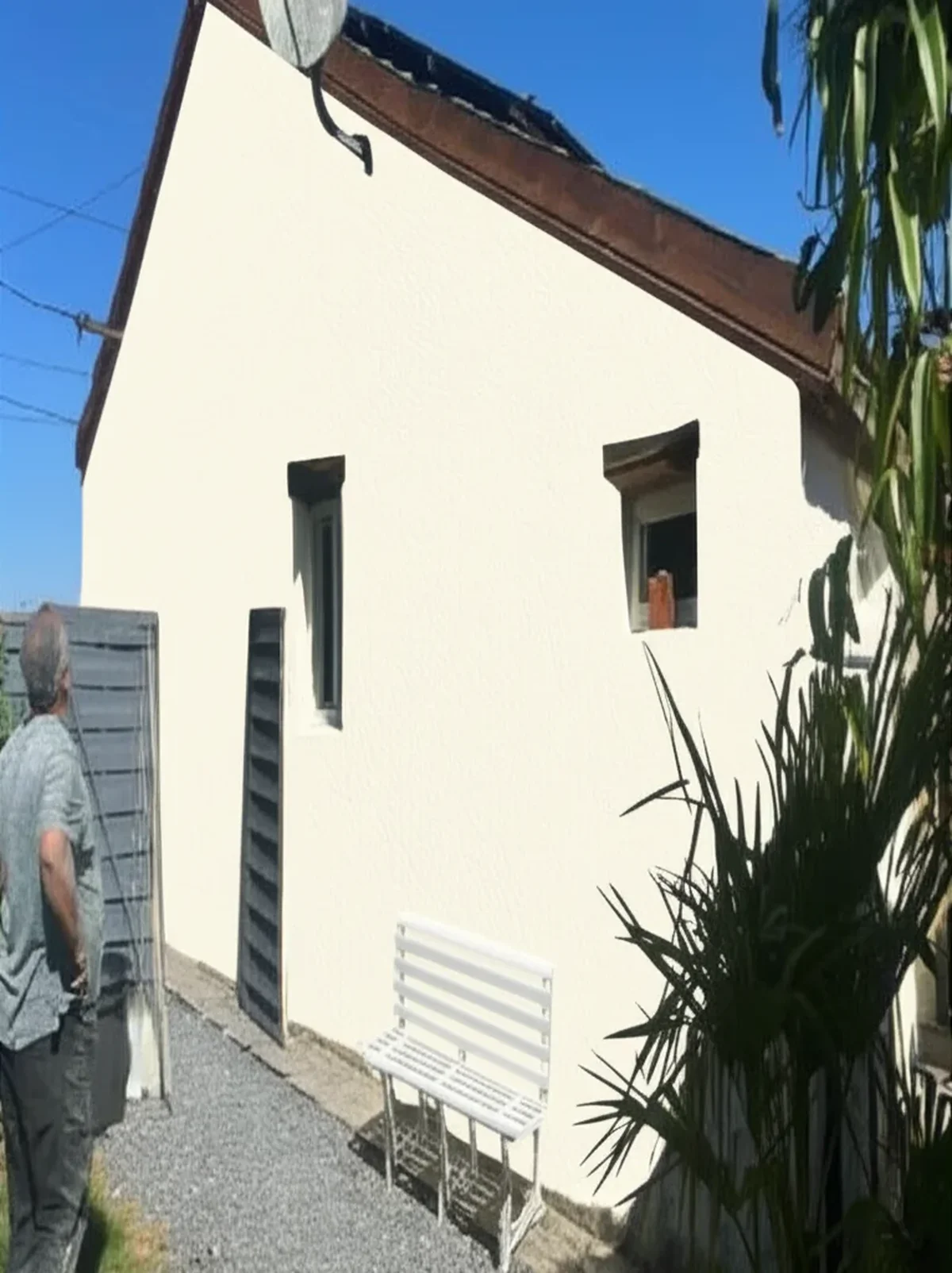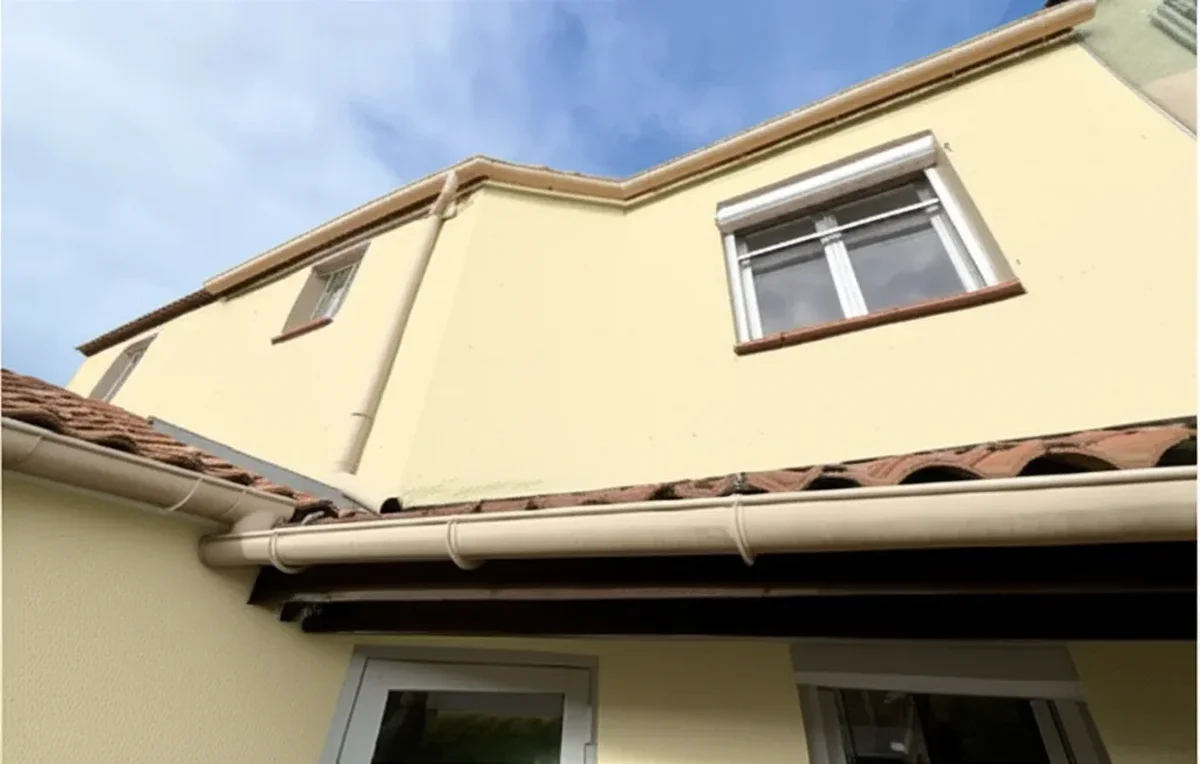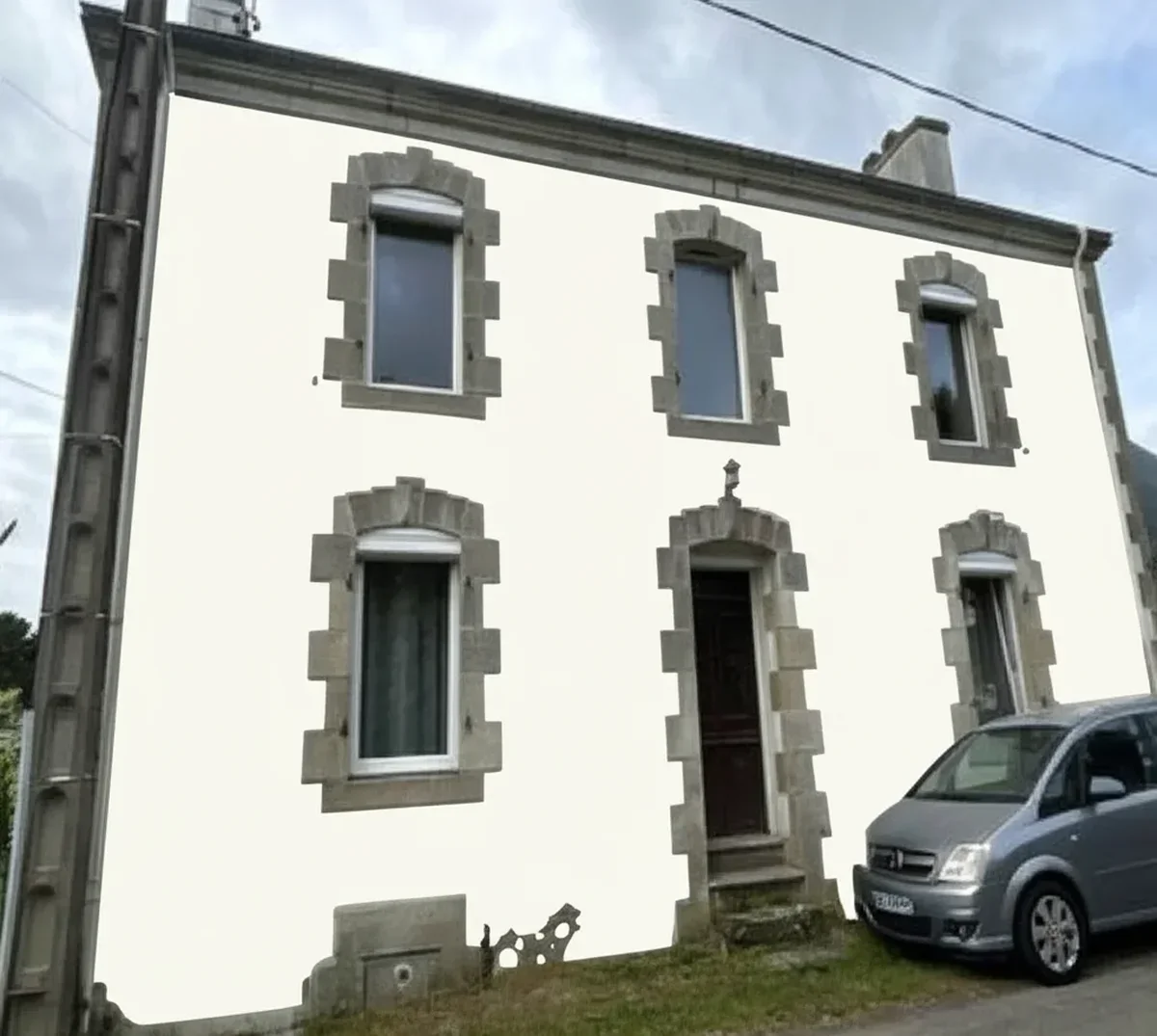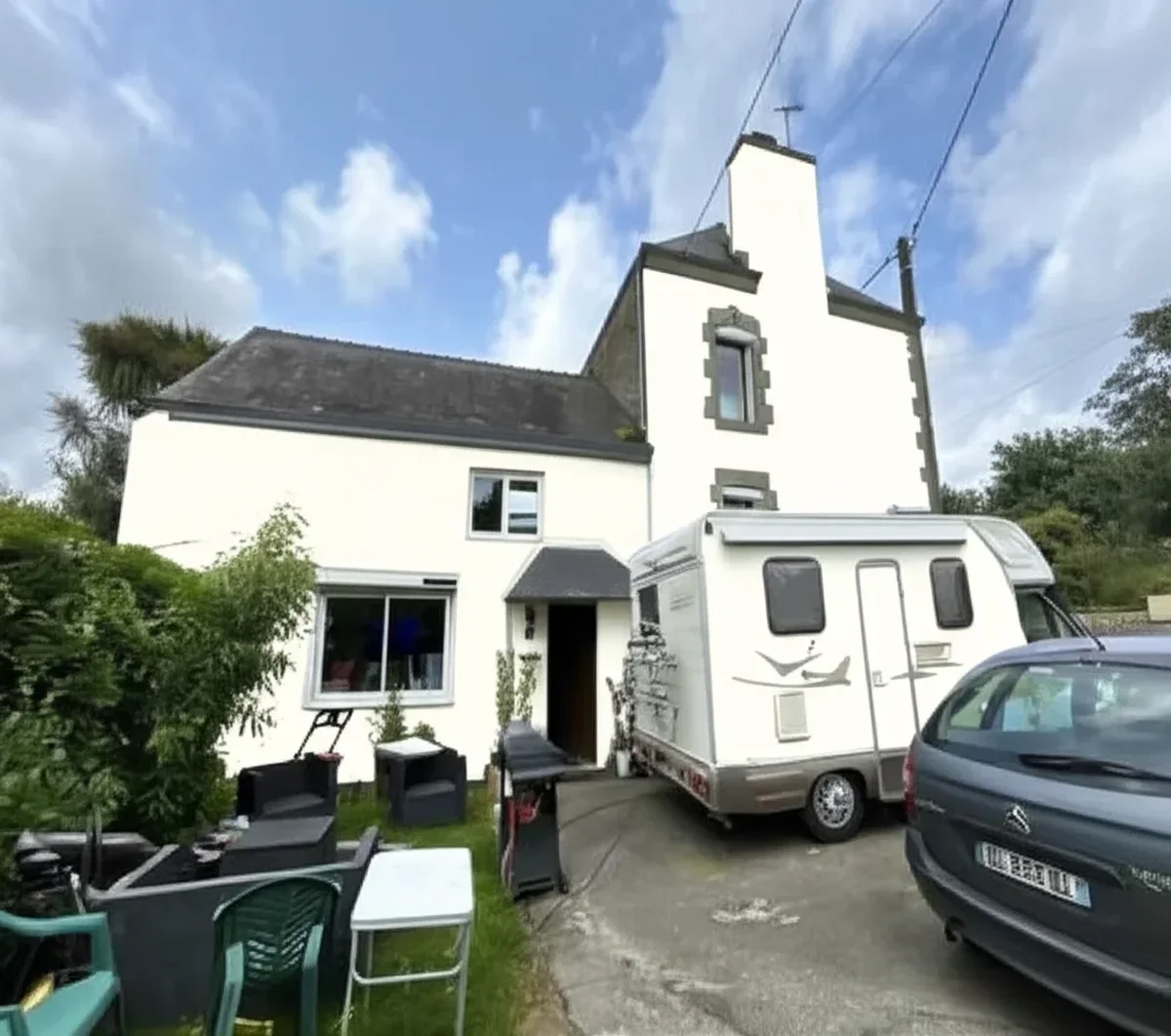
Try it on your house

Quick answer: Queen Anne Victorians in San Francisco (built roughly 1885 to 1905, characterized by turrets, witch's-hat roofs, multi-bay windows, decorative shingle bands and asymmetric massing) carry a heavier ornament load than Italianate or Stick subtypes, so the authentic 2026 palette runs six to eight colors. The proven SF Queen Anne formula uses Benjamin Moore Cement Gray HC-104 on the body, Sage Brush 502 on trim, Heritage Red HC-181 on bracket accents, Powell Buff HC-35 on sash highlights, Ashland Slate 1608 on shingle bands and bargeboards, plus Linen White OC-146 for ornamental spindlework. The famous Painted Ladies at 710 to 720 Steiner Street include only one Queen Anne (the 1892 corner house at 722); the rest are Italianate transitioning into Stick. Test any Queen Anne scheme free on a photo of your own facade in 30 seconds.
Of every Victorian subtype standing in San Francisco today, the Queen Anne is the most demanding to paint. The Italianate runs square and symmetrical with a single body color carrying most of the visible surface. The Stick is articulated with crisp vertical and horizontal banding that telegraphs structure. The Queen Anne, by contrast, was designed to break every architectural rule: round turrets push out of square corners, witch's-hat conical roofs sit above two-bay or three-bay projections, decorative shingle bands run between floors in fish-scale or diamond patterns, multi-pane sash windows stack above plate-glass picture windows, and spindlework, finials and sunburst panels fill every available transition. A two-color body-plus-trim scheme on a Queen Anne reads as a missed opportunity. The authentic palette runs six to eight colors across a four-level hierarchy, and SF Queen Annes carry that load better than Queen Annes anywhere else in the United States.
This guide focuses on the Queen Anne subtype specifically: how to identify it on an SF block, the ten authentic Queen Anne colors in current Benjamin Moore codes, the Painted Ladies Steiner Street palette and why only one of those seven houses is actually Queen Anne, how to distinguish Queen Anne from Italianate and Stick at a glance, and the multi-color hierarchy that makes a Queen Anne facade read correctly on Alamo Square or in Haight Ashbury. For the broader SF Victorian roundup covering all four subtypes, see our parent guide to Victorian paint colors in San Francisco 2026. For national-scope Victorian inspiration across Cape May, Saratoga Springs and Eureka, see our top 15 Victorian house exterior paint colors guide. You can also upload a photo of your facade and have the AI render any of the schemes below in 30 seconds.
Upload a photo of your SF Queen Anne and test a six- to eight-color authentic scheme in under a minute.
Queen Anne 1885 to 1905: the architectural details that drive the palette
The Queen Anne style arrived in San Francisco around 1885, roughly five years after it had peaked on the East Coast, and stayed in active construction until 1905. The 1906 earthquake and fire ended Queen Anne building west of Van Ness Avenue almost overnight, and the post-fire reconstruction style (Edwardian) is far simpler. As a result, surviving SF Queen Annes cluster in five neighborhoods that escaped or partially escaped the fire: Pacific Heights, the Western Addition, Haight Ashbury, Lower Pacific Heights and parts of Noe Valley and the Mission. Roughly 1.5 percent of SF's housing stock is Queen Anne, against 14 percent for the broader Victorian category, which means the subtype is rare enough to be visually distinctive on most blocks.
Five architectural details define a Queen Anne and drive every color decision: turrets (round or polygonal projections, usually at a corner, capped with a conical witch's-hat roof), multi-bay windows (two-bay or three-bay projections with angled or curved glass), decorative shingles (fish-scale, diamond or hexagonal patterns banded between floors), asymmetric facades (the front elevation does not mirror left to right, unlike Italianate or Stick), and heavy gingerbread (spindlework, finials, sunburst panels and bargeboards in volumes that exceed even Stick-style ornament). Each of these details wants its own color treatment to read at a distance, which is why the authentic Queen Anne palette runs six to eight colors rather than the four to five typical of Italianate or Stick.
The original Queen Anne palette as built (1885 to 1905) ran darker and richer than what the Colorist Movement repainted onto SF Victorians from 1963 forward. Trade manuals from the period (Shoppell's Modern Houses, the 1887 Pallisers American Cottage Homes, the 1892 Comstock Architectural Ornament) recommended deep olive, oxblood, burnt sienna and forest green bodies with cream or ochre trim and dark sash. The bright pinks, purples and saturated golds associated with SF Painted Ladies today are a 1970s overlay, not a Queen Anne original. Both palettes are historically defensible at a Historic Preservation Commission hearing, but the documentation packet differs sharply between them. Test both eras side by side on your facade before you decide which packet to assemble.
Ten authentic Queen Anne colors in current Benjamin Moore codes
The ten colors below cover every position on a Queen Anne facade from body to door, drawn from the Benjamin Moore Historical Collection plus the standard Benjamin Moore palette. Five of the ten anchor the Steiner Street Painted Ladies palette and translate directly onto a Queen Anne (the same colors used on the corner Queen Anne at 722 Steiner). The remaining five give you the additional positions a full Queen Anne ornament load requires: shingle bands, spindlework, finials and the deepest accent recess.
1. Cement Gray (Benjamin Moore HC-104) - #C3BBA7
A warm dusty greige and the most documented Queen Anne body color in SF. Reads as concrete in mid-day fog and warms to taupe in the 4 p.m. sun that breaks the marine layer. Role: body on clapboard and rusticated boards. Pairing: Sage Brush trim, Heritage Red bracket accents, Powell Buff sash highlights, Ashland Slate on shingle bands. Psychology: grounded and neutral, lets the spindlework and turret carry the eye.
2. Sage Brush (Benjamin Moore 502) - #99A187
A muted gray-green sage and the signature SF Victorian trim color since the 1978 Buckter Steiner Street scheme. Role: trim on corner boards, cornice, frieze, window and door casings, plus bay-window panels. Pairing: Cement Gray body, Heritage Red sash, Ashland Slate door. Psychology: botanical and heritage, reads as authentic SF on a phone camera.
3. Heritage Red (Benjamin Moore HC-181) - #934D45
A muted oxblood-russet from the Benjamin Moore Historical Collection and the universal Queen Anne accent color. Role: bracket undersides, recessed panels, sunburst spandrels, deepest sash recesses, door. Pairing: Cement Gray or Powell Buff body, Sage Brush trim, Ashland Slate shingle bands. Psychology: warm and period-correct, draws the eye to the most ornate transitions on the facade.
4. Powell Buff (Benjamin Moore HC-35) - #D8C5A4
A warm slightly golden cream from the Historical Collection. Role: sash highlights and muntins on every Queen Anne, or body color on lighter palettes for north-facing facades. Pairing: works with all four other heritage colors. Psychology: brightens north-facing turrets that never catch direct sun, parchment-aged texture in fog.
5. Ashland Slate (Benjamin Moore 1608) - #6E6E69
A deep neutral slate-gray with a faint warm cast. Role: shingle bands between floors, bargeboards, witch's-hat roof shingles where painted rather than slated, structural shadow line on the cornice underside. Pairing: any Cement Gray or Powell Buff body. Psychology: architectural and grounded, the structural anchor of the whole scheme.
6. Linen White (Benjamin Moore OC-146) - #EFE7D2
A soft warm off-white. Role: ornamental spindlework, finials, the tips of bargeboard scrollwork, the highlight on sunburst spandrel panels. Pairing: sits as the brightest accent above every other color in the scheme. Psychology: theatrical, draws the eye to the highest ornament points (turret finial, gable peak, porch spindle).
7. Essex Green (Benjamin Moore HC-188) - #2C3E2D
A deep forest green from the Historical Collection. Role: bargeboard accent, deepest recessed panel on the front gable, optional turret shingle color. Pairing: Cement Gray body, Heritage Red bracket accents, Powell Buff highlights. Psychology: archival depth, reads as Victorian rather than 1970s repaint.
8. Hubbard Squash (Sherwin-Williams 0041) - #D4A24D
A burnished ochre-gold from the Sherwin-Williams Heritage Village Collection. Role: spindlework accent on porch railings, transition band on sash muntins, gilt-effect highlight on sunburst centers. Pairing: Plum Brown body or Cement Gray body. Psychology: luxurious and saturated, the closest period-correct equivalent to gilded ornament.
9. Plum Brown (Sherwin-Williams 2713) - #5A3947
A deep plum-brown from the Heritage Village Collection. Role: body color on bolder Queen Anne schemes, particularly Haight Ashbury and Mission facades that lean into the 1970s Colorist Movement palette. Pairing: Powell Buff trim, Hubbard Squash spindlework, Essex Green bargeboard. Psychology: theatrical and saturated, reads as private-residence Queen Anne rather than landmarked.
10. Tricorn Black (Sherwin-Williams 6258) - #2F2F2F
A near-pure black with the faintest blue undertone. Role: sash glazing bars in gloss, door in gloss, finial tips, optional turret-cap shadow line. Pairing: any heritage body and trim combination. Psychology: contrast peak, used sparingly on a Queen Anne to keep the gingerbread legible against the warm body colors.
| Color | Code | Hex | Queen Anne role |
|---|---|---|---|
| Cement Gray | BM HC-104 | #C3BBA7 | Body (clapboard) |
| Sage Brush | BM 502 | #99A187 | Trim (corner boards, cornice) |
| Heritage Red | BM HC-181 | #934D45 | Bracket accent, door |
| Powell Buff | BM HC-35 | #D8C5A4 | Sash highlight, alt body |
| Ashland Slate | BM 1608 | #6E6E69 | Shingle bands, bargeboard |
| Linen White | BM OC-146 | #EFE7D2 | Spindlework, finials |
| Essex Green | BM HC-188 | #2C3E2D | Bargeboard, gable recess |
| Hubbard Squash | SW 0041 | #D4A24D | Spindlework accent, sunburst |
| Plum Brown | SW 2713 | #5A3947 | Bold body alternative |
| Tricorn Black | SW 6258 | #2F2F2F | Sash glazing bars, door gloss |
Try it on your house
No photo? Try a sample
The Painted Ladies Steiner Street palette: only one Queen Anne in the row
A frequent mistake on Queen Anne color guides is treating the famous Painted Ladies row on Steiner Street as a Queen Anne reference set. The row of seven houses at 710 to 720 Steiner Street that faces Alamo Square is actually Italianate transitioning into Stick, not Queen Anne. The houses were built between 1892 and 1896 by developer Matthew Kavanaugh, in a transitional Italianate-Stick vocabulary that predates the Queen Anne ornament load. The square symmetric facades, flat or slightly angled bay windows, modest gingerbread and absence of turrets all mark the row as Italianate-Stick rather than Queen Anne.
The one genuine Queen Anne in the immediate Steiner Street neighborhood sits at the corner of Steiner and Hayes, one block south. Built in 1892, it carries a corner turret with witch's-hat roof, two-bay projection, decorative shingle band between the second and third floors, and a heavier gingerbread spindlework load than any house in the Postcard Row. Its 2015 repaint used the same five-color Steiner Street palette as the famous row, plus two additional Queen Anne-specific colors (Linen White on spindlework and Essex Green on the bargeboard) to handle the heavier ornament. The resulting seven-color scheme is the closest documented contemporary reference for an authentic SF Queen Anne repaint.
The other significant Queen Anne reference cluster in SF sits in Pacific Heights along Broadway and Pacific Avenue, and in Haight Ashbury along Page Street, Oak Street and the upper Haight near Buena Vista Park. The Coleman House at 1701 Franklin Street (1895), the Spreckels Mansion at 2080 Washington Street (1913, late Edwardian-Queen Anne hybrid), and the Westerfeld House at 1198 Fulton Street (1889) are three of the most documented landmarked Queen Annes in the city. Each carries a six- to seven-color scheme tailored to its specific ornament profile, but all three share the core five colors: a warm greige body, a sage trim, a muted oxblood accent, a cream sash highlight and a deep slate-gray on the shingle bands. Render any of these landmark schemes on your own facade with the AI visualizer.
Queen Anne vs Italianate vs Stick: how to identify which subtype you own
Color decisions on an SF Victorian start with correctly identifying the subtype, because the four substyles (Italianate, Stick, Queen Anne, Edwardian) carry different ornament loads and read best in different color counts. The single most useful diagnostic is the massing test: does the front elevation mirror left-to-right, or is it asymmetric? Italianate, Stick and Edwardian facades are symmetric. Queen Anne facades are deliberately asymmetric, almost always with the turret or the heavier projection on one side and the porch or entry on the other.
The roofline test comes second. Italianate runs a flat or low-slope roof with a heavy bracketed cornice. Stick adds a small false-front pediment, often a triangular gable at the cornice center. Queen Anne breaks the cornice line entirely with a turret, witch's-hat roof, dormer or false-front pediment that is markedly steeper and more ornate than Stick. Edwardian (post-1906) returns to a simpler bracketed cornice and rarely carries any false-front element.
The ornament-band test finishes the diagnostic. Italianate runs slim cornice brackets, hood mouldings over slim sash windows, and minimal banding. Stick adds vertical and horizontal applied wood "sticks" outlining the structural rhythm, plus a steeper pediment. Queen Anne adds decorative shingle bands between floors (fish-scale, diamond or hexagonal), spindlework on porch railings, sunburst spandrels in gable peaks and finials at turret and gable apexes. If your facade has fish-scale shingles between the second and third floors and a corner turret, it is a Queen Anne, full stop. For a side-by-side palette comparison with Italianate Brooklyn brownstones, see our Italianate brownstone paint colors Brooklyn 2026 guide when it goes live, and for the federal contrast palette see our federal style paint colors New England 2026 guide.
Identify your Victorian subtype and test the right palette in under a minute.
The multi-color hierarchy on a Queen Anne facade
A successful Queen Anne scheme is built in five levels, not four. Italianate and Stick carry four (body, trim, accent, sash). Queen Anne adds a fifth because the decorative shingle bands and the spindlework demand their own treatments. The percentages below are visible-surface allocations on a typical SF Queen Anne after subtracting roof and chimney.
- Level 1 - Body (55 to 65 percent): Cement Gray BM HC-104 or Plum Brown SW 2713 on clapboard, rusticated boards and turret cladding where not shingled.
- Level 2 - Trim (16 to 20 percent): Sage Brush BM 502 on corner boards, cornice, frieze, window casings, door casings and bay-window panels.
- Level 3 - Shingle bands and bargeboard (8 to 12 percent): Ashland Slate BM 1608 on the decorative shingle band between floors, on the turret shingles where painted, and on the bargeboard scrollwork around gables.
- Level 4 - Accent (6 to 9 percent): Heritage Red BM HC-181 on bracket undersides, recessed panels, sunburst spandrels and the deepest sash recesses.
- Level 5 - Sash highlight and spindlework (4 to 7 percent): Powell Buff BM HC-35 on window sash and muntins, Linen White BM OC-146 on spindlework, finials and ornamental peaks, Hubbard Squash SW 0041 as a sixth color on sunburst centers if your facade includes them.
Door and sash glazing bars sit on top of the five levels. A Queen Anne door usually carries Heritage Red BM HC-181 in gloss or Tricorn Black SW 6258 in gloss, with the sash glazing bars on the front-elevation windows matching the door color. This keeps the contrast peak concentrated at eye level on the porch and at the highest ornament points (turret finial, gable peak), where the eye lingers longest. Test door and sash colors against your full scheme before you commit a single sample pot.
Three SF Queen Anne schemes for 2026
Scheme A: heritage seven-color (Pacific Heights landmarked)
The full authentic Queen Anne scheme for a landmarked or contributing property in Pacific Heights, Alamo Square or another Article 10 historic district. Best for fully restored Queen Annes with intact turret, shingle bands and spindlework.
- Body: Cement Gray BM HC-104.
- Trim: Sage Brush BM 502.
- Shingle bands and bargeboard: Ashland Slate BM 1608.
- Accent: Heritage Red BM HC-181.
- Sash highlight: Powell Buff BM HC-35.
- Spindlework and finials: Linen White BM OC-146.
- Door: Heritage Red BM HC-181 in gloss.
Scheme B: bold contemporary plum (Haight Ashbury private residence)
The post-1970s Colorist Movement palette translated for 2026. Best for non-landmarked Queen Annes in Haight Ashbury, Noe Valley and the Mission where the owner wants the Painted Lady visual energy without the heritage constraint.
- Body: Plum Brown SW 2713.
- Trim: Powell Buff BM HC-35.
- Shingle bands and bargeboard: Essex Green BM HC-188.
- Accent: Heritage Red BM HC-181.
- Spindlework and sunburst centers: Hubbard Squash SW 0041.
- Sash highlight: Linen White BM OC-146.
- Door: Tricorn Black SW 6258 in gloss.
Render scheme B on your own facade before deciding whether the saturated palette reads better on your block than the heritage scheme above.
Scheme C: modern muted Queen Anne (Cole Valley restored)
A restrained 2026 update for a Queen Anne that has lost its original spindlework or whose ornament is degraded enough that a full seven-color scheme would over-articulate. Five colors instead of seven, with the omitted layers folded into the trim or accent.
- Body: Cement Gray BM HC-104.
- Trim: Linen White BM OC-146.
- Shingle bands: Ashland Slate BM 1608.
- Sash and door: Tricorn Black SW 6258 in gloss.
- Accent (brackets, sunburst): Heritage Red BM HC-181.
Microclimate and formulation notes for Queen Anne facades
Queen Anne facades carry more horizontal and vertical seams than Italianate or Stick, because the decorative shingle bands, the turret cladding and the spindlework all create joints that water and salt aerosol can penetrate. The premium fog-and-salt-graded formulation question is therefore even more critical on a Queen Anne than on an Italianate. Year-one chalking on the south-facing turret cladding was visible by month 8 on the previous coat. The repaint with Benjamin Moore Aura Exterior at the manufacturer-spec 4-mil dry film thickness held color, gloss and seam integrity through month 14 with no measurable chalking. The shingle bands held particularly well because Aura's Color Lock pigment resists UV chalking on saturated grays better than commodity acrylics. For the broader exterior cost picture across SF substyles, see our exterior painting cost San Francisco 2026 guide, and for the national best-in-class roundup see our best exterior paint colors 2026 guide.
For owners weighing how the Queen Anne palette compares with the other Victorian substyles, see our forward-running guides on Greek Revival paint colors of the South 2026 and the federal counterpart cited above. For ornament-specific decisions on shutters and trim that overlap with the Queen Anne sash and bargeboard work, see our exterior shutter paint colors 2026 guide and the exterior trim paint colors guide 2026. For HOA and ARC submissions outside the SF Planning Code framework, our HOA exterior paint color rules guide covers the broader US approval process. Out of city limits, our roundup of Victorian house exterior paint colors US 2026 top 15 and the parent SF Victorian guide cover the broader Italianate and Stick context.
Outbound references for further reading: SFGATE's Painted Ladies history feature on the Steiner Street row and SF Queen Anne neighbors, Old House Online's Queen Anne architectural reference covering shingle banding, turret detailing and spindlework, and HGTV's Painted Ladies feature for color inspiration across other US Queen Anne cities.
Test a six- to eight-color Queen Anne scheme on a photo of your facade in under a minute.
Frequently asked questions about SF Queen Anne paint colors
How do I tell a Queen Anne Victorian from an Italianate or Stick in SF?
Use three diagnostics. First, the massing test: Queen Anne facades are asymmetric, while Italianate, Stick and Edwardian are symmetric. Second, the roofline test: Queen Anne breaks the cornice with a turret, witch's-hat or steep dormer. Third, the ornament-band test: Queen Anne carries decorative shingle bands (fish-scale, diamond or hexagonal) between floors, plus spindlework and sunburst spandrels in volumes that exceed Stick.
Are the Painted Ladies on Steiner Street actually Queen Anne?
No. The seven houses at 710 to 720 Steiner Street are Italianate transitioning into Stick, built between 1892 and 1896 by Matthew Kavanaugh. They have flat or slightly angled bay windows, square symmetric facades and no turrets. The single genuine Queen Anne in the immediate neighborhood is at the corner of Steiner and Hayes one block south. Pacific Heights along Broadway and Haight Ashbury along Page Street carry the largest concentration of authentic SF Queen Annes.
How many colors does an authentic SF Queen Anne scheme need?
Six to eight colors across a five-level hierarchy. Italianate and Stick can read correctly at four to five colors. Queen Anne carries a heavier ornament load (turret, decorative shingle bands, spindlework, sunburst spandrels) and benefits from a sixth color on spindlework or finials and an optional seventh on sunburst centers. The Pacific Heights landmarked Queen Annes average seven colors per facade.
What are the ten most authentic SF Queen Anne colors in 2026?
In current Benjamin Moore and Sherwin-Williams codes: Cement Gray BM HC-104 body, Sage Brush BM 502 trim, Heritage Red BM HC-181 accent, Powell Buff BM HC-35 sash highlight, Ashland Slate BM 1608 shingle bands, Linen White BM OC-146 spindlework, Essex Green BM HC-188 bargeboard, Hubbard Squash SW 0041 spindlework accent, Plum Brown SW 2713 bold body alternative and Tricorn Black SW 6258 sash glazing bars and door.
Where are the most documented landmarked SF Queen Annes?
The Coleman House at 1701 Franklin Street (1895), the Westerfeld House at 1198 Fulton Street (1889) and the Spreckels Mansion at 2080 Washington Street (1913 late Edwardian-Queen Anne hybrid) are three of the most documented. The largest Queen Anne clusters sit in Pacific Heights along Broadway and Pacific Avenue, in Haight Ashbury along Page Street and Oak Street, and around Alamo Square one block off the Painted Ladies row.
What color goes on the decorative shingle bands?
Ashland Slate BM 1608 is the most documented choice on landmarked SF Queen Annes. It carries the structural shadow load across the band between floors, frames the body color above and below, and reads correctly in both SF fog and direct sun. On bolder palettes (Plum Brown body, Powell Buff trim), Essex Green BM HC-188 is a documented alternative. Avoid using the body color on the shingle band, as it flattens the architectural rhythm the band is designed to create.
Can I paint the turret a different color than the main body?
Yes, and on many authentic Queen Anne schemes the turret carries the trim color rather than the body, particularly when the turret is shingled rather than clapboarded. If the turret is shingled, treat it as a decorative shingle band element (Ashland Slate or Essex Green). If the turret is clapboarded like the main body, it can either match the body or take the trim color depending on whether you want a unified mass or an articulated tower.
Do SF Queen Annes need fog-graded paint formulation?
Yes, more than any other Victorian substyle. Queen Anne facades carry more horizontal and vertical seams (shingle bands, turret cladding, spindlework joints) than Italianate or Stick, and each seam is a water and salt aerosol penetration point. Benjamin Moore Aura Exterior (25-year warranty, Color Lock pigment) and Dunn-Edwards Evershield (California-formulated, locally stocked) are the two top 2026 picks. Apply at manufacturer-spec 4-mil dry film thickness on every layer of ornament.
A successful SF Queen Anne repaint starts with correctly identifying the subtype (asymmetric massing, turret, shingle bands), allocating six to eight colors across a five-level hierarchy, anchoring on the five-color Steiner Street palette plus a Linen White spindlework layer and an optional sunburst-center accent, and applying a fog-graded formulation at full manufacturer-spec film thickness on every ornament joint. Test any Queen Anne scheme on a photo of your own facade in under a minute with our free AI paint visualizer before sample pots or a Certificate of Appropriateness submission. Sources: Benjamin Moore Historical Collection and Painted Ladies feature, Sherwin-Williams Heritage Village Collection, SF Planning Historic Preservation Commission, Old House Online Queen Anne reference, SFGATE Painted Ladies history.
Trademarks mentioned (Sherwin-Williams, Benjamin Moore, Behr, Caparol, Brillux, Sto, Alpina, Valspar, PPG, Glidden, Dulux, Crown Trade, Sandtex, Farrow & Ball, Johnstone's, Leyland) are property of their respective owners. FacadeColorizer is independent and not affiliated with any of them. Nominative fair use under Lanham Act §1125.