Try it on your house

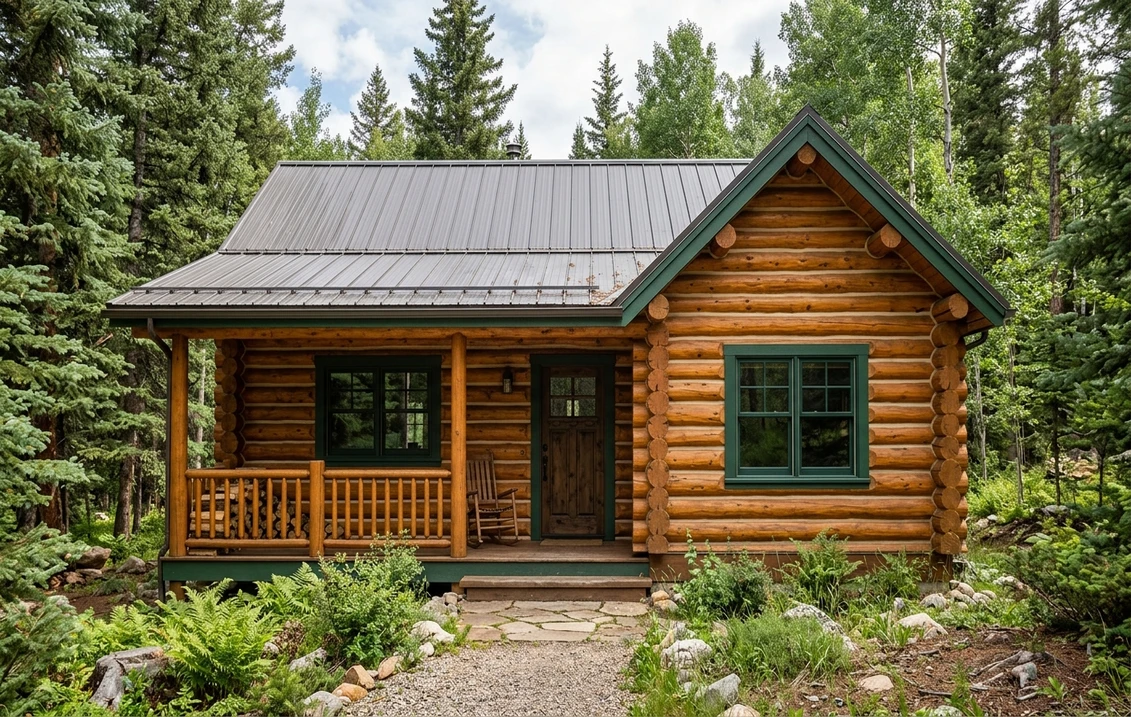
Quick answer: The best log cabin exterior colors in 2026 start with the log stain tone (honey, golden cedar, light natural, walnut, dark chestnut, or weathered gray), then add a contrasting trim and a coordinating roof. Top pairings are honey logs + forest green trim + charcoal roof, golden cedar logs + dark brown trim + green metal roof, and weathered gray logs + black trim + black roof. Semi-transparent and semi-solid stains protect the wood while letting the grain show. Preview any log stain and trim combo free on your own cabin photo with AI in 30 seconds, no signup.
FacadeColorizer is a free AI exterior paint and stain visualizer. A log cabin is a unique color project: instead of a solid body paint, the logs themselves carry the dominant tone through a stain, and your real color decisions are the stain shade, the trim (fascia, window casings, doors, posts), and the roof. Get those three to agree and the cabin reads warm and intentional; get them wrong and even beautiful logs look flat or dated.
This roundup gives you 12 best log cabin exterior color schemes for 2026, each built around a specific log stain tone with matching trim and roof colors, plus undertone guidance and a plain-English explanation of stain opacity. If you want broader single-color inspiration beyond log homes, see our companion guide to outside house color ideas for 2026. To see any stain on your actual cabin instantly, use the free exterior paint visualizer.
12 Best Log Cabin Exterior Color Schemes (2026)
Each row below is a complete log + trim + roof scheme. The "log stain" column names the dominant wood tone, the "undertone" tells you whether it leans warm or cool so you can match your trim, and "best use" notes the cabin style or setting where the combination shines. Stain tone names vary by brand (Sikkens, Sashco Capture, Olympic, Cabot, TWP), so treat each as a target color you can match at the store.
| Log Stain Tone | Undertone | Trim + Roof Pairing | Best Use |
|---|---|---|---|
| Honey Gold | Warm | Forest green trim + charcoal roof | Classic mountain cabin |
| Golden Cedar | Warm | Dark brown trim + green metal roof | Wooded lakeside |
| Light Natural | Warm-neutral | Bronze trim + brown roof | New-build modern log home |
| Cedar Tone | Warm-red | Black trim + black metal roof | High-contrast contemporary |
| Butternut / Amber | Warm | Hunter green trim + brown roof | Rustic woodland retreat |
| Medium Walnut | Warm-brown | Cream trim + charcoal roof | Refined craftsman cabin |
| Dark Chestnut | Deep warm | Tan trim + green metal roof | Traditional hunting lodge |
| Espresso / Dark Walnut | Deep neutral | Warm white trim + black roof | Modern luxury timber |
| Weathered Gray | Cool | Black trim + black roof | Coastal or Scandinavian look |
| Driftwood Gray-Brown | Cool-neutral | Charcoal trim + slate roof | Mountain modern |
| Redwood / Russet | Warm-red | Dark green trim + brown roof | Southwest / desert cabin |
| Two-Tone (light logs, dark chinking) | Warm + neutral | Bronze trim + charcoal roof | Historic chinked cabin |
Try it on your house
No photo? Try a sample
Stain names and the way they read on wood depend heavily on your log species (pine, cedar, cypress, spruce), the age of the logs, and how much sun the wall gets. The same can of "honey gold" looks amber on fresh pine and almost orange on aged cedar. Before you commit to a 5-gallon order, preview these stain tones and trim pairings on YOUR cabin, free.
Log Stain Opacity: Transparent, Semi-Transparent, Semi-Solid
Color is only half the decision on a log cabin. The other half is opacity, which controls how much wood grain shows through and how often you will need to re-coat. This is the same opacity logic used for decks, covered in depth in our deck stain colors guide. For logs specifically:
- Transparent / clear: Shows the most grain and natural log color but offers the least UV and water protection. On a full exterior it can fade in one to two seasons, so it is rarely the right choice for a whole cabin.
- Semi-transparent: The most popular log cabin choice. It adds rich color (honey, cedar, walnut) while letting the grain show, and protects far better than a clear coat. Expect to re-coat sun-exposed walls every three to five years.
- Semi-solid: More pigment, more protection, less visible grain. Ideal for older or weathered logs where you want even color and a longer maintenance interval. This is the direction to choose if your logs are mismatched or sun-bleached.
- Solid / opaque: Covers the grain almost completely, like paint. Some owners use a solid stain on trim and accents but keep the logs semi-transparent so the wood character survives.
A common winning formula in 2026 is a semi-transparent stain on the logs (grain visible, warm tone) paired with a solid stain or paint on the trim (crisp, high-contrast lines). That mix gives the cabin both rustic warmth and clean definition around windows and the roofline.
How to Match Trim and Roof to Your Log Tone
Because the logs are warm by nature, almost every successful log cabin scheme treats the logs as the 60% body color and uses trim and roof as the 30% and 10% in the classic exterior balance. The undertone rules that govern painted homes apply here too:
- Warm logs want a deep, slightly cool trim for contrast. Honey, cedar, and amber logs come alive against forest green, hunter green, or near-black trim. The cool green or black reads as the "shutter" of nature against the warm wood.
- Gray and driftwood logs want black or charcoal, not brown. Cool-toned logs clash with warm brown trim. Keep the whole scheme cool: black trim, slate or black roof, maybe a single warm wood door for relief.
- Pick the roof first if it already exists. A green metal roof pushes your trim toward green or dark brown; a black roof opens up almost any log tone; a brown roof wants warm logs and tan or cream trim, never gray logs.
- Use the door as your one accent. A red, deep green, or black front door is the cabin equivalent of the 10% pop. Keep it saturated and let everything else stay in the wood-and-roof family.
If you are coordinating logs with a separate painted addition, garage, or guest house on the property, our exterior house color combinations guide gives you 20 tested body, trim, and door trios with real Sherwin-Williams and Benjamin Moore codes so the painted structures echo the cabin's tone.
Best Roof Colors for a Log Cabin
The roof is the second-largest surface on most cabins, and a metal roof is increasingly the 2026 default for snow shedding and longevity. Here is how the common roof colors pair with log tones:
| Roof Color | Best Log Tone | Suggested Trim |
|---|---|---|
| Charcoal / Black metal | Any (honey to gray) | Black or forest green |
| Forest / hunter green | Honey, golden cedar, walnut | Dark brown or cream |
| Brown / bronze | Warm logs (honey, chestnut, redwood) | Tan, cream, or hunter green |
| Slate / gray | Weathered gray, driftwood, espresso | Charcoal or black |
| Rusted / Cor-Ten | Light natural, redwood, russet | Dark bronze or black |
Green roofs are the traditional mountain-cabin classic and never look dated over warm logs. Black metal is the fastest-growing modern choice because it pairs with every log tone and frames the wood like a picture. A brown roof is the riskiest because it can blend into warm logs and wash out the whole facade, so add light trim to break it up.
Color Schemes by Cabin Style
The 12 schemes in the table suit different cabin styles. Quick guidance:
- Classic mountain cabin: Honey or golden cedar logs, forest green trim, green or charcoal metal roof. The most timeless and resale-safe combination, especially in the Rockies, Smokies, and Adirondacks.
- Modern timber / luxury build: Espresso or dark walnut logs, warm white or black trim, black metal roof. Reads architectural and contemporary; pairs well with large glass.
- Coastal or Scandinavian: Weathered gray or driftwood logs, black trim, black or slate roof. The cool, restrained palette suits lakefront and northern climates.
- Rustic woodland retreat: Butternut, amber, or chestnut logs, hunter green trim, brown roof. Cozy and traditional, the "hunting lodge" look.
- Southwest / desert cabin: Redwood or russet logs, dark green trim, brown or rusted roof. The warm red tones echo desert rock and sunset light.
Whatever style you lean toward, the safest move is to keep the logs warm-neutral and put your personality in the trim and door. A neutral honey or walnut log tone with bold trim ages far better than a heavily tinted log stain that locks you into one look.
5 Log Cabin Color Mistakes to Avoid
Most log cabin color regrets come from the same handful of errors. Avoid these and almost any scheme above will land:
- Trim too close to the log tone. Brown trim on brown logs makes windows vanish. Trim needs to contrast the wood, usually darker green or black.
- Clear stain on the whole cabin. It looks great for one season, then UV strips the color and you are re-coating every year. Use semi-transparent at minimum.
- Cool gray logs with a warm brown roof. The classic clash. Keep gray logs in a fully cool scheme with black or slate.
- Over-tinted "orange" stain. A heavily pigmented honey or cedar stain can read garish orange on pine. Test on a hidden log first; go one shade more neutral than you think.
- Forgetting the chinking. On chinked cabins, the chinking is a real color decision. Light chinking against dark logs (or the reverse) is a two-tone scheme, not an afterthought.
How to Test a Log Stain Before You Commit
A stain that looks perfect on a 2-inch sample card can read completely different across an entire sunlit log wall. Use the process professional log-home finishers follow:
- Start with fixed elements. Roof, stone foundation, and any existing trim do not change. Pull your stain tone toward their temperature first.
- Preview the full scheme digitally. Upload a photo of your cabin to FacadeColorizer and apply log tone, trim, and roof together. Seeing all three on your real cabin eliminates most bad combinations before you buy anything.
- Brush real samples on hidden logs. Once the digital scheme looks right, apply candidate stains to a low or rear log to see grain interaction.
- Watch them for 48 hours. Check at dawn, noon, and dusk. Wood undertones shift dramatically with light, far more than painted surfaces.
- Confirm trim contrast. Stand back at the driveway. If the trim blurs into the logs, go darker; if the door disappears, saturate it.
Preview Any Log Cabin Color on Your Home - Free
Why gamble with a $5,000+ stain project across an entire cabin? FacadeColorizer lets you upload a photo of your log home and apply any log stain tone, trim color, and roof color in seconds, then compare three to five complete schemes side by side. Share the winner with your painting contractor, your log-home builder, or your partner before committing. The free tier includes 1 full HD simulation plus 3 variations, requires no signup, and works on phone or desktop. For broader inspiration beyond log homes, start with our outside house color ideas guide. Preview these log stains on YOUR cabin, free.
Related deep-dives in this hub
Frequently asked questions
What are the best exterior colors for a log cabin in 2026?
What stain opacity is best for log cabin exterior?
What trim color goes with honey or cedar log walls?
What is the best roof color for a log cabin?
Can I preview a log cabin stain color on my home before staining?
How many simulations is the 2026 Facade Color Barometer based on?
Trademarks mentioned (Sherwin-Williams, Benjamin Moore, Behr, Caparol, Brillux, Sto, Alpina, Valspar, PPG, Glidden, Dulux, Crown Trade, Sandtex, Farrow & Ball, Johnstone's, Leyland) are property of their respective owners. FacadeColorizer is independent and not affiliated with any of them. Nominative fair use under Lanham Act §1125.