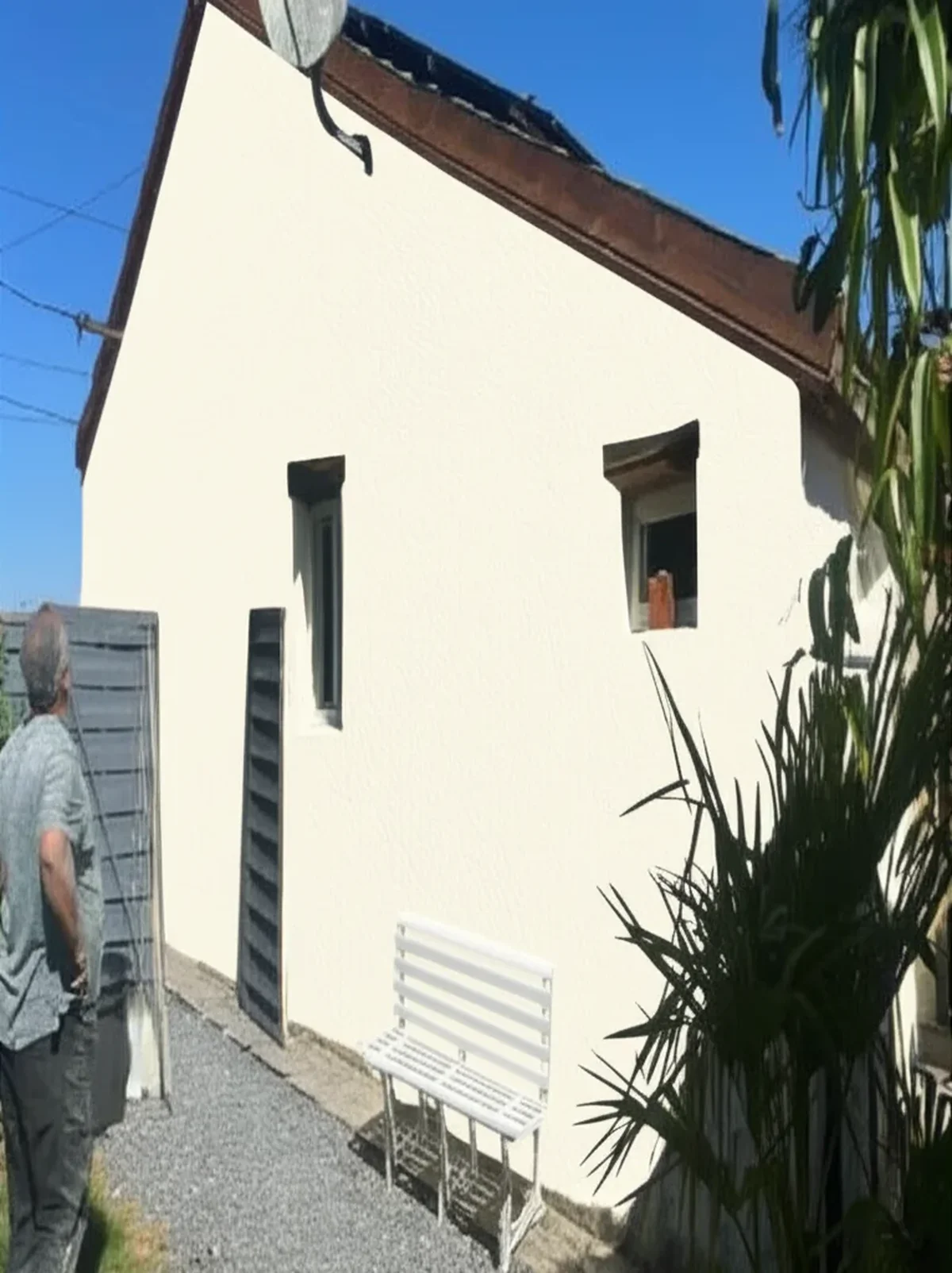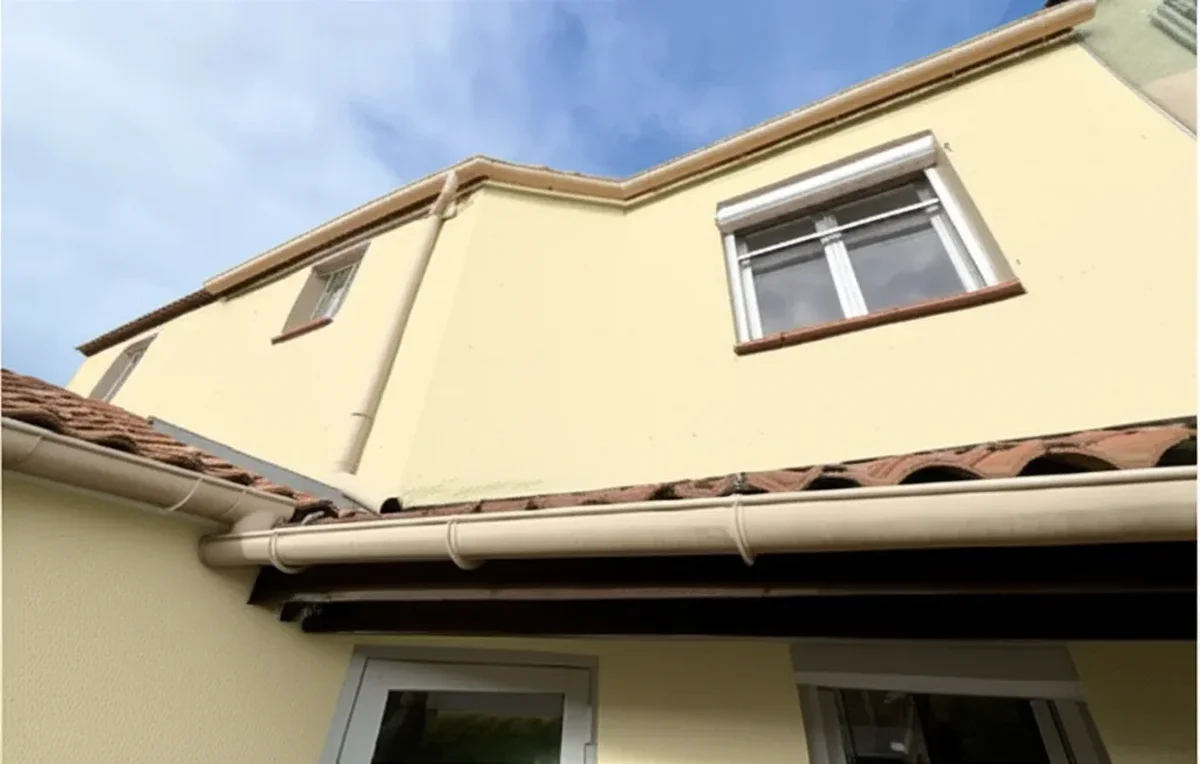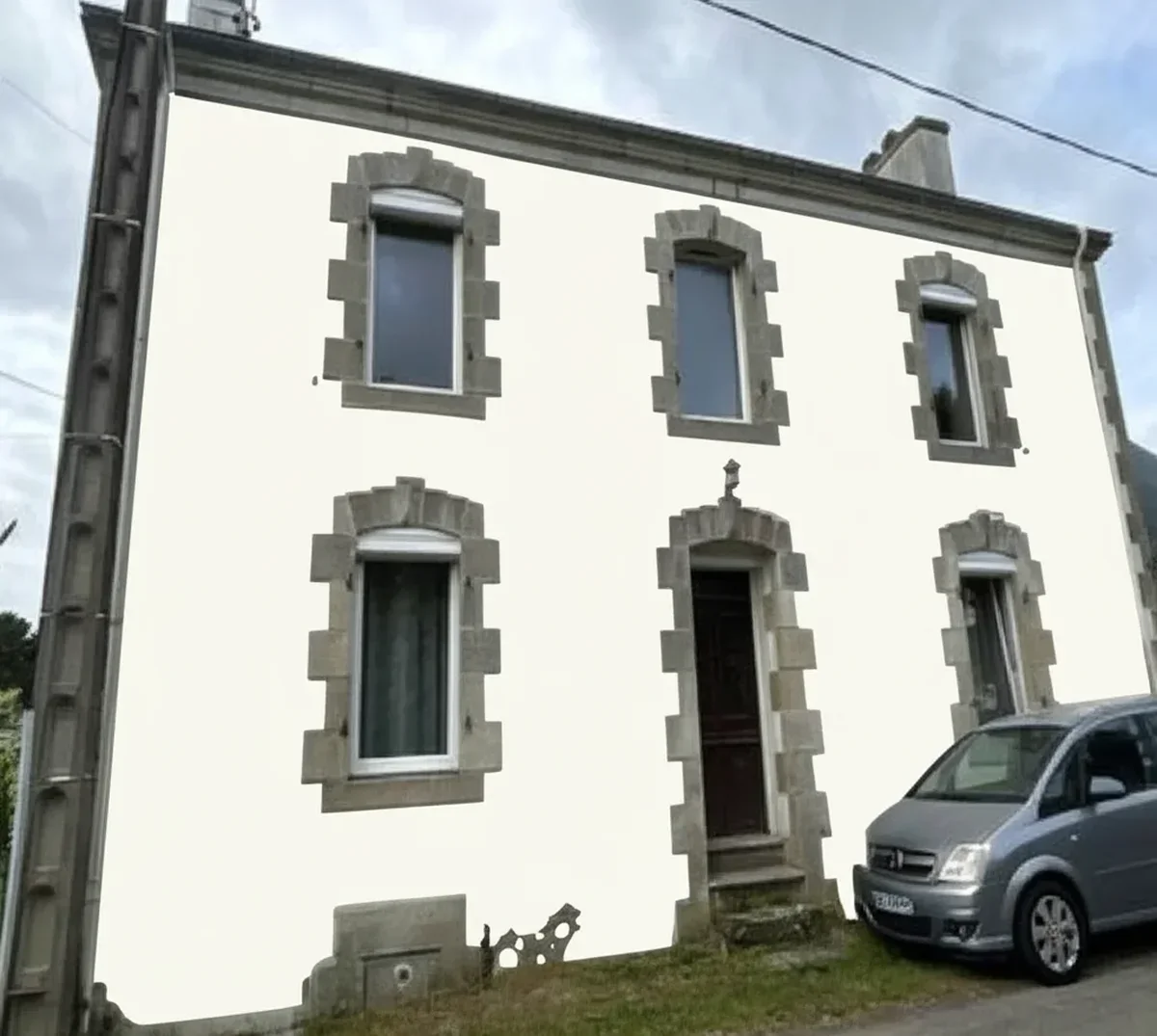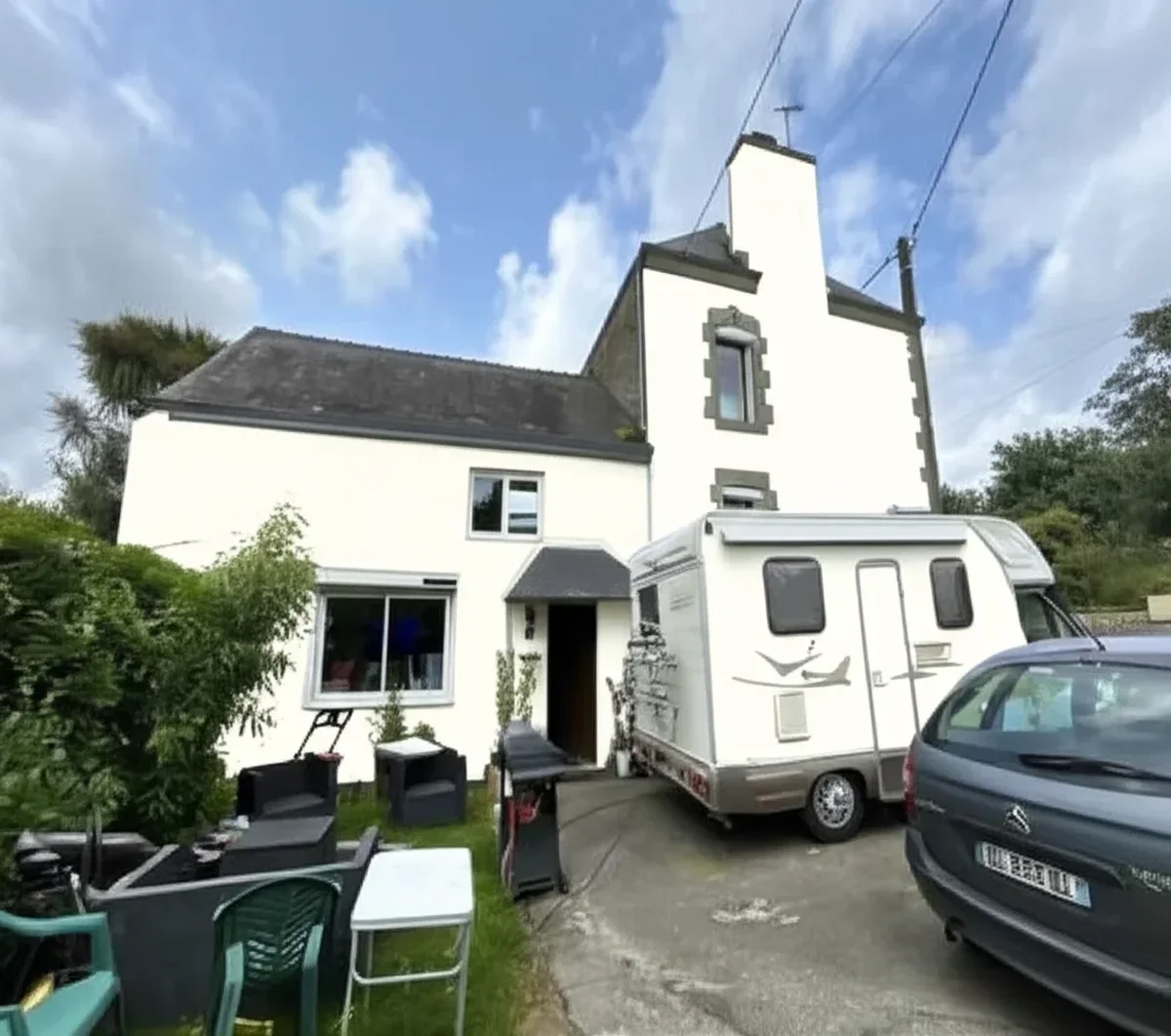
Try it on your house

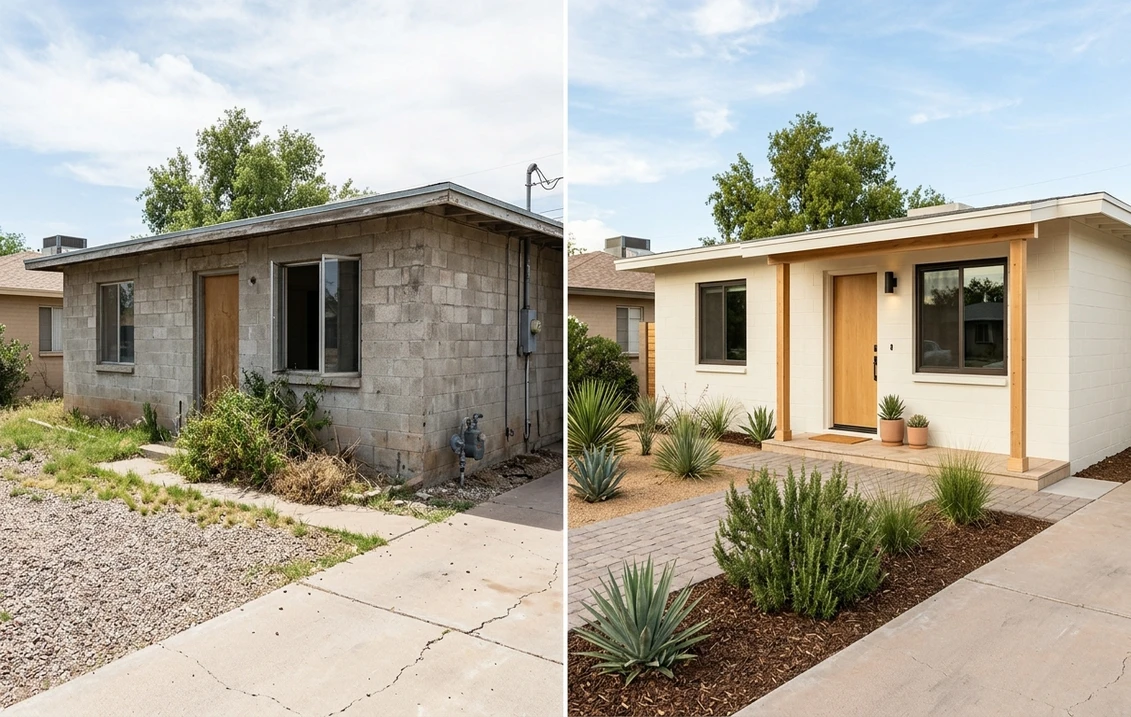
A bare cinder block house reads as unfinished even when the structure is solid. The gray concrete masonry units (CMU), the visible mortar grid, the chalky dust that rubs off on your hand: it all says "warehouse," not "home." The good news is that a cinder block house exterior makeover is one of the highest-impact, lowest-cost upgrades in masonry. You are not tearing anything down. A good masonry coating fills the porous texture, kills the gray, and turns a utilitarian box into a crisp modern, coastal, or Mediterranean facade. The hard part is committing to a color on a surface that swallows samples and costs a weekend to repaint.
This is a gallery of makeover directions, not a how-to. We will walk through six before-and-after color stories that work on block, why each one suits a particular block house, and how to see any of them on your own walls before you rent a sprayer. If you want the brush-and-primer mechanics, that is covered separately; here the question is simply: what should your block house become?
Upload one photo and preview a full makeover in about 30 seconds. Free preview: 1 HD render plus 3 variations.
Why cinder block is its own makeover problem
Block does not behave like siding or smooth stucco. Three things make the makeover decision different, and they all push you toward seeing the result before you buy paint:
- The texture eats light and color. The open, porous face of a CMU and the recessed mortar joints throw tiny shadows. A color that looks crisp on a chip lands a half-step darker and grayer on the wall, because you are seeing it across a shadowed, broken surface.
- The mortar grid never disappears. Even painted, the joint lines stay visible as a faint grid. That grid reads as "industrial" with cool grays and gets quieter (more residential) with warm, soft, light colors. Color choice is how you control whether the grid feels like a feature or a flaw.
- It is high-build, not a quick recoat. Bare block drinks the first coat. A real makeover means a masonry primer or block filler plus an elastomeric or acrylic masonry topcoat, so you are committing to more paint, more labor, and a harder color to undo than a wood-sided house. The cost of guessing wrong is real.
That is exactly why a digital preview earns its place here. The same surface traits that make block hard to sample by hand are easy to judge on a clear photo of your actual wall, in your actual light.
Six before-and-after directions for a block house
Each of these takes the same gray-block "before" and pushes it somewhere different. Match the direction to your roof color, your region, and how much you want the masonry grid to show.
| Direction | Body color feel | Best for | Trim and accent |
|---|---|---|---|
| Crisp coastal white | Warm soft white | Florida, Gulf, beach block homes | Black or bronze windows, natural wood door |
| Warm greige modern | Soft greige | Suburban block ranches | White trim, charcoal door |
| Charcoal contemporary | Deep warm charcoal | Flat-roof modern, ADUs, garages | White or light wood accents |
| Desert tan / adobe | Sandy warm tan | Southwest, Arizona, Texas | Terracotta roof, deep brown door |
| Sage green retreat | Muted sage | Wooded lots, cottage block homes | Cream trim, black hardware |
| Mediterranean two-tone | Cream body, warm white trim | Stucco-look block, arched entries | Clay tile roof, iron details |
Try it on your house
No photo? Try a sample
1. Crisp coastal white: from gray box to clean cottage
The most requested block makeover, and for good reason. A warm soft white (think a low-key off-white rather than a stark builder white) hides the most while still letting the mortar grid read as a gentle texture instead of an industrial one. On a Florida or Gulf Coast block house it instantly reads "beach cottage." Pair it with black or bronze window frames and a natural wood front door so the white does not feel flat. If you are weighing which white, our guide to the best white exterior shades compares the warm-versus-cool options that matter most on textured masonry.
2. Warm greige modern: the safe, sellable upgrade
If white feels too high-maintenance near landscaping or red soil, a soft greige is the workhorse. It is warm enough to dodge the cold "concrete" read, neutral enough to satisfy an HOA, and it hides dust and hose splash better than pure white. On a block ranch, greige body with white trim and a charcoal door is the combination that photographs well on a listing. For more body-and-trim pairings that translate to masonry, see our exterior house color combinations roundup.
3. Charcoal contemporary: lean into the box
Some block houses, especially flat-roof moderns, garages, and ADUs, look best when you stop fighting the geometry. A deep warm charcoal over the whole block turns the mortar grid into a deliberate gridded texture, almost like board-formed concrete. Keep accents light (white fascia, a pale wood door) so the dark body has somewhere to breathe. Dark colors hold heat, so this direction suits milder climates better than the desert. Browse more dark-facade ideas in our outside house color ideas hub.
4. Desert tan and adobe: blend with the Southwest
In Arizona, New Mexico, and West Texas, a sandy warm tan or soft adobe makes a block house look like it was always meant to be there. The warm tone bounces less heat than charcoal, ties into a terracotta or clay-tile roof, and the visible block grid reads almost like rammed earth. Finish with a deep brown or weathered-wood door. This is also the easiest direction to push toward a stucco-look two-tone if you want to soften the grid further.
5. Sage green retreat: block that disappears into the trees
For a block cottage on a wooded lot, a muted sage takes the building from "utility shed" to "tucked-in retreat." Green is forgiving on masonry because the natural variation in the block actually helps it read like a textured, organic surface rather than flat paint. Cream trim and black hardware keep it from going too soft. Sage has been one of the strongest exterior trends, and it sits especially well on block where you want the house to recede.
6. Mediterranean two-tone: cream body, warm-white trim
When a block house has arched openings or a tile roof, a two-tone Mediterranean scheme is the most dramatic transformation. A warm cream body with a brighter warm-white on banding, sills, or a parapet edge mimics the look of finished stucco and minimizes the industrial grid. Add a clay-tile roof and iron light fixtures and almost no one will read the walls as cinder block. If you like the layered look, our two-tone exterior ideas show how to place the second color so the grid works for you.
See coastal white, charcoal, or sage on your actual photo before you commit a single coat.
The best paint colors for a cinder block makeover
Because block is textured and porous, lean warm and slightly lighter than you think. The shadowed face darkens any color, so a swatch that looks just right on paper often lands a touch heavy on the wall. Practical starting points by direction:
- Coastal white: a warm soft white with a high light-reflectance value hides texture and stays bright without going stark.
- Greige: a balanced greige with a faint warm undertone reads neutral on masonry and resists the cold concrete cast.
- Charcoal: a deep warm charcoal rather than a blue-black, so the grid looks intentional and not grimy.
- Desert tan: a mid sandy tan that picks up a terracotta roof and reflects heat better than dark tones.
- Sage: a muted, grayed sage so the green reads as a soft natural neutral, not a saturated accent.
Whatever direction you pick, the finish matters as much as the hue on block: a flat or low-sheen masonry coating hides texture variation and minor imperfections, while higher sheens spotlight every shadow in the surface. For the full color-theory backbone behind these picks, our best exterior paint colors guide breaks down undertones, LRV, and what holds up outdoors.
Painted block vs painted brick: not the same job
People often lump cinder block in with brick because both are masonry, but the makeover plays differently. Brick has color and character you may want to keep or only soften (whitewash, limewash, German smear). Cinder block has almost no character to preserve: it is a flat gray you are usually trying to fully cover and elevate. That makes solid-color coatings the default on block, where on brick a translucent treatment is often the goal.
The surface prep also differs: bare block is thirstier and usually needs a dedicated masonry block filler before topcoat, where painted brick is often a recoat. If your "block" house is actually brick, or a mix, our complete painted brick exterior guide covers the brick side of the decision, including whether to paint at all.
See your makeover before you commit
A block makeover is a real commitment: more paint, harder prep, and a color that is a chore to undo. The smartest first step costs nothing. Upload a clear, straight-on photo of your block house into our exterior paint visualizer and see coastal white, charcoal, desert tan, or sage rendered on your actual walls, mortar grid and all. It is an AI preview, so it is a planning tool, not a paint match, but it rules out the directions you would have regretted in seconds and helps you walk into the store with a decision already made.
The free preview gives you one HD render plus three variations, which is enough to compare your two or three favorite directions side by side on the same facade before you spend a dollar on primer.
One photo, about 30 seconds. Free preview includes 1 HD render and 3 variations.
Frequently asked questions
What is the best color for a cinder block house exterior?
There is no single best color, only the best fit for your roof, region, and how much you want the mortar grid to show. The most popular and forgiving directions are a warm soft white for coastal homes, a warm greige for suburban ranches, a deep charcoal for flat-roof moderns, and a sandy desert tan for the Southwest. Lean slightly warm and a touch lighter than the chip, because the shadowed block texture darkens any color on the wall.
Does painting a cinder block house look cheap?
No, when it is done right it is one of the biggest curb-appeal upgrades in masonry. The "cheap" look usually comes from a thin coat that leaves the gray showing through, or from a high-gloss sheen that spotlights every shadow in the texture. A proper masonry primer or block filler plus a flat or low-sheen acrylic or elastomeric topcoat gives a smooth, finished, intentional result that reads as a real exterior, not a quick fix.
Will the mortar lines still show after I paint cinder block?
Yes, a faint grid stays visible because the joints are recessed below the block face. You control how it reads with color and sheen. Light, warm, low-sheen colors make the grid recede and look residential, while cool grays and glossier finishes emphasize it and read more industrial. If you want the grid to nearly disappear, a two-tone stucco-look scheme softens it the most.
Can I see a paint color on my own cinder block house before buying?
Yes. Upload a clear photo of your house to the FacadeColorizer exterior paint visualizer and you can see different colors rendered on your actual block walls, including the texture and mortar grid. It is an AI preview meant for planning rather than an exact paint match, but it lets you compare directions side by side. The free preview includes one HD render and three variations.
Disclaimer: FacadeColorizer is an independent paint visualization service and is not affiliated with or endorsed by any paint manufacturer. Color descriptions are general directions, not specific product recommendations, and on-screen renders approximate how a color may look. Cinder block (CMU) results vary with surface porosity, texture, prep, primer, sheen, and natural light, so always confirm with a physical test patch before committing to a full exterior. AI previews are a planning aid, not a paint match.