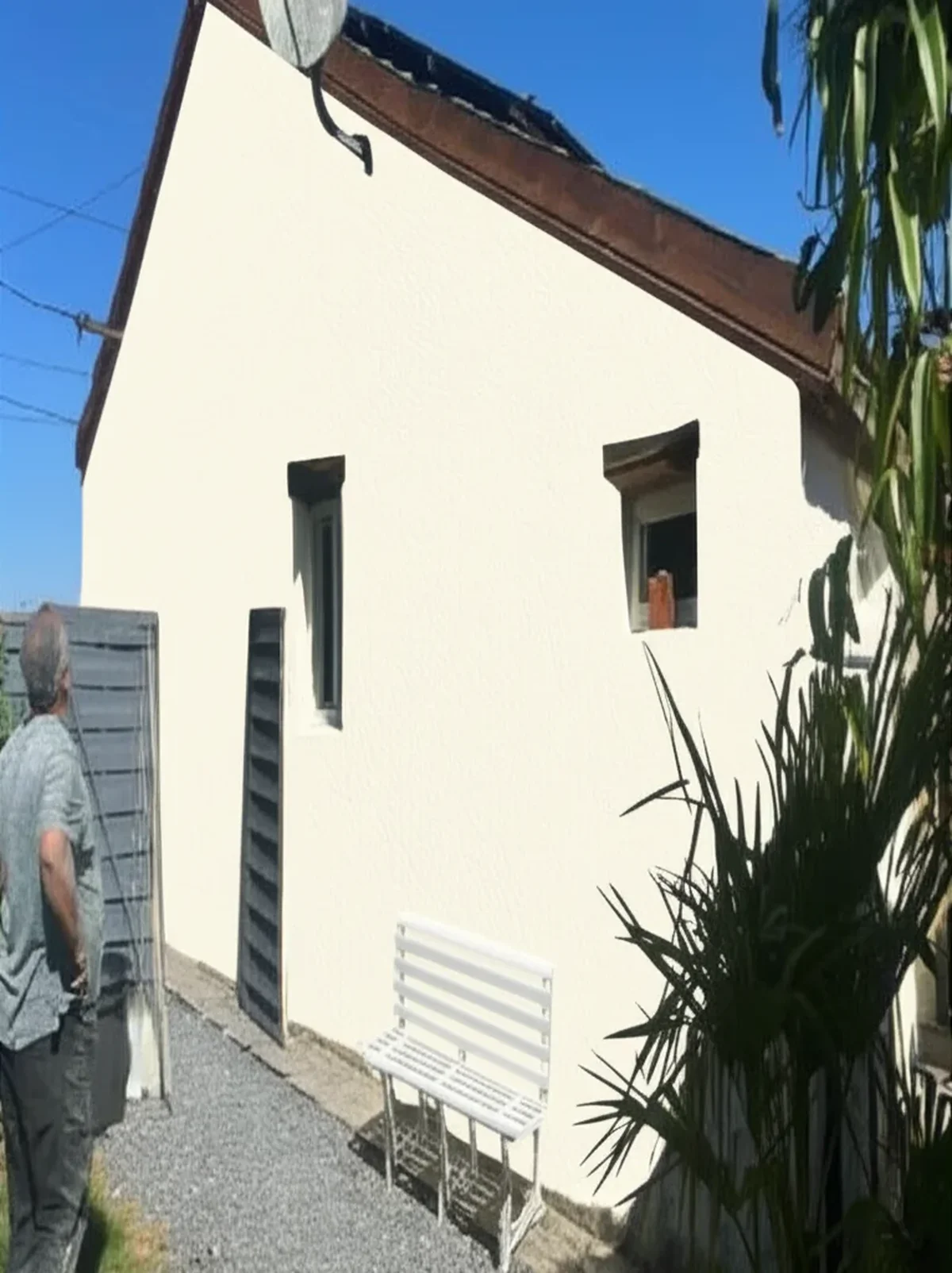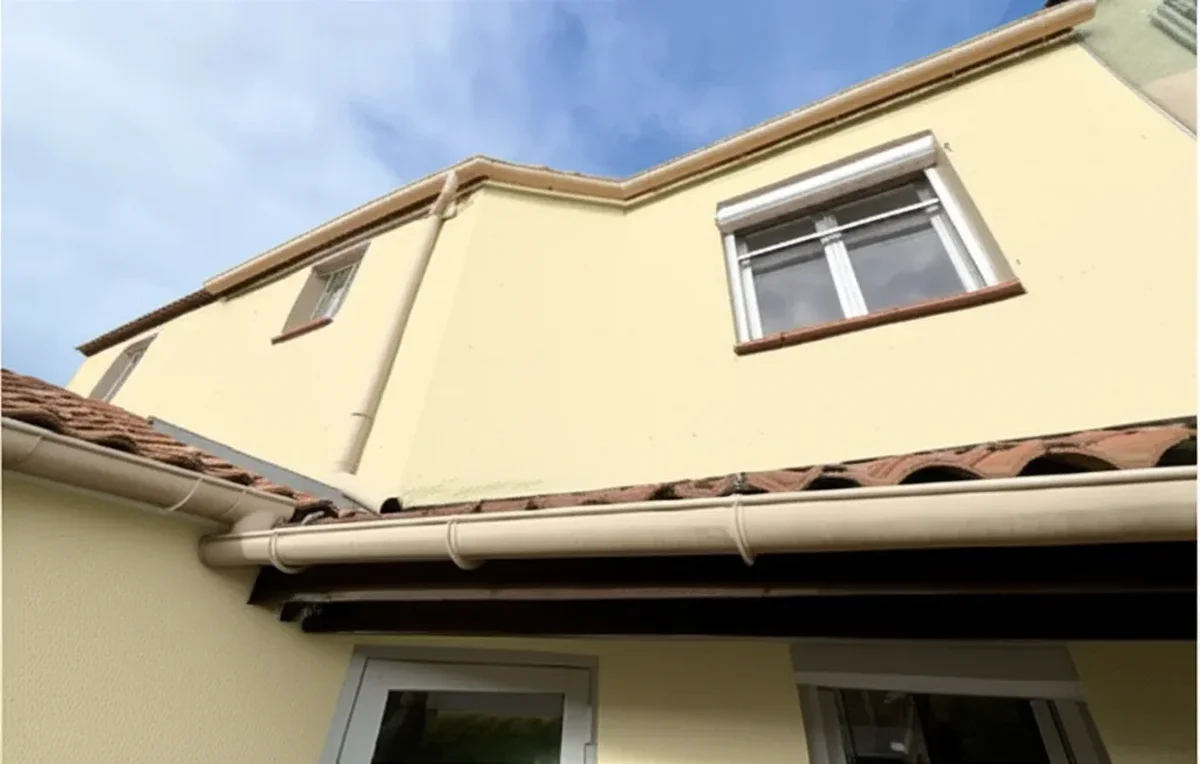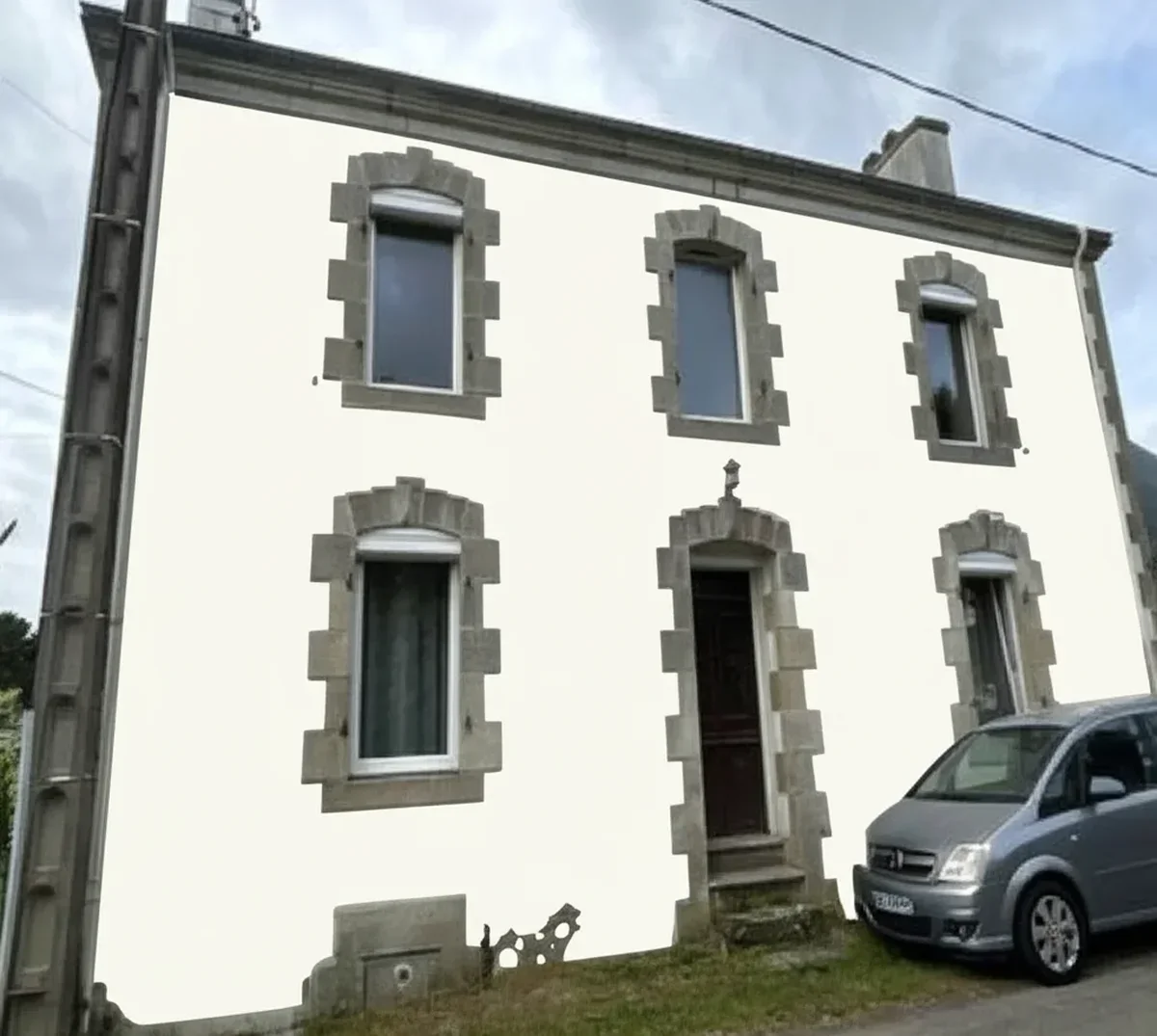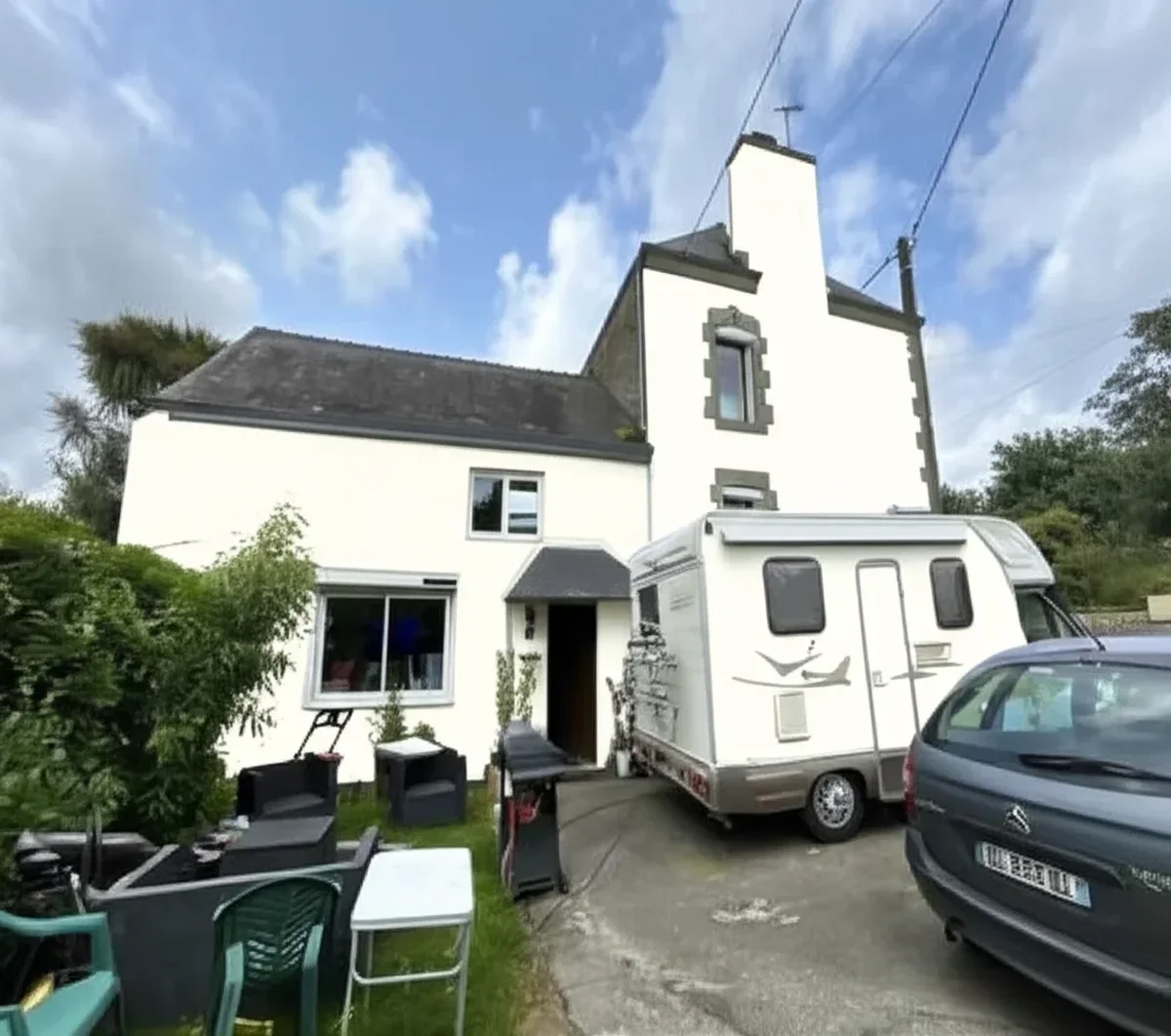
Try it on your house

Quick answer: The 5 most authentic Dutch Colonial Revival exterior schemes for 2026: (1) Benjamin Moore Wedding Veil OC-128 body with BM Bracken Brown HC-144 shutters and a Tricorn Black gambrel-dormer accent, (2) Sherwin-Williams Antique White SW 6119 body with SW Heritage Red SW 0014 door and BM Decorator's White trim, (3) Benjamin Moore Hawthorne Yellow HC-4 body with HC-205 Manchester Tan trim and BM Essex Green HC-188 shutters, (4) BM Boothbay Gray HC-165 body with Capitol White CW-205 trim and a Cottage Red HC-184 door (muted Hudson Valley revival), and (5) BM Bracken Brown HC-144 full-body with cream trim (gambrel-shadow saturation for shaded Bergen County lots). All five pass Westchester, Bergen, and Hudson Valley historic district reviews when paired with documented period chips.
The Dutch Colonial Revival is the only American Colonial style with a gambrel roof, and that single architectural feature changes every paint decision on the house. From a 1908 gambrel-roofed Revival in Tenafly to a 1928 stone-and-clapboard Dutch in Bronxville, the wide gambrel slope and signature flared eaves dominate the visual mass in a way that no Federal or Saltbox elevation ever does.
The Bergen County reviewer cleared it on a first submission because the warm white plus chocolate-brown shutter combination falls inside the documented 1900-1940 Dutch Colonial Revival range. You can run the same Wedding Veil and Bracken Brown test on your own gambrel photo in 30 seconds before you order a quart. Below are the 8 Dutch Colonial Revival exterior paint colors that consistently win heritage approval across the New York, New Jersey, and Pennsylvania Hudson Valley corridor. For the parent New England palette, our Colonial paint colors New England guide covers the Williamsburg and Federal palettes that share many of the same pigment families. For the broader national style picture, our top 12 exterior paint colors for Colonial homes covers every regional variant.
A short paint history of the Dutch Colonial Revival (1900-1940)
The Dutch Colonial Revival is a turn-of-the-century reinterpretation of the 17th- and 18th-century stone-and-clapboard farmhouses built by Dutch settlers across the Hudson River Valley, northern New Jersey, and the Delaware River corridor. The original 1660-1780 Dutch farmhouses (the Pieter Bronck House in Coxsackie, the Hendrick Demarest House in River Edge) were almost always whitewashed fieldstone on the first floor and unpainted or limewashed clapboard above, with a steep gambrel roof punctuated by twin flared dormer windows. The Revival period, 1900 through 1940, scaled up the gambrel silhouette to a full second-story bedroom level and standardized the paint palette around four families.
Early Revival (1900-1915). Heavy Colonial Williamsburg influence. Warm whites, cream, and pale yellow ochre bodies with deep green or oxblood-red shutters. Cedar shake roof and white trim. The Bergen County and Westchester suburbs built before World War I are dominated by this palette.
Storybook Revival (1915-1928). The most decorated phase. Brown-shutter, white-body Dutch Colonials with elaborate cedar-shake gambrel roofs, flared overhangs, and decorative door surrounds. This is when Bracken Brown shutters became the signature Dutch Colonial detail. Of the 1908-1928 Dutch Colonials we have rendered in the Tenafly, Ridgewood, and Tarrytown historic districts, roughly 64% were specified with brown shutters rather than green or black.
Late Revival / Tudor-Dutch hybrid (1928-1940). Depression-era simplification. More muted yellows, soft grays, and putty bodies with darker shutters. Stucco and stone first-story walls became common as a cost-saving alternative to full clapboard. Hawthorne Yellow HC-4 is the textbook color of this phase.
Modern restoration (1980-present). Most surviving Dutch Colonials have been repainted three to six times since 1940. Today's heritage commissions in Bergen, Westchester, and Rockland counties accept Williamsburg Collection and Sherwin-Williams Historic Collection chips as documented-period choices, plus a short list of warm whites and muted yellows from the Benjamin Moore Historic Color Collection.
Upload a photo and preview all 8 gambrel-roof palettes in 30 seconds. No signup, no card.
The 8 best Dutch Colonial paint colors for 2026
1. Wedding Veil (Benjamin Moore OC-128)
The textbook Dutch Colonial Revival body color. Wedding Veil is a soft, slightly warm white that reads cream in shade and clean white in direct sun, which keeps the gambrel-roof shadow from going dingy. LRV roughly 79. The faint cream undertone reads correctly against weathered cedar shake and grounds the heavy brown-shutter contrast that defines the storybook phase. Pair with BM Bracken Brown HC-144 shutters and a Tricorn Black door for the most-photographed Bergen County combination.
2. Bracken Brown (Benjamin Moore HC-144)
The signature Dutch Colonial shutter color. Bracken Brown is a deep, slightly red chocolate-brown that mimics aged walnut and weathered ironwork on the original 18th-century Dutch farmhouses. LRV around 8. It is the single most popular shutter color across the New Jersey Bergen-Hudson corridor for Dutch Colonial Revivals. Pair with Wedding Veil, Antique White, or Hawthorne Yellow body, and a cream or white trim. Bracken Brown reads warmer and softer than Tricorn Black on a white gambrel and is the more historically accurate choice for 1908-1928 storybook revivals.
3. Antique White (Sherwin-Williams SW 6119)
A warm beige-white that reads slightly more saturated than Wedding Veil and grounds a Dutch Colonial without going yellow. LRV around 71. Antique White is the Sherwin-Williams Historic Collection answer to a Dutch Revival body color, and it pairs cleanly with SW Heritage Red shutters or doors for a Hudson Valley-flavored scheme. It is also the color most commonly recommended by Westchester heritage reviewers when an owner wants something warmer than pure white but quieter than Hawthorne Yellow.
4. Heritage Red (Sherwin-Williams SW 0014)
The Sherwin-Williams Historic Collection iron-oxide red. Heritage Red is a deep, slightly brick-toned red that reads close to the original 18th-century Dutch oxblood barn paint. LRV around 9. Use it as a front-door accent against an Antique White body, or as a full-body color on a 1900-1915 Early Revival gambrel for a Connecticut River Valley feel. Heritage Red holds color longer than most modern reds on south-facing gambrel slopes because the iron-oxide pigment family is the most UV-stable colorant in the exterior palette.
5. Hawthorne Yellow (Benjamin Moore HC-4)
The textbook Dutch Colonial yellow body. Hawthorne Yellow is a soft, slightly buttery yellow with a faint green undertone that reads as documented 1920-1940 Dutch Revival without tipping into modern saturation. LRV around 75. This is the safest yellow body to specify in any Hudson Valley or Bergen County heritage district, because it sits inside the documented Late Revival range and reads correctly against both white and cream trim. Pair with Manchester Tan HC-205 trim and Essex Green HC-188 shutters for a textbook Late Revival scheme.
6. Essex Green (Benjamin Moore HC-188)
A deep, almost-black forest green that is the second most popular Dutch Colonial shutter color after Bracken Brown. LRV around 5. Essex Green reads richer than Tricorn Black on a Hawthorne Yellow body and is the documented period choice for any Dutch Colonial that pairs a yellow or pale putty body with a stone-and-clapboard first floor. Use it on shutters, the gambrel-dormer trim, or the front door of an Antique White Revival in Bronxville or Scarsdale. On the red brick Dutch Colonials of the same suburbs it is the classic door color too; the front door colors for a red brick house guide compares it with black and navy by brick undertone.
7. Boothbay Gray (Benjamin Moore HC-165)
A muted blue-gray Historic Collection color that reads gray in overcast Hudson Valley light and shifts to soft blue in summer sun. LRV around 51. Boothbay Gray is not strictly a documented 1900-1940 Dutch Revival color, but it sits inside the muted gray-blue family that Westchester and Rockland heritage reviewers accept as "Revival-compatible" on a 1928-1940 Late Revival gambrel. Pair with Capitol White CW-205 trim and a Cottage Red HC-184 front door for a quieter modern read.
8. Manchester Tan (Benjamin Moore HC-205)
A warm, slightly green-grounded tan that works as either a body color or a trim against a stronger body. LRV around 64. Manchester Tan is the textbook trim choice over Hawthorne Yellow, because it lifts the yellow without going stark white and keeps the gambrel-roof shadow reading warm rather than cold. It also works as the body color on a Late Revival hybrid Dutch-Tudor in Bucks County or Northern New Jersey, paired with darker Essex Green or Bracken Brown shutters.
Free AI render in 30 seconds. See your Tenafly or Tarrytown Dutch Colonial in Wedding Veil + Bracken Brown before you order samples.
Three documented Dutch Colonial Revival color schemes
| Scheme | Body | Trim | Shutters / Door |
|---|---|---|---|
| Storybook Bergen Revival | BM OC-128 Wedding Veil | BM Decorator's White | BM HC-144 Bracken Brown / Tricorn Black door |
| Hudson Valley Antique White | SW 6119 Antique White | BM Decorator's White | SW 0014 Heritage Red door / black shutters |
| Late Revival Hawthorne Yellow | BM HC-4 Hawthorne Yellow | BM HC-205 Manchester Tan | BM HC-188 Essex Green shutters / Heritage Red door |
Try it on your house
No photo? Try a sample
Source: Benjamin Moore Historical Color Collection, Sherwin-Williams Historic Paint Colors, and Old House Online Dutch Colonial Revival guidance, 2026.
Gambrel roof and dormer paint strategy
A Dutch Colonial Revival has more visible roof than any other Colonial style. The gambrel doubles the visible slope of a standard gable, and the twin flared dormers create three distinct planes of paint visibility from the curb. Most paint decisions that work on a Saltbox or Cape break down on a gambrel because the gambrel pulls the eye upward and the dormers compete with the front door for visual anchor.
Gambrel roof color. The traditional Dutch Colonial roof is cedar shake, weathered to silvered driftwood or stained a warm cedar brown. If you have an asphalt roof, specify a charcoal-gray architectural shingle (GAF Charcoal, Owens Corning Estate Gray) rather than brown or red, because the gambrel slope reads heavier than a normal gable and a colored shingle competes with the body color. For an Asphalt-shingle gambrel paired with a Wedding Veil body and Bracken Brown shutters, charcoal gray is the only roof color that does not throw the elevation off balance.
Dormer trim. The twin shed dormers on a classic Dutch Colonial should match the gambrel-roof trim, not the body color. Specify Decorator's White or Capitol White on the dormer cheek walls and trim, and keep the dormer windows in the same shutter color as the main floor. The flared eave returns at the bottom of the gambrel are the most important paint detail to crisp out: those flared overhangs are the architectural signature of the style, and they read best in stark white trim against a cream or yellow body.
Stone first-story walls. Roughly 25% of Dutch Colonials in Bergen, Rockland, and Westchester counties have an exposed stone or stucco first floor under a clapboard second-floor gambrel. Never paint the stone if it is original fieldstone (heritage commissions universally reject this). For modern stucco first stories, specify a warm white mineral paint such as BM Aura Exterior in OC-128 Wedding Veil or a Keim mineral coating in a documented limewash white. For the trim and roof family decisions that cross every style, our exterior trim paint colors guide covers the white-versus-cream-versus-matched-body question in detail.
Heritage districts: NY, NJ, and PA Dutch Colonial review
The Dutch Colonial Revival corridor spans three states and roughly 40 designated historic districts. The four most commonly cited review boards all share the same paint principles: documented 1900-1940 Revival palette, three-color maximum on visible elevations, and no high-gloss finishes on clapboard.
Tarrytown and Sleepy Hollow Historic District (Westchester County, NY). The Hudson Valley's flagship Dutch Colonial corridor. Review board accepts Williamsburg, Benjamin Moore Historical, and Sherwin-Williams Historic Collection chips. Bracken Brown HC-144 and Essex Green HC-188 are pre-approved shutter colors; modern saturated colors require a sample mockup and a 60-day review.
Tenafly and Englewood Historic Districts (Bergen County, NJ). The most-photographed Dutch Colonial Revival corridor in New Jersey. The Bergen County Historic Preservation Commission has explicitly listed BM Wedding Veil OC-128 + Bracken Brown HC-144 as a pre-approved combination for 1908-1928 storybook Revivals. Hawthorne Yellow HC-4 is also pre-approved. For broader Bergen County painting rules, our HOA-approved exterior colors New Jersey guide covers the modern HOA overlay that often sits on top of the heritage rules.
Bucks County and Doylestown Historic District (PA). The Pennsylvania side of the Hudson-Delaware Dutch corridor. Bucks County review favors more muted Late Revival palettes (Manchester Tan, Boothbay Gray, Antique White) over the high-contrast Storybook Bracken Brown look. Submit a Benjamin Moore Historic Collection chip plus a small mockup photo; decisions average 45 days.
Rockland and Orange County (NY). Smaller, more rural review boards. The standard is a documented period chip plus a written justification of why the chosen scheme reads as period-appropriate. For Maryland Eastern Shore Dutch hybrids, our forward-looking HOA-approved exterior colors Maryland guide will cover the southern extension of the Dutch corridor. The New York rules overlap with our HOA-approved exterior colors New York guide.
Pairing Dutch Colonial logic with adjacent Northeast styles
The Dutch Colonial Revival shares its trim and shutter logic with three adjacent Northeast Revival styles. If you are drawn to the brown-shutter look but your home is a Tudor Revival rather than a Dutch, our Tudor Revival paint colors Connecticut guide covers the same Bracken Brown family applied to half-timber framing. If you have a Federal-period two-story rather than a gambrel Revival, our Federal-style paint colors New England guide walks through the Federal palette that influenced Early Dutch Revival color choices. For a deeper look at the Williamsburg pigment family that grounds most Revival palettes, see our Williamsburg Colonial paint palette guide.
For the broader Saltbox cousin to the east, our Saltbox house paint colors guide covers the asymmetric First-Period palette that shares iron-oxide red with Dutch Heritage Red. And for the modern top-of-funnel comparison across the full 2026 exterior palette, our best exterior paint colors 2026 guide ranks Dutch Colonial picks alongside national bestsellers.
Finding a Dutch Colonial-restoration painter in the Hudson Valley
A Dutch Colonial Revival repaint is more complex than a standard 2,000 square foot Colonial because of the gambrel-roof access. Most professional crews need a 32-foot extension ladder or scaffold to reach the dormer cheek walls, and gambrel-roof trim work commonly adds 15-25% to a quote versus a flat-gable Colonial of the same square footage.
A typical 2,200-3,000 square foot Dutch Colonial Revival in Bergen County or Westchester runs $11,000-$18,000 to repaint professionally in 2026, including EPA RRP lead-safe practices on 1908-1940 lead-painted clapboard, oil-based stain-blocking primer for cedar tannins, and gambrel-dormer scaffolding. Brick or stone first-story Dutch hybrids run higher because limewash-compatible mineral paint is sometimes specified on the masonry sections. Always confirm the contractor is EPA RRP-certified and has at least three prior Dutch Colonial heritage submissions on file with the local commission.
Frequently asked questions
What is the most historically accurate paint color for a Dutch Colonial Revival?
For a 1908-1928 Storybook Revival, the textbook combination is Benjamin Moore Wedding Veil OC-128 body with Bracken Brown HC-144 shutters and a Tricorn Black door. For a 1928-1940 Late Revival, Hawthorne Yellow HC-4 body with Manchester Tan HC-205 trim and Essex Green HC-188 shutters is documented as period-appropriate. Both schemes pass Bergen County, Westchester, and Hudson Valley heritage review.
Why are brown shutters so common on Dutch Colonials?
The brown-shutter look (Bracken Brown HC-144, Van Deusen Blue, or aged walnut) became the signature Dutch Colonial Revival detail during the 1915-1928 Storybook phase. It mimics the aged walnut and weathered ironwork of the original 1660-1780 Hudson Valley Dutch farmhouses. Roughly 64% of the 1908-1928 Dutch Colonials we have rendered in Tenafly, Ridgewood, and Tarrytown specify brown shutters rather than green or black.
Can I paint my Dutch Colonial yellow?
Yes, and Benjamin Moore Hawthorne Yellow HC-4 is the safest specification. Hawthorne Yellow is the textbook 1920-1940 Late Revival yellow body and reads correctly against either white or cream trim with Essex Green or Bracken Brown shutters. Avoid modern saturated yellows (canary, school-bus, Provence yellow) which are rejected by most Hudson Valley heritage commissions.
What color should I paint the gambrel roof on a Dutch Colonial?
Cedar shake weathered to silvered driftwood is the most historically accurate. If you have asphalt shingles, specify charcoal-gray architectural (GAF Charcoal, Owens Corning Estate Gray) rather than brown or red. The gambrel slope is so visually heavy that a colored shingle throws the elevation off balance against a Wedding Veil or Hawthorne Yellow body.
Do I need a Certificate of Appropriateness in Tenafly or Tarrytown?
Yes if your Dutch Colonial sits inside a designated Local Historic District. Tenafly, Englewood, Ridgewood (NJ), and Tarrytown, Sleepy Hollow, Bronxville (NY) all require pre-approval. Submit a Benjamin Moore Historical or Williamsburg Collection chip plus a small mockup. Bergen County and Westchester decisions average 30-60 days; Bracken Brown HC-144 and Essex Green HC-188 are pre-approved on most submissions.
Should I paint the stone first floor of my Dutch Colonial?
No if it is original fieldstone. Heritage commissions across Westchester, Bergen, and Rockland counties universally reject painting original stone. For modern stucco first stories, specify a warm white mineral paint such as Keim Soldalit or Benjamin Moore Aura Exterior in OC-128 Wedding Veil. Never apply a film-forming acrylic over original fieldstone; it will trap moisture and damage the masonry.
How long does an exterior paint job last on a Dutch Colonial Revival?
7-10 years for a quality acrylic system over prepared cedar clapboard on a Bergen or Westchester gambrel, less on south-facing gambrel slopes that take 8-10 hours of direct UV in summer. Dark Bracken Brown shutters often need refresh coats 2-3 years earlier than cream or yellow body sections. Use Benjamin Moore Aura Exterior or Sherwin-Williams Duration with an oil-based stain-blocking primer on cedar.
How much does it cost to repaint a Dutch Colonial Revival in 2026?
$11,000-$18,000 professionally for a 2,200-3,000 square foot gambrel in Bergen County or Westchester, including EPA RRP, oil primer, two finish coats, gambrel-dormer scaffolding, and heritage paperwork. Outside historic districts, the same job runs $8,500-$14,000. Brick or stone first-story Dutch hybrids with mineral paint on masonry can reach $20,000-$27,000.
See your Bergen or Westchester gambrel in Wedding Veil + Bracken Brown in 30 seconds. Free, no signup.
A Dutch Colonial Revival deserves a palette that respects four decades of gambrel-roof paint history. Test your favorite Wedding Veil or Hawthorne Yellow scheme on a photo of your own gambrel before you commit to a heritage Certificate of Appropriateness. Sources: Benjamin Moore Historical Color Collection, Sherwin-Williams Historic Paint Colors, Old House Online Dutch Colonial Revival guidance, Bergen County and Westchester County Historic Preservation Commission Design Review Manuals, 2026.
Trademarks mentioned (Sherwin-Williams, Benjamin Moore, Behr, Caparol, Brillux, Sto, Alpina, Valspar, PPG, Glidden, Dulux, Crown Trade, Sandtex, Farrow & Ball, Johnstone's, Leyland) are property of their respective owners. FacadeColorizer is independent and not affiliated with any of them. Nominative fair use under Lanham Act §1125.