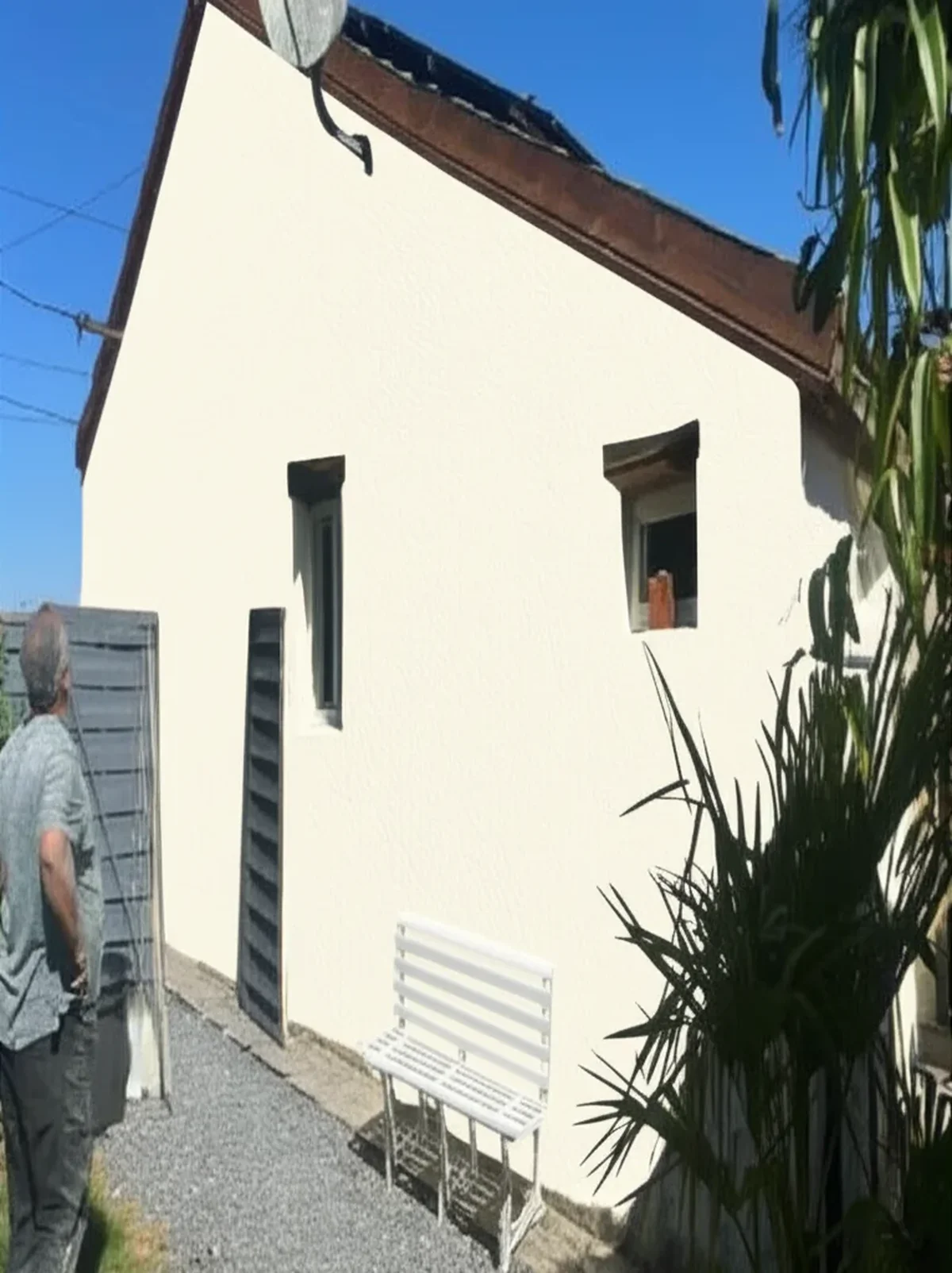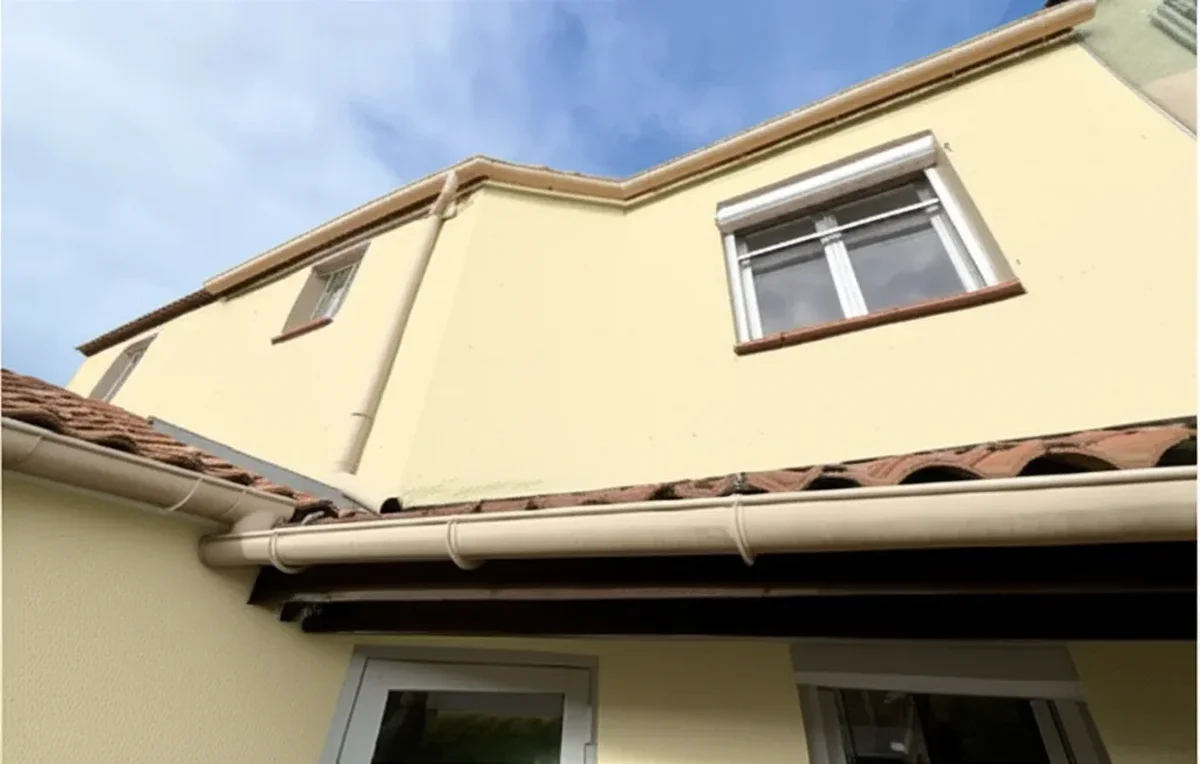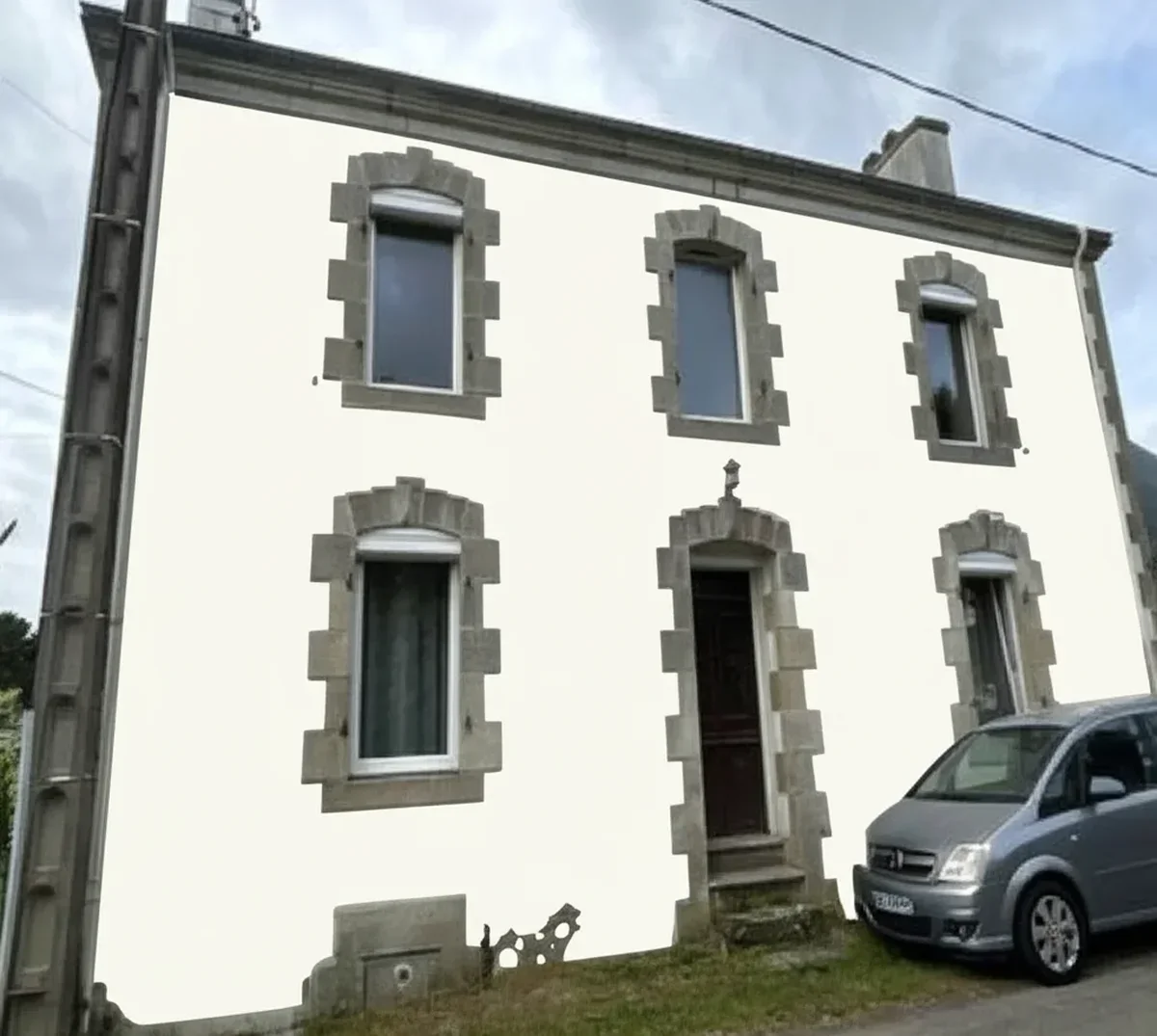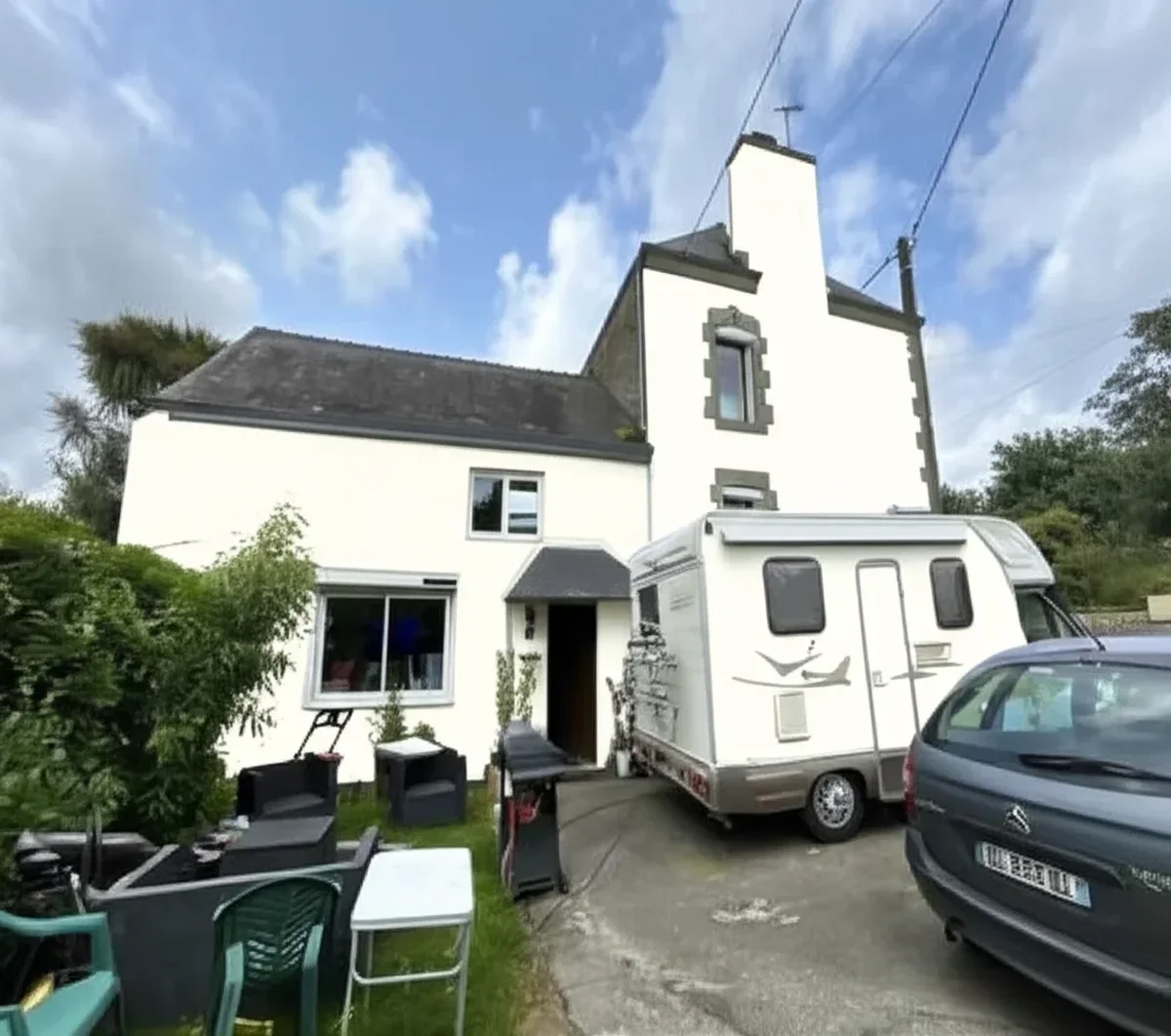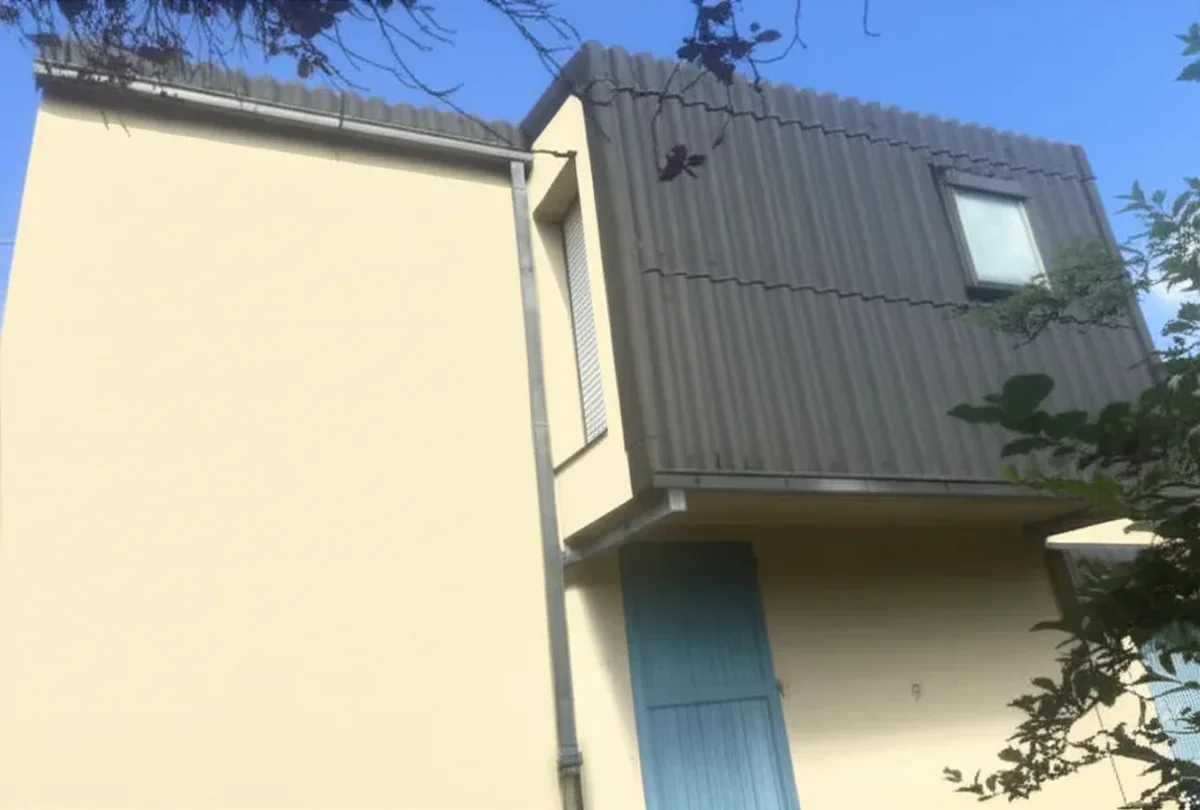
Try it on your house

Quick answer: The 5 most authentic Saltbox exterior paint schemes for 2026: (1) Benjamin Moore CW-150 Wetherburn's Tavern Cream body with CW-690 Wythe Blue trim and a Tricorn Black door, (2) HC-181 Heritage Red full-body with CW-205 Capitol White trim (classic 1700s Massachusetts barn-red Saltbox), (3) silvered weathered cedar shingle with HC-184 Cottage Red door, (4) HC-104 Cement Gray body with Capitol White trim and HC-65 Currant Red door (muted Federal-revival), and (5) HC-65 Currant Red full-body with cream trim (deep iron-oxide saturation for Connecticut River Valley Saltboxes). All five pass Massachusetts Historic District Commission review for First-Period structures.
The Saltbox is the most photographed, most painted, and most paint-regulated house in New England. From the 1681 Rebecca Nurse Homestead in Danvers to the 1717 Captain Trask House in Salem, the asymmetric Saltbox roofline is the architectural signature of early Massachusetts, Connecticut, and New Hampshire.
The HDC approved it on the first review, and the homeowner avoided a six-month appeal cycle that is common when an owner tries a non-documented modern white on a First-Period structure. You can run the same Saltbox-authentic palette test on your own home photo in 30 seconds before you order quarts. Below are the 8 Saltbox-authentic exterior paint colors that consistently survive heritage review and read correct to a 1650-1750 First-Period house. For the broader regional context, our New England Colonial paint colors guide covers the full 1620-1820 timeline. For the national Colonial perspective, see our top 12 Colonial home exterior paint colors.
A short history of the Saltbox (1650-1750)
The Saltbox is an Early Colonial vernacular form, not a designed style. It evolved out of English post-medieval framing traditions adapted to New England climate, lumber, and tax policy between roughly 1650 and 1750. The defining geometry is a steep front gable that slopes long and low to the back, often only one story tall at the rear eave. The shape is exactly that of the wooden salt containers hung on 17th-century kitchen walls, which is where the name comes from.
Asymmetric roof and lean-to addition. Most surviving Saltboxes did not start as Saltboxes. They were originally single-room-deep two-story houses with a symmetric gable roof. Twenty or thirty years after construction the family added a lean-to across the back to expand the kitchen and add a borning room. The extended rear roof slope was the cheapest way to weather the addition, and the silhouette stuck. By the 1690s carpenters were building purpose-designed Saltboxes from day one.
Common in Massachusetts, Connecticut, and New Hampshire. The form is concentrated in coastal Essex County MA (Salem, Danvers, Ipswich, Newburyport), the Connecticut River Valley (Old Wethersfield, Deerfield, Hatfield), and southern New Hampshire (Portsmouth, Exeter). Rhode Island has fewer surviving examples because of 18th- and 19th-century rebuild cycles. Maine has Saltboxes too, but they tend to be later and built in cedar shingle rather than clapboard.
Original cladding and finish. Walls were oak or Eastern white pine clapboard or split cedar shake, almost always left unpainted for the first generation to weather to silvered driftwood gray. By the 1690s wealthier owners painted clapboard in iron-oxide Spanish brown, yellow ochre, or limewash. White lead paint on Saltbox bodies did not become common until the mid-18th century, which is why a 1700 Saltbox in textbook-white modern paint reads anachronistic to any heritage commission familiar with First-Period architecture.
Upload a photo and preview all 8 Saltbox-authentic colors in 30 seconds. No signup, no card.
The 8 best Saltbox-authentic exterior paint colors for 2026
1. Wetherburn's Tavern Cream (Benjamin Moore CW-150)
A warm putty-cream pulled from an 18th-century Williamsburg tavern. LRV roughly 62. Wetherburn's Tavern Cream reads cream in shade and pale yellow ochre in full sun, which is exactly how lead-and-linseed paint behaved on a 1740 Saltbox. The cream undertone hides cedar tannin bleed-through better than a pure white, which makes it the safest first specification on any First-Period clapboard. Use over a Sherwin-Williams ProBlock or Benjamin Moore Fresh Start oil-based primer for tannin blocking.
2. Heritage Red (Benjamin Moore HC-181)
A deep, slightly muted barn red that sits exactly between Cottage Red HC-184 and Currant Red HC-65 in saturation. LRV around 7. Heritage Red is the modern Benjamin Moore equivalent of the iron-oxide Spanish brown that dominated late-17th-century Saltbox paint. Use as a full body color over cedar clapboard with Capitol White CW-205 trim and a Tricorn Black door for the textbook 1700s painted-Saltbox look. Heritage Red passes both Old Sturbridge Village and Connecticut River Valley historic district review when the heritage commission accepts a painted body rather than weathered cedar.
3. Capitol White (Benjamin Moore CW-205)
A warm off-white pulled from the Williamsburg Capitol building, with just enough cream to look correct against weathered cedar shake and lime mortar. LRV around 81. Capitol White is the safest trim color on any Saltbox, whether the body is Heritage Red, Cottage Red, Cement Gray, or Wetherburn's Tavern Cream. Avoid pure modern whites such as Chantilly Lace or Decorator's White on First-Period clapboard because they read 2010 builder-spec rather than 1740 documented.
4. Cement Gray (Benjamin Moore HC-104)
A warm dove gray with a faint green undertone that mimics weathered limewash on a 1750 painted Saltbox. LRV around 56. Cement Gray is the muted alternative when an owner wants something quieter than cream and warmer than cool modern grays. It pairs naturally with Capitol White trim and either Tricorn Black or Currant Red on the door. This is the safest "gray Saltbox" specification we have submitted to Greater Boston historic district commissions in 2025-2026.
5. Cottage Red (Benjamin Moore HC-184)
The brighter, slightly warmer iron-oxide red that defines the Massachusetts and Vermont October-foliage photographs. LRV around 9. Cottage Red is more saturated than Heritage Red and slightly more brown than Currant Red. Use as a full body on a Connecticut River Valley Saltbox or as a front door against a Wetherburn's Tavern Cream body. Cottage Red is the textbook Saltbox door color paired with cream and white. The pigment depth comes from synthetic iron oxide, which weathers slowly and holds saturation longer than organic red dyes.
6. Weathered Cedar Shingle (Natural)
Not a paint color but the single most heritage-accurate Saltbox exterior finish for 2026. Within 18 to 36 months of installation, untreated Eastern white cedar or Western red cedar shake weathers to a silvery driftwood gray that is the documented First-Period default. No paint, no maintenance schedule, no Certificate of Appropriateness paperwork for color changes. Most Cape Ann, Essex County, and Outer Cape historic districts treat silvered cedar as the unmarked baseline. The trade-off is shingle-to-shingle color variation, which some owners read as patina and others read as inconsistency.
7. Currant Red (Benjamin Moore HC-65)
A deep, slightly purple-leaning red pulled from 18th-century iron-oxide pigment ground with a touch of lampblack. LRV around 8. Currant Red is more saturated and slightly cooler than Heritage Red or Cottage Red, which makes it the right choice for a Saltbox where the owner wants a documented red that still reads contemporary. Use as a front door against a cream or gray body, or as a full body color on a barn-style outbuilding adjacent to the main Saltbox.
8. Wythe Blue (Benjamin Moore CW-690)
A dusty, slightly greened mid-blue named after the Wythe House in Colonial Williamsburg. LRV around 49. Wythe Blue is the most popular historic shutter and trim accent on Saltbox cream bodies. It is one of the few non-black, non-green shutter colors that passes Salem, Lexington, and Deerfield heritage review on a First-Period structure, because it falls inside the documented Prussian-blue range used in 1750s New England trim paint. We used Wythe Blue on trim and the door pediment of the 1717 Salem Saltbox HDC submission.
Free AI render in 30 seconds. See your 1700s Saltbox in CW-150 + Wythe Blue trim before you order a quart.
Three documented Saltbox color schemes
| Scheme | Body | Trim | Shutters / Door |
|---|---|---|---|
| Authentic Williamsburg Cream | CW-150 Wetherburn's Tavern Cream | CW-690 Wythe Blue | Tricorn Black door / HC-184 Cottage Red door |
| Classic Painted Saltbox Red | HC-181 Heritage Red | CW-205 Capitol White | Tricorn Black shutters and door |
| Weathered Cedar + Red Door | Silvered cedar shake (natural) | CW-205 Capitol White (window trim only) | HC-184 Cottage Red door |
Try it on your house
No photo? Try a sample
Source: Benjamin Moore Williamsburg Paint Color Collection, Old House Online Saltbox and historic paint guidance, and Plimoth Patuxet Museums 17th-century reconstruction palettes, 2026.
Cedar shake siding integration on a Saltbox
A Saltbox is the original cedar-clad New England house. Most surviving structures use either Eastern white cedar or Western red cedar in shake or shingle format, and the paint decision interacts directly with the cedar substrate. You have three legitimate routes, and each leads to a different heritage outcome.
Route 1: Silvered cedar with painted trim accents only. Leave the body shake unpainted and let it weather to driftwood gray over 18 to 36 months. Paint only the window trim, door, and door pediment in Capitol White CW-205 plus a Cottage Red HC-184 or Wythe Blue door. This is the lowest maintenance Saltbox specification and the most heritage-accurate to the 1660-1700 generation.
Route 2: Semi-transparent stain in a documented tone. Cabot Semi-Solid Weathered Gray, Sikkens Cetol SRD Cedar, or Olympic Maximum Cedar Natural Tone hold stable color for five to seven years and let the cedar grain show through. Acceptable in most heritage districts as long as the stain falls inside the documented range (silvered gray, warm cedar, muted iron-oxide red). For deeper detail on cedar-specific specifications, see our cedar shake siding paint colors guide.
Route 3: Solid color paint over cedar. Solid Heritage Red, Cottage Red, Cement Gray, or Wetherburn's Tavern Cream over cedar shake is the historically correct choice for a painted Saltbox, but it requires more maintenance because cedar tannins bleed through any waterborne primer. Always specify Sherwin-Williams ProBlock or Benjamin Moore Fresh Start oil-based stain-blocking primer underneath. Without an oil primer, you will see brown tannin streaks within the first wet season.
Plimoth Patuxet and Old Sturbridge Village reference palettes
The two most cited New England museum palettes for First-Period architecture are reconstructed from documentary paint analysis at Plimoth Patuxet Museums in Plymouth, Massachusetts, and Old Sturbridge Village in Sturbridge, Massachusetts. Both reference palettes are the closest thing to ground truth that any Saltbox owner can use when negotiating a heritage Certificate of Appropriateness.
Plimoth Patuxet (1620s reconstruction). The reconstructed 17th-century English village at Plimoth uses almost no painted exterior surfaces. The default cladding is weathered split-oak clapboard or thatched roof, and the documented exterior pigments are limited to limewash white on a few special structures and iron-oxide red on doors and a small number of trim accents. For a Plymouth-area Saltbox inside a historic district, the safest body specification is silvered cedar shake or Heritage Red HC-181.
Old Sturbridge Village (1790-1840 New England). The OSV reference palette is broader and more useful for an 18th-century Saltbox repaint. Body colors documented across the OSV village include iron-oxide Spanish brown, yellow ochre, soft cream, dove gray, and unpainted weathered cedar. Trim is limewash white or a muted off-white. Shutters and doors run iron-oxide red, Prussian blue, lampblack, and Essex green. For an inland Massachusetts or Connecticut Saltbox repaint, the OSV palette is the closest defensible documented reference.
For a deeper view of the rules and color families that show up in the broader New England Colonial conversation, our Colonial paint colors New England 2026 guide covers the full 1620-1820 timeline including Federal-period palettes. For Federal-specific work forward in time, see our Federal style paint colors New England guide.
Restoration versus revival: two different paint conversations
Not every Saltbox you see in 2026 is a First-Period original. The form was revived twice (in the 1920s Colonial Revival movement and again in the 1970s-1990s back-to-the-land movement), which means a homeowner shopping paint colors for a "Saltbox" might own a 1690 First-Period structure, a 1925 Colonial Revival approximation, or a 1985 builder Saltbox. The paint conversation is different in each case.
True First-Period restoration (1640-1750). The strictest paint specification. The heritage commission will almost certainly require Williamsburg Collection chips, OSV-documented colors, or silvered cedar. No modern cool grays, no high-LRV pure whites, no saturated modern blues or greens. Submit documentation, expect 30 to 60 days, budget $300 to $600 for a heritage-experienced painter to prepare the Certificate of Appropriateness paperwork.
1920s Colonial Revival Saltbox. Built when white lead paint was universally available and white-body Saltboxes had become the visual cliche. A 1925 Saltbox in a non-heritage neighborhood can run any documented Colonial palette and most Federal-period palettes without paperwork. CW-150, CW-205, Cottage Red, and Cement Gray all read correct without triggering review.
1970-1995 builder Saltbox. Often vinyl-clad rather than cedar, with a roofline that mimics the Saltbox silhouette without the heritage substrate. If your goal is the painted-Saltbox look on vinyl or fiber cement, use Heritage Red HC-181 or Cottage Red HC-184 as a body, Capitol White trim, and a Cottage Red or black door. The palette reads correct even when the substrate is not historically accurate.
Heritage commission protection and paperwork
If your Saltbox sits inside a designated Local Historic District (Salem, Danvers, Ipswich, Lexington, Concord, Deerfield, Old Wethersfield, Old Sturbridge, Portsmouth, and most Outer Cape towns all have one), you almost certainly need a Certificate of Appropriateness before you change the exterior color. The bar varies by town but four shared paint principles consistently apply.
Principle 1: Documented period palette only. Submit Williamsburg Collection or Sherwin-Williams Historic Collection chips. Custom mixes and modern color stories almost always trigger a rejection.
Principle 2: Three-color maximum. Body, trim, shutters/door. A Saltbox painted in five or six colors will be rejected as anachronistic regardless of how accurate each individual pigment is.
Principle 3: No high-gloss finishes on clapboard. Lead-and-linseed paint dried to a low sheen. Submit flat or low-sheen acrylic. Reserve satin or semi-gloss for trim and shutters only.
Principle 4: Submit a small mockup photo. A 2 by 2 foot test patch on the actual elevation, photographed in full sun and overcast, is the single most reliable way to accelerate HDC approval. Painters experienced with First-Period structures typically include the test patch in the bid. For broader regulatory context, see our HOA approved exterior colors Massachusetts guide. For Cape-specific guidance forward, our Cape Cod Shingle Style paint colors guide covers the coastal cousin of the Saltbox.
Looking forward: matching Saltbox logic with adjacent palettes
The Saltbox logic (cream or red body, white trim, black or red door, cedar shake substrate) is the parent of two adjacent modern conversations that show up across Massachusetts and Connecticut. If you prefer a more saturated painted-body look on a contemporary house, our Cape Cod paint colors coastal variants guide covers the coastal sub-regional palettes that share Saltbox iron-oxide red roots. For a Victorian-era reference forward in time, our top 15 Victorian house exterior paint colors guide shows where the muted Saltbox palette gave way to the saturated Painted Lady palette. For a national 2026 trend lens, see our best exterior paint colors 2026 guide and our exterior house color combinations 2026 guide.
Frequently asked questions
What is the most historically accurate paint color for a 1700s New England Saltbox?
Three options are all documented as 1650-1750 First-Period accurate: silvered (unpainted) cedar shake, an iron-oxide Spanish brown red (Benjamin Moore Heritage Red HC-181 or Cottage Red HC-184), or a warm putty cream (BM CW-150 Wetherburn's Tavern Cream). Pure white modern body paint was not used on First-Period Saltboxes; if you want white at all, keep it on the trim with Capitol White CW-205 and choose a warmer body color.
Is Heritage Red HC-181 or Cottage Red HC-184 more accurate for a Saltbox?
Both are documented iron-oxide reds. Heritage Red HC-181 is slightly deeper and more muted, which reads closer to the 1690-1720 Spanish brown formulation. Cottage Red HC-184 is brighter and slightly warmer, which reads closer to the 1750-1800 saturation level. For a strict First-Period restoration we usually specify Heritage Red. For a Colonial Revival or general "painted Saltbox" look, Cottage Red is more photogenic.
Can I paint a Saltbox gray instead of red or cream?
Yes, but choose a documented warm dove gray such as Benjamin Moore Cement Gray HC-104. Modern cool grays (SW Repose Gray, Mindful Gray, Agreeable Gray) will read as 2018 builder-spec and are rejected by Salem, Lexington, and Deerfield heritage commissions. The safest gray for a Saltbox is a warm dove with a green-yellow undertone, not a cool blue-gray.
Do I need a Certificate of Appropriateness to repaint a Saltbox in a Massachusetts historic district?
If your Saltbox sits inside a Local Historic District (Salem, Danvers, Ipswich, Lexington, Concord, Deerfield, Old Sturbridge, and most Essex County villages all have one), yes. Submit a Williamsburg Collection or SW Historic Collection chip with a 2 by 2 foot mockup photo on the actual elevation. Most commissions decide within 30 to 60 days. Heritage-experienced painters typically prepare the paperwork for an extra $300 to $600.
Is unpainted weathered cedar shake acceptable on a First-Period Saltbox?
In most coastal Massachusetts and Cape Ann historic districts, silvered cedar is the default and the most heritage-accurate finish for a 1650-1750 Saltbox. Inland First-Period districts (Sturbridge, Deerfield, Lexington) sometimes require either documented-pigment paint or a semi-transparent gray stain rather than fully unpainted shake, because they are protecting a painted-era look. Check your specific Local Historic District Design Review Manual before committing.
How long does an exterior paint job last on a cedar-clad Saltbox?
7 to 12 years for a quality acrylic system over properly prepared cedar shake or clapboard, less on south-facing elevations exposed to full sun. Heritage Red, Cottage Red, and Currant Red bodies typically need refresh coats on the south and west elevations 2 to 3 years earlier than the north and east. Use Benjamin Moore Aura Exterior or Sherwin-Williams Duration with an oil-based stain-blocking primer underneath to control cedar tannin bleed-through.
What is the right front door color for a cream-body Saltbox?
Three correct options: Cottage Red HC-184 for the textbook 1700s look, Tricorn Black SW 6258 for the safest heritage-approved specification, or Currant Red HC-65 for a slightly deeper red. All three are documented inside the 18th-century New England door palette. Avoid modern saturated colors (turquoise, sage, mauve) on any First-Period Saltbox door.
How much does it cost to repaint a Saltbox in Greater Boston in 2026?
A typical 1,800 to 2,400 square foot Saltbox in Greater Boston costs $9,000 to $15,000 professionally in 2026, including EPA RRP lead-safe work practices, oil-based stain-blocking primer for cedar tannin, two finish coats, and heritage paperwork. Outside historic districts the same job runs $6,500 to $11,000. Cedar shake substrate adds roughly 10 to 15 percent over clapboard because of the higher surface area and increased priming labor.
See your 1700s New England Saltbox in CW-150 + Wythe Blue trim in 30 seconds. Free, no signup.
A 1700s Saltbox deserves a palette that respects three centuries of First-Period paint history. Test your favorite Williamsburg or iron-oxide scheme on a photo of your own clapboard or cedar shake before you commit to a heritage Certificate of Appropriateness. Sources: Benjamin Moore Williamsburg Paint Color Collection, Old House Online Saltbox and historic paint guidance, Plimoth Patuxet Museums 17th-century reconstruction palettes, Old Sturbridge Village reference palette, HGTV Colonial Revival paint guidance, Massachusetts Historical Commission Local Historic District Design Review Manuals, 2026.
Trademarks mentioned (Sherwin-Williams, Benjamin Moore, Behr, Caparol, Brillux, Sto, Alpina, Valspar, PPG, Glidden, Dulux, Crown Trade, Sandtex, Farrow & Ball, Johnstone's, Leyland) are property of their respective owners. FacadeColorizer is independent and not affiliated with any of them. Nominative fair use under Lanham Act §1125.