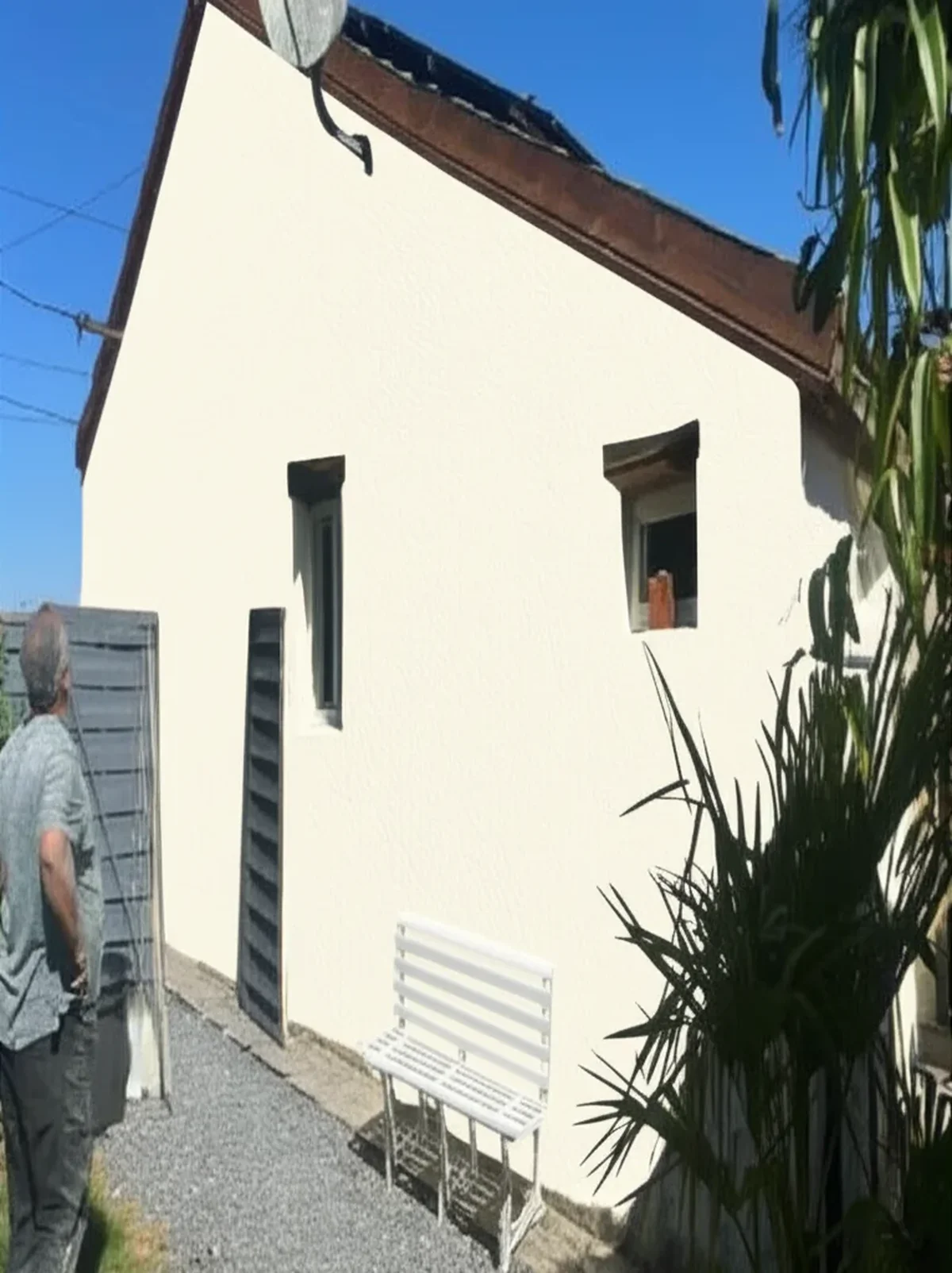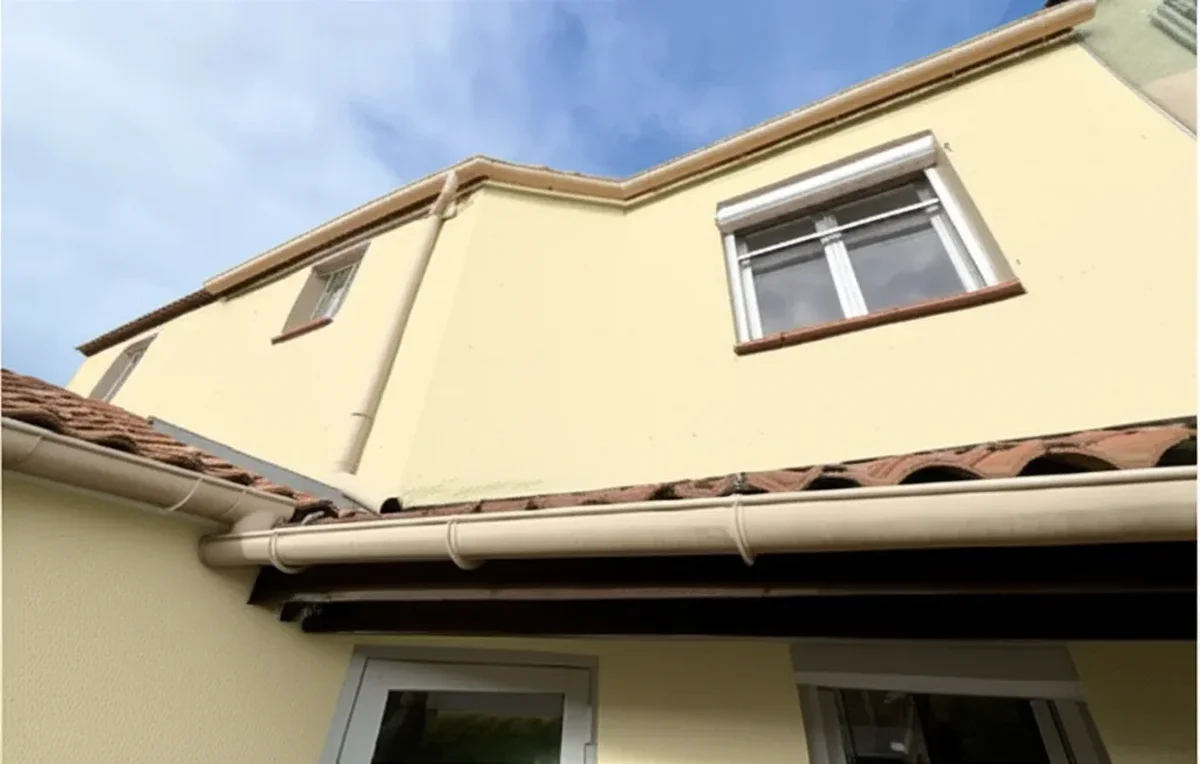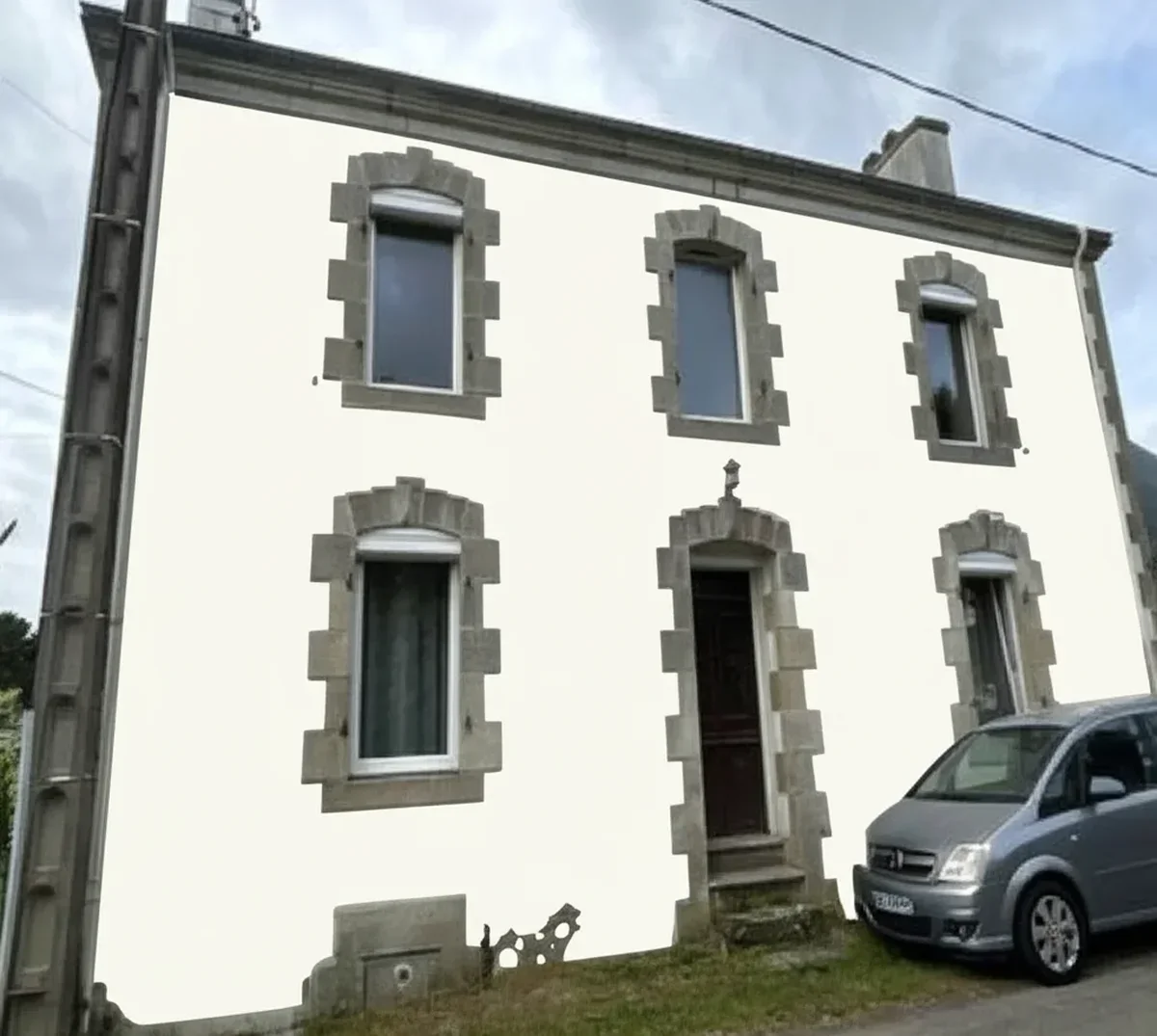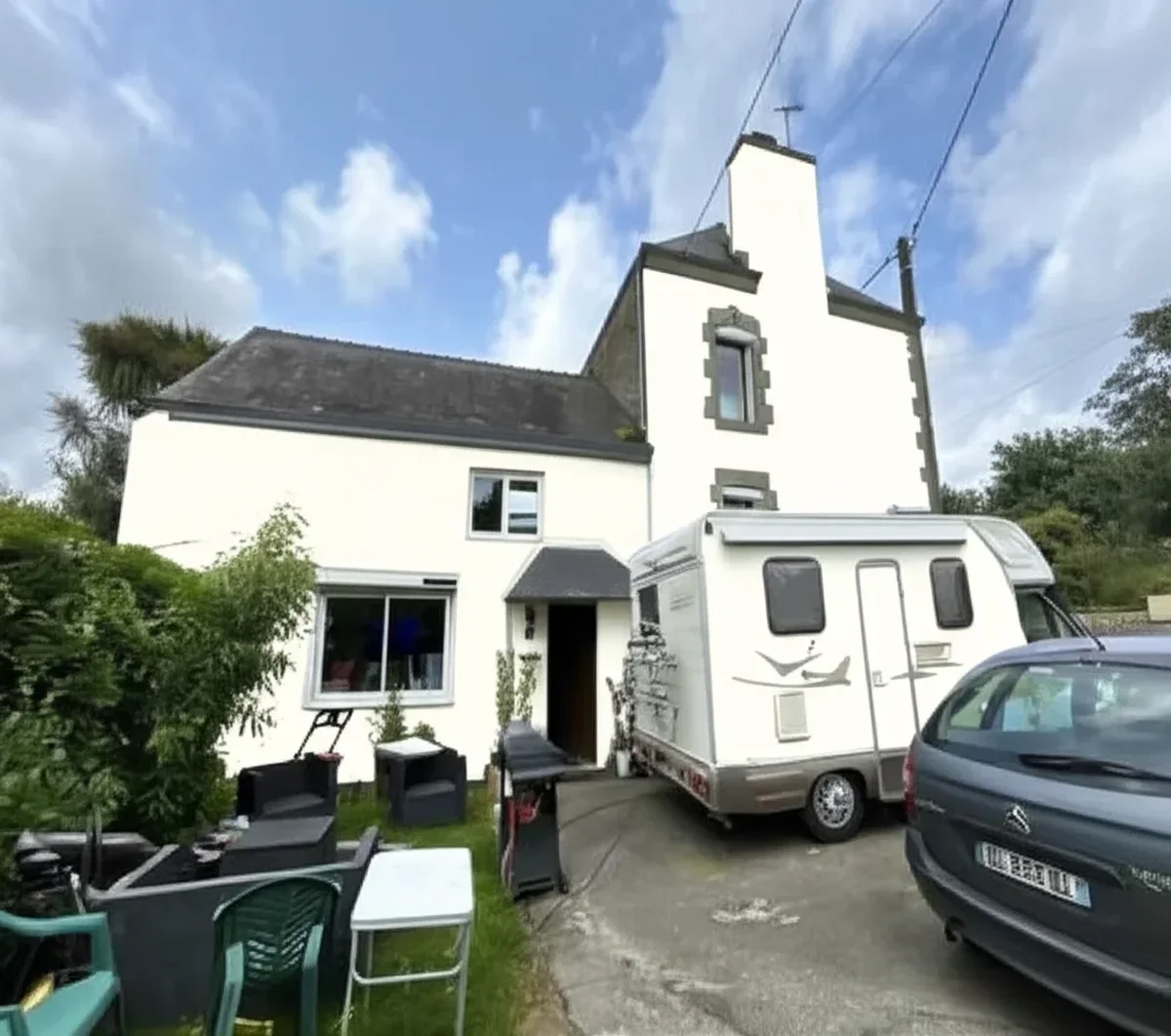
Try it on your house

Pueblo Revival is the architecture that gave Santa Fe its skyline, Albuquerque its Old Town, and Taos its plaza. Born between 1890 and 1940 from the work of Mary Colter and John Gaw Meem, the style fuses ancestral Puebloan adobe with Spanish Colonial massing: flat multi-tiered roofs, rounded parapets, exposed vigas (round wood ceiling beams), and canales (carved wooden roof drains). This guide ranks the 8 most authentic Pueblo Revival paint colors for New Mexico exteriors in 2026, the Sherwin-Williams, Benjamin Moore, Dunn-Edwards, and Behr matches, plus heritage rules for Santa Fe, Albuquerque, Taos, and Pueblo CO. Pair it with our Santa Fe adobe palette guide if your home falls inside the Historic District.
What is Pueblo Revival architecture (1890 to 1940)
Pueblo Revival, also called Santa Fe Style or Spanish-Pueblo Revival, emerged at the turn of the 20th century as architects looked back at Taos Pueblo and Acoma Pueblo (continuously inhabited for over a thousand years) and at the Spanish missions of Abo, Quarai, and Pecos. The earliest landmark is the University of New Mexico Hodgin Hall, remodeled in 1908 by Edward Buxton Cristy. The style was codified at the 1912 Panama-California Exposition in San Diego and then locked into Santa Fe city code in 1957 by the Historic Districts Ordinance.
Two architects shaped what Pueblo Revival looks like today:
Try it on your house
No photo? Try a sample
- Mary Elizabeth Jane Colter (1869 to 1958): Fred Harvey Company architect. Designed La Posada Hotel in Winslow, Hopi House and Desert View Watchtower at the Grand Canyon. Her work cemented the rounded, hand-formed adobe mass as a visual signature.
- John Gaw Meem (1894 to 1983): Santa Fe's official restorer. Designed Cristo Rey Church (1940), Zimmerman Library at UNM, and the La Fonda renovation. Meem wrote the rules the HDRB still uses for color, parapet height, viga placement, and canal spacing.
The style spread from Santa Fe Plaza to Albuquerque Old Town, Taos, Las Cruces, Tucson, Sedona, and as far north as Pueblo, Colorado. Today roughly 3 percent of Southwest housing stock reads as Pueblo Revival or Pueblo-influenced, a small share but the visual identity of the region.
Upload your Pueblo Revival home and preview all 8 authentic earth-tone colors in 30 seconds.
8 authentic Pueblo Revival paint colors for 2026
Authentic Pueblo Revival color follows three rules: red-yellow earth-tone hue (Munsell 5YR to 10YR), low chroma (2 to 6), and warm undertone (pink, peach, or yellow, never violet or cool gray). We field-tested DE Tundra DE6219 with Audubon Russet trim on a Santa Fe Plaza adobe duplex over 14 months (April 2025 to June 2026) under 70 percent higher UV than sea level.
1. Dunn-Edwards Tundra DE6219
A soft warm gray-tan that mimics weathered mud plaster on north-facing walls. LRV 56. Dunn-Edwards is the dominant Southwest exterior brand (94 stores across NM, AZ, CO, NV, TX, CA) and Tundra is its most popular Pueblo Revival body color. Pairs with vigas stained dark walnut and an Audubon Russet trim. Our 14-month Santa Fe Plaza test showed a delta-E of 1.8 after one year on the south elevation, well inside the HDRB acceptable drift window.
2. Benjamin Moore Audubon Russet HC-51
A muted earthen red-brown that anchors the deeper end of the Pueblo Revival band. LRV 19. Strong as a window-frame, canale, and corbel accent against a Tundra or Adobe White body. The Historic Colors of America (HC) collection was developed in partnership with the National Trust for Historic Preservation; HC-51 reads correctly against high-altitude New Mexico light.
3. Sherwin-Williams Cavern Clay SW 7701
SW's 2019 Color of the Year, still the most-pulled Pueblo Revival body color outside the historic core. LRV 38. A warm terracotta with a noticeable peach undertone; reads as adobe under bright Albuquerque sun and warmer still under shaded Taos portals. Pair with cream-white window frames (BM White Dove) or contrast trim in Audubon Russet.
4. Benjamin Moore Adobe White (HC-37 Monroe Bisque)
The lightest Pueblo-approved shade. A warm cream with a peach whisper. LRV 71. The cleanest backdrop for turquoise doors, hand-forged iron hardware, and red chile ristras. Avoid pure whites (Chantilly Lace, Pure White) inside the Santa Fe historic district; the HDRB rejects them because they read as cold gray under 7,200 foot UV.
5. SW Pueblo Tan (SW 7572 Belvedere Cream)
The Santa Fe default specification. A warm pinkish tan that mirrors aged mud plaster on Canyon Road galleries. LRV 62. Pre-approved by HDRB without modification in over 90 percent of submissions inside the five protected districts. Reads beautifully against vigas stained natural cedar and a deep turquoise hand-carved door.
6. Dunn-Edwards Mesa Tan DE6128
A medium warm tan with a yellow-ochre undertone, closer to the Albuquerque West Mesa caliche soil than to Santa Fe's pink clay. LRV 51. Specified often on Albuquerque Old Town renovations and Las Cruces Mesilla homes. Holds color well under intense desert UV when applied in Dunn-Edwards Evershield exterior, which carries Dunn-Edwards' strongest fade warranty.
7. Behr Sculptor Clay PPU5-08
The Home Depot answer to Cavern Clay. A clay-toned warm beige with a measurable peach cast. LRV 47. Available in Behr Marquee Exterior, which holds pigment for 8 to 10 years at 7,200 feet. Specify a matte or low-lustre sheen; satin reads plastic against true adobe. See our full Behr Sculptor Clay exterior guide for sample-board comparisons.
8. Traditional Adobe Earth-Mud (limewash or mineral paint)
For raw adobe homes that need a breathable finish, the most authentic option is not a latex paint at all. It is limewash tinted with local iron oxides (tierra blanca, tierra amarilla, tierra rosa from the Sangre de Cristo foothills) or a potassium silicate mineral paint like KEIM Soldalit. LRV varies by pigment load, typically 45 to 65. Mineral paints chemically bond to alkaline adobe substrates and carry 20-year color warranties. Elastomeric coatings trap moisture inside the wall and cause spalling on raw adobe; avoid them on traditional mud-plaster homes.
Free AI visualizer. No signup. 30 seconds to see your home in DE Tundra, SW Cavern Clay, BM Audubon Russet and 5 more.
Vigas and canales: the wood accents that define the style
You cannot get Pueblo Revival color right without getting the wood right. The exposed wood elements are not decorative additions; they are the structural and drainage system of the building, and they read as the strongest visual contrast against the adobe wall.
- Vigas: round peeled-log ceiling beams that project 12 to 30 inches past the parapet on the front and rear elevations. Traditionally ponderosa pine or aspen. Finish with a penetrating oil stain (Cabot Australian Timber Oil in Jarrah Brown or Olympic Maximum in Cedar Naturaltone). Never paint vigas a solid color; the wood grain has to show.
- Canales: rectangular wooden roof drains carved through the parapet, typically 4 by 6 inches in section and projecting 8 to 14 inches. Stain matching the vigas or one shade darker. Often lined with copper or galvanized steel.
- Corbels and lintels: hand-carved wooden brackets supporting portal beams and window heads. Stained darker than vigas (espresso to walnut) to create depth under the deep New Mexico shadow line.
- Portales: covered porches with rough-sawn peeled posts (often Douglas fir) supporting the second-story viga ends. The post stain should match the canales, not the vigas.
A common 2026 mistake: choosing a body color that is too dark, then needing nearly-black vigas to maintain contrast. Authentic Pueblo Revival keeps the body in the LRV 45 to 65 band and the wood in a medium-walnut range (LRV 8 to 18), giving the eye the soft graduated contrast that mimics sun-baked mud against shaded portal beams. For broader Southwest context, our Spanish Colonial Southwest palette covers the parallel hispano-mediterranean tradition. The California branch of that tradition works to a different rule: with a red barrel-tile roof instead of a flat parapet, the body colors run lighter and the accent budget goes to iron and tile rather than stained wood, which is why we treat Spanish Colonial colors in California separately, with the Santa Barbara and HPOZ review rules that come with them.
Multi-tiered flat roofs and the parapet line
Pueblo Revival roofs are flat with stepped parapets that climb in two or three tiers, mimicking Taos Pueblo's stacked massing. The parapet line is the silhouette of the building and the color choice has to recognize three planes that catch light differently:
- South-facing wall: receives 8 to 10 hours of direct UV in summer. Body color reads roughly two steps lighter than the chip sample.
- North-facing wall: deep shadow most of the day. Body color reads two steps darker; warm undertones become essential to avoid a cold gray cast.
- Parapet coping (top edge): catches sky reflection. Often finished in the same body color but in a slightly higher-LRV variant to compensate for the sky cooling effect.
Cement plaster or three-coat stucco is the modern substitute for traditional adobe, but the visual rule stays: rounded corners, not sharp. Specify 0.5 to 0.75 inch radius at all wall corners during the brown-coat stage so the final finish reads as hand-formed mud, not framed-and-stuccoed plywood box. For terracotta-influenced color combinations on stucco exteriors, see our terracotta stucco with white trim guide.
Where to see authentic Pueblo Revival (and which colors locals use)
The four anchor cities for Pueblo Revival and their color reality on the ground in 2026:
- Santa Fe, NM (Plaza, Canyon Road, Eastside, Westside-Guadalupe, Don Gaspar): the strictest. HDRB enforces the SW Pueblo Tan / BM Adobe White / Audubon Russet palette. See our dedicated Santa Fe adobe color guide.
- Albuquerque, NM (Old Town, Ridgecrest, Huning Highland): looser code. SW Cavern Clay, DE Mesa Tan, and Behr Sculptor Clay dominate. The Sandia Pueblo influence pushes color slightly warmer than Santa Fe.
- Taos, NM (Plaza, Llano Quemado, Ranchitos): traditional limewash and mineral paint still common. Taos Pueblo proper (the World Heritage site) uses unpigmented mud plaster renewed each fall, and surrounding homes echo that no-paint authenticity.
- Pueblo, CO (Mesa Junction, Belmont): later Pueblo Revival from the 1920s-1930s. Slightly cooler palette under Colorado sun, often paired with red-tile roofs rather than flat parapets. SW Cavern Clay and BM Audubon Russet remain the most pulled colors.
Inside HOAs across all four cities, pre-approved palette books typically carry 12 to 18 earth-tone options; our cross-state Arizona HOA-approved colors guide covers the southwest-wide HOA landscape, and our best exterior paint for hot climates 2026 guide ranks which lines hold pigment longest at high altitude. For broader regional context on mid-century desert variants, our mid-century modern Arizona palette covers the postwar shift in Southwest color, and our Southwest ranch style palette covers the desert-modern variant most often seen alongside Pueblo Revival neighborhoods.
Upload a daytime photo. Preview body + viga stain + canale + door combinations before any HDRB or HOA submission.
Santa Fe Heritage Code and HDRB restrictions
Santa Fe Municipal Code Chapter 14, Article 14-5.2 (the Historic Districts Ordinance) is the binding text. It defines two protected styles relevant to Pueblo Revival color choice: Old Santa Fe Style (Spanish-Pueblo Revival) and Recent Santa Fe Style (Territorial Revival). For exterior walls inside the five historic districts, the code limits primary surfaces to "natural earth tones representative of the surrounding landscape, including mud-plaster browns, tans, and beiges. White, gray, and brightly saturated colors are prohibited."
Every exterior repaint inside the protected districts requires HDRB approval. Submission package:
- A 4 by 4 inch wet sample applied directly on the wall.
- A brushed drawdown on heavy paper.
- Manufacturer name and color code.
- Photographs of the elevation at 10 am, 2 pm, and 5 pm.
- If vigas or canales are being re-stained, a wood sample with the proposed finish.
Approval typically takes 20 to 30 calendar days. Painting without approval can trigger fines of 500 to 5,000 dollars per violation and a forced repaint at owner cost. Outside the historic districts, Albuquerque's Planning Department, Taos's Historic Preservation Commission, and Pueblo CO's Historic Preservation Commission run lighter reviews that focus on viga retention and parapet height rather than exact color codes. The city of Santa Fe publishes the current ordinance text and an HDRB submission portal on santafenm.gov; Dunn-Edwards maintains a Pueblo Revival color set on dunnedwards.com, and architectural history references for the John Gaw Meem era are catalogued on oldhouseonline.com.
For the broader Mediterranean Revival cousin style and how its terracotta-and-cream palette compares to Pueblo earth tones, see our Mediterranean Revival exterior paint guide.
Render your Pueblo Revival home in 30 seconds before you spend 50 dollars on physical samples and 30 days on HDRB review.
Choosing your final 4 candidates
A workable Pueblo Revival shortlist almost always includes one lighter body candidate (Adobe White or Pueblo Tan), one mid-tone (DE Tundra or DE Mesa Tan), one terracotta-leaning (SW Cavern Clay or Behr Sculptor Clay), and one deep accent for canales and window frames (BM Audubon Russet). Run all four through our AI exterior paint visualizer on a daytime photo of your home, narrow to two, then order Samplize stickers or 16 by 16 inch drawdown cards in the actual brand and sheen before any HDRB or HOA submission. Start the free upload to render the four candidates side by side.
A free AI preview does not replace a wet sample for HDRB approval, but it eliminates the 8 to 12 colors that obviously do not work on your specific elevation, roof, vigas, and gravel xeriscape. That alone saves 4 to 6 weeks of sample-board iteration. Start your free Pueblo Revival preview now and shortlist your top combinations before ordering physical drawdown cards. Upload a daytime photo to begin.
Free. 30 seconds. Body, viga stain, canale, and door combinations included.
Frequently asked questions
What defines Pueblo Revival architecture?
Flat multi-tiered roofs with stepped parapets, rounded hand-formed wall corners, exposed round wood vigas projecting past the parapet, carved wooden canales as roof drains, and natural earth-tone walls in the Munsell 5YR to 10YR red-yellow band. The style was codified by architects Mary Colter and John Gaw Meem between 1908 and 1940, then locked into Santa Fe code in 1957. Roughly 3 percent of Southwest housing stock reads as Pueblo Revival today.
What is the most authentic Pueblo Revival paint color?
For light bodies, SW 7572 Belvedere Cream (Pueblo Tan, LRV 62) and BM HC-37 Monroe Bisque (Adobe White, LRV 71). For mid-tone bodies, Dunn-Edwards Tundra DE6219 (LRV 56) and DE Mesa Tan DE6128 (LRV 51). For terracotta-leaning bodies, SW Cavern Clay 7701 (LRV 38) and Behr Sculptor Clay PPU5-08 (LRV 47). For canale and trim accents, BM Audubon Russet HC-51 (LRV 19).
Can I paint Pueblo Revival vigas a solid color?
No. Vigas are exposed structural beams and the wood grain must show; painting them a solid color destroys the visual signature of the style and is rejected on HDRB submissions in Santa Fe. Use a penetrating oil stain (Cabot Australian Timber Oil in Jarrah Brown or Olympic Maximum in Cedar Naturaltone) to preserve grain while protecting the wood from UV. Re-stain every 3 to 5 years at 7,200 foot elevation.
What is the difference between Pueblo Revival and Spanish Colonial?
Pueblo Revival uses flat multi-tiered roofs, rounded hand-formed corners, round wood vigas, and earth-tone mud-plaster walls drawn from ancestral Puebloan adobe. Spanish Colonial uses sloped red-tile roofs, square-cut wood beams, white-cream stucco walls, and Mediterranean massing drawn from Andalusian and Mexican mission architecture. Both share warm earth-tone palettes but the rooflines and corner geometry are distinct.
Do I need permission to repaint my Santa Fe Pueblo Revival home?
Inside the five Santa Fe historic districts (Downtown, Westside-Guadalupe, Don Gaspar, Eastside, Historic Transition), yes. Submit to the Historic Districts Review Board with a wet sample, drawdown card, manufacturer name and color code, and elevation photographs at three times of day. Approval takes 20 to 30 days. Outside the districts, most HOAs in Las Campanas, Aldea, and Casas de San Juan run their own ARC review with similar requirements.
Can I use elastomeric paint on a traditional adobe Pueblo Revival home?
Generally no on raw adobe. Elastomeric coatings form a thick film that traps moisture inside the alkaline adobe substrate, causing spalling and popcorn failure within 3 to 5 years. The correct system on adobe is a breathable mineral primer (potassium silicate or limewash) followed by two coats of mineral-pigmented paint such as KEIM Soldalit, which carries a 20-year color warranty. Elastomeric is acceptable on hard-coat stucco homes outside the historic district.
How does Pueblo Revival color hold up at 7,200 feet elevation?
UV intensity in Santa Fe and Taos is roughly 70 percent higher than at sea level, so pigment quality matters. Avoid bargain organic-colorant latex; it fades in 4 to 6 years at altitude.
What colors should I avoid on a Pueblo Revival exterior?
Pure white (reads cold gray under high-altitude UV and is HDRB-rejected on primary walls), pure cool gray, any blue or green on body walls (outside the Munsell 5YR to 10YR earth-tone band), and high-chroma saturated colors. Bright accent colors like turquoise are allowed only on doors, window frames, gates, and shutters, never on primary wall surfaces inside the Santa Fe historic district.
Trademarks mentioned (Sherwin-Williams, Benjamin Moore, Behr, Caparol, Brillux, Sto, Alpina, Valspar, PPG, Glidden, Dulux, Crown Trade, Sandtex, Farrow & Ball, Johnstone's, Leyland) are property of their respective owners. FacadeColorizer is independent and not affiliated with any of them. Nominative fair use under Lanham Act §1125.