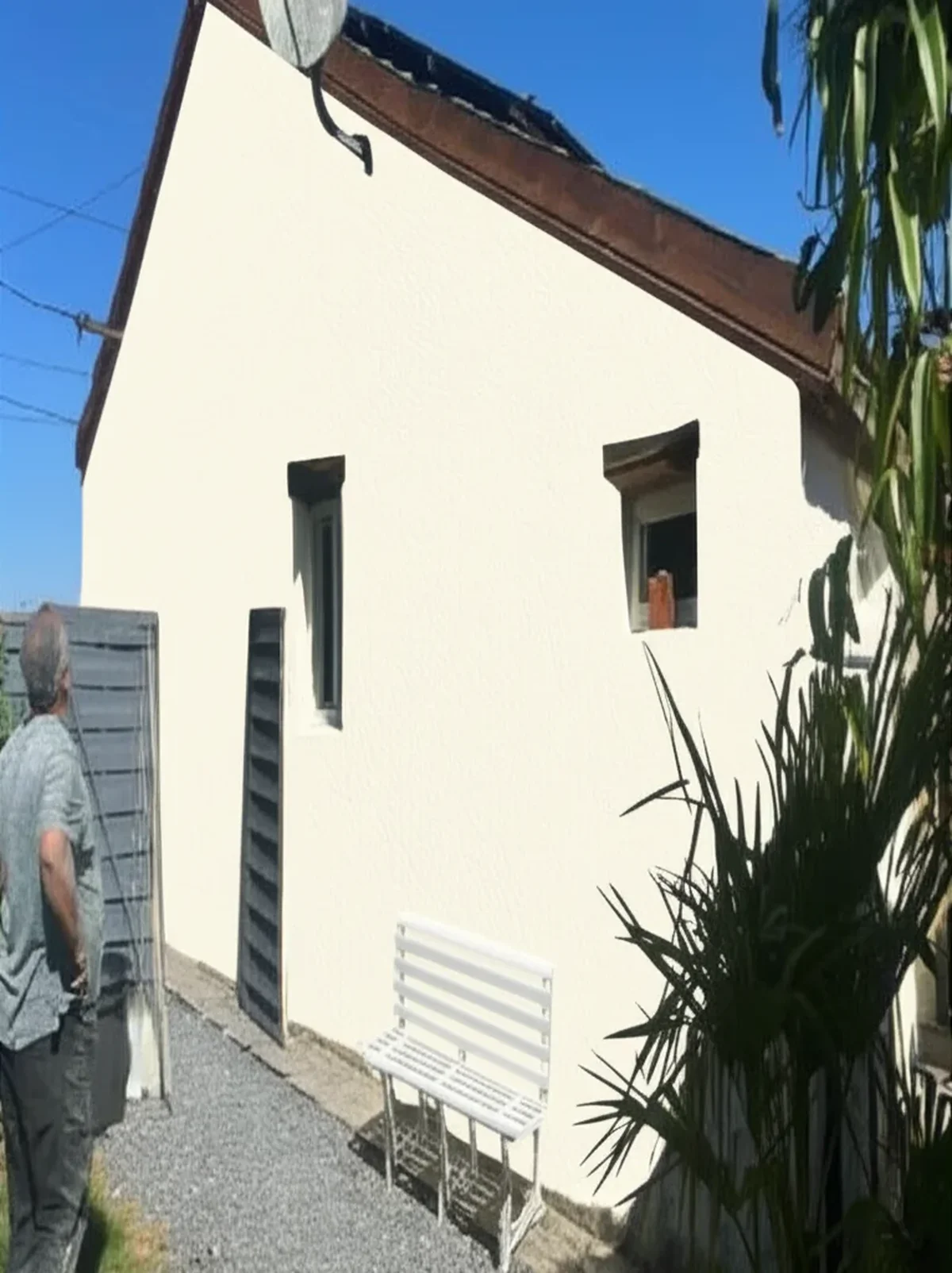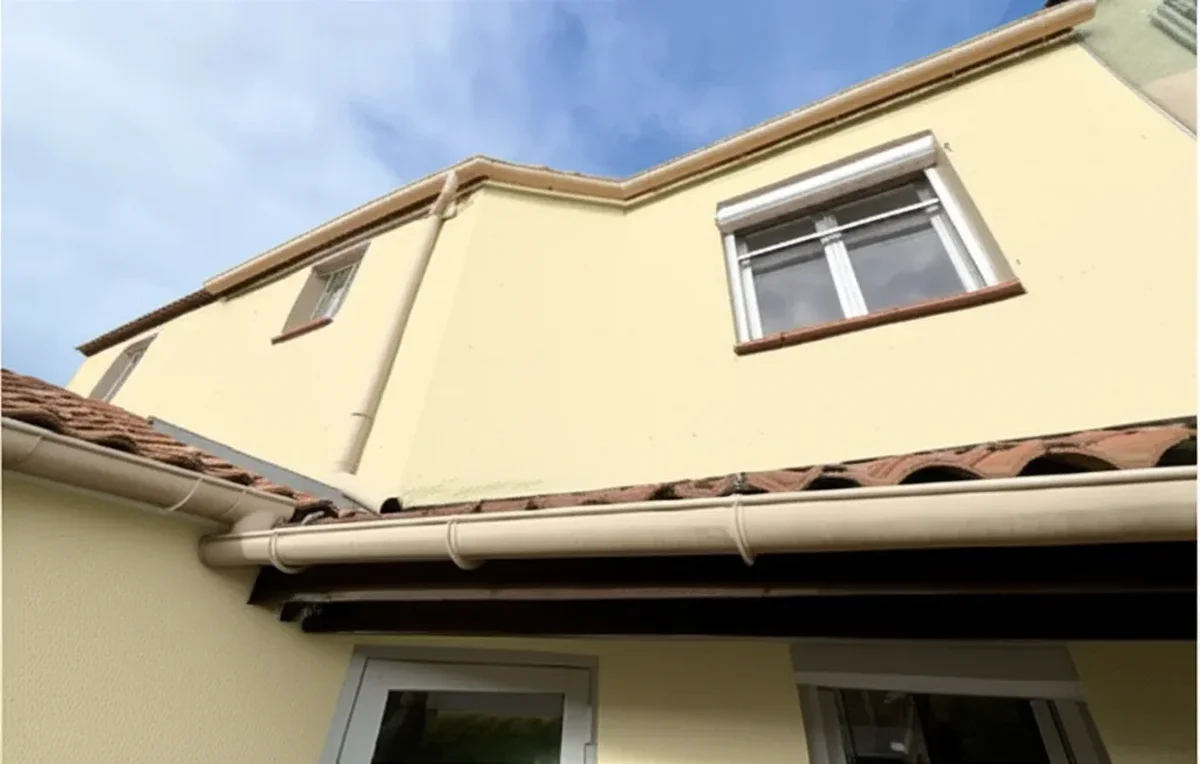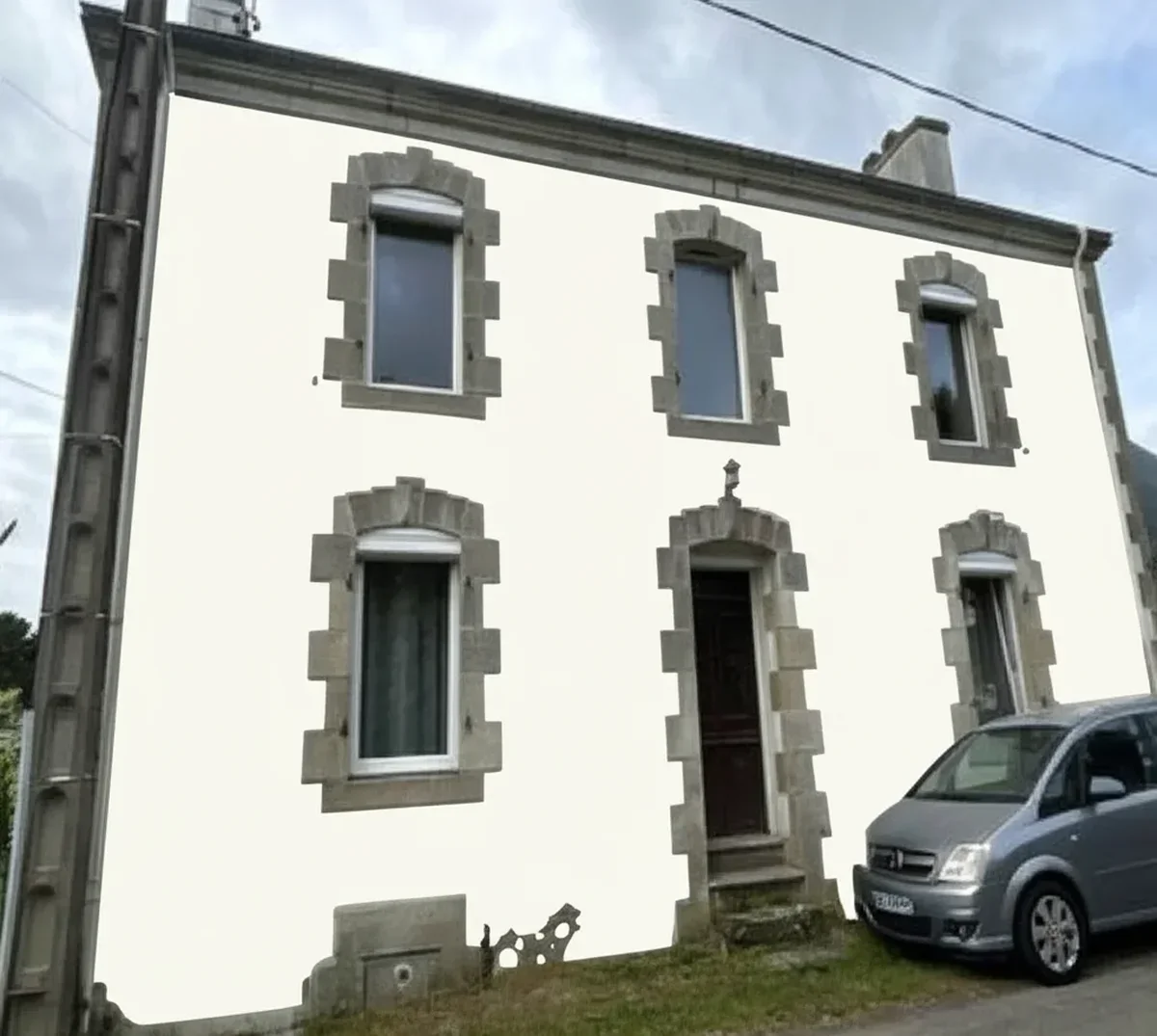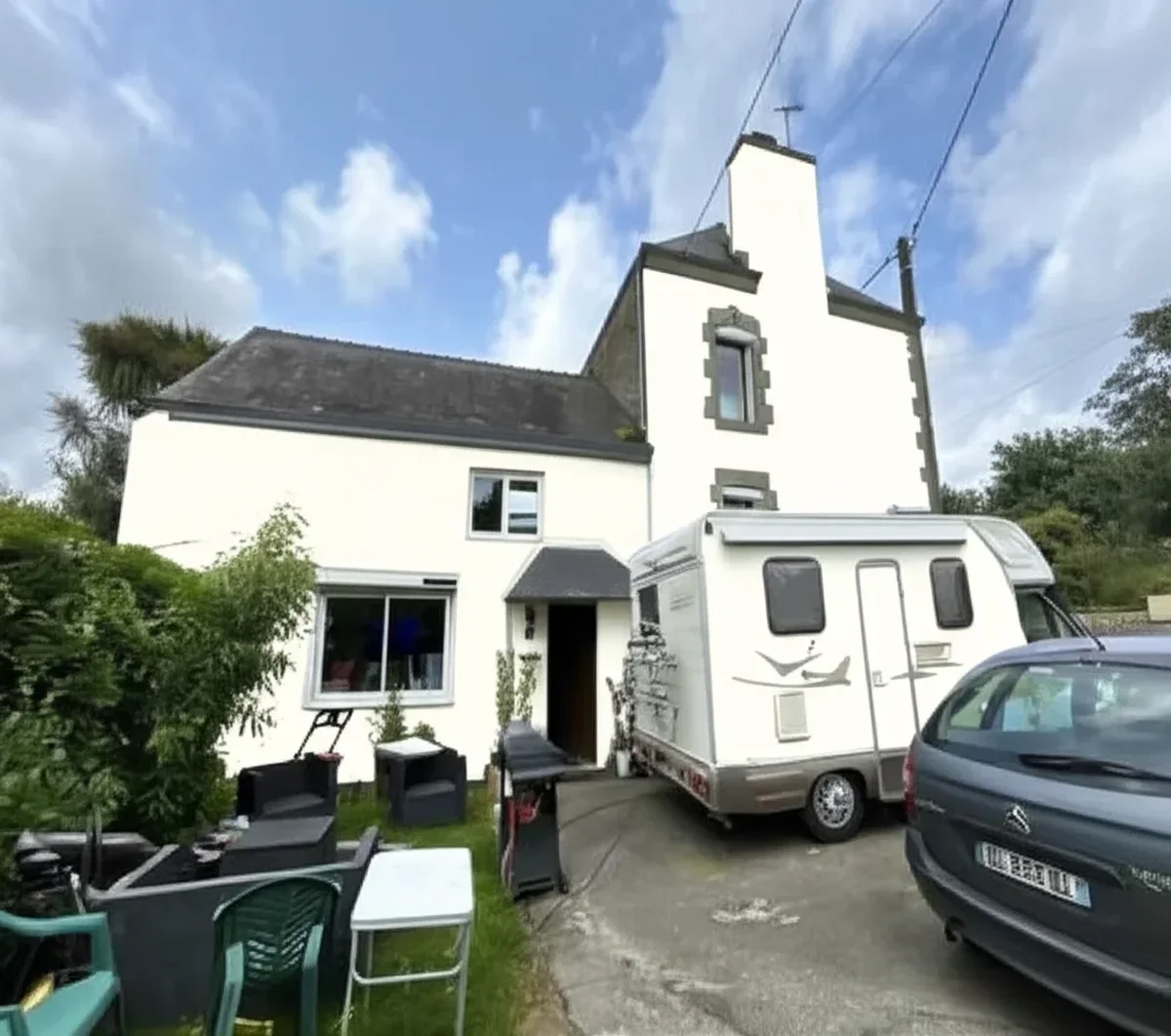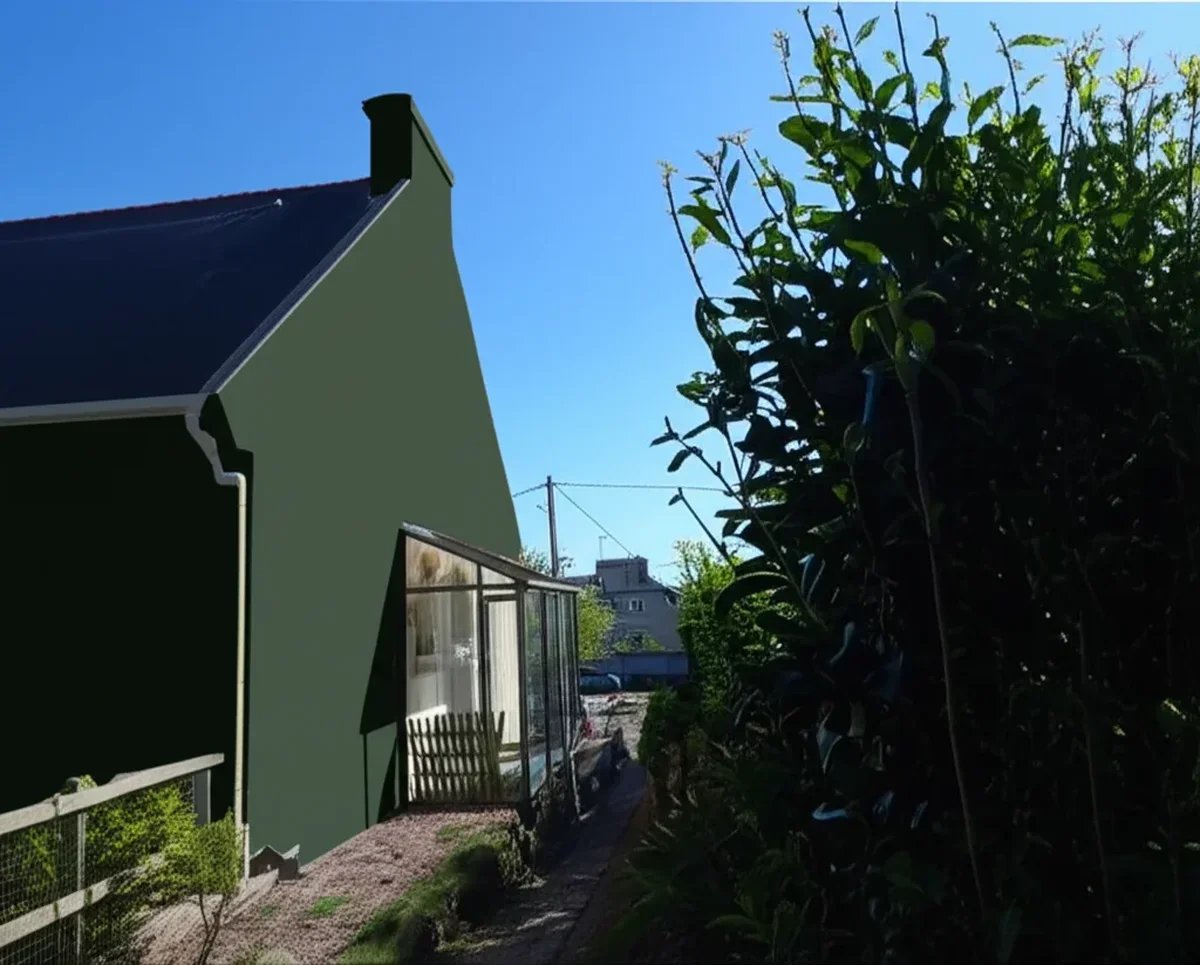
Try it on your house

Arizona is the second capital of Mid-Century Modern in America. While Palm Springs gets the magazine covers, Phoenix, Scottsdale, and Tucson hold more original 1950s and 1960s MCM stock than any other Southwest metro, thanks to Frank Lloyd Wright's Taliesin West school, Al Beadle's flat-roof ranches, and the post-war population boom that filled the Valley of the Sun with desert modernism. The right paint palette here is not the Bay Area Eichler palette and it is not the coastal Palm Springs palette. It is a cooler, drier, heat-reflective version tuned for 115°F summers, monsoon dust, and ten months of unrelenting UV. This 2026 guide presents the 8 best Mid-Century Modern exterior paint colors for Arizona, the local history that shaped them, and the heat-resistant paint formulas that keep them from fading on a Phoenix south-facing wall.
The Arizona MCM aesthetic: cool desert white plus one bold accent
Arizona Mid-Century homes follow a discipline that sets them apart from California MCM: a cool, reflective body color (warm whites and soft tans dominate) carrying 80 to 90 percent of the facade, plus one saturated accent that reads against the cobalt sky. That accent is almost always turquoise, mustard, avocado, or terracotta, never coral or rose, which read as too soft against the high-desert glare. The two-color formula traces back to original 1957 to 1968 builder palettes used by Hallcraft, Allied, and Staff Builders across north Phoenix and Scottsdale, where the body was a single muted stucco and the fascia or front door carried the personality.
For the national MCM context behind these regional choices, see our 15 best Mid-Century Modern exterior paint colors guide. For local labor cost context, our Phoenix house painting cost guide breaks down what a full Arizona MCM repaint runs in 2026.
The 8 best Mid-Century Modern paint colors for Arizona homes
Each color includes its Sherwin-Williams or Benjamin Moore code, hex value, and the architectural role it plays on a Phoenix or Tucson facade.
- Cool Desert White - Sherwin-Williams Alabaster SW 7008 (hex #EDEAE0). The single most popular body color on Arizona MCM in 2026. Slightly warm to avoid reading sterile, but cool enough at LRV 82 to reflect Phoenix afternoon heat. Used on Al Beadle's 1958 Three Fountains apartments and across the Marlen Grove and Windemere Phoenix Modern neighborhoods. Pair with a saturated accent door.
- Soft Tan Stucco - Sherwin-Williams Loggia SW 7506 (hex #C9B79C). When pure white feels too stark next to mature mesquite landscaping, Loggia drops the body half a tone into a warm beige that still reflects heat (LRV 56). The classic 1962 Hallcraft palette pairs Loggia stucco with a turquoise carport beam and dark anodized aluminum window frames.
- Desert Sage Body - Benjamin Moore Sequoia AF-185 (hex #908A75). For homes surrounded by Palo Verde and saguaro, a muted olive-tan body color helps the silhouette settle into the desert. Sequoia is a 2026 favorite for Tucson MCM in the Sam Hughes and El Encanto historic districts where landscaping is dense.
- Avocado Accent - Sherwin-Williams Avocado SW 6707 (hex #889D5A). The 2026 Arizona MCM revival shade. Use Avocado on a garage door, planter wall, or single accent volume against a white or tan body. Pulls 1968 directly into the present without looking like a costume.
- Charcoal Fascia - Benjamin Moore Iron Mountain 2134-30 (hex #45494B). The dark line that crowns nearly every Arizona MCM flat roof. Iron Mountain on a parapet or fascia draws a crisp horizontal against the desert sky and visually grounds a low-slung profile. Pairs with Alabaster body for the canonical Phoenix Modern look.
- Turquoise Door - Sherwin-Williams Naval SW 6244 (hex #2F3A48) cut with a teal, or use Benjamin Moore Boca Raton Blue 811 (hex #3FA5C6) for the brighter Frey-inspired hit. Boca Raton Blue is the more historically accurate accent on a 1960 Phoenix MCM door or carport panel. Naval works when the homeowner wants a moodier, sun-faded reading.
- Terracotta Accent - Sherwin-Williams Cavern Clay SW 7701 (hex #B67459). Wright's Taliesin West palette in a single can. Cavern Clay on a chimney mass, accent wall, or planter wall pulls the desert floor into the facade. Pairs with Alabaster body and Iron Mountain fascia for the truest Frank Lloyd Wright homage.
- Bold Orange Door - Benjamin Moore Crisp Romaine 2032-10 (hex #4A8B3A) for green-orange contrast, or for a true sunset orange substitute Cavern Clay above. Crisp Romaine reads as the saturated avocado-orange that defines a 1965 Beadle door in late afternoon light. Use sparingly: one element, never two.
Upload a photo of your Phoenix or Tucson MCM home and preview all 8 Arizona colors in 30 seconds.
Local Arizona MCM history: Wright, Beadle, and Phoenix Modern District
Arizona Mid-Century Modern did not arrive by accident. In 1937 Frank Lloyd Wright bought 600 acres at the base of the McDowell Mountains and built Taliesin West, his winter desert studio. The complex's rock-aggregate walls, redwood beams, and Cherokee Red accents (which mapped to roughly SW Rookwood Red SW 2802 and BM Cavern Clay equivalents in modern coatings) defined a regional vocabulary that local architects would borrow for the next four decades. Wright trained generations of apprentices there, several of whom stayed in the Valley and shaped Scottsdale's residential character.
The second wave came from Al Beadle, a self-taught architect who built more than 40 flat-roofed steel-frame houses across Phoenix between 1956 and 1985. The 1958 Beadle Townhouse 3 (a tested simulation case in our platform) uses a near-Alabaster body, an Avocado service door, and an Iron Mountain parapet line. Beadle's discipline (single body color, single saturated accent, exposed steel) is the closest thing Phoenix has to an MCM constitution.
The third force is the Phoenix Modern District, an informal network of neighborhoods (Marlen Grove, Windemere, Town and Country Manor, Marion Estates) where original 1955 to 1968 builder homes survive in numbers. The Scottsdale Historic Preservation Office publishes an official Mid-Century Modern color palette PDF that helps homeowners stay period-appropriate during repaints; for our cross-style southwest reference, our Santa Fe adobe and southwest paint colors guide covers the adobe and Pueblo influences that frequently appear on Arizona MCM cross-overs.
Heat-resistant cool paint: why Arizona MCM needs more than color
Pick the wrong formula and even Alabaster will chalk, fade, and crack within three Phoenix summers. Arizona MCM repaints need a paint engineered for desert UV. The regional top pick in 2026 is Dunn-Edwards Evershield, a 100 percent acrylic exterior with ceramic technology and infrared-reflective pigments that drop wall surface temperature by 15 to 20°F versus standard exterior acrylics on dark colors. Evershield is what Phoenix and Tucson contractors specify by default on south and west exposures. See our Dunn-Edwards Evershield review for the full performance breakdown.
Sherwin-Williams Emerald Rain Refresh and Behr Marquee are credible alternatives, but neither matches Evershield's IR-reflective track record on Iron Mountain or Cavern Clay accents in 110°F+ conditions. For homes outside Phoenix in Las Vegas and the wider Mojave, our best exterior paint for hot climates guide compares the top hot-climate formulas head-to-head.
Pueblo and Spanish Colonial cross-influences
Arizona MCM does not exist in isolation. Two older Southwest traditions bleed into many original 1960s palettes and remain visible in 2026 repaints.
Pueblo Revival. The earthen orange, soft buff, and warm terracotta of Pueblo architecture show up on Arizona MCM chimneys, planter walls, and accent volumes. Cavern Clay and Loggia are the bridge colors. The Pueblo tradition explains why even a strictly modernist Beadle house in Phoenix often features a single terracotta-toned mass against an otherwise cool palette.
Spanish Colonial. Tucson and southern Arizona MCM homes occasionally borrow Spanish Colonial cues: a low parapet stucco wall in soft white, dark wood (or wood-look) carport beams, and a saturated accent door (turquoise, deep red, or mustard). The result is a hybrid that reads MCM in massing but Spanish in surface texture. Our southwest ranch house paint colors guide covers the ranch-MCM crossover in detail.
Roof options: the flat roof with parapet, an Arizona MCM signature
The single most distinctive Arizona MCM feature is the flat roof with a low parapet wall. Unlike Palm Springs butterfly roofs or Eichler beam-and-tongue cathedrals, Phoenix and Scottsdale MCM almost always relies on a flat or near-flat membrane behind a stucco parapet. That parapet creates a clean horizontal silhouette against the desert sky and is the natural place to apply your fascia color. Iron Mountain or Onyx on the parapet's top band is the canonical move.
A handful of Arizona MCM homes use butterfly roofs (Frey-inspired) or low-slope shed roofs, particularly in north Scottsdale custom builds from 1961 to 1969. On those rooflines, the fascia color matters more because the slope catches afternoon shadow and reads as a darker band naturally. Choose Iron Mountain or a darker custom mix to reinforce the line.
For full trim and accent guidance across rooflines, see our 2026 exterior trim paint colors guide. For homeowners weighing Las Vegas project costs, our Las Vegas exterior painting cost guide covers the nearest comparable desert market.
| Facade Element | Recommended Color | SW / BM Code |
|---|---|---|
| Main stucco body | Cool warm white | SW 7008 Alabaster |
| Body (landscaped) | Desert sage tan | BM AF-185 Sequoia |
| Parapet / fascia | Charcoal | BM 2134-30 Iron Mountain |
| Front door (turquoise) | Bright teal | BM 811 Boca Raton Blue |
| Accent volume / chimney | Terracotta | SW 7701 Cavern Clay |
| Garage / accent wall | Avocado | SW 6707 Avocado |
Try it on your house
No photo? Try a sample
Free AI visualizer, no signup, tested on a 1958 Al Beadle Phoenix flat-roof.
Frequently asked questions
What is the most authentic MCM exterior color for a Phoenix home?
An Alabaster SW 7008 stucco body with an Iron Mountain 2134-30 parapet line and a Boca Raton Blue 811 front door is the most historically accurate combination for a 1955 to 1968 Phoenix MCM. The two-color body-plus-accent formula traces back to original Hallcraft and Allied Builders palettes, and it appears repeatedly across Marlen Grove, Windemere, and Marion Estates today.
Can I paint a Phoenix MCM house dark gray or black?
Possible, but not recommended on the main body. Dark stucco in Phoenix absorbs heat aggressively; surface temperatures on a south-facing Iron Mountain wall can exceed 165°F in July, which stresses substrate and accelerates cracking. Reserve charcoal and black for the parapet, fascia, and a single accent door or volume. Keep the body warm white or soft tan.
Which paint brand performs best on Arizona MCM exteriors?
Dunn-Edwards Evershield is the regional default in 2026, thanks to infrared-reflective pigments that drop surface temperature by 15 to 20°F on dark accents and resist UV chalking on whites. Sherwin-Williams Emerald and Behr Marquee perform well as alternatives. Whichever brand you choose, specify the cool-paint or IR-reflective tint base on any color darker than LRV 50.
Is turquoise still appropriate on a 2026 Phoenix MCM door?
Yes, more than ever. Boca Raton Blue 811 or a custom mid-saturation teal remains the single most popular MCM front door color in Phoenix and Scottsdale repaints. The shade nods to original 1960s builder palettes and reads strongly against Alabaster stucco and the cobalt Arizona sky without feeling costume-y.
How do I keep my MCM avocado or terracotta accent from fading?
Specify an infrared-reflective tint base (Dunn-Edwards Evershield IR or SW Emerald IR), prime with a high-bond masonry primer, and apply two top coats with 4 hours minimum dry time at substrate temperatures below 95°F. Phoenix south and west exposures will still fade faster than north walls, so plan a one-coat refresh on accent elements every 7 to 9 years versus 12 to 15 on the body.
Does my Arizona MCM need HOA approval for a teal door?
Often yes. Most Phoenix and Scottsdale HOAs require color approval for any exterior change, including front doors. Many MCM neighborhoods (Marlen Grove, Windemere) have HOA palettes that explicitly permit period-appropriate accents (turquoise, avocado, terracotta, mustard) but reject pastels, corals, and saturated pinks. Submit the SW or BM code and a small swatch photo with your application.
Should I paint over my original slump-block walls?
Almost never. Original slump-block, rock-aggregate, and exposed concrete walls are the most valuable architectural assets on a 1958 to 1968 Phoenix MCM. The whole movement was built on honest material expression. Clean, reseal, and let the masonry speak; reserve paint for stucco infill panels, fascia, doors, and accent volumes only.
What is the difference between Arizona MCM and Palm Springs MCM palettes?
Palm Springs MCM leans whiter and brighter, with butterfly roofs, slump-block accents, and a higher rate of turquoise and bright pink accents. Arizona MCM (Phoenix, Scottsdale, Tucson) leans warmer in the body (Loggia and Sequoia show up often), uses flat roofs with parapets instead of butterflies, and adopts more terracotta, avocado, and mustard accents because of the Wright and Pueblo cross-influences. Both palettes share Alabaster as the safest body white.
Free, no signup, all 8 Arizona MCM colors ready on your Phoenix or Tucson home.
An Arizona Mid-Century repaint rewards restraint and respect for history. Pick one cool body color, one charcoal parapet line, and one saturated accent (turquoise, avocado, terracotta, or mustard). Specify an infrared-reflective formula like Dunn-Edwards Evershield on south and west exposures. Preview the combination on a photo of your actual Phoenix or Tucson facade before you buy a single gallon, and your 2026 MCM repaint will hold up through ten desert summers. Sources: Dunn-Edwards regional paint guide, Sherwin-Williams color library, HGTV Mid-Century Modern design overview, Scottsdale Historic Preservation Office MCM palette.
Trademarks mentioned (Sherwin-Williams, Benjamin Moore, Behr, Caparol, Brillux, Sto, Alpina, Valspar, PPG, Glidden, Dulux, Crown Trade, Sandtex, Farrow & Ball, Johnstone's, Leyland) are property of their respective owners. FacadeColorizer is independent and not affiliated with any of them. Nominative fair use under Lanham Act §1125.