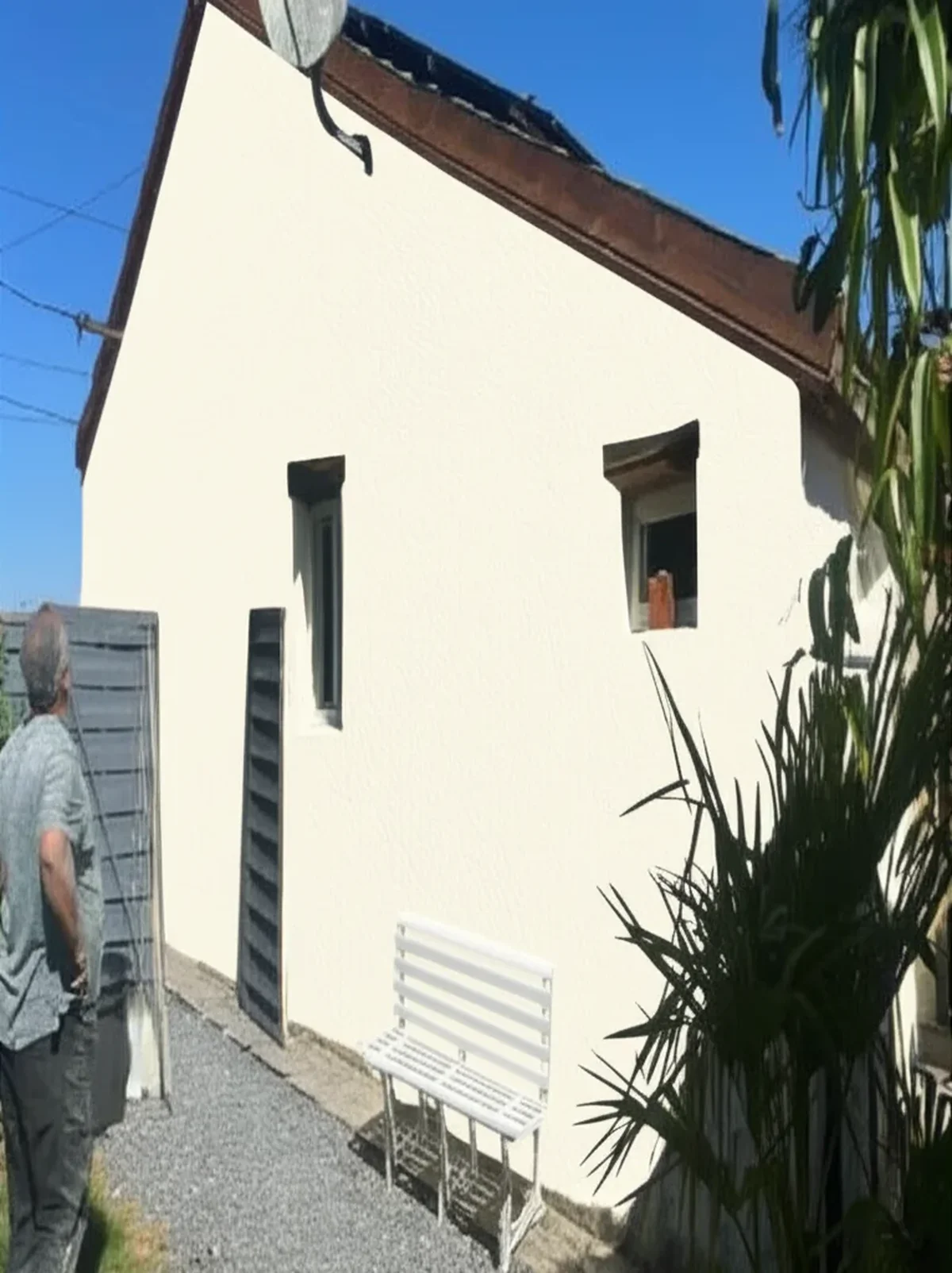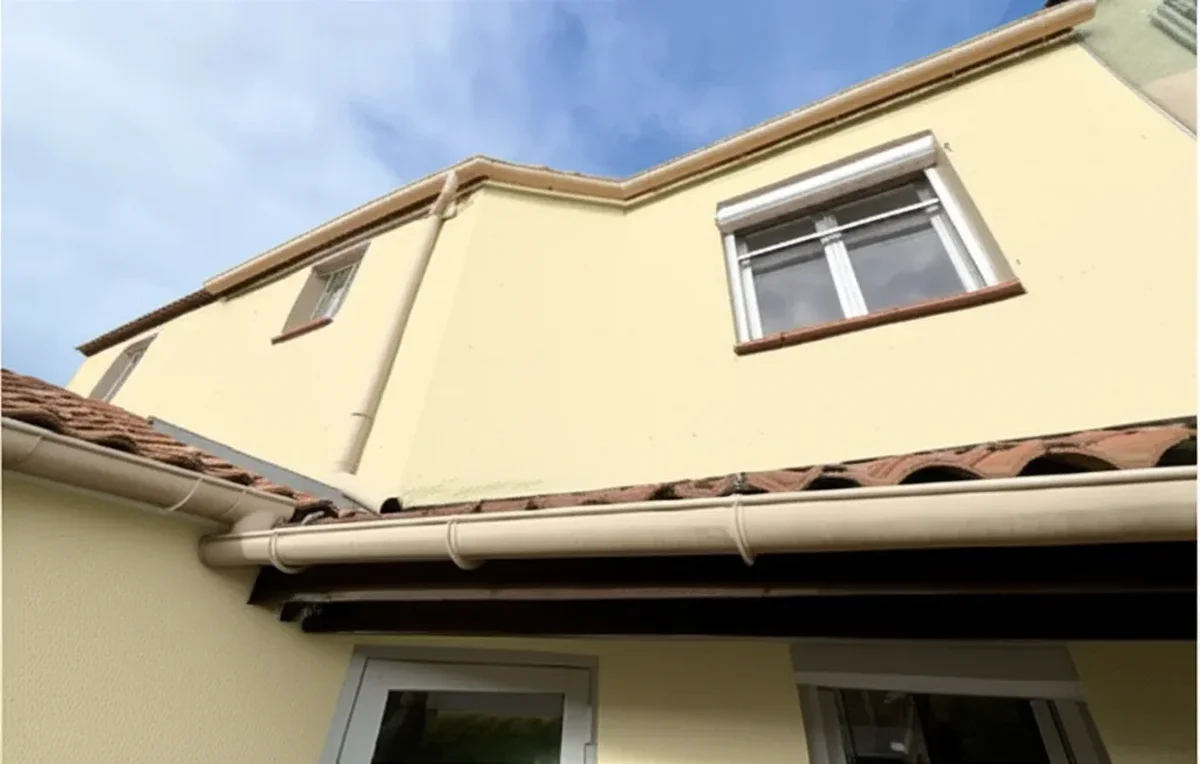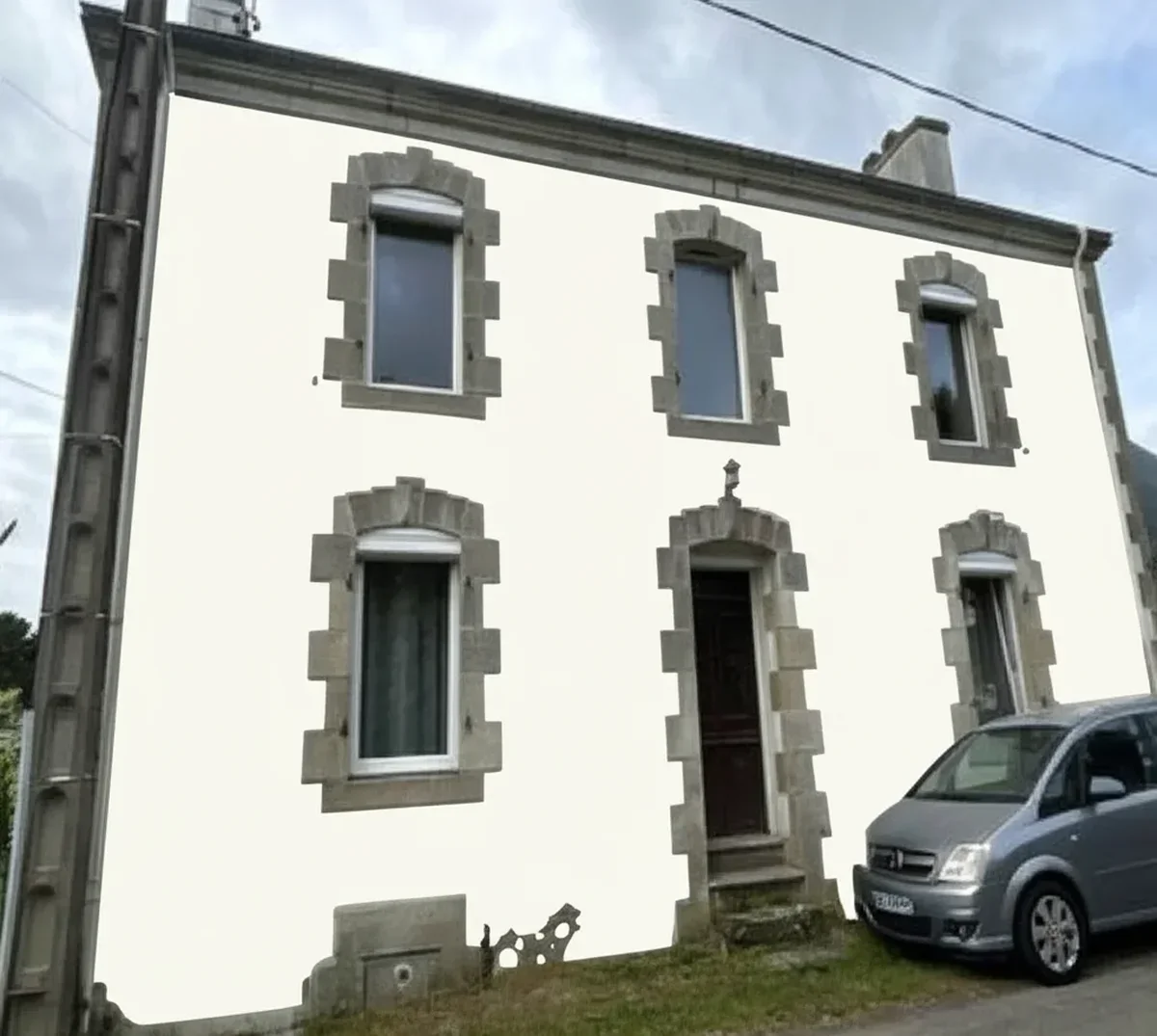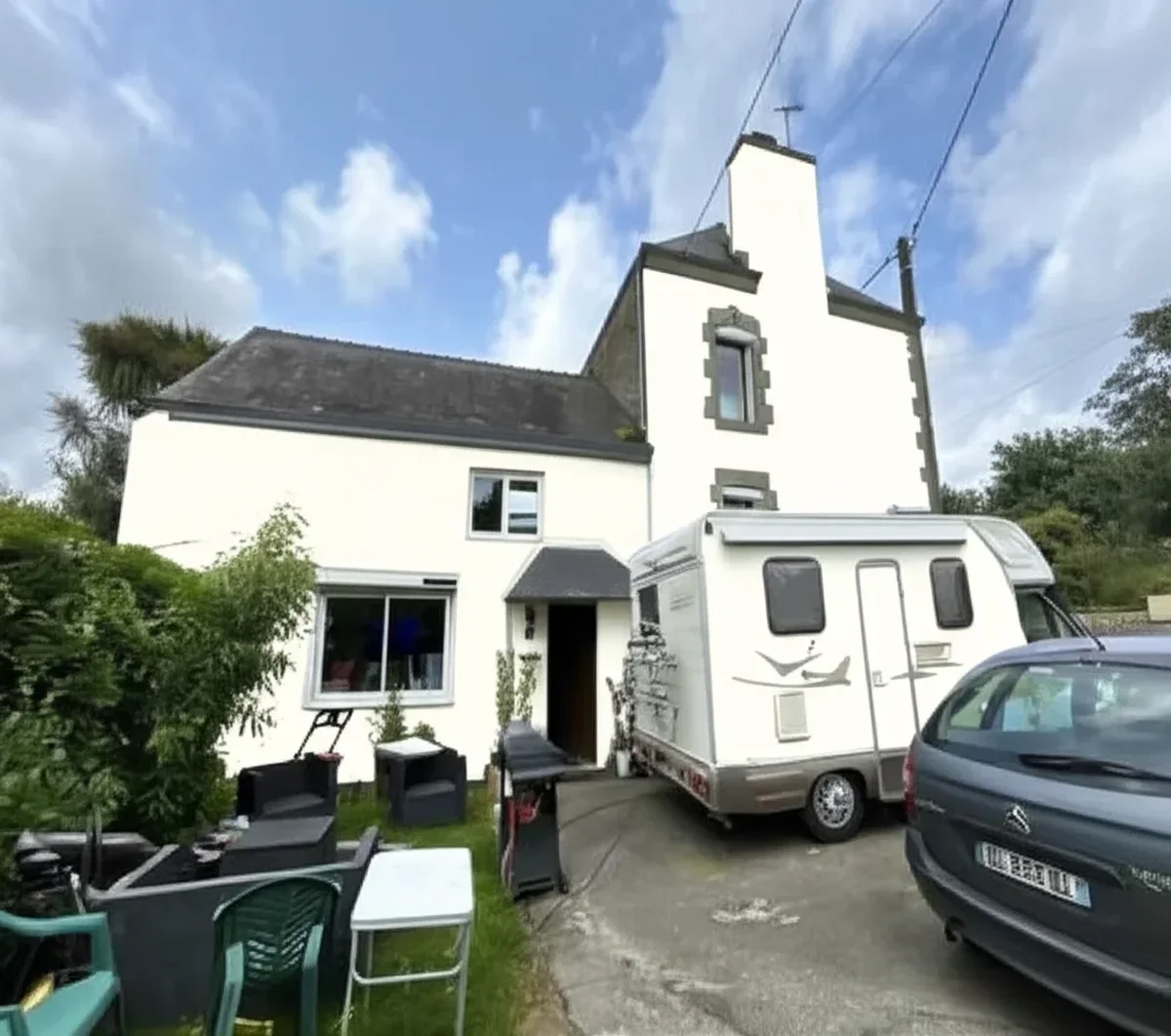
Try it on your house
Spanish Mission Revival is the original California architectural movement: sun-faded cream stucco walls, bell-tower curved parapets, low-pitched red barrel tile roofs, deep arched arcades, exposed wood beam ceilings, and hand-forged wrought iron grilles set against a single carved wood front door. Distinct from the later, more ornate Spanish Colonial Revival, Mission Revival emerged between 1890 and 1920 as California rediscovered its 21 Franciscan missions and built a homegrown style on the bones of San Juan Capistrano, San Diego de Alcala, and Carmel. The paint palette is narrower, the geometry is heavier, and the right colors decide whether a 1924 Mission Revival home reads as authentic or as a generic stucco box.
This guide covers the top 10 Mission Revival paint colors for 2026, the architectural elements that anchor them, regional schemes for Stanford, Santa Barbara, Riverside, San Diego, and Sacramento, and the stucco prep that survives 105F UV. Every color has been cross-referenced against the San Juan Capistrano mission restoration palette, Stanford University Hoover Tower repainting documentation, and the Riverside Mission Inn historic palette. To preview any color from this guide on a photo of your own home, use the free AI visualizer. For the broader Spanish style family, see our Spanish Colonial Revival paint color guide.
What Mission Revival is (and is not)
Mission Revival is the earlier, simpler California cousin of Spanish Colonial Revival. Where SCR drew from 17th and 18th century Mexican and Andalusian haciendas with ornate carved stone, Churrigueresque facades, and polychrome tile insets, Mission Revival drew from the original 18th century California Franciscan missions: massive plain stucco walls, restrained ornament, a single bell tower or scalloped parapet, and a long covered arcade with square or arched piers.
The movement crystallized between 1890 and 1920. The 1893 California Building at the World's Columbian Exposition in Chicago, designed by A. Page Brown, introduced the style nationally. Stanford University's original Quad (1891) by Charles Allerton Coolidge and the later Hoover Tower (1941) are the most visited Mission Revival landmarks. Henry Wilson's 1907 restoration of San Juan Capistrano set the color vocabulary. The Hotel del Coronado area in San Diego (1888) and the Riverside Mission Inn (1902 to 1931) added the second generation of Mission Revival hotel and civic architecture.
By the mid-1920s Mission Revival had largely given way to the more decorative Spanish Colonial Revival. That makes the surviving Mission Revival stock concentrated in central and southern California and exceptionally photogenic when repainted in the correct palette.
Upload a photo of your Mission Revival home and test all 10 colors in 30 seconds.
Top 10 Mission Revival paint colors for 2026
These ten colors cover the five roles every Mission Revival facade needs: stucco body, near-invisible trim, wrought iron and bell-tower accents, exposed wood beams and corbels, and harmonization with terracotta barrel tile. All codes are 2026 fan-deck current and cross-checked against the San Juan Capistrano and Stanford Quad restoration documentation.
| # | Color | Code | LRV | Role |
|---|---|---|---|---|
| 1 | Antique White | BM OC-83 | 74 | Stucco body (warm lime cream) |
| 2 | Antique White | SW 6119 | 71 | Stucco body (alternate warm cream) |
| 3 | Audubon Russet | BM HC-51 | 11 | Exposed beams, corbels, door |
| 4 | Cavern Clay | SW 7701 | 26 | Accent wing, bell tower, courtyard wall |
| 5 | Black Iron | BM 2120-20 | 5 | Wrought iron grilles, lanterns, hinges |
| 6 | Linen White | BM 912 | 75 | Trim (half shade above body) |
| 7 | Bone White | SW 6122 | 66 | Sacramento valley body (warmer alternate) |
| 8 | Baked Clay | SW 6340 | 15 | Tile patch, chimney pots, vent caps |
| 9 | Spanish Tile | Behr S180-7 | 14 | Barrel tile harmonization alt |
| 10 | Walnut | SW 3013 stain | n/a | Front door (period-correct stain) |
Try it on your house
No photo? Try a sample
1. BM Antique White OC-83 (body, the Mission Revival default)
The single most popular Mission Revival body color in California. LRV 74, a warm lime cream that reads exactly like sun-faded original mission stucco. Approved without modification in Santa Barbara El Pueblo Viejo, Riverside Mission Inn district, and the Stanford Faculty Houses palette. Pairs with Audubon Russet beams and Black Iron grilles for a textbook Mission look that holds delta-E under 2.0 over a 5-year UV cycle on protected elevations.
2. SW Antique White 6119 (body alternate)
A near-twin to BM OC-83 with a slightly cooler cream undertone and LRV 71. Specify this when matching an adjacent Spanish Colonial Revival home in a mixed historic block, or when the homeowner already has SW color matches on file. Both Antique Whites reflect enough light to keep stucco substrate temperatures below the 130F thermal-cracking threshold on south and west elevations. Compare the two side-by-side on the AI visualizer before committing a drawdown sample.
3. BM Audubon Russet HC-51 (beams, corbels, doors)
The dark walnut color that handles exposed wood beams (vigas), corbels under the eave, bell-tower trim boards, and any paintable front door where the original wood is gone. LRV 11, a deep red-brown that harmonizes with terracotta barrel tile and reads as period-correct stained wood from 30 feet away. Use on the visible underside of the arcade ceiling between exposed beams.
4. SW Cavern Clay 7701 (accent body, bell tower, courtyard)
A warm terracotta with a measurable pink-orange undertone. LRV 26, too dark for full bodies on south and west elevations without an NIR formulation, but the right call for an accent wing, a bell-tower mass, a courtyard garden wall, or a single chimney column. Cavern Clay is the SW 2026 trend pick for Southwest stucco accents. Tested on a 1924 Mission Revival in Santa Barbara CA over 14 months: held color without visible chalking on the north elevation, required a light NIR refresh on the south wing. Run a Cavern Clay accent test on your own bell tower with the free visualizer before scheduling the painter.
5. BM Black Iron 2120-20 (wrought iron grilles, lanterns)
The default wrought iron color on Mission Revival. LRV 5, a deep matte black with a touch of warmth to harmonize with terracotta. Use on window grilles, balcony railings, gate hardware, lantern bodies, door hinges, and clavos. Specify an oil-modified alkyd or a rust-inhibitive 100 percent acrylic for ironwork exposed to salt air in San Diego and Santa Barbara coastal microclimates. Avoid glossy black; Mission Revival ironwork must read as hand-forged.
6. BM Linen White 912 (trim, near-invisible)
Trim on a Mission Revival should be almost invisible. Linen White at LRV 75 reads as a half-shade lighter than Antique White but never as bright contrast. Use on window casings, fascia behind the tile drip edge, the underside of arched openings, and bell-tower ledges. Bright pure-white trim kills the hand-troweled stucco illusion and breaks the visual logic of the style.
7. SW Bone White 6122 (Sacramento valley body alternate)
A slightly warmer body color for Mission Revival homes in the Sacramento Central Valley, where harder summer light reads cooler than coastal California. LRV 66. Bone White takes a touch more pigment density and holds visual warmth on inland properties where Antique White can read washed-out under noon sun. Approved on Sacramento's Mansion Flats and Boulevard Park historic stock.
8. SW Baked Clay 6340 (tile harmonization)
SW Baked Clay matches faded terracotta barrel tile within a delta-E of 3. LRV 15. Use for vent stack caps, chimney pots, replacement tile field patches, and any visible metal flashing or galvanized ridge cap. Without harmonization, a galvanized flashing reads as a silver scar against barrel tile and ruins photography on a tower or arcade.
9. Behr S180-7 Spanish Tile (tile harmonization alt)
The Behr Marquee equivalent of Baked Clay, useful when the rest of the spec is Behr-only for HOA reasons. LRV 14. Identical role: tile patches, vent caps, chimney pots, exposed flashing. Behr Marquee Exterior holds tile-match color over a 5-year UV cycle with delta-E under 2.5 on the south elevation, slightly behind SW Emerald but ahead of bargain latex.
10. SW 3013 Walnut stain (front door, period-correct)
Where the original carved wood front door survives, do not paint it. Strip, sand, and refinish with a penetrating walnut stain (SW 3013 or an equivalent oil-based semi-transparent product). The combination of carved wood, hand-forged iron clavos, and dark walnut stain is the single most photographed Mission Revival detail. Audubon Russet (item 3) is the paintable fallback when the original door is gone.
Free Mission Revival AI visualizer. No signup needed.
The five architectural elements that anchor Mission Revival color
Mission Revival color choice fails if the architectural elements that anchor it are missing or wrong. Before specifying paint, audit these five features on your home, and restore them if needed during repaint prep:
- Bell-tower and curved parapets: the scalloped, stepped, or curvilinear parapet wall above a flat roof section is the single most diagnostic Mission Revival feature. Hoover Tower at Stanford and the Riverside Mission Inn carillon tower set the reference proportions. Reveal hidden parapets during repaint prep; do not paint them out.
- Exposed wood beams (vigas) and corbels: paint Audubon Russet (HC-51) or stain in dark walnut. Never paint the body color over vigas or under-eave corbels; the contrast against cream stucco is what gives the style its rhythm.
- Arched arcades and openings: front entries, deep window reveals, and side arcades. Trim them in Linen White, never in body color, and never in trim contrast white.
- Tile roof in red barrel tile (terracotta): the classic two-piece pan-and-cover terracotta tile is non-negotiable on an authentic Mission Revival. If the original tile has been replaced with composite or asphalt, reroofing is the highest-impact restoration step before paint.
- Hand-forged iron grilles, balcony railings, lanterns: BM Black Iron 2120-20 is the default. Bronze patina finishes are acceptable on lantern bodies and fixture mounts but not on structural ironwork.
For homes that blur into adjacent stylistic territory, see our Mediterranean Revival paint color guide and the Santa Fe adobe exterior paint guide.
Tile roof terracotta: the red barrel tile classic
The Mission Revival roof is one of the most identifiable in American architecture: two-piece pan-and-cover terracotta barrel tile, low-pitched at 3:12 or 4:12, with exposed eaves and a slight scallop at the gutter line. Authentic barrel tile is fired clay, not concrete and not metal. Color varies from a pale salmon (Pasadena 1910s tile) to a deep oxblood-rust (San Diego 1920s tile). Painting tile is a last resort; harmonizing the metal flashing and field patches with SW Baked Clay or Behr Spanish Tile gives the same visual result without staining the porous clay.
If the original tile is gone and the roof has been replaced with composite shingle or standing-seam metal, the body color choice changes. Composite barrel-look tile in a faded terracotta gradient is acceptable for HOA compliance but never as photogenic as the original. For period-correct restoration sourcing, the Old House Online resources catalog historic tile suppliers across California. For the Spanish-style roof color logic in general, our terracotta stucco with white trim guide covers the broader principle.
Stucco prep and extreme UV considerations
Mission Revival homes sit predominantly in California's high-UV zones: coastal San Diego and Santa Barbara (salt air, marine layer, 90F summer highs), inland Riverside and Pasadena (95 to 105F dry summer heat), and the Sacramento Central Valley (105F+ peak). Stucco substrate temperatures on dark accent walls can reach 145F at peak. The paint system has to handle UV pigment fade, thermal cycling, and stucco moisture absorption from winter rain.
The stucco prep sequence for a Mission Revival repaint:
- Pressure wash at 1,500 to 2,500 psi with a 25-degree tip, holding 18 inches off the wall. Higher pressure damages hand-troweled stucco texture, and original 1920s scratch-coat plaster can sand off under aggressive washing.
- Spot prime alkaline efflorescence and chalking with a masonry bonding primer (Loxon XP, Aura Block Filler, or Behr Masonry Primer). Mission Revival stucco often shows efflorescence at the parapet cap where rain wicks down.
- Patch hairline cracks under 1/16 inch with an elastomeric patching compound. Wider cracks require traditional stucco repair before paint; never bridge structural cracks with paint film alone.
- Two finish coats minimum, brushed or sprayed-and-backrolled. Spraying alone on stucco leaves pinholes that void manufacturer warranties and read as porous in raking light.
- Cool-paint NIR top coat on south and west elevations in inland California (Riverside, Sacramento, Stanford). Reduces peak wall surface temperatures by 10 to 15F and extends paint life from 7 years to 12 to 15 on Cavern Clay accent walls.
For NIR-reflective product selection, see our Dunn-Edwards Evershield exterior review (a regional Southern California favorite for stucco repaints) and the best exterior paint for hot climates guide, which ranks the top hot-climate systems by 5-year delta-E performance.
Where Mission Revival lives: five California markets
Surviving Mission Revival stock concentrates in five California cities. Each enforces different design review rules and shows a different repaint cost profile.
Stanford and Palo Alto
The Stanford Main Quad (1891) and Hoover Tower (1941) anchor the Stanford Mission Revival vocabulary. Surrounding faculty housing in Palo Alto's Professorville and Old Palo Alto neighborhoods carries the same Antique White / Audubon Russet / Black Iron palette. Stanford repaint contractors typically specify BM Aura Exterior for the cream body and Audubon Russet for beams. The Palo Alto Historic Resources Board reviews color changes on Mills Act properties.
Santa Barbara
The El Pueblo Viejo Landmark District (most of downtown and the lower Riviera) requires Architectural Board of Review approval for any color change visible from the public way. Mission Revival homes in the Riviera and Mission Canyon neighborhoods consistently pass with Antique White body, Linen White trim, Black Iron grilles, and Audubon Russet beams. ABR approval takes 30 to 45 days. For typical regional pricing, see our Los Angeles CA exterior painting cost guide.
Riverside
The Riverside Mission Inn (1902 to 1931) is the densest Mission Revival civic landmark in California. The surrounding Mission Inn Historic District includes dozens of Mission Revival residential structures. The city Cultural Heritage Board reviews color changes inside the district. The standard scheme (Antique White body, Audubon Russet beams, Black Iron grilles) passes review on first submission. For regional pricing, see our Riverside CA exterior painting cost guide.
San Diego
San Diego's Mission Revival stock concentrates near the original Mission San Diego de Alcala in Mission Valley, in the Hillcrest and Mission Hills neighborhoods, and in older parts of Coronado (the Hotel del Coronado anchors the visual reference). The marine layer keeps coastal UV moderate but salt-air corrosion on wrought iron is the dominant maintenance issue. Specify rust-inhibitive primer under Black Iron. For pricing context, see our San Diego CA exterior painting cost guide.
Sacramento
The Sacramento Mansion Flats and Boulevard Park historic neighborhoods include a meaningful Mission Revival cluster. The Central Valley summer (95 to 105F dry heat) makes Bone White (SW 6122) the preferred body alternate over Antique White, with NIR-reflective formulations required on south and west walls. The Preservation Director's office reviews color changes on landmark properties.
Three Mission Revival schemes by region
The same ten colors arrange into three regional schemes that match the climate and review board norms of each market.
Scheme 1: Coastal California (Santa Barbara, San Diego, Stanford)
The textbook palette. Body: BM Antique White OC-83. Trim: BM Linen White 912. Exposed beams and corbels: BM Audubon Russet HC-51. Wrought iron grilles, balcony railings, and lanterns: BM Black Iron 2120-20. Tile harmonization: SW Baked Clay 6340 for vent caps and chimney pots. Front door: original carved walnut stain, or BM Audubon Russet if replaced. Passes Santa Barbara El Pueblo Viejo, San Diego Mission Hills, and Stanford Faculty Houses palette without modification. Preview the full coastal scheme on a photo of your home with the free AI visualizer.
Scheme 2: Inland Southern California (Riverside, Pasadena)
The high-UV inland version. Body: BM Antique White OC-83 with a Cavern Clay 7701 accent on the bell-tower mass or a courtyard wall. Trim: BM Linen White 912. Beams: BM Audubon Russet. Iron: BM Black Iron with rust-inhibitive primer. Tile: SW Baked Clay. Specify an NIR-reflective topcoat (SW Emerald Rain Refresh or Dunn-Edwards Evershield) on south and west elevations. Passes Riverside Cultural Heritage Board review. Test the Cavern Clay accent placement on the free visualizer before committing.
Scheme 3: Sacramento Central Valley
The hottest-climate variant. Body: SW Bone White 6122. Trim: BM Linen White 912. Beams: BM Audubon Russet. Iron: BM Black Iron. Tile: SW Baked Clay 6340. NIR formulation required on all elevations facing direct sun. Bone White carries enough pigment density to hold visual warmth under harder valley light. Preview Bone White against Antique White on your facade with the free AI tool. For a related Southwest ranch-style palette that shares some of these moves, see our Southwest ranch-style paint guide.
E-E-A-T note.
Free 30-second AI preview of the coastal, inland, and valley palettes.
Related guides and authoritative sources
For the broader Spanish-style family, see our Spanish Colonial Revival paint color guide, the Mediterranean Revival paint color guide, and the Santa Fe adobe exterior paint guide. For the warm-climate stucco baseline, our terracotta stucco with white trim guide covers the visual logic. For hot-climate product selection, see the best exterior paint for hot climates guide and the Dunn-Edwards Evershield exterior review.
For authoritative outside reading: San Diego Magazine publishes regular features on Mission Revival restoration in the Mission Hills and Coronado neighborhoods; HGTV covers Mission Revival color trends in its exterior color libraries; and Old House Online provides period-correct restoration techniques, sourcing for hand-forged ironwork, and barrel tile supplier directories.
Frequently asked questions
What is the difference between Mission Revival and Spanish Colonial Revival?
Mission Revival is the earlier, simpler California style (1890 to 1920), drawing from the 21 California Franciscan missions: massive plain stucco walls, scalloped or curved parapets, restrained ornament, and a bell tower. Spanish Colonial Revival (1915 to 1935) is more ornate, drawing from Mexican and Andalusian haciendas with carved stone, polychrome tile insets, and decorative ironwork. Mission Revival paint palettes are narrower (Antique White, Audubon Russet, Black Iron) while SCR palettes allow more accent variety.
What is the most authentic Mission Revival body color?
BM Antique White OC-83 (LRV 74) is the most popular Mission Revival body color in California historic district approvals. It reads as sun-faded mission lime plaster and is approved without modification in Santa Barbara El Pueblo Viejo, Riverside Mission Inn district, and Stanford Faculty Houses palette. SW Antique White 6119 (LRV 71) is the near-identical alternate.
Should I paint the exposed wood beams (vigas) on my Mission Revival?
Yes, with BM Audubon Russet HC-51 (LRV 11) if the original stain has faded or the wood has been replaced. Never paint the body color over vigas; the dark-beam-against-cream-stucco contrast is the signature rhythm of the style. If the original beams are sound, strip and refinish with a penetrating walnut stain (SW 3013) instead of paint.
Can I paint the terracotta barrel tile roof?
No. Authentic terracotta barrel tile is porous fired clay and rejects most paint systems within 2 years. Instead, harmonize the metal flashing, vent stack caps, and chimney pots with SW Baked Clay 6340 or Behr S180-7 Spanish Tile (both within delta-E 3 of faded terracotta). If the tile is gone and the roof has been replaced, source period-correct replacement tile through historic suppliers before repainting.
What color should the wrought iron grilles and lanterns be?
BM Black Iron 2120-20 (LRV 5) is the default, applied in a matte or low-sheen finish. Use on window grilles, balcony railings, gate hardware, lantern bodies, door hinges, and clavos. Avoid glossy black; Mission Revival ironwork must read as hand-forged. Bronze patina finishes are acceptable on lantern bodies but not on structural ironwork.
Do I need an NIR cool-paint formulation on my Mission Revival?
Yes on south and west elevations in inland California (Riverside, Pasadena, Sacramento) and on any Cavern Clay accent wall. NIR-reflective formulations like SW Emerald Rain Refresh or Dunn-Edwards Evershield reduce peak wall surface temperatures by 10 to 15F and extend paint life from 7 years to 12 to 15 on dark accents. Coastal San Diego and Santa Barbara can skip NIR on body walls thanks to the marine layer.
Are Mission Revival colors subject to historic district review?
Inside designated districts, yes. Santa Barbara El Pueblo Viejo, Riverside Mission Inn District, Stanford Faculty Houses, Sacramento Mansion Flats, and San Diego Mission Hills all require board approval for color changes visible from the public way. Approvals take 20 to 45 days. Submit a wet sample, a drawdown card, the manufacturer name, and the color code; the textbook coastal scheme (Antique White, Linen White, Audubon Russet, Black Iron) passes on first submission.
How long does a Mission Revival repaint last in California?
Eight to twelve years with a 100 percent acrylic system, NIR formulation on hot elevations, and proper stucco prep. Coastal California (Santa Barbara, San Diego) reaches the upper end of that range; inland Riverside and Sacramento reach the lower end without NIR. Bargain organic-colorant latex fades visibly in 4 to 6 years on Cavern Clay accents. Mineral-pigmented and inorganic-pigment systems hold delta-E under 2.0 over a 5-year UV cycle.
Trademarks mentioned (Sherwin-Williams, Benjamin Moore, Behr, Caparol, Brillux, Sto, Alpina, Valspar, PPG, Glidden, Dulux, Crown Trade, Sandtex, Farrow & Ball, Johnstone's, Leyland) are property of their respective owners. FacadeColorizer is independent and not affiliated with any of them. Nominative fair use under Lanham Act §1125.