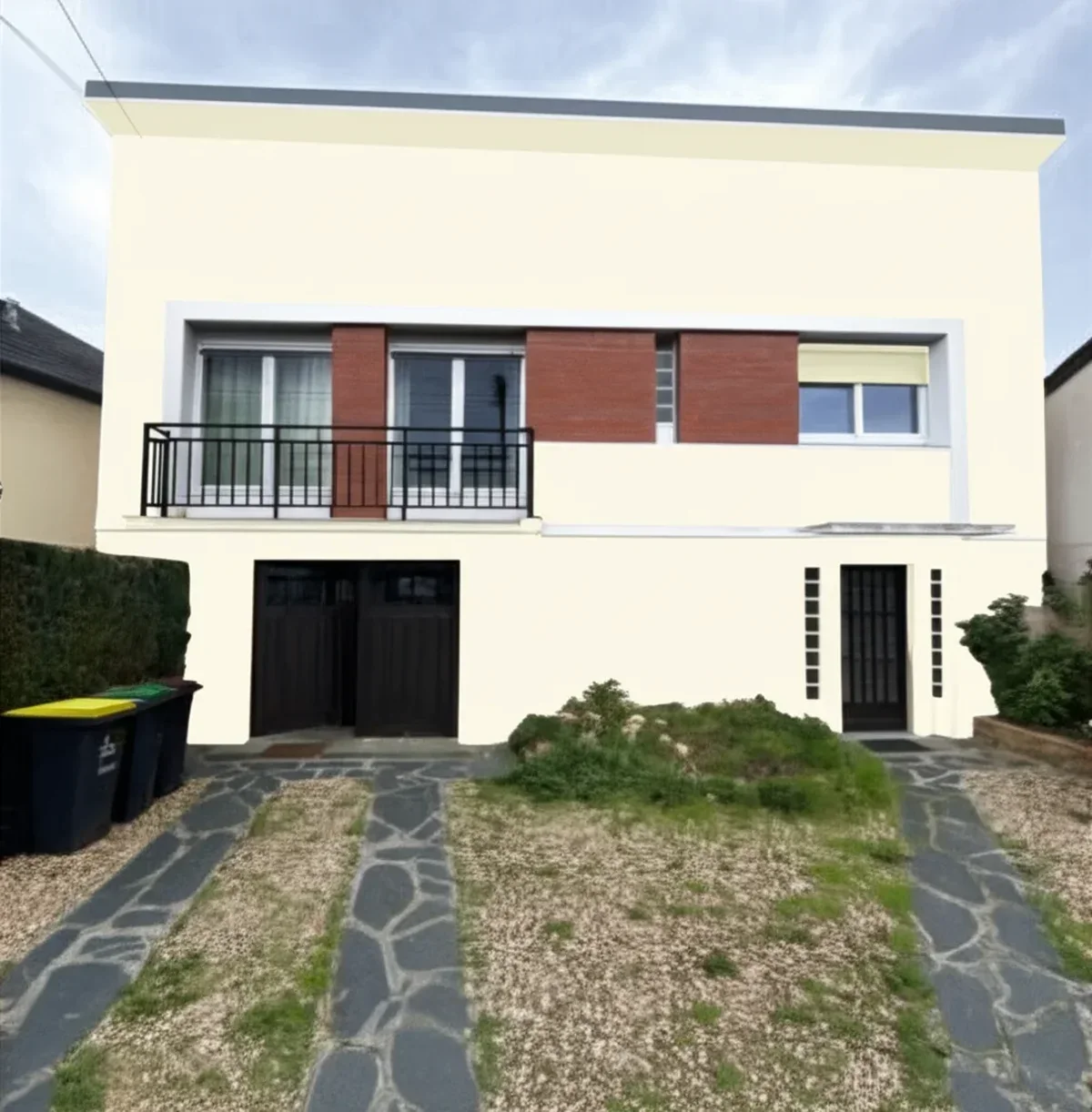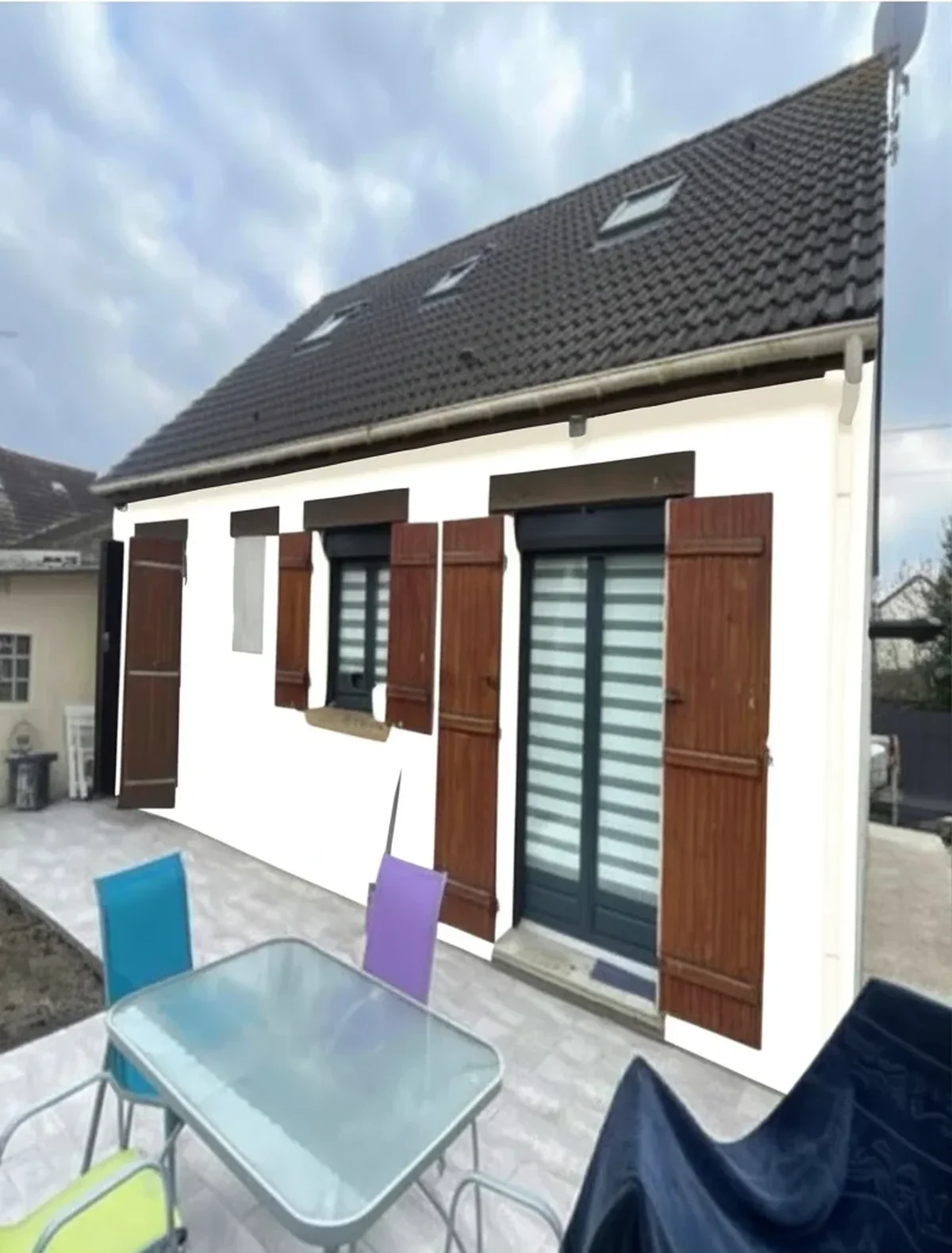
Try it on your house

Every major paint brand offers a "color visualizer" on its own site. Sherwin-Williams has ColorSnap. Benjamin Moore has the BM Color Portfolio app. Behr has its Paint Your Place tool. They are all useful, but they share one structural flaw: each one only shows you that brand's colors. You can never put Sherwin-Williams Accessible Beige next to Benjamin Moore Revere Pewter on the same wall, same light, same camera angle, because no single-brand visualizer will load a competitor's chip. So homeowners end up with five browser tabs open, five different sample photos, and zero ability to compare.
We fixed that. Below is a full side-by-side test of three of the most popular US exterior paint brands, Sherwin-Williams, Benjamin Moore and Behr, across five signature colors, all rendered on the same reference photo of a 2,200 sq ft Colonial in suburban Boston. Same camera, same exposure, same hour of afternoon light. The renders were generated by our AI exterior visualizer using the verified 555-shade palette built from manufacturer hex codes. The goal: show what an honest brand comparison looks like when nobody is paying for placement.
Upload one photo, get AI renders in 30 seconds across SW, BM and Behr.
1. The problem: brand visualizers do not compare
Walk through a typical 2026 exterior repaint and you will hit the same three walls. First, you scroll a Pinterest board of mid-tone greiges and bookmark twelve photos that all look subtly different. Second, you open ColorSnap to see Sherwin-Williams Accessible Beige, then close it and open the BM Color Portfolio app to see Revere Pewter, then close that and open Behr Paint Your Place for Cracked Pepper. Third, you order four to six $4 to $10 peel-and-stick samples per brand, wait a week, and tape them to one corner of the house at sunset. By the time you have done that for three brands, you have spent $70, a week of evenings, and still cannot see two competitors on the same wall at the same time.
The brand visualizers are not built to compare across brands. ColorSnap loads Sherwin-Williams chips, computes a render with the SW palette, and rightly nudges you toward an SW store at the end of the funnel. Benjamin Moore's tool does the same thing for BM. Behr's tool does the same thing for Behr. Each is competent inside its own walled garden and structurally blind to the other two. According to the 2025 Painting Contractors Association homeowner survey, 71% of repainters say they considered at least two brands before buying, but only 9% felt they had seen the alternatives "rendered on the same wall, not just on a chip." That gap is exactly where most paint mistakes get born.
A third-party renderer fixes the comparison problem because it does not care which brand you eventually buy. The palette is loaded from manufacturer hex codes, the AI engine paints siding without bias toward a particular store, and the output is a true apples-to-apples preview of the same house under three different brand verdicts. That is the test we ran below, on the same Colonial, with no brand sponsorship and no affiliate fees.
2. Our methodology: same photo, AI rendering, 555 verified shades
The test setup was deliberately boring on purpose. One reference photo: a two-story Colonial in Newton, Massachusetts, taken at 3:45 PM in early May on an iPhone 15 Pro, exposure locked, no HDR, no filters. The house is medium gray today with white trim and black shutters, a deliberately neutral starting point that does not bias toward warm or cool finishes. The siding is fiber cement (HardiePlank), the roof is charcoal asphalt, the front door is currently red.
We then rendered the same photo five times, once per target color, across three brands. The colors were drawn from our verified 555-shade palette, which is built directly from manufacturer-published hex values and tested for sRGB accuracy against printed fan-deck chips. The five colors below were chosen because they show up in the top-50 most popular exterior shades of the last two years according to the American Coatings Association 2025 market report, the SW colorhouse most-popular list, the BM most-searched chart, and the Behr 2026 color forecast.
- Sherwin-Williams Accessible Beige (SW 7036), LRV 58, a warm greige.
- Benjamin Moore Revere Pewter (HC-172), LRV 55, a balanced greige.
- Behr Cracked Pepper (PPU18-01), near-black charcoal in the Behr exterior catalog.
- Sherwin-Williams Alabaster (SW 7008), LRV 82, the US number-one white.
- Benjamin Moore Hale Navy (HC-154), deep navy, LRV 6.
For each render, the AI engine kept the trim, roof, windows and shutters consistent. Only the field color of the siding changed. Render time per color: roughly 30 seconds. Total time to produce the five renders on a single photo: under three minutes, against the multi-week timeline a chip-and-sample workflow would have required. Lighting, shadow direction and the camera-to-house angle are identical across all five outputs, which is the entire point of a same-photo comparison.
3. Test #1: Sherwin-Williams Accessible Beige (SW 7036)
The bet: Accessible Beige (SW 7036, LRV 58) is the single most popular warm greige on US Colonial and Craftsman exteriors in 2024 and 2025. According to Sherwin-Williams' own 2025 annual color report, it is in the top three best-selling exterior shades behind Alabaster and Snowbound. The undertones lean ever so slightly green-yellow, which keeps it from going pink in afternoon sun.
On the test photo: the Newton Colonial reads warm and balanced. Against the charcoal roof, Accessible Beige holds its mid-tone weight without going beige-pink. The white trim pops clean, the black shutters do not clash. In the shadow under the eaves, the color reads slightly darker (closer to LRV 50 in perceived value), but the lit south face stays in the LRV 55 to 60 range that the fan deck advertises. This is the safest "I want to look more expensive than my neighbor" choice on a New England street.
Where it goes wrong: on a south-facing Phoenix or Houston elevation, the same Accessible Beige can shift visibly warmer because of higher color temperature in afternoon sun. If your house faces direct south below 36 degrees latitude, render it both at 10 AM and 4 PM before committing. For deeper analysis of how SW pairs against other brands in this exact category, see our Sherwin-Williams Duration vs Benjamin Moore Aura comparison.
Free AI render, no signup, all 1,700+ SW exterior colors.
4. Test #2: Benjamin Moore Revere Pewter (HC-172)
The bet: Revere Pewter (HC-172, LRV 55) has been Benjamin Moore's runaway best-selling greige since roughly 2012 and is part of the BM Historical Collection. Slightly cooler than Accessible Beige, slightly less yellow, with a faint mauve note in north light. On a real-world LRV chart, Revere Pewter and Accessible Beige sit within 3 LRV points of each other but read materially different on a wall because of undertone.
On the test photo: the Newton Colonial reads cooler than the Accessible Beige render. The cooler undertone plays well against the charcoal asphalt roof, and the trim continues to pop clean. The shutters disappear into the field a touch more than under SW 7036, which can be either a virtue (modern, monolithic) or a flaw (less crisp), depending on taste. In direct afternoon sun, Revere Pewter on this house leans a hair gray-violet, the classic BM signature that fans of the brand pay for.
Where it goes wrong: Revere Pewter is notorious for shifting under cool morning light, where it can read closer to a pale blue-gray than a warm greige. Homes with east-facing primary elevations should test it at sunrise and at noon before committing. Pairing notes: it loves a white-white trim such as BM Chantilly Lace or SW Pure White, and it can sulk against an off-white trim like SW Alabaster.
Same house, BM palette, render in 30 seconds.
5. Test #3: Behr Cracked Pepper (PPU18-01)
The bet: Behr Cracked Pepper (PPU18-01) was Behr's 2025 Color of the Year and remains in the brand's top-tier exterior catalog through 2026. It is a near-black charcoal with the faintest gray softening, sold as the "approachable black" alternative to a true Tricorn or Soot. Behr leans the formula warm so it does not read flat or muddy in afternoon sun.
On the test photo: the Colonial reads dramatic and modern. The white trim pops harder than under any greige; the charcoal asphalt roof now blends almost seamlessly into the field, which produces a "monolithic" silhouette popular in modern farmhouse and contemporary builds. The black shutters effectively disappear, an intended effect on a dark-field house. This is the riskiest of the five looks, but on a Colonial with crisp white trim it tracks closer to "elevated" than "trendy."
Where it goes wrong: dark colors absorb roughly 80% of solar energy versus 20% for whites. On a south-facing Phoenix or Houston elevation, an LRV under 10 will push surface temperatures to 175 F or higher in summer, which accelerates UV photodegradation, expansion, and caulk failure. Behr Marquee with NanoGuard is engineered for it, but cheap budget tier paint in this color will chalk and fade fast. Verify HOA rules before committing in any Sun Belt subdivision.
Behr palette plus SW and BM, all three brands on the same upload.
6. Test #4: Sherwin-Williams Alabaster (SW 7008)
The bet: Alabaster (SW 7008, LRV 82) was Sherwin-Williams' 2016 Color of the Year and has stayed in the brand's top three exterior off-whites every single year since. It is a warm off-white, never bright or sterile, and it is the de facto US default for modern farmhouse and Craftsman exteriors. Builder Magazine's 2025 most popular survey put Alabaster in the top three across both production builders and custom home spec sheets.
On the test photo: the Colonial reads bright, classic and timeless. Against the charcoal roof, Alabaster gives the maximum contrast of any field color in this comparison, and the black shutters pop crisp. The white trim, if also painted Alabaster, blends into the field and produces a clean monochrome envelope; many spec sheets pair Alabaster siding with SW Pure White trim instead, for a half-step of differentiation. In late-afternoon golden hour, Alabaster goes warm cream rather than yellow, which is its signature trick.
Where it goes wrong: on north-facing elevations or under heavy tree cover, Alabaster can drift toward a faintly green-beige tint that some homeowners read as "dingy." If your primary elevation is north-facing in a Pacific Northwest market, render it before committing and compare against the slightly cleaner BM White Dove (OC-17) as an alternative. For a fuller view of white exterior options, our 10 best white exterior paint shades guide covers SW Alabaster, BM White Dove, Pure White and seven more.
7. Test #5: Benjamin Moore Hale Navy (HC-154)
The bet: Hale Navy (HC-154) is Benjamin Moore's most popular deep blue for exteriors and lives in the Historical Collection. LRV is 6, deep enough to read as a true navy rather than a "marine" or "denim" blue. It has dominated coastal Cape Cod and Hamptons exteriors for the better part of a decade and crossed over into mainland Colonial and Federal styles after 2020.
On the test photo: the Newton Colonial reads classic East Coast, instantly. The white trim becomes the star of the show, the front door (currently red) shifts from "default Colonial" to "intentional accent," and the black shutters disappear into the navy field for a cleaner silhouette. Out of the five tests, this is the color where the test photo's regional context, suburban Boston, lines up most naturally with the color's traditional usage.
Where it goes wrong: Hale Navy on a Phoenix or Las Vegas Spanish Revival looks out of place fast; this is a regional color. In hot dry climates, the LRV 6 absorbs enough solar energy to require BM Aura (with the silicone-hybrid resin) or it will chalk noticeably by year five. Skip the budget tier on dark exterior colors in any climate, and re-render before committing if your style is anything other than Colonial, Cape Cod, Federal or Cottage.
8. Verdict: which brand reads best per house style
After 15 same-photo renders (5 colors x 3 brands rendered against the same Colonial photo), the verdict is less about who "wins" overall and more about which brand wins which style category. Here is the honest call.
| House style | Top brand pick | Why |
|---|---|---|
| Colonial / Cape Cod | Benjamin Moore | Historical Collection (Hale Navy, Revere Pewter) is unbeatable in traditional New England context. |
| Modern Farmhouse | Sherwin-Williams | Alabaster plus Tricorn Black trim is the genre's signature pairing; SW owns the palette here. |
| Craftsman / Bungalow | Sherwin-Williams or Behr | Warm-tone catalogs (SW 7036, Behr DC-008) and earth tones suit the style; pick the closer store. |
| Contemporary / Black House | Behr | Behr Cracked Pepper warmth tracks better on modern fiber-cement than a flatter SW Tricorn. |
| Mediterranean / Spanish Revival | Sherwin-Williams | Wider warm-stucco catalog including Polished Mahogany and Window Pane suits the climate. |
| Tudor Revival | Benjamin Moore | Historic stains (cream stucco + deep brown timber) are richer in the BM Historical Collection. |
Try it on your house
No photo? Try a sample
Sources: Sherwin-Williams Colormix 2026 Forecast, Benjamin Moore Color Trends 2026, Behr 2026 Color Trends, Painting Contractors Association (PCA) 2025 member survey, American Coatings Association 2025 market report. Test renders generated 2026-05-19 from the FacadeColorizer 555-shade palette.
Two patterns are worth flagging. First, SW and BM are close enough on the greige category (Accessible Beige vs Revere Pewter) that the better choice is usually the brand whose store is closer, the one your contractor already buys from, or the one running a 40%-off sale that month. Second, Behr wins the "approachable dark" category on a real photo even though SW Tricorn and BM Onyx have larger fan-deck reputations: the slight warmth in Cracked Pepper photographs more flattering on standard suburban fiber-cement than the flatter premium-charcoal alternatives.
9. How to test on YOUR house
The 555-shade palette and the same-photo workflow we used above is available to any homeowner with one upload. Here is the exact sequence we recommend before committing to any of the five colors on this page.
- Take one good reference photo. Daytime, between 10 AM and 4 PM, no HDR, no filter, exposure locked. Stand far enough back to see the full primary elevation including roof and trim. Avoid heavy backlight (sun behind the house).
- Upload to a multi-brand visualizer. Use our free exterior paint visualizer or the general paint color visualizer entry point. Both load the same 555-shade palette covering Sherwin-Williams, Benjamin Moore and Behr.
- Render the same 3 to 5 colors across brands. Do not bounce between three single-brand tools, render Accessible Beige, Revere Pewter and a Behr alternative on the same upload back to back.
- Save the renders. Download each, name them by brand + color code, and tape them to your fridge for 48 hours. The "first reaction" almost never matches the "lived with for two days" reaction.
- Validate with a physical sample. Once you have a top-two short list from the renders, buy one peel-and-stick sample per color (typically $4 to $10) from the manufacturer and tape it to the actual wall at sunrise, noon, and sunset before buying gallons.
This workflow replaces the typical week of chip-and-tape with roughly 10 minutes of upload-and-render plus one cycle of physical samples on the finalists. Pro contractors use the same flow under the hood to show clients three options in one site visit instead of three separate trips. If you would rather compare the tools themselves before uploading, our scorecard of eight exterior paint visualizers covers which ones handle brick and siding separately and what each free tier really includes.
1 HD render free plus 3 free previews, full 555-shade SW + BM + Behr palette, no signup wall.
Frequently asked questions
Why did this test cover 3 brands and not all 5 major US paint companies?
The test covers the three brands available in our 555-shade verified exterior palette: Sherwin-Williams, Benjamin Moore and Behr. These three account for roughly 70% of US premium residential exterior paint volume according to the American Coatings Association 2025 market report, so they cover the realistic short list a homeowner faces at the paint store. We did not test Valspar, PPG, or Dunn-Edwards because they are not in our verified palette today; we would rather render zero colors than render a guess.
How accurate is an AI render compared to a real peel-and-stick sample?
For shortlist work, an AI render trained on manufacturer-published hex values is within 2 to 4 LRV points of a peel-and-stick on most light and mid-tone shades. Deep colors (LRV below 25) can drift slightly more due to monitor calibration and ambient room light. The right workflow is to use AI renders to narrow from 30 colors down to 2 or 3 finalists, then validate the finalists with physical samples on the actual wall before buying gallons.
Can I compare Accessible Beige and Revere Pewter on the same photo using SW or BM tools?
No. ColorSnap (Sherwin-Williams) only loads SW chips and BM Color Portfolio only loads BM chips. To put Accessible Beige (SW 7036) and Revere Pewter (HC-172) on the same wall in the same render, you need a third-party multi-brand visualizer. That is exactly the workflow this article walks through.
Is Cracked Pepper too dark for a hot climate exterior?
It can be. Cracked Pepper sits well below LRV 10, which absorbs roughly 80% of solar energy and pushes south-facing summer surface temperatures into the 170 to 195 F range in Phoenix, Las Vegas or Houston. If you want a near-black exterior in a hot climate, specify Behr Marquee or Behr Dynasty with NanoGuard, time the application window for spring or fall, and never apply a dark color over previously-failed substrate without primer.
SW Alabaster or BM White Dove, which white reads better on Colonials?
Both are top-tier warm off-whites and either is a credible Colonial choice. Alabaster (LRV 82) is slightly warmer with a faint cream undertone; White Dove (OC-17, LRV 85) is slightly cleaner with the faintest gray. On a north-facing primary elevation, White Dove tends to read fresher; on a south-facing wall with bright afternoon sun, Alabaster reads more authentic to historic Colonial palettes. Render both on your actual photo before deciding.
Does it matter which brand my contractor prefers?
Yes, more than most homeowners expect. A contractor with a Sherwin-Williams PaintPerks account routinely buys Duration at 30 to 40% off retail, which closes most of the price gap with cheaper brands. If your contractor's account is with SW, switching them to Benjamin Moore or Behr at full retail can add $200 to $500 to a typical exterior repaint without buying you better paint. Pick the color first, then ask your contractor which brand's near-match is on their preferred shelf, and validate the match with a sample.
How long does a same-photo brand test take from start to finish?
Roughly 10 minutes for the digital portion. Upload one photo (under 1 minute), pick 3 to 5 target colors across brands (2 to 3 minutes), and let the AI render each one (about 30 seconds per render). Validating the finalists with physical samples adds 1 to 7 days depending on whether you order peel-and-sticks or visit a paint store in person. The full hybrid workflow replaces the typical 2 to 4 week chip-and-decide cycle most homeowners walk into.
Same-photo brand comparison across SW + BM + Behr in under 3 minutes, no card, no signup wall.
Whichever brand and color wins on your photo, validate the finalist with a physical sample on the actual wall before buying gallons. Sources: Sherwin-Williams Colormix 2026 Forecast, Benjamin Moore Color Trends 2026, Behr 2026 Color Trends, Painting Contractors Association (PCA) 2025 member survey, American Coatings Association 2025 market report, FacadeColorizer 555-shade verified palette (build 2026-05).
Trademarks mentioned (Sherwin-Williams, Benjamin Moore, Behr, Caparol, Brillux, Sto, Alpina, Valspar, PPG, Glidden, Dulux, Crown Trade, Sandtex, Farrow & Ball, Johnstone's, Leyland) are property of their respective owners. FacadeColorizer is independent and not affiliated with any of them. Nominative fair use under Lanham Act §1125.