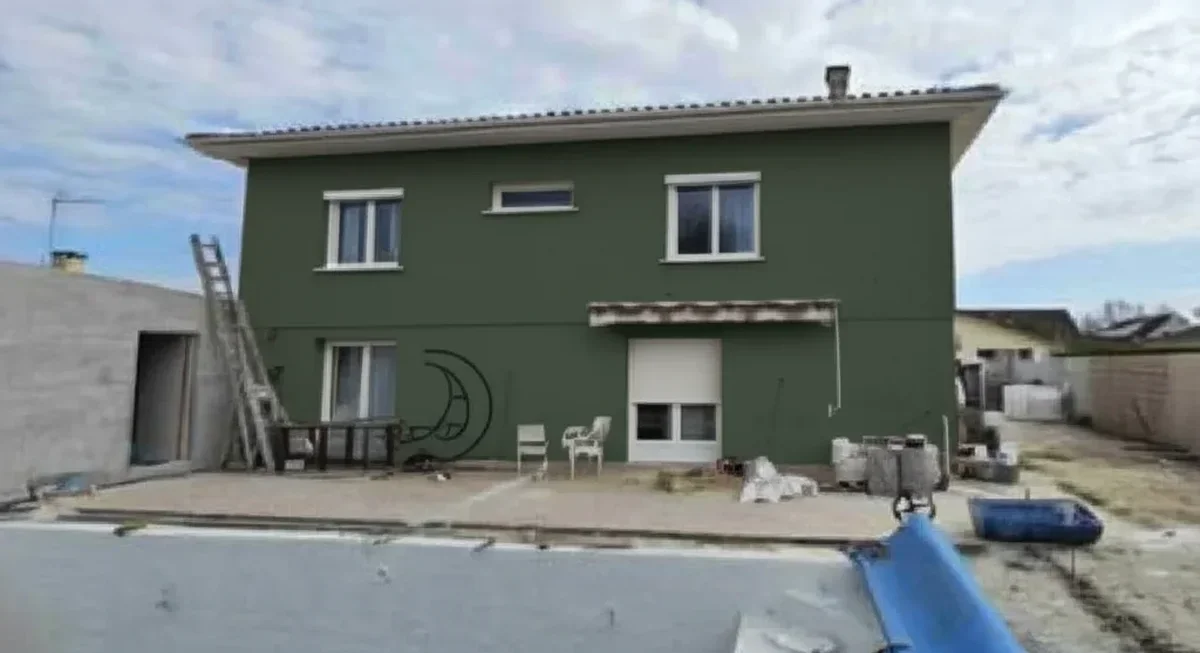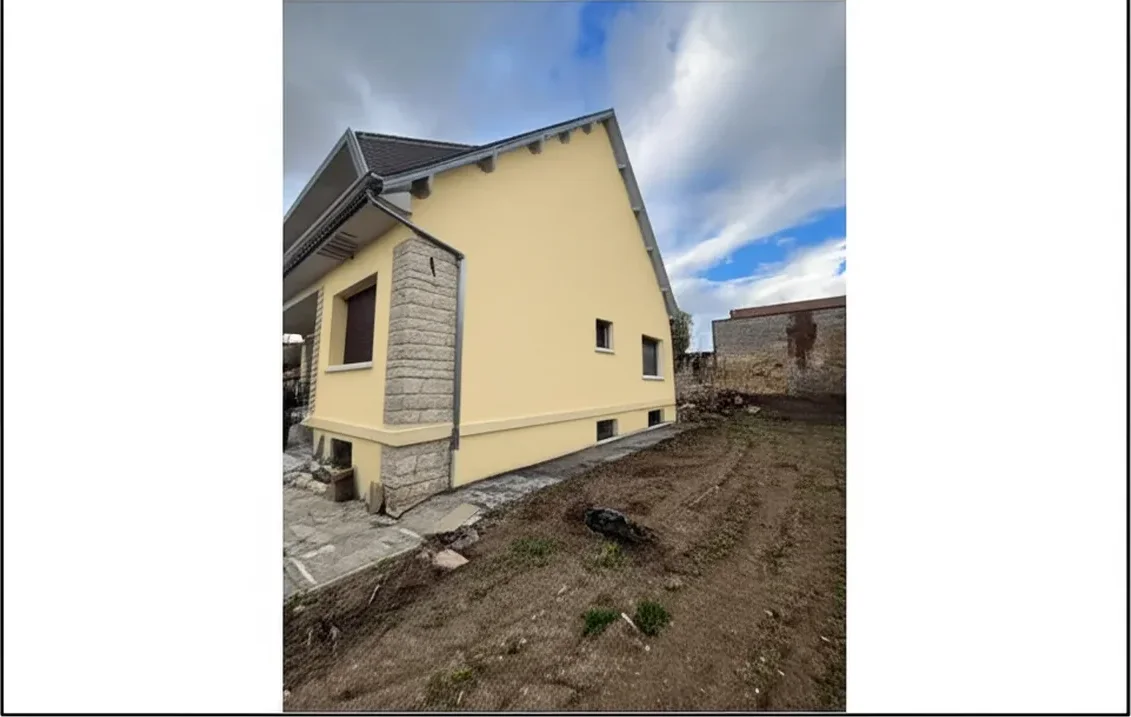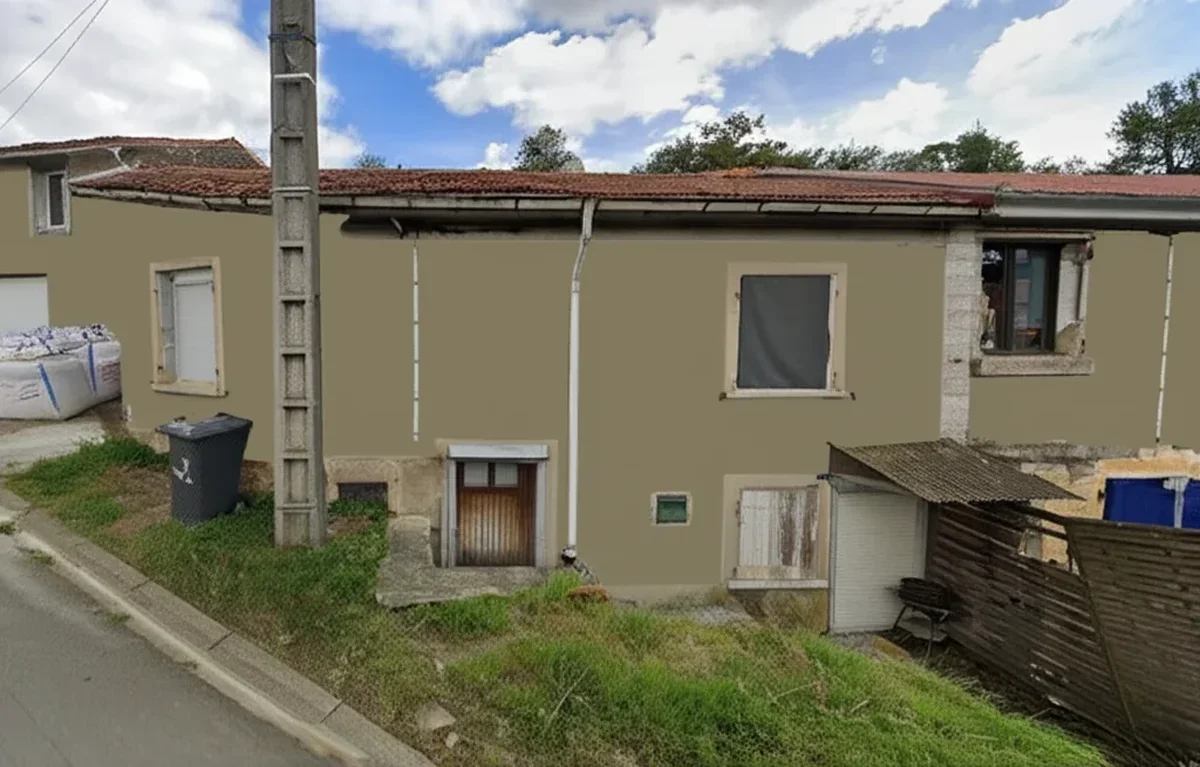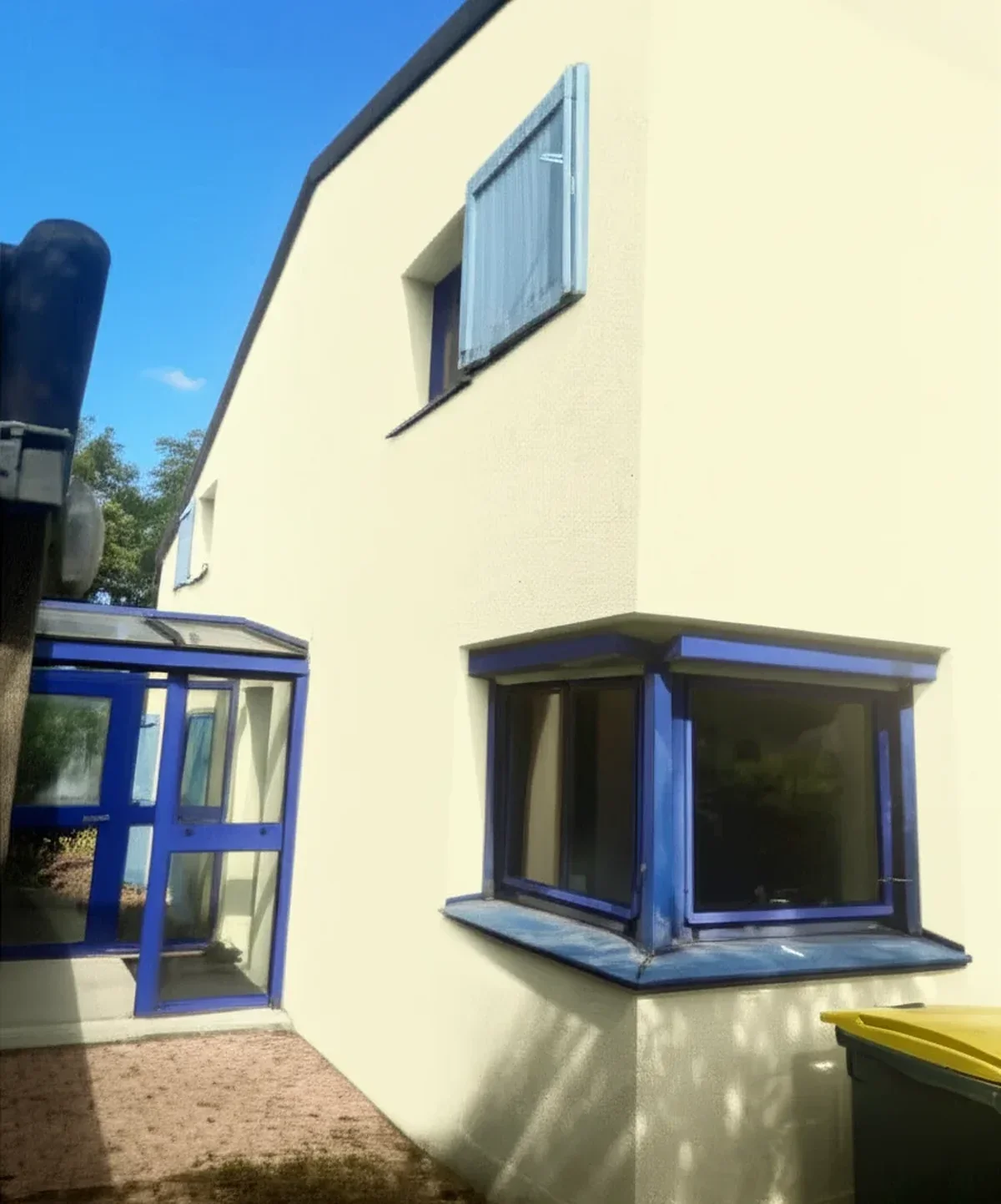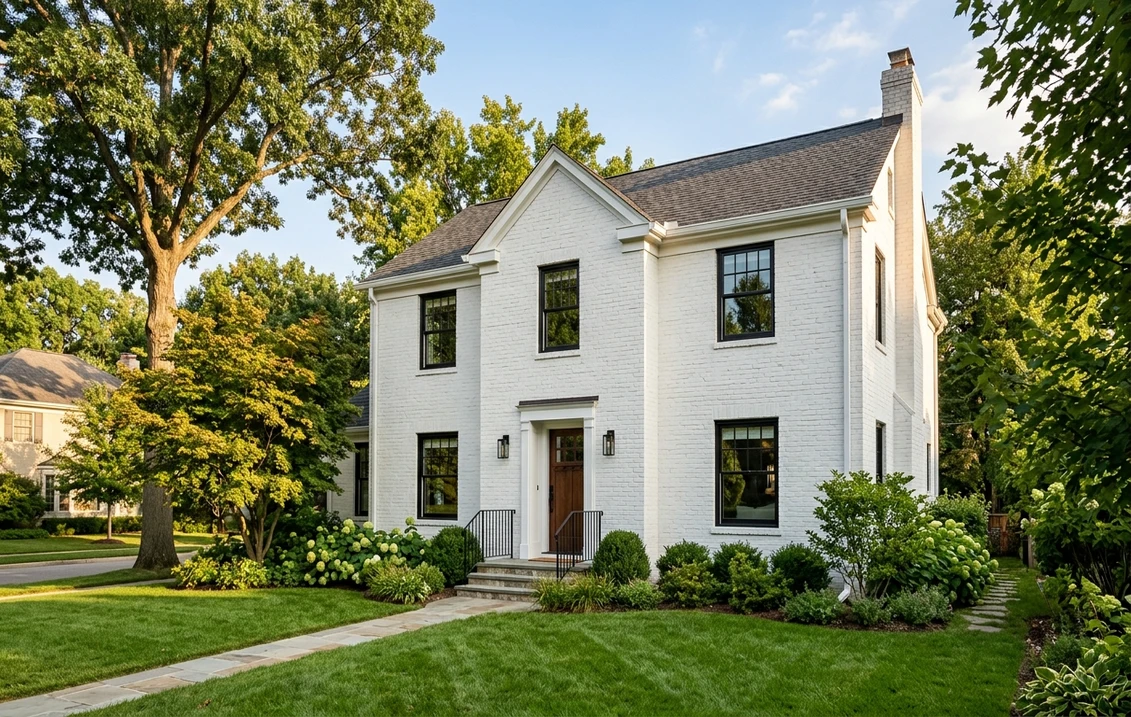
Try it on your house

A white brick house is one of the few exterior decisions that reads as expensive from the street and is genuinely hard to undo. Most guides jump straight to the paint chip. That is the wrong first question. On brick, the system you use to make it white decides how the wall breathes, how it ages and whether your brick manufacturer still stands behind it. The color comes second, and it is easier than people think.
Quick answer: there are three honest ways to get a white brick house. Acrylic latex paint gives an opaque, uniform white and the widest color range, but forms a film that the Brick Industry Association classes as only semi-permeable and that you will repaint. Limewash is mineral, soaks into the brick, weathers softly and can be reapplied over itself without stripping. Mineral (silicate) paint is opaque and matte like paint but bonds chemically to the brick, keeps its permeability and carries the longest warranties. For the white itself, a soft off-white in the 82 to 84 LRV range hides mortar variation better than a stark white above 90.
Before anything else: is your brick allowed to be painted?
The industry reference on this is Technical Note 6 from the Brick Industry Association, revised in March 2025 and titled Changing the Appearance of Brick Masonry. Its first warning is about permanence: "paint can be very difficult to remove from brick masonry without causing damage, and painted exterior brickwork can require repainting on a regular basis depending on the type of paint". The second is about the wall itself: "in most cases, deterioration of brick masonry is due to unaddressed moisture problems. Treatments can further compromise the brickwork if they trap moisture in the wall".
There is also a manufacturer angle that most homeowners never hear about. Acme Brick, one of the largest US brick producers, states in its guidelines for painted brick that "any brick painted in a manner that does not follow BIA guidance is excluded from the Limited Guarantee", and that for exterior masonry "only mineral-based paints" should be used. Painting the wrong way does not just risk the finish. It can void the guarantee on the brick underneath.
If you have not yet decided whether to paint at all, the decision framework in our guide to painting a brick house versus leaving it natural comes first. This page assumes the answer is white and asks how.
The three systems, compared on what actually matters
The Technical Note draws one line through every treatment it lists: mineral-based or not. Mineral treatments "penetrate the pores of the brickwork while maintaining the water vapor permeance", while non-mineral treatments "typically form a film on the surface of brickwork, which can adversely affect the water vapor permeance". Everything below follows from that line.
| Criterion | Acrylic latex paint | Limewash | Mineral (silicate) paint |
|---|---|---|---|
| Type | Non-mineral, film-forming | Mineral, penetrating | Mineral, chemically bonded |
| Look | Opaque, uniform, any sheen | Matte, semi-opaque to opaque, "naturally nonuniform" | Opaque, fully matte, "softens the natural texture" |
| Breathability (BIA) | "Vapor semi-permeable rather than fully vapor permeable" | "Will not change its vapor permeability" | "Water vapor permeability of the substrate is not affected" |
| Aging | "Susceptible to peeling or flaking", repaint cycle | Weathers, "often forming streaks", 5 to 10 years or more | Warranties "of 15 years or more", recoats of 30 years documented |
| Recoat | Over sound film only, more coats lower permeability | "Easily reapplied over existing limewash" | Requires clean, unsealed brick; prior coatings removed |
| Color range | Widest | "May be limited compared with other products" | Wide within the mineral pigment range |
| Reversibility | Chemical stripping, risk to brick | Removable with water in the first days | Effectively permanent |
Try it on your house
No photo? Try a sample
Read across the "aging" row and the trade-off becomes clear. Acrylic paint gives the crispest white on day one and the most work over the life of the house. Limewash asks you to like a finish that changes. Mineral paint sits between the two: as opaque as paint, as breathable as limewash, and the least reversible of the three.
Upload a photo and compare a warm white against a cool white on your actual elevation, free.
Acrylic latex paint: the crisp white with a maintenance clause
Paint is what most people mean by "painted brick", and it is the only route to a truly uniform, bright white in a specific sheen. The Technical Note is fair about it: painting "provides a fully opaque appearance that softens the natural texture of brickwork", and acrylic latex is "readily available in a wide variety of colors and sheens". Then comes the clause. "Applying acrylic latex paint to brick creates a recurring exterior maintenance task, requiring multiple reapplications over the life of the brickwork", and "in all cases, avoid too many coats or heavy applications of paint, which will further lower the permeability of the walls".
Two technical points decide whether a painted white brick house lasts. First, the primer: brick "are normally pH neutral but are set in mortars that are chemically basic", so "an alkaline-resistant primer or a paint specifically designated for use on masonry is recommended". Second, the drying: after cleaning, "wait at least 24 hours for the masonry to dry", and on new or repaired masonry "allow at least 30 days for the mortar to cure". The plastic-sheet test the note describes, a 4 mil sheet taped to the wall for 16 hours, tells you whether the wall is dry enough to paint at all.
On sheen, white brick is a case where the general rule holds strongly: keep it flat or at most low-luster. A textured, absorbent surface traces every reflection, and a glossy white brick wall reads as plastic rather than crisp. The reasoning by substrate is in our exterior paint finish guide.
Limewash: the white that is supposed to change
Limewash is "a mineral- and water-based treatment made from a paste or putty of slaked or hydrated lime" that is "diluted with water prior to application and brushed onto the desired surface". Because lime is alkaline and already a component of mortar, "it is fully compatible with brick masonry and will not change its vapor permeability". It is also, by the note's own account, "naturally mold-resistant" thanks to its high pH.
What the Pinterest photos do not show is the weathering. "In exterior applications, the treatment will weather, often forming streaks, for an 'Old World' appearance." Its life span "can last five to 10 years or more depending upon the level of weathering desired", and "recoating is not difficult, as prior coats do not have to be removed". If you want a white brick house that looks the same in year eight as in year one, limewash is the wrong tool. If you want one that looks better with age and can be refreshed with a brush, it is the right one.
Application details matter more here than with paint. The note specifies a lime putty diluted "either a 1:1 ratio or 1 part lime putty to 2 parts water", brick that "should be dampened slightly by misting with water", an overcast day "so it does not dry too quickly", random brushstrokes with "a 4 to 6 in. wide brush" and "24 hours of drying time between coats". The full technique, including the German smear variant, is in our lime wash brick technique guide.
One warning that saves a lot of disappointment: diluted latex paint is not limewash. The note calls it "semi-opaque paint" or "faux limewash", and is blunt that it "only changes the appearance of the brickwork and does not provide the advantages of authentic limewash". It is "generally more susceptible to peeling or flaking and will require reapplication over time". If a contractor quotes "whitewash" using thinned acrylic, ask which product it actually is.
Mineral paint: opaque like paint, breathable like limewash
Mineral paints "combine pigment with potassium silicate (waterglass) or sodium silicate as the binder". Through silicification, "a chemical bond forms between the paint and the substrate", which is why the water vapor permeability "is not affected when mineral paints are applied". The result is "a fully opaque matte appearance that softens the natural texture of brickwork, smoothing the variations between the brick and mortar profiles", which is exactly the look most people have in mind when they say "white brick house".
The durability claim is the strongest of the three: mineral paints "typically have warranties of 15 years or more, and there have been projects in which recoating was not required for 30 years or more". This is also the category Acme Brick points to when it recommends Romabio products for exterior masonry as providing "high breathability, durability, and a wide range of colors and finishes". The catch is preparation. Mineral paint "can be applied only to brickwork that is clean and unsealed, so the pore structure of the brick can be accessed", and "if there is an existing coating on the brick, it must be removed". Previously painted brick is therefore a poor candidate unless you are prepared to strip it.
Which white: LRV, undertone and the mortar problem
Once the system is chosen, the color question is narrower than a paint-store wall suggests. White brick has a problem no siding has: the mortar. A stark white over gray mortar will show every joint as a faint grid once the paint film thins with weathering, and the brick face and the mortar absorb differently, so even a fresh coat is rarely uniform. A slightly softer white forgives this. That is the practical reason the popular white brick houses on the market almost all use an off-white rather than a pure one.
| White | LRV | Character on brick |
|---|---|---|
| Benjamin Moore White Dove OC-17 | 83.16 | Soft, slightly warm, hides mortar variation well |
| Sherwin-Williams Alabaster SW 7008 | 82 | Warm cream lean, reads creamy in full sun |
| Sherwin-Williams Pure White SW 7005 | 84 | Near neutral, the safe pick with black windows |
| Benjamin Moore Chantilly Lace OC-65 | 90.04 | Crisp, cool, shows the joint grid most |
The Benjamin Moore values are the ones published on the White Dove and Chantilly Lace product pages. Between the two Sherwin-Williams whites, the difference is undertone rather than brightness, and our Alabaster versus Pure White comparison goes through where each one wins. On a large brick elevation, two LRV points are invisible; a cream undertone against cool gray mortar is not.
Two constraints narrow the list further. Limewash colors "may be limited compared with other products", so the exact paint chip above may not exist in a lime formulation and you will be choosing among a manufacturer's whites instead. And mineral paint is tinted with mineral pigments, which handle whites and earth tones well but not every acrylic shade. If the white you love is a specific acrylic chip, that alone may decide the system.
Preparation: the part that decides whether it lasts
The Technical Note spends more pages on preparation than on any treatment, and for good reason. Before anything is applied, the wall must be inspected for "loose or damaged brick units", "loose, missing or deteriorated mortar", "damaged or missing flashing", "missing or clogged weeps" and "visible evidence of active or previous water penetration". Mortar "that is deteriorated, loose or missing, or contains cracks wider than the thickness of a business card, should be removed and repointed".
Cleaning has its own rules. "In many cases scrubbing with a stiff-bristled, non-metallic brush and soapy water or low-pressure washing is sufficient." What is not acceptable: "do not use diluted or undiluted muriatic (hydrochloric) acid", and "abrasive methods such as sandblasting are not recommended, as the process will damage the brickwork". Efflorescence, the white salt bloom on masonry, "should be removed, and once removed the surface should be observed for reoccurrence prior to being treated". A white finish, ironically, is the one that hides efflorescence best and therefore the one where it is most often painted over unaddressed.
Temperature matters too. Per ASTM D6237 as cited in the note, "the typical minimum air, material and surface temperature to apply the treatments is 40 °F", and you should "avoid painting surfaces that are less than 5 °F above the dew point". Our guide to the complete painted brick exterior process turns these into a step-by-step sequence.
What white brick costs you later
The upfront price of the three systems is close enough that it should not drive the decision. The lifetime cost is not. Acrylic paint on brick is a repaint cycle for as long as you own the house, and each repaint must go over a sound film, which means washing and spot-priming every time. Limewash is a refresh cycle with a brush and no stripping, but it is a cycle nonetheless. Mineral paint is the longest interval between interventions and the highest cost if you ever change your mind, because the bond is chemical.
There is also the dirt question specific to white. A white wall shows what every wall accumulates: pollen, roof runoff, splash-back at the base and biological growth on the shaded side. A flat acrylic film holds it; limewash and mineral paint are alkaline enough to resist growth but still show streaking. Plan on a gentle wash of the north elevation every year or two regardless of system, and treat the lower courses near grade as the sacrificial zone they are.
Free, no account needed. Lock the white before you order a system you cannot easily undo.
The mock-up rule, and why it matters more for white
The note is explicit that "mock-ups or sample panels should be used for color selection prior to completing the work", that "standalone mock-ups are preferred rather than designating an area of initial brickwork", and that you should "allow the surface to dry completely before evaluating the results, as the treatment may appear different when wet". For a white this is doubly true: a wet white brick reads gray, a dry one reads bright, and the difference is large enough to make people repaint a wall that was fine.
The cheapest version of that rule is a photograph. Upload your elevation, run a warm white and a cool white on it side by side, and check them against your roof and window color before you buy a single gallon. Then confirm the finalist on a real panel in real light. Between the two steps you will have eliminated the most common regret on white brick, which is not the system but the undertone.
Sources and references
- Brick Industry Association, Technical Note 6, Changing the Appearance of Brick Masonry (March 2025), the source for every treatment description, permeance classification, preparation and application rule quoted on this page.
- Acme Brick, Technical Bulletin: Guidelines for Painted Brick, guarantee exclusion for brick painted outside BIA guidance and the mineral-only recommendation for exterior masonry.
- Benjamin Moore, White Dove OC-17 and Chantilly Lace OC-65, published LRV values.
- Sherwin-Williams, Alabaster SW 7008, manufacturer color page.
- Romabio, mineral paint and limewash manufacturer referenced by Acme Brick for exterior masonry.
Frequently asked questions
Is it a bad idea to paint a brick house white?
What is the best white paint for a brick house?
Limewash or paint for a white brick house?
Is whitewash the same as limewash?
How do I prepare brick before painting it white?
Can I put mineral paint over brick that was already painted?
Trademarks mentioned (Sherwin-Williams, Benjamin Moore, Behr, Caparol, Brillux, Sto, Alpina, Valspar, PPG, Glidden, Dulux, Crown Trade, Sandtex, Farrow & Ball, Johnstone's, Leyland) are property of their respective owners. FacadeColorizer is independent and not affiliated with any of them. Nominative fair use under Lanham Act §1125.