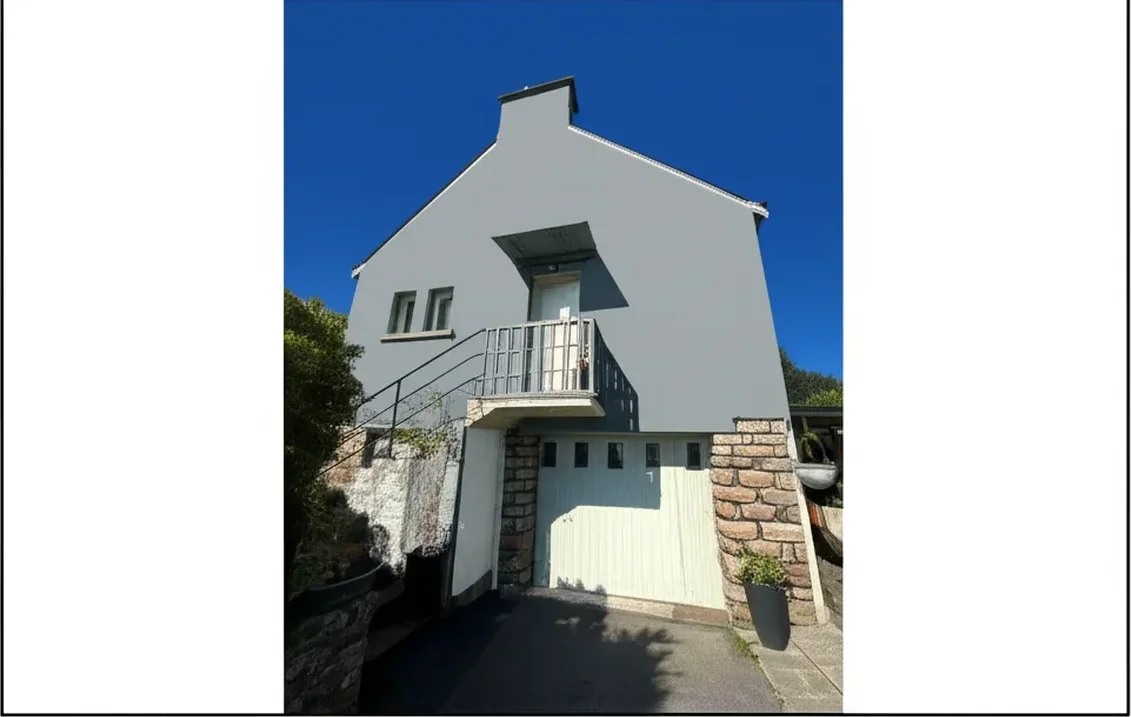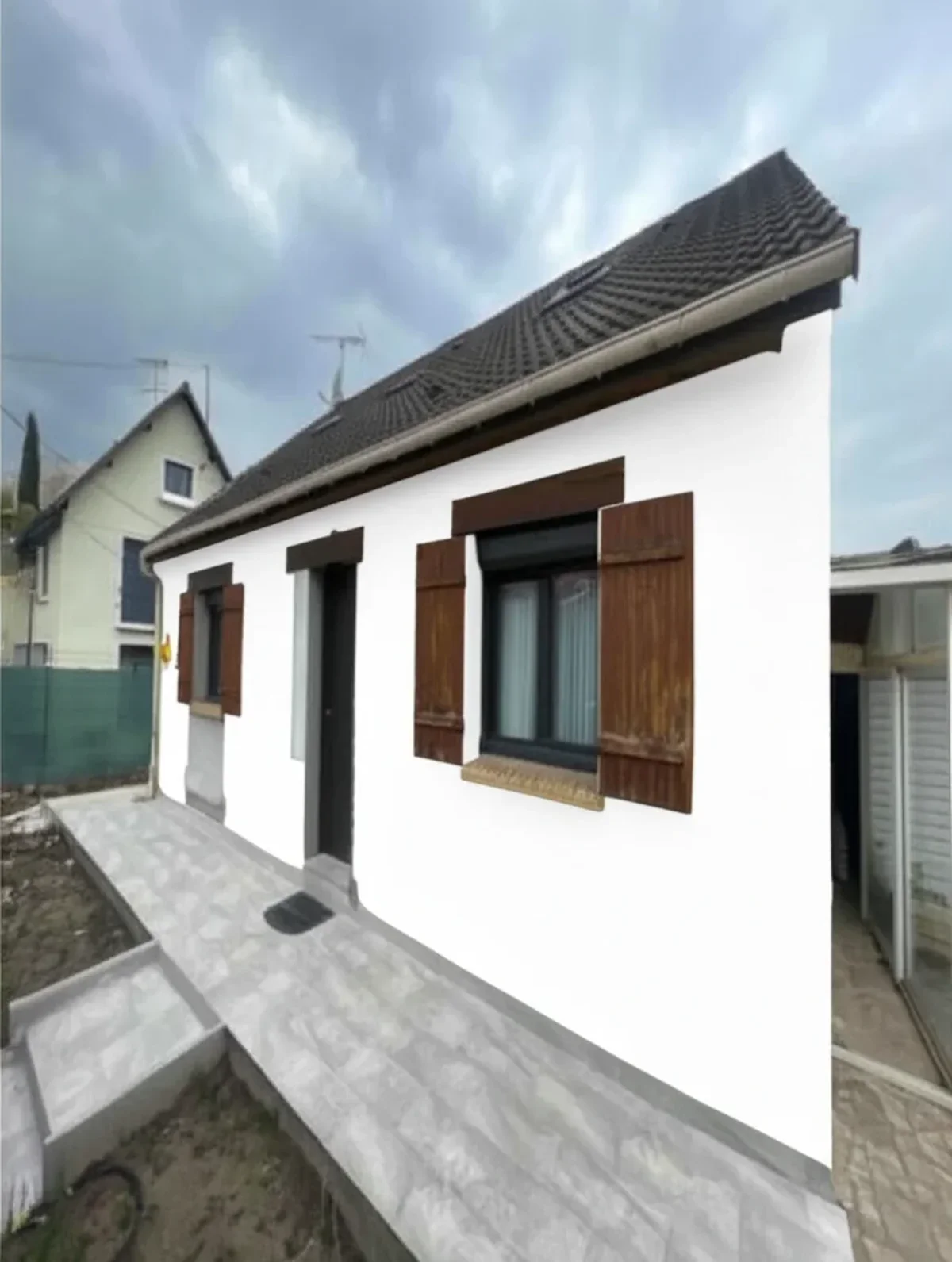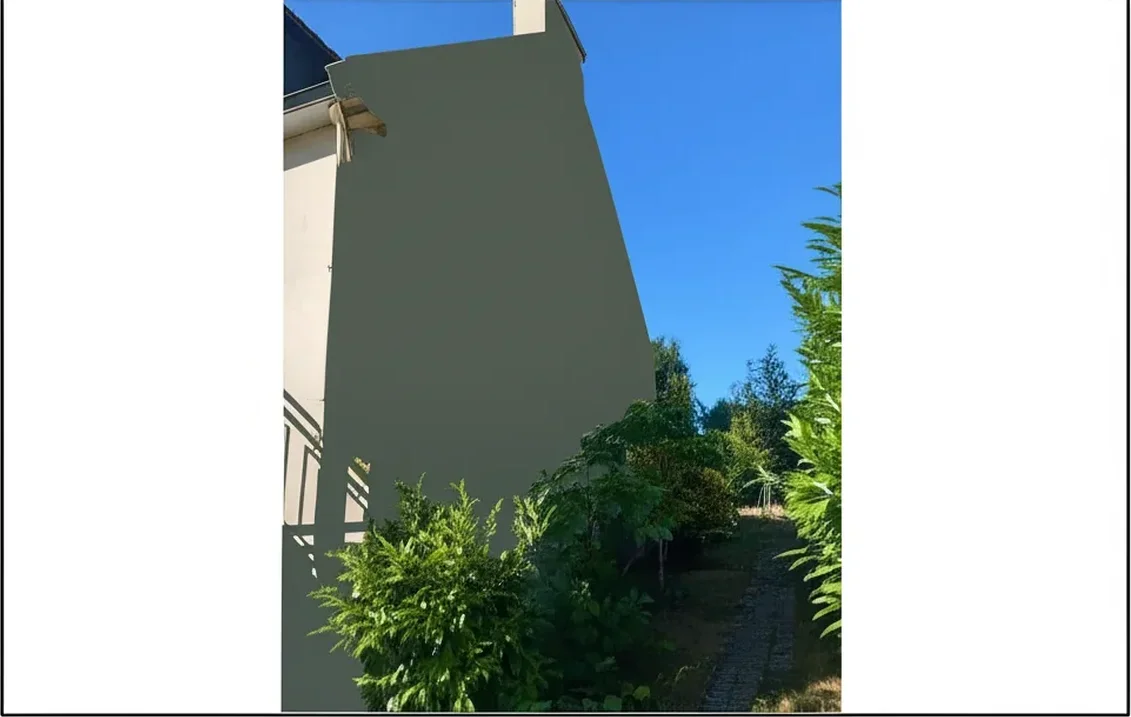
Try it on your house

Masonry paint brushes are the single most underrated tool in a British exterior repaint, and in 2026 they are also one of the most-searched UK painting keywords with around 3,000 monthly UK searches for masonry paint brushes alone. This guide breaks down the real masonry paint brushes a UK decorator or DIYer actually uses in 2026 - Hamilton Perfection, Harris Ultimate Masonry, Purdy XL Glide, Coral Tools Endurance, Hamilton Prestige and the trade-counter own-brands at B&Q, Wickes, Homebase and Screwfix - with verified GBP prices, bristle types and the right size for every British wall finish from smooth render to deep pebbledash.
Why masonry paint brushes are different from interior brushes
A standard interior emulsion brush is built for thin acrylic vinyl emulsion on smooth plastered walls following BS EN 13300 finish classes. Masonry paint is a thicker, heavier, pigment-loaded acrylic or pliolite coating built to BS EN 1062 weathering categories, and on British exterior surfaces it has to work itself into porous brick, rough render, pebbledash and chalky old paint. That demands a stiffer filament, a thicker stock, a tougher ferrule and a longer handle. A typical masonry block brush carries 30 to 40% more paint per dip than an interior wall brush and lasts about 3 to 4 times longer when cutting around fascia, soffit, dado courses, render reveal, dormer cheeks, gable end pointing and sash window frames.
The British brush trade has its own shape language. A 100 mm or 150 mm rectangular block brush ("masonry block" or "stocky") is the workhorse for open render and pebbledash. A 75 mm or 100 mm flat sash is the cutting-in brush for fascia, soffit and reveal. A short-handled radiator brush at 25 to 50 mm clears the back of downpipes and the gap behind cast iron rainwater goods. Hamilton, Harris, Purdy UK, Coral Tools and Stanley dominate the shelves at B&Q, Wickes, Homebase and Screwfix; American imports like Wooster and Corona appear at specialist trade merchants but rarely on UK retail aisles.
The honest summary: masonry paint brushes look agricultural compared to fine-finish brushes, but the geometry is precise. Filament type, length out, ferrule depth and handle balance all matter when you are working a thick 5 litre tin of Sandtex 365 or Dulux Weathershield across a damp brick wall in driving Atlantic rain. The right brush is the difference between two clean coats and four scrappy ones.
Six best masonry paint brushes UK 2026 compared (GBP prices)
Prices and sizes below were verified in May 2026 at B&Q stores in London, Manchester, Birmingham, Leeds and Bristol, Wickes branches in Edinburgh and Cardiff, plus Screwfix Trade Counter and Homebase. Cross-checked against the brand pages of Dulux for paired Weathershield products and Sandtex for masonry brush recommendations. Every brush listed below is suitable for BS EN 1062 masonry coatings on render, brick and pebbledash, with synthetic filaments that work with water-based and pliolite-style solvent masonry paints.
| Masonry paint brush | Best for | Sizes (mm) | Price each (GBP) | Filament | UK availability |
|---|---|---|---|---|---|
| Hamilton Perfection Pure Synthetic | All-rounder render and brick | 25, 50, 75, 100, 150 | 8 to 22 | Synthetic Prospec filament | B&Q, Wickes, Screwfix |
| Harris Ultimate Masonry Block | Pebbledash and rough-cast render | 100, 150 | 9 to 18 | Stiff synthetic block | B&Q, Homebase |
| Purdy XL Glide | Sash, fascia, fine cutting in | 25, 38, 50, 63, 75 | 12 to 21 | Nylon and polyester blend | Screwfix, Brewers |
| Coral Tools Endurance Masonry | Budget block brush, weekend DIY | 75, 100, 150 | 6 to 13 | Synthetic mixed filament | Wickes, B&Q |
| Hamilton Prestige Synthetic | Trade decorator, fine finish | 25, 50, 75, 100 | 10 to 19 | Tipped synthetic | B&Q Trade Point, Brewers |
| Stanley Dynagrip Masonry | Entry level, single elevation jobs | 50, 75, 100, 150 | 5 to 11 | Soft synthetic | Screwfix, Wickes |
Try it on your house
No photo? Try a sample
The realistic shortlist for most British exterior jobs in 2026 is Hamilton Perfection 100 mm and 150 mm as the main block brushes, paired with Purdy XL Glide 50 mm or 63 mm for cutting in fascia, soffit, render reveal, dado course and sash window frames. Hamilton Perfection holds the most paint per dip in this group, releases evenly into a textured render or pebbledash, and the stainless steel ferrule resists the constant wetting and drying that British weather inflicts on outdoor brushes. For full pebbledash elevations and rough-cast render, the Harris Ultimate Masonry Block 150 mm is the workhorse the trade reaches for; the bristle is deliberately stiffer than the Hamilton to push paint into the deep pockets between aggregate stones.
Right brush size for every UK wall finish (render, pebbledash, brick)
British exterior walls split into four mainstream finishes: smooth sand-cement render, textured tyrolean render, pebbledash (sometimes called rough-cast in Scotland) and fair-faced brick. Each one wants a different filament length and brush width. Smooth render across a typical mid-century semi takes 100 mm block brushes or 230 mm rollers; the filament barely needs to flex because the surface is flat. Tyrolean render with its distinctive flicked aggregate finish, common on 1960s and 1970s housing estates in Birmingham, Leeds and Bristol, wants a 150 mm block with stiff filament to work paint sideways into the texture. Pebbledash is the most demanding finish in British housing stock, with stones up to 8 mm across and pockets 4 to 6 mm deep that grab paint and refuse to release it from any brush that is too soft.
| UK wall finish | Recommended brush size | Filament stiffness | Best brush match | Coverage per litre (m2) |
|---|---|---|---|---|
| Smooth sand-cement render | 100 to 150 mm block | Medium | Hamilton Perfection 100 mm | 10 to 13 |
| Tyrolean and textured render | 150 mm block | Stiff | Harris Ultimate 150 mm | 7 to 9 |
| Pebbledash and rough-cast | 150 mm block plus 50 mm radiator | Very stiff | Harris Ultimate 150 mm + Hamilton 50 mm | 5 to 7 |
| Fair-faced London stock brick | 100 mm block plus 25 mm sash | Medium-stiff | Hamilton Perfection 100 mm + Purdy XL Glide 25 mm | 8 to 11 |
| Cotswold limestone and Yorkshire stone | 75 mm block plus 25 mm radiator | Soft (vapour permeable paint) | Hamilton Prestige 75 mm + 25 mm radiator | 6 to 8 |
Coverage figures above assume two coats of Sandtex 365, Dulux Weathershield, Crown Trade Clean Extreme, Sandtex Trade or Johnstone's Stormshield on a sound, properly primed wall. Expect 25 to 40% lower coverage on chalky pre-1965 render where the surface drinks the first coat, and on solid-wall pre-1919 brick where the paint also has to bridge fine mortar joints. On a typical three bed semi front elevation of 45 to 60 m2, the realistic brush budget is one 100 mm Hamilton Perfection at 14 GBP, one 150 mm Harris Ultimate at 18 GBP and one 50 mm sash at 9 GBP - total 41 GBP - which will outlast at least four 5 L tins of masonry paint if washed out properly after each session.
Preview your masonry colour before you buy a 150 mm Hamilton block
Photograph the front of your house, upload it to FacadeColorizer and preview Sandtex 365, Dulux Weathershield, Crown Trade and Farrow & Ball Exterior Masonry on the actual brick or render of your home in under 30 seconds. Free tier includes 1 HD preview plus 3 free variants - enough to short-list a colour and a finish before you head to B&Q, Wickes or Screwfix for the brushes.
Try the free UK visualiserSynthetic vs natural bristle masonry brushes for British masonry paint
Almost every masonry paint sold in the UK in 2026 is water-based acrylic or pliolite-modified acrylic, and that effectively rules out pure natural bristle ("hog hair" or "pure bristle") brushes for masonry work. Natural bristle absorbs water, swells, splays and curls within an hour of starting a wet job; you end up with a soggy, useless brush halfway through the south elevation. The British trade has converged on synthetic Prospec, Chinex-style stiff filament and tipped polyester blends for masonry, all of which keep their shape in water and release thick acrylic paint evenly.
Hamilton Perfection uses a Prospec-style synthetic filament made for thick acrylic emulsions, which holds the paint volume needed for textured render. Harris Ultimate Masonry Block uses a deliberately stiffer, thicker synthetic specifically to work paint into pebbledash pockets. Purdy XL Glide is a nylon and polyester blend designed for fine cutting in on fascia, soffit and reveals, where the bristle has to lay down a smooth edge rather than push paint into texture. Coral Tools Endurance uses a mixed-filament synthetic that is competent for the price; it lacks the stiffness of the Harris Ultimate on pebbledash but is fine for one weekend's work on smooth render. For lime-painted Cotswold limestone, Yorkshire stone or pre-1919 solid-wall brick where vapour permeable mineral paints (Beeck, Keim, Earthborn Silicate, Emperor Mineral) are specified, the softer Hamilton Prestige 75 mm is the sensible choice.
A practical rule across our 16,983 previews dataset: if the user is targeting Sandtex 365 or Dulux Weathershield, a synthetic block plus synthetic sash combination wins. If the user is targeting a heritage limewash, mineral silicate or Farrow & Ball Exterior Masonry on a listed building or in a Conservation Area, step down a filament grade to softer synthetic and accept slightly slower coverage. The British Coatings Federation (bcf.co.uk) publishes technical guidance on applicator selection that aligns with these recommendations.
B&Q vs Wickes vs Homebase vs Screwfix: where to actually buy masonry brushes
The UK retail picture for masonry brushes in 2026 is concentrated in four mainstream sheds. B&Q stocks the widest mainstream range, with full Hamilton Perfection sets, Harris Ultimate Masonry, Coral Tools Endurance and a small selection of Purdy XL Glide. B&Q Trade Point inside larger B&Q superstores adds Hamilton Prestige, the trade-style stocky brushes and bulk packs at roughly 4 to 8 GBP lower per brush. Wickes leans heavier on its own-brand Wickes Pro range plus Harris Ultimate and Coral Tools, and is typically 1 to 3 GBP cheaper than B&Q on the same Harris brush. Homebase has reduced range since the 2024 restructure but still carries Hamilton and Harris in the larger stores in London, Manchester, Birmingham, Edinburgh and Cardiff. Screwfix is the strongest for Purdy XL Glide and for next-day click and collect, with a trade-card discount typically 5 to 10% below shelf price.
For a typical British weekend DIY repaint of a three bed semi, the cheapest realistic basket in 2026 is one Wickes Pro 150 mm masonry block at around 10 GBP, one Coral Tools Endurance 100 mm at 9 GBP and one Stanley Dynagrip 50 mm sash at 6 GBP, total 25 GBP. The decorator's basket from B&Q Trade Point or Brewers Decorator Centres is one Hamilton Perfection 150 mm at 22 GBP, one Hamilton Perfection 100 mm at 14 GBP and one Purdy XL Glide 50 mm at 14 GBP, total 50 GBP. The decorator's basket cuts roughly 25 to 30% off application time on a 60 m2 elevation and will survive two or three full season repaints before needing replacement.
Avoid two retail mistakes that surface repeatedly in our 16,983 previews dataset support enquiries. First, do not use cheap polyester decorating brushes from the 5 for 4 GBP packs that appear in clearance bins; the loose filament shedding under the weight of masonry paint will leave brush hairs stuck to the wall surface that you cannot remove without a full re-paint. Second, do not buy "pure bristle masonry" brushes that occasionally appear at the lower end of Homebase or at Poundland; pure bristle splays in water-based masonry paint within the first hour and is intended for solvent-based products that are now a small minority of UK exterior masonry coatings.
Loading, laying off and cutting in: masonry brush technique that lasts a British winter
A masonry brush is loaded around 40% of the bristle length into the tin; deeper loading wastes paint and ruins the ferrule. Knock off the excess against the inside of the kettle - not the rim of the tin - then apply in a criss-cross pattern across the wall texture before laying off in vertical strokes. Two thinner coats always beat one thick coat. On pebbledash, follow up the brush pass with a 230 mm long-pile masonry roller within 10 minutes to even out the texture; the brush alone leaves visible stipple lines on the deep aggregate. The Health and Safety Executive (hse.gov.uk) publishes free guidance on ladder safety and working at height for exterior decorating that applies to all British domestic repaints over 2 metres above ground level.
Timing matters more for masonry brush life than for any other type of decorating brush. UK exterior masonry paint should be applied at 8 to 25 degrees Celsius, on a dry day with no rain forecast in the next 6 hours and no risk of overnight frost. Driving rain from Atlantic westerlies will pull half-cured masonry paint off a wall and ruin the brush in the same hour; freeze-thaw on a damp brush left outdoors overnight is the fastest way to kill a 22 GBP Hamilton Perfection. Always finish the day by washing the brush in clean water until the rinse runs clear, comb the bristle straight, wrap in clean newsprint and store flat. A properly cared-for Hamilton Perfection 150 mm will outlast 8 to 12 masonry paint tins, an unwrapped one ends up in the bin after two.
For Listed Building Consent and Conservation Area projects under Planning Permission rules, the Local Planning Authority sometimes specifies a vapour permeable mineral paint and a soft-filament brush to avoid bridging historic limewash. The Planning Portal (planningportal.co.uk) and Historic England guidance both recommend a sample patch of around 1 m2 before committing to a full elevation; a 75 mm Hamilton Prestige or a 50 mm Purdy XL Glide is appropriate for these sample patches.
Preview every UK masonry colour before you load the brush
Don't waste a 22 GBP Hamilton Perfection on a colour you'll regret. Upload your facade photo to FacadeColorizer and preview Sandtex 365, Dulux Weathershield, Crown Trade Clean Extreme, Johnstone's Stormshield and Farrow & Ball Exterior Masonry colours on the real surface of your home in under 30 seconds. Free tier: 1 HD preview plus 3 free variants, no card needed.
Try the free UK visualiserHow to test it on your own home before you buy
No third-party report replaces your own walls: the same colour reads differently on a north elevation and a south one, next to red brick or a grey roof, under morning and evening light. Take a daylight photo, upload it to the free AI paint visualiser, and run two or three candidates on the same image so the comparison is fair. Keep the one or two that survive the side-by-side, buy a tester pot of each, and brush them out on the actual surface in the actual light before you order the full quantity.
Five masonry brush mistakes British DIYers make in 2026
First, using an interior emulsion brush on exterior masonry. An interior brush is built for thin vinyl emulsion at BS EN 13300 finish classes; the softer filament collapses under the weight of BS EN 1062 masonry paint and leaves brush marks. Second, oversizing the brush; a 200 mm "stocky" is a trade brush for full elevation work with a paint pot strapped to the belt - the average British DIYer is faster with a 100 to 150 mm block. Third, undersizing the brush; a 50 mm sash is a cutting-in brush and will take three weekends to cover a 60 m2 elevation that a 150 mm block clears in a long afternoon.
Fourth, leaving the brush in water overnight; the ferrule corrodes, the filament curls and the next morning the brush sheds bristles into the second coat. Always wash, comb straight, wrap in clean newsprint, store flat. Fifth, not buying a 25 to 50 mm radiator brush for cast iron downpipes, soffit returns, behind extractor terminals and the back of meter boxes. About 20% of an exterior repaint hides behind awkward fittings; a 6 GBP radiator brush from B&Q or Screwfix saves you from leaving "halo" gaps that will start to flake first in the next freeze-thaw cycle. Citizens Advice (citizensadvice.org.uk) publishes consumer guidance on tradesperson disputes for British homeowners commissioning a decorator if the brushwork on the finished job is below standard.
A final practical point: keep the receipt. Hamilton, Harris, Purdy UK and Coral Tools all back their professional masonry brushes with at least a 12 month manufacturing guarantee against ferrule failure and filament shedding, and B&Q, Wickes and Screwfix all accept exchanges on visibly defective brushes within 30 days. If a brush sheds more than 2 to 3 bristles in the first hour of use, it is defective; take it back.
Related UK masonry and exterior painting guides
Frequently asked questions
What is the best masonry paint brush UK 2026?
What size brush do I need for masonry paint on a British semi?
Are synthetic or natural bristle brushes better for masonry paint?
Where can I buy masonry paint brushes in the UK?
How long should a masonry paint brush last?
What brush is best for pebbledash walls UK?
Can I use the same brush for Sandtex and Dulux Weathershield?
Trademarks mentioned (Sherwin-Williams, Benjamin Moore, Behr, Caparol, Brillux, Sto, Alpina, Valspar, PPG, Glidden, Dulux, Crown Trade, Sandtex, Farrow & Ball, Johnstone's, Leyland) are property of their respective owners. FacadeColorizer is independent and not affiliated with any of them. Nominative fair use under Lanham Act §1125.