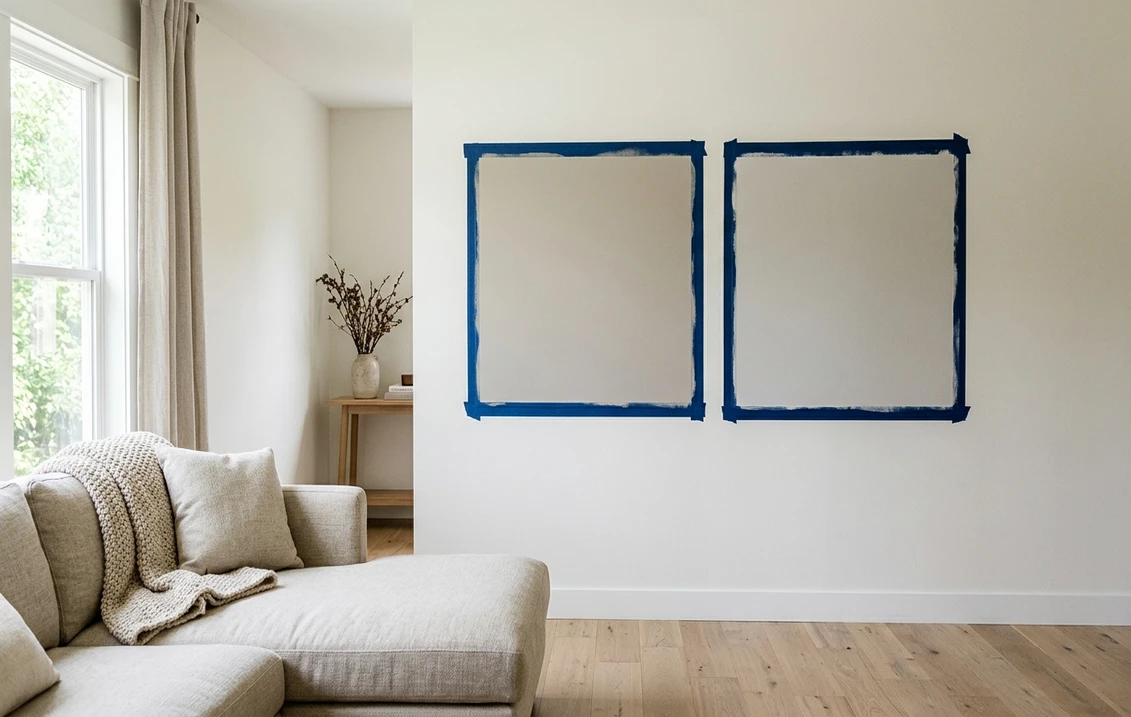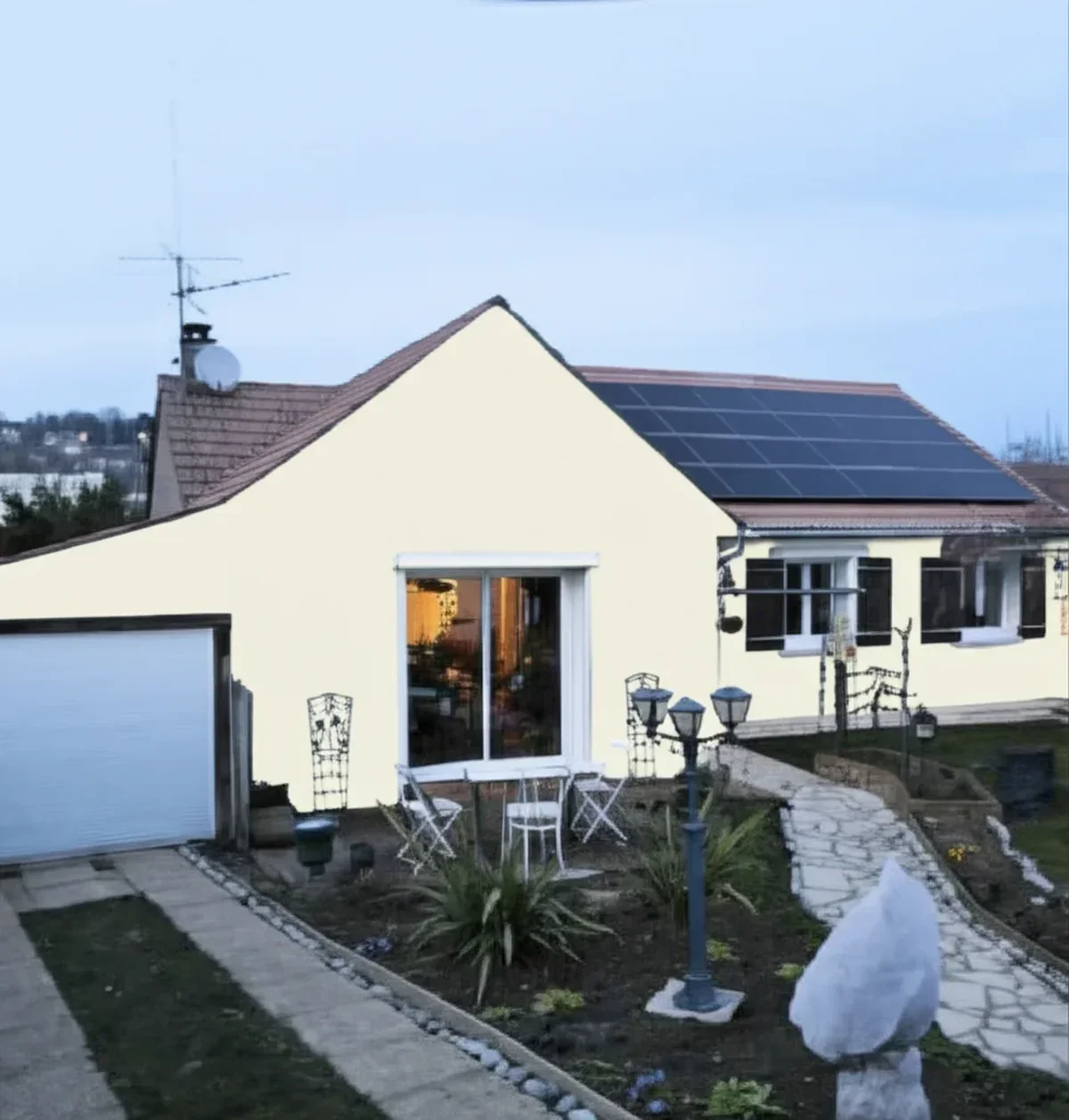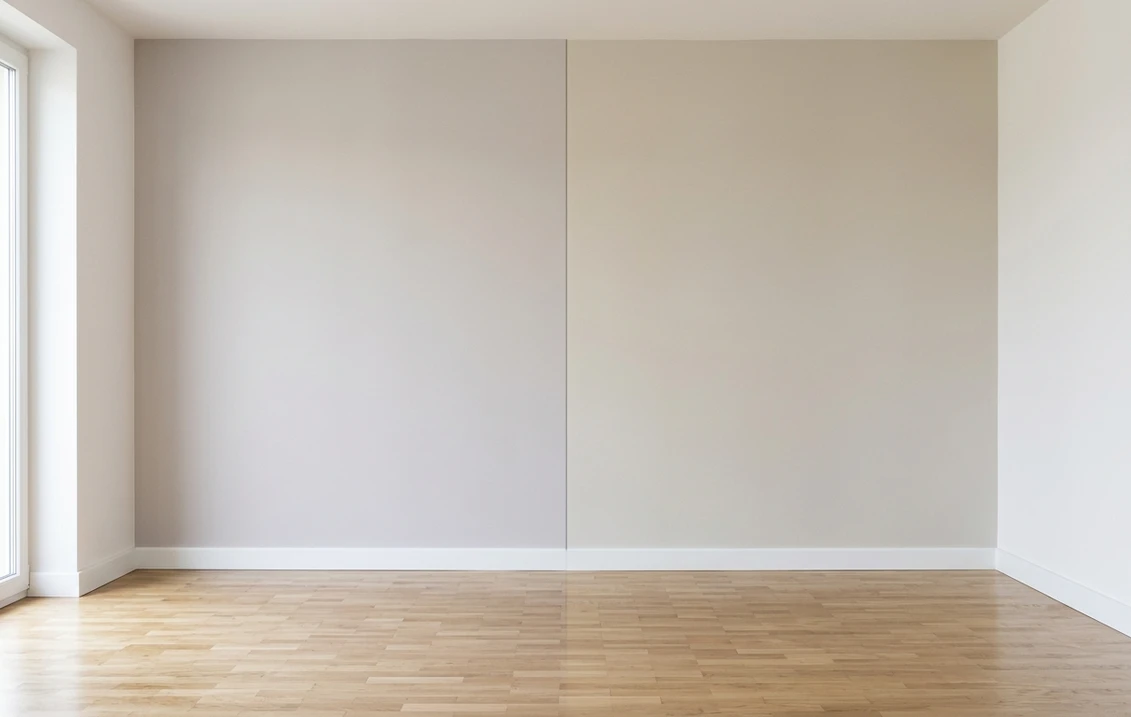
Try it on your house

The verdict in three lines. Balboa Mist OC-27 (LRV 67) is the cooler, grayer greige: lighter and crisper, it suits bright white trim, cool stone, black metal, and rooms you want to feel airy.
Collingwood OC-28 (LRV 62) is the warmer, cozier greige: a hair deeper, it flatters wood floors, cream trim, brass, and rooms that need warmth injected.
The 5-point LRV gap is real but modest. Undertone (cool gray vs warm greige) decides most of this duel, so the honest tiebreaker is seeing both on a photo of your own room.
Benjamin Moore Balboa Mist (OC-27) and Collingwood (OC-28) are code neighbors on the same Off-White strip, and they are the greige pair people cross-shop most inside the Benjamin Moore deck. Both are light, easygoing neutrals, and on a chip they look like the same color printed twice. On a full wall they part ways: one leans cool and gray, the other warm and cozy. This head-to-head puts the numbers side by side, walks the duel room by room and exposure by exposure, and tells you exactly when each color wins. For the general method behind any two-color decision, start with our side-by-side method for comparing paint colors.
The numbers side by side
| Attribute | Balboa Mist OC-27 | Collingwood OC-28 |
|---|---|---|
| Family | Cooler, grayer greige | Warmer greige |
| LRV | 67 | 62 |
| Approximate hex | #DBD7CD | #D4CFC5 |
| Approximate RGB | 219, 215, 205 | 212, 207, 197 |
| Undertone | Gray base with a soft violet-gray cast in cool light | Warm greige; a faint violet-gray can surface in cool north light |
| Loves | Crisp white trim, cool quartz and marble, black metal, chrome | Oak and walnut floors, cream or White Dove trim, brass, linen |
| Watch out for | Can flash faint violet in dim north light | Can drift beige in strong sun, or tip cool under blue-white bulbs |
| Overall vibe | Crisper, lighter, more neutral | Warmer, cozier, slightly deeper |
Try it on your house
No photo? Try a sample
LRV values are the published Benjamin Moore figures. Hex and RGB are approximate digital renderings; the authoritative reference is a physical Benjamin Moore chip or peel-and-stick sample.
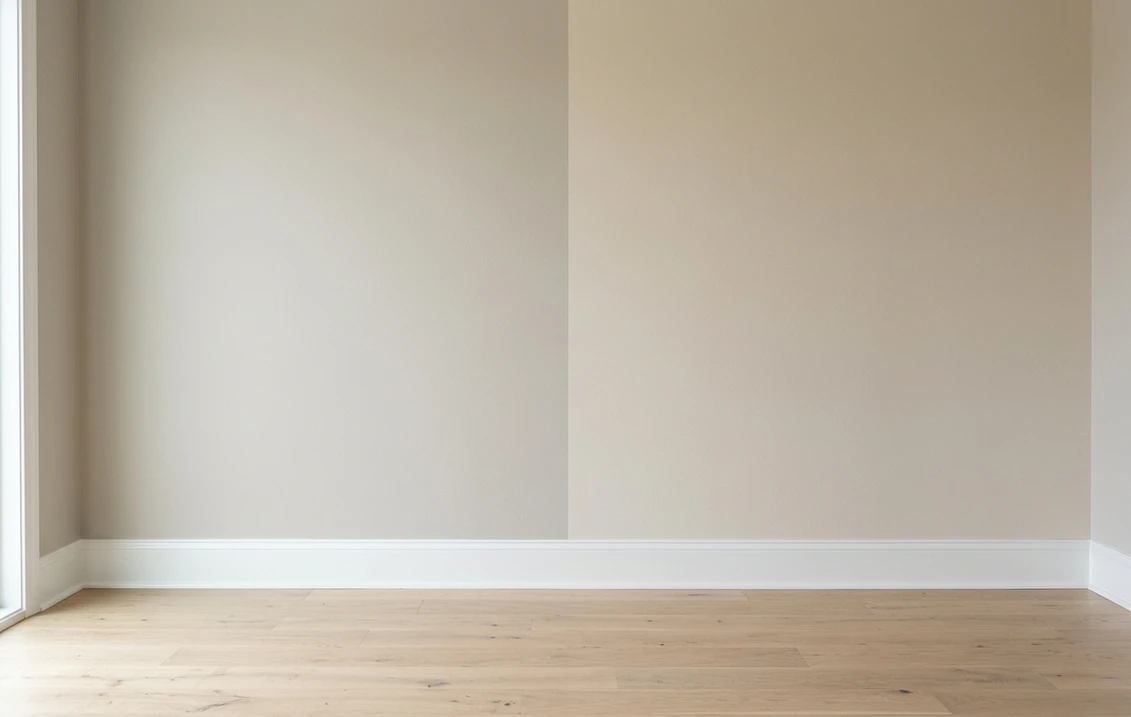
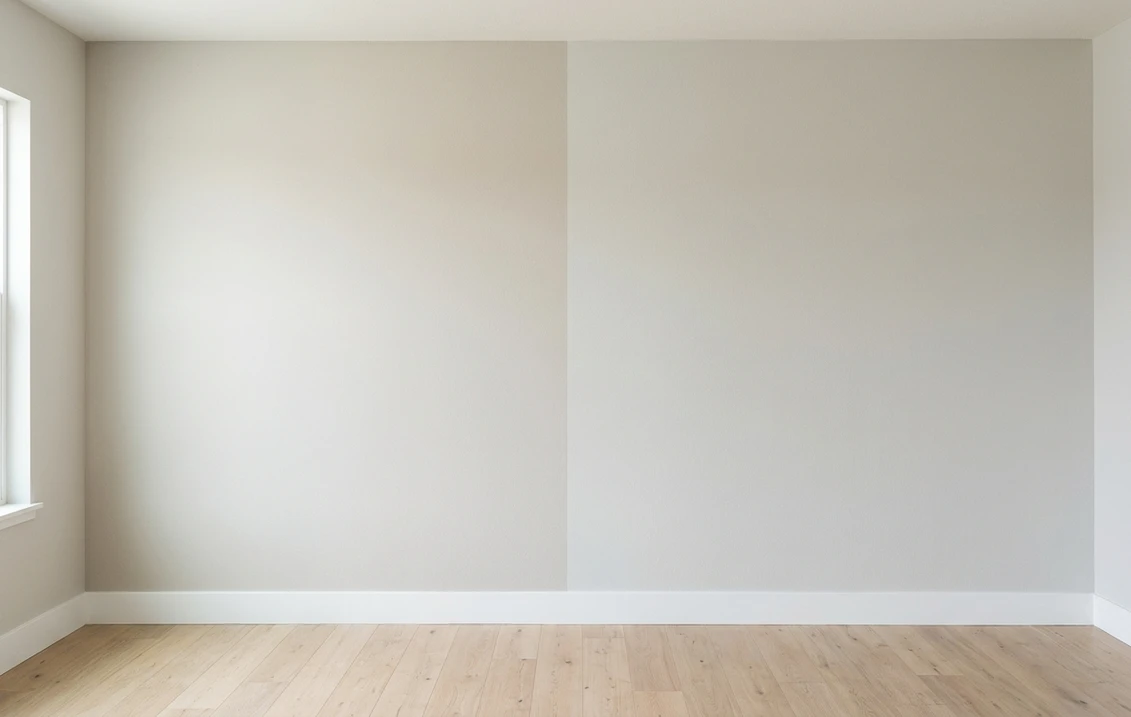
Read that table once and the shape of the duel is clear. Depth is nearly a tie: at LRV 67 versus 62, Balboa Mist is the lighter of the two, but the 5-point gap is small enough that no one will call Collingwood "the dark one." The real story is the undertone row. Balboa Mist keeps a gray base and can flash a whisper of violet-gray in soft light, while Collingwood carries visible warmth and reads cozier. Hold each chip against white printer paper and the difference jumps out: Balboa Mist shows its cooler gray, Collingwood its warmth. That white-paper trick, plus the two-coat sample rule, comes from the comparison method in the pillar guide above.
Upload one photo, get a photorealistic render, then swap to Collingwood in one click. Free, no signup.
Room by room, exposure by exposure
Because the depth gap is small, the same room can crown either color depending on its light and finishes. Here is how the duel plays out across common situations.
| Situation | Usual winner | Why |
|---|---|---|
| North-facing room that needs warmth | Collingwood | Its warmer base fights flat, cool light better; sample both, since either greige can flash faint violet here |
| Bright south-facing room | Balboa Mist | Strong sun pushes Collingwood toward warm beige; Balboa Mist stays crisp and light |
| Small or dim room you want to feel bigger | Balboa Mist | At LRV 67 it is the lighter, more reflective of the two and opens a room up |
| Cozy bedroom with wood furniture | Collingwood | The warmer greige flatters oak, walnut, and warm textiles |
| Kitchen with white cabinets and cool stone | Balboa Mist | The grayer, cooler base sits cleanly next to bright white and cool quartz |
| Open-plan whole main floor | Either, pick by finishes | Both are proven flow-through neutrals; match the undertone to floors and trim |
If your shortlist is really a family of BM greiges, it helps to see where these two sit against their neighbors. Balboa Mist against a warmer, deeper greige is covered in Edgecomb Gray vs Balboa Mist, and if Pale Oak is on your list, Pale Oak vs Edgecomb Gray maps that warmer corner of the strip.
When to choose Balboa Mist
- Your fixed finishes are cool. Bright white trim, marble or quartz with gray veining, black window frames, chrome or matte-black hardware. Balboa Mist's grayer base reads intentional next to them instead of muddy.
- The room is bright and south-facing. Full sun keeps Balboa Mist elegant and light, while it can push Collingwood toward beige.
- You want the lighter, airier read. At LRV 67 it is the more reflective of the two, so it opens up small rooms and dim hallways a touch more than Collingwood.
- You want a grayer, more current neutral. If the brief is "greige, but keep it gray," Balboa Mist is that exact chip.
For its full undertone breakdown, best rooms, and trim pairings, see the dedicated Balboa Mist OC-27 undertones profile.
When to choose Collingwood
- Your fixed finishes are warm. Oak or walnut floors, cream or off-white trim, brass or bronze hardware, beige stone. Collingwood's warmth joins that family instead of fighting it.
- The room faces north or gets little direct sun. Cool light strips warmth from every paint color; Collingwood has warmth to spare and stays welcoming where Balboa Mist can go cooler.
- You want a cozier, softer feel. If the room should read snug rather than crisp, the warmer greige delivers that mood without going full beige.
- You are bridging gray and beige finishes. Beige carpet or travertine next to newer gray furniture is exactly the split Collingwood reconciles well.
The full room-by-room treatment, its lighting behavior, and companion trim shades live in the Collingwood OC-28 review.
Notice that the two shortlists above name their trim by family rather than by code: "bright white" on the Balboa Mist side, "cream or off-white" on the Collingwood side. Those translate into one specific pair in the Benjamin Moore deck, Chantilly Lace OC-65 (LRV 90) and White Dove OC-17 (LRV 85), and picking the wrong one undoes the wall color you just chose. The White Dove versus Chantilly Lace comparison takes that decision room by room.
The same temperature test decides the dark end of the scheme, and greige rooms almost always need one: a kitchen island, a stair rail, a set of interior doors. Balboa Mist's cool base holds up against Wrought Iron 2124-10, the near-black with a green-gray cast that keeps company with bright white trim and black metal. Collingwood's warmth is better served by Kendall Charcoal HC-166, a warm charcoal whose green-brown lean sits with oak, brass and cream. The gap between them is depth as much as undertone, which is why Benjamin Moore Wrought Iron vs Kendall Charcoal settles that half separately.
Same wall, both greiges, your actual light. Free render in about 30 seconds.
Frequently asked questions
What is the real difference between Balboa Mist and Collingwood?
Undertone first, depth second. Balboa Mist OC-27 (LRV 67) is the cooler, grayer greige that can flash a faint violet-gray in soft light, while Collingwood OC-28 (LRV 62) is the warmer, cozier greige. The 5-point LRV gap makes Balboa Mist a touch lighter, but the warm-versus-cool character is what really changes how a room feels.
Is Balboa Mist lighter than Collingwood?
Yes, slightly. Balboa Mist has a published LRV of 67 versus 62 for Collingwood, so it reflects a little more light and reads marginally airier. The difference is modest: on a full wall you will notice the cool-versus-warm undertone long before you notice the small depth gap.
Which is warmer, Balboa Mist or Collingwood?
Collingwood. Hold both chips against white paper and Collingwood shows clear greige warmth while Balboa Mist reads grayer and cooler. That warmth makes Collingwood the friendlier partner for wood floors, cream trim, and brass, and the safer pick in dim north rooms that need warming up.
Can I use Balboa Mist and Collingwood together in the same house?
You can, but keep them in separate zones. Side by side on connected walls they are close enough in depth to look like a mismatched batch rather than a deliberate contrast. A cleaner plan is one greige for the main areas and the other, or a deeper shade from the same strip, in a closed-off room.
Settle it on your photo
Chips lie, screens lie, and even honest sample patches sit on someone else's wall in someone else's light. The fastest honest answer to Balboa Mist vs Collingwood is to test both on a photo of your own room and let your trim, floor, and windows pick the winner. If the duel widens into a full shortlist, the 2026 Benjamin Moore interior color guide maps the rest of the deck.
1 HD render plus 3 free color variations. Start with Balboa Mist, swap to Collingwood in one click.
Trademark notice. Benjamin Moore®, Balboa Mist®, Collingwood®, Edgecomb Gray® and Pale Oak® are trademarks of Benjamin Moore & Co. FacadeColorizer is not affiliated with, endorsed by, or sponsored by Benjamin Moore & Co. Brand and color names are used for descriptive and editorial purposes only, consistent with nominative fair use. Hex and RGB values are approximate digital renderings; the only authoritative reference is a physical Benjamin Moore color sample.
Trademarks mentioned (Sherwin-Williams, Benjamin Moore, Behr, Caparol, Brillux, Sto, Alpina, Valspar, PPG, Glidden, Dulux, Crown Trade, Sandtex, Farrow & Ball, Johnstone's, Leyland) are property of their respective owners. FacadeColorizer is independent and not affiliated with any of them. Nominative fair use under Lanham Act §1125.