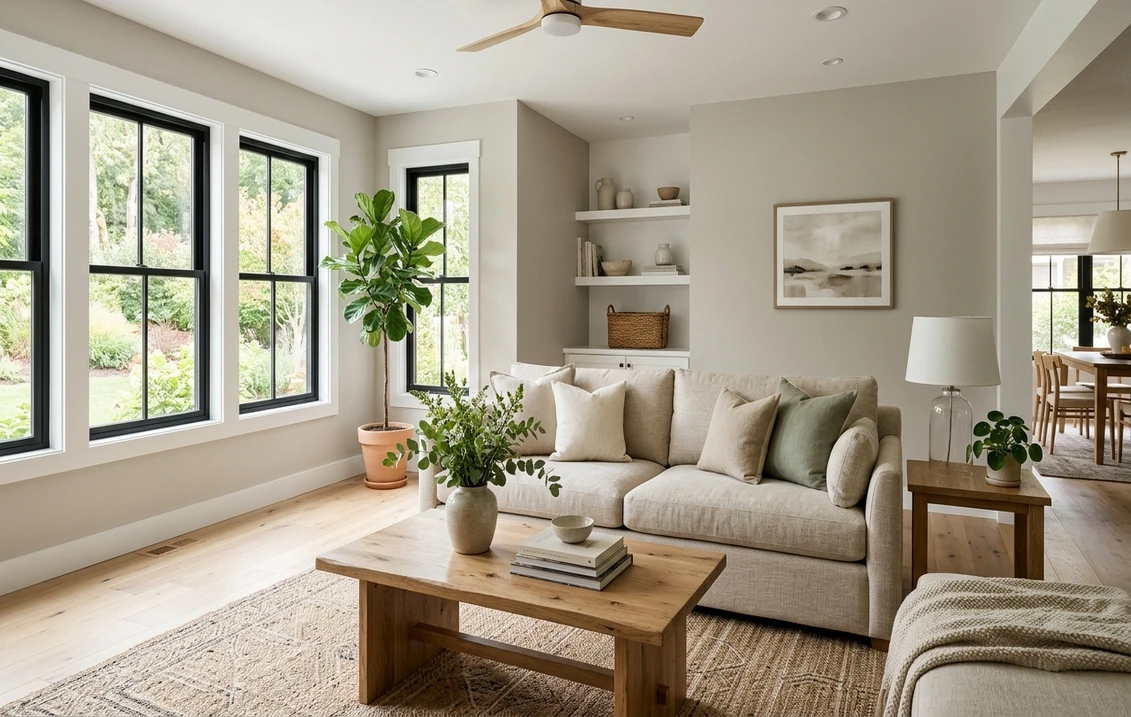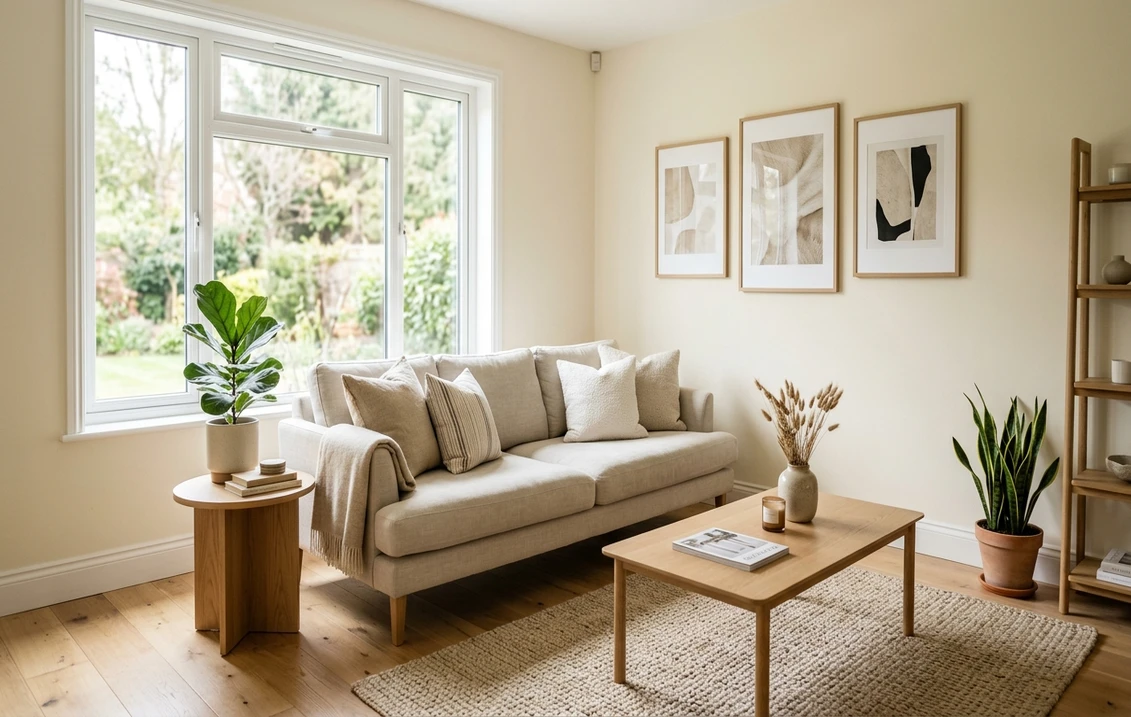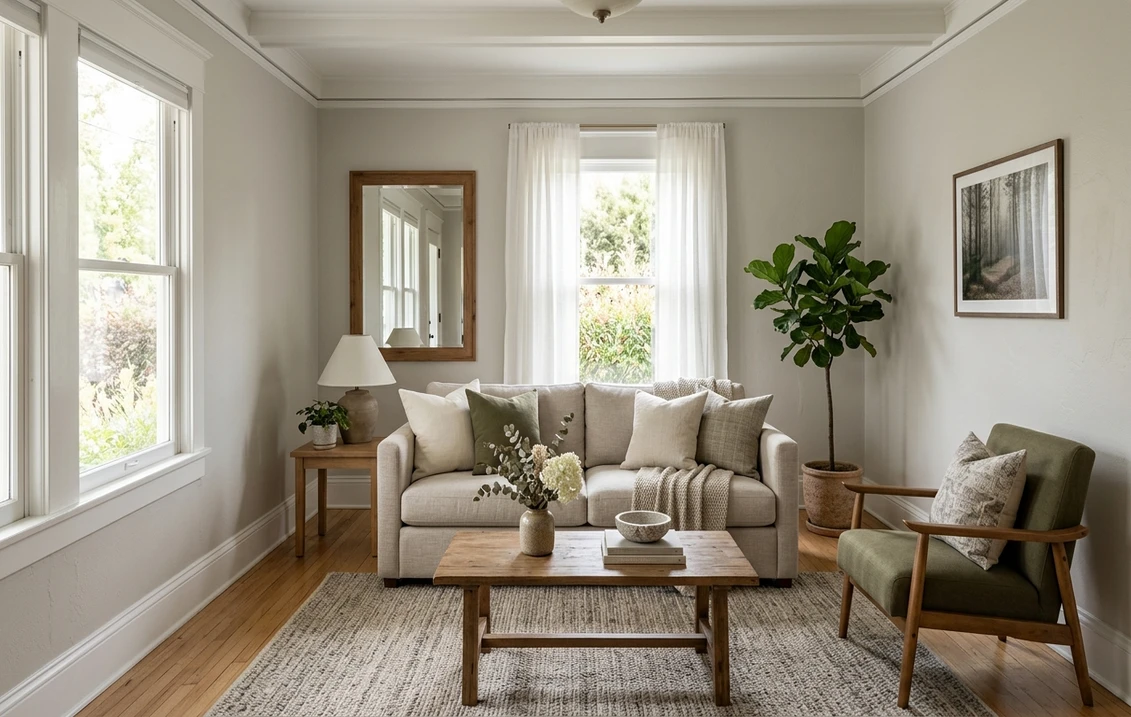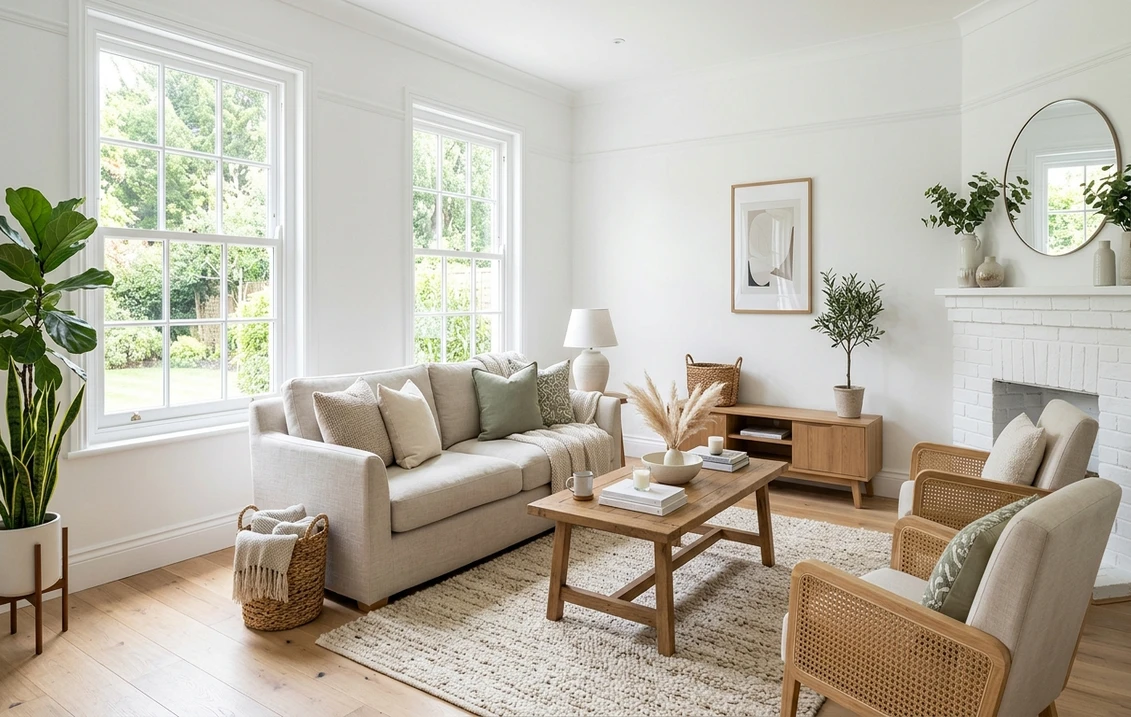
Try it on your room

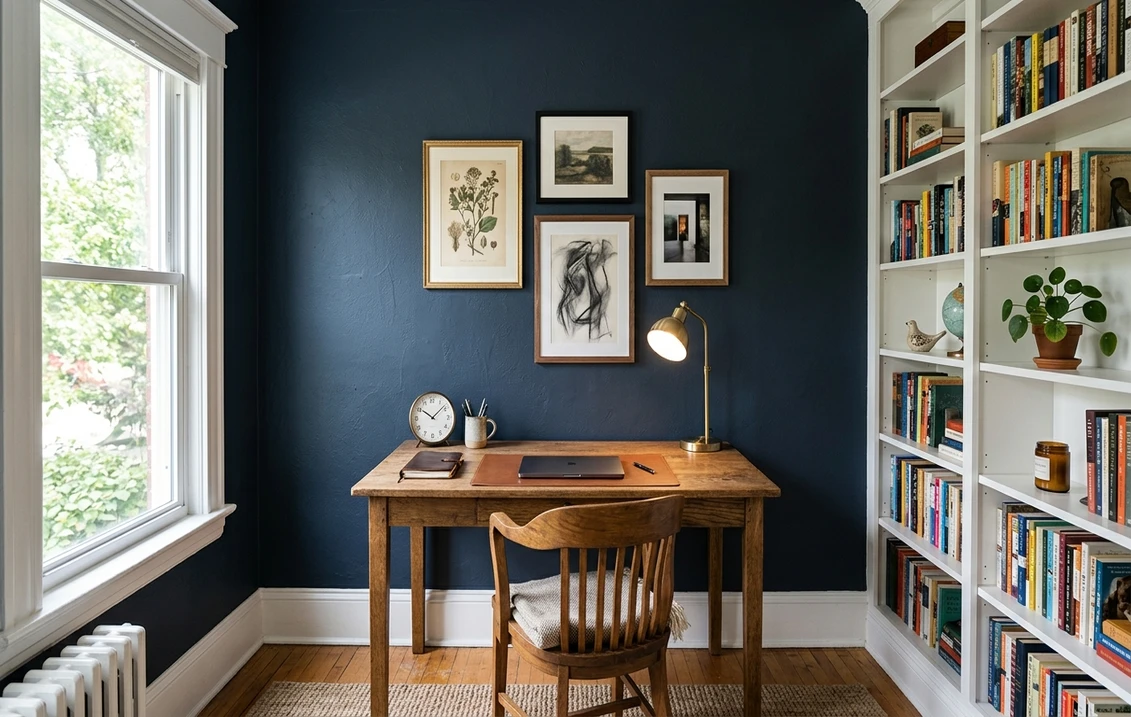
You pull the chip for Behr Midnight Blue (PPU15-19), tape it to a north wall, and it looks almost black. Move it to a sunny window and a deep, slightly green navy emerges. That swing is the whole story of this color: it is a near-black deep blue that only shows its true navy under good light, which makes it dramatic in the rooms it suits and a trap in the rooms it does not. This profile is for the homeowner who has already shortlisted Midnight Blue and wants to know exactly how it behaves before committing a whole room to it.
We will cover its undertones, the published LRV and why it matters more here than for almost any other color, how the four room orientations change it, the rooms it was built for, the trim and metals that keep it from going flat, and how it differs from the two navies people line it up against. It is one of the deep statement colors in our wider Behr interior paint colors guide, and you can see where deep blues sit overall in our best navy paint colors roundup.
Upload one photo and preview Behr Midnight Blue under your room's actual light in about 30 seconds, free.
The numbers behind Midnight Blue PPU15-19
With a color this dark, the published data tells you more than the chip. These figures come from Behr's color tools:
| Spec | Value |
|---|---|
| Behr code | PPU15-19 Midnight Blue |
| HEX (screen approximation) | #313D4C |
| RGB approximation | 49, 61, 76 |
| LRV (Light Reflectance Value) | 5 |
| Hue family | Deep navy with a slight green-gray cast, near-black in low light |
| Closest Behr cousins | Dark Navy (PPU14-20), Very Navy (PPU14-19), Nocturne Blue (S-H-580) |
Try it on your house
No photo? Try a sample
Sources: Behr PPU15-19 Midnight Blue color data, retrieved 2026; The Spruce and designer references on deep-color LRV.
The LRV of 5 is the single most important number on this page. On a scale where 0 is black and 100 is pure white, an LRV of 5 means Midnight Blue reflects almost no light back into the room. It will read as a true navy only where light is plentiful and direct; everywhere else it collapses toward black. That is by design and it is the effect many people want, but it also means a north room or a windowless space gets a near-black wall, not the dressy blue on the chip. If you want navy that holds more of its blue in dimmer light, a slightly lighter, grayer navy reads more reliably, which is part of why so many shoppers cross-compare it with Benjamin Moore Hale Navy (LRV around 8 to 9).
Midnight Blue's undertones
At full strength Midnight Blue is dominated by deep blue, but two secondary undertones decide whether it reads cool and crisp or moody and almost stormy:
- A green-gray cast. Midnight Blue is not a pure, clean royal navy. It carries a faint green-gray in its base, which keeps it from looking electric and gives it a slightly muted, weathered depth. Under cool light this cast is most visible.
- A black depth. Because the LRV is so low, the color's near-black floor is always present. In shadow or at night it stops reading as blue at all and behaves like a soft charcoal-black.
- A blue peak. Only in direct, warm-leaning light does the true navy step fully forward, and that is when the color looks the way most people pictured it on the chip.
Because the green-gray cast and the black floor are always lurking, the orientation of the room moves Midnight Blue more than it moves a cleaner, higher-LRV navy. The same logic that governs lighter colors applies here, just amplified, as our interior color families guide explains. Typical behavior across the four Northern Hemisphere orientations:
| Room orientation | Daylight character | How Midnight Blue reads |
|---|---|---|
| South-facing | Warm, abundant midday light | Truest navy: the deep blue holds, dressy and rich rather than black |
| West-facing | Cool by day, very warm at sunset | Near-black and cool by day, glowing into a warm deep navy late afternoon |
| East-facing | Warm early sun, neutral later | Navy in the morning, settling to a charcoal-navy by afternoon |
| North-facing | Cool, indirect, no direct sun | Coolest and darkest: reads almost black with the green-gray cast most visible |
Sources: American Institute of Architects daylight reference; Behr PPU15-19 color data; designer notes on low-LRV blues.
The takeaway: if you want Midnight Blue to read as a recognizable navy rather than near-black, give it a south or west room with real direct sun, and lean your bulbs slightly warm (2700K to 3000K) to pull the blue forward. In a north or windowless room, accept that you are choosing a dramatic near-black with a blue soul, and plan the lighting and decor around that rather than fighting it.
The rooms Midnight Blue was made for
A near-black navy is a statement color, not a wall-to-wall safe pick. It earns its keep in spaces where depth and drama are the goal:
- Accent and feature walls: the highest-return use. One Midnight Blue wall behind a bed or sofa adds depth without making the whole room feel cave-like.
- Home offices and studies: the enveloping, focused quality reads serious and library-like, especially with brass hardware and warm wood.
- Powder rooms: a small windowless powder room is the one place near-black works for almost everyone, where the lack of light becomes the point: jewel-box drama with good sconces.
- Cabinetry and built-ins: Midnight Blue on lower kitchen cabinets, an island, or a bookcase reads custom and high-end against white uppers and warm counters. Often the smartest way to use it without committing a whole room.
- Dining rooms: a deep navy dining room feels intimate and dressy at night under candlelight and warm bulbs, which is when most people use the room.
Where to be careful: a north-facing bedroom or a room you mostly use in daylight for relaxing can feel heavy and cold in Midnight Blue, since it will mostly read as black there. Big open great rooms with limited light can feel closed in if you wrap all four walls. When in doubt, use it on one wall, on cabinetry, or in a small room you enter for drama rather than calm. For what a deep-color repaint costs (dark colors often need a tinted primer and an extra coat), see our interior house painting cost guide.
Free AI visualizer: test Midnight Blue as an accent wall, on cabinets, or in a powder room before you buy a sample.
Trim, ceiling, metals, and decor
With a near-black navy, contrast and metal finishes do most of the heavy lifting. The trim you choose decides whether the room feels crisp and tailored or soft and enveloping:
- Crisp, high-contrast trim: a clean bright white like Behr Ultra Pure White or Behr Polar Bear (75) frames Midnight Blue sharply and makes it look tailored and architectural. The default for a dressy office or dining room.
- Soft, enveloping trim: for a moodier cocoon, paint the trim the same Midnight Blue or a soft warm white like Behr Swiss Coffee. Lower contrast makes a small powder room or study feel deeper and more custom.
- Ceiling: a flat white ceiling keeps a room from feeling like a box; painting the ceiling Midnight Blue too is a bold move that only works in a small jewel-box space with good lighting.
- Metals: brass and antique gold are the classic warm partners and the most flattering. Polished or matte black reads modern and graphic; chrome and nickel keep it cooler and more contemporary.
- Decor and finishes: warm woods (walnut, white oak), brass, cream and ivory textiles, marble with warm veining, and plenty of warm artificial light all flatter it. Cool gray floors and cool fluorescent light push it toward a flat, cold black.
For pairing Midnight Blue with the rest of the house, a deep navy plays well with warm neutrals and a few specific accents. Our guide to colors that go with navy blue covers the full palette, from warm white and brass to mustard, blush, and terracotta accents that keep a navy room from reading cold.
Midnight Blue vs the navies people cross-shop
Midnight Blue has a couple of near-twins shoppers line up against it, and the differences are small on paper but real on the wall:
- vs Behr Dark Navy (PPU14-20): the closest in-brand sibling. Dark Navy is a cleaner, more classic navy with less of the green-gray cast and a marginally higher LRV, so it holds its blue a little better in average light. Choose Midnight Blue for a moodier, more near-black depth with a slight stormy cast; choose Dark Navy when you want a more straightforward, recognizable navy that does not collapse to black as readily.
- vs Benjamin Moore Hale Navy (HC-154): the most common cross-brand benchmark and the designer default. Hale Navy is softer and slightly grayer with a higher LRV (around 8 to 9), so it reads as navy in more lighting conditions and rarely goes fully black. Midnight Blue is deeper, darker, and more dramatic; Hale Navy is the safer, more forgiving choice for a whole room. Our full Hale Navy profile breaks down its undertones and rooms in detail.
- vs Behr Very Navy (PPU14-19): a touch brighter and more saturated than Midnight Blue, with less black depth. Pick Very Navy when you want the blue to be unmistakably blue even in modest light; pick Midnight Blue when you want the near-black drama.
If you are deciding between Behr and another brand's navy beyond Hale Navy, our Behr vs Sherwin-Williams interior comparison covers how the two brands' deep-base formulas, coverage, and finish wear, which matters more for dark colors than for any pale neutral.
How to test Midnight Blue before you commit
Midnight Blue is the textbook color where a small chip will mislead you, because at LRV 5 a 3-inch sample looks like a flat black square no matter the light. The reliable method is a large peel-and-stick sample (Behr offers them) taped to at least two walls, including your darkest wall, and checked mid-morning, mid-afternoon, and at night under your actual bulbs. The night read is the one you will live with most, since deep colors are most often enjoyed after dark. Two practical notes for a color this dark: it almost always needs a gray-tinted primer plus two finish coats for even coverage, and a flat or matte sheen hides wall flaws that an eggshell or satin would spotlight. The faster, no-paint first pass is a digital visualizer: upload a photo of the room and apply Midnight Blue beside Behr Dark Navy and BM Hale Navy to see which depth your light actually supports, ruling out the ones that go too black in your space.
Preview Midnight Blue beside a cleaner navy and a softer navy under your real light, free.
Frequently asked questions
What is the LRV of Behr Midnight Blue?
Behr Midnight Blue (PPU15-19) has a Light Reflectance Value of about 5, very near the bottom of the 0-to-100 scale. That means it reflects almost no light, so it reads as a true deep navy only in bright, direct light and collapses toward near-black in shade, north rooms, or at night. The low LRV is why it looks so dramatic and why a small chip is unreliable for this color.
Is Behr Midnight Blue too dark for a whole room?
It can be, depending on the room's light. In a south or west room with strong direct sun, a whole room of Midnight Blue reads as a rich, dressy navy. In a north-facing or low-light room it will mostly read as near-black, which can feel heavy if the room is meant to be calm. For most homes the safest uses are an accent wall, cabinetry, a study, or a small powder room where the drama is the point.
What trim color goes with Behr Midnight Blue?
For a crisp, tailored look use a clean bright white such as Behr Ultra Pure White or Polar Bear (75), which frames the navy sharply. For a softer, more enveloping look in a small room, paint the trim the same Midnight Blue or a warm white like Swiss Coffee to lower the contrast. Brass and antique-gold hardware are the most flattering metals; warm bulbs around 2700K to 3000K pull the blue forward.
How is Behr Midnight Blue different from Behr Dark Navy and BM Hale Navy?
Behr Dark Navy (PPU14-20) is a cleaner, more classic navy with less green-gray cast and a slightly higher LRV, so it holds its blue better in average light. Benjamin Moore Hale Navy (HC-154) is softer and grayer with an LRV around 8 to 9, so it reads as navy in more conditions and rarely goes fully black. Midnight Blue is the deepest and most dramatic of the three, with a near-black floor and a faint stormy green-gray cast.
See Behr Midnight Blue under your real light, beside Dark Navy and Hale Navy, before you buy.
Disclaimer: Behr and PPU15-19 Midnight Blue are trademarks of Behr Process Corporation. Benjamin Moore and Sherwin-Williams are trademarks of their respective owners. FacadeColorizer is an independent paint visualization service and is not affiliated with, endorsed by, or sponsored by Behr, Benjamin Moore, or Sherwin-Williams. Screen color approximates the manufacturer's sample; always confirm with a physical sample before purchase. Sources: Behr PPU15-19 Midnight Blue color data 2026, Behr Dark Navy PPU14-20 and Very Navy PPU14-19 color data, Benjamin Moore Hale Navy HC-154 color data, and designer notes on low-LRV deep colors.
Trademarks mentioned (Sherwin-Williams, Benjamin Moore, Behr, Caparol, Brillux, Sto, Alpina, Valspar, PPG, Glidden, Dulux, Crown Trade, Sandtex, Farrow & Ball, Johnstone's, Leyland) are property of their respective owners. FacadeColorizer is independent and not affiliated with any of them. Nominative fair use under Lanham Act §1125.