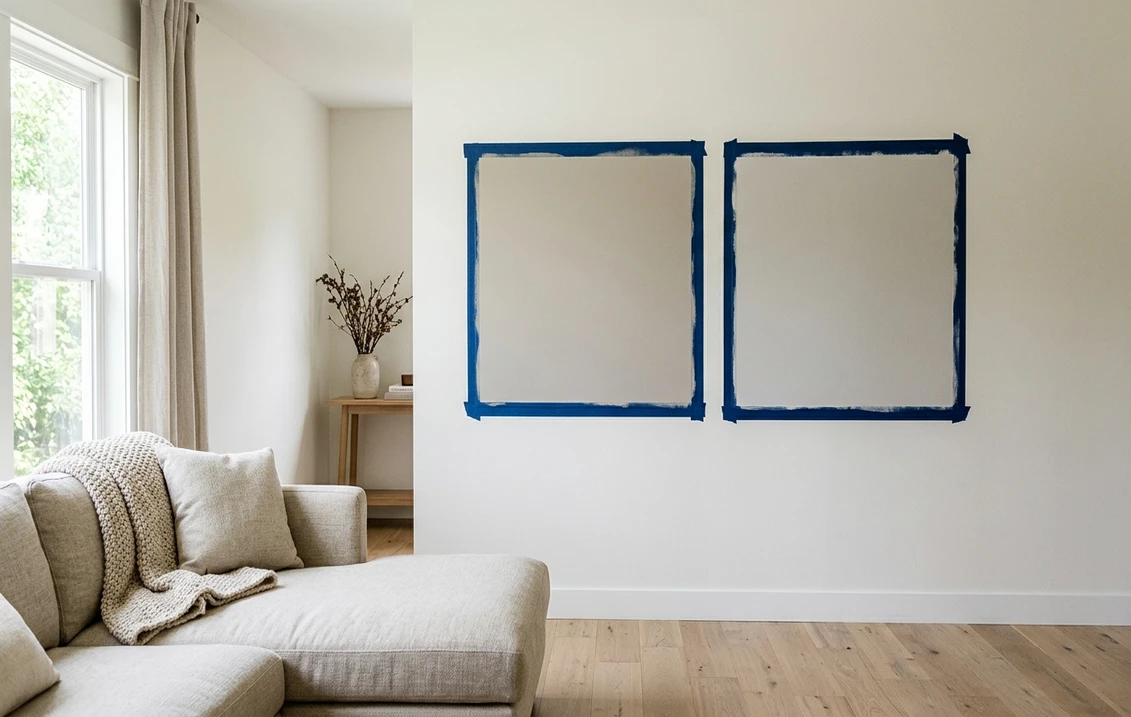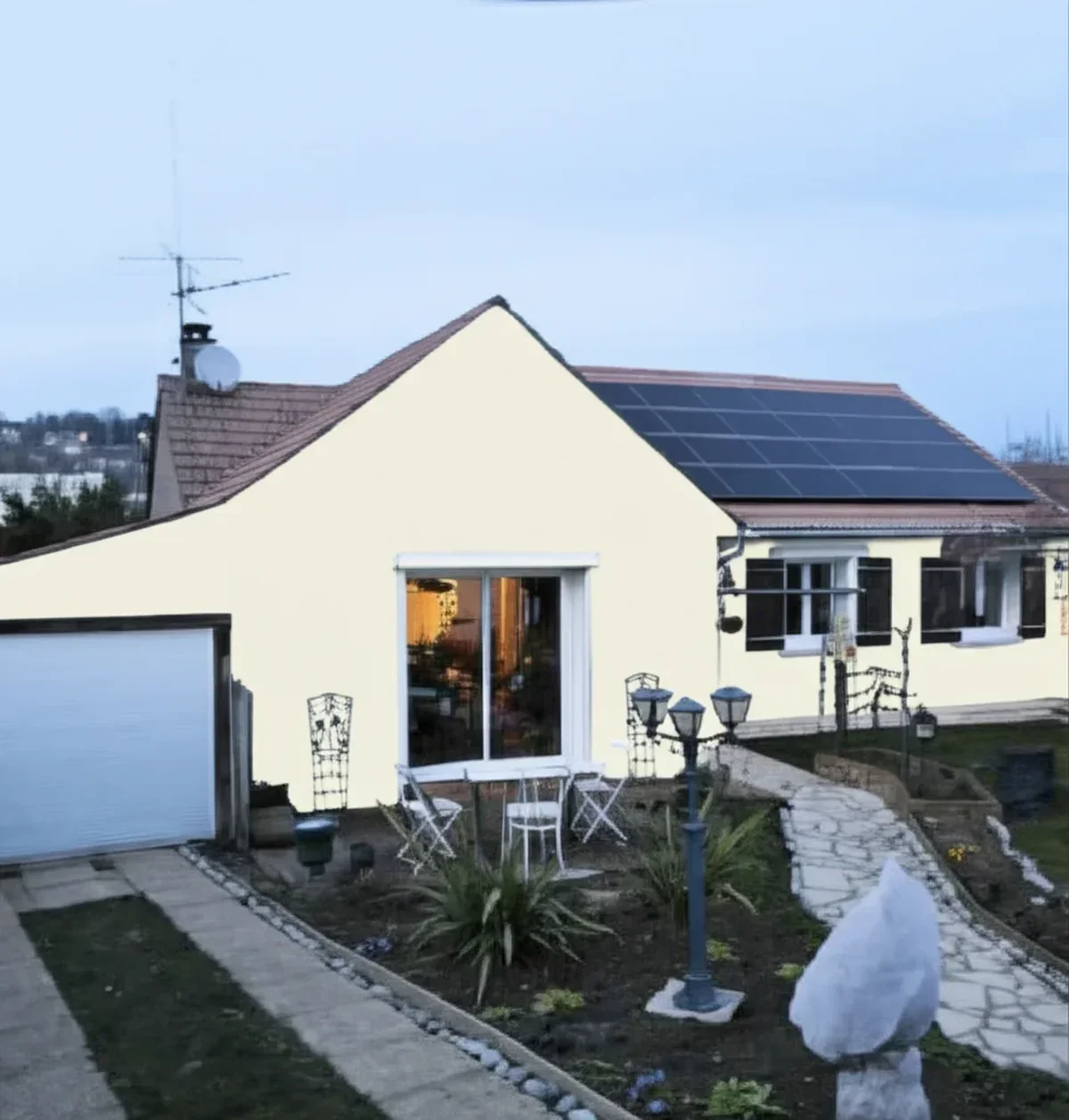
Try it on your house

The verdict in three lines. Shoji White SW 7042 (LRV 74) is not really a white: it is a light greige with a taupe whisper that reads as a soft, intentional putty on the wall.
Alabaster SW 7008 (LRV 82) is a true soft white: creamy and bright, it stays "white" in the same room where Shoji White reads as a color.
Unlike most white duels, this one has a real depth gap of 8 LRV points. Decide how much visible color you want on the wall, then confirm on a photo of your own room.
Sherwin-Williams Shoji White (SW 7042) and Alabaster (SW 7008) land on the same shortlist constantly, because both promise the same thing: a warm, calm alternative to cold builder white. Alabaster is one of the most-painted whites in the United States; Shoji White is the greige-leaning off-white that took over japandi and organic-modern boards. This head-to-head puts the numbers side by side, runs the duel room by room and exposure by exposure, and tells you exactly when each one wins. For the general method behind any two-color decision, start with our side-by-side method for comparing paint colors.
The numbers side by side
| Attribute | Shoji White SW 7042 | Alabaster SW 7008 |
|---|---|---|
| Family | Greige-leaning warm off-white | Soft creamy white |
| LRV | 74 | 82 |
| Approximate hex | #E6DFD3 | #EDEAE0 |
| Approximate RGB | 230, 223, 211 | 237, 234, 224 |
| Undertone | Quiet greige with a whisper of taupe | Creamy, gentle yellow-beige warmth |
| Loves | Oak, rattan, linen, bright white trim for contrast | Wood tones, tonal cream trim, whole-house use |
| Watch out for | Looks dingy next to bright builder white; deepens in dim rooms | Can read flat gray or chalky in cool north light |
| Overall vibe | Organic, muted, japandi and modern farmhouse | Classic, clean, crowd-pleasing |
Try it on your house
No photo? Try a sample
LRV values are the published Sherwin-Williams figures. Hex and RGB are approximate digital renderings; the authoritative reference is a physical Sherwin-Williams chip or peel-and-stick sample.
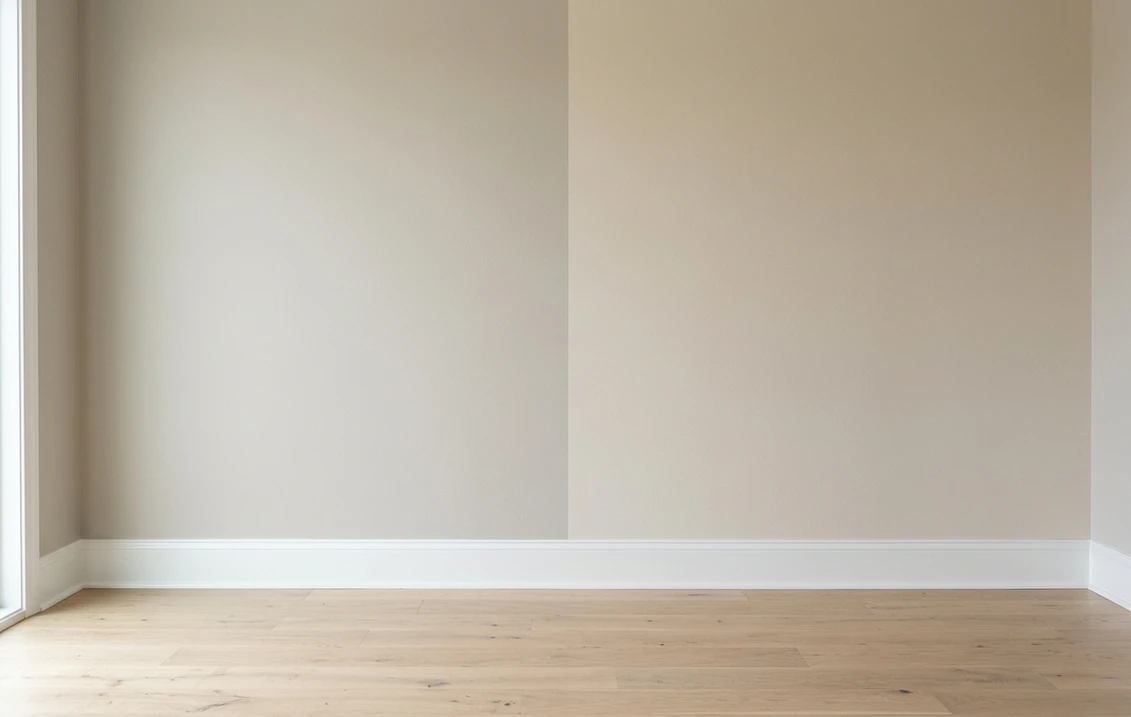
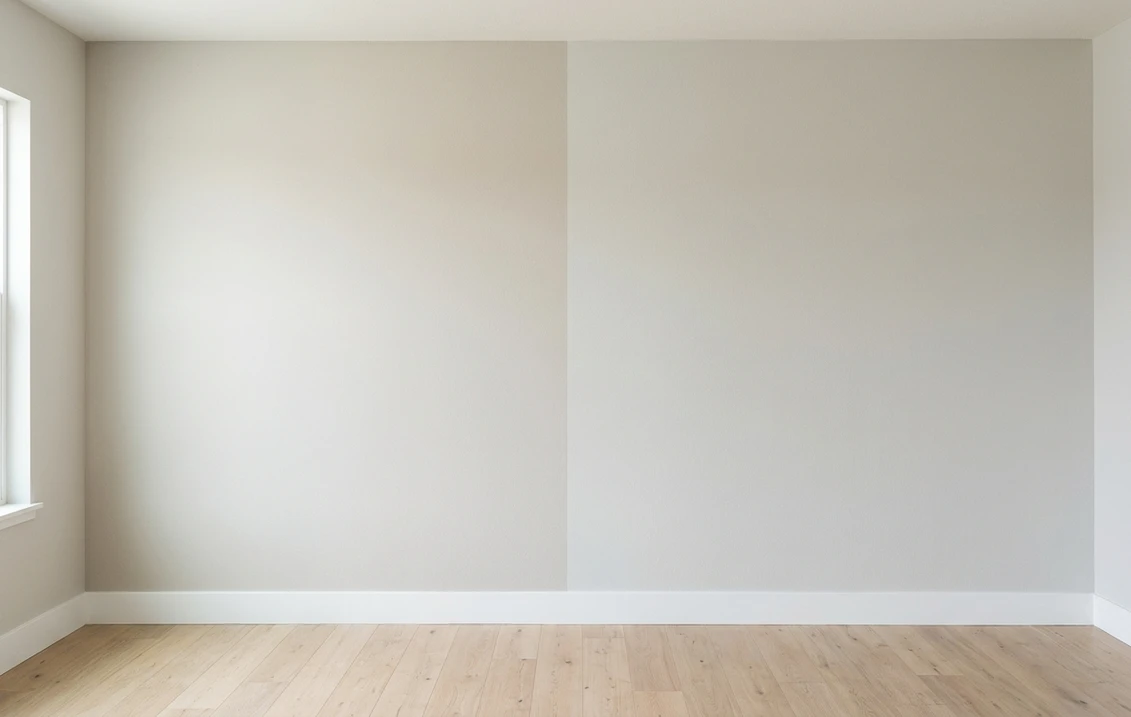
This duel is not the usual white-versus-white coin flip. An 8-point LRV gap is clearly visible on a wall: side by side, Alabaster is obviously "the white" and Shoji White is obviously "the color." Designers usually draw the off-white line near LRV 80, and the two contenders sit on opposite sides of it. The undertones diverge too. Hold each chip against plain white printer paper and Alabaster shows a creamy, slightly yellow warmth, while Shoji White drops into greige with a taupe cast. That white-paper trick comes straight from the comparison method in the pillar guide linked above.
Upload one photo, get a photorealistic render, then swap to Alabaster in one click. Free, no signup.
Room by room, exposure by exposure
Because depth and undertone both differ, the winner shifts with light and fixed finishes more than in most duels. Here is how the matchup typically plays out across the common situations.
| Situation | Usual winner | Why |
|---|---|---|
| North-facing living room | Shoji White | Settles into an intentional calm greige; Alabaster can read flat gray or chalky in the same cool light |
| Bright south-facing room | Either, pick by mood | Strong sun lifts Shoji White toward a clean warm white and keeps Alabaster creamy |
| Small or dark hallway | Alabaster | The higher LRV keeps a low-light space from feeling closed in; Shoji White deepens noticeably |
| Kitchen with bright white cabinets | Alabaster | Sits close enough to white cabinetry to look deliberate; Shoji White can look dingy beside it |
| Japandi or organic-modern living room | Shoji White | The muted greige base is the look; a true white reads too stark against oak and linen |
| Whole-house walls with bright white trim | Shoji White | The 8-point gap gives crisp wall-to-trim definition; Alabaster against bright trim can look like a mismatched white |
| Exterior body color | Alabaster, usually | A proven exterior soft white; Shoji White reads distinctly greige outdoors, so sample both in daylight |
If Alabaster is your anchor and you are still auditioning challengers, two sibling duels finish the bracket: Swiss Coffee vs Alabaster for the cream-white crown and Alabaster against Benjamin Moore White Dove.
When to choose Shoji White
- You want walls with visible, quiet color. Shoji White gives you the softness of a white scheme while still reading as a real neutral, so rooms feel finished rather than blank.
- Your palette is oak, rattan, linen, and stone. The greige-taupe base joins those organic materials instead of glaring next to them, which is why it anchors so many japandi and modern-farmhouse schemes.
- You like strong wall-to-trim definition. Paired with a brighter white trim, the 8-point LRV gap draws crisp lines around doors, casings, and built-ins.
- The room faces north and a white keeps failing there. Where pale whites go flat or chalky, Shoji White simply settles into a calm greige and still looks intentional.
For the full undertone breakdown, lighting behavior, and trim pairings, see the dedicated Shoji White undertones and best rooms profile.
When to choose Alabaster
- You want a white, full stop. Alabaster stays recognizably white on the wall with just enough cream to avoid the sterile look, which is why it has been a US best-seller for a decade.
- The space is small, dark, or low on windows. LRV 82 bounces meaningfully more light than LRV 74, and in a dim hallway or bath that difference is the whole game.
- You need one safe color for walls, trim, and ceiling. Alabaster is a proven tonal all-over white; Shoji White used the same way reads as a painted-out greige box.
- You are matching bright white fixed elements. White cabinets, white quartz, and white built-ins sit comfortably next to Alabaster and make Shoji White look a shade dirty. If the cabinets themselves are the surface being painted, the Alabaster kitchen cabinets guide covers the enamel, sheen and pairings that keep the doors from reading cream.
Alabaster's classic failure mode is cool, flat light: before committing it to a dim room, read the Alabaster north-facing room guide for how its undertones shift by exposure.
Both cases above lean on the phrase "bright white trim", which is doing more work than it looks. Put numbers on it: against Chantilly Lace OC-65 (LRV 90) the gap is 16 points from Shoji White and 8 from Alabaster, enough for the wall to stay a wall in either case. Against White Dove OC-17 (LRV 85) those gaps fall to about 11 and 3, and Alabaster walls under White Dove trim stop being a contrast scheme and become a tonal one. If the trim is still open, settle White Dove versus Chantilly Lace before you sign off on the wall.
Same wall, both whites, your actual light. Free render in about 30 seconds.
Frequently asked questions
What is the real difference between Shoji White and Alabaster?
Both depth and undertone. Alabaster SW 7008 (LRV 82) is a true soft white with a creamy base, while Shoji White SW 7042 (LRV 74) sits 8 LRV points deeper with a greige-taupe undertone. Side by side on a wall, Alabaster reads as white and Shoji White reads as a light putty color.
Is Shoji White darker than Alabaster?
Yes, noticeably. Shoji White has a published LRV of 74 versus 82 for Alabaster, and a gap that size is visible in normal room light. Shoji White lands below the off-white threshold designers usually draw near LRV 80, so it holds real color on the wall where Alabaster stays bright.
Can I use Shoji White and Alabaster together?
Yes, and it is one of the cleaner ways to use them. Because they share warm ground but differ by 8 LRV points, Shoji White walls with Alabaster trim and ceilings create a soft tonal scheme with enough contrast to look deliberate. Avoid splitting them across adjacent walls at the same depth, where the pairing can read as a mismatch.
Which is better for a north-facing room, Shoji White or Alabaster?
Usually Shoji White. Cool north light can push Alabaster toward a flat gray or chalky reading, while Shoji White settles into a calm, intentional greige. If you need maximum brightness in that room, Alabaster still wins on light bounce, so sample both on the actual wall before deciding.
One exterior case where this duel comes up every week: trim on an Urbane Bronze house. Shoji White lowers the contrast and suits farmhouse and Craftsman trim; Alabaster gives crisper lines on wide trim. Our Urbane Bronze exterior guide shows both against the dark bronze body.
Settle it on your photo
Chips lie, screens lie, and an 8-point LRV gap looks bigger or smaller depending on your windows, floors, and trim. The fastest honest answer to Shoji White vs Alabaster is to test both on a photo of your actual room and let your own light pick the winner. If the duel widens into a full shortlist, the 2026 Sherwin-Williams interior color guide maps the rest of the deck.
1 HD render plus 3 free color variations. Start with Shoji White, swap to Alabaster in one click.
Trademark notice. Sherwin-Williams®, Shoji White®, Alabaster®, Greek Villa® and Snowbound® are trademarks of The Sherwin-Williams Company. FacadeColorizer is not affiliated with, endorsed by, or sponsored by The Sherwin-Williams Company. Brand and color names are used for descriptive and editorial purposes only, consistent with nominative fair use. Hex and RGB values are approximate digital renderings; the only authoritative reference is a physical Sherwin-Williams color sample.
Trademarks mentioned (Sherwin-Williams, Benjamin Moore, Behr, Caparol, Brillux, Sto, Alpina, Valspar, PPG, Glidden, Dulux, Crown Trade, Sandtex, Farrow & Ball, Johnstone's, Leyland) are property of their respective owners. FacadeColorizer is independent and not affiliated with any of them. Nominative fair use under Lanham Act §1125.