Try it on your room

I once rolled a so-called clean white on a client's powder room, and by the time the second coat dried under the recessed cans it had gone faintly lemon, the kind of yellow you only notice once the towels go up. That is the trap with a white bathroom: the color is never just white. It picks up the tile, the LED temperature, the glass shower, and the lack of daylight, then hands you back something you did not choose. Get the undertone right and a white bathroom reads crisp, calm, and bigger than it is. Get it wrong and it reads cold or oddly creamy. Here are 14 white bathroom ideas that hold up in a real room, sorted by how each white actually behaves.
A quick orientation before the gallery. White is a family, not a single color, and the divide that matters most in a bath is warm versus cool. Cool, crisp whites (Chantilly Lace, Pure White) read fresh and spa-like next to white tile and chrome. Warm whites (White Dove, Simply White, Alabaster) read soft and inviting, which rescues a windowless or north-light room from feeling like a walk-in freezer. This page sits inside our broader room-by-room paint color ideas guide, and it pairs with our pillar on best bathroom paint picks for 2026: that one spans every hue, this one stays on white and how to keep it from turning on you.
Upload a photo of your actual bath and preview these whites under your own light in about 30 seconds, free.
How white reads in a bathroom (and why it changes)
Bathrooms gang up on white paint in three ways. First, light: most baths are small, often windowless, and lit by LED downlights. A cool 4000K bulb pushes any white grayer, a warm 2700K bulb pushes it creamier. Second, reflection: white floor tile, a glass shower, and a big mirror bounce that light back onto the upper walls, doubling whatever undertone hides in the paint. Third, contrast: the moment a true bright white touches a softer white tile, the warmer one can look dirty. None of this means avoid white. It means pick the undertone on purpose.
One painter's note that saves regret: a white bathroom wall wants a soft sheen, not a flat one. Eggshell or satin in a bathroom-grade, mildew-resistant formula wipes clean and shrugs off steam, where flat paint in a wet room chalks and stains. Cut in carefully around the vanity, then roll your second coat in good light so you catch any holidays the first coat left.
14 white bathroom ideas, by undertone and read
Here are the 14 looks. Each names a real shade, its undertone, and where it earns its keep. Pull two or three that fit your light, then test before you commit.
1. Chantilly Lace on every wall, spa-crisp
Benjamin Moore Chantilly Lace (OC-65, LRV 90) is the cleanest mainstream white, with almost no undertone to drift. In a bright bath it reads pure and gallery-fresh next to white subway tile and chrome: the modern, hotel-bathroom look. It can feel clinical in a dim room, so reserve it for spaces with real light or a warm vanity to balance it.
2. White Dove for a soft north-facing bath
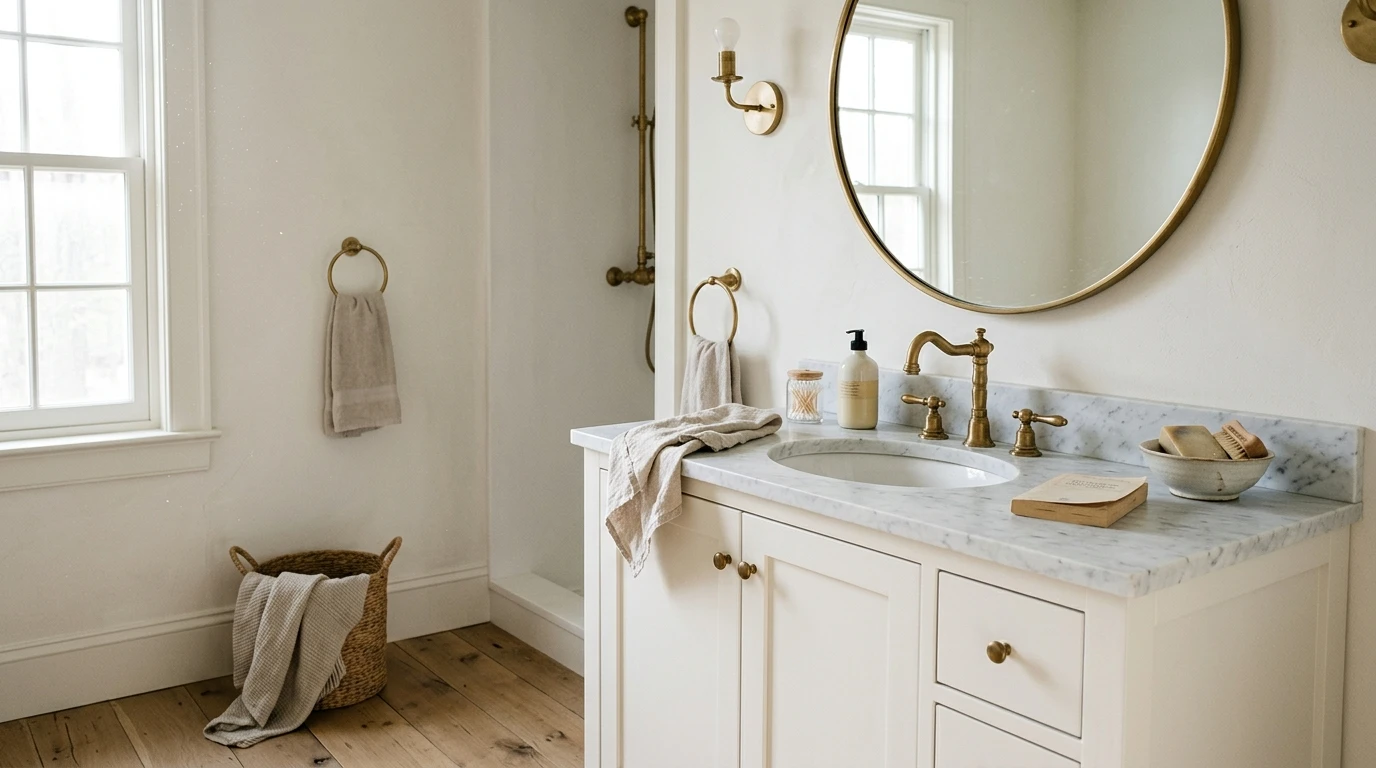
Benjamin Moore White Dove (OC-17, LRV 85) is the warm white that designers reach for when a bathroom faces north or has no window. Its quiet gray-cream undertone keeps it from feeling stark, so the room reads soft instead of cold. Pair it with brushed brass and warm wood and the bath feels calm rather than clinical.
3. Simply White to warm up cool tile
Benjamin Moore Simply White (OC-117, LRV 92) is bright but carries a faint yellow lift. If your floor tile or quartz reads cool and blue, Simply White on the walls nudges the whole room back toward warm without going creamy. Watch it under warm bulbs, where the yellow can show more than you want.
4. Pure White, the go-anywhere wall
Sherwin-Williams Pure White (SW 7005, LRV 84) sits almost dead-center between warm and cool. It is the safe white bathroom walls choice when you cannot read your light or your tile leans neutral. It plays with both chrome and brass, which is why it shows up so often in our roundup of the best white paint for walls.
5. Alabaster for a creamy, warm-modern look
Sherwin-Williams Alabaster (SW 7008, LRV 82) is a soft creamy white that flatters warm wood vanities and unlacquered brass. In a small bath with warm light it feels enveloping, not boxy. Skip it next to a stark blue-white tile, where its cream side can suddenly look off.
6. White walls, black accents
A crisp white (Chantilly Lace or Pure White) with matte-black hardware, a black-framed mirror, and a black faucet is the most reliable high-contrast white bathroom. The black anchors the brightness so the room reads designed, not blank. Keep the white cool here so the contrast stays sharp.
7. Warm white over a wood vanity
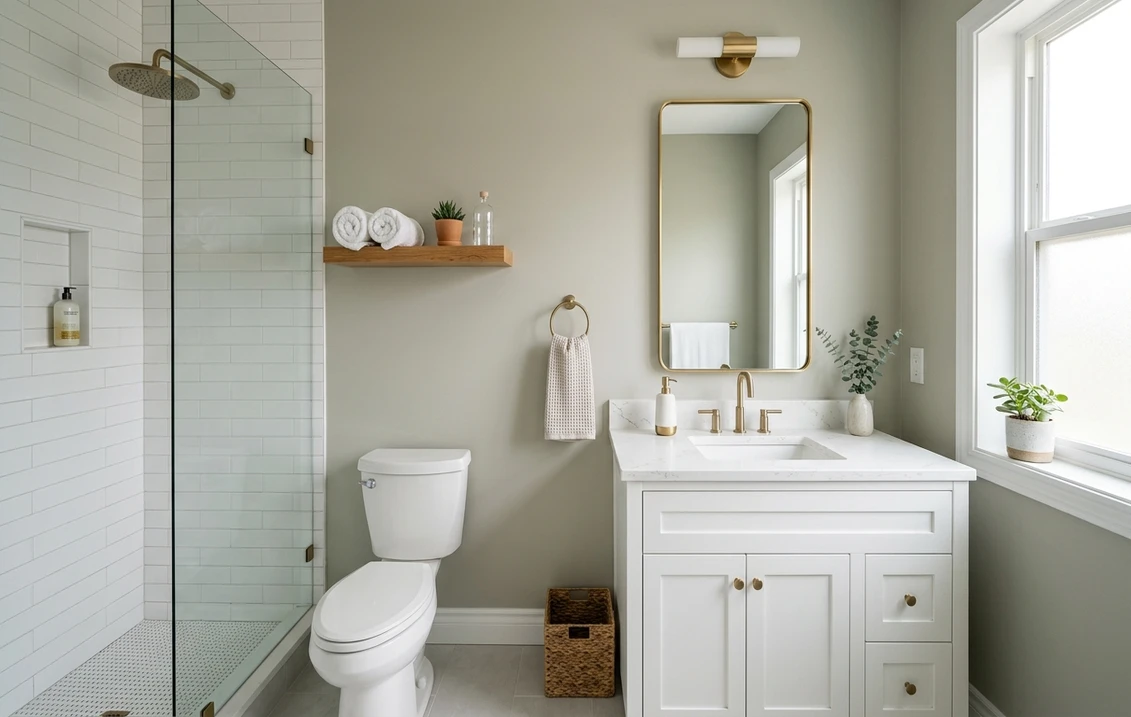
Pair White Dove or Alabaster walls with a natural oak or walnut vanity and the warm wood reflects warmth back onto the paint, deepening the soft, spa feeling. This is the antidote to the cold white bathroom complaint, and it photographs beautifully.
8. White and sage, the calm pairing
A warm white on three walls with a muted sage on the vanity or a single wall reads fresh and restful. The green keeps the room from feeling sterile while the white keeps it light. Which sage you choose changes the balance more than the white does: Clary Sage at LRV 41 still reads almost neutral beside a warm white, while Evergreen Fog at 30 turns the white into the bright element of the room. Our sage green bathroom ideas page compares the five worth using. For the full palette logic behind moves like this, see our bathroom color schemes guide for 2026.
9. White walls, blue tile
If your tile is the star, a clean white wall lets a deep-blue or zellige tile breathe. Pick a near-neutral white (Pure White) so it does not fight the tile's undertone. Warm whites can muddy a cool blue, so test the pairing first.
10. All-white small bath, brightened
In a tiny powder room, a single light white on walls, trim, and ceiling erases the corners and makes the space read larger. Warm whites work best in cramped baths because pure whites can feel hard-edged up close. Our small bathroom paint colors guide goes deeper on making little rooms feel open.
11. White with a painted vanity
Keep the walls white and put the color on the vanity instead: navy, charcoal, or muted green. The white ceiling and walls keep the room airy while the vanity carries the personality. Our bathroom vanity paint colors guide maps the best vanity shades for a white room.
12. White board-and-batten wainscot
White paneling on the lower wall with the same or a slightly brighter white above adds traditional texture without adding color. Keep the trim white tight to the wall white so the relief reads as shadow, not contrast. This look loves a warm white in an older home.
13. Warm white with brass and stone
Alabaster or White Dove walls, unlacquered brass fixtures, and a marble or quartzite counter make a softly luxe white bath. The warm metals and natural stone keep the white from reading flat. This is the most forgiving scheme for a low-light room.
14. Crisp white shower surround, warm white walls
Use a brighter white inside the wet zone (where tile and glass already read cool) and a warm white on the dry walls. The two read as one in passing but keep the shower clean and the room cozy: a subtle pro move that solves the cold-bath problem at the source.
Free AI visualizer. Test two whites on your real bathroom walls before buying a single sample pot.
White bathroom shades compared
Here is how the core white bathroom walls candidates line up by LRV, undertone, and the room they suit. LRV (light reflectance value) tells you how bright the white will read: the higher the number, the more light it bounces.
| White | LRV | Undertone | Best bathroom read |
|---|---|---|---|
| Chantilly Lace (OC-65) | 90 | Near-neutral, faint cool | Bright, spa-crisp; needs good light |
| Simply White (OC-117) | 92 | Soft warm yellow | Brightens cool tile without going creamy |
| White Dove (OC-17) | 85 | Warm gray-cream | Soft, calm; rescues north-light baths |
| Pure White (SW 7005) | 84 | Balanced near-neutral | Go-anywhere; pairs chrome or brass |
| Alabaster (SW 7008) | 82 | Warm cream | Cozy, warm-modern over wood and brass |
Try it on your house
No photo? Try a sample
Sources: Benjamin Moore and Sherwin-Williams published color data 2026; The Spruce white-paint undertone coverage; designer field reports compiled by FacadeColorizer.
See wall, trim, and tile together in one preview, free.
Trim, ceiling, and tile pairings for a white bath
A white bathroom lives or dies on the relationships between its whites. Here is how to keep them from clashing:
- Trim and walls, same white: the cleanest small-bath look is one white on walls and trim in different sheens (satin walls, semi-gloss trim). It erases visual seams and makes the room feel taller.
- Brighter trim, warm walls: for crisp millwork, pair a warm white wall (White Dove) with a brighter trim white (Chantilly Lace). The slight lift reads intentional, not mismatched.
- Ceiling: a clean flat white ceiling keeps the room bright. Match it to the wall white in a low room, or go a touch brighter for lift.
- White tile: match the temperature, not the exact color. A warm wall white beside a cool bright tile makes the wall look dirty; a cool wall white beside warm tile makes the tile look yellow. Pull both swatches together first.
- Avoid: a flat-finish wall paint in a wet room. It absorbs steam and stains; a satin or eggshell bathroom-grade formula wipes clean.
For a bigger menu of whites by undertone before you lock one in, our shades of white paint colors guide lays out the full warm-to-cool spectrum so you can match the white to the exact light your bathroom gives you.
How to test a white bathroom color before you commit
A 3-inch chip is the number-one reason a white bathroom disappoints: it cannot show how the tile, the mirror, and the LED bulbs will gang up on the undertone. Two better methods:
- Swatch on two walls: roll a 12-by-12-inch sample near the vanity and near the shower, then look at it under your real bulbs in the morning and at night. Warm light and cool light will pull the same white in opposite directions, and the bath is where that swing is most brutal.
- Preview it digitally first: upload a real photo of your bathroom and apply a warm white, a cool white, and a neutral before you buy any samples, narrowing three contenders to the one worth painting. It is the fastest way to see which white survives your tile and your light.
Preview a warm and a cool white side by side on your real bathroom walls, free.
Frequently asked questions
What is the best white for a bathroom?
It depends on your light. For a bright or south-facing bath, a crisp near-neutral white like Chantilly Lace (OC-65, LRV 90) or Pure White (SW 7005, LRV 84) reads fresh and spa-like. For a windowless or north-facing bath, a warm white like White Dove (OC-17, LRV 85) keeps the room from feeling cold. Match the white's temperature to your tile and your bulbs, then test before you commit.
Why does white look yellow or gray in my bathroom?
Two things cause it: bulb temperature and reflection. A warm 2700K LED pushes white toward cream and yellow, while a cool 4000K LED pushes it grayer and crisper. White floor tile, a glass shower, and a big mirror then bounce that light back onto the walls, amplifying whatever undertone the paint carries. Pick a white whose undertone counters your light, and use a soft sheen so it wipes clean.
Should bathroom walls and trim be the same white?
In a small bath, yes: one white on walls and trim (in different sheens, satin walls and semi-gloss trim) erases seams and makes the room feel taller. If you want crisper millwork, pair a warm white wall like White Dove with a brighter trim white like Chantilly Lace so the lift reads intentional rather than mismatched.
What sheen is best for a white bathroom?
Eggshell or satin in a bathroom-grade, mildew-resistant formula is the sweet spot for white bathroom walls: it resists steam, wipes clean, and reads soft. Use semi-gloss on trim and the vanity for extra durability. Flat paint chalks and stains in a wet room, so avoid it on bathroom walls.
How do I keep a white bathroom from feeling cold?
Choose a warm white (White Dove or Alabaster), add warm materials like a wood vanity, brass fixtures, and natural stone, and use a 2700K to 3000K bulb. You can also keep a brighter white only inside the wet zone and a warm white on the dry walls, so the shower stays clean and the room stays cozy.
Preview these whites on your actual bathroom walls under your own light before buying a single sample.
Disclaimer: Benjamin Moore, Chantilly Lace (OC-65), White Dove (OC-17), and Simply White (OC-117) are trademarks of Benjamin Moore & Co. Sherwin-Williams, Pure White (SW 7005), and Alabaster (SW 7008) are trademarks of The Sherwin-Williams Company. FacadeColorizer is an independent paint visualization service and is not affiliated with, endorsed by, or sponsored by Benjamin Moore or Sherwin-Williams. Color reproduction on screens approximates the manufacturer's chip; always confirm with a manufacturer sample under your own bathroom light before purchase. Sources: Benjamin Moore and Sherwin-Williams published color data 2026, The Spruce white-paint undertone coverage, designer field reports compiled by FacadeColorizer.
Trademarks mentioned (Sherwin-Williams, Benjamin Moore, Behr, Caparol, Brillux, Sto, Alpina, Valspar, PPG, Glidden, Dulux, Crown Trade, Sandtex, Farrow & Ball, Johnstone's, Leyland) are property of their respective owners. FacadeColorizer is independent and not affiliated with any of them. Nominative fair use under Lanham Act §1125.