Try it on your room

The gray bathroom I still think about was a tiny windowless guest bath where the homeowner wanted "spa gray." Her chips looked perfect under the kitchen pendants and turned faintly purple the second the door closed and the cool LED vanity bar took over. That is the whole story of a gray bathroom in one sentence: the color is easy, the undertone and the light are where it lives or dies. Gray sits against white porcelain, chrome, and tile that show exactly which way it leans, so get those relationships right and it feels like a hotel; get them wrong and it goes flat, blue, or dingy.
Below are 14 gray bathroom ideas, from the lightest reads down to deep charcoal, with the shade I would reach for, the undertone to watch, and what to pair it with. This page is one room in our wider room-by-room paint color ideas series, and the gray-specific companion to our broader best bathroom paint picks roundup.
Upload a photo of your actual bathroom and preview any gray under your own vanity light in about 30 seconds, free.
How gray reads in a bathroom (before you pick a shade)
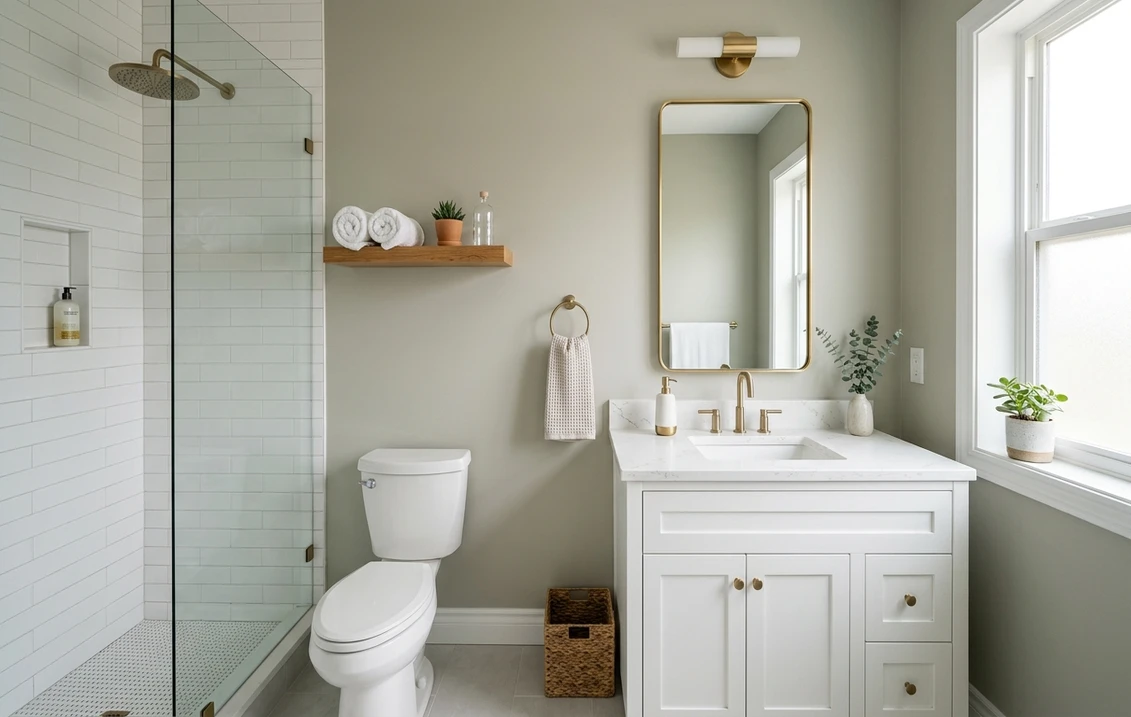
A bathroom is the hardest room to judge a gray in, for three reasons painters learn the hard way. The rooms are small, so color reflects off itself: a gray that looks neutral on a big living-room plane reads a step moodier between two tight walls. Most baths run cool light (4000K bulbs or daylight LEDs) and little warm sun, which pulls every gray toward its cool undertone, exactly what turns a "warm gray" lavender. And gray never sits alone here: it is always next to white tile, a white tub, and metal that throws its own cast onto the wall.
So the real decision is not "which gray," it is "which undertone, under which light, against which tile." Warm greige keeps a small bath from feeling clinical; cool blue-gray leans spa; a true neutral is safest if you are unsure. And LRV (light reflectance value) decides whether the room stays open or closes in: above 60 for a small windowless bath, 45 to 60 for a room with decent light you want grounded, below 35 only for an accent wall or a powder room you are deliberately making moody.
14 gray bathroom paint ideas, light to charcoal
1. Soft mist light gray, all four walls
The default for a small or windowless bath. A light gray around LRV 65 to 72 bounces what little light you have and keeps the room clean rather than cramped, reading as "barely there color" next to white tile. For the full range of pale grays and their undertones, our light gray paint colors and undertones guide is the place to narrow it down.
2. Repose Gray, the no-regret mid-gray
If you want gray to read as gray and not commit to warm or cool, Repose Gray (SW 7015, LRV 58) is the one I steer nervous clients toward. A faint warm-violet undertone keeps it from going icy, but it holds a true-gray identity under most vanity light, forgiving against both warm wood vanities and cool white tile. The rare whole-bath safe bet.
3. Greige, for a bath that should feel warm
A warm gray (gray plus beige) is the move when your bath has wood-tone cabinetry, brushed brass, or beige floor tile you are keeping. The beige cancels the cool cast from the vanity bulbs, so the wall stays soft instead of sterile. Agreeable Gray and Edgecomb Gray are the usual suspects here.
4. Blue-gray, the spa read
Lean into the cool side instead of fighting it. A blue-gray around LRV 45 to 55 next to crisp white subway tile reads almost coastal, calm and slightly upscale, and is one of the most popular bathroom looks going. Just confirm the undertone is blue and not green under your light. Our blue-gray paint colors and undertones guide separates the true-blue grays from the ones that go teal.
5. Gray-green sage-leaning, for a softer cool
A gray with a green undertone (think a muted sage-gray) is the gentler cool option, restful without the clinical edge a pure blue-gray can have in a north-facing bath. It flatters warm wood and aged brass beautifully, good for a primary bath you want as a quiet retreat.
6. Two-tone: gray walls over white wainscoting
A classic that never dates. Run a mid-gray above a chair rail with bright white beadboard or panel molding below. The split keeps the room feeling tall while still giving you the color, and it hides splash marks better than an all-gray wall does.
7. Gray on the vanity, white on the walls
Flip the usual plan. Keep the walls a clean off-white and paint the vanity cabinet a deeper gray for a built-in furniture look. This is the highest-impact, lowest-risk gray project in a bath, since a vanity is a small surface you can repaint in an afternoon. Use a hard-wearing cabinet enamel and a real second coat.
8. Charcoal accent wall behind the tub or vanity
One deep gray wall, the rest light, gives drama without darkening the whole room. Put the charcoal where the eye lands, behind a freestanding tub or the vanity mirror, and let the bright walls keep the space open. An accent wall is also the safest way to test a dark gray before committing the whole room.
9. Full charcoal powder room (Iron Ore and friends)
A powder room is the one bath where you can go fully dark with no regret: nobody showers in it and the lack of light works for the mood. Iron Ore (SW 7069), a soft near-black charcoal wrapped on all four walls with brass fixtures and a big mirror, reads jewel-box, not cave. Our Iron Ore undertones and best rooms guide covers how it behaves under low light.
10. Gray plus warm wood
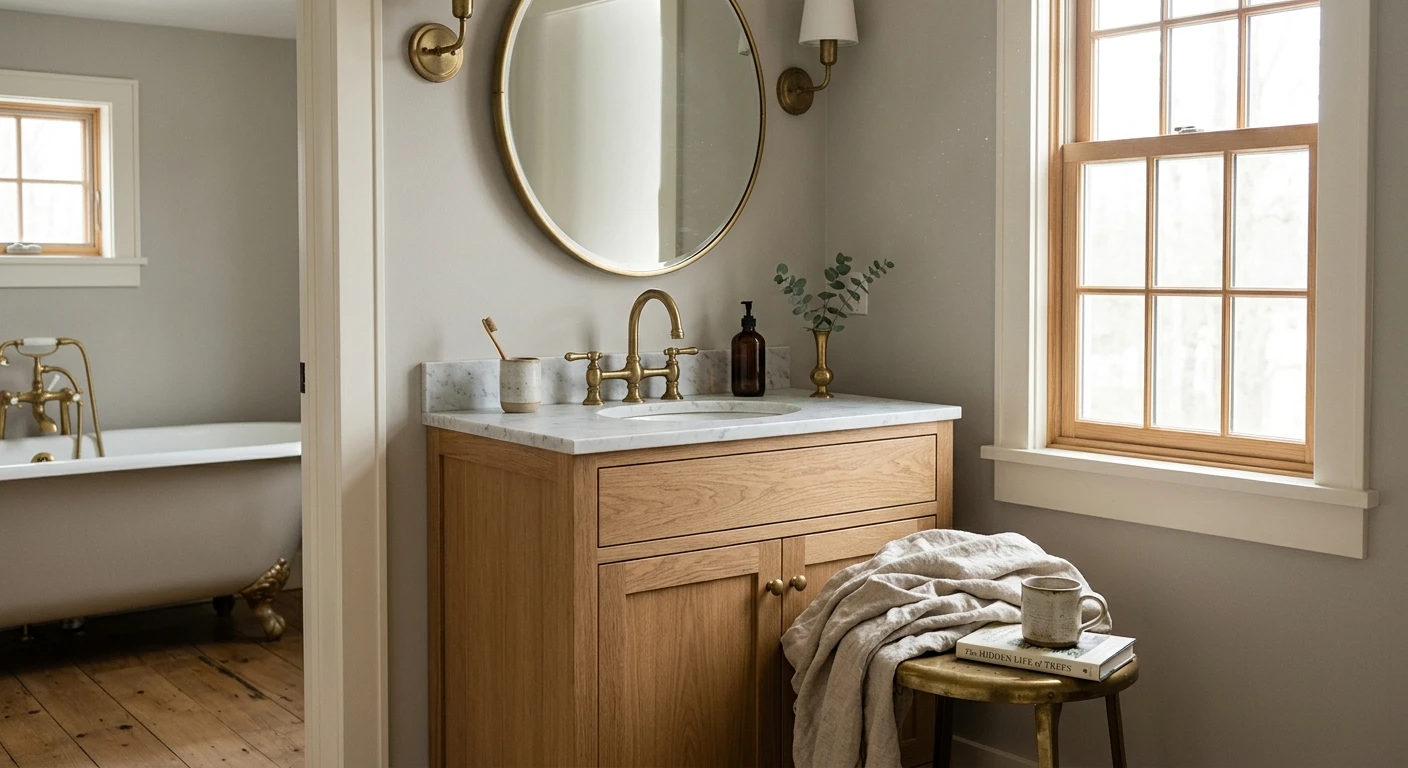
Pair any gray wall with a teak stool, a wood-framed mirror, or an oak floating shelf. The warmth of the wood keeps a gray bath from feeling cold and makes both materials look intentional, the single easiest fix when a finished gray bath feels lifeless.
11. Gray plus black hardware and a black-framed shower
Matte-black fixtures and a black-grid shower enclosure against a mid-gray wall is the current modern-bath shorthand: the black sharpens the gray and reads graphic. Keep the gray neutral to mid-cool here; warm greige can look muddy next to crisp black.
12. Gray plus brass for warmth and shine
Brushed or unlacquered brass taps, towel bars, and a brass mirror frame warm up a cool gray and add the glint a bathroom wants. Brass against blue-gray is especially good: the warm metal balances the cool wall so neither feels extreme.
13. Tone-on-tone gray (gray walls, gray tile, gray grout)
A quiet, contemporary look where everything sits within a few LRV points. The trick is varying texture so it does not go flat: matte wall paint, satin or gloss tile, a textured floor, with one element clearly lighter or darker to give the eye a rest. Done well it is serene; done lazily it reads like a parking garage.
14. Gray with a single saturated accent
Neutral gray walls are the perfect backdrop for one strong color: a deep green vanity, a terracotta runner, a mustard towel set. The gray keeps the room calm so the accent can be bold in a small space. For more full palettes, see our bathroom color schemes guide.
Free AI visualizer. Test light, blue, or charcoal gray on your real walls before buying a single sample pot.
Gray bathroom shades compared: LRV, undertone, and best use
Here is the same lineup as a quick-reference table, with published or typical LRV figures for each tier:
| Gray tier | Typical LRV | Undertone to watch | Best bathroom use |
|---|---|---|---|
| Light gray | 65 to 72 | Can flash violet in cool LED | Small or windowless full bath, all walls |
| Mid neutral (Repose Gray) | 55 to 60 | Faint warm-violet, stays true | The safe whole-bath default |
| Greige (warm gray) | 55 to 62 | Beige can go pink-tan in warm bulbs | Baths with wood vanity or brass |
| Blue-gray | 45 to 55 | Confirm blue, not teal-green | Spa look with white subway tile |
| Charcoal (Iron Ore) | 6 to 12 | Soft near-black, slight warm cast | Powder room or single accent wall |
Try it on your house
No photo? Try a sample
Sources: Sherwin-Williams color data 2026 (Repose Gray SW 7015, Iron Ore SW 7069); LRV tiers per manufacturer chip data; bathroom lighting and undertone notes compiled by FacadeColorizer.
See wall, tile, and fixtures together in one preview, free.
Pairing gray bathroom walls with tile, trim, and fixtures
A gray wall is only half the room. What sits beside it decides whether the gray looks intentional or accidental:
- Tile: a bright white subway or hex makes gray walls pop; a warm-white or cream tile can make a cool gray look dingy, so match the tile temperature to the gray's undertone.
- Trim: use a soft warm-white trim for greige walls and a crisper white for cool or blue-gray walls; a white ceiling keeps the room bright.
- Fixtures: chrome and nickel reinforce a cool gray, brass and bronze warm it, matte black sharpens it. Pick the metal first if you already own it, then match the gray to it.
- Floor and grout: a warm wood-look floor warms the room while a cool gray floor risks feeling flat, so vary the value. Charcoal grout against white tile adds a graphic line; light grout reads timeless.
For the full menu of colors and metals that flatter a gray base in any room, our colors that go with gray guide is the deeper reference, and the family-level overview of every gray shade lives in our interior gray paint shades guide.
Paint, finish, and how to test before you commit
One finish note before you buy: bathrooms see steam and wipe-downs, so skip the flat or eggshell you would happily roll on a gray bedroom wall and use a satin or semi-gloss bathroom-rated paint with mildew resistance, plus a true cabinet enamel on any painted vanity. Cut in clean lines around the mirror and tile, and give the walls a real second coat, since grays look patchy over one thin pass.
A fan-deck chip held up in a bathroom is the number-one reason people end up with a purple wall: the chip reflects the hallway light, not the cool vanity bar. Two better methods:
- Paint a large swatch by the vanity: roll a 12-by-12-inch sample next to the mirror where the cool light is strongest, and check it morning, midday, and at night under your real bulbs. Watch for any violet or green flash.
- Preview it digitally first: upload a real photo of your bathroom and apply a light, a mid, and a charcoal gray before buying samples, narrowing three contenders to the one worth painting.
Preview a light, mid, and charcoal gray in your real bathroom, side by side, free.
Frequently asked questions
What is the best gray for a small bathroom?
For a small or windowless bathroom, choose a light gray with an LRV above 60 so it reflects what little light you have and keeps the room open. A true neutral such as Repose Gray (SW 7015) or a paler gray works best. Avoid going below LRV 45 on all four walls, since a small bath intensifies color; save the charcoals for a single accent wall or a powder room.
Why does my gray bathroom look purple or blue?
Cool vanity lighting is almost always the cause. Bathrooms run cool 4000K or daylight LED bulbs and little warm window sun, which subtracts the warm wavelengths and pushes a gray toward its blue or violet undertone, then the small room amplifies it. Fix it by choosing a warmer greige, a gray with a true-neutral undertone, or by switching to 2700K to 3000K warm-white bulbs over the vanity.
Should a gray bathroom be warm or cool?
It depends on the fixtures and the feel you want. A warm greige suits baths with wood vanities, brass, or beige tile and keeps the room from feeling clinical, while a cool blue-gray reads spa-like next to white tile and chrome. If you are unsure, a true neutral mid-gray is safest, because it flatters both warm and cool elements without committing to either.
What colors go with gray bathroom walls?
White tile and trim keep gray walls crisp; warm wood and brass stop the room feeling cold; matte black sharpens a neutral gray into a modern look. For a pop, one saturated accent (deep green, terracotta, mustard) reads beautifully against gray. Match the temperature of your tile and metal to the gray's undertone so nothing fights.
What paint finish is best for a gray bathroom?
Use a satin or semi-gloss bathroom-rated paint with mildew resistance on walls and ceiling, since flat and eggshell spot and grow mildew under steam. Paint any vanity in a true cabinet enamel and give every surface a real second coat, because grays show patchiness over one thin pass. A working exhaust fan matters as much as the paint.
Preview any gray on your actual bathroom walls under your own light before buying a single sample.
Disclaimer: Sherwin-Williams, Repose Gray (SW 7015), Iron Ore (SW 7069), Agreeable Gray, and Edgecomb Gray are trademarks of The Sherwin-Williams Company. FacadeColorizer is an independent paint visualization service and is not affiliated with, endorsed by, or sponsored by Sherwin-Williams or any paint manufacturer named here. LRV values and color names are published by their respective manufacturers and are used here for identification only. Color reproduction on screens approximates the manufacturer's chip; always confirm with a manufacturer sample under your own bathroom light before purchase. Sources: Sherwin-Williams color data 2026, manufacturer chip LRV data, bathroom lighting and undertone field reports compiled by FacadeColorizer.
Trademarks mentioned (Sherwin-Williams, Benjamin Moore, Behr, Caparol, Brillux, Sto, Alpina, Valspar, PPG, Glidden, Dulux, Crown Trade, Sandtex, Farrow & Ball, Johnstone's, Leyland) are property of their respective owners. FacadeColorizer is independent and not affiliated with any of them. Nominative fair use under Lanham Act §1125.