Try it on your room

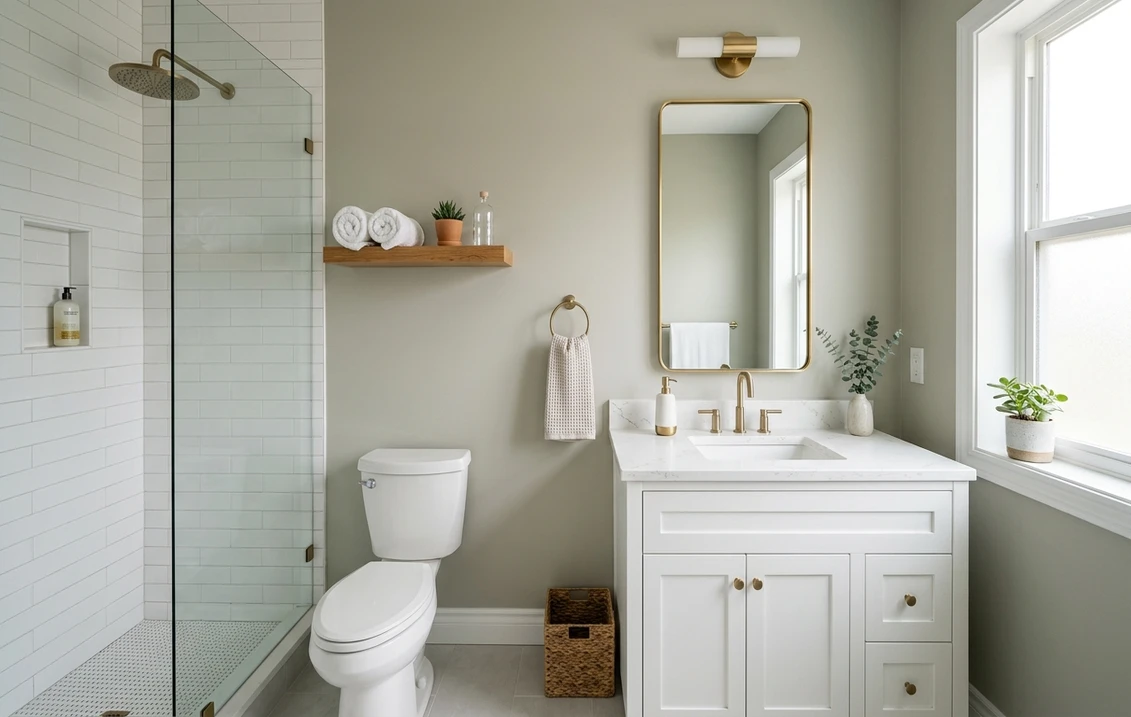
The bathroom that changed my mind about green was a windowless powder room off a client's entry hall. She wanted it dark, I talked her into a smoky gray-green over the wainscot, and cutting in around the mirror I was sure we had gone too moody. Then the brass sconces went back up and the whole little box read like a jewel instead of a closet. That is the lesson with a green bathroom: on a chip it feels like a gamble, but on a real wall, against tile and warm metal, green is the most forgiving color you can put in a wet room. This guide runs through 15 looks, from barely-there sage to a blackened forest powder room, with the shades, LRV numbers, and pairings that make each one hold up.
A quick map first. Green sits between warm and cool, so it borrows whatever you put beside it: wood and brass pull it earthy, white tile and chrome keep it crisp. In a bath that flexibility matters more than anywhere, because you juggle tile, metal, and a big mirror at once. This page is part of our wider room-by-room paint color ideas hub, and it pairs with our best bathroom paint picks for 2026. Those cover the full spectrum for the room; this one stays on green ideas only.
Upload a photo of your actual bathroom and preview any green below under your own light in about 30 seconds, free.
How green reads in a bathroom (before you pick a shade)
Bathrooms break two rules that matter for green. First, the light is rarely natural and almost never generous: most baths get one small window or none, plus a vanity bar that runs cool or warm with the bulb. Second, everything in the room is reflective, so tile, mirror, glass, and chrome bounce that light back onto your green walls. A sage that looks soft in a bright bedroom reads grayer in a dim half bath, and a deep forest green can swallow a tiny powder room wrapped on all four walls with no warm light to lift it.
So depth and undertone do the heavy lifting. A few painter's notes I give every client:
- Match the green's depth to the wall job. Light to mid sages (LRV roughly 40 to 60) flatter a full small bathroom. Deep blackened greens (LRV under 20) belong on a vanity wall, in a powder room, or below a chair rail, not wrapped around a cramped daily shower.
- Mind the undertone against your tile. A yellow-leaning olive next to a cool blue-gray tile can read off. A gray-green like a smoky sage is the safest match for white subway and most marble.
- Use a real bathroom sheen. Satin or semi-gloss in a moisture-prone bath, never flat. Sheen lifts the LRV slightly and helps the green shrug off steam and splashes.
- Check it under your vanity bulbs. A 2700K warm bulb pushes green toward earthy and cozy; a 4000K cool bulb pulls it crisper and a touch grayer. Decide which you want before you commit.
15 green bathroom ideas, by shade and depth
Here are the looks, grouped from lightest to deepest so you can match the green to your light and the size of the room. For the wider sage family and its pairings, our sage green interior shades and pairings guide goes deeper on the lighter end.
1. Soft whole-room sage
The default calm green bathroom. A muted sage such as Clary Sage (SW 6178, LRV 41) wraps the whole room without closing it in, reading almost neutral against white tile. The safe daily-bath pick: restful, spa-like, and forgiving of cool vanity light. Sage alone spans a wide depth range, from Sea Salt at LRV 63 down to Evergreen Fog at 30, and picking the wrong end is the usual regret: our sage green paint for a bathroom page sorts the five worth using by that number.
2. Smoky gray-green spa wall
Evergreen Fog (SW 9130, LRV 30) is the gray-green that started the trend, and it is a natural in a bath. Use it on a single vanity wall behind the mirror, or full-room in a half bath with good light, for that quiet hotel-spa feel.
3. Pale eucalyptus mist
A barely-there, high-LRV green that reads like a tinted white in daylight and softens to dusty sage at night. Ideal for a small windowless bath that needs a hint of color without losing brightness. Pair with chrome and crisp white trim.
4. Sage with warm wood vanity
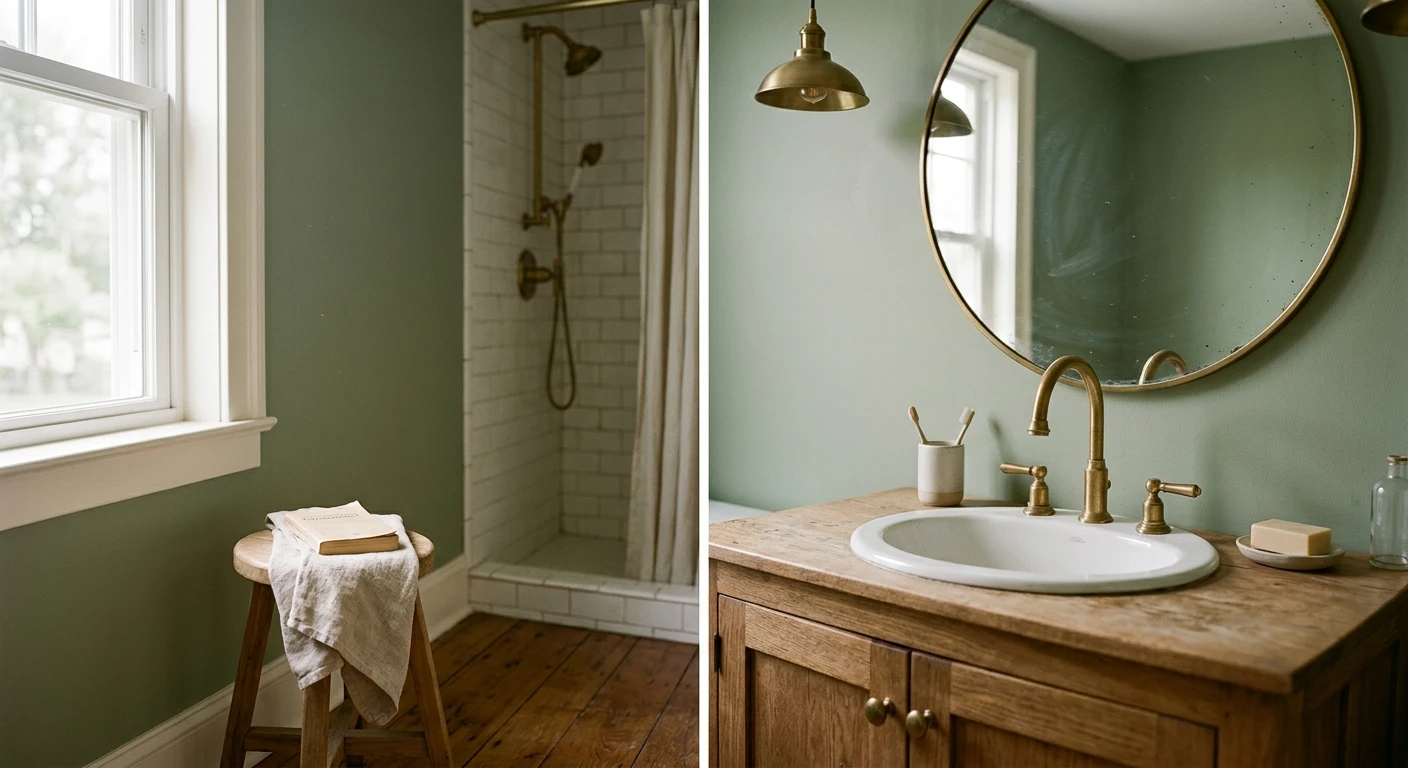
The same soft sage flips earthy the moment a warm oak or walnut vanity enters the room. The wood pulls the green's warm side forward and the space reads grounded. Brass faucets seal it.
5. Mid-tone olive accent wall
A grounded yellow-leaning olive on one wall turns a plain bath rich and a little vintage. Keep it behind the vanity or tub so the warm undertone does not overwhelm a small room. Watch it against cool tile: olive wants warm company.
6. Green wainscot, white above
A classic that suits any size bath. Paint beadboard a mid sage from floor to chair-rail height, leave the upper wall a warm white, and you get color and brightness in one room. It also hides the splash zone where steam and water hit hardest.
7. Two-tone vanity and walls
Carry the green onto the cabinetry. A sage or gray-green vanity under white walls reads custom without committing the whole room to color. The lowest-risk way to do a green bathroom in a rental-friendly or resale-minded space.
8. Green and white subway tile
Run white subway to mid-wall and bring a soft to mid green above it. The crisp tile keeps the room bright while the green warms the air. A gray-green undertone matches white grout better than a yellow olive here.
9. Coastal sea-glass green
A green that leans gently toward blue-green reads like sea glass and suits a beachy or coastal bath. Keep trim bright white and add natural rattan or jute. For full seaside schemes, our coastal paint color palette for 2026 shows where these greens sit next to blues and sands.
10. Herb-garden green powder room
Powder rooms are where you take risks, because nobody showers in them. A fresh mid green wrapped on all four walls turns a tiny guest bath into a small surprise. Brass hardware and a bold mirror finish it.
11. Deep forest vanity wall
A rich forest green on the single wall behind a freestanding tub or vanity gives a primary bath a grown-up, moody anchor while the rest stays light. Keep the ceiling and other walls a warm white so the dark wall reads intentional, not heavy.
12. Blackened green half bath
The powder-room drama pick. Pewter Green (SW 6208, LRV 12) is a deep blackened green that reads near-black in low light and softens to forest under warm bulbs. Wrap a windowless powder room in it, add a big mirror and warm metal, and it feels like a jewel box rather than a dark closet.
13. Green ceiling, white walls
The unexpected fifth wall. A soft sage on the ceiling over white walls drops a quiet wash of color into the room and reads custom. Best in a bath with decent height so the colored ceiling does not press down.
14. Green with marble and brass
A mid gray-green against white marble and unlacquered brass is the most timeless green bathroom you can build. The green warms the cool stone, the brass warms both, and it reads classic rather than trendy. The look I steer most clients toward when they want green that ages well.
15. Sage and terracotta accents
For a warmer, earthier finish, pair a soft sage wall with terracotta tile or clay-toned accessories. The rust and the green are natural partners straight out of the landscape, and the combination keeps a north-facing bath from feeling cold.
Free AI visualizer. Test any green on your real bathroom walls before buying a single sample pot.
Green bathroom shades compared: shade, LRV, and best use
Four greens cover most of what a bathroom needs, from a light whole-room sage to a blackened powder-room green. Here is how they line up:
| Shade | LRV | Reads as | Best bathroom use |
|---|---|---|---|
| Clary Sage (SW 6178) | 41 | Muted neutral sage | Whole small or mid bath, daily use |
| Evergreen Fog (SW 9130) | 30 | Smoky gray-green | Vanity wall or full half bath, spa feel |
| Pewter Green (SW 6208) | 12 | Deep blackened green | Powder room or single vanity wall, drama |
| Sage range | ~40 to 60 | Soft airy sage | Whole windowless bath, wainscot, ceiling |
Try it on your house
No photo? Try a sample
Sources: Sherwin-Williams SW 6178, SW 9130, and SW 6208 color data 2026; designer field reports compiled by FacadeColorizer.
Trim, tile, and metal pairings for green bathroom walls
Green walls live or die on what surrounds them, and a bathroom has more competing surfaces than any room. Get these right and the green reads designed; get them wrong and it can look murky or cold.
- Trim (most harmonious): a creamy off-white flatters sage and gray-green and keeps the room from feeling clinical. A crisp pure white sharpens deeper greens and modern baths.
- Tile: white subway and light marble are the safe partners for any green. A gray-green undertone matches white grout best; save warm olive for warm stone or terracotta.
- Metal: brass and bronze make green look rich; chrome and nickel keep it crisp. Brass with a deep forest is the classic jewel-box pairing.
- Avoid: a strong cool blue-gray tile next to a yellow-leaning olive. The undertones fight and the green can read dirty.
- Floors and accents: oak vanities, rattan, and terracotta pull the green earthy; white stone and chrome keep it fresh. For more two-color recipes, see our colors that go with green interior guide.
To build the whole room around the green, our bathroom color schemes for 2026 maps full palettes with tile, vanity, and accent colors. For the broader green palette beyond this room, the green interior paint shades guide covers every green by family.
See walls, trim, and fixtures together in one preview, free.
How to test a green bathroom color before you commit
A 3-inch fan-deck chip is the number-one reason a green bathroom disappoints: it cannot show how the color shifts under a cool vanity bulb, against your tile, or in a room with almost no daylight. Two better methods:
- Paint a large swatch: roll a 12-by-12-inch sample next to your tile and mirror, then check it in the morning, at night under the vanity bar, and with the door shut. Watch how the green grays down in low light and reads against the grout.
- Preview it digitally first: upload a real photo of your bathroom and apply a sage, a gray-green, and a deeper green before buying samples, narrowing three contenders to one worth painting. It saves a small room from a too-dark mistake. The narrow space keeps repaint labor low, which our interior house painting cost guide for 2026 breaks down.
Preview a sage, a gray-green, and a deeper green side by side, free.
Frequently asked questions
What is the best green for a small bathroom?
For a small bathroom, a soft to mid sage in the LRV 40 to 60 range, such as Clary Sage (SW 6178, LRV 41), is the safest choice. It carries enough color to feel intentional but stays light enough to keep the room open. Save deep blackened greens like Pewter Green (SW 6208) for a single vanity wall or a powder room rather than wrapping a cramped daily bath in them.
Does green work in a bathroom with no window?
Yes, but choose the depth for the light you have. In a windowless bath, a light sage keeps things bright while still adding color, and a 2700K warm bulb pulls the green earthy and cozy. A deep forest or blackened green can also look striking in a windowless powder room, but only with warm metal, a big mirror, and warm bulbs to lift it, otherwise it reads heavy.
What colors go with green bathroom walls?
Warm white trim, white subway or marble tile, and natural wood are the most harmonious partners for green bathroom walls. Brass and bronze make green look rich; chrome and nickel keep it crisp. Terracotta and warm clay accents pull a sage earthy. Avoid pairing a yellow-leaning olive with a strong cool blue-gray tile, since the clashing undertones can make the green read dirty.
What sheen should I use for green bathroom paint?
Use satin or semi-gloss in any moisture-prone bathroom, never flat. The sheen helps the walls shrug off steam and splashes and is easier to wipe clean. It also lifts the green's light reflectance slightly, which helps a deeper green from feeling too closed-in. Reserve flat or matte finishes for a half bath that never sees a shower.
Is a green bathroom a trend or a timeless choice?
A muted sage or gray-green bathroom paired with white tile, marble, and brass reads as timeless rather than trendy, because those greens borrow from nature and age well. Brighter or more saturated greens feel more of-the-moment. If you want a green bathroom that still looks right in ten years, lean toward a soft sage or a smoky gray-green like Evergreen Fog (SW 9130) over a punchy lime or emerald.
Preview any green above on your actual bathroom walls under your own light before buying a single sample.
Disclaimer: Sherwin-Williams, Clary Sage (SW 6178), Evergreen Fog (SW 9130), and Pewter Green (SW 6208) are trademarks of The Sherwin-Williams Company. FacadeColorizer is an independent paint visualization service and is not affiliated with, endorsed by, or sponsored by Sherwin-Williams. Color reproduction on screens approximates the manufacturer's chip; always confirm with a manufacturer sample under your own light before purchase. Light Reflectance Values and undertone behavior vary with bathroom light, sheen, and surrounding tile and metal. Sources: Sherwin-Williams SW 6178 Clary Sage, SW 9130 Evergreen Fog, and SW 6208 Pewter Green color data 2026; designer field reports compiled by FacadeColorizer.
Trademarks mentioned (Sherwin-Williams, Benjamin Moore, Behr, Caparol, Brillux, Sto, Alpina, Valspar, PPG, Glidden, Dulux, Crown Trade, Sandtex, Farrow & Ball, Johnstone's, Leyland) are property of their respective owners. FacadeColorizer is independent and not affiliated with any of them. Nominative fair use under Lanham Act §1125.