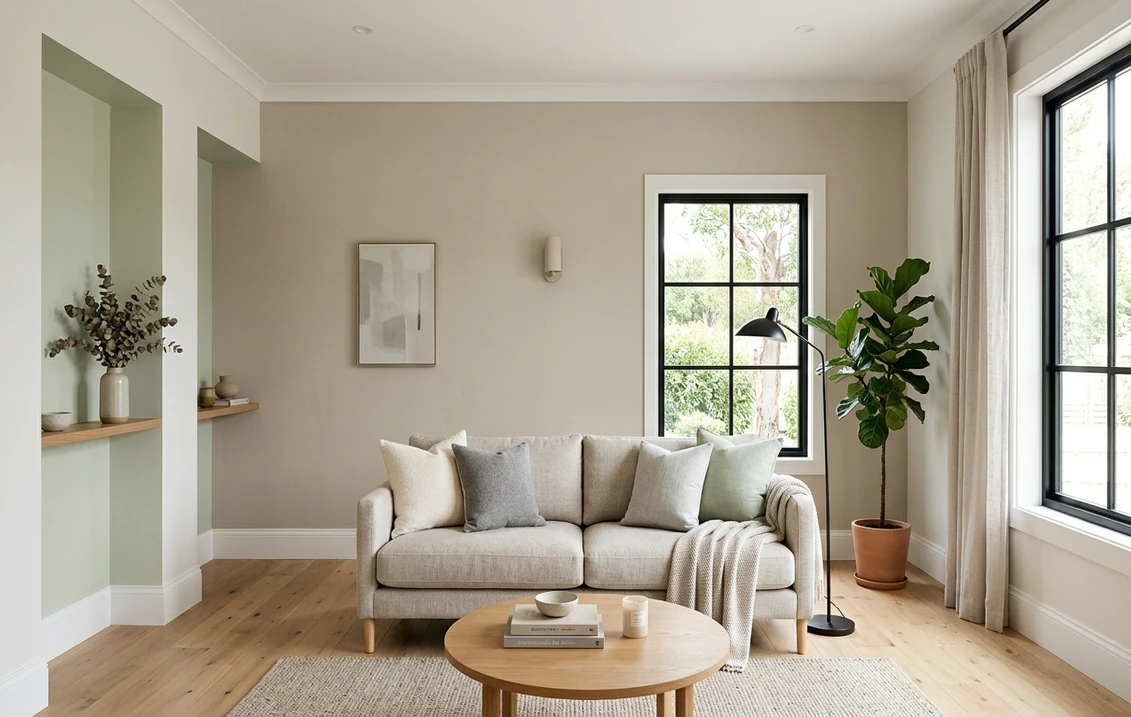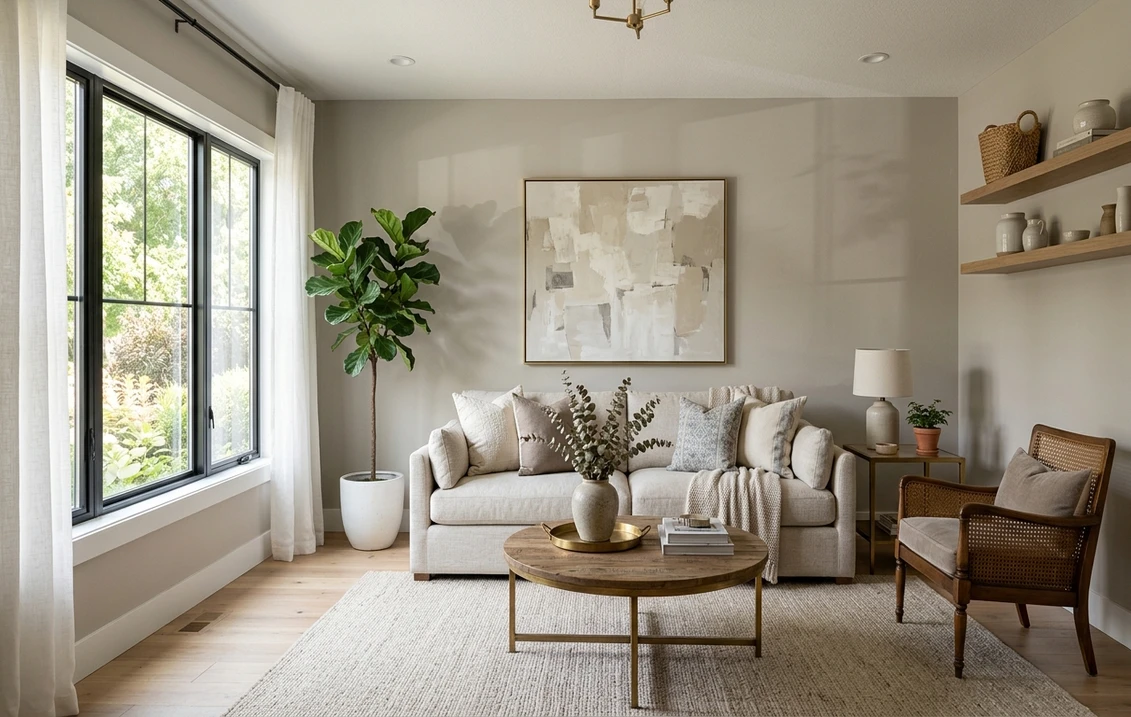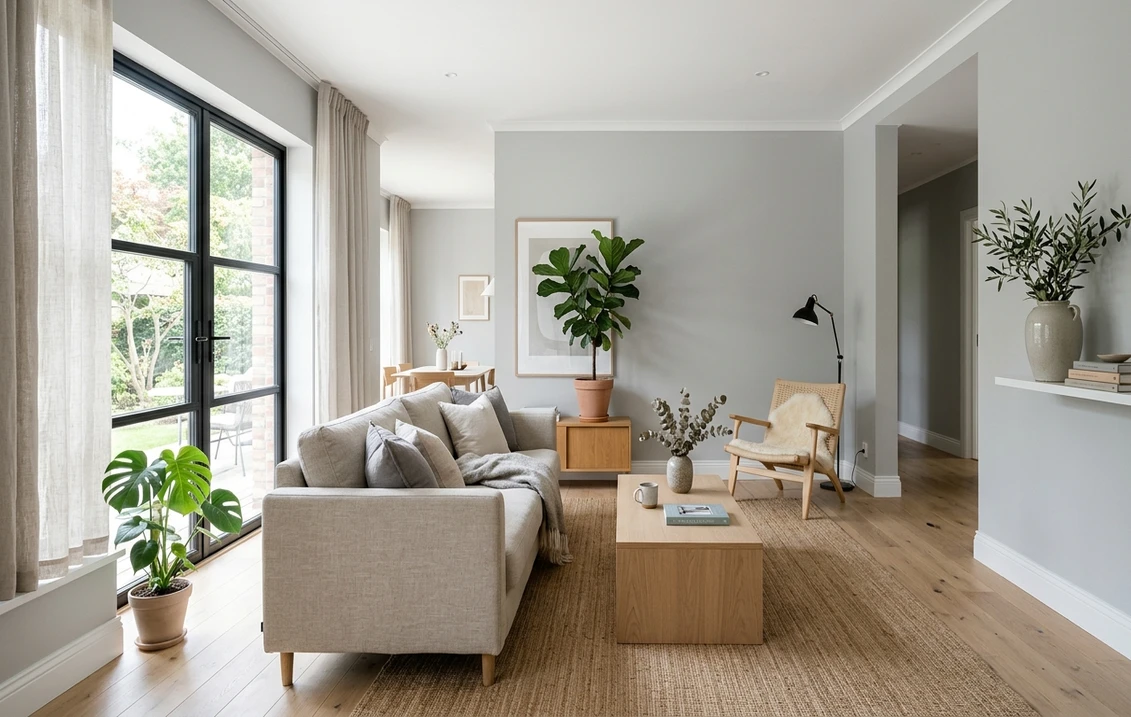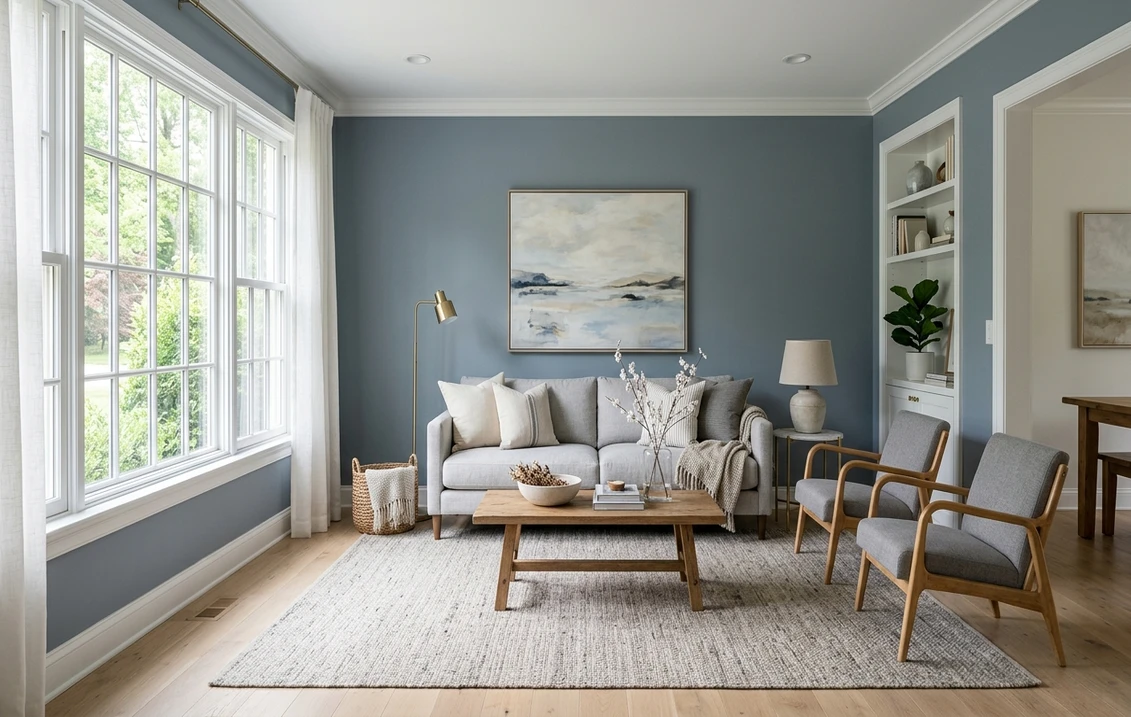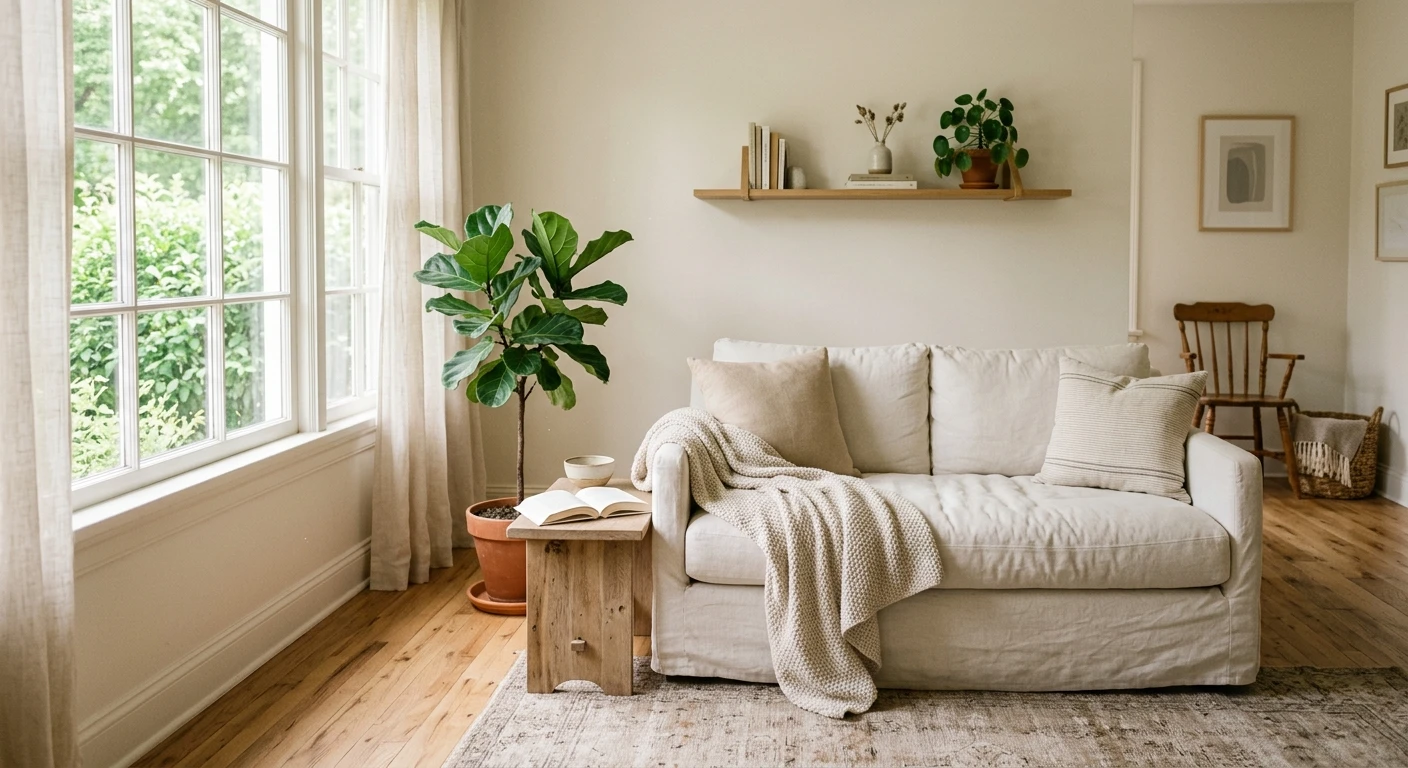
Try it on your room

The first time I rolled a "simple" white across a client's north-facing living room, it went blue. Not a little blue: cold, dingy, hospital-corridor blue, in a room she had described as "cozy." We had grabbed the brightest white on the rack because white is white, right? That afternoon taught me the lesson every painter learns once: there is no such thing as a neutral white, and the best white paint for walls is the one that flatters your light, not the one that looks crispest on a fan deck. This guide ranks 15 whites by undertone and LRV so you can skip the blue-room mistake.
Quick orientation before the list. Every white leans somewhere: a touch yellow, a touch gray, a touch blue, sometimes green or pink. That lean is the undertone, and it only shows up at full scale on a wall, never on a chip. The other number that matters is LRV (Light Reflectance Value): how much light the color bounces back, on a 0 to 100 scale. Wall whites mostly live between LRV 80 and 92. This page is part of our broader interior paint color families guide, and it pairs with our deeper dives on decoding the full white spectrum and the cozy warm white shades. Here, the focus is narrow: which whites actually look right on a wall.
Upload a photo of your actual room and preview top wall whites under your own light in about 30 seconds, free.
How to choose a white for walls (the 60-second version)
Before the rankings, three rules that save most repaints. Get these right and almost any quality white on the list will work:
- Match the white to your light. North-facing and shaded rooms drain warmth, so a cool or blue-leaning white turns gray and chilly. Pick a soft white with a touch of warmth there. South and west rooms flood with warm light, so they can carry a cooler, cleaner white without it ever looking icy.
- Pick your LRV on purpose. LRV 88 to 92 reads bright and airy (great for small or dark rooms). LRV 80 to 85 reads softer and more grounded, less likely to glare, and easier to live with on every wall of a sunny room.
- Decide warm or crisp first, brand second. The split that matters is undertone, not the logo. A warm creamy white and a crisp clean white are two different design moods. Choose the mood, then pick the closest match from whichever brand your store stocks.
One opinion up front, because it cuts the list in half: bright, blue-based whites (the ones marketed as the "whitest white") are the wrong call for most wall projects. They look stunning on trim against a colored wall, but rolled across a whole room with average light they go sterile and cold. Save them for millwork. The whites that live well on walls almost always carry a quiet warm or balanced undertone.
The 15 best white paint colors for walls, by undertone and LRV
Here is the working table I keep on my phone at the paint counter. LRV values are from each manufacturer's published color data; undertone is how the color reads at full scale on a wall, which is what actually matters. Use it to narrow to two or three, never to pick blind:
| White (brand / code) | LRV | Undertone | Best wall use |
|---|---|---|---|
| Chantilly Lace (BM OC-65) | 92 | Crisp, near-neutral | Bright, sunny rooms wanting a clean modern white |
| Pure White (SW 7005) | 84 | Soft, very slight warm | The safest all-rounder wall white |
| White Dove (BM OC-17) | 85 | Warm, soft gray-cream | Whole-house warm white, walls and trim together |
| Alabaster (SW 7008) | 82 | Warm cream | Cozy rooms, low-light spaces, traditional homes |
| Swiss Coffee (BM OC-45) | 84 | Warm, soft creamy | Inviting living rooms and bedrooms |
| Simply White (BM OC-117) | 89 | Clean, faint warm | Bright fresh walls without going stark |
| Snowbound (SW 7004) | 83 | Soft, slight gray-taupe | Modern rooms, walls beside cool grays |
| Cloud White (BM OC-130) | 85 | Warm cream | Soft warm walls, kitchens, classic trim |
| Greek Villa (SW 7551) | 84 | Warm, creamy | Sun-washed, organic-modern walls |
| Extra White (SW 7006) | 86 | Cool, blue-leaning | Very sunny rooms wanting a true cool white |
| High Reflective White (SW 7757) | 93 | Bright, near-pure | Ceilings, modern galleries, max brightness |
| Decorator's White (BM OC-149) | 83 | Cool, slight gray-blue | Crisp cool walls in bright spaces |
| Marshmallow (BM OC-30) | 86 | Soft warm, faint gray | Calm warm-neutral walls that stay current |
| Shoji White (SW 7042) | 74 | Warm greige-white | Soft "barely there" walls with depth |
| Ultra Pure White (Behr) | 90 | Clean, very slight cool | Budget-friendly bright walls and ceilings |
Try it on your house
No photo? Try a sample
Sources: Sherwin-Williams, Benjamin Moore, and Behr published color data 2026; designer field reports on white undertones compiled by FacadeColorizer.
Free AI visualizer. Compare a warm white and a crisp white on your real walls before buying samples.
The crisp whites: clean, bright, current
These are the whites that feel modern and airy. They suit rooms with strong natural light, white-and-black schemes, and anyone who wants walls that read fresh rather than soft. The trade: in poor light they cool off fast, so audition them carefully if your room faces north.
Pure White (SW 7005), LRV 84
If I had to bet one white sight-unseen on an unknown room, this is it. Pure White is soft enough to never glare, with the faintest warm whisper that keeps it from going cold, yet clean enough to read as a real white rather than a cream. It is the rare white that behaves on walls, trim, and cabinets at once. The full breakdown of how it shifts by room and light is in our SW Pure White undertones and best rooms guide.
Chantilly Lace (BM OC-65), LRV 92
The designer default for a genuinely clean white with almost no detectable undertone. On walls in a bright room it is crisp and gallery-fresh. My one caution: at LRV 92 it can feel a touch clinical on every wall of a dim space. It is happiest in sunlight, or used on trim against a soft-colored wall.
Simply White (BM OC-117), LRV 89
A bright, clean white with just enough warmth to stay friendly. It reads whiter than White Dove but never sterile, which makes it a strong pick when you want walls to feel light and current without committing to a stark, blue-based white.
Extra White (SW 7006) and Decorator's White (BM OC-149)
Both lean cool, and that is the point. They give a true, crisp white with no cream. Used on walls they need genuinely good light, or the blue-gray undertone takes over and the room turns chilly. Reach for these in a sun-soaked modern room, or keep them on trim where a cool white reads as clean contrast rather than coldness.
The warm and soft whites: cozy, forgiving, lived-in
These are the wall whites that almost never fail. The quiet warmth lets them hold up in north light, low light, and rooms full of wood and natural texture. If "white but not cold" is the brief, start here. For the full family of cozy options, our warm white paint guide goes wider, and our guide to softer off-white tones covers the deeper, creamier end.
White Dove (BM OC-17), LRV 85
The most-recommended white in America for a reason. It is warm without being yellow, soft without being dull, and it makes a room feel calm and collected rather than blank. White Dove is the safest "do my whole house in one white" choice, because it flatters walls, trim, and cabinets together. Our complete Benjamin Moore White Dove OC-17 review covers exactly how it behaves room by room.
Alabaster (SW 7008), LRV 82
Sherwin-Williams' warm answer to White Dove and a former Color of the Year. The cream undertone is a touch more present, so on walls it reads soft, hospitable, and a little classic. It is my go-to rescue for a dim or north-facing room where a cooler white would die. In very warm afternoon light it can edge toward ivory, so audition it before committing in a west-facing space.
Swiss Coffee (BM OC-45) and Cloud White (BM OC-130)
Two creamy classics that wrap a room in warmth. Swiss Coffee is soft and slightly deeper; Cloud White is a hair cleaner. Both look beautiful on walls in living rooms and bedrooms, especially alongside natural wood. The honest warning: in a room that already gets strong warm light, they can tip toward looking a little yellow, so they reward a sunlight test.
Shoji White (SW 7042) and Marshmallow (BM OC-30)
These are the "barely there" whites with a soft greige whisper, for when a flat white feels too plain but a true color is too much. Shoji White (LRV 74) reads more like a warm off-white than a pure white, with real depth on a wall. Marshmallow is brighter and cleaner. Both keep walls feeling current and grounded rather than builder-blank.
See White Dove or Alabaster on your actual walls before buying a single sample pot, free.
Which white for which room
Undertone theory is useful, but most people just want a starting pick. Here is where each type earns its keep:
- North-facing or low-light rooms: go warm. White Dove, Alabaster, or Swiss Coffee. The warmth fills in the gray that north light pulls out. Skip the cool, blue-based whites entirely here.
- South and west rooms with strong sun: you have room to go cleaner. Pure White, Simply White, or Chantilly Lace stay bright and never tip cold, while the sun keeps any creamy white from yellowing too far.
- Small rooms and hallways: a higher-LRV soft white (Simply White, Pure White) bounces light and opens the space without the sterile feel of a max-bright white.
- Kitchens with white or wood cabinets: match the wall white to the cabinet warmth. Warm cabinets love Cloud White or White Dove; crisp cabinets pair with Pure White.
- Walls beside cool grays: Snowbound or Decorator's White keep the white from looking yellow next to a gray wall or floor.
- Ceilings: High Reflective White or Ultra Pure White flat for max bounce, or simply your wall white at a lighter sheen for a seamless look.
A pairing note from job sites: if your walls are a warm white, keep the trim in the same white or a slightly cleaner one. Putting a cool, blue-white trim next to a creamy wall is the fastest way to make perfectly good walls look dingy by comparison.
Sheen and coverage: the part people skip
The color is only half the result. White walls live or die on finish and prep:
- Sheen: matte or flat hides drywall flaws and reads softest, which suits low-traffic walls. Eggshell is the practical wall standard: a faint glow that wipes clean. Go satin in kitchens and baths. The higher the sheen, the more any undertone and surface imperfection shows.
- Two coats, always. White over a colored or patchy wall will look thin and blotchy with one coat, no matter the brand's claims. Plan for a primer or a quality self-priming paint, then two finish coats, cutting in your edges before you roll each coat.
- Mind the ceiling. A bright cool-white ceiling over warm-white walls can make the walls read grayer than you expect. Keeping ceiling and walls in the same white family avoids the surprise.
Budgeting the whole job, not just the gallons, helps avoid mid-project surprises. Our interior house painting cost guide for 2026 breaks down paint, primer, and labor so a multi-room white project does not blow past your number.
Preview a crisp white against a warm white, side by side on your real room, free.
How to test a white before you commit
A fan-deck chip is the single biggest reason a white disappoints: it is too small to show the undertone and it never sees your real light across a day. Two reliable methods:
- Paint a large swatch: roll a 12-by-12-inch sample (or a peel-and-stick sample) on two different walls and check it mid-morning, mid-afternoon, and at night under your normal bulbs. Watch the corners and any north wall for the white going gray or yellow.
- Preview it digitally first: upload a real photo of your room and apply two or three whites before you buy any samples, narrowing the field to the one or two worth painting. It will not replace a final swatch, but it kills the obviously wrong picks in minutes instead of after a gallon.
Frequently asked questions
What is the best white paint for walls?
For most rooms, the best white paint for walls is a soft white with a slight warm or balanced undertone, because it flatters real light instead of going cold. Benjamin Moore White Dove (OC-17, LRV 85) and Sherwin-Williams Pure White (SW 7005, LRV 84) are the two safest all-rounders. Go warmer (Alabaster, Swiss Coffee) in low or north light, and cleaner (Chantilly Lace, Simply White) in bright sunny rooms.
Should wall white be warm or cool?
Match it to your light. North-facing and dim rooms drain warmth, so a warm or balanced white keeps them from turning gray; cool, blue-based whites go chilly there. South and west rooms get strong warm light and can carry a cooler, crisper white without it ever looking icy. As a rule, warm and soft whites are more forgiving on full walls, while cool whites shine best on trim.
What LRV should a white wall paint have?
Most wall whites land between LRV 80 and 92. An LRV around 88 to 92 reads bright and airy, which helps small or dark rooms but can feel stark in a sunny space. An LRV around 80 to 85 reads softer and more grounded, glares less, and is easier to live with on every wall of a bright room. Pick the number on purpose rather than defaulting to the brightest white.
Why does my white wall look blue or yellow?
Every white has an undertone that only shows up at full scale on a wall. A cool, blue-leaning white (like Extra White or Decorator's White) can read blue or gray in weak or north light. A creamy white (like Swiss Coffee or Cloud White) can read yellow in strong warm light. Choosing an undertone that counterbalances your room's light, and testing a large swatch, prevents both surprises.
Can I use the same white on walls, trim, and ceiling?
Yes, and a soft white like White Dove or Pure White is built for it. Using one white throughout gives a calm, seamless look; you just change the sheen (flat or matte on walls and ceiling, eggshell or satin on trim) for durability and a subtle definition between surfaces. The trick is to avoid mixing a warm wall white with a cool trim white, which makes the walls look dingy by contrast.
Preview top wall whites on your actual walls under your own light before buying a single sample.
Disclaimer: Sherwin-Williams, Pure White (SW 7005), Alabaster (SW 7008), Extra White (SW 7006), High Reflective White (SW 7757), Snowbound (SW 7004), Greek Villa (SW 7551), Shoji White (SW 7042), and Sea Salt (SW 6204) are trademarks of The Sherwin-Williams Company. Benjamin Moore, White Dove (OC-17), Chantilly Lace (OC-65), Simply White (OC-117), Swiss Coffee (OC-45), Cloud White (OC-130), Decorator's White (OC-149), and Marshmallow (OC-30) are trademarks of Benjamin Moore & Co. Behr and Ultra Pure White are trademarks of Behr Process Corporation. FacadeColorizer is an independent paint visualization service and is not affiliated with, endorsed by, or sponsored by Sherwin-Williams, Benjamin Moore, or Behr. LRV values are approximate and drawn from each manufacturer's published color data; color reproduction on screens approximates the manufacturer's chip, so always confirm with a manufacturer sample under your own light before purchase. Sources: Sherwin-Williams, Benjamin Moore, and Behr color data 2026, designer field reports on white undertones compiled by FacadeColorizer.
Trademarks mentioned (Sherwin-Williams, Benjamin Moore, Behr, Caparol, Brillux, Sto, Alpina, Valspar, PPG, Glidden, Dulux, Crown Trade, Sandtex, Farrow & Ball, Johnstone's, Leyland) are property of their respective owners. FacadeColorizer is independent and not affiliated with any of them. Nominative fair use under Lanham Act §1125.