Try it on your room

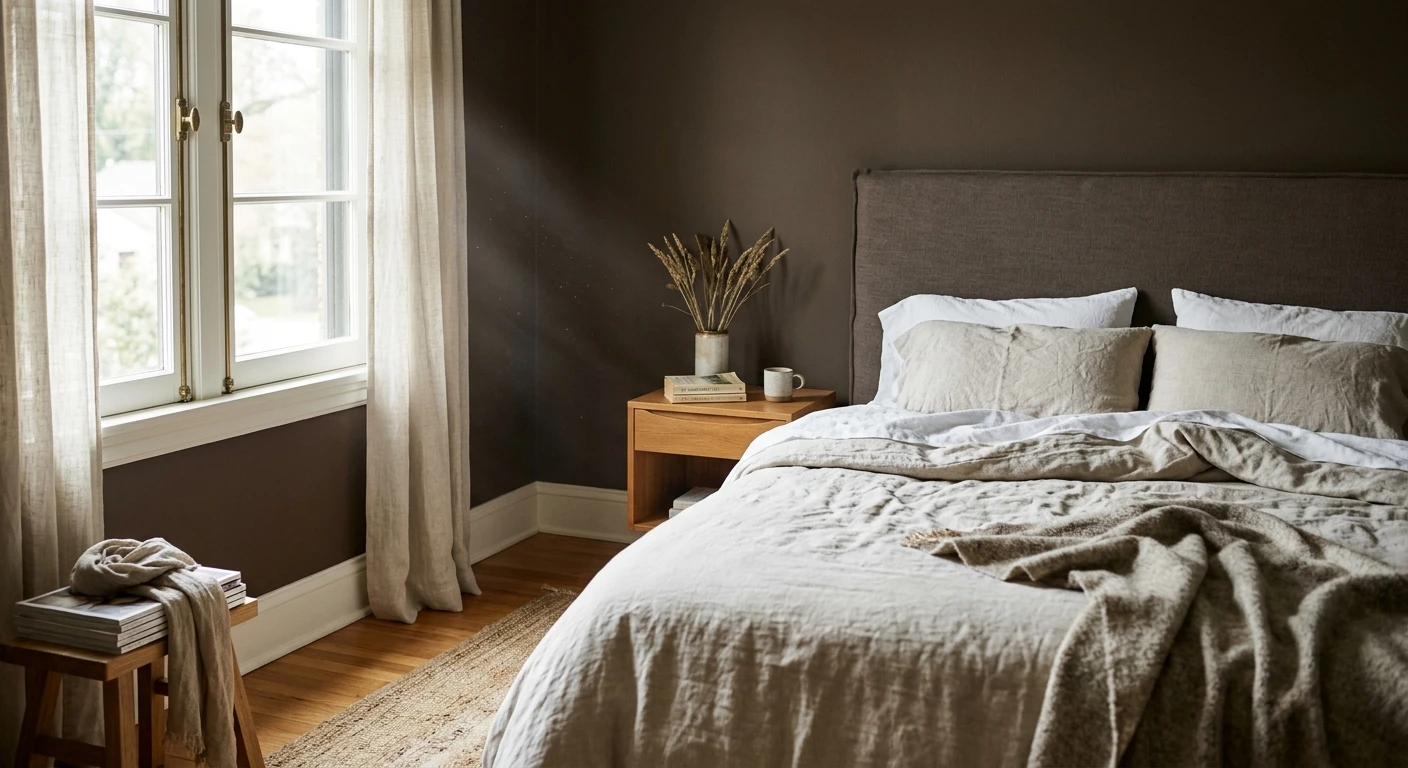
The first time a client asked me to paint a primary suite the color of espresso, I tried to talk her out of it. I was wrong. We rolled a warm chocolate behind the bed, wrapped the other three walls in a soft mushroom, and under the bedside lamps it read like a boutique hotel: snug, grown-up, expensive. That is the thing about a brown bedroom. Done right it reads as warm, calm, and quietly luxurious. Done wrong it reads as a 1970s rec room. The whole game is the shade, the light, and what you put next to it. Below are 14 brown bedroom ideas, sorted from deep and dramatic to pale and barely-there, with the LRV and pairings for each.
This is one room in our wider room-by-room paint color ideas series, and it pairs with the family explainer on brown interior shades and their undertones: that one covers brown across the whole house, while this page stays on the bedroom, on how brown walls read at night, and on the pairings that keep them from going muddy.
Upload a photo of your actual bedroom and preview these brown shades under your own light in about 30 seconds, free.
Why brown works in a bedroom (and the one rule that saves you)
Brown is the most grounded color on the wheel. A bedroom is the one room where you actually want that weight: low light, a sense of enclosure, a wind-down cue for your nervous system. That is why brown bedroom walls feel restful in a way a stark white never does. The catch is undertone. Every brown leans somewhere, and the lean decides whether the room feels cozy or dirty.
- Red-brown (think chestnut, mahogany) reads warmest and richest. Gorgeous at night, but can go pink-orange under warm 2700K bulbs, so test it.
- Yellow-brown (caramel, camel, tobacco) is the most golden and inviting; the easiest brown to live with.
- Gray-brown (taupe, mushroom, "greige-brown") is the safest and most modern. It mutes the brown down toward neutral.
- Green-brown (olive-brown, drab) is the designer favorite right now, sophisticated, a little moody, but it needs warm light or it can read swampy.
The one rule that saves a brown bedroom: commit to warm. Warm bulbs (2700K to 3000K), warm wood, warm-white trim, brass or aged bronze, linen and wool. A brown wall under cool 4000K LED light and a stark blue-white trim goes flat and muddy every time. Keep the whole room on the warm side of the dial and brown turns into the hotel-suite version of itself.
14 brown bedroom ideas, by depth and undertone
Here is the working map I keep in my head on a job. LRV (Light Reflectance Value) runs from 0 (black) to 100 (white); the lower the number, the darker and more enveloping the wall. Lamp-light behavior is the column most people forget, and it is the one that decides whether you love the room at 10 p.m.
| Brown look | Approx LRV | Undertone | Best bedroom use |
|---|---|---|---|
| 1. Espresso / near-black brown | 5 to 8 | Neutral to red | Full cocoon in a bright, big-window room |
| 2. Chocolate | 7 to 10 | Red-brown | Accent wall behind the headboard |
| 3. Chestnut / mahogany | 9 to 12 | Red | Traditional rooms with brass, dark wood |
| 4. Coffee / cocoa | 12 to 16 | Neutral warm | Whole-room, south-facing space |
| 5. Olive-brown / drab | 15 to 20 | Green-brown | Moody modern rooms; warm bulbs only |
| 6. Mocha | 20 to 24 | Yellow-brown | Easy mid-tone, flatters most rooms |
| 7. Tobacco / cigar | 18 to 22 | Yellow-red | Library-feel guest rooms |
| 8. Caramel | 28 to 34 | Yellow / golden | Sunny rooms; reads honey at night |
| 9. Camel | 35 to 42 | Yellow-tan | Neutral-leaning, easy with white bedding |
| 10. Mushroom | 40 to 48 | Gray-brown | Most modern brown, near-neutral |
| 11. Taupe | 42 to 50 | Gray-pink-brown | North-facing rooms; safest light brown |
| 12. Fawn / latte | 48 to 55 | Warm beige-brown | Airy rooms wanting a hint of brown |
| 13. Brown-leaning greige | 52 to 60 | Greige with cocoa lean | Resale-friendly, pairs with anything |
| 14. Two-tone: dark brown + cream | mixed | Contrast | Chocolate headboard wall, cream above |
Try it on your house
No photo? Try a sample
Sources: manufacturer color data 2026 (Sherwin-Williams, Benjamin Moore); LRV ranges are typical-band approximations for each brown family; designer field reports compiled by FacadeColorizer. Confirm exact LRV against the specific product chip.
Free AI visualizer. See chocolate, mocha, and taupe on your real bedroom walls before buying a single sample pot.
The four browns I reach for most
Chocolate, for the dramatic accent wall
A chocolate accent wall behind the headboard is the highest-impact, lowest-risk brown bedroom idea there is. At LRV 7 to 10 it frames the bed like a piece of furniture, the lighter walls keep the room from closing in, and you only commit a gallon. Cut in cleanly at the ceiling line, because dark walls show a wobbly edge. Two coats minimum over a tinted primer; deep browns are thirsty, and a single coat leaves roller streaks you will see every morning. Our guide to bedroom accent wall ideas shows which wall actually deserves the color.
Mocha, for the whole room without the gloom
Mocha (a yellow-leaning mid-brown around LRV 22) is my default when someone wants all four walls brown but is nervous about going dark. It is coffee with a splash of milk: enough depth to feel cocooning, enough light to avoid the basement feeling. It flatters warm wood, brass, and a creamy ceiling, and it forgives imperfect drywall because a mid-tone hides texture better than a pale or a near-black does. Mocha is also the brown that travels furthest out of the bedroom: it is the standard whole-room shade in a brown kitchen at the same LRV band. What changes is the jury. A bedroom judges brown against bedding under warm lamp light; a kitchen judges it against a countertop, a backsplash, and appliances, which is why the same mocha there wants a cool light stone counter and brass or matte black rather than chrome. Our brown kitchen paint ideas work through those pairings.
Taupe, the brown that pretends to be a neutral
When a client says "brown" but means "warm and calm, nothing loud," I show them taupe. At LRV 42 to 50 it is technically a gray-brown, light enough for a north-facing room and soft enough to disappear behind your bedding and art. It reads as a sophisticated neutral, the same logic behind a good greige. Our taupe paint colors and undertones guide breaks down where it tips pink versus green.
Olive-brown, the moody one designers love
Olive-brown and "drab" greens are the brown bedroom trend right now: that murky, green-tinged brown that looks like it has always been there. It is beautiful in a room with warm lamp light and natural materials. One caution: in a cool, dim, north room it can slide toward swampy. Keep the bulbs at 2700K, add brass and a warm-white ceiling, and it stays elegant. Our broader brown interior shades guide has the full range of muted earth tones to compare.
Trim, ceiling, bedding, and metal pairings
A brown wall lives or dies on what surrounds it. The surrounding choices have to either match that warmth or provide deliberate, clean contrast. Muddy middle ground is what makes a brown room look dated.
- Trim (most harmonious): a warm white such as a soft cream-white keeps the contrast gentle and the room cohesive. This is the hotel-suite look, brown wall, creamy trim.
- Trim (crisp contrast): a clean bright white sharpens the edges for a more modern, graphic feel, especially with a deep chocolate. Avoid a stark blue-white, which can make the brown read flat and dirty by comparison.
- Ceiling: a warm white, or for a true cocoon, paint the ceiling the same brown as the walls. A cool-white ceiling over a brown room fights the warmth.
- Bedding: cream, oatmeal, ivory, and warm white linens make brown sing. Add rust, terracotta, mustard, sage, or dusty blue for accent pillows. Cool gray bedding tends to deaden a brown wall.
- Metals: brass, aged bronze, and matte black all flatter brown. Chrome and polished nickel feel cold against it.
- Wood and texture: oak, walnut, cane, rattan, jute, and wool reflect warmth back into the room and are what separate a designed brown bedroom from a drab one.
For a full color story built around the bed wall, our bedroom color schemes and palettes guide shows brown working in three-color combinations, and the calming master bedroom paint colors guide places brown next to the other restful tones for a primary suite.
Preview walls, trim, and ceiling together in one image, free.
How brown reads under your bedroom light
Bedrooms are the trickiest room for color because you experience them mostly at the two extremes: bright morning sun and dim evening lamp light. A brown that looks rich at noon can turn pink-orange or muddy at night. Here is the quick map:
| Bedroom light | How a brown wall reads |
|---|---|
| South-facing (bright, warm) | Browns look their richest and most flattering; you can go darker than you think |
| West-facing (warm afternoon) | Reds and caramels glow; watch red-browns turning orange in late sun |
| East-facing (cool after noon) | Warm at dawn, flatter by afternoon; mid-tones hold up best |
| North-facing (cool, indirect) | Browns can go flat and grayed; stick to lighter taupe or add warm bulbs |
| Warm bulbs (2700K) at night | Cozy, honeyed, the brown bedroom at its best |
| Cool bulbs (4000K) at night | Browns read grayer and can look muddy; not recommended for a brown room |
Sources: designer field reports compiled by FacadeColorizer; The Spruce and Better Homes & Gardens neutral-paint undertone coverage. Always confirm under your own bulbs.
Small bedroom? You can still go brown
The myth that dark colors shrink a small room is only half true. A small bedroom painted a deep brown does not feel smaller, it feels intentional and cozy, like a jewel box, because the walls recede into shadow and the corners blur. The mistake is going dark with cool light and high-contrast white trim, which highlights every boundary. In a small brown bedroom: dark walls, dark or matching ceiling, low warm light, minimal contrast trim. Or keep it light with a fawn or latte brown around LRV 50 that holds the airy feeling while still warming the room. Either commit to the cocoon or stay genuinely light; the unhappy middle is a half-dark room.
How to test brown before you commit the whole room
Brown is the family that fools the most people, because a tiny fan-deck chip cannot show you how a deep cocoa will swallow light at night or how a caramel will glow gold under your lamps. Two better methods:
- Paint a large swatch: roll a 2-by-2-foot sample (or use a peel-and-stick sample) on the wall you are considering, ideally the headboard wall, and live with it for a couple of days. Check it at dawn, mid-afternoon, and under your actual bedside lamps. Dark browns especially must be judged at night.
- Preview it digitally first: upload a real photo of your bedroom and apply a few browns (one dark, one mid, one light) before you buy any samples, so you narrow three contenders down to the one worth painting. Budget context for the repaint is in our interior house painting cost guide for 2026.
Preview a dark, a mid, and a light brown on your real bedroom walls, side by side, free.
Frequently asked questions
Is a brown bedroom a good idea?
Yes, brown is one of the most restful colors you can put in a bedroom because it is warm, grounded, and low-reflectance, which signals your body to wind down. The key is keeping the whole room warm: warm bulbs (2700K to 3000K), warm-white trim, brass, and natural wood. A brown wall under cool 4000K light and stark white trim is what makes a room look dated; warm light makes the same brown read like a boutique hotel.
What is the best brown shade for a bedroom?
For most rooms, a mid-tone mocha (around LRV 22) is the easiest brown to live with: cozy without going cave-dark. If you want light and almost-neutral, choose a taupe or mushroom around LRV 45. If you want drama, a chocolate accent wall behind the headboard gives the biggest impact with the least risk. The right pick depends mainly on your light: go darker in a south-facing room, lighter in a north-facing one.
What colors go with brown bedroom walls?
Cream, oatmeal, and warm white are the safest companions for trim and bedding. For accents, rust, terracotta, mustard, sage green, and dusty blue all flatter brown. Brass, aged bronze, and matte black are the right metals. Avoid cool gray bedding and stark blue-white trim, which tend to deaden a brown wall and make it look muddy.
Does a brown bedroom make a room look smaller?
Not the way people fear. A deep brown does not shrink a small bedroom; it makes it feel cozy and intentional, like a jewel box, because the walls recede into shadow and the corners blur. The trick is to pair dark walls with low warm light, a dark or matching ceiling, and minimal-contrast trim. If you would rather keep it airy, use a light fawn or latte brown around LRV 50 instead of going dark.
Should the ceiling be brown too in a brown bedroom?
For a full cocoon effect, yes, painting the ceiling the same brown as the walls removes the visual boundary and makes a room feel enveloping and luxurious, which works beautifully in a bedroom you sleep in rather than work in. If you prefer to keep the room feeling taller and lighter, use a warm white ceiling instead. Avoid a cool-white ceiling over a brown room, since it fights the warmth and can make the walls look flat.
Preview chocolate, mocha, taupe, and more on your actual bedroom walls under your own light before buying a single sample.
Disclaimer: Color names such as chocolate, mocha, taupe, mushroom, caramel, camel, olive-brown, and espresso describe general brown families, not single proprietary products; match each to a specific manufacturer chip before buying. Sherwin-Williams and Benjamin Moore are trademarks of their respective owners (The Sherwin-Williams Company and Benjamin Moore & Co.). FacadeColorizer is an independent paint visualization service and is not affiliated with, endorsed by, or sponsored by any paint manufacturer. LRV figures are typical-band approximations for each brown family and should be confirmed against the exact product. Color reproduction on screens approximates the manufacturer's chip; always confirm with a manufacturer sample under your own light before purchase. Sources: manufacturer color data 2026, The Spruce and Better Homes & Gardens neutral-paint undertone coverage, designer field reports compiled by FacadeColorizer.
Trademarks mentioned (Sherwin-Williams, Benjamin Moore, Behr, Caparol, Brillux, Sto, Alpina, Valspar, PPG, Glidden, Dulux, Crown Trade, Sandtex, Farrow & Ball, Johnstone's, Leyland) are property of their respective owners. FacadeColorizer is independent and not affiliated with any of them. Nominative fair use under Lanham Act §1125.