Try it on your room

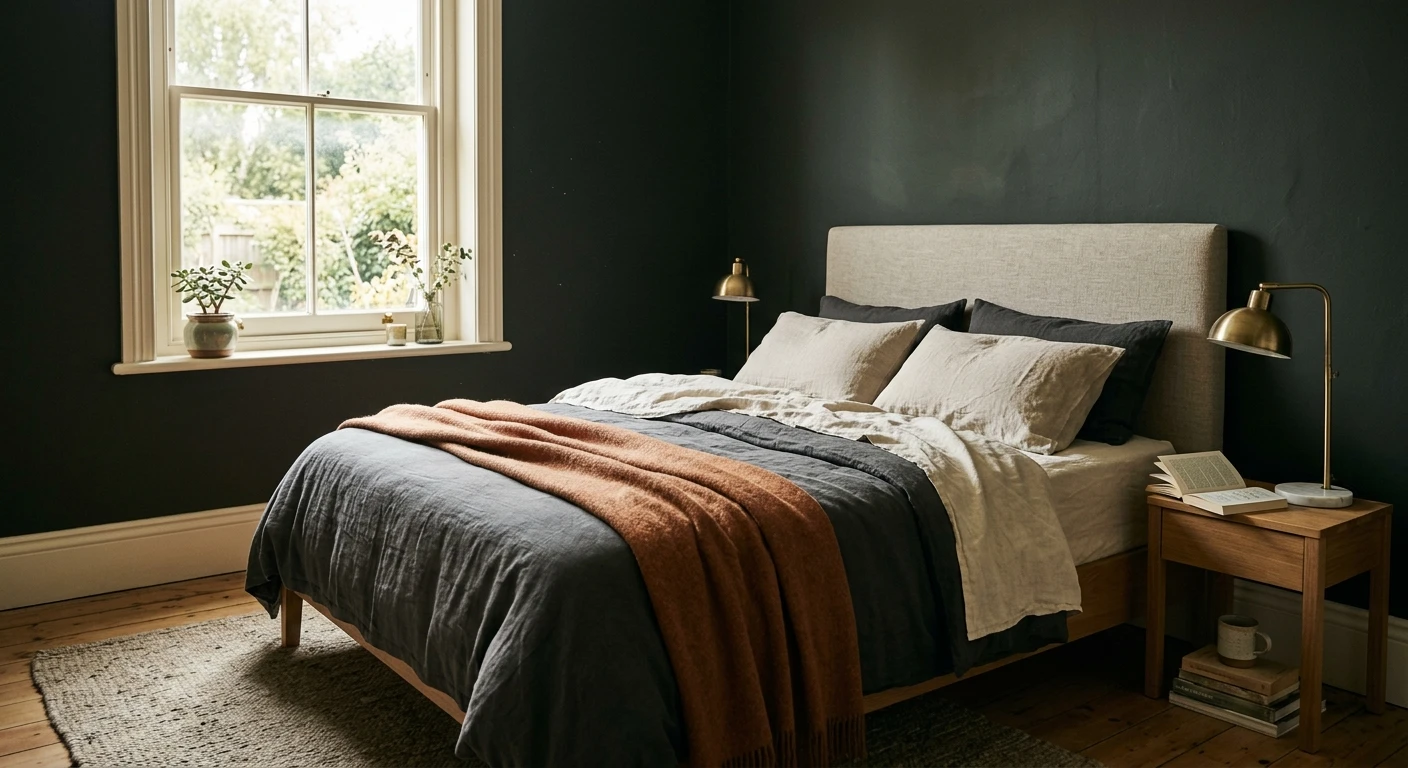
The first dark bedroom I painted was a client's north-facing guest room, and she was nervous the whole way through the first coat. Rolled out wet, Benjamin Moore Hale Navy looked like the inside of a submarine. Then the trim went back on in a crisp warm white, a brass sconce flicked on over the headboard, and the room turned into the kind of space you want to read in until 2 a.m. That is the whole trick with dark and moody bedrooms: the paint alone looks like a mistake until the light, trim, and bedding catch up. Below are 15 looks I keep coming back to, each with the shade, how it reads in a bedroom, and what to pair it with so the room feels cocooning, not cave-like.
A bit of orientation first. Dark bedroom ideas live or die on LRV, the Light Reflectance Value, where 0 is pure black and 100 is pure white. Most of these picks sit between LRV 3 and 15: under 6 reads near-black, 8 to 15 reads as a saturated deep color you can still name. This article is the dramatic corner of our wider room paint color ideas guide, and the bold counterpart to our calming master bedroom paint colors roundup: that one stays soft, this one goes deep.
Upload a photo of your actual bedroom and preview any of these moody shades under your own light in about 30 seconds, free.
Why dark bedroom walls work better than people expect
The fear is always the same: a dark color will make the room feel smaller and gloomy. In a living space that worry has merit. In a bedroom it mostly evaporates, because this is the one room where you actively want the walls to recede and the light to feel low. A deep wall color absorbs the harsh edges, hides the line where wall meets ceiling, and makes the bed the obvious center of the room. Designers call this the envelope effect, and it is why dark bedroom ideas went from edgy to mainstream.
Three things make or break a moody bedroom. First, undertone: a dark color is never just dark, it leans navy, green, charcoal, brown, or plum, and that lean is what you live with. Second, sheen: stick to matte or eggshell so the color drinks light instead of bouncing glare. Third, contrast: dark walls need one or two lighter anchors (warm-white trim, pale bedding, a brass or oak accent) or the room flattens into a void. Get those right and even a small bedroom can carry a near-black wall.
A quick word on light direction
North-facing bedrooms get cool, even, indirect light that deepens dark colors and pulls cool undertones (blue, green-gray) forward: wonderful for navy and charcoal, less so for a warm brown that can go muddy. South and west bedrooms get warm direct light that lifts dark colors a half-step and flatters chocolate, plum, and warm black. Match the lean of your color to the room, not to the Pinterest photo shot in different light than yours.
15 dark and moody bedroom shades, with how each one reads
These are grouped by family so you can find your lean fast. LRV values are from the manufacturer color data; treat them as a guide to depth, not an exact promise on your wall.
| Color | LRV | Family / lean | How it reads in a bedroom |
|---|---|---|---|
| BM Hale Navy (HC-154) | 6 | Deep navy, soft | The safe entry to dark: cozy, classic, brass-friendly |
| SW Naval (SW 6244) | 4 | Rich saturated navy | Bolder, more pigmented than Hale Navy; striking |
| BM Gentleman's Gray (2062-20) | 5 | Inky blue-black | Reads navy by day, near-black at night; very enveloping |
| SW Cyberspace (SW 7076) | 7 | Blue-black slate | Swings navy or charcoal with the light; a chameleon |
| SW Iron Ore (SW 7069) | 6 | Warm charcoal near-black | Soft black with warmth; drama without true-black harshness |
| BM Kendall Charcoal (HC-166) | 12 | Green-gray charcoal | Lighter moody option when full dark feels like too much |
| SW Peppercorn (SW 7674) | 8 | Cool dark gray | Crisp, modern, slightly cooler; pairs with white linen cleanly |
| BM Black Forest Green (2047-10) | 4 | Deep forest green | Reads nearly black in low light; organic, cocooning |
| SW Rookwood Dark Green (SW 2816) | 7 | Earthy heritage green | Vintage, library feel; warms up beautifully under lamp light |
| BM Salamander (2050-10) | 4 | Black-green | The dramatic green; almost black, intensely moody |
| SW Tricorn Black (SW 6258) | 3 | True neutral black | The boldest choice; needs strong light and pale anchors |
| BM Soot (2129-20) | 5 | Blue-black | A softer black with a blue whisper; restful |
| SW Cabbage (SW 6428) | 10 | Muted deep green | Slightly lighter green for a moody-but-airy compromise |
| BM Chocolate Candy Brown (2107-10) | 5 | Espresso brown | Warm and enveloping; best in south or west light |
| BM Caponata (AF-650) | 8 | Plum-aubergine | Moody jewel tone; romantic and unexpected |
| SW Black Fox (SW 7020) | 5 | Warm brown-black | Charcoal with a brown soul; cozier than cool black |
Try it on your house
No photo? Try a sample
Sources: Benjamin Moore and Sherwin-Williams published color data 2026; designer field reports on dark bedroom walls compiled by FacadeColorizer.
Free AI visualizer. Test any of these moody shades on your real walls before buying a single sample pot.
The four dark bedroom ideas worth shortlisting first
Fifteen is a lot to weigh. For a shorter path, these four cover the spread of moods and are the ones I specify most.
1. The easy navy: Hale Navy (HC-154)
If you have never lived with a dark bedroom, start here. Hale Navy is deep enough to feel dramatic but soft enough that it never reads aggressive, even in a small room. It loves warm-white trim, white oak floors, brass hardware, and oatmeal bedding. In a north bedroom it leans cool and moody; in a south one it warms a touch. For the full breakdown, see our Benjamin Moore Hale Navy HC-154 review.
2. The warm near-black: Iron Ore (SW 7069)
When you want full envelope drama but true black feels too stark, Iron Ore is the answer. At LRV 6 it is a warm charcoal that reads almost black, yet the brown-gray warmth keeps it from feeling cold or industrial. Wrap it floor to ceiling, keep the trim the same color for a seamless cocoon, and add one pale anchor (a linen headboard, a cream rug). Our SW Iron Ore undertones and best rooms guide covers how it shifts under different light.
3. The organic green: Black Forest Green (2047-10)
Deep greens are the fastest-growing dark bedroom ideas walls trend, for good reason: green is the most restful hue to the eye, so a near-black green gives drama and calm at once. Black Forest Green reads almost black in low light and resolves into rich forest by day. Pair it with aged brass, walnut, and terracotta. Moody without feeling heavy.
4. The chameleon: Cyberspace (SW 7076)
For people who cannot decide between navy and charcoal, Cyberspace performs as both: a blue-black slate that leans navy in bright light and charcoal in the evening, so a bedroom gets two moods in a day. It is forgiving with cool and warm metals alike. To see how these dark tones sit inside a fuller scheme, our bedroom color schemes and palettes guide is the next stop.
See two dark contenders side by side in your own light, free.
How to pair a dark bedroom so it feels designed, not gloomy
The color is half the job; what sits next to it does the rest. These pairings keep moody bedroom paint reading intentional:
- Trim and ceiling: two routes. Paint trim and ceiling a warm white (BM White Dove, SW Alabaster) for crisp edges, or color-drench the whole room in the dark shade for a seamless, hotel-suite cocoon. Drenching makes a small room feel larger, not smaller, because it erases the boundaries.
- Bedding and textiles: a dark wall needs a lighter, softer counterpoint. Cream, oatmeal, or pale terracotta bedding lets the bed glow against the wall. All-dark-everything reads like a void.
- Metals and wood: aged brass and warm oak or walnut are the universal partners for dark walls; they add warmth and a glint of reflected light. Black metal works too, but keep something warm so the room does not go cold.
- Lighting: dark walls eat ambient light, so layer it. Bedside lamps, a sconce, and warm 2700K bulbs do far more than one bright ceiling fixture, which just creates a harsh pool and dark corners.
- Art and a mirror: a large mirror opposite the window bounces daylight back and opens the room; framed art with a warm-white mat breaks up the dark plane.
One note from the field: prime with a gray-tinted primer and always do a true second coat. Deep bases are translucent, so a single coat over white drywall looks blotchy where you cut in. The gray primer and second coat are what give you that even, velvety depth.
How to test a dark bedroom color before you commit
Dark colors are the riskiest to choose from a chip: a 3-inch swatch can never show the envelope effect or how the undertone shifts from a bright afternoon to lamp-lit night. Two smarter moves:
- Paint a large swatch, two coats: roll a 2-by-2-foot sample (two coats, the only way a dark color reads true) behind where the bed will go and on an adjacent wall. Check it mid-morning, late afternoon, and at night under your lamps. Watch the undertone: navy can go purple, charcoal brown, green gray depending on your light.
- Preview it digitally first: upload a real photo of your bedroom and apply a few contenders (a navy, a charcoal, a green) before you buy any sample pots, narrowing five ideas to the one worth painting. Pricing context for the repaint is in our interior house painting cost guide for 2026.
Preview a navy, a charcoal, and a deep green in your bedroom, side by side, free.
Frequently asked questions
Do dark paint colors make a bedroom feel smaller?
Less than you would think. A bedroom is the one room where you want the walls to recede and the light to feel low, so a dark color tends to feel cozy rather than cramped. The trick is contrast and light: keep pale bedding, a warm-white or brass accent, and layered lamp lighting. Color-drenching the trim and ceiling in the same dark shade actually makes a small bedroom feel larger by erasing the edges.
What is the best dark color for a bedroom?
For a first dark bedroom, Benjamin Moore Hale Navy (HC-154, LRV 6) is the safest: deep and moody but still soft. If you want a warm near-black, Sherwin-Williams Iron Ore (SW 7069) is excellent, and for an organic, cocooning feel a deep forest green like Black Forest Green works beautifully. The best pick depends on your light direction and the metals and wood already in the room.
What sheen should I use on dark bedroom walls?
Matte or eggshell. A flat or matte finish lets the dark color absorb light and read as a velvety, even plane, which is the whole point of a moody bedroom. Higher sheens bounce glare and exaggerate every wall imperfection, which dark colors already make more visible. Save satin or semi-gloss for trim and doors only.
Should I paint the trim and ceiling dark too?
Both work. Painting trim and ceiling a warm white gives you crisp contrast and a more traditional look. Color-drenching, where walls, trim, and ceiling all wear the same dark shade, creates a seamless, hotel-suite cocoon and makes a small or boxy bedroom feel larger because the eye stops finding edges. Choose drenching for drama and softness, contrast trim for a cleaner, tailored feel.
How many coats does a dark bedroom color need?
Plan on two finish coats over a gray-tinted primer. Deep colors use translucent bases, so a single coat over white drywall looks blotchy and uneven, especially where you cut in around trim. A gray primer plus two coats gives you the even, rich depth you see in photos, and prevents that patchy look in raking window light.
Preview these moody shades on your actual bedroom walls under your own light, free.
Disclaimer: Sherwin-Williams, Iron Ore (SW 7069), Naval (SW 6244), Cyberspace (SW 7076), Peppercorn (SW 7674), Rookwood Dark Green (SW 2816), Tricorn Black (SW 6258), Cabbage (SW 6428), Black Fox (SW 7020), and Alabaster are trademarks of The Sherwin-Williams Company. Benjamin Moore, Hale Navy (HC-154), Gentleman's Gray (2062-20), Kendall Charcoal (HC-166), Black Forest Green (2047-10), Salamander (2050-10), Soot (2129-20), Chocolate Candy Brown (2107-10), Caponata (AF-650), and White Dove are trademarks of Benjamin Moore & Co. FacadeColorizer is an independent paint visualization service and is not affiliated with, endorsed by, or sponsored by Sherwin-Williams or Benjamin Moore. Color reproduction on screens approximates the manufacturer's chip; always confirm with a manufacturer sample under your own light before purchase. Sources: Benjamin Moore and Sherwin-Williams published color data 2026, designer field reports on dark bedroom walls compiled by FacadeColorizer.
Trademarks mentioned (Sherwin-Williams, Benjamin Moore, Behr, Caparol, Brillux, Sto, Alpina, Valspar, PPG, Glidden, Dulux, Crown Trade, Sandtex, Farrow & Ball, Johnstone's, Leyland) are property of their respective owners. FacadeColorizer is independent and not affiliated with any of them. Nominative fair use under Lanham Act §1125.