Try it on your room

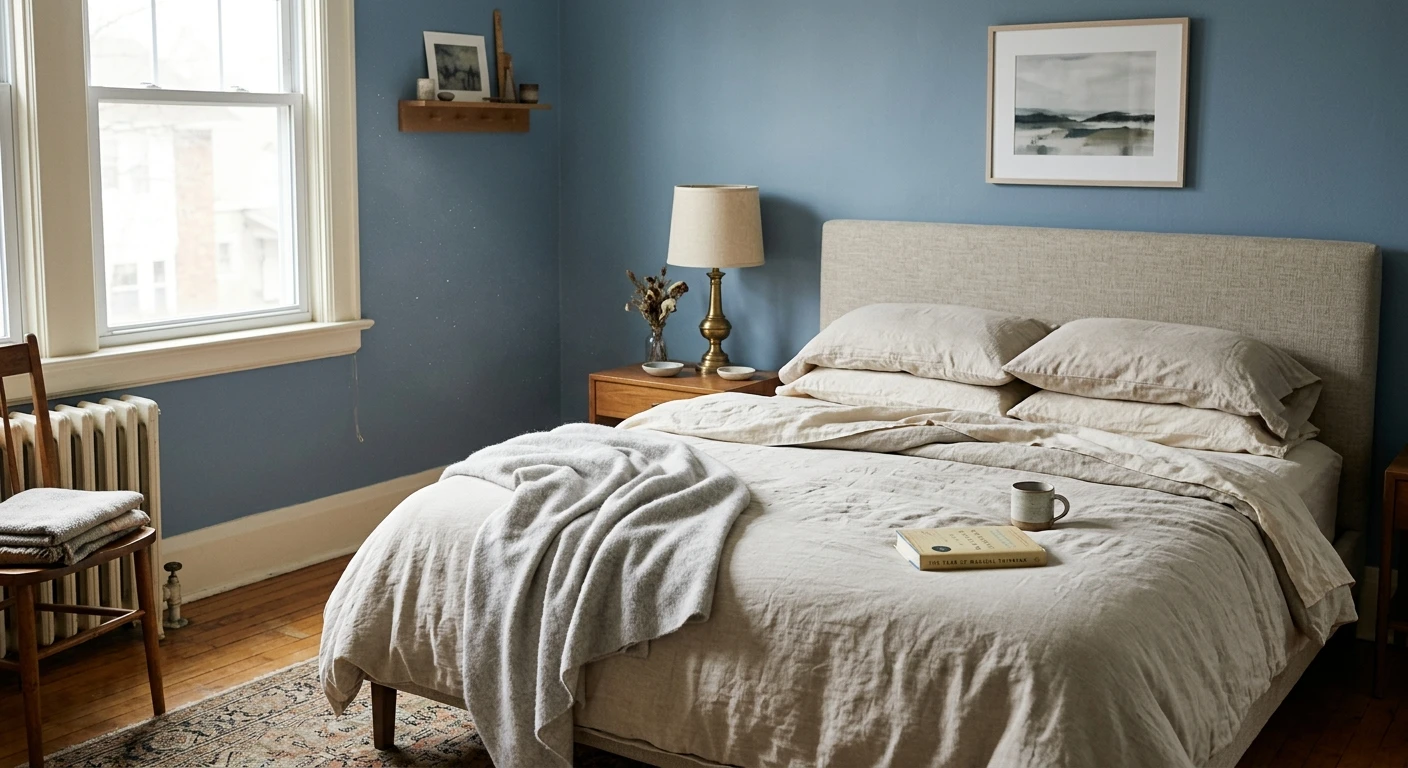
The first wall I ever rolled in a deep navy was a client's north-facing bedroom in a Portland bungalow. She was nervous it would feel like a cave. We cut in around the window at 7am, came back after lunch, and the room had completely changed character: cool and crisp in morning light, soft and almost velvet by late afternoon. That is the thing nobody tells you about a blue bedroom. Blue is not one decision, it is a sliding scale from barely-there sky to inky midnight, and the exact spot you land on decides whether the room feels airy, calm, or cocooning. This gallery walks through 18 blue bedroom ideas, grouped by depth, with the shade, the pairing, and an honest note on how each one actually reads once it is on the wall.
Quick orientation. Blue ranges from high-LRV pastels (LRV 70 plus, almost white) down to near-black navies (LRV under 10). The lighter you go, the more the room reads as soft and open; the deeper you go, the more it wraps and quiets. This room-by-room guide is one stop in our wider room-by-room paint color ideas hub, and it pairs naturally with our deeper dive on blue interior paint shades if you want the full family chart. Here, the focus stays narrow: blue, in a bedroom, done 18 ways.
Upload a photo of your actual bedroom and preview any blue under your own light in about 30 seconds, free.
How blue reads in a bedroom: the one rule that matters
Bedrooms are the trickiest room for blue, and the reason is light. Most bedrooms get used at the two times of day when light is least flattering: early morning and after dark. A blue that looked gorgeous on a sunny Saturday swatch can turn flat, gray, or even slightly purple under a 2700K bedside lamp. So before the gallery, internalize one rule: the dimmer and cooler your bedroom light, the warmer and lighter your blue should lean. A north-facing room with no warm bulbs will drain a cool blue and push it toward gray; a south-facing room with afternoon sun can carry a much deeper, richer navy without ever feeling like a dungeon.
The second thing to watch is undertone. Blues split into three rough camps: green-leaning blues (teal, ocean, denim) that feel relaxed and organic; true blues (cobalt, French blue) that feel crisp and classic; and gray-leaning blues (the entire blue-gray family) that feel quiet and restful. For a bedroom, gray-leaning and green-leaning blues are the safe, sleep-friendly bets. Pure saturated true blue is best saved for a single accent wall rather than wrapping the whole room. For the full undertone breakdown, our guide to colors that go with blue interiors maps which pairings flatter which lean.
Light and airy: pale blue bedroom ideas (LRV 60+)
Pale blues are the gateway. They keep a small bedroom feeling open, they bounce light like an off-white, and they are nearly impossible to get wrong. The catch: at this lightness, undertone is everything, because there is no depth to hide a wrong lean.
- 1. Soft sky blue. The classic nursery-graduate blue. Reads almost like a tinted white in bright rooms, cozy and clean at night. Pair with crisp white trim and warm oak.
- 2. Pale powder blue. A touch grayer than sky, so it stays calm rather than sweet. Beautiful in a south-facing room with linen bedding.
- 3. Whisper aqua. A green-leaning pale blue that feels coastal without committing to a theme. Flatters rattan, jute, and natural wood.
- 4. Pale denim. The faded-jeans version: gray-blue, soft, and grounded. The most grown-up of the pastels, and my pick for a guest room.
- 5. Misty blue-gray. Barely blue at all in dim light, just a cool quiet neutral. Use it when you want the idea of blue without color committing.
Painter's note: cut in pale blues with a steady hand because they show every brush ridge against white trim, and always do a second coat. Thin pastels dry patchy in one pass and you will see roller lap marks in raking morning light.
The everyday workhorse: blue-gray bedroom ideas (LRV 45 to 60)
If I had to bet on one camp for the most bedrooms, it is here. Blue-grays read as a soft neutral that happens to have a calming blue soul. They behave in tricky light, they pair with almost any bedding, and they never feel juvenile. This is the sweet spot most people actually want when they search for a blue bedroom.
- 6. Mid blue-gray. The default. Gray body, clear blue lean in daylight, quiet at night. Pairs with white trim, brass hardware, and warm wood. See the whole family in our blue-gray paint colors guide.
- 7. Slate blue. Deeper and more dramatic than mid blue-gray, with a stony, grounded feel. Excellent in a primary bedroom with charcoal or black accents.
- 8. French gray-blue. A softer, more romantic slate with a faint violet whisper. Gorgeous with cream linens and antique brass.
- 9. Stormy blue. A moodier mid-tone that leans green-gray. Reads almost like weathered slate; pairs with warm whites to keep it from feeling cold.
- 10. Denim blue. A true workhorse with visible blue but enough gray to stay calm. The most versatile single color on this entire list.
One caution belongs with this camp, and it is the reason French gray-blue is described above as having a violet whisper. In a blue-gray, that whisper is not always quiet. Under north light or a cool bulb the red-violet base can step forward until the wall reads lilac rather than blue, usually at exactly the hour you are in the room. If that happens and you find you like it, you have not made a mistake, you have found a neighboring family. Our purple bedroom paint ideas cover the grayed lavenders and mauves that do this on purpose and therefore hold the same character all day.
| Blue depth | Approx LRV | Bedroom feel | Best for |
|---|---|---|---|
| Pale sky / powder | 60 to 78 | Airy, soft, open | Small or north-facing rooms |
| Blue-gray | 45 to 60 | Calm, neutral, restful | Most primary and guest bedrooms |
| Mid blue (saturated) | 25 to 40 | Confident, characterful | One accent wall behind the bed |
| Navy | 7 to 18 | Cozy, enveloping, refined | South-facing or well-lit rooms |
| Near-black ink | Under 7 | Dramatic cocoon | Bold cocoon bedrooms, all four walls |
Try it on your house
No photo? Try a sample
Sources: manufacturer LRV color data 2026; The Spruce and designer field reports on blue-in-bedrooms compiled by FacadeColorizer. LRV bands are approximate ranges, not single-product values.
Free AI visualizer. Test the blue on your real walls before buying a single sample pot.
Saturated and confident: mid blue bedroom ideas (LRV 25 to 40)
This is where blue stops whispering and starts talking. Saturated mid-blues bring real color into a bedroom, and the smart move is usually restraint: one wall, not four. A confident blue behind the headboard frames the bed like a piece of art and leaves the other three walls breathing. Our guide to colors that go with blue is worth a look before you commit to a saturated tone, because the pairing carries the whole look.
- 11. French blue. Crisp, classic, slightly grayed true blue. The most timeless saturated option; pairs with white, natural wood, and a single warm metal.
- 12. Ocean teal. A green-leaning blue that feels relaxed and coastal. Wraps a room beautifully and stays warmer than a true blue under lamp light.
- 13. Cobalt accent wall. Pure, vivid, energetic. Strictly one wall; on all four it becomes overwhelming for a sleep space. Keep the rest soft white.
- 14. Dusty cornflower. A muted mid-blue with a chalky finish that softens the saturation. The friendliest of the bold blues.
- 15. Peacock blue-green. Jewel-toned and luxurious. Stunning in a primary bedroom with brass, deep wood, and moody lighting.
Reality check on saturated blues: they are pigment-heavy and can need three coats over a white primer to reach full, even depth. Budget for it. A two-coat job on a deep blue often leaves a faint cloudiness that only shows up at night, exactly when you are lying in bed staring at the wall.
Moody and cocooning: navy bedroom ideas (LRV under 18)
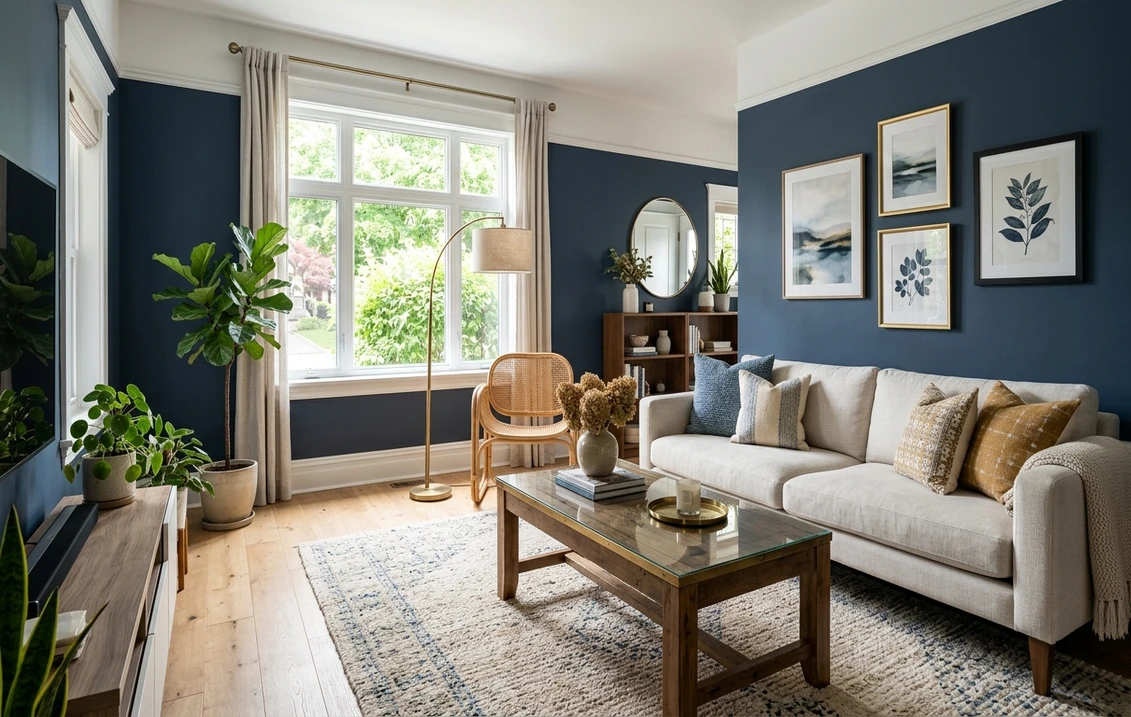
Navy is the most requested deep color in bedrooms for a reason: it reads as expensive, it makes white bedding pop, and wrapped on all four walls it creates a genuine cocoon. The fear of going dark is almost always overblown. A navy bedroom is not gloomy; it is intimate. The trick is contrast: keep your ceiling, trim, and bedding bright so the room has crisp edges instead of melting into a blur.
- 16. Classic navy. The benchmark. Deep, true, and refined. Benjamin Moore Hale Navy is the most famous example; see our full Hale Navy HC-154 review for how it behaves on walls.
- 17. Black-blue (inky). So deep it reads near-black in shade and only reveals its blue in direct light. The ultimate cocoon for a well-lit bedroom. Pair with warm wood and soft white linens.
- 18. Greenish navy. A navy with a teal undertone that feels softer and more organic than a true navy. Forgiving under warm lamps because the green keeps it from going cold.
For deeper navy planning, including how it reads under different light and which whites to pair, our broader guide to calming master bedroom colors places navy alongside other restful, sleep-friendly options. The short version on blue bedroom paint at this depth: navy in a south- or west-facing room is glorious; in a small windowless room, drop to a blue-gray instead.
See walls, trim, and bedding together in one preview, free.
Pairings: what goes with blue bedroom walls
A blue body color lives or dies on what sits next to it. Here is the cheat sheet, from safest to boldest:
- White trim (always safe): a warm white like a soft cream-white flatters every blue and keeps edges crisp. For pale and mid blues this is the default. Avoid a stark blue-white, which can make the walls look gray and tired by contrast.
- Warm wood floors and furniture: oak, walnut, and rattan add the warmth that stops any blue from feeling cold. This is the single most important pairing for a north-facing blue bedroom.
- Brass and antique gold: the classic metal for blue. Lamps, hardware, and frames in warm brass make navy and blue-gray read intentional and rich.
- Soft white and natural linen bedding: the contrast that makes a deep blue room feel fresh rather than heavy. Bright bedding is non-negotiable in a navy bedroom.
- Muted blush, terracotta, or mustard accents: a single warm pop in a cushion or throw keeps an all-blue room from feeling monochrome and chilly.
For full room palettes built around these blues (wall, trim, ceiling, and accent in one scheme), our bedroom color schemes and palettes guide does the coordinating work for you.
How to test a blue bedroom before you commit
A 3-inch fan-deck chip is the number-one reason people pick a blue that disappoints. Blue shifts more than almost any other color across the day, and a chip cannot show you the morning-versus-night swing in your own room. Two better methods:
- Paint a large swatch: roll a 12-by-12-inch sample (or a peel-and-stick sample) on two different walls and check it at 7am, mid-afternoon, and at night under your bedside lamp. Watch how much grayer or more purple it goes after dark, because that is how you will see it most.
- Preview it digitally first: upload a real photo of your bedroom and apply a pale blue, a blue-gray, and a navy side by side before you buy any samples, narrowing three contenders to one worth painting.
Preview a pale blue, a blue-gray, and a navy side by side on your real bedroom, free.
Frequently asked questions
What is the best blue for a bedroom?
For most bedrooms, a blue-gray in the LRV 45 to 60 range is the safest and most restful choice: it reads as a calm neutral with a quiet blue soul, behaves well in tricky morning and night light, and pairs with almost any bedding. Go paler (sky or powder blue) in a small or north-facing room, and reserve a saturated mid-blue or navy for rooms that get good direct light.
Does a navy bedroom make the room feel smaller or darker?
Not the way people fear. A navy bedroom reads as intimate and cocooning rather than gloomy, especially when you keep the ceiling, trim, and bedding bright for contrast. Navy works best in a south- or west-facing room with good light; in a small windowless bedroom, a lighter blue-gray gives a similar mood without absorbing too much light.
Should I paint all four bedroom walls blue or just one?
It depends on the depth. Pale blues and blue-grays look great wrapped on all four walls because they read as soft neutrals. Saturated mid-blues like cobalt or French blue are usually best on a single accent wall behind the headboard, with the other walls kept soft white. Navy can go either way: one wall for a feature, or all four for a full cocoon if the room is well lit.
What colors go with blue bedroom walls?
Warm white trim, warm wood floors and furniture, and brass or antique-gold hardware are the safest companions for any blue. Soft white and natural linen bedding keeps deeper blues feeling fresh, and a single warm accent (blush, terracotta, or mustard in a cushion or throw) stops an all-blue room from feeling cold or monochrome.
Why does my blue bedroom wall look gray or purple at night?
Blue shifts more than most colors across the day. Under warm 2700K bedside lamps and in dim light, the warm wavelengths get added back and a cool blue can drain toward gray, while a blue with a faint red base can tip slightly purple. To avoid surprises, test your swatch at night under your actual bulbs, and lean toward a warmer, green-leaning, or slightly lighter blue if your bedroom light is dim or cool.
Preview your blue on your actual walls under your own light before buying a single sample.
Disclaimer: Benjamin Moore and Hale Navy (HC-154) are trademarks of Benjamin Moore & Co. Any other color names referenced describe general blue families rather than specific products. FacadeColorizer is an independent paint visualization service and is not affiliated with, endorsed by, or sponsored by any paint manufacturer. LRV bands in this guide are approximate ranges, not single-product values. Color reproduction on screens approximates a manufacturer's chip; always confirm with a manufacturer sample under your own light before purchase. Sources: manufacturer LRV color data 2026, The Spruce coverage of blue paint in bedrooms, designer field reports compiled by FacadeColorizer.
Trademarks mentioned (Sherwin-Williams, Benjamin Moore, Behr, Caparol, Brillux, Sto, Alpina, Valspar, PPG, Glidden, Dulux, Crown Trade, Sandtex, Farrow & Ball, Johnstone's, Leyland) are property of their respective owners. FacadeColorizer is independent and not affiliated with any of them. Nominative fair use under Lanham Act §1125.