Try it on your room

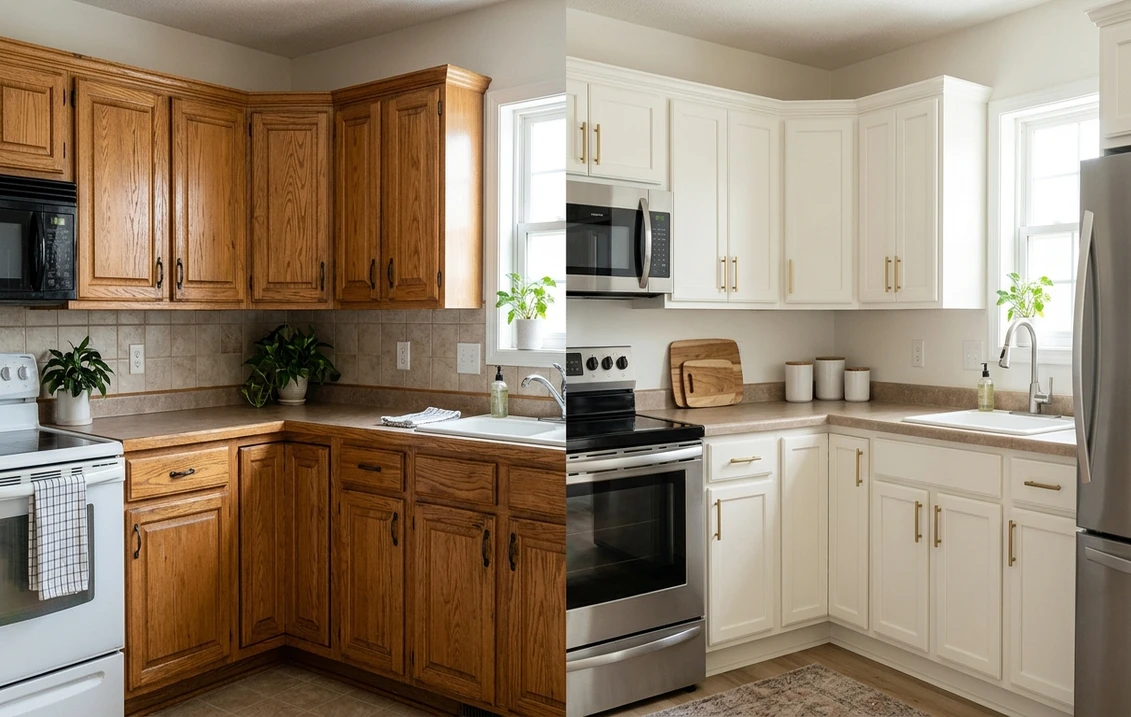
The honey oak kitchen is the single most-repainted cabinet in America, and for good reason: those orange-gold doors with their deep, open grain instantly date a kitchen to the 1990s. The good news is that painted oak cabinets before and after is one of the most dramatic, lowest-cost transformations you can do without a single new box or hinge. The catch nobody mentions on Pinterest is that oak is not maple. Its coarse, ropey grain behaves differently under paint than any other cabinet wood, and ignoring that is exactly why some DIY oak repaints look custom and others look like fuzzy, grain-telegraphed regret.
This is a before-and-after gallery and a decision guide, not a brush-by-brush tutorial (we link the full step-by-step below). The goal here is to show you what oak actually looks like once it is painted, the colors that consistently work on it, and the one question that decides your whole project: do you fill the grain and repaint, or refinish to keep it?
Upload one photo of your kitchen and preview a painted-cabinet before and after in about 30 seconds. 1 HD preview plus 3 variations, free.
What oak actually looks like once it is painted
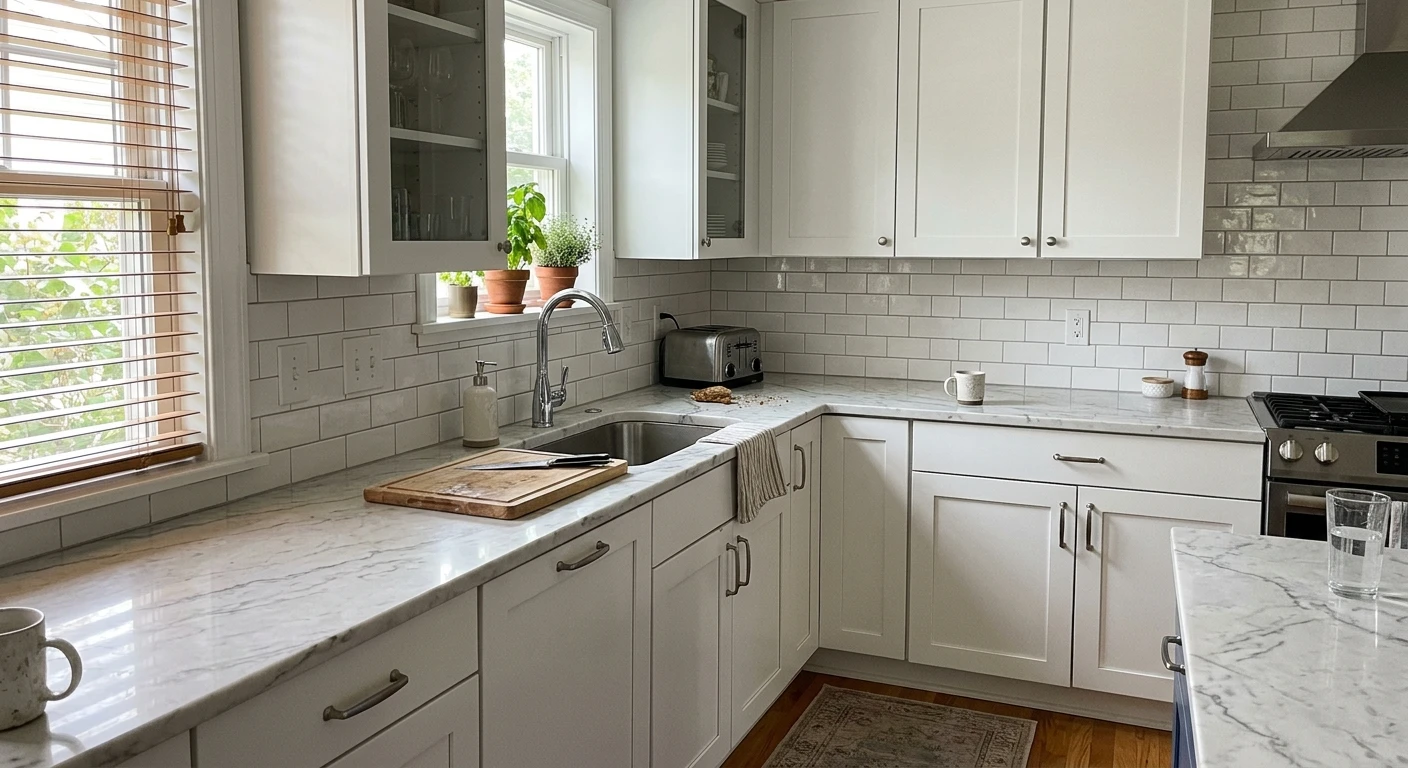
In a finished before-and-after, the transformation reads as bigger than the room: the same boxes, the same layout, but the kitchen looks ten years newer and noticeably brighter. The orange-gold tone that fought every other color in the room disappears, the doors recede into a calm backdrop, and your countertop and backsplash suddenly look intentional instead of stuck.
But look closely at a painted oak door versus a painted maple one and you will see the tell: oak's grain. Oak has wide, open pores that run in long parallel channels. Maple and MDF are smooth, so paint dries glassy on them. On oak, unless you fill those pores first, the grain reads right through the paint as faint lines, like brushstrokes that will not go away. Whether that is a flaw or a feature is the first thing you have to decide.
- Grain showing through (faint texture): reads as a casual, cottage or farmhouse look. Some people love it; it whispers "real wood, painted." Acceptable on white and off-white, less forgiving in deep colors.
- Grain filled smooth (custom look): reads as factory-finished, modern, intentional. This is what high-end painted cabinets look like, and it is the only way deep colors like navy or charcoal look right on oak.
There is no wrong answer, but there is a wrong surprise. Decide on purpose before you open a can, because filling the grain is a separate step you cannot add after the paint is on.
Repaint vs refinish: the decision that sets your budget
Two very different projects hide behind "I want to redo my oak cabinets." Pick the wrong one and you either spend three weekends you did not need to, or you end up disappointed that the grain still shows.
| Approach | What it is | Result on oak | Effort and cost |
|---|---|---|---|
| Repaint (grain shows) | Clean, degloss, bonding primer, two coats of cabinet enamel | Solid color, faint grain texture telegraphs through | Lowest; a weekend or two, roughly $150 to $300 in materials |
| Repaint (grain filled) | Add grain filler or a high-build primer plus sanding before paint | Smooth, factory-like, custom finish | Higher labor; add a full extra step and dry time, materials similar |
| Refinish or restain | Strip or sand back to bare wood, then a new stain or clear coat | Keeps and celebrates the wood and grain (lighter, grayer, or richer) | Most labor-intensive; messy stripping, but no grain-fill issue |
Try it on your house
No photo? Try a sample
The honest shortcut: if you want a smooth painted look in any color darker than a soft white, you are doing the grain-fill version, full stop. If you want a casual painted white or greige and you do not mind a hint of texture, the basic repaint is genuinely a weekend job. And if you have decided you actually like real wood and just hate the orange, refinishing to a lighter or grayer stain (or even a limewash effect) keeps the warmth without the dated tone. For the actual sequence and products, our step-by-step guide to painting kitchen cabinets walks through prep, primer, and enamel in order.
The primer is the whole game on oak
More oak repaints fail at the primer than anywhere else. Oak presents two problems at once, and one product does not solve both, so you have to know which you are fighting.
- Adhesion: factory-finished oak is sealed and slick. Paint will peel off it like a sticker unless you degloss and use a true bonding primer. A shellac-based primer (the white pigmented kind) or a dedicated bonding primer is non-negotiable on oak.
- The pores: a bonding primer sticks, but it does not fill the deep grain channels by itself. If you want a smooth finish, you either skim a paste grain filler into the pores, sand it back flush, then prime, or you use a high-build primer and sand between coats. Plan on two primer coats and patience.
- Tannin bleed: oak tannins can yellow through a water-based primer over time, leaving brownish ghosting. A shellac or oil-based stain-blocking primer locks the tannins so your white stays white.
Skip degloss and the paint peels. Skip stain-blocking primer and the white yellows. Skip grain filler and accept the texture. None of those are paint problems, they are oak problems, and they are exactly why an oak repaint deserves a preview before you commit a single weekend to it.
See the after on your real kitchen photo before you degloss anything, free.
Colors that consistently work on painted oak
Because oak is so warm to begin with and its grain wants to show, some colors flatter it and some fight it. These are the after-colors that show up again and again in successful oak transformations:
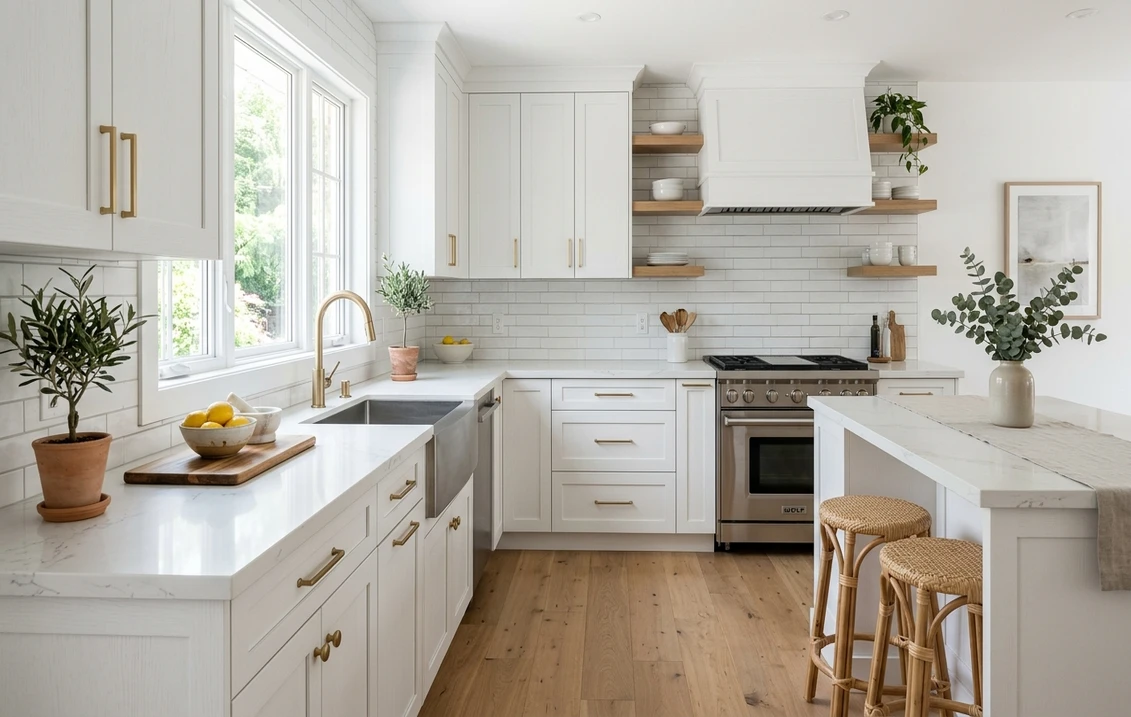
- Soft white (Alabaster SW 7008, White Dove OC-17): the most popular and most forgiving. A warm white hides faint grain better than a stark white and keeps the kitchen from feeling clinical. The classic honey-oak rescue.
- Greige and warm gray (Agreeable Gray SW 7029, Revere Pewter HC-172): a half-step up from white that hides grain texture even better and pairs easily with existing beige or tan counters and floors left over from the oak era.
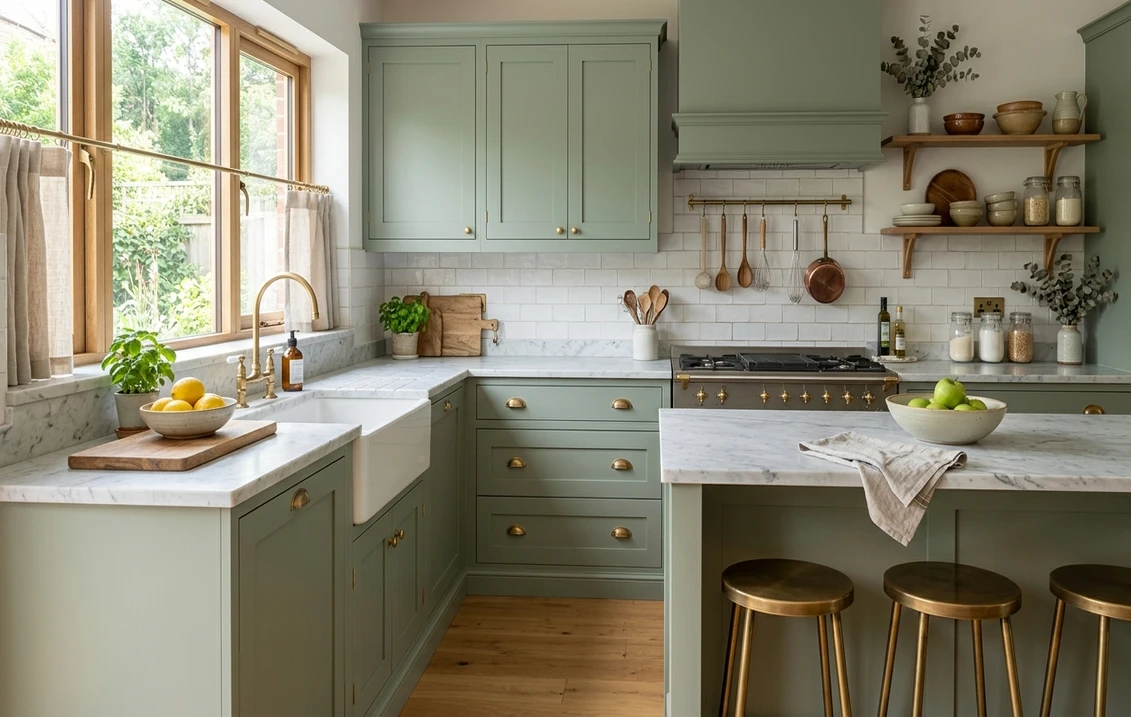
- Sage and muted green (Evergreen Fog SW 9130): reads modern and grounded, and the soft chroma masks grain well. A favorite for an updated farmhouse kitchen.
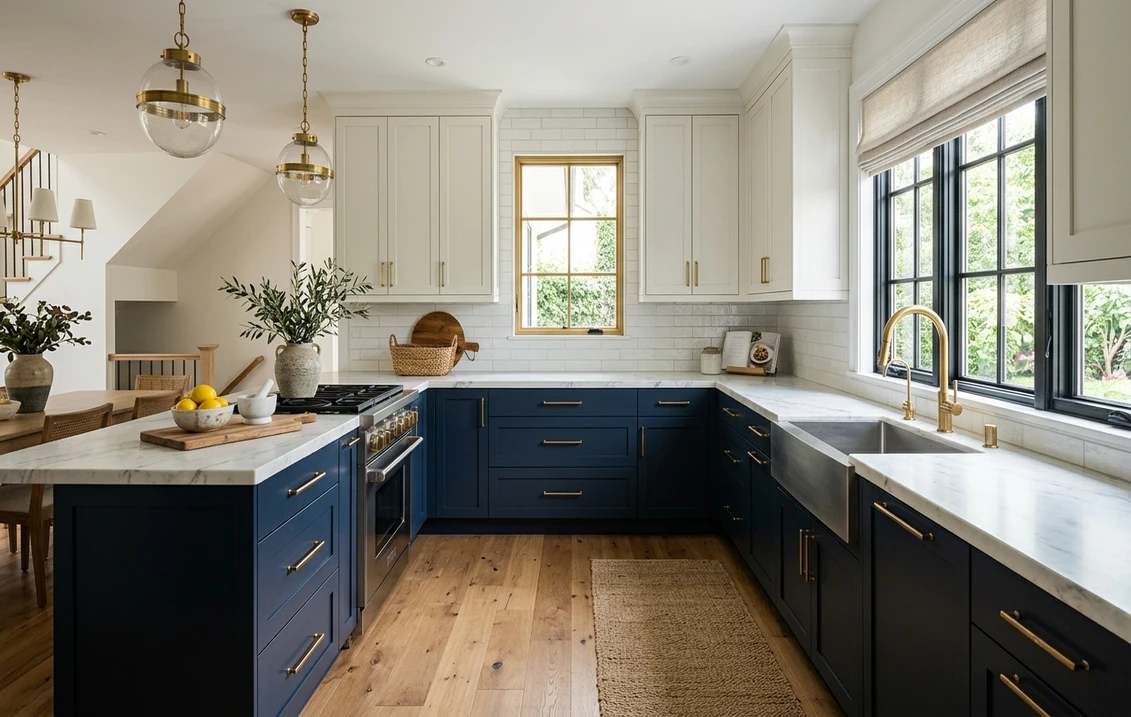
- Navy and deep blue (Naval SW 6244, Hale Navy HC-154): dramatic and high-end, but only if you fill the grain first. Deep colors are unforgiving; every unfilled pore shows. Best reserved for an island.
- Charcoal and black: the most demanding. Stunning when smooth, distractingly textured when not. Grain fill is mandatory.
A two-tone scheme is the safest way to add a deep color: keep the perimeter a soft white or greige (forgiving), and reserve the navy or charcoal for the island where you can take the time to fill the grain. If your heart is set on keeping some of the wood rather than painting all of it, our guide to a white kitchen with oak cabinets shows ten ways to pair white paint with oak you leave natural. For the full palette logic across every cabinet color, the complete kitchen cabinet color guide is the hub, and the best interior paint colors for 2026 roundup shows what is trending beyond the kitchen.
Why an AI preview matters more for oak than for any other cabinet
A painted-cabinet decision is hard to picture because the color does not live in isolation. It has to land against your specific countertop, your backsplash, your floor, and your light, all of which were probably chosen to go with the oak you are about to erase. A beautiful navy that you saw online can look wrong above your warm-tan granite, and a crisp white can suddenly read cold against a yellow-toned floor.
That is the gap a preview closes. Upload a clear, straight-on photo of your kitchen into our interior paint visualizer and you see the after rendered on your actual cabinets, against your actual counters and floor and light, before any deglosser comes out. It is an AI preview, so it will not show you the grain texture decision (filled versus showing) or the exact sheen, and it does not replace a sample door painted for real. What it does, in seconds, is rule out the colors you would have hated and confirm the two or three worth testing physically.
For oak especially, where the prep alone is a real time investment, that front-end filter is the difference between one confident project and three second-guessed weekends. You get 1 HD preview plus 3 variations free, which is enough to compare a soft white against a greige and a sage on the same kitchen, side by side.
Common before-and-after mistakes to avoid
- Expecting a smooth finish from a basic repaint. If you did not fill the grain, the texture will show. Decide first, and pick a color that is friendly to whatever you chose.
- Choosing a deep color over unfilled oak. Navy and charcoal magnify every pore. Either fill the grain or keep deep tones to a small accent.
- Skipping the deglosser or the bonding primer. Slick factory oak rejects ordinary paint. Peeling at the door edges within months is almost always a missed prep step.
- Forgetting the counters and floor. The new cabinet color has to live with what is already there. Preview it against your real surfaces, not on a swatch in a different room.
- Painting the boxes and skipping the doors detail. Doors are 80 percent of what you see. Remove them, label the hinges, and finish them flat for the cleanest result.
One photo, your real before and after. 1 HD preview plus 3 variations, no charge.
Frequently asked questions
Does the oak grain show through after you paint cabinets?
Yes, unless you fill it first. Oak has wide, open pores that telegraph through paint as faint parallel lines. To get a smooth, factory-like finish you skim a paste grain filler into the pores and sand it flush before priming, or use a high-build primer sanded between coats. If you skip that step, the grain texture will read through the color, which looks fine and casual on a soft white but distracting under a deep navy or charcoal.
Should I paint or refinish my oak cabinets?
Paint if you want to lose the orange-gold tone entirely and get a clean, modern color; it is the lower-cost, faster route, roughly $150 to $300 in materials for a basic repaint. Refinish or restain if you actually like real wood and only hate the dated tone; restaining to a lighter, grayer, or richer color keeps the grain and warmth but means stripping back to bare wood, which is messier and more labor-intensive. The deciding question is simply whether you want wood or a painted color in the end.
What primer do you use on oak cabinets before painting?
Use a stain-blocking bonding primer, ideally shellac-based or oil-based. Oak needs three things from its primer: adhesion to the slick factory finish (so the paint does not peel), stain blocking to stop tannins from yellowing a white topcoat over time, and ideally help filling the grain. Always degloss or scuff-sand first, then expect two primer coats. A plain water-based wall primer is the most common cause of peeling and yellowing on oak.
What is the best paint color for oak cabinets?
Soft warm whites like Alabaster (SW 7008) and White Dove (OC-17) are the most popular and most forgiving, because a warm white hides faint grain and tames oak's warmth without looking cold. Greige and warm gray (Agreeable Gray, Revere Pewter) hide grain texture even better and pair with leftover beige counters. Sage greens read modern. Reserve deep navy, charcoal, or black for a grain-filled island, since they magnify every unfilled pore.
Can I see my own oak kitchen painted before I start?
Yes. Upload a straight-on photo of your kitchen to the FacadeColorizer interior paint visualizer and it renders a painted before and after on your actual cabinets, against your real counters, floor, and light. You get 1 HD preview plus 3 variations free, enough to compare a few colors side by side. It is an AI preview, so it will not show the grain-fill texture or exact sheen and does not replace a real sample door, but it quickly rules out colors that would clash with your existing surfaces.
See the after on your own photo before you commit to the prep.
Disclaimer: Sherwin-Williams, SW 7008 Alabaster, SW 7029 Agreeable Gray, SW 9130 Evergreen Fog, and SW 6244 Naval are trademarks of The Sherwin-Williams Company. Benjamin Moore, OC-17 White Dove, HC-172 Revere Pewter, and HC-154 Hale Navy are trademarks of Benjamin Moore & Co. FacadeColorizer is an independent paint visualization service, not affiliated with or endorsed by Sherwin-Williams or Benjamin Moore. Screen color approximates the manufacturer's chip, and painted results vary with oak grain, prep, primer, and lighting; always test a physical sample door first.
Trademarks mentioned (Sherwin-Williams, Benjamin Moore, Behr, Caparol, Brillux, Sto, Alpina, Valspar, PPG, Glidden, Dulux, Crown Trade, Sandtex, Farrow & Ball, Johnstone's, Leyland) are property of their respective owners. FacadeColorizer is independent and not affiliated with any of them. Nominative fair use under Lanham Act §1125.