Try it on your room

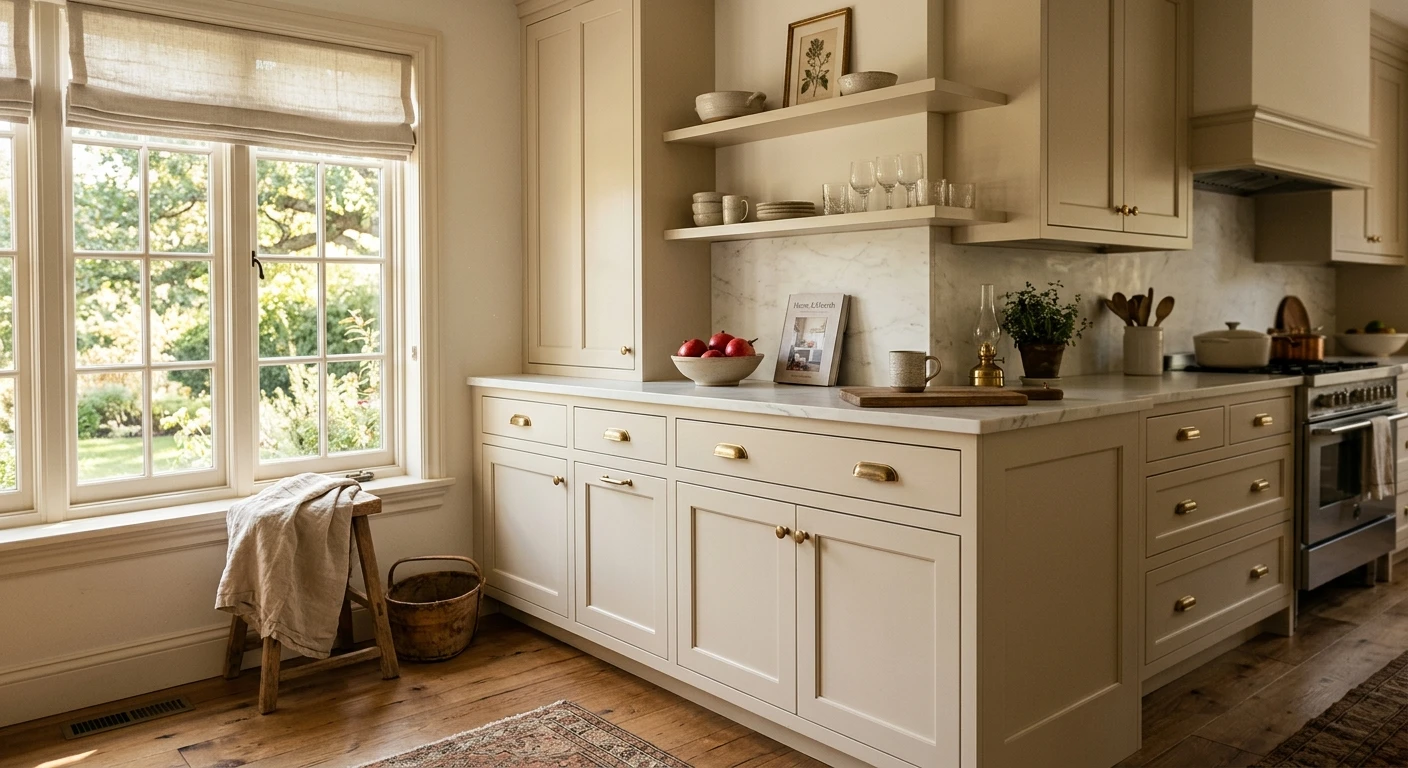
A client in a 1990s colonial called me last spring, half apologizing, to ask if she was allowed to keep her oak-toned kitchen and just paint it. She wanted warmth back. She was tired of the cold gray-and-white kitchen her neighbor put in, the one that looked like a dentist's office by 6 p.m. We landed on a soft beige cabinet with cream trim, and the day the painter pulled the tape, her whole first floor felt like it exhaled. That is the quiet comeback story of the last two years: beige kitchen cabinets, plus their cream and antique white cousins, are the antidote to a decade of cool gray. Here is how to pick the right one without ending up with a kitchen that reads dingy or dated.
Before you commit to a shade, upload one photo of your kitchen to the free kitchen cabinet color visualizer and preview the beige or cream on your own doors and drawer fronts.
Fast orientation. Beige, cream, and antique white are three steps on the same warm dial. Beige is the deepest and sandiest (think SW Kilim Beige, BM Shaker Beige), cream is a soft buttery near-white (SW Creamy), and antique white is a warm off-white that sits between the two (BM White Dove, SW Alabaster). All three flatter wood, brass, and honest stone in a way crisp white cannot. This guide is one stop in our wider complete kitchen cabinet colors guide, and it is the warm-neutral companion to our breakdown of the best white kitchen cabinet paint colors. They overlap at the cream end but do not compete: this page is about warmth.
Upload a photo of your real kitchen and preview beige, cream, or antique white cabinets under your own light in about 30 seconds, free.
Beige, cream, antique white: what is the actual difference?
People use these three words interchangeably and then wonder why their samples look nothing alike. The difference is mostly LRV (Light Reflectance Value, how much light a color bounces back) and how much pigment sits in the mix. Lower LRV equals deeper and sandier. Here is the plain version:
- Beige (LRV roughly 50 to 62): a real tan-sand color with visible depth. It reads as a soft color, not a white. Best when you want noticeable warmth and contrast against white countertops.
- Antique white (LRV roughly 78 to 85): a warm off-white. Reads white from across the room but never icy, with a creamy or faintly yellow lean up close. The most forgiving of the three.
- Cream (LRV roughly 78 to 84): white with the chill turned off and a soft buttery glow. Warmer than antique white, cleaner than beige. Glows on Shaker doors in dim light.
The honest takeaway: if you want your cabinets to read as a color, go beige. If you want them to read white but feel warm, go cream or antique white. Mixing them up is the single most common reason a sample disappoints. For the full breakdown of cream versus antique white on walls and millwork, our guide to cream and antique white paint colors goes deeper on undertones.
The cabinet colors that actually work: specs side by side
These are the warm cabinet colors I specify most, with the numbers you can take to a paint counter. LRV and undertone are doing the heavy lifting here, so read the right two columns before you fall for a name:
| Color | Family | LRV | Undertone | Best for |
|---|---|---|---|---|
| SW Kilim Beige 6106 | Beige | 57 | Pink-tan, warm | Traditional kitchens, granite counters |
| BM Shaker Beige HC-45 | Greige-beige | ~56 | Soft green-gray | Less-yellow beige, transitional look |
| SW Accessible Beige 7036 | Greige | 58 | Warm greige | The modern, low-risk beige |
| BM White Dove OC-17 | Antique white | 85 | Soft warm cream | Antique white that stays neutral |
| SW Alabaster 7008 | Cream / off-white | 82 | Soft cream | Warm cabinets without yellow |
| SW Creamy 7012 | Cream | 81 | Soft buttery, warm yellow | Cream cabinets, north-facing rooms |
Try it on your house
No photo? Try a sample
Sources: Sherwin-Williams and Benjamin Moore color data 2026; designer field reports compiled by FacadeColorizer. LRV values are manufacturer-published or close approximations.
Free AI visualizer. Test Kilim Beige, Accessible Beige, and Creamy on your real doors before buying samples.
My picks, and the ones I steer people away from
Best true beige: SW Accessible Beige (SW 7036)
If you want one safe beige cabinet and you do not want to overthink it, this is it. Accessible Beige is a greige, so it carries enough gray to stay current and avoids the dated, peachy 1995 beige people are scared of. It looks expensive next to white oak floors and warm brass pulls. At LRV 58 it has real presence without going dark.
Best deeper beige: BM Shaker Beige (HC-45)
When a client wants beige but hates yellow, I reach for Shaker Beige. Its quiet green-gray undertone keeps it from turning gold under warm bulbs, which is exactly where cheaper beiges fail. It is a touch deeper, so it shines in a kitchen with good daylight and stone countertops.
Best antique white: BM White Dove (OC-17)
White Dove is the antique white cabinet color I have specified more than any other. It is warm enough to feel custom and creamy in shade, but it reads as a clean neutral in daylight, so it never tips into ivory. If you are nervous about commitment, this is the one. It pairs with almost any countertop. For the look that mixes painted doors with stained wood, see our guide to cabinets paired with oak, where antique white earns its keep next to honey tones.
Best clean cream: SW Creamy (SW 7012)
Creamy earns its name: it has a real soft, buttery warmth with a gentle yellow lean, so know going in that this is a true cream, not a near-white. In a north-facing kitchen, where cool light drains warmth, that glow is the whole point, and it reads soft on Shaker doors rather than tipping into harsh custard-gold. This is the cream I trust most in low light, where a flatter off-white would fall dead.
Where to think twice
A few honest warnings. A heavy, yellow-leaning cream (the old "antique white kitchen cabinet colors" that builders sprayed in the early 2000s) can look dated fast, especially under 3000K LED strips that push it gold. Skip the most saturated yellow-creams unless your kitchen has cool daylight to balance them. And a deep beige in a small, windowless kitchen can read muddy: there, jump up to an antique white instead. If you are still weighing warm against cool overall, our guide to the best paint for kitchen cabinets covers the finishes and primers that make any of these last.
Countertops, walls, and hardware that flatter beige cabinets
A warm cabinet lives or dies on what surrounds it. Get the counter and hardware right and a beige kitchen looks collected; get it wrong and it can read flat or builder-grade.
- Countertops: a warm-white or cream quartz with a soft tan or gold vein flatters beige far better than a stark cool-white. Honed soapstone is too cold; warm-toned granite, quartzite, or a creamy marble-look quartz is the move. For cream cabinets, a slightly deeper counter (greige or tan) keeps the kitchen from washing out.
- Wall color: keep walls a shade or two lighter or warmer than the cabinets so the cabinets stay the star. A warm white or soft greige wall works for all three families. Our kitchen color schemes guide shows full wall-plus-cabinet palettes built around warm neutrals.
- Hardware: brass, antique brass, and oil-rubbed bronze sing against beige and cream. Polished chrome can look cold and accidental on a warm cabinet, so I avoid it here.
- Backsplash: a creamy zellige or a warm subway tile reinforces the warmth. A bright white glossy subway can fight a beige cabinet and make it look dirty by contrast.
- Flooring: white oak, natural hickory, and warm terracotta reflect light back and bring out the cabinet's best. Gray-washed floors flatten beige and are the one pairing I push back on hardest.
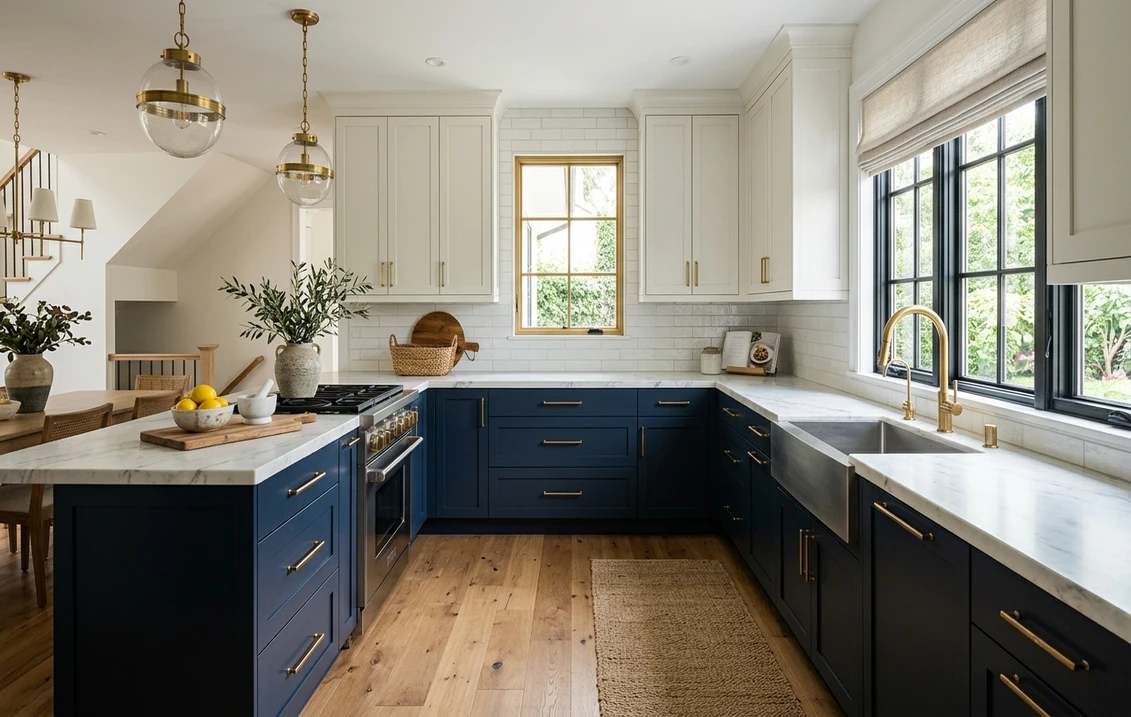
For a two-tone kitchen, a beige or cream perimeter with a deeper island (navy, green, or a warm brown) is one of the most popular looks of 2026. Our guide to two-tone cabinet combinations maps which island colors hold up against a warm neutral base.
See doors, counter, and backsplash together in one preview, free.
How to test a beige cabinet color before you commit
A small fan-deck chip is the number-one reason people pick a beige that disappoints: it reads lighter and grayer than a sprayed door, and it cannot show how the undertone shifts from morning to night. Beige is unusually light-sensitive, so two better methods:
- Sample on a real door: brush two coats on an actual cabinet door or a large poster board, prop it inside the cabinet run, and check it mid-morning, late afternoon, and at night under your normal bulbs. Watch for any gold shift under warm LEDs and any flatness in a dim corner.
- Preview it digitally first: upload a real photo of your kitchen and apply beige, cream, and antique white side by side before you buy a single sample, narrowing three contenders to one worth painting. For budgeting the full job, our interior painting cost guide covers cabinet pricing specifically.
Preview beige, cream, and antique white cabinets on your real kitchen, free.
Frequently asked questions
Are beige kitchen cabinets in style for 2026?
Yes. Beige kitchen cabinets are firmly back as the warm answer to a decade of cool gray, especially in greige-leaning shades like SW Accessible Beige and BM Shaker Beige. The trend favors soft, slightly grayed beiges over the yellow, peachy beiges of the early 2000s, paired with brass hardware, warm wood floors, and creamy countertops.
What is the best beige paint color for kitchen cabinets?
For a safe, modern beige, SW Accessible Beige (SW 7036, LRV 58) is hard to beat because its greige undertone keeps it current. For a deeper beige with less yellow, BM Shaker Beige (HC-45) leans on a soft green-gray. SW Kilim Beige (SW 6106) is the warmer, sandier classic for traditional kitchens with granite counters.
What is the difference between cream and antique white cabinets?
Cream is a soft buttery near-white with a noticeable warm glow (SW Creamy, LRV 81). Antique white is a warm off-white that reads cleaner and more neutral from across the room while still feeling warm up close (BM White Dove, LRV 85). Cream is warmer and slightly more yellow; antique white is the more forgiving, neutral of the two.
What countertop goes with beige cabinets?
A warm-white or cream quartz with a soft tan or gold vein flatters beige cabinets best, as do warm-toned granite and creamy marble-look quartz. Avoid stark cool-white or gray-heavy counters, which can make beige read dingy by contrast. Brass or bronze hardware and a warm backsplash complete the look.
Do beige cabinets make a kitchen look dated?
Only the wrong beige does. The dated look comes from heavily yellow or peachy beiges under warm LEDs. A greige-leaning beige like Accessible Beige or Shaker Beige, paired with current hardware and warm wood, reads timeless rather than tired. In a small windowless kitchen, jump up to an antique white instead of a deep beige.
Preview beige, cream, and antique white on your actual cabinets under your own light before buying a single sample.
Disclaimer: Sherwin-Williams, Kilim Beige (SW 6106), Accessible Beige (SW 7036), Alabaster (SW 7008), and Creamy (SW 7012) are trademarks of The Sherwin-Williams Company. Benjamin Moore, Shaker Beige (HC-45), and White Dove (OC-17) are trademarks of Benjamin Moore & Co. FacadeColorizer is an independent paint visualization service and is not affiliated with, endorsed by, or sponsored by Sherwin-Williams or Benjamin Moore. Color reproduction on screens approximates the manufacturer's chip; always confirm with a manufacturer sample under your own light before purchase. Sources: Sherwin-Williams and Benjamin Moore color data 2026, designer field reports compiled by FacadeColorizer.
Trademarks mentioned (Sherwin-Williams, Benjamin Moore, Behr, Caparol, Brillux, Sto, Alpina, Valspar, PPG, Glidden, Dulux, Crown Trade, Sandtex, Farrow & Ball, Johnstone's, Leyland) are property of their respective owners. FacadeColorizer is independent and not affiliated with any of them. Nominative fair use under Lanham Act §1125.