Try it on your room

A painter I trust says he can spot a doomed cabinet job from the driveway: the homeowner picked the color in the store under fluorescent tubes, never saw it on the doors, and grabbed whatever wall paint was on sale. Three months later the latch edges are chipping and the white reads gray next to the quartz. The best paint colors for kitchen cabinets are only half the decision; the other half is the product and the prep. This guide covers both: the shades selling in 2026, the enamels that survive a real kitchen, and how to test a color before you commit a dollar.
Cabinets cover roughly 40 percent of the visible surface in an average kitchen, so the color sets the mood. This page is the shortlist. For the full browse-everything reference (every family, resale notes, lighting physics), start with our kitchen cabinet colors complete guide.
Upload a photo of your real kitchen and preview any cabinet color in about 30 seconds, free. No sample pots, no painter's tape.
The best cabinet colors in 2026, ranked by how often they work
There is no single winner; the right color depends on your light and your counters. But after years of watching which kitchens still look good five years on and which get repainted, a clear short list emerges. Every shade below uses a real Sherwin-Williams or Benjamin Moore code so you can sample it.
1. Warm white: the safe, never-wrong pick
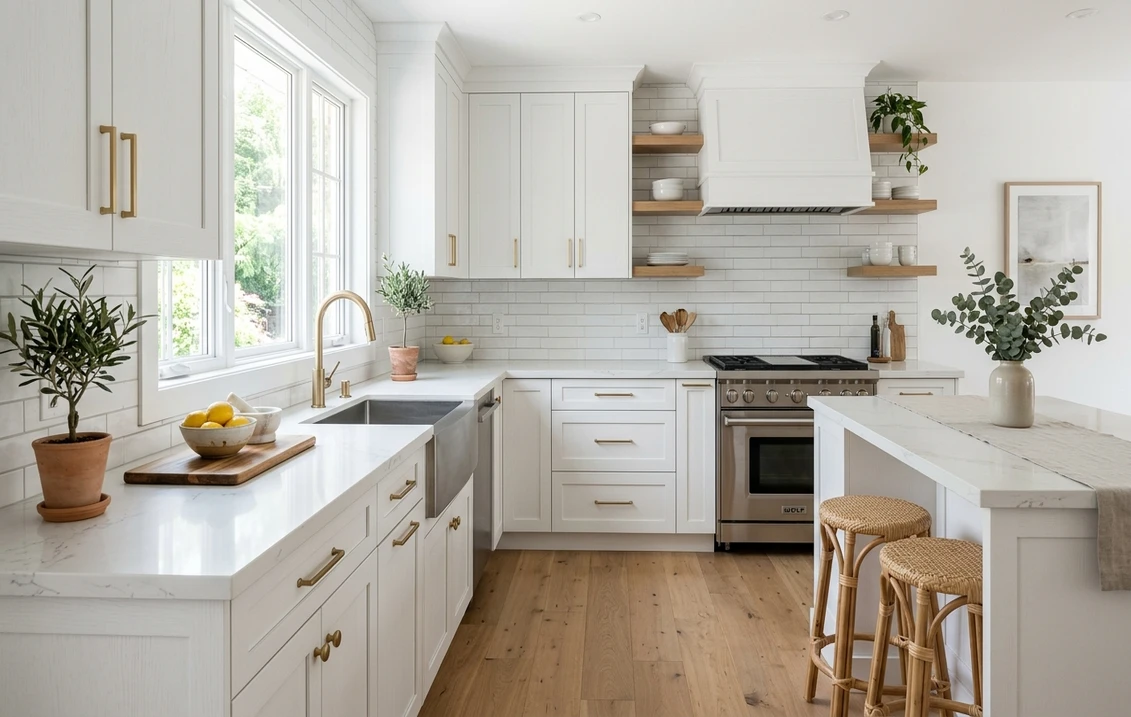
Warm white is the highest-volume cabinet category and the strongest for resale. The mistake is a stark builder white that goes cold and slightly blue under kitchen lighting; the fix is a soft off-white that reads clean without feeling clinical. Benjamin Moore White Dove (OC-17, LRV 85) is the most-recommended cabinet white in America: creamy, forgiving, friendly with almost any countertop. Sherwin-Williams Alabaster (SW 7008, LRV 82) is creamier and feels custom on Shaker doors, though it can shift cool in a north window. More in our White Dove OC-17 review and our white kitchen cabinet paint colors guide.
2. Greige: the quiet upgrade from cool gray
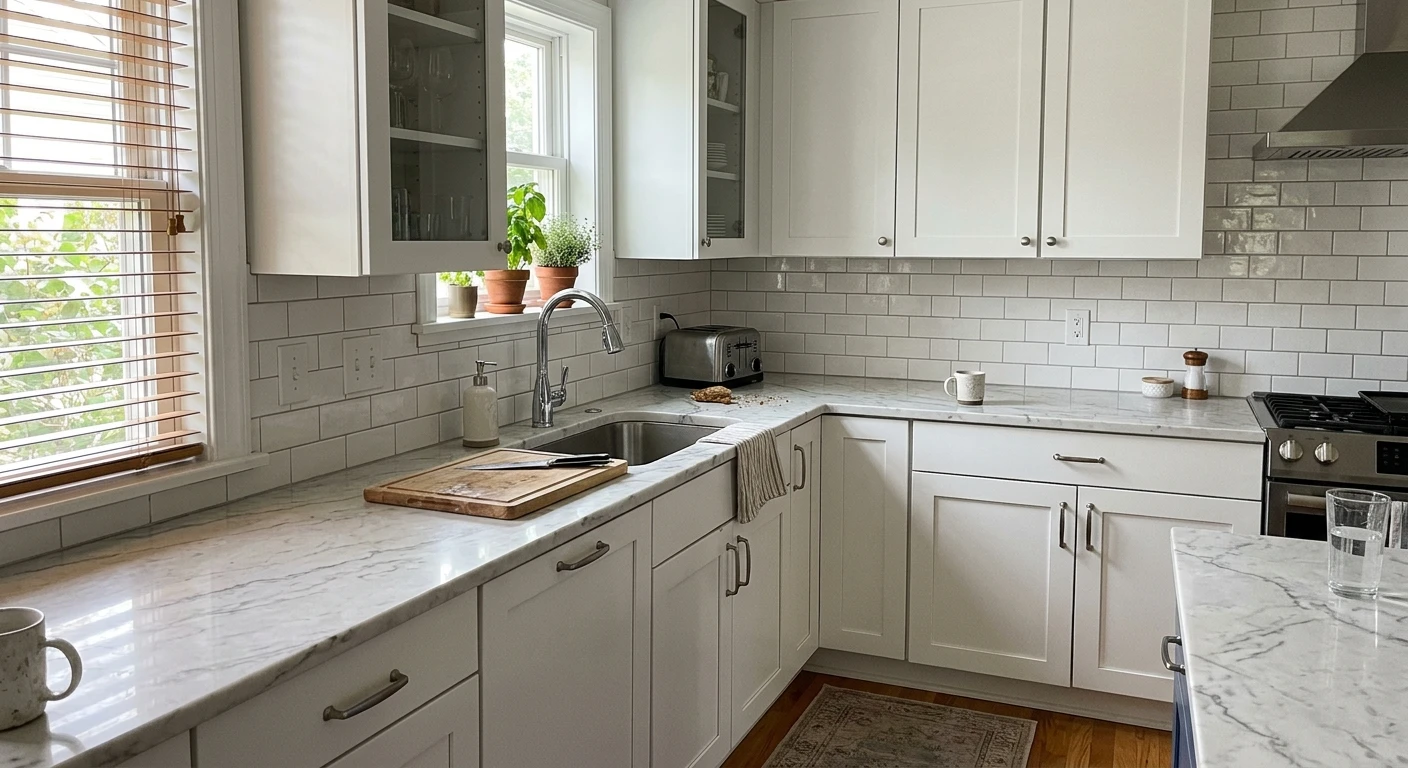
Greige (gray plus beige) is where the cool-gray kitchens of the 2010s are migrating: a calm backdrop with the warmth pure gray was missing. Sherwin-Williams Agreeable Gray (SW 7029, LRV 60) is the best-selling greige in the country and reads balanced on doors. Benjamin Moore Revere Pewter (HC-172) runs a hair deeper with a green-gray base that flatters white counters. Full lineup in our gray kitchen cabinet paint colors guide.
3. Muted green: the color defining 2026 kitchens
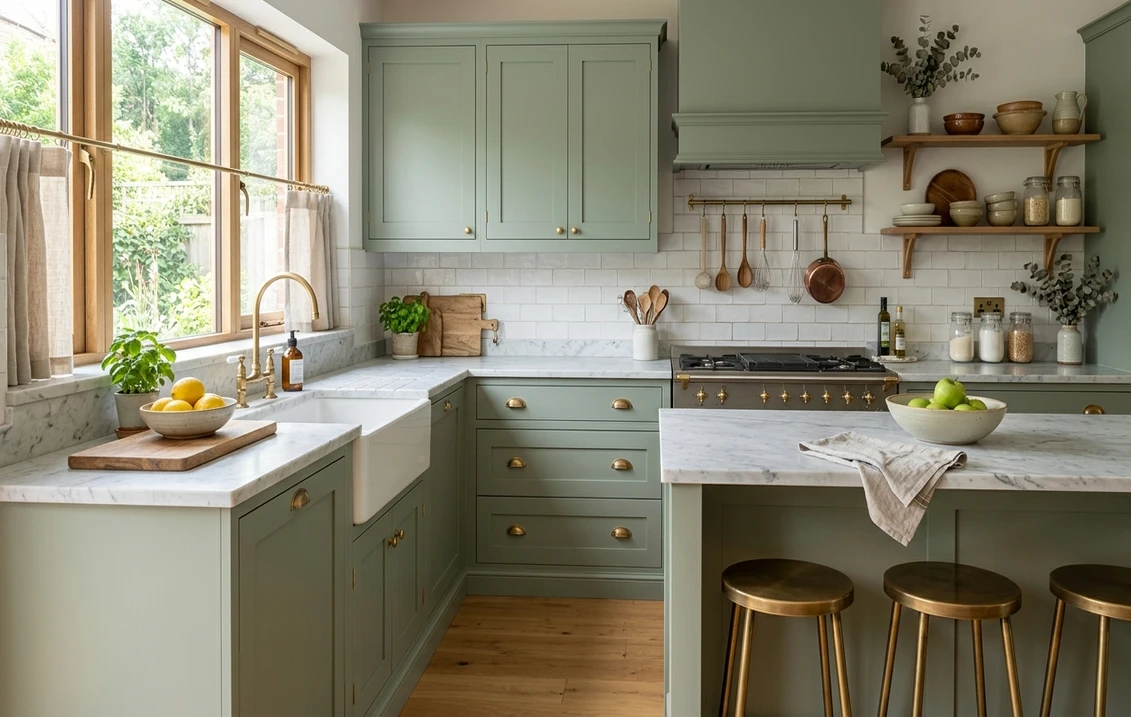
If one color owns the moment, it is muted green. Sherwin-Williams Evergreen Fog (SW 9130) and softer sages have moved from accent to mainstream because they feel natural and warmer than gray, and they flatter both brass and matte black hardware. The rare color that feels current today yet has the earthy staying power to age well. Codes in our green kitchen cabinet paint colors guide.
4. Navy and deep blue: timeless on an island
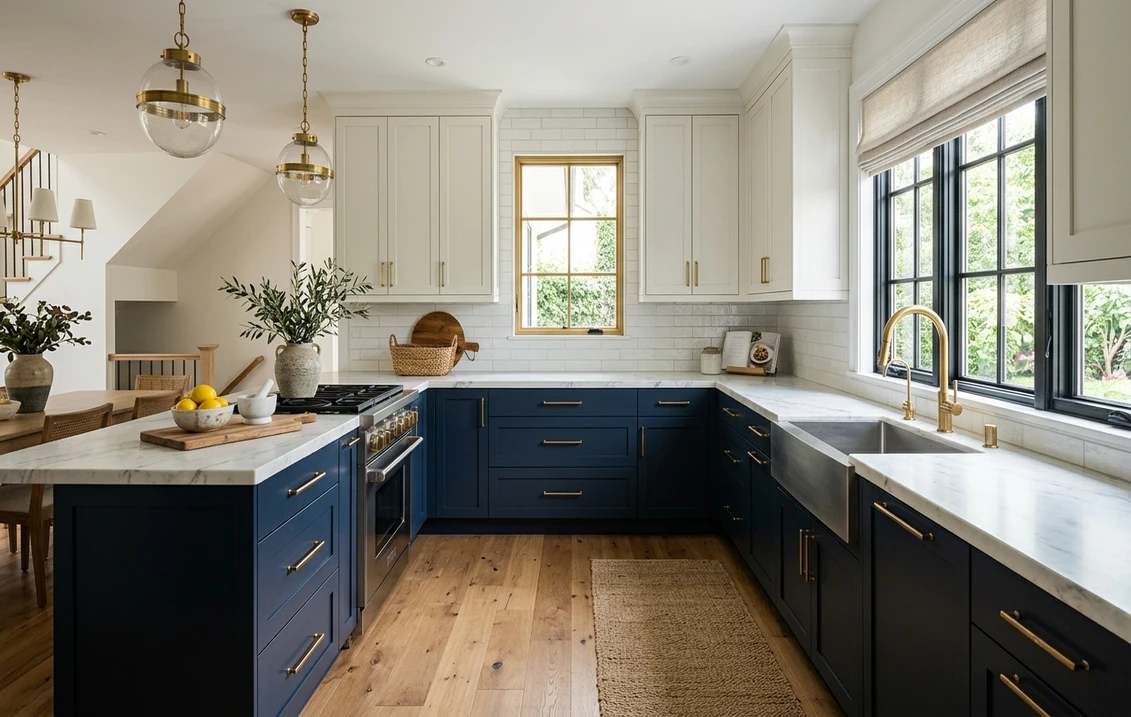
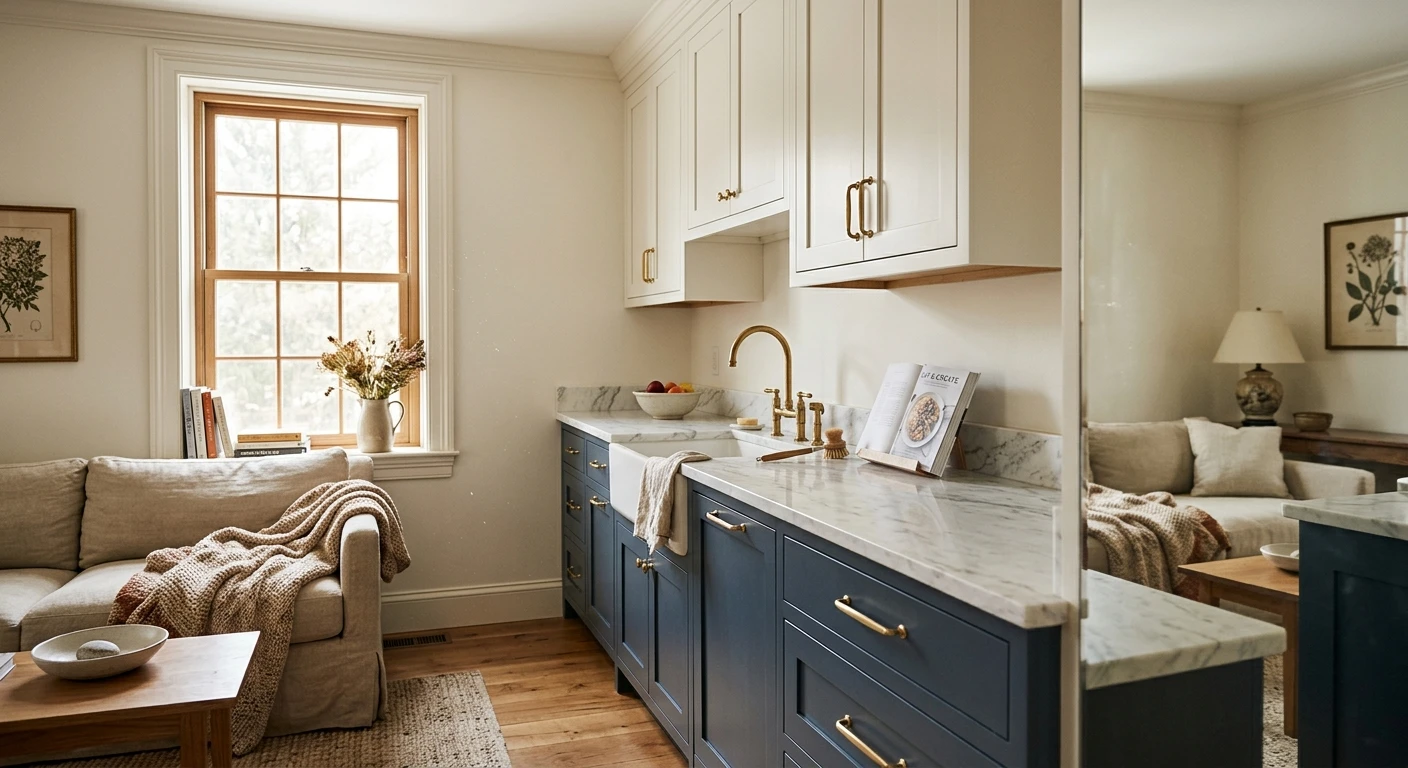
Navy has been a kitchen staple for years, especially on islands and lower cabinets under white uppers. Benjamin Moore Hale Navy (HC-154) is the designer default: deep, slightly muted, never garish, and classic with brass and a white or marble counter. Our blue kitchen cabinet paint colors guide covers the range, and the Hale Navy HC-154 review breaks down its undertones.
5. Black and charcoal: high drama, handle with care
Black and near-black charcoal are the bold cousins: striking, modern, and forgiving of fingerprints in a matte or satin finish. Sherwin-Williams Tricorn Black (SW 6258) is a true black with no muddy undertone. The honest catch: black shrinks a small kitchen and looks closed-in in a dim galley, so reserve it for a well-lit kitchen, ideally a lower run or island. If you love the look but worry about resale, two-tone is your friend.
Preview white, greige, green, navy, and black on your actual cabinets, side by side, free.
One filter narrows the field before you fall for a swatch: where your kitchen window faces. Cool north light turns stark whites and cool grays flat or slightly blue, so warm whites and greiges flatter those rooms; bright south light carries cooler colors and deep navy without feeling cold; west light reads intense and golden late in the day, so test any bold shade in the evening too. The mechanism is covered in depth in our complete cabinet color guide.
The best paint for kitchen cabinets: products that cure hard
Color gets the attention, but the product decides whether the job lasts. Cabinets take more abuse than any painted surface in the home, so you want a cabinet-grade enamel that levels smooth and cures hard. Even good wall paint stays softer and prints at the handles within a year. The workhorses pros reach for:
- Benjamin Moore Advance: a waterborne alkyd that flows and levels almost like an old oil enamel, leaving few brush marks. The most-named DIY cabinet enamel. It cures slowly, but the hard finish is worth the patience.
- Sherwin-Williams Emerald Urethane Trim Enamel: a urethane-fortified acrylic that dries faster than Advance and blocks well, so doors are less likely to stick. A favorite for brush-and-roll and sprayed jobs alike.
- Sherwin-Williams ProClassic (waterborne): the broad-availability pick at SW stores, durable and easy to find, slightly less self-leveling than Emerald.
- Behr Cabinet and Trim Enamel: the value option at Home Depot, an alkyd-modified acrylic that performs well for the price on a careful DIY job.
Spraying gives the smoothest finish, but a good waterborne alkyd brushed and rolled with a fine roller gets close. Whichever you pick, the enamel is only as good as what is under it.
Sheen and prep: the part people skip and regret
Two boring choices make or break a cabinet repaint, which is exactly why they get rushed.
- Satin or semi-gloss, nothing flatter. Both wipe clean and resist moisture. Semi-gloss is the most durable; satin hides minor imperfections slightly better. Skip flat and eggshell in a kitchen, they hold grease and scuff.
- Prep is non-negotiable. Degrease every door (kitchens leave an invisible film), scuff-sand to dull the finish, and prime, especially over raw wood, open oak grain, or anything previously stained. A bonding or stain-blocking primer keeps the topcoat from peeling at the edges.
- Cut in, then roll. Cut in the profile and panel edges with a quality brush, then lay off the flat faces with a fine roller. Two thin coats beat one thick one.
- Cure time is real. Paint is dry to the touch in hours but not fully cured for days to weeks. Handle gently until it hardens.
Skipping the degrease-and-prime step is the single most common reason a DIY cabinet job chips within a year.
Best cabinet colors and enamels at a glance
A fast filter: each color, a real code, the kitchens it flatters, the hardware that pairs best, and a durable enamel.
| Color | Real code (LRV) | Best for | Pairs with | Enamel pick |
|---|---|---|---|---|
| White Dove | BM OC-17 (85) | Any kitchen, small or dim | Brass, black, nickel; any counter | BM Advance, satin |
| Agreeable Gray | SW 7029 (60) | Open-plan, transitional | Bronze, black; wood or white counters | SW Emerald Urethane, satin |
| Evergreen Fog | SW 9130 (30) | North or south light; islands | Brass, gold; marble, butcher block | SW Emerald Urethane, satin |
| Hale Navy | BM HC-154 (6) | Islands, lowers, well-lit kitchens | Brass, gold; white or marble | BM Advance, semi-gloss |
| Tricorn Black | SW 6258 (3) | Larger, bright kitchens; islands | Brass or matte black; light counters | SW Emerald Urethane, satin |
Try it on your house
No photo? Try a sample
Sources: Sherwin-Williams and Benjamin Moore technical data sheets 2026 (LRV and codes); manufacturer product literature; designer field references compiled by FacadeColorizer. Enamel picks reflect professional preference, not a paid endorsement.
Free AI visualizer. See the exact color on your real cabinets before buying a quart.
Two-tone: have your bold color and your safe neutral
Two-tone is close to a default request now, and it solves the resale worry that holds people back from navy, green, or black. Split the color (one shade on uppers, another below or on the island) and you get personality without committing the whole kitchen to a trend. The formula: lighter on top, darker below. The combinations that photograph best:
- Warm white uppers + navy lowers: the most popular pairing, classic with brass.
- White uppers + sage or green island: fresh, natural, very 2026.
- Greige uppers + black or charcoal island: a calm, gallery-like contrast.
- Wood-tone uppers + painted lowers: stained warmth over a clean painted base.
Two small chips held side by side tell you almost nothing about how the real runs will sit together, which is exactly where a preview earns its keep. For the full set of pairings (and the ones that fight), see our two-tone kitchen cabinet color combinations guide.
Test before you commit: the 10-minute version
A 2-inch chip is the wrong tool for a cabinet decision: color reads differently at scale, under your lighting, and next to your counter. Two methods actually predict the result:
- Paint a door: roll your top two candidates onto a spare door or a large peel-and-stick swatch, lean it against the cabinets, and look morning, midday, and at night under your kitchen lights. Watch the white for a cool, gray cast in a dim corner.
- Preview digitally first: upload a photo of your real kitchen into our interior paint visualizer and apply colors to narrow six options to two before buying any paint. Fastest way to rule out the misses.
Preview to shortlist, then one painted door to confirm the finalist. If you are also budgeting labor versus DIY, our interior house painting cost guide for 2026 shows where cabinet work lands against walls and trim.
Upload one kitchen photo and preview the best colors side by side, free.
Frequently asked questions
What are the best paint colors for kitchen cabinets in 2026?
Warm white leads on volume and resale (Benjamin Moore White Dove OC-17, Sherwin-Williams Alabaster SW 7008). Greige like Agreeable Gray (SW 7029) is the calm upgrade from cool gray. The fastest-growing color is muted green such as Evergreen Fog (SW 9130), and navy like Hale Navy (HC-154) stays timeless on islands. Black (Tricorn Black, SW 6258) is striking but best on a well-lit kitchen or a lower run.
What is the best paint to use on kitchen cabinets?
Use a cabinet-grade enamel that cures into a hard, smooth film, not standard wall paint. Benjamin Moore Advance (a waterborne alkyd that levels beautifully) and Sherwin-Williams Emerald Urethane Trim Enamel (faster-drying, blocks well) are the most-recommended, with ProClassic and Behr Cabinet and Trim Enamel as solid alternatives. Apply in satin or semi-gloss; both resist grease far better than flat or eggshell.
Do I need to sand and prime cabinets before painting?
Yes, and skipping it is the number one reason cabinet paint chips within a year. Degrease every door to remove the cooking film, scuff-sand to dull the finish so the new coat can grip, and prime, especially over raw wood, open oak grain, or anything previously stained. A bonding or stain-blocking primer keeps the topcoat from peeling at the handle edges.
What cabinet color is best for resale?
Warm white and greige are the strongest resale neutrals because they appeal to the widest range of buyers and do not lock the kitchen into a trend. Navy and sage are also broadly liked. Black, deep charcoal, and very saturated colors are more polarizing, so reserve them for an island or lower run rather than the whole kitchen if you may sell soon.
How do I pick a cabinet color for a small or dark kitchen?
Lean light and warm. Warm whites and soft greiges (LRV in the high 50s to mid 80s) reflect more light and make a small or dim kitchen feel larger. Soft sage stays light enough to keep the room open if you want color. Save black, charcoal, and deep forest green for kitchens with strong natural light or a large footprint. Previewing the color on a photo of your actual room is the most reliable way to judge it at your scale and light.
See white, greige, green, navy, and black on your real kitchen before you buy a drop of paint.
Disclaimer: Sherwin-Williams, Benjamin Moore, Behr, the named color codes (OC-17 White Dove, SW 7008 Alabaster, SW 7029 Agreeable Gray, HC-172 Revere Pewter, SW 9130 Evergreen Fog, HC-154 Hale Navy, SW 6258 Tricorn Black) and product names (Benjamin Moore Advance, Sherwin-Williams Emerald Urethane Trim Enamel, Sherwin-Williams ProClassic, Behr Cabinet and Trim Enamel) are trademarks of their respective owners. FacadeColorizer is an independent paint visualization service and is not affiliated with, endorsed by, or sponsored by Sherwin-Williams, Benjamin Moore, or Behr. Color reproduction on screens approximates the manufacturer's chip; always confirm with a manufacturer sample under your own light before purchase. LRV figures and product notes are from manufacturer data sheets; resale guidance reflects general patterns, not a guarantee of results. Sources: Sherwin-Williams and Benjamin Moore technical data sheets 2026, manufacturer product literature, and professional designer references.
Trademarks mentioned (Sherwin-Williams, Benjamin Moore, Behr, Caparol, Brillux, Sto, Alpina, Valspar, PPG, Glidden, Dulux, Crown Trade, Sandtex, Farrow & Ball, Johnstone's, Leyland) are property of their respective owners. FacadeColorizer is independent and not affiliated with any of them. Nominative fair use under Lanham Act §1125.