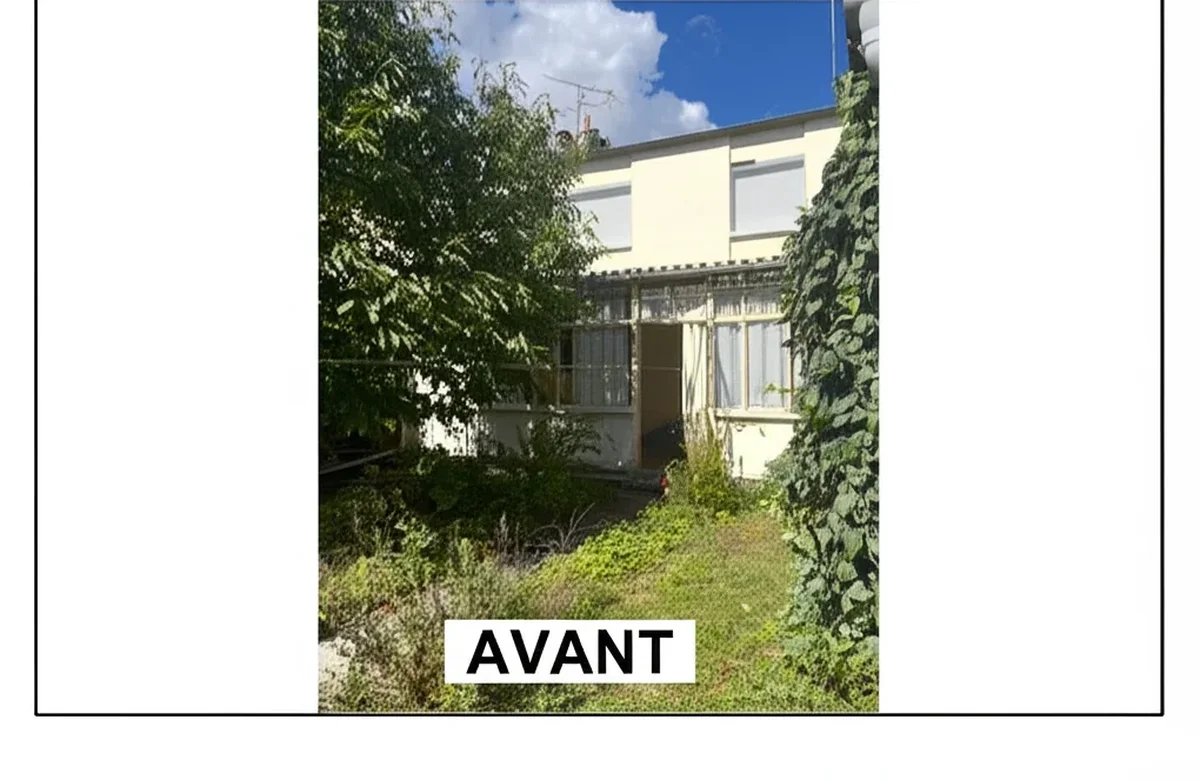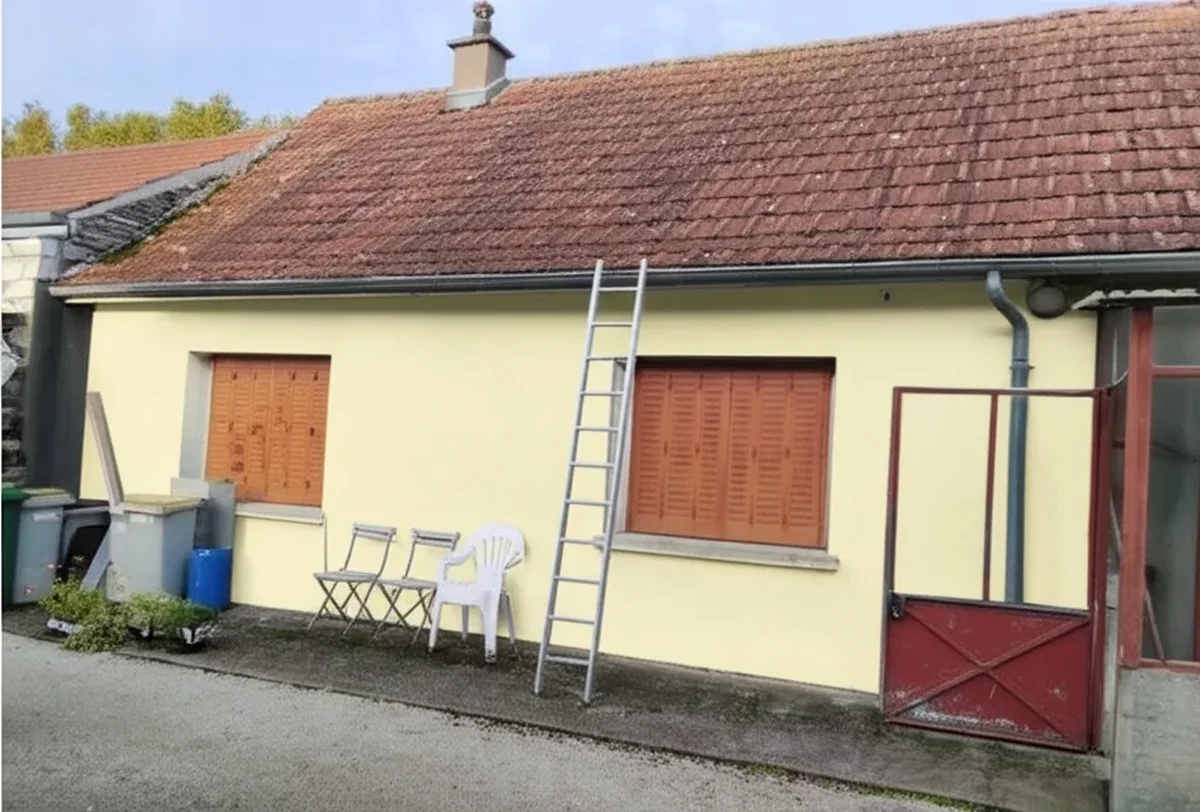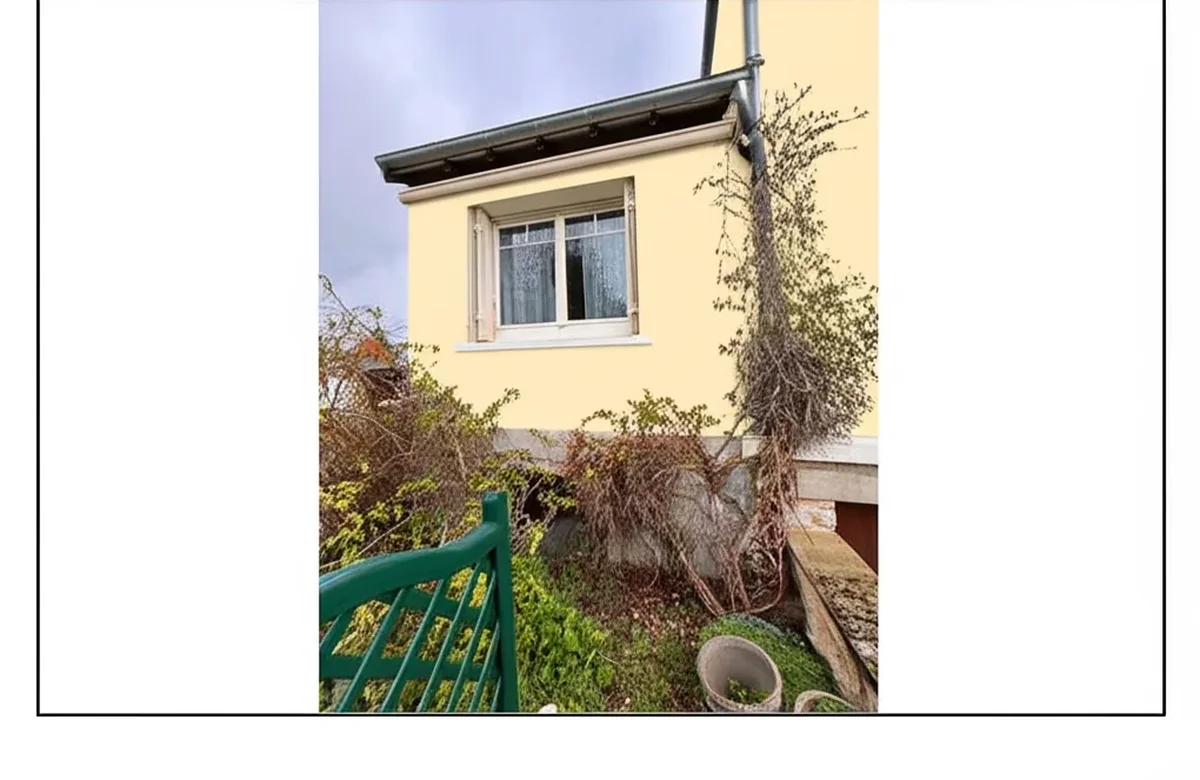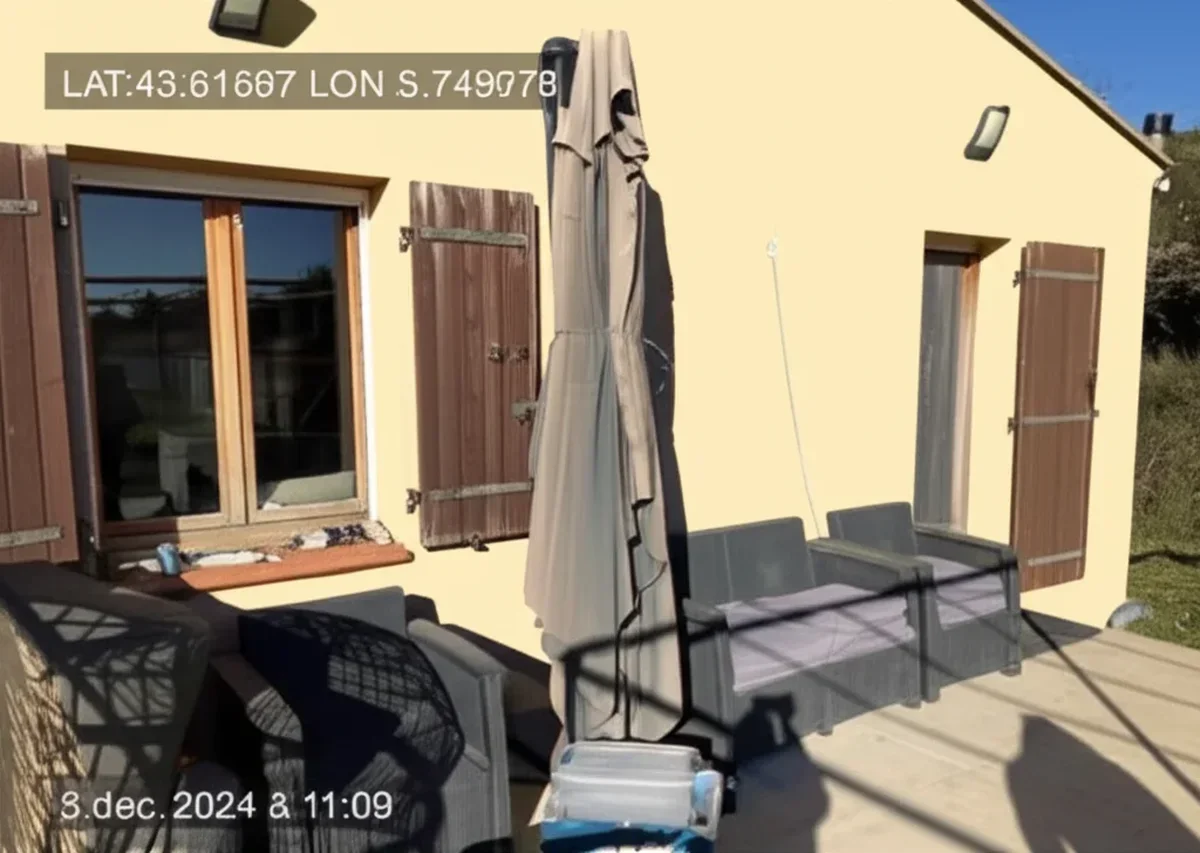
Try it on your house

This page answers one question and one question only: satin or semi-gloss, surface by surface. It is the head-to-head, not the full sheen tour.
If you are still deciding between all the finishes, including flat, the full chart of gloss levels and the by-material recommendations live in the parent article, how to choose an exterior paint finish. Come back here once the decision has narrowed to these two, which is where most homeowners actually get stuck: the trim is obvious, the siding is not, and nobody agrees about the garage door.
Preview any color and sheen on your home photo before you order a gallon.
Satin vs semi-gloss: the head-to-head
Both numbers come from the same measurement. Gloss is read on a glossmeter under ASTM D523, whose scope covers "the measurement of the specular gloss of nonmetallic specimens for glossmeter geometries of 60, 20, and 85 degrees". Datasheets quote the 60-degree figure. Satin sits at roughly 25 to 35 gloss units, semi-gloss at roughly 35 to 70. Everything below follows from that gap.
| Criterion | Satin (25-35 GU) | Semi-gloss (35-70 GU) |
|---|---|---|
| Resin content | Moderate, balanced with pigment | Higher, harder film |
| Cleaning | Rinses well, may need a sponge | Wipes clean with soap and water |
| Shows brush marks | Only at a grazing angle | Yes, in most light |
| Shows substrate flaws | Hides minor waviness | Traces every ridge and fill |
| Glare at scale | None to speak of | Visible reflections on a large plane |
| Touch-up | Blends reasonably | Patches tend to flash |
| Default home | Siding body, garage door, shutters | Trim, fascia, window frames, doors |
Try it on your house
No photo? Try a sample
The jump homeowners actually feel is between about 30 GU and about 50 GU. At 30 you see a soft glow. At 50 you start seeing clouds, tree branches and porch lights reflected in the surface. Both are perfectly appropriate outdoors. They simply belong on different parts of the building.
Trim: why semi-gloss is the default, and the two cases where satin beats it
Trim gets semi-gloss for reasons that have nothing to do with taste. It is the part of the house that gets hit by hose nozzles, packages, ladders and string trimmers, and it is narrow enough that a reflection reads as a crisp edge rather than as glare. Sherwin-Williams describes semi-gloss simply as "easy to clean" with "a subtle shine", which is the whole argument in six words.
The washability difference is not a marketing claim; it is a measured property. Scrub resistance is tested under ASTM D2486, which counts the cycles a film survives against an abrasive brush. Within one product line, the higher-sheen version almost always posts the higher cycle count, because the same resin-to-pigment shift that raises gloss also tightens the film.
Two cases flip the answer to satin. The first is trim you are not going to sand properly: old fascia with raised grain, previous drip marks or a failed film will look worse in semi-gloss than in satin, because gloss reflects the defect instead of absorbing it. The second is a deliberately matte design language, modern farmhouse or minimalist, where a shiny black window surround breaks the intended look. In both cases you are trading washability for appearance knowingly, which is a legitimate choice.
Siding: why semi-gloss is almost never right on a full elevation
On a 900 square foot wall, the qualities that make semi-gloss good on trim turn against you. Reflections that read as a crisp highlight on a four-inch casing read as glare across a whole elevation, and every lap, nail line and slightly cupped board is lit from the side twice a day. This is the single most common sheen mistake on a US repaint, and it is usually made by someone reasoning that more durable must be better.
Satin is the answer for smooth siding because it keeps most of the cleanability while dropping the glare. Where siding is rough, stucco, cedar shake, heavy texture, the correct step is down to flat rather than across to semi-gloss, which the parent finish guide covers material by material.
One exception worth naming: shaded, humid elevations where mildew is the recurring problem. There the case for the higher sheen gets stronger, because a tighter film dries faster and gives spores less purchase. Manufacturers test this directly under ASTM D3273, which exposes coated panels in an environmental chamber to rate resistance to mold growth. Even there the usual answer is a mildew-resistant satin rather than semi-gloss, because the glare problem does not go away.
Garage doors, shutters and front doors: where the answer flips
Garage door: satin. It is a large flat plane at eye level, so it behaves like siding, not like trim. Semi-gloss on a double garage door is the most visible way to make a good paint job look cheap, because the panel is wide enough to mirror the driveway.
Shutters: either, and it is a design call. Satin shutters recede and let the body color lead. Semi-gloss shutters read as a deliberate accent and hold a saturated color more vividly. Both clean acceptably at that size. Our 2026 exterior shutter paint colors guide pairs the sheen decision with the color one.
Front door: semi-gloss, or gloss if you are committing. It is a small surface, it is touched by hand daily, and it is the one place on the house where reflection is the point. Sand it flat first: on a door, semi-gloss will show any imperfection you left behind, at reading distance.
The dirt-shedding correlation: higher gloss = easier clean
The physics behind sheen choice is simple. Higher gloss paints contain more resin and less pigment by volume. More resin means a tighter, less porous surface film. Less porosity means dirt, pollen, mildew spores, and road grime sit on the surface rather than embedding in micro-cavities. That's why semi-gloss trim wipes clean with a soapy sponge while flat siding needs a pressure washer.
This is measurable rather than anecdotal. Scrub resistance under ASTM D2486 counts the abrasive cycles a dried film survives, and within a single product line the higher-sheen version generally posts the higher count. What that means on a coastal or high-pollen elevation is a difference in effort, not in survival: both films stay sound and adhered, but the glossier one usually comes clean with a rinse where the lower sheen needs a soft brush and a diluted detergent. That gap compounds over a decade of annual washing.
See how satin vs semi-gloss reads on your specific home before you spec the job.
Cost difference across sheen levels
Sheen barely moves the price needle. Inside a single product line, here's what you pay per gallon in 2026 for premium exterior acrylic:
| Product line | Flat / gallon | Satin / gallon | Semi-gloss / gallon |
|---|---|---|---|
| Behr Marquee Exterior | $48 | $52 | $55 |
| Sherwin-Williams Duration | $58 | $62 | $65 |
| Sherwin-Williams Emerald | $80 | $85 | $88 |
| Benjamin Moore Aura Exterior | $92 | $95 | $98 |
| Valspar Duramax | $35 | $38 | $42 |
Prices: 2026 retail at Home Depot, Lowe's, and Sherwin-Williams stores. Geographic variance plus or minus 8%.
On a typical 2,200 sq ft home using 10 gallons of body and 3 gallons of trim, the all-in cost delta between an all-satin spec and a mixed satin-body / semi-gloss-trim spec is around $15 to $25. That's nothing on a $5,000 to $9,000 project. Choose sheen by surface, not by budget.
For the full pricing picture across product tiers, our Sherwin-Williams Emerald exterior review and Benjamin Moore Aura exterior review break down what you're actually getting at the premium end.
Brand product equivalents by sheen
Same gloss range, different marketing names. When a contractor's quote says "low lustre" and a paint store clerk says "satin," they're talking about the same paint. Here's the cross-reference.
| Sheen tier | Sherwin-Williams | Benjamin Moore | Behr | Valspar |
|---|---|---|---|---|
| Flat | Flat | Flat | Flat | Flat |
| Eggshell | Low Sheen | Soft Gloss | Soft Gloss | Eggshell |
| Satin | Satin | Low Lustre | Satin Enamel | Satin |
| Semi-gloss | Semi-Gloss | Soft Gloss | Semi-Gloss Enamel | Semi-Gloss |
| High-gloss | Gloss | High Gloss | Hi-Gloss Enamel | Gloss |
The modern farmhouse all-flat trend
Between 2022 and 2026, modern farmhouse and modern minimalist architecture pushed an unusual sheen choice into the mainstream: flat everything. White body in flat, black trim in flat, black shutters in flat. The aesthetic intent is to remove all reflection cues so the building reads as a sculptural shape rather than a collection of architectural details.
This works visually, but you trade durability. A flat film is more porous, so bird droppings, sap and pollen embed rather than sit on top, and they resist cleaning accordingly. Behr's own exterior sheen guidance steers higher sheens toward the surfaces that take contact and weather, which is exactly what all-flat trim gives up. If you go all-flat on a modern farmhouse, plan on regular soft washing and accept more frequent touch-ups on the door.
If you want the matte modern look without the maintenance penalty, a soft satin at the bottom of its band, around 25 to 27 GU, reads as nearly flat from fifteen feet but cleans far closer to semi-gloss. Ask for the product by its gloss unit figure rather than by name, since "low lustre", "satin" and "satin enamel" are different words for the same band at different brands. That is the compromise worth knowing about before you commit a whole elevation to flat.
Test all-flat vs mixed-sheen on your home photo in under 30 seconds.
Substrate and primer interactions with sheen
Sheen choice can't be separated from substrate prep. A semi-gloss topcoat on a poorly primed cedar trim board will flash (uneven gloss patches where the bare wood absorbed differently). A flat paint on a glossy old oil-based coating won't bond and will peel in 18 months without a deglossing step.
The order of operations matters. Sand the substrate. Spot prime any bare spots. Full prime if you are crossing chemistries, oil to latex, or chalking old paint to new. Then topcoat with the sheen you want. Skipping the prime step does not produce a slightly worse result; it produces flashing, uneven gloss patches where the bare substrate drank differently from the sound film around it, and the higher your sheen, the more visible that is.
Chemistry compatibility also matters. Latex over latex is fine across sheens. Latex semi-gloss directly over old oil-based semi-gloss is a peeling risk without a bonding primer, because the new film has nothing to key into. Our guide to latex versus oil-based exterior paint sets out the cross-chemistry rules in detail.
How to test sheen on your own home before committing
A 2 ft by 2 ft test patch in each candidate sheen, viewed in morning, noon, and late afternoon light, will tell you more than any swatch chart. Order quart samples (around $9-$14 each), paint side-by-side patches on the same elevation, and live with them for 72 hours.
Faster option: use a visualizer to preview the color first, lock in the hue, then test sheen physically. Our AI tool lets you preview any of the best exterior paint colors of 2026 on your actual home photo, so you can narrow to 2-3 candidate colors before spending money on quart samples.
Still weighing every sheen option, not just these two? Start with our guide on how to choose an exterior paint finish for the full decision framework.
Test satin vs semi-gloss on your own home photo before you order paint.
Sources and references
- ASTM D523, Standard Test Method for Specular Gloss, the source of the gloss unit bands used to separate satin from semi-gloss.
- ASTM D2486, Standard Test Methods for Scrub Resistance of Wall Paints, the method behind every washability comparison on this page.
- ASTM D3273, Standard Test Method for Resistance to Growth of Mold on the Surface of Interior Coatings in an Environmental Chamber, referenced for the mildew discussion on shaded elevations.
- Sherwin-Williams paint sheen guide, manufacturer definitions of satin, semi-gloss and the surrounding sheen levels.
- Behr, how to choose an exterior paint sheen, a second manufacturer view on matching sheen to exterior surface.
Related paint comparisons
Sheen is one lever among several. If you are still specifying the paint itself, these guides pair well with this one:
- Latex versus oil-based exterior paint, the binder choice that sits underneath any sheen.
- SuperPaint against Emerald, two Sherwin-Williams tiers compared line for line.
- PPG Timeless versus Permanizer if you are shopping the PPG shelf instead.
Whatever finish and product you pick, try the color on your own home first.
The sheen rule for 2026, restated: satin on the body, semi-gloss on trim and doors, and step down to flat rather than across to semi-gloss when the surface is rough. Match the sheen to the surface, not to the budget, and sand before you put anything glossy on a board you will look at from three feet.
Frequently asked questions
Is semi-gloss or satin better for exterior trim?
What sheen should I use on exterior siding?
Does higher sheen really shed dirt faster?
Is flat exterior paint a bad idea?
What sheen is best for a dark exterior color?
Can I mix sheens within a single elevation?
Does sheen affect how long the paint lasts?
Is semi-gloss paint worth the extra cost?
Trademarks mentioned (Sherwin-Williams, Benjamin Moore, Behr, Caparol, Brillux, Sto, Alpina, Valspar, PPG, Glidden, Dulux, Crown Trade, Sandtex, Farrow & Ball, Johnstone's, Leyland) are property of their respective owners. FacadeColorizer is independent and not affiliated with any of them. Nominative fair use under Lanham Act §1125.