Try it on your room

Stand at the Sherwin-Williams counter, describe a high-traffic hallway or a kid's room that gets wiped down weekly, and the rep almost always reaches for the same can. Emerald is the most expensive interior paint Sherwin-Williams sells, and that price is the whole conversation. At roughly double the cost of a builder-grade gallon, is Sherwin-Williams Emerald actually worth it? Or are you just paying for the name on the lid? That is the honest question every homeowner asks, and it deserves an honest answer.
This is a straight review, not a brochure. Below: what Emerald is, where it genuinely earns its price, where a cheaper line does the same job, the sheen breakdown, the rooms it suits best, and how it stacks up against Duration, SuperPaint, and Benjamin Moore Aura. FacadeColorizer is independent, so there is no upside for us in selling you the priciest can. For where Emerald fits in the wider catalog, start with our Sherwin-Williams interior paint colors guide.
Upload a photo of your room and test any Sherwin-Williams color on your actual walls in 30 seconds, free, before you commit to a premium can.
What Emerald actually is in the Sherwin-Williams lineup
Emerald is a product line, not a color. The word on the lid names the formula tier, which sits at the top of the Sherwin-Williams retail interior range. From value to flagship the rough ladder runs ProMar and SuperPaint, then Cashmere and Duration in the middle, then Emerald at the top, with Emerald Designer Edition as a higher-pigment offshoot for deep, saturated colors.
The headline claims for the original Emerald Interior Acrylic Latex are a self-priming film on most repaints, strong stain resistance, excellent washability, and a mildew-resistant coating that helps the dried film resist mold and mildew in humid rooms. None of that is brochure copy. The manufacturer technical data sheet lists every one of those properties, and they are the practical reasons the line exists in the first place.
- Type: premium 100% acrylic interior wall paint, low VOC.
- Paint and primer: self-priming on most previously painted surfaces in good condition, which can save a separate primer coat.
- Coverage: excellent hide; many light-over-light repaints finish in two coats, and some go one coat over a similar existing color.
- Washability: rated for repeated scrubbing without burnishing, the standout reason designers spec it for trafficked rooms.
- Mildew resistance: the dried film resists mold and mildew, useful in bathrooms, laundry rooms, and mudrooms.
- Sister product: Emerald Designer Edition carries more sheens and a deeper color range tuned for rich, low-LRV shades.
Where Emerald earns its price (and where it does not)
Spending up on paint is only smart in the rooms that punish a cheaper film. Here is the honest split based on how the line performs versus what the surface actually demands.
Worth the premium
- High-traffic and high-touch zones: entry halls, stairwells, kids' rooms, and kitchens, where washability keeps walls looking new for years instead of months.
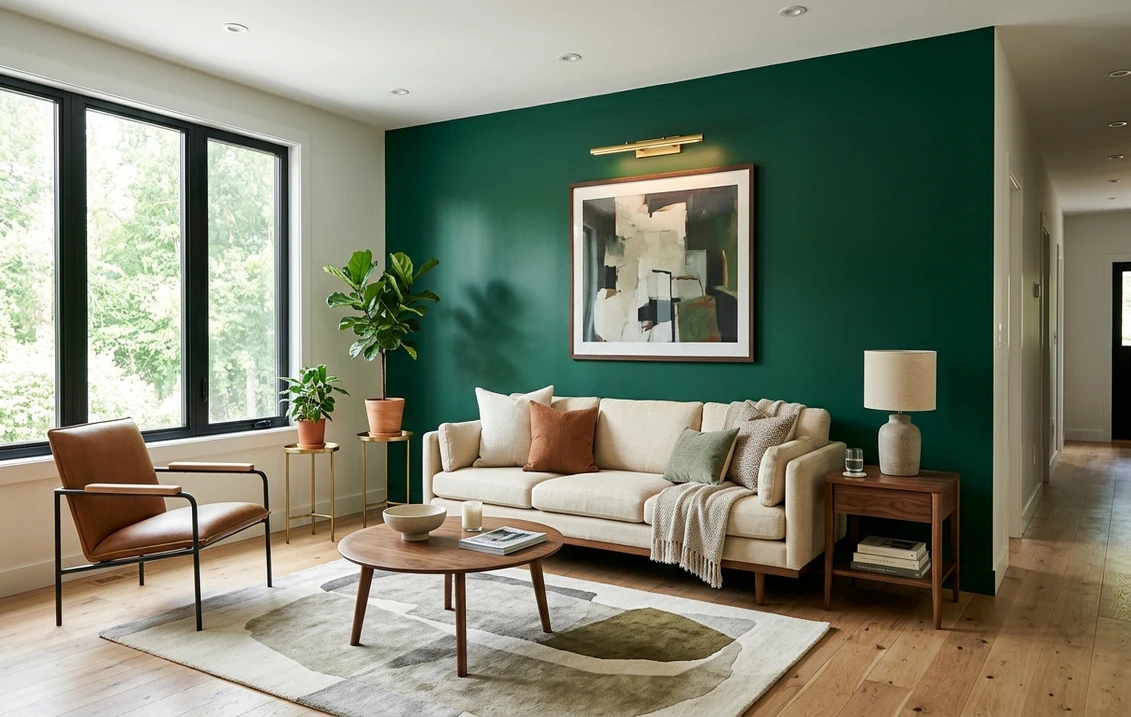
- Deep, saturated colors: a charcoal, forest green, or navy in Emerald Designer Edition lays down flatter and hides better than the same shade in a mid-tier line, where deep colors often need three coats and still flash.
- Damp rooms: bathrooms, laundry rooms, and basements benefit from the mildew-resistant film.
Skip it, use a cheaper SW line
- Low-traffic adult bedrooms and ceilings: walls that rarely get touched do not need scrub resistance. SuperPaint or Cashmere look identical on day one for less money.
- Rental turnovers and stage-to-sell jobs: when longevity is not the goal, the premium is wasted.
- Light neutrals over a similar existing color: a warm white over an old warm white hides easily in almost any decent paint, so the Emerald hide advantage barely shows.
For what a repaint actually costs once you add labor, primer, and supplies, see our interior house painting cost guide. The paint itself rarely decides the budget.
Deep navies and forest greens are exactly where Emerald shines. Test yours free before you buy.
Sheens and finishes: matte, satin, and the Designer Edition
Sheen changes durability and how a color reads as much as the color itself. The original Emerald line offers a tighter sheen set, while Emerald Designer Edition adds finishes for a velvety low-sheen look that still wipes clean.
| Finish | How it reads | Best rooms |
|---|---|---|
| Flat / Matte | No shine, hides wall imperfections, deepens color | Adult bedrooms, living rooms, ceilings, deep colors |
| Satin | Soft low sheen, most washable everyday finish | Hallways, kids' rooms, kitchens, family rooms |
| Semi-Gloss | Visible shine, hardest, most scrubbable | Trim, doors, bathroom walls, cabinets |
| Pearl / Gloss (Designer Edition) | Extra sheen tiers for a tailored look | Feature walls, millwork, statement spaces |
Try it on your room
No photo? Try a sample
Sources: Sherwin-Williams Emerald Interior Acrylic Latex technical data sheet 2026; Sherwin-Williams Emerald Designer Edition product page 2026.
A useful rule for Emerald specifically: because its matte and flat finishes are far more scrubbable than a typical flat from a cheaper line, you can often run a matte through a living room or a calm hallway without the usual durability penalty. That is a quieter reason the line is worth it, you get the rich, imperfection-hiding look of a flat with much of the cleanability of a satin. If you are still weighing sheens, our interior paint color families guide covers how finish and undertone interact across whole palettes.
Best colors and rooms to put Emerald to work
Emerald accepts the entire Sherwin-Williams fan deck, so the line does not dictate your color. What it does well is make demanding colors and rooms behave. A few pairings that lean on its strengths:
- Deep, moody feature walls: rich greens and inky blues in Emerald Designer Edition flat lay down even and velvety, the best use case for the line.
- Soft warm neutrals in trafficked spaces: Accessible Beige (SW 7036) and Agreeable Gray (SW 7029) in Emerald satin stay clean in busy hallways. See exactly how each behaves in our Accessible Beige undertones guide and Agreeable Gray undertones guide.
- Calm grays for family rooms: Repose Gray (SW 7015) holds its soft greige identity in a washable satin, detailed in our Repose Gray undertones guide.
- Spa-like bathrooms: Sea Salt (SW 6204) in Emerald satin or semi-gloss pairs the color's soft green-blue with the line's mildew resistance, a natural fit covered in our Sea Salt undertones guide.
At the other end of the Sherwin-Williams ladder sits ProMar 200 Zero VOC, the vinyl acrylic contractor line that appears on most interior quotes: Sherwin-Williams claims excellent hide and outstanding touch-up for it, but no scrubbability and no homeowner warranty, which is exactly what Emerald sells. The two are not alternatives so much as the two ends of one decision; our guide to ProMar 200 explains where the contractor paint is the right call and where Emerald earns the difference.
Emerald vs Duration, SuperPaint, and Benjamin Moore Aura
The most useful comparisons are within the Sherwin-Williams family and against the obvious cross-brand rival.
Emerald vs Duration
Duration sits one step below Emerald and is an excellent paint in its own right. For everyday repaints in normal rooms, its durability and coverage are hard to tell apart from Emerald. Emerald pulls ahead specifically on washability, deep-color hide, and the mildew-resistant film. Light-to-mid colors in ordinary living spaces favor Duration as the value-smart pick; deep colors, damp rooms, and scrub-zones favor Emerald.
Emerald vs SuperPaint
SuperPaint is the value-tier favorite and frequently goes on sale. It is genuinely good for low-traffic bedrooms, ceilings, and repaints where longevity is not critical. Against Emerald it gives up scrub resistance, deep-color hide, and the anti-mildew film. The honest take: on a low-touch guest-room wall, SuperPaint is the smarter spend.
Emerald vs Benjamin Moore Aura
Aura is Benjamin Moore's flagship and Emerald's closest cross-brand rival. On paper they nearly mirror each other: premium tier, self-priming on most repaints, strong on deep colors, similar list price. Where painters split them is feel. Aura tends to go on thicker and build faster, so it lands one-coat coverage more often, while Emerald earns its loyalty on the washable matte and that mildew-resistant film. Honestly, what usually settles it is logistics, whichever store sits closer and already mixed the exact color you want. For a fuller head-to-head, read our Sherwin-Williams vs Benjamin Moore interior comparison.
On price, both sit at the top of their ranges, though Sherwin-Williams runs frequent storewide sales that close the gap, so ask about an active promotion before you pay list. To browse color direction across brands, our best interior paint colors for 2026 guide is the place to start.
How to test before you spend on a premium can
Here is where Emerald really burns money. Not the can itself, but the gallons you buy in the wrong color because a 3-inch chip lied to you under store lighting. Two layers of testing keep that from happening:
- Narrow the color digitally first. Upload a real photo of your room into our color preview tools and apply your shortlist on the actual walls under your actual light. This is free and rules out the obvious wrong calls in minutes.
- Confirm the finalist with a real sample. Once you are down to one or two colors, brush a 12-inch swatch on two walls and check it at morning, midday, and night under your normal lamps. Sherwin-Williams sells peel-and-stick and sample-pot options for exactly this.
Only after the color is locked does the Emerald-versus-cheaper-line question matter, and then it comes down to the room, not the swatch.
Upload your room photo and preview your shortlist on your real walls in 30 seconds. No paint, no guesswork.
Frequently asked questions
Is Sherwin-Williams Emerald worth the extra cost?
Yes in the rooms that punish a cheaper film, no in the rooms that do not. Emerald is worth it for high-traffic and high-touch spaces, damp rooms, and deep saturated colors, where its washability, mildew-resistant film, and superior hide pay off over years. For low-traffic bedrooms, ceilings, or rental turnovers, a value line like SuperPaint or a mid-tier like Duration looks identical on day one for less money.
Is Emerald a paint and primer in one?
On most previously painted surfaces in good condition, yes. Sherwin-Williams rates Emerald Interior Acrylic Latex as self-priming, which can save a separate primer coat on a standard repaint. Bare drywall, raw wood, heavy stains, or a dramatic color change can still call for a dedicated primer, so confirm your surface with the technical data sheet or a store rep.
What is the difference between Emerald and Emerald Designer Edition?
Emerald Designer Edition is a higher-pigment offshoot of the Emerald line, built for deep and saturated colors and offered in more sheen options, including velvety low-sheen finishes designers favor. The original Emerald Interior Acrylic Latex carries a tighter sheen set and the mildew-resistant film. For a rich navy or forest green feature wall, the Designer Edition flat is usually the better tool.
Emerald or Benjamin Moore Aura, which is better?
They are close enough that you can stop agonizing. Two flagship paints, similar price, both self-priming on most repaints, both strong on deep colors. Painters often note Aura builds slightly thicker and can hit one-coat coverage more often, while Emerald wins fans with its washable matte and mildew-resistant film. For most projects, pick whichever store is closer and already mixed the exact color you want. You will not go wrong either way.
Can I use Emerald flat in a hallway?
Often yes. Emerald's flat and matte finishes are far more scrubbable than a typical flat from a value line, so you can frequently run a matte through a calm hallway or living room and still wipe off scuffs. For the busiest entry halls, stairwells, or kids' zones, a satin stays the safest everyday choice for repeated cleaning.
Lock your color on your real walls before you decide between Emerald and a cheaper line. Upload a photo to start.
Disclaimer: Sherwin-Williams, Emerald, Emerald Designer Edition, Duration, and SuperPaint are trademarks of The Sherwin-Williams Company. Benjamin Moore and Aura are trademarks of Benjamin Moore and Co. FacadeColorizer is an independent paint visualization service and is not affiliated with, endorsed by, or sponsored by Sherwin-Williams or Benjamin Moore. Product performance claims summarize publicly published manufacturer technical data and may change; always confirm current specifications, sheens, and pricing with the manufacturer and your local store before purchase. Color reproduction on screens approximates the manufacturer's chip; confirm with a physical sample before buying. Sources: Sherwin-Williams Emerald Interior Acrylic Latex technical data sheet 2026, Sherwin-Williams Emerald Designer Edition product page 2026, Sherwin-Williams Duration and SuperPaint product pages 2026, Benjamin Moore Aura interior product page 2026.
Trademarks mentioned (Sherwin-Williams, Benjamin Moore, Behr, Caparol, Brillux, Sto, Alpina, Valspar, PPG, Glidden, Dulux, Crown Trade, Sandtex, Farrow & Ball, Johnstone's, Leyland) are property of their respective owners. FacadeColorizer is independent and not affiliated with any of them. Nominative fair use under Lanham Act §1125.