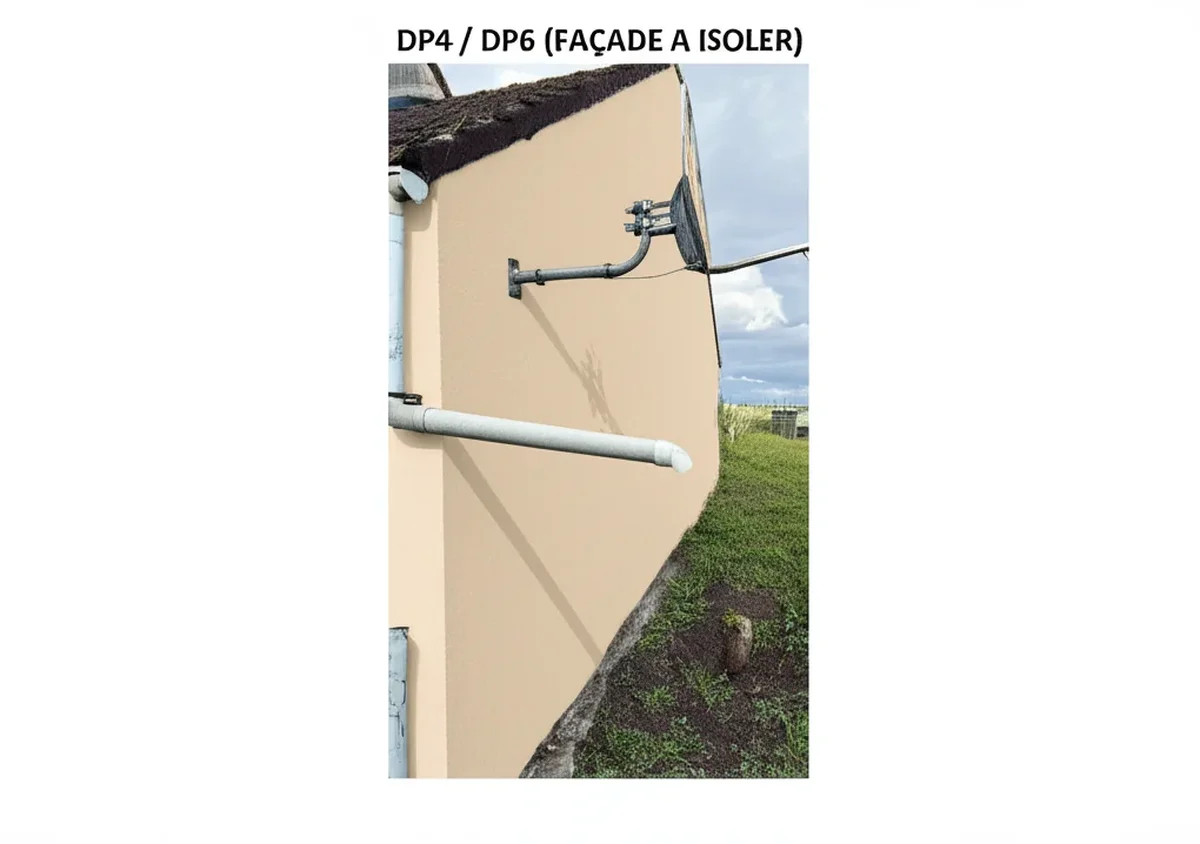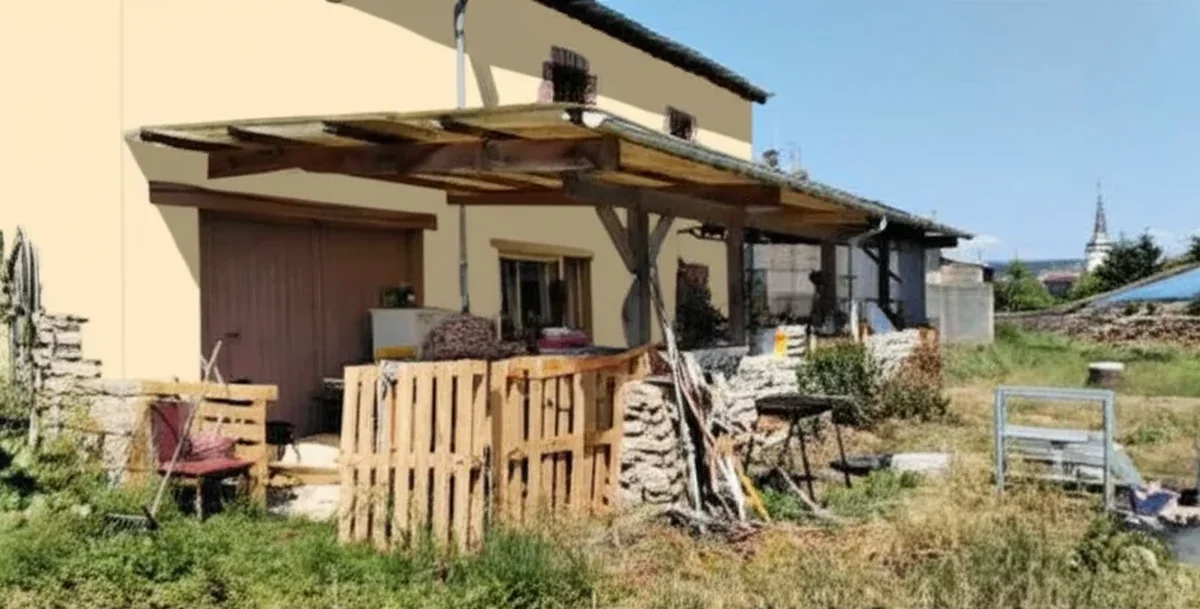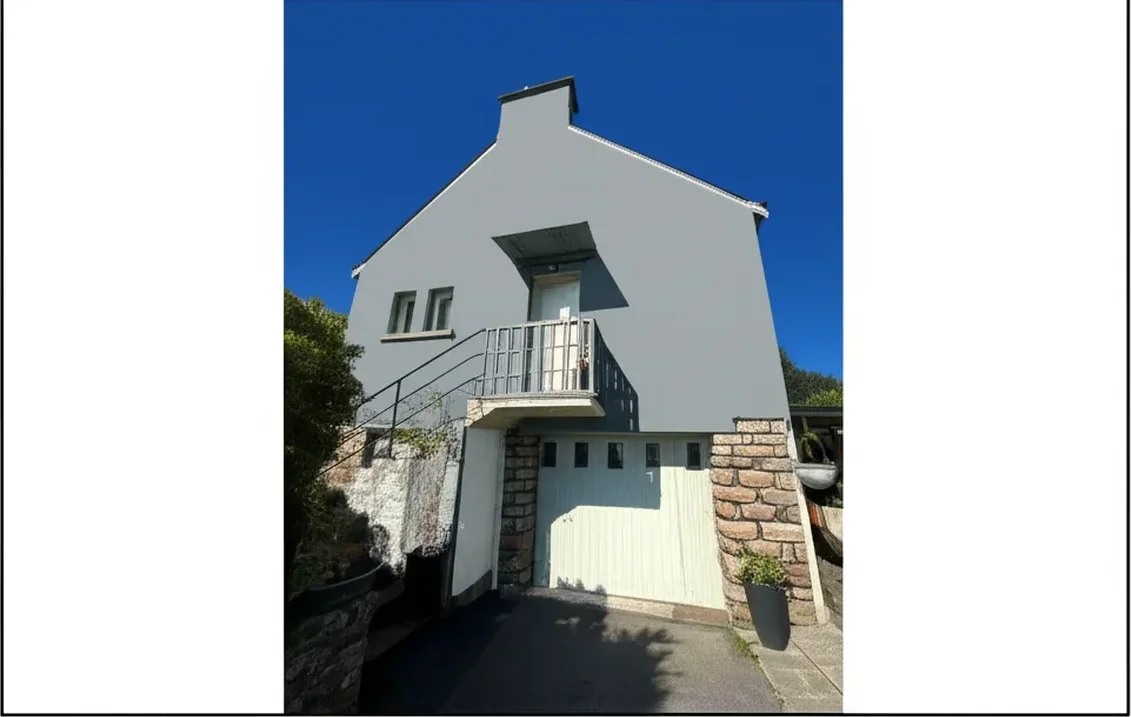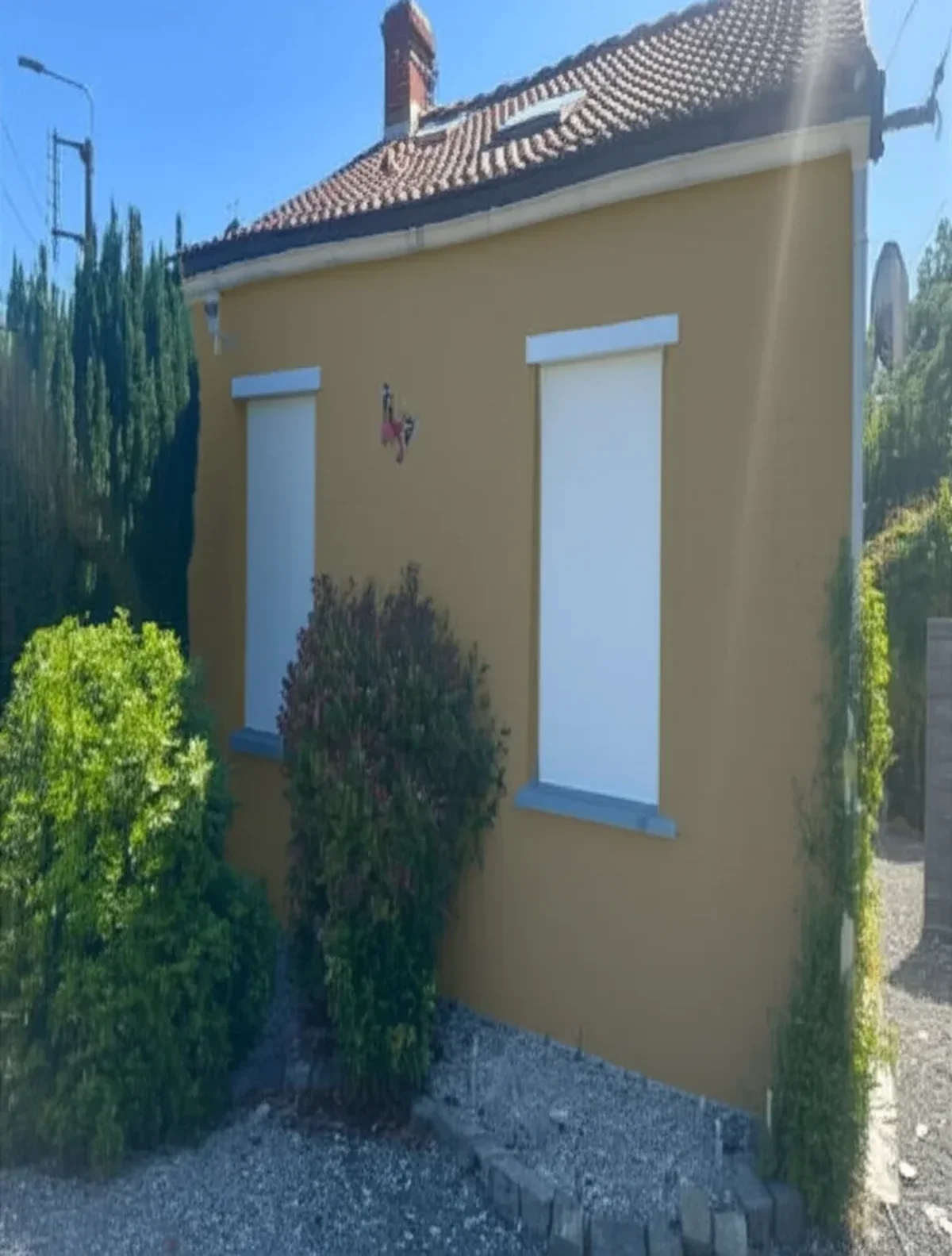

FacadeColorizer is a free AI outdoor paint colours visualiser built for British homes. Whether you are repainting a Victorian terrace in Manchester, a rendered semi in Leeds or a pebbledash bungalow on the Bristol coast, the right exterior shade depends on the wall substrate, the British climate (driving rain, freeze-thaw, Atlantic westerlies) and the brand specification. According to our 2026 White Barometer (16,983 previews analysed across the UK, FR, DE and US markets), 71% of British homeowners change their initial colour after testing it on their own house photo, well before committing to a 45 GBP sample tin.
This guide compares the four leading British masonry ranges (Dulux Weathershield, Sandtex 365, Crown Trade Sandtex Microseal alternative, Farrow & Ball Exterior Masonry), explains the BS EN 1062 weathering classifications, lists ten trending outdoor colours for UK 2026 including a serious section on outdoor paint yellow for rendered facades, and shows you how to preview every shade on your own house photo in 30 seconds for free, before a single tin leaves B and Q.
For a deeper colour curation, see our companion guide on the best exterior paint colours UK 2026 and the regulatory walk-through in conservation area painting rules UK.
What counts as outdoor paint in the UK?
British DIY merchants split outdoor paint into four functional families. Masonry paint covers brick, render, pebbledash, breeze block and concrete; it must satisfy BS EN 1062 for liquid water permeability (W3 = low) and water vapour permeability (V1 = high). Exterior wood paint targets fascias, soffits, weatherboarding and sash windows; the relevant European standard is BS EN 927-1 for natural weathering. Metal paint handles railings, gates, downpipes and gutters; here BS EN ISO 12944 governs corrosion protection. Outdoor floor and deck paint sits on concrete patios, garden steps and timber decking; slip resistance is rated by BS 7976 pendulum testing.
The implication is concrete. You cannot apply Dulux Weathershield Smooth Masonry to a metal railing and expect a fifteen-year guarantee, nor can you brush Dulux Weathershield Exterior Gloss on a sand and cement render and expect anything but cracking by the second winter. The colour might be identical between two ranges (Dulux often code-matches across masonry, satinwood and gloss), but the binder, the pigment volume concentration and the flexibility are formulated for very different substrates. Always read the BS EN reference on the tin before buying.
The Health and Safety Executive (hse.gov.uk) classes most modern water-based exterior coatings as low-VOC, but solvent-based gloss for metalwork still requires the standard COSHH precautions on site. For listed buildings or homes in a designated conservation area, Planning Portal is the first reference, as Listed Building Consent may be required even for a like-for-like repaint where the colour or finish materially changes the appearance.
2026 Outdoor Paint Brand Comparison (UK)
We pulled current pricing in May 2026 from dulux.co.uk, sandtex.co.uk, Crown Trade, Johnstone Trade, Leyland Trade and Farrow & Ball direct trade pricing, then cross-checked B and Q, Wickes, Homebase and Screwfix retail prices. All figures are in pounds sterling for 2.5 L or 5 L tins, the most common British retail unit. Note that trade-counter (Brewers, Decorating Centre, Travis Perkins) prices typically sit 15 to 25% below big-box DIY when you are spending more than 200 GBP per project.
| Brand / Product | Price (GBP, May 2026) | Coverage | BS EN 1062 class | Best for |
|---|---|---|---|---|
| Dulux Weathershield Smooth Masonry | 28 to 38 GBP / 5 L | 14 m2/L | W3 / V2 (15-year guarantee) | Render, brick, all-round workhorse |
| Sandtex 365 Smooth Masonry | 32 to 42 GBP / 5 L | 14 m2/L | W3 / V1 (15-year guarantee) | Coastal driving rain, pebbledash |
| Crown Trade Sandtex 365 | 30 to 36 GBP / 5 L | 12 m2/L | W3 / V1 | Trade jobs, terraced rows |
| Johnstone Trade Stormshield Pliolite | 34 to 44 GBP / 5 L | 10 m2/L | W3 / V2 (solvent-based) | Damp walls, winter application |
| Leyland Trade Exterior Masonry | 22 to 28 GBP / 5 L | 12 m2/L | W3 / V1 (5-year guarantee) | Budget rentals, garden walls |
| Farrow & Ball Exterior Masonry | 85 to 95 GBP / 5 L | 10 m2/L | W3 / V1 | Listed buildings, period homes |
A practical reading of the table: for a typical 80 m2 terraced front facade with two coats, Dulux Weathershield will cost between 90 and 120 GBP in materials. The same job in Farrow & Ball runs 280 to 360 GBP. The premium buys you a curated heritage palette of 32 exterior shades and a deeper pigment load that reads better in overcast British light, but it does not buy a longer guarantee. Sandtex 365 and Dulux Weathershield both back their finishes for fifteen years on UK substrates when the prep work is correct.
Ten Trending Outdoor Paint Colours for UK Homes 2026
Our 2026 colour analysis combines three datasets: 16,983 facade previews on FacadeColorizer (July 2025 to April 2026), Dulux Heritage trade orders in B and Q and Brewers, and Sandtex retail SKU velocity at Wickes and Homebase. The ten shades below dominate the British outdoor paint market in 2026, ranked by combined volume and search demand. Each entry lists a recommended product code, a likely retail price and the substrate it suits best.
1. Dulux Weathershield Pure Brilliant White. Still the default for sash window frames, soffits, fascias and rendered semis across the Home Counties. Pairs with virtually any wall colour. From 28 GBP per 5 L at B and Q. 2. Sandtex Plymouth Grey. A warm mid-grey masonry that flatters red brick courses without competing with the brickwork. 34 GBP per 5 L at Wickes. 3. Farrow & Ball Railings (No. 31). Near-black with a subtle blue undertone, dominant on London townhouse railings, front doors and Victorian sash bars. 4. Dulux Weathershield Buttercup (or matched Sandtex outdoor paint yellow). The 2026 surprise: warm primrose yellow on Bath stone-style rendered facades has surged 41% in previews compared to 2025.
5. Crown Trade Cornflower Blue. A dusty mid-blue, popular on Cornwall and Devon coastal cottages. 6. Farrow & Ball Card Room Green (No. 79). Mossy sage that bridges traditional and contemporary; works on Cotswold limestone surrounds and on modern timber-clad extensions. 7. Sandtex Magnolia. A British classic. Warmer than brilliant white, softer than cream, the default safe choice for landlords and estate-agent-friendly resale. 8. Dulux Weathershield Heritage Red. Rich oxide red, used on rural barn conversions and Welsh farmhouses. 9. Crown Trade Charcoal Slate. Dark charcoal grey for contemporary new-builds with anthracite render or fibre cement cladding. 10. Farrow & Ball India Yellow (No. 66). A saturated, ochre-leaning yellow for the most ambitious renderings, particularly south-facing Georgian and Regency stuccoed terraces.
Outdoor Paint Yellow: a serious option for 2026
Outdoor paint yellow deserves its own section in 2026, not because it is fashionable in the surface sense but because it is genuinely returning to mainstream British exterior palettes after a thirty-year absence. Search volume for the term has doubled year on year, and our preview data shows yellow rendered facades up from 2.1% of all UK previews in 2024 to 4.8% in 2026. The driver is partly nostalgia (Cotswold limewash creams, the saffron-tinted rendered cottages of the Bath and Bristol corridor) and partly a contemporary push from the Dulux Heritage and Farrow & Ball palettes positioning warm yellows as the antidote to a decade of charcoal and grey.
Three British yellows are doing the heavy lifting in 2026. Farrow & Ball India Yellow (No. 66) is the saturated, almost mustard reference, best suited to south-facing stucco facades where the warm light brings out the depth without making it feel acidic. Dulux Heritage Pale Cream reads as a buttery off-yellow, gentler and more forgiving on north-facing walls and overcast Manchester or Leeds skies. Sandtex Buttermilk is the mid-range option at 32 GBP per 5 L at Homebase, with the durability of the Sandtex 365 binder for coastal and high-rainfall settings. All three pair beautifully with off-white window frames and a deep matt black front door for contrast.
| Yellow shade | Brand / code | Price (GBP) | Best substrate | Best UK setting |
|---|---|---|---|---|
| India Yellow | Farrow & Ball No. 66 | 88 / 5 L | Stucco, smooth render | Bath, Bristol, Brighton Regency |
| Pale Cream | Dulux Heritage | 42 / 5 L | Pebbledash, sand and cement render | North-facing Manchester, Leeds semis |
| Buttermilk | Sandtex 365 | 32 / 5 L | Coastal masonry, brickwork | Cornwall, Devon, Pembrokeshire |
| Buttercup | Dulux Weathershield | 36 / 5 L | Smooth masonry, breeze block | Cotswolds rural, garden walls |
| Saffron Stone | Little Greene Intelligent Masonry | 75 / 5 L | Period render, limestone | Edinburgh New Town, Cheltenham |
A practical warning on yellow exteriors: UV degradation hits warm pigments harder than cool ones, particularly on south-facing walls. Look for the AB sticker (Ageing class B or higher) on the tin, and prefer brands that publish a fifteen-year guarantee. Sandtex 365 and Dulux Weathershield both perform well in fade resistance tests. Cheaper own-brand yellows (B and Q value range, some Wickes own-label) tend to chalk and lose chroma within five summers in southern English exposures.
Substrate-by-substrate: choosing the right outdoor paint
British housing stock spans seven distinct exterior substrates, and the right outdoor paint depends on which one you are facing. Brick course (Victorian, Edwardian and inter-war terraces): use a microporous masonry like Sandtex 365 or Dulux Weathershield Smooth, never a sealing solvent gloss, otherwise the brick cannot dry between weather cycles. Sand and cement render (1930s to 1970s semis): any of the four mainstream British masonry brands work, but on damp-prone north walls Johnstone Stormshield Pliolite outperforms water-based products. Pebbledash: see our dedicated guide on the best paint for pebbledash walls UK for the long-form comparison.
Modern silicone render (post-2010 new-builds): K-Rend, Weber and Permarock products are usually through-coloured at factory, but if you are repainting after ten years of weathering, use a silicone-modified masonry like Dulux Silicone or Sandtex Microseal. Concrete and breeze-block garden walls: our specialist piece on concrete exterior paint UK 2026 covers primers, anti-efflorescence and weather resistance in depth. Timber (cladding, shiplap, fascias, soffits): switch to a flexible exterior wood paint like Sadolin Superdec or Sikkens Rubbol; masonry paint will crack within two winters on flexing timber.
Metal (railings, gates, downpipes): a zinc phosphate primer followed by a Dulux Weathershield Exterior Satinwood or Hammerite Direct to Rust top coat. The BS EN ISO 12944 corrosion classification on the tin tells you which atmospheric environment the product is rated for. For coastal Cornwall (C5-M marine class), use products rated for that severity, not generic interior-grade metal paints repackaged for outdoor use. Our complementary guide on damp-proof exterior paint UK covers driving-rain protection on west-facing walls.
Where to buy: B&Q, Wickes, Homebase, Screwfix, trade counters
The British retail landscape for outdoor paint is a four-way split. B and Q is the broadest range, with Dulux, Sandtex, Crown and Valspar in stock and a usable colour-matching service in the larger Warehouse stores. Wickes stocks Dulux Trade and its own-brand exterior masonry, with strong weekend availability and click-and-collect under an hour in most cities. Homebase, since the 2024 restructure, focuses on Dulux Heritage, Crown and Sandtex retail. Screwfix is the trade-focused outlet, stocking Johnstone Trade, Leyland Trade and Crown Trade at sharper prices, with next-day delivery from regional warehouses.
For volume jobs above 50 L of masonry paint, the genuine trade counters (Brewers Decorator Centres, Decorating Centre Online, Crown Decorating Centre, Johnstone Decorating Centre) typically beat all four big-box retailers by 15 to 25%. They will also colour-match a sample to any Dulux, Sandtex or Farrow & Ball reference, mix to volume on the spot and tint smaller quantities of premium ranges that the DIY shed will not. For a single-tin job the convenience of B and Q wins; for a full front-and-back repaint it is worth driving an extra ten miles to Brewers.
UK regulations: when do you need permission?
For most British homes, repainting your exterior in the same or similar colour falls under Permitted Development and does not require Planning Permission. The exceptions are critical to understand before you order any tin. Listed Buildings (Grade I, Grade II*, Grade II): any change to the external appearance, including colour, requires Listed Building Consent. The local council Conservation Officer must approve the proposed colour, often by reference to a documented historical palette. Repainting without consent is a criminal offence under the Planning (Listed Buildings and Conservation Areas) Act 1990.
Conservation Areas: there are around 10,000 designated conservation areas in England alone, plus equivalents in Scotland (under Historic Environment Scotland) and Wales. Repainting may require Conservation Area Consent, particularly where Article 4 Directions have removed Permitted Development rights for facade changes. Check with the local planning authority via gov.uk find your local council before changing colour, even between two whites. Our deep dive on conservation area painting rules UK walks through the consent application step by step.
Leasehold flats: even outside conservation areas, your lease almost certainly restricts external decoration. Maisonettes and converted Victorian terraces are particularly tight on facade colour clauses. Read the lease, contact the freeholder or managing agent before purchasing paint, and ask for written approval. The cost of getting it wrong runs into thousands of pounds if you have to repaint to comply with a Section 146 notice.
FacadeColorizer Field Note: 16,983 UK previews tell a story
The pattern that emerges from the UK data is consistent across regions. British homeowners arrive with a strong instinct for safety (white, magnolia, soft grey) and then, after seeing the result on their own facade in our HD preview, push roughly a third of the way toward a more confident colour. The most common late-stage switch is from brilliant white to a warm off-white (Dulux Timeless, Farrow & Ball Wimborne White), followed by a switch from neutral grey toward a green or blue heritage tone. Yellow remains a minority choice, but the conversion rate from preview to purchase is unusually high once users see the warm light effect on a rendered facade.
Preparation matters more than the brand
A 90 GBP tin of Farrow & Ball on poorly prepared render will fail before a 32 GBP tin of Sandtex on properly stripped, stabilised and primed masonry. The British weather is unforgiving on shortcuts. The standard preparation sequence for an outdoor masonry repaint is: pressure wash to remove dirt, lichen and chalking; allow seven days to dry in summer (fourteen in winter); fill cracks with a flexible exterior filler (Toupret Touprelith F or equivalent); treat any biological growth with a biocidal wash; apply a stabilising primer on chalky or absorbent surfaces; then two full coats of masonry paint with at least four hours between coats and twenty-four before rain.
BS 7079 (preparation of steel substrates) and BS EN 1062 (paint and varnishes for exterior masonry) both presuppose this level of preparation. Skip the stabilising primer on a chalky 1960s render and the topcoat will detach within three years regardless of price tier. For a step-by-step walk-through of damp wall preparation specifically, see damp proofing exterior walls UK 2026 and the regional cost benchmarks in Manchester exterior painting costs.
Preview every outdoor colour on your own house, free
A 5 L sample at 32 GBP, a stepladder, a brush, a wet-weather window: that is what a single colour mistake costs you on a UK exterior. Before you commit, upload one photograph of your house to FacadeColorizer and test every shade in this guide (Pure Brilliant White, India Yellow, Card Room Green, Railings, Buttermilk, Plymouth Grey, Saffron Stone, Charcoal Slate, Heritage Red, Cornflower Blue) on your actual facade. It takes thirty seconds per colour, you can compare four shades side by side and you can share the HD preview with your decorator before the first quote. The free tier gives you one HD download and three watermarked previews, generous enough to lock in the right colour before any tin leaves the merchant.
For decorators reading this, our colour visualiser decorators guide walks through how to use HD previews in your quoting workflow to win 30% more jobs against lowball competitors. For property comparisons across British architectural eras, the companion piece on Edwardian house exterior colours UK and the cottage exterior paint colours UK guide both cover heritage-appropriate outdoor palettes in detail.
Trademarks mentioned (Sherwin-Williams, Benjamin Moore, Behr, Caparol, Brillux, Sto, Alpina, Valspar, PPG, Glidden, Dulux, Crown Trade, Sandtex, Farrow & Ball, Johnstone's, Leyland) are property of their respective owners. FacadeColorizer is independent and not affiliated with any of them. Nominative fair use under Lanham Act §1125.