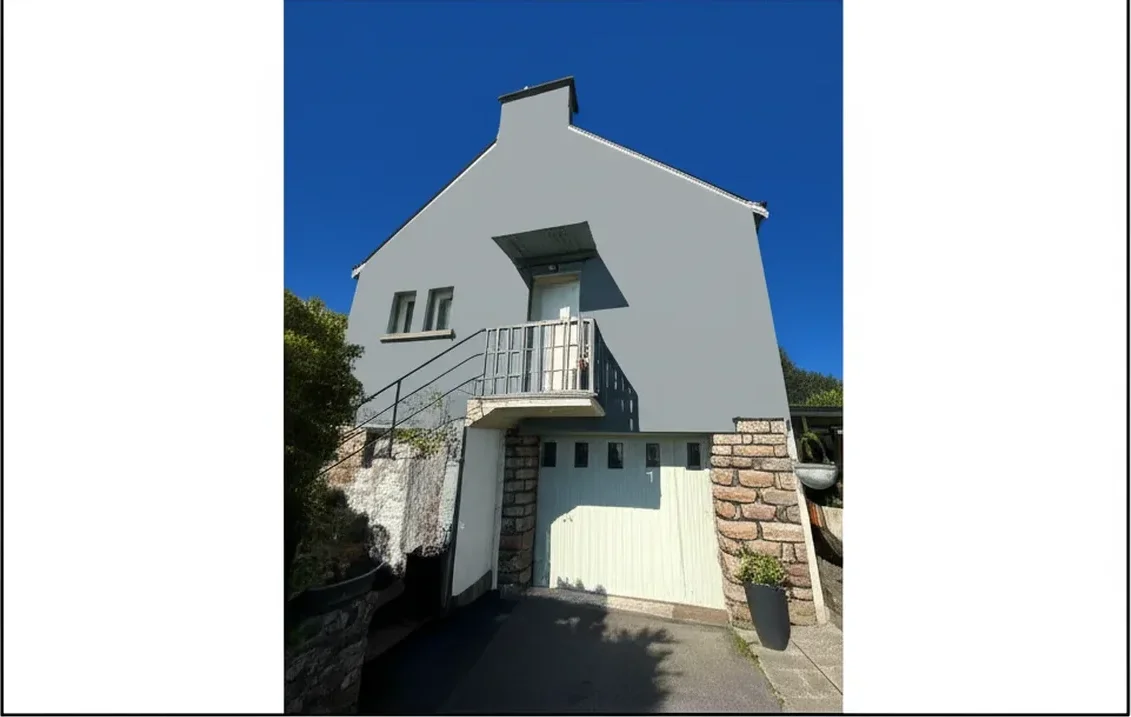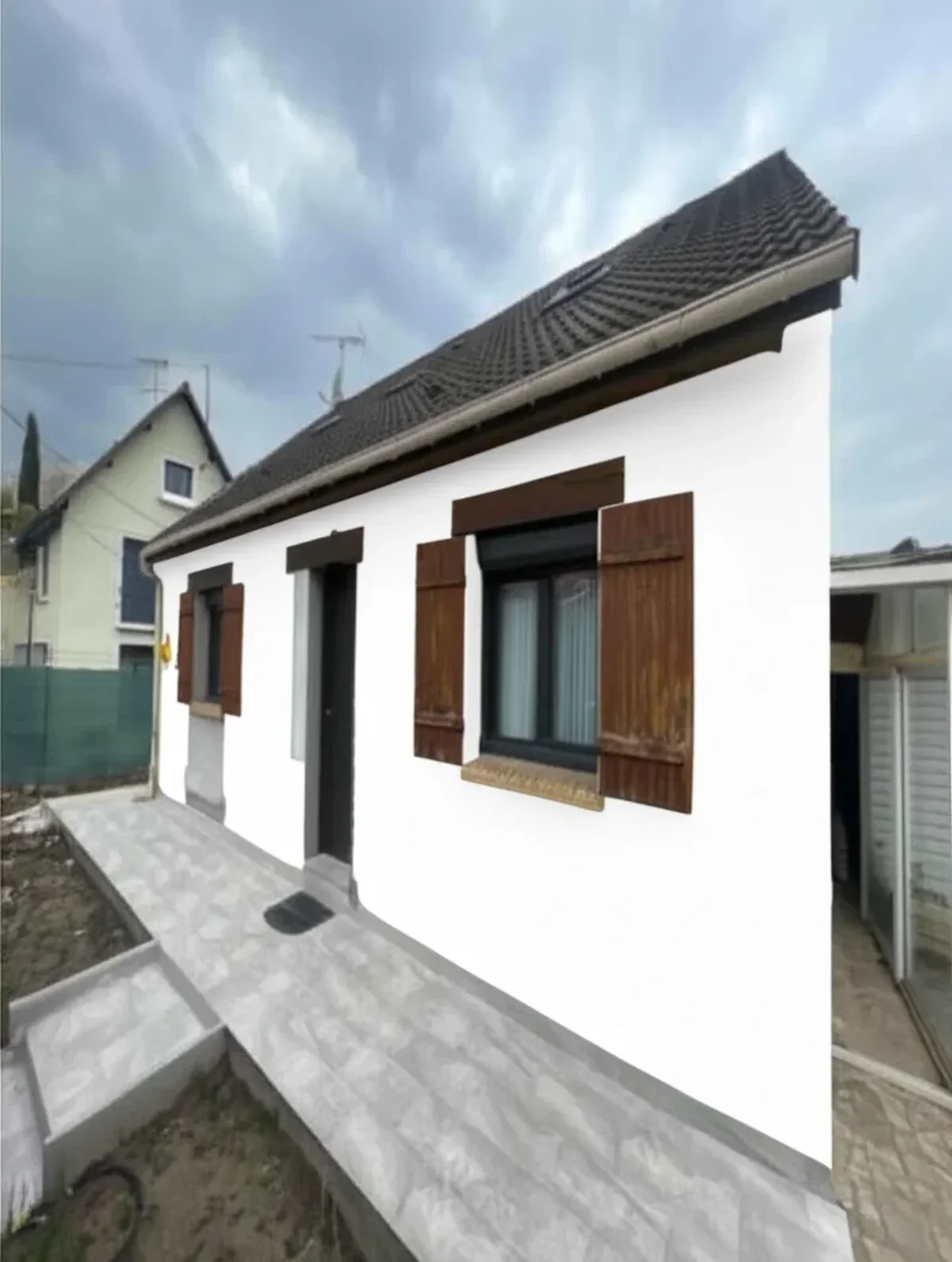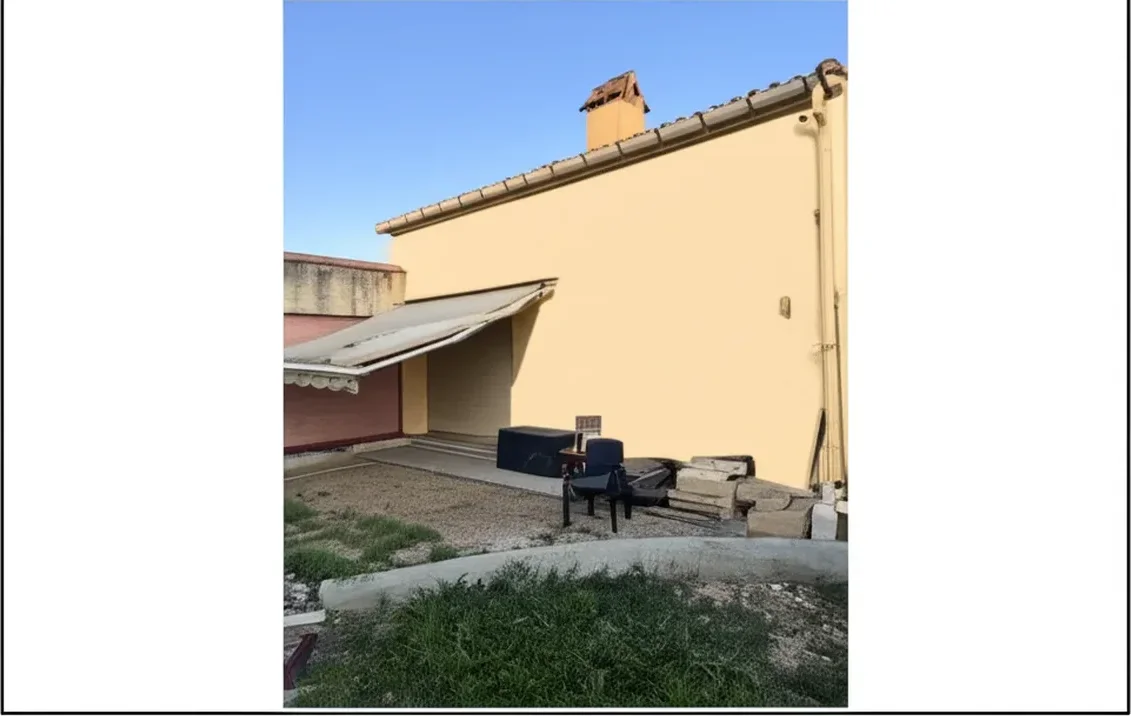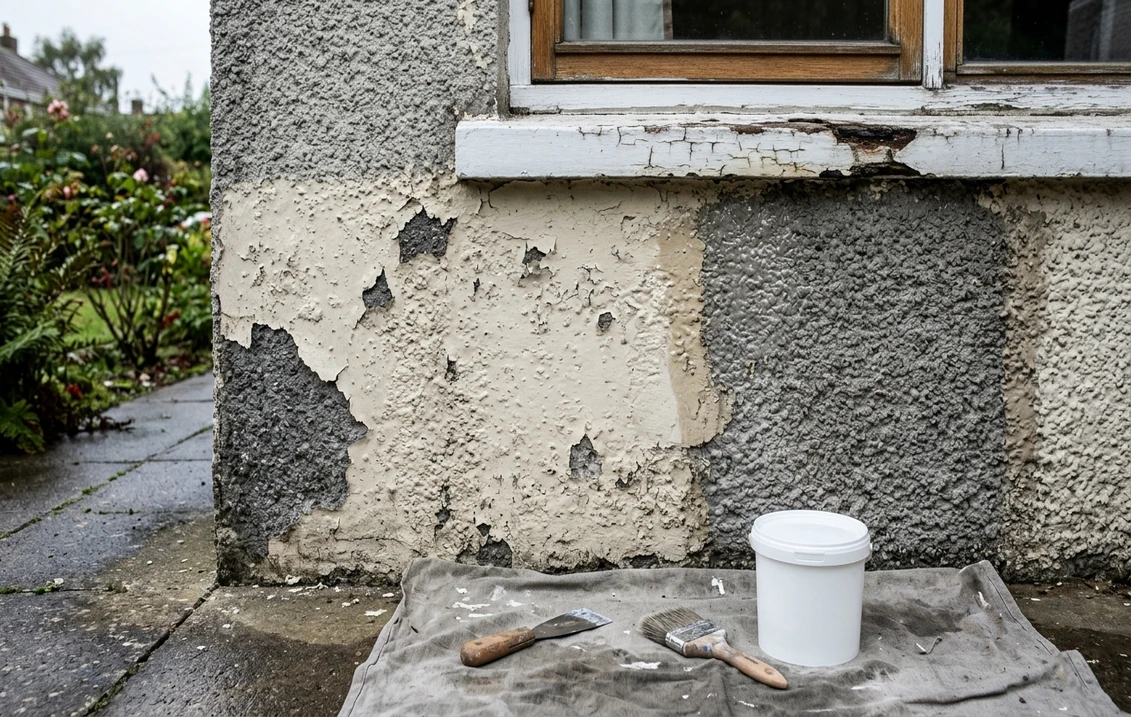
Try it on your house

Zinsser Peel Stop, as sold in the UK, is a clear, water-based binding primer for old paint that is flaking, chalking or cracking on masonry, render, brick and painted timber. You scrape off the loose paint and sand the edges first; Peel Stop then soaks into the gaps left under the remaining edges and glues them down. The UK data sheet gives 7.4 to 9.8 m² per litre, touch dry in one hour, recoat in two, and application only when air and surface are between 10°C and 32°C with humidity below 80%. It is a primer for a failing paint system, not a cure for damp.
The product facts below come from the Zinsser UK product page, its technical data sheet and its guide to flaking paint, read on 11 November 2026, and the prices from two UK retailers on the same day. Our own calculations are labelled as such. We did not apply the product for this page.
Choose the finish colour while the wall is being prepared
Peel Stop dries clear, so the colour is the topcoat's job. Try masonry paint shades on a photo of your house before you buy the tins.
Try colours on my houseThe Peel Stop sold in the UK is the clear one
The Zinsser UK product page calls Peel Stop a "problem surface sealer": a flexible paint sealer for surfaces where peeling, flaking, dusting or chalking is a problem, indoors or out. It dries clear, tinting is not recommended, and it comes in 1 litre, 2.5 litre and 5 litre tins. The UK technical data sheet, linked from that page, names Tor Coatings Ltd as the company that makes and markets Zinsser in the UK.
A search for the name also brings up American pages about Peel Stop Triple Thick, a different product that dries white. Rust-Oleum's Triple Thick data sheet (PST-01) describes a thick acrylic that can be thinned for a first coat over severe peeling. The UK sheet says do not thin. For a tin bought in Britain, follow the UK sheet.
| Figure | Peel Stop, Zinsser UK sheet | Triple Thick, US sheet PST-01 |
|---|---|---|
| Dries to | Clear, slight sheen | White |
| Coverage | 7.4 to 9.8 m² per litre | 50 to 200 sq ft per US gallon |
| Air and surface temperature | 10°C to 32°C | 4°C to 32°C |
| Humidity | Less than 80% | Not greater than 85% |
| Thinning | Do not thin | 10% water on a first coat over severe peeling |
| Touch dry / recoat | 1 hour / 2 hours | 30 minutes / 2 hours |
Try it on your house
No photo? Try a sample
The UK figures match Rust-Oleum's American Clear Binding Sealer sheet (PST-02) on coverage and on the 10°C to 32°C window, so our reading is that the UK tin is the clear version. Even then the UK sheet is stricter on humidity (80% against 85%) and slower to touch dry (one hour against 30 minutes).
What Zinsser Peel Stop is good for
The UK sheet recommends it for problem interior and exterior painted surfaces that show chalking, alligatoring, cracking, flaking and peeling. It glues down the edges of old coatings, seals and bridges cracking and checking, binds chalky surfaces, and stays flexible and breathable. Over crazed paint it acts as a flexible bridging primer that stops the finish coat from cracking. Its list of surfaces is written in American terms; the right-hand column below is our reading for a British house.
| British surface | What the UK sheet says | Our reading |
|---|---|---|
| Painted render | Masonry walls, including stucco | Covered: "stucco" is the American word closest to render |
| Painted pebbledash or roughcast | Not named; masonry walls are listed | Treat as masonry; expect the low end of the spread rate |
| Painted brick, blockwork, concrete | Brick, concrete block, cured concrete | Covered |
| Sash windows, doors, fascias, cladding, fences | Previously painted windows, doors, trim, wood siding and fences | Covered once loose paint and loose fibres are off |
| Gutters and downpipes | Metal gutters and downspouts; the product page adds galvanised gutters | Covered for metal; cast iron is not named |
| Decks, steps, anything that stays wet | Not for floors, exterior decks or surfaces in prolonged contact with water | Not suitable |
Indoors, the product page sends bare plaster to Zinsser Gardz instead, and our guide to paint bubbling and peeling on interior walls and ceilings covers rooms and condensation. For the masonry paints that go on top of pebbledash, see our guide to paint for pebbledash.
Does Zinsser Peel Stop really work?
It does what the sheet says, under the conditions the sheet sets. Even after scraping and sanding, tiny cracks and gaps remain under the edges of the old paint. Peel Stop seeps into them, glues them down and, in the sheet's words, forms a tight bond that helps stop future peeling. It also binds chalky residue.
The limits are just as plain. Peel Stop is not a substitute for proper surface preparation, and it is not for surfaces where paint fails because of chronic or excessive moisture getting in. The sheet says to repair any source of moisture before repainting, and warns that ongoing failure may require complete removal of the existing coating system. Zinsser UK's guide to fixing flaking paint names the usual causes: poor preparation, moisture, the wrong paint for the surface, and leaks. Our guides to damp-proofing exterior walls and rising damp treatment costs deal with the water side.
The warranty follows the same logic: Peel Stop is guaranteed to perform as claimed when applied by the label directions to a properly prepared surface, and claims are limited to refund or replacement of the product. We have not found an independent test of it on British masonry, so the sheet is the evidence.
Is Zinsser Peel Stop just PVA glue?
Zinsser does not describe it as PVA in any document we read. The UK sheet gives the type as "vinyl resin, water-based, clear", the product page says it forms a tough acrylic film, and the American clear sheet says vinyl acrylic copolymer. None of them says polyvinyl acetate.
What you pay for is a set of stated properties for outdoor use: a spread rate, a 10°C to 32°C window, flexibility and breathability, crack bridging, chalk binding, a two-hour recoat, a VOC content of 30 g/l at most, and the statement that any water-based or alkyd primer or paint can go over it. If you are weighing it against a tub of PVA from the shed, read that tub's label for the same things. That comparison is ours; no maker we read sets the two side by side. It is not a filler either: the product page and the guide both put filling after Peel Stop, once it is dry.
Preparing render, brick and timber
The UK sheet calls thorough preparation very important. With the how-to guide, the order is:
- Find the water. Fix any source of moisture first, as the limitations section requires.
- Check for lead on older paintwork before anyone scrapes (see below).
- Scrape all poorly adhered paint. The guide warns that loose paint left behind can cause further peeling.
- Sand the edges with medium-grit paper, 120 to 150 in the guide. The sheet adds: lightly sand exposed wood and dull glossy painted areas.
- Clean off dust, dirt, grease and mould, then let the surface dry completely.
- Spot prime the scraped areas. One coat is usually enough; very porous surfaces may need a second, and so do dull spots.
On joinery, the job ends in an exterior paint system rather than masonry paint: our guide to painting exterior window frames covers sash windows, and our exterior primer guide covers bare wood, metal and new render, where a binding primer is the wrong tool.
Applying it in British weather
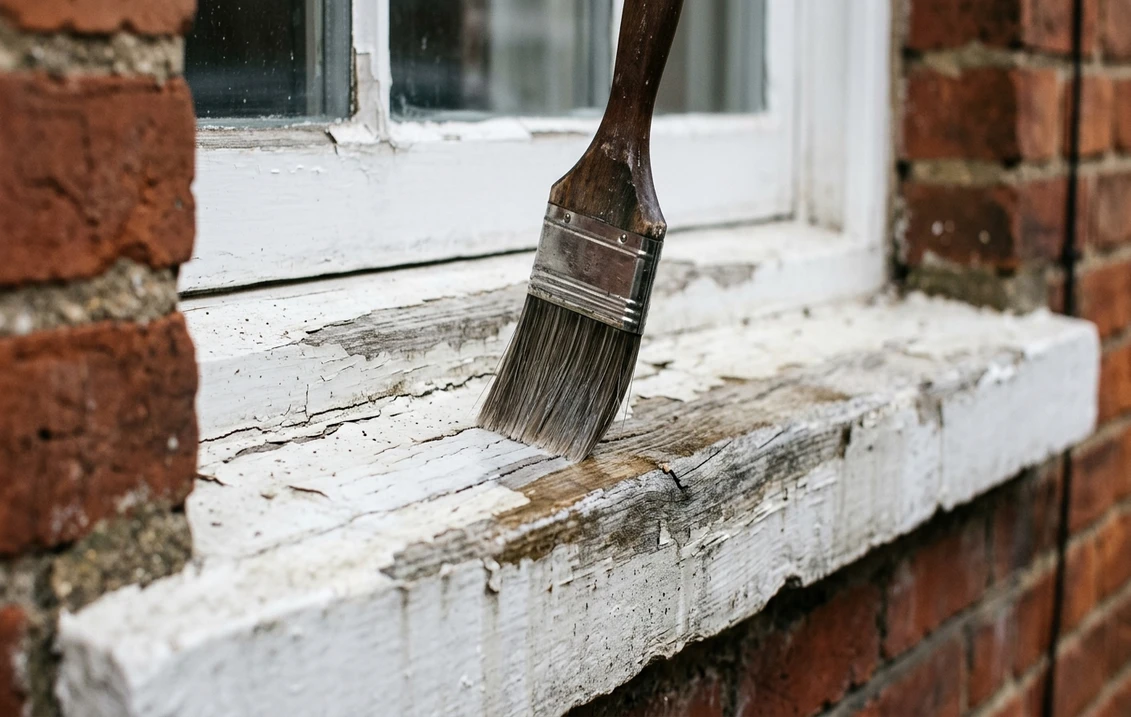
Shake or stir well and do not thin. Apply by brush, roller or airless sprayer, then back-brush or back-roll it into cracks and paint edges, using synthetic bristles: the sheet does not recommend natural bristle. A proper coat dries to a slight sheen.
The weather rules are stricter than for many masonry paints. Air and surface must both be between 10°C and 32°C, with humidity below 80%. If conditions do not allow prompt drying, leave it overnight before priming or painting, and do not apply it if rain is expected before the next coat can go on. Sandtex sets 8°C on its Microseal Smooth masonry paint, so on a job using both, the primer sets the start date.
How often does a British day reach 10°C? From the Met Office UK climate series (HadUK-Grid, whole-country averages), we calculated the 1991 to 2020 monthly means:
| Month | UK mean daily maximum | Days with 1 mm of rain or more | Average afternoon above 10°C? |
|---|---|---|---|
| October | 13.1°C | 14.8 | Yes |
| November | 9.4°C | 15.8 | No |
| December | 7.0°C | 15.6 | No |
| January | 6.7°C | 15.4 | No |
| February | 7.2°C | 13.2 | No |
| March | 9.2°C | 12.7 | No |
| April | 12.0°C | 11.6 | Yes |
On those averages, a typical UK afternoon stays under the 10°C floor from November to March, the months with the most rain days. Averages hide local weather, and the sheet asks for the surface temperature as well as the air, so check the wall itself, not only the forecast. Our guide to the minimum temperature for painting outside in the UK sets the main masonry paints against the same record. The tin itself should be stored indoors between 4°C and 27°C and kept from freezing, which rules out an unheated shed in January.
How much to buy, and what it costs in 2026
The sheet gives 7.4 to 9.8 m² per litre and says the spread rate depends on porosity and application method. Plan on the low figure for pebbledash, roughcast and porous brick. The table is our calculation, for one coat.
| Tin | Area, one coat | Price on 11 November 2026, inc. VAT | Cost per m² |
|---|---|---|---|
| 1 litre | 7.4 to 9.8 m² | £12.79 at Toolstation | £1.31 to £1.73 |
| 2.5 litres | 18.5 to 24.5 m² | £27.79 at Toolstation, £28 at Wickes | £1.13 to £1.51 |
| 5 litres | 37 to 49 m² | No price at these two retailers | Not calculated |
The prices come from the Toolstation 1 litre, Toolstation 2.5 litre and Wickes 2.5 litre listings: a dated observation, not a price guide. Because the sheet says to spot prime the scraped areas, most jobs need less than the whole wall. Two examples, our calculation:
- Patches on a rendered front: 15 m² of scraped areas need 1.5 to 2.0 litres. One 2.5 litre tin covers it.
- A whole 60 m² elevation failing everywhere: 6.1 to 8.1 litres. Before buying that much, read the sheet's warning about complete removal.
Budget for the coats on top too. For a whole house, our exterior house painting cost guide sets out what a decorator charges for the full job.
Can you paint directly over Peel Stop?
Yes. The product page says that once the surface is dry and the preparation done, you apply your topcoat as usual: Peel Stop dries in one hour and can be recoated in two. Material that has seeped under paint edges or into small cracks may take longer to dry than the surface film.
The sheet allows any water-based or alkyd primer or paint over it. Because Peel Stop is clear, Zinsser recommends priming with Bulls Eye 1-2-3 or Cover-Stain first, then a quality water-based or alkyd paint "to assure optimum results". So painting straight over it is allowed, and a primer coat is what Zinsser recommends. On masonry, follow the masonry paint's own first-coat instructions; our masonry paint guide compares the main ranges. On timber, see our Zinsser AllCoat guide. The sheet's full cure time is 7 to 10 days, but the figure it gives for painting over is the two-hour recoat.
Peel Stop or a stabilising solution for chalky masonry?
On masonry, Peel Stop overlaps with the stabilisers sold by masonry paint brands, since all of them deal with chalk. Wipe a dry hand across the wall: if it comes away white or coloured, the old paint is powdering.
| Product | What the maker says it is for | Base | Coats and drying | Sizes |
|---|---|---|---|---|
| Zinsser Peel Stop | Peeling, flaking, chalking and cracking paint on masonry, timber and metal gutters | Water-based | Usually 1 coat; recoat 2 hours | 1 L, 2.5 L, 5 L |
| Sandtex Quick Dry Stabilising Solution | Seals and stabilises chalking and weathered surfaces | Not stated on the page | 2 coats; recoat 4 hours | 2.5 L |
| Sandtex Trade SB Stabilising Solution | Chalky surfaces on most exterior masonry and building boards | Solvent-based | 1 coat; touch dry 16 hours | 5 L |
| Dulux Trade Weathershield Stabilising Primer | Areas that stay powdery and chalky after preparation; not for sound surfaces | Solvent-based | Up to 10 m² per litre; recoat 16 to 24 hours | 5 L |
The figures come from the Sandtex Quick Dry and Trade SB pages and the Dulux Trade Weathershield Stabilising Primer page, which adds that sound bare surfaces should only be sealed with a thinned first coat of the masonry paint itself.
Our reading, not a test: on render that is chalky all over but not lifting, the masonry stabilisers are written for exactly that job. Peel Stop's case is paint lifting at the edges after scraping, or a job that mixes masonry with painted sills, fascias and gutters, where one water-based product with a two-hour recoat covers all of them. None of the four stops damp. Our masonry primer guide compares the stabilising primers brand by brand, and our exterior concrete paint guide covers powdery concrete.
Old paint on older houses: lead comes first
Every Peel Stop job starts with scraping, and on an older British house that is the risky step. The UK sheet does not mention lead. The Health and Safety Executive's page on lead as a construction hazard says lead pigments were widely used in paints for homes until the 1960s and were not removed from all commonly used paint until the early 1980s. Its controls for old leaded paint:
- Strip old paint only if it is flaking, chipping, giving off dust or a risk to children.
- Use wet abrasive paper and a scraper to keep dust down.
- No blow lamps or gas torches; keep hot air guns below 500°C.
- Wear respiratory protection with an assigned protection factor of 20, such as an FFP3 mask or a half mask with a P3 filter.
The HSE page is written for construction work, but the methods apply to anyone scraping a Victorian sash. Peel Stop suits the low-disturbance route: remove what is loose, glue down the rest.
See the finish colour before you buy it
Peel Stop decides whether the new paint stays on, not what colour it is. Our paint visualiser shows a masonry paint colour on a photo of your own house, so you can shortlist shades while the wall dries out. It shows colour only, not primer or the state of the old paint, so confirm with testers in daylight.
Pick the masonry paint colour on your own photo
Upload a picture of your house and compare shades on the render or brick you are repairing, before the first tin is opened.
Upload a photo of my houseSources and references
- Zinsser UK, Peel Stop product page: description, uses, sizes, coverage, drying and cure times, and the answers on painting over it, filling and bare plaster. Read on 11 November 2026.
- Zinsser UK (Tor Coatings Ltd), Peel Stop technical data sheet (PDF): type, substrates, preparation, application conditions, thinning, coverage, VOC, storage, limitations and warranty.
- Zinsser UK, How to fix flaking paint: the scrape, sand, clean, prime sequence and the causes of flaking.
- Rust-Oleum, PST-01 Triple Thick and PST-02 Clear Binding Sealer data sheets: the American versions.
- Sandtex, Quick Dry Stabilising Solution, Trade SB Stabilising Solution and Microseal Smooth: uses, coats, drying, sizes and the 8°C floor.
- Dulux Trade, Weathershield Stabilising Primer: purpose, base, coverage and recoat time.
- Met Office, UK and regional series: UK mean daily maximum and rain days series, for our 1991 to 2020 means.
- Health and Safety Executive, Construction hazardous substances: lead: lead in old paint and the controls.
- Toolstation (1 L, 2.5 L) and Wickes (2.5 L): shelf prices on 11 November 2026, a dated observation only.
Frequently asked questions
Does Zinsser Peel Stop really work?
What is Zinsser Peel Stop good for?
Can I paint directly over Zinsser Peel Stop?
Is Zinsser Peel Stop just PVA glue?
How far does a tin of Peel Stop go?
What is the minimum temperature for applying Peel Stop outside?
Trademarks mentioned (Sherwin-Williams, Benjamin Moore, Behr, Caparol, Brillux, Sto, Alpina, Valspar, PPG, Glidden, Dulux, Crown Trade, Sandtex, Farrow & Ball, Johnstone's, Leyland) are property of their respective owners. FacadeColorizer is independent and not affiliated with any of them. Nominative fair use under Lanham Act §1125.