
KILZ Adhesion High-Bonding Interior/Exterior Latex Primer (Product No. L2111) is a water-base modified-acrylic bonding primer engineered to grip slick, glossy, and non-porous surfaces that reject ordinary drywall or multipurpose primers. Inside the house, its primary job is creating a tenacious anchor coat over glossy painted cabinets, Formica laminate, melamine, dry ceramic wall tile, PVC trim, fiberglass, glass, glazed brick, and polished metals while reducing or eliminating heavy mechanical sanding.
At standard ambient conditions (77°F and 50% relative humidity), KILZ Adhesion L2111 covers 300 to 400 square feet per gallon, dries to the touch in roughly 30 minutes, and is ready for a water-based topcoat in 1 hour (or 24 hours before hot solvent-based coatings such as epoxies or lacquers). With VOC levels under 100 g/L and soap-and-water cleanup, it offers an occupied-home workflow that solvent-based primers cannot match. This technical guide breaks down its exact specifications, substrate limits, degreasing protocol, coverage math, indoor air quality rules, and how it compares directly with Sherwin-Williams Extreme Bond Primer and Zinsser B-I-N Shellac-Base Primer.
Upload a photo of your kitchen or bath and test finish colors on your cabinets before buying primer and enamel.
KILZ Adhesion Primer (L2111) technical specifications at a glance
Bonding primers do not behave like high-build PVA drywall sealers. On a porous wallboard, primer sinks into paper fibers to create mechanical lock. On laminate, glass, or glossy alkyd trim, there are virtually no pores to penetrate, so adhesion depends on resin chemistry, wet-out behavior, and film thickness. The technical data for KILZ Adhesion L2111 shows why it is formulated specifically for smooth, low-energy substrates.
| Technical parameter | KILZ Adhesion High-Bonding Primer (L2111) | Practical impact on interior jobs |
|---|---|---|
| Resin chemistry | Water-base modified-acrylic | High-grip polymer bond without harsh solvent fumes |
| Coverage rate | 300 to 400 sq. ft. per gallon | Slick surfaces yield closer to 350 to 400 sq. ft.; textured substrates closer to 300 |
| Dry to touch (77°F / 50% RH) | Approximately 30 minutes | Fast dust-free window on vertical cabinet doors and trim |
| Dry to recoat (77°F / 50% RH) | 1 hour (24 hours for hot solvent topcoats) | Same-day waterborne topcoating; full overnight wait before epoxies or lacquers |
| VOC content | < 100 g/L | Low-VOC profile suitable for occupied kitchens, baths, and hallways |
| Solids by volume / weight | 42% (+/- 2%) volume; 58% (+/- 2%) weight | Substantial resin body that bridges micro-scratches and builds uniform opacity |
| Viscosity | 93 to 100 KU | Creamy, controlled body that resists sagging on vertical doors and tile |
| Film thickness per coat | 4.0 to 5.3 mils wet / 1.7 to 2.2 mils dry | Thick enough for reliable chemical grip without flooding panel profiles |
| Application temperature | 50°F to 90°F (10°C to 32°C) | Avoid cold basements or unheated garages below 50°F |
| Cleanup | Soap and water | No denatured alcohol, mineral spirits, or ammonia required |
Try it on your room
- 1Your photoPhoto
- 2Your colorColor
- 3HD render in ~30 sHD render in ~30 s
Your photo is used only to create your preview. JPG, PNG, HEIC (iPhone)
Two numbers in that specification sheet deserve extra attention: volume solids and dry film thickness. At 42% (+/- 2%) solids by volume and 58% (+/- 2%) by weight, KILZ Adhesion leaves behind a substantial 1.7 to 2.2 mils of cured modified-acrylic film when applied at the target 4.0 to 5.3 mils wet. If a painter over-rolls the primer too thin (stretching a gallon past 500 square feet), the dry film drops below its designed thickness and loses cohesive strength. Conversely, piling on heavy coats above 6 mils wet slows moisture evaporation and can cause soft spots or drips on vertical cabinet stiles.
Which slick interior surfaces KILZ Adhesion bonds to (and where not to use it)
Knowing the exact substrate boundaries prevents peeling callbacks. KILZ Adhesion L2111 is engineered for hard, glossy, non-porous surfaces across kitchens, bathrooms, laundry rooms, and millwork. For a broader overview of priming and topcoating non-standard materials across the home, see our specialty surface painting guide. Below is how L2111 performs on each common interior substrate.
| Interior substrate | Suitability with KILZ Adhesion | Key preparation and performance notes |
|---|---|---|
| Glossy painted woodwork and cabinets | Recommended | Degrease cooking oils thoroughly; light scuff-sand improves edge durability on high-touch doors |
| Formica, plastic laminate and melamine | Recommended | Zero porosity requires a clean, wax-free surface; allow full cure before heavy kitchen use |
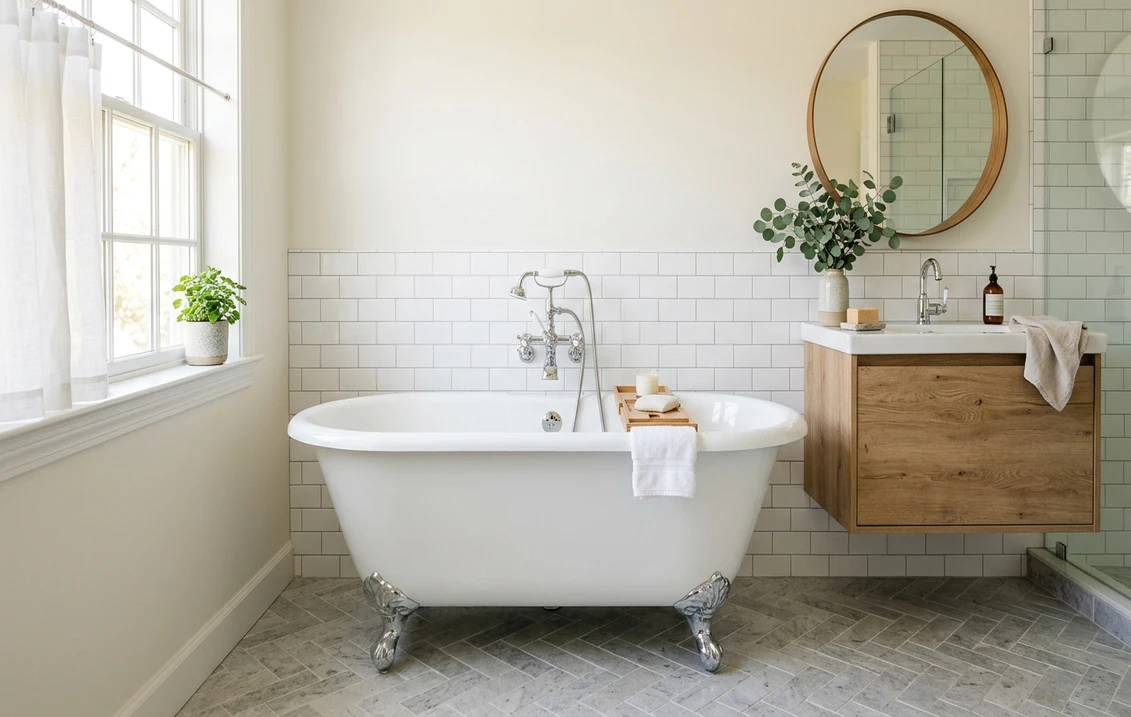
| Ceramic wall tile and backsplashes | Recommended (dry zones only) | Ideal for kitchen backsplashes and dry bathroom walls; never use on submerged shower floors or tubs |
| PVC trim, vinyl and fiberglass | Recommended | Remove factory mold-release agents with a degreaser before priming |
| Glass, glazed brick and Kynar | Recommended | Clean with glass cleaner or alcohol-based wipe, let flash dry, apply even 4 to 5 mil wet coat |
| Polished interior metals | Recommended (non-rusted) | Degrease completely; bare ferrous steel prone to rust still needs a rust-inhibitive metal primer |
| Submerged shower floors, tubs and sinks | Not recommended | Standing water and hot immersion soften latex bonding films; use specialized refinishing systems |
| Heavy tannin wood, smoke or water stains | Not primary function | L2111 is a bonding primer, not a heavy stain blocker; use shellac or stain-blocking primer first |
Ceramic tile deserves a clear distinction between dry wall surfaces and wet immersion zones. As Benjamin Moore's technical advice on painting tile emphasizes, painted ceramic tile succeeds on low-wear vertical areas such as backsplashes, fireplace surrounds, and dry powder-room wainscot, provided the tile is spotless, dry, and primed with a high-adhesion bonding primer before a durable topcoat. It is not a substitute for porcelain reglazing inside a bathtub or on a standing-water shower pan, where constant thermal cycling and soap chemistry break down standard architectural coatings. For realistic expectations and visual transformations on dry tiled walls, review our paint over tile before-and-after guide.
Surface preparation protocol: why "no heavy sanding" never means "no cleaning"
The single most common reason a high-bonding primer fails on kitchen cabinets or laminate is surface contamination, not primer chemistry. Even the strongest modified-acrylic polymer cannot bond to cooking grease, furniture polish, silicone overspray, soap scum, or hand oils sitting on top of the substrate. KILZ Adhesion is formulated to reduce or eliminate heavy stripping and aggressive sanding on sound glossy surfaces, but thorough degreasing remains mandatory.
- Remove hardware and inspect for loose coatings: Take off cabinet hinges, pulls, switch plates, and caulk beads that are cracked or silicone-based. Paint will not adhere over 100% silicone caulk; cut it out completely and recaulk later with a paintable acrylic-latex caulk.
- Degrease aggressively: Wash glossy cabinets, laminate doors, and backsplashes with a dedicated degreaser or TSP substitute, paying close attention to the areas around stove hoods, refrigerator handles, and pull edges where skin oils accumulate.
- Rinse with clean water and dry thoroughly: Degreaser residue acts as a bond breaker just like grease. Wipe down every surface with a clean, damp microfiber cloth and let the substrate dry completely before opening the primer can.
- Spot-scrape and feather peeling areas: Bonding primers grip sound, intact glossy paint. They cannot glue down flaking or delaminating old paint. Scrape any loose edges back to a solid border and feather-sand the transition.
- Decide on light scuff-sanding for high-wear zones: While L2111 is designed to bond without heavy sanding on slick surfaces, a quick light pass with a 220-grit sanding sponge or fine abrasive pad on high-traffic kitchen cabinet edges and door frames adds mechanical tooth and knocks down dust nibs. Vacuum and tack-wipe all dust afterward.
If you are working on vintage wood trim, glazed wainscoting, or factory-finished paneling in a home built before 1978, check for lead paint before disturbing any old layer. The U.S. EPA's Lead-Safe Renovations guide for DIYers warns that sanding, scraping, or dry-abrading pre-1978 paint can release hazardous lead dust into living spaces. One practical advantage of a high-bonding primer like KILZ Adhesion on intact, non-peeling pre-1978 woodwork is that it minimizes the need for aggressive dust-generating sanding, though any peeling paint or surface disturbance still requires proper lead testing and containment. If you are updating dated glossy wall panels, our painted wood paneling makeover guide details the prep sequence for grooved walls.
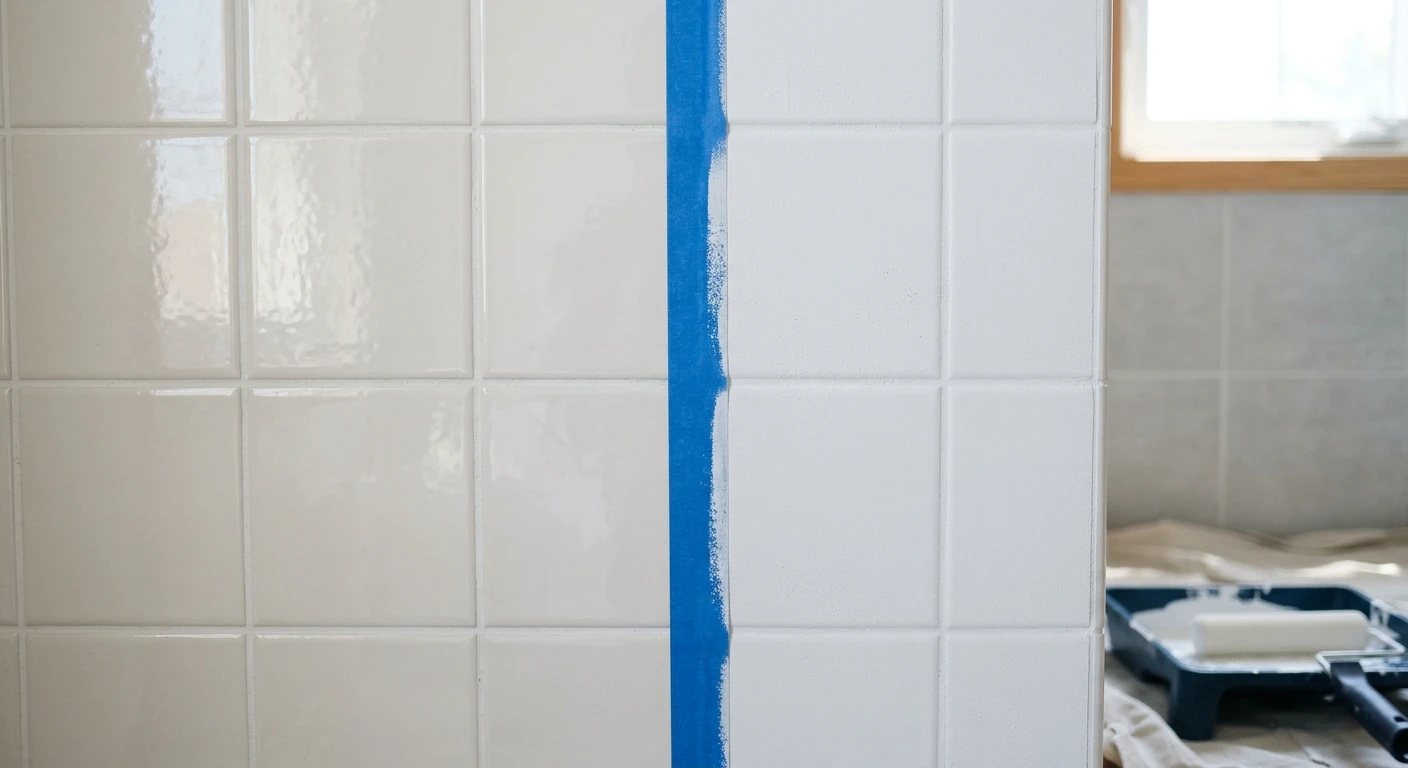
Application, film build, dry times and topcoat compatibility
Stir KILZ Adhesion thoroughly before and occasionally during use, without shaking the can (shaking introduces micro-bubbles that dry as pinholes on slick laminate or tile). Apply when both the air and the substrate temperature sit between 50°F and 90°F (10°C and 32°C). Cold ceramic tile on an exterior wall in winter can sit 10 degrees colder than room air, so check the surface temperature before rolling.
Tool choice directly controls whether you hit the target 4.0 to 5.3 mils wet film thickness (1.7 to 2.2 mils dry) without leaving heavy texture:
- Brushes: Use a high-quality synthetic nylon or polyester sash brush for cabinet rails, recessed moldings, and grout lines. Natural bristle brushes swell in water-base formulas and leave drag marks.
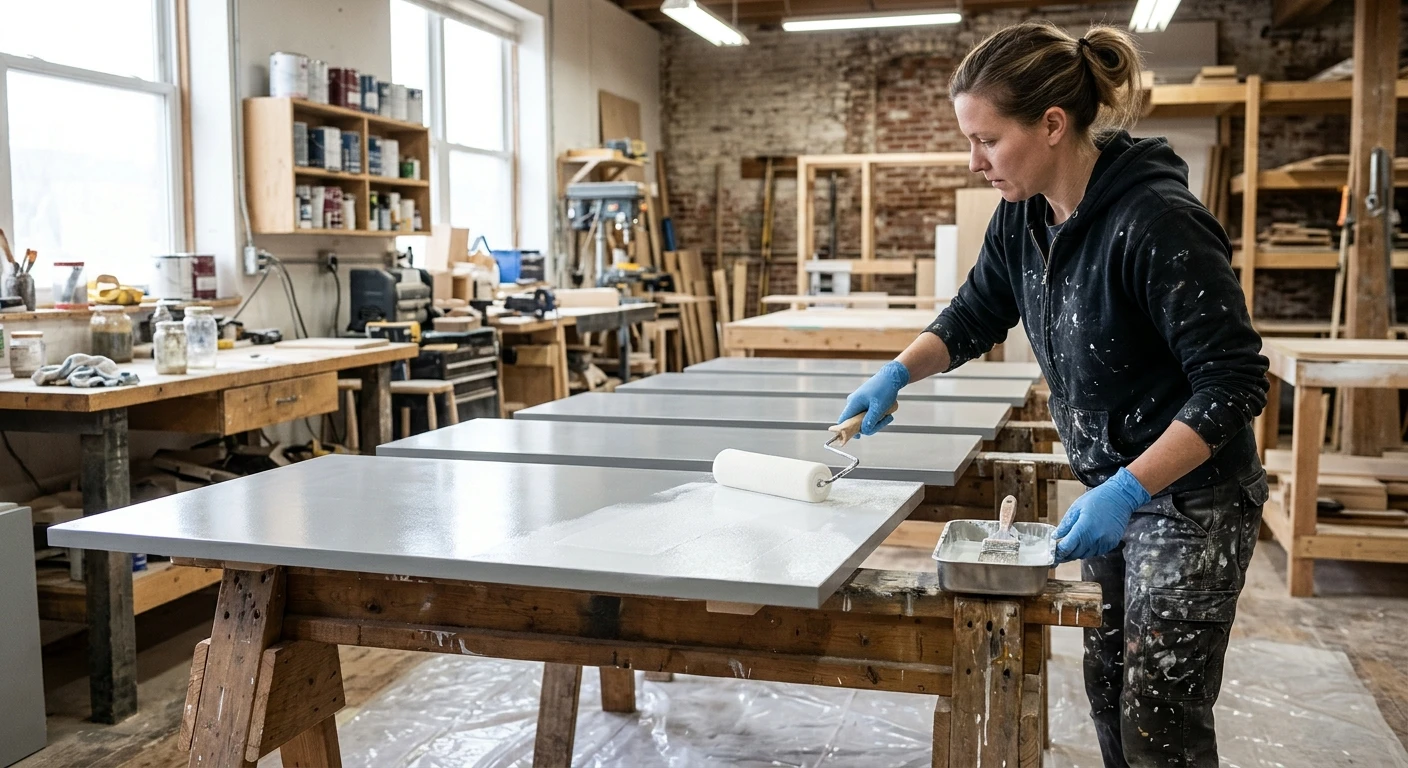
- Rollers: On smooth cabinets, laminate, PVC, and ceramic tile, use a 1/4-inch to 3/8-inch shed-resistant microfiber or woven cover, or a high-density foam roller for flat slab doors. Avoid thick 1/2-inch naps that deposit excessive orange-peel texture on slick surfaces.
- Sprayers: With a viscosity of 93 to 100 KU, L2111 sprays cleanly through airless equipment with a fine-finish tip when the project scale (such as a full kitchen cabinet set) justifies masking. Keep passes even to avoid runs on non-absorbent panels.
Respect the recoat schedule based on your chosen finish coat. At 77°F and 50% relative humidity, KILZ Adhesion dries to the touch in about 30 minutes and accepts standard water-based acrylic, latex, or urethane-alkyd trim enamels after 1 hour. Lower temperatures or high indoor humidity stretch that window, so confirm the film feels cool, hard, and non-tacky before recoating. If you plan to topcoat with a hot solvent-based coating such as a two-part epoxy or solvent lacquer, you must wait a full 24 hours so the modified-acrylic primer cross-links enough to resist solvent lifting.
Also understand the difference between recoat dry and full adhesion cure. After 1 hour, the primer is dry enough to paint over, but water-base bonding primers continue gaining hardness and scratch resistance over several days as residual coalescents evaporate. Do not perform a harsh fingernail scratch test two hours after rolling laminate or tile; allow the complete primer-plus-topcoat system to cure gently before heavy scrubbing or slamming cabinet doors. On high-contrast projects like painting interior doors black, letting the primer and enamel cure fully before closing the door tightly against weatherstripping prevents sticking and edge pulls.
Coverage math: how much KILZ Adhesion Primer to buy
Because KILZ Adhesion is rated at 300 to 400 square feet per gallon (roughly 75 to 100 square feet per quart), estimating material accurately is straightforward once you measure every face, edge, and frame. Non-porous surfaces like glass, ceramic tile, and laminate do not soak up liquid, so one uniform coat typically lands near 350 to 400 square feet per gallon. Glazed brick with recessed mortar joints or heavily profiled wood trim pulls more material and tracks closer to 300 square feet per gallon.
| Typical interior project | Estimated surface area (1 coat) | Expected spread rate | Recommended purchase |
|---|---|---|---|
| Kitchen backsplash (ceramic tile) | 30 to 45 sq. ft. | 350 to 400 sq. ft./gal | 1 quart (ample margin) |
| Dry bathroom wall tile wainscot | 80 to 130 sq. ft. | 350 to 400 sq. ft./gal | 2 quarts or 1 gallon |
| Medium kitchen cabinets (25 doors/drawers both sides + boxes) | 240 to 320 sq. ft. | 325 to 375 sq. ft./gal | 1 gallon |
| Interior door & glossy trim refresh (6 doors + casings) | 260 to 340 sq. ft. | 300 to 350 sq. ft./gal | 1 gallon |
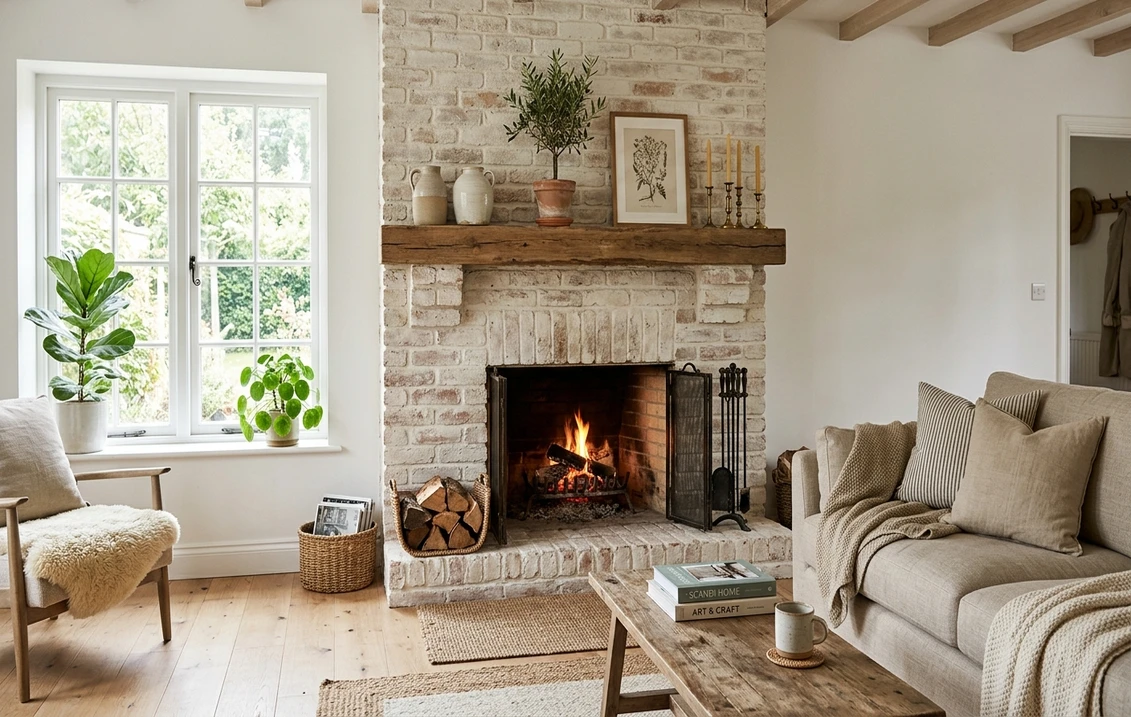
| Glazed brick fireplace surround | 40 to 70 sq. ft. | 300 sq. ft./gal (mortar joints) | 1 quart |
In almost all bonding scenarios, one continuous coat of KILZ Adhesion at the specified 4.0 to 5.3 mils wet thickness provides the adhesion bridge. Apply a second coat only if you are covering a very dark, high-contrast laminate pattern before a light white topcoat, or if missed holiday spots show through after the 1-hour dry window.
KILZ Adhesion vs Sherwin-Williams Extreme Bond vs Zinsser B-I-N Shellac
Homeowners and contractors painting slick interior surfaces usually narrow the shortlist to three products: KILZ Adhesion L2111, Sherwin-Williams Extreme Bond Primer, and Zinsser B-I-N Shellac-Base Primer. All three grip glossy surfaces, but their chemistry creates clear trade-offs in stain blocking, odor, and cleanup.
| Feature | KILZ Adhesion (L2111) | Sherwin-Williams Extreme Bond | Zinsser B-I-N Shellac-Base |
|---|---|---|---|
| Base chemistry | Water-base modified-acrylic | Water-base urethane-modified acrylic | Alcohol-based shellac |
| Primary strength | High-bond grip on slick, non-porous surfaces | High-bond grip on hard, slick, glossy surfaces | Severe stain blocking (tannins, knots, smoke, odor) + strong adhesion |
| Tannin and water-stain blocking | Limited (bonding primer first, not a heavy stain blocker) | Limited (bonding primer first, not a heavy stain blocker) | Benchmark performance on bleeding wood and heavy stains |
| Odor & VOC profile | Low odor, < 100 g/L VOC | Low odor, waterborne profile | Strong alcohol/solvent odor; requires heavy ventilation |
| Cleanup | Soap and water | Soap and water | Denatured alcohol or ammoniated detergent |
| Best interior fit | Laminate, ceramic tile, PVC, glass, glossy cabinets without tannin bleed | Glossy cabinets, tile, laminate, and PVC paired with SW topcoats | Bare knotty pine, oak/cedar tannin bleed, nicotine or smoke-damaged trim |
Choosing between KILZ Adhesion and Sherwin-Williams Extreme Bond often comes down to supply chain and topcoat ecosystem. Both are water-base acrylic bonding primers with low odor and water cleanup built for slick surfaces like laminate, ceramic tile, PVC, and glossy cabinets. For a dedicated look at the Sherwin-Williams option, read our Sherwin-Williams Extreme Bond Primer interior guide.
The bigger functional split is between water-base bonding primers and Zinsser B-I-N Shellac-Base Primer. KILZ Adhesion is a bonding primer first, not a heavy tannin or water-stain blocker. If you are painting glossy plastic laminate, ceramic tile, PVC, or previously painted cabinets that have no bleeding stains, KILZ Adhesion saves you from strong solvent fumes and alcohol cleanup. If you are painting bare oak, cedar, redwood, knotty pine, or smoke-stained woodwork where yellow-brown tannins or nicotine will bleed straight through water-base primers, Zinsser B-I-N Shellac is the right tool for stain isolation.
Indoor air quality, VOCs and ventilation during interior priming
Priming a kitchen or bathroom inside an occupied home always raises air-quality questions. As the U.S. EPA's Indoor Air Quality guide on Volatile Organic Compounds notes, concentrations of many VOCs are consistently higher indoors than outdoors, and paint strippers, primers, and coatings are major short-term sources during renovation work. Selecting a low-VOC water-base primer like KILZ Adhesion (< 100 g/L VOC) significantly lowers indoor solvent load compared with oil-based or shellac primers.
Low VOC still does not mean zero ventilation. Follow three practical habits whenever you prime indoors: open two windows or run a bathroom or range exhaust fan to pull fresh air across the room; keep cabinet doors propped open or laid out on drying racks in a ventilated space until the 1-hour recoat window and overnight dry period pass; and close the primer lid tightly between rolling sessions so the modified-acrylic emulsion neither skins over nor releases unnecessary vapors into living areas.
Planning your finish color after priming
Once KILZ Adhesion dries to a uniform matte white film at 1.7 to 2.2 mils dry, it visually erases dated faux-wood laminate, yellowed ceramic backsplash tile, or glossy trim so your finish color reads cleanly. For kitchen projects, pair the bonding primer with two coats of a cabinet-grade waterborne acrylic or urethane-modified alkyd enamel in satin or semi-gloss. If you are still choosing between warm whites, greiges, sage greens, or deep navy tones for your kitchen, explore our kitchen cabinet colors complete guide before ordering your topcoat gallon.
Visualize walls, cabinets, doors and trim in your own space before picking up a roller.
Sources and references
- KILZ (Masterchem Industries), Technical Data Sheet for KILZ Adhesion High-Bonding Interior/Exterior Latex Primer (Product No. L2111): modified-acrylic water-base chemistry, 300 to 400 sq. ft./gal coverage, 30-minute touch dry, 1-hour recoat (24 hours before hot solvent-based topcoats), < 100 g/L VOC, 42% (+/- 2%) solids by volume, 58% (+/- 2%) by weight, 93 to 100 KU viscosity, 4.0 to 5.3 mils wet / 1.7 to 2.2 mils dry film thickness, and 50°F to 90°F application range.
- Sherwin-Williams, Extreme Bond Primer product page: water-base urethane-modified acrylic bonding primer positioning for slick, glossy interior surfaces used in our primer comparison.
- Rust-Oleum / Zinsser, Zinsser B-I-N Shellac-Base Primer product page: shellac-base stain blocking, adhesion, odor, and alcohol cleanup specifications used in our primer comparison.
- Benjamin Moore, Project Advice: Painting Tile: surface cleaning, dry-zone suitability, and bonding primer workflow for ceramic wall tile and backsplashes.
- U.S. Environmental Protection Agency, Lead-Safe Renovations for DIYers: precautions for disturbing or sanding painted woodwork and trim in pre-1978 homes.
- U.S. Environmental Protection Agency, Volatile Organic Compounds' Impact on Indoor Air Quality: indoor VOC concentration guidance and ventilation best practices when priming indoors.
Frequently asked questions
Do I still need to sand before applying KILZ Adhesion Primer?
How long do I wait to paint over KILZ Adhesion Primer?
Can KILZ Adhesion Primer be used on ceramic bathroom or shower tile?
Does KILZ Adhesion block wood tannins, knots, or water stains?
How much area does one gallon of KILZ Adhesion Primer cover?
Trademarks mentioned (Sherwin-Williams, Benjamin Moore, Behr, Caparol, Brillux, Sto, Alpina, Valspar, PPG, Glidden, Dulux, Crown Trade, Sandtex, Farrow & Ball, Johnstone's, Leyland) are property of their respective owners. FacadeColorizer is independent and not affiliated with any of them. Nominative fair use under Lanham Act §1125.