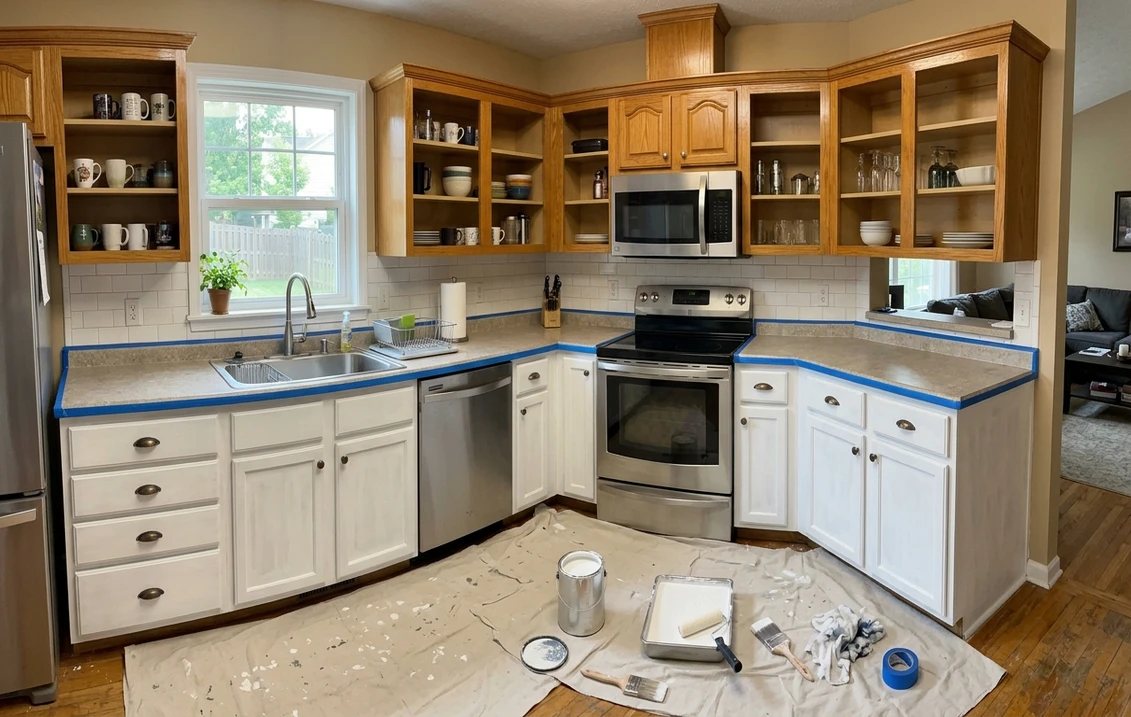

Sherwin-Williams Extreme Bond Primer (B51W01150) is a waterborne, urethane modified acrylic bonding primer for hard, slick, glossy surfaces: kitchen cabinets, wall laminates, ceramic wall tile, varnished woodwork, glass, PVC and fiberglass are all named on its product data sheet. The sheet gives 450 to 500 sq ft per gallon at 1.0 mil dry, touch dry in 30 minutes, recoat in 1 hour as a primer (24 hours under a high-performance finish), under 50 g/L VOC and 14 days at most before the topcoat. Sherwin-Williams' site listed it at $90.49 a gallon on November 14, 2026. Sanding "may not be necessary for most clean, paintable surfaces", yet the same sheet asks for a scuff sand or an abrasive cleaner on tile, laminate and plastics. It is not a stain blocker, and the sheet rules out floors, showers, tubs and the area around sinks.
How this page works: every figure comes from Sherwin-Williams' data sheets and project pages, Rust-Oleum's data sheet for Zinsser Bulls Eye 1-2-3, Benjamin Moore and the EPA, read on November 14, 2026. Calculations are ours and labeled as such. No primer was applied for this page.
Opens the interior tool with "Cabinets" preselected. How it works: our interior paint visualizer.
Extreme Bond Primer at a glance: the data sheet in one table
Sherwin-Williams publishes one product data sheet for Extreme Bond Interior-Exterior Bonding Primer (sheet 108.51A, dated 10/2023). The product page adds the sizes, and shows no price unless you sign in; the list price below was displayed on the brand's interior primers page.
| Spec | Extreme Bond Primer B51W01150 |
|---|---|
| Resin | Waterborne urethane modified acrylic |
| Coverage | 450 to 500 sq ft per gallon at 3.1 mils wet, 1.0 mil dry |
| Volume solids | 32% ± 2 |
| Touch dry | 30 minutes at 77°F and 50% relative humidity |
| Recoat | 1 hour as a primer, up to 24 hours (table below); within 14 days |
| VOC | Under 50 g/L |
| Tinting | No more than 2 oz of colorant per gallon |
| Sizes | Quart, gallon, 5 gallon |
| List price on sherwin-williams.com, Nov 14, 2026 | $90.49 a gallon |
Try it on your room
- 1Your photoPhoto
- 2Your colorColor
- 3HD render in ~30 sHD render in ~30 s
Your photo is used only to create your preview. JPG, PNG, HEIC (iPhone)
One figure deserves a second look: 1.0 mil of dry film, against 1.5 mils for Premium Wall & Wood Primer on its own sheet. Our reading: Extreme Bond is a thin tie coat made to grip, not a build coat that fills oak grain.
Where it goes indoors: the surfaces the sheet names
The sheet's list reads: PVC piping, plastics, glass, wall laminates, glossy surfaces, aluminum, kitchen cabinets, fiberglass, varnished woodwork, glazed block, ceramic wall tile, previously painted surfaces and fluoropolymer coatings. Room by room, that means:
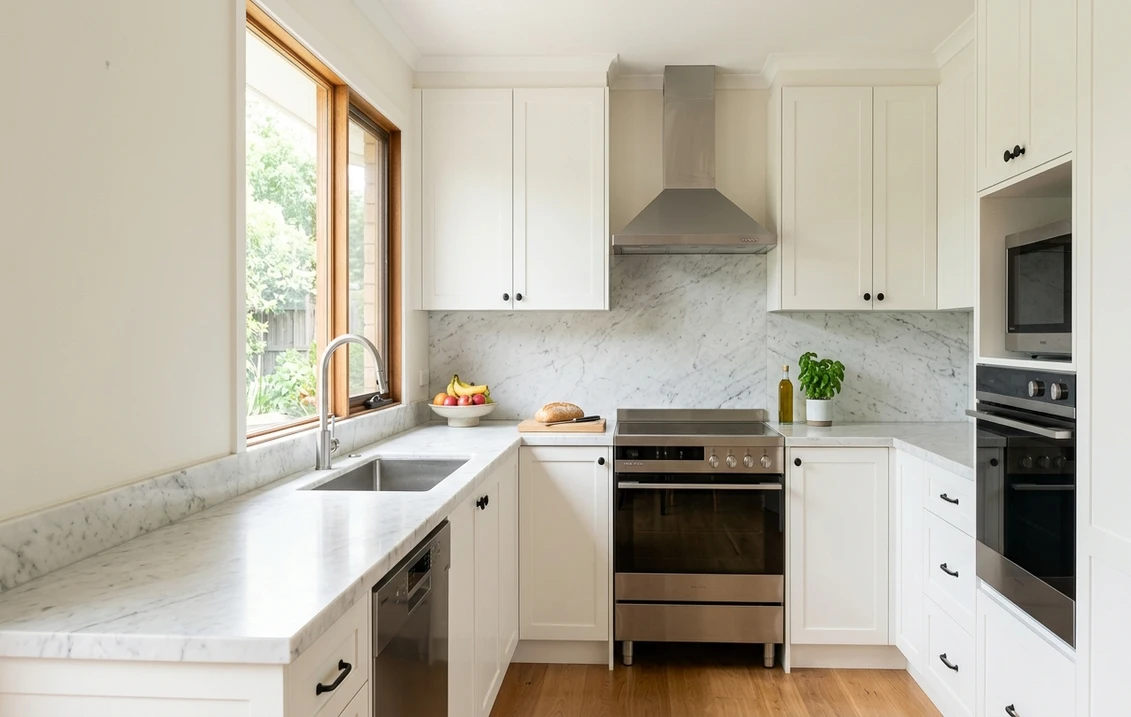
- Kitchen cabinets, laminate or varnished. Sherwin-Williams' Cabinet Refinishing guide (2019) says: "For laminate or previously painted wood cabinets, use an adhesion promoting primer like our Extreme Bond."
- Glossy trim, doors and varnished paneling, the "varnished woodwork" and "glossy surfaces" of the sheet. See our guide on how to paint interior doors, trim and baseboards and our painted wood paneling before and after.
- Ceramic wall tile, such as a backsplash away from the sink. Limits below.
- Wall laminates, fiberglass, PVC piping and glass.
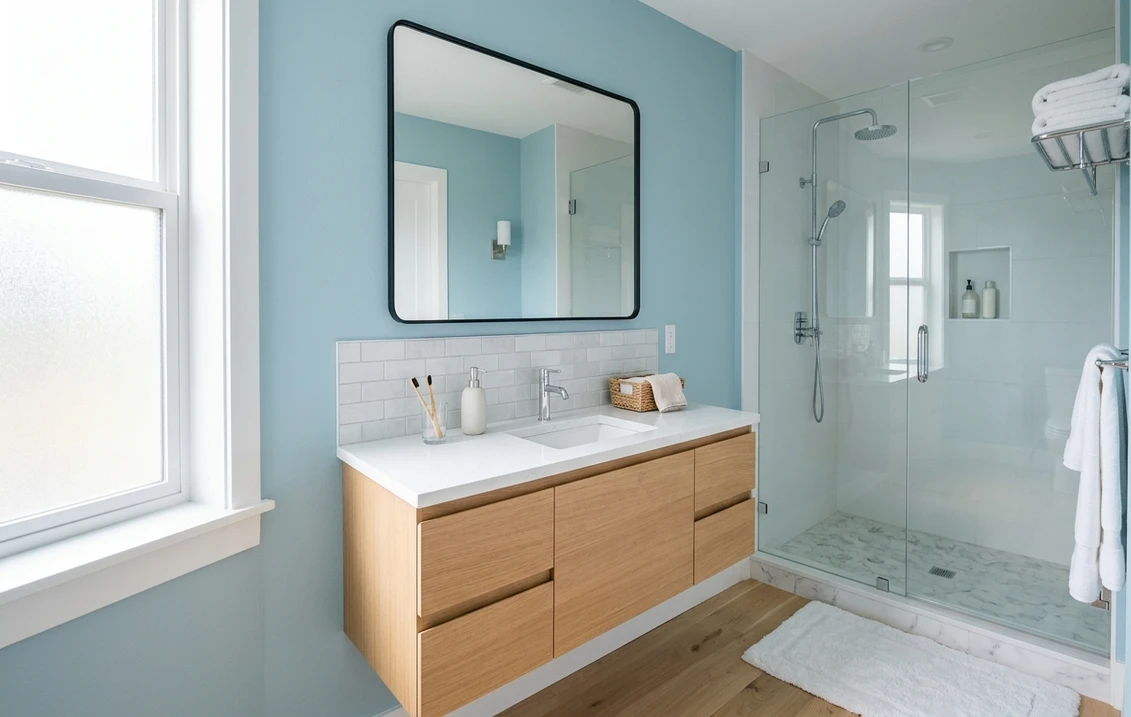
- Bathroom vanities, with a caveat. Sherwin-Williams' vanity how-to names Extreme Bond, while the sheet excludes areas "subject to excessive water". Our reading: doors and drawer fronts yes, any surface that stays wet no. Colors: our bathroom vanity paint colors guide.
Do you need to sand before Extreme Bond Primer?
Often a scuff, sometimes nothing, never without cleaning. The sheet holds two sentences, usually quoted one without the other. First: "Because of the exceptional adhesion of this product, sanding may not be necessary for most clean, paintable surfaces." Second: "Sanding or dulling with an abrasive cleaner is recommended on glossy, extremely hard surfaces for maximum adhesion." Surface by surface:
| Surface | What the data sheet asks for |
|---|---|
| Every surface | Wash, rinse thoroughly, let dry, with "only a waterbased emulsifying detergent"; no hydrocarbon solvents such as mineral spirits |
| Glossy, extremely hard surfaces | Sanding or dulling with an abrasive cleaner recommended |
| Plastic, vinyl, PVC, fiberglass, Formica | Scuff sand or scrub with an abrasive cleaner "to dull the surface for best adhesion" |
| Ceramic tile, glazed block, porcelain | Same scuff or abrasive cleaner; free of all oil, grease and soap residue |
| Glass | Apply directly to thoroughly cleaned glass |
| Mildew | Remove first: 1 part liquid bleach to 3 parts water, 10 minutes, rinse, dry |
The sheet also asks for a test on hard, slick surfaces: "apply a test area of this primer, allow to dry properly and test for adhesion". In its replies to readers under its cabinet painting article, the brand tells the owner of lacquered cupboards to "lightly sand" before Extreme Bond, and says of finished cabinets: "If you do not dull the surface, the primer may not adhere effectively", before adding: "If sanding is not an option, consider Extreme Bond Primer."
Our reading: clean always, test, and scuff anything that still shines, because the sheet ties "maximum adhesion" to a dulled surface. In a home built before 1978, old paint can contain lead and sanding releases the dust: follow the EPA's lead-safe practices for do-it-yourselfers.
How long before you can paint over Extreme Bond?
| Step | Time on the data sheet (77°F, 50% RH) |
|---|---|
| Topcoat, used as a primer | 1 hour |
| Topcoat, used as a stain sealer | 4 hours |
| Topcoat with a "Hi-Performance" finish | 24 hours |
| Latest topcoat | 14 days |
The "1 hour" quoted everywhere is the shortest of three recoat times, and no full cure time is published. The sheet describes high-performance coatings as "epoxies and urethanes" and does not say which line applies to Emerald Urethane Trim Enamel, the cabinet enamel it lists among its architectural topcoats. Sherwin-Williams' project pages do not agree with each other either: the kitchen cabinet how-to says "Let the primer dry for at least 24 hours, then sand the primed surfaces", the vanity how-to says two to three hours.
Our reading: one hour is the minimum under a latex wall paint. On cabinets, where the primer is sanded and the enamel takes daily knocks, plan the 24 hours, and more in a cool or humid room. The other limit runs the opposite way: primed doors left more than 14 days fall outside the sheet. Our interior paint drying time guide explains dry, recoat and cure.
Extreme Bond on kitchen cabinets: the full system
Sherwin-Williams' cabinet how-to pairs Extreme Bond with Emerald Urethane Trim Enamel, and its 2019 guide calls that enamel "the best choice for the most durable results"; the same guide also lists two ProClassic enamels for cabinets, compared in our ProClassic enamel guide. The sequence, sheets included:
- Remove and number doors, drawers and hardware.
- Degrease. The guide calls washing "the most important step": a degreaser or an emulsifying dish soap, a rinse, a full dry.
- Test, then scuff sand what still shines; wipe the dust with a damp rag.
- One coat of Extreme Bond on the whole surface: the sheet warns that spot priming can show through the finish.
- Wait, then fine sand. At least 24 hours on the how-to, then "very fine" grit and a damp cloth.
- Two coats of enamel. The Emerald Urethane Trim Enamel Satin sheet gives 350 to 400 sq ft per gallon, touch dry in 1 hour and recoat in 4 hours. The how-to is slower: about 24 to 48 hours between coats and before the hardware goes back.
Wood needs one more check. The Extreme Bond sheet does not mention tannin or knots. For unfinished wood cabinets the Cabinet Refinishing guide names Premium Wall & Wood Primer instead, and the Emerald Urethane sheet says that if tannin staining persists indoors, severe areas get a spot coat of ProBlock Quick Dry Oil-Based Primer. On open-grained oak, the brand suggests to a reader "multiple coats of primer and sanding between coats".
The full method is in our guide on how to paint kitchen cabinets, the enamels are compared in best paint for kitchen cabinets, and oak is covered in painted oak cabinets before and after. On the Benjamin Moore side, see our Benjamin Moore Advance cabinet paint review.
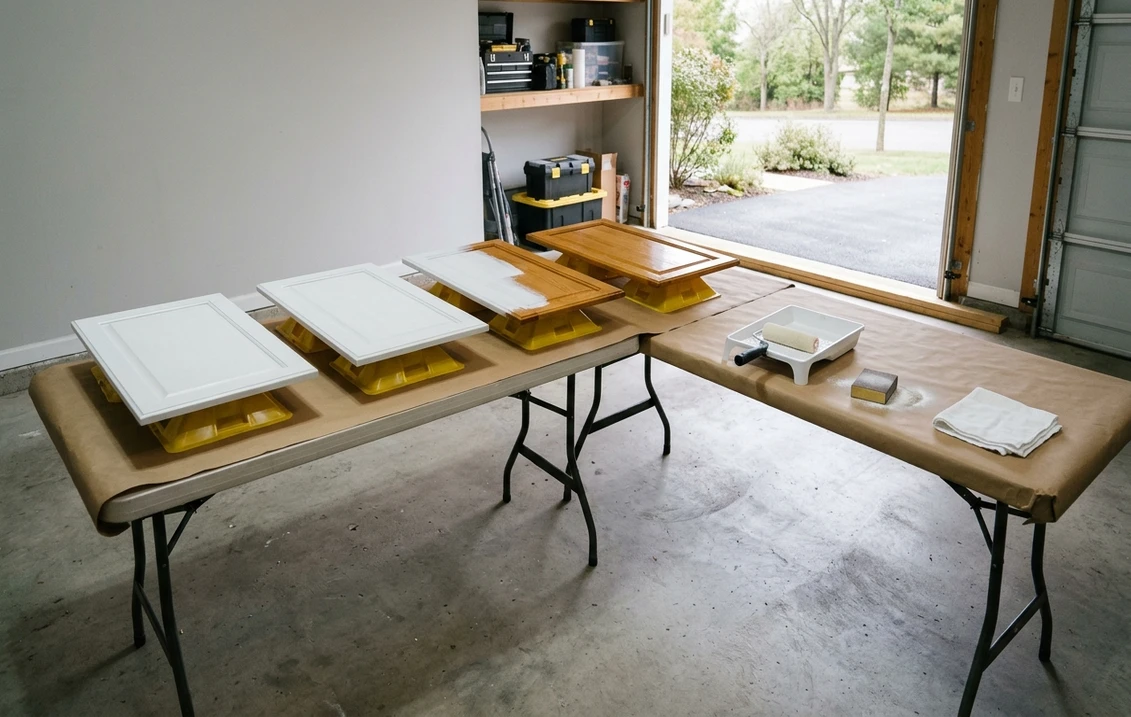
How much Extreme Bond a kitchen takes, and what it costs
Doors are primed on both faces. Three worked examples, with 15 by 30 inch doors, 15 by 6 inch drawer fronts, both faces counted, plus 18, 30 and 45 sq ft of face frames and one, two and three exposed end panels of 24 by 34.5 inches (our calculations, from the sheets' spread rates):
| Kitchen | Area to prime | Extreme Bond, one coat | Enamel, two coats at 350 to 400 sq ft |
|---|---|---|---|
| Small: 12 doors, 5 drawers | About 105 sq ft | 0.21 to 0.23 gallon: 1 quart, nearly all of it | 0.53 to 0.60 gallon: 3 quarts |
| Medium: 20 doors, 8 drawers | About 177 sq ft | 0.35 to 0.39 gallon: 2 quarts | 0.89 to 1.01 gallons: 1 gallon and 1 quart |
| Large: 30 doors, 12 drawers | About 265 sq ft | 0.53 to 0.59 gallon: 3 quarts or 1 gallon | 1.33 to 1.51 gallons: 2 gallons |
At the $90.49 list price, one coat of Extreme Bond comes to about 18 to 20 cents per square foot (our calculation), so the primer in a medium kitchen is worth $32 to $36 of a gallon. Quart prices were not shown, and stores set their own. Measure your own doors with our interior paint coverage calculator guide; a whole-home budget is in our interior house painting cost guide.
A primer coat and two enamel coats: choose the color before you start
Upload a photo of your kitchen and compare cabinet colors on your own doors before the first quart is opened.
Try cabinet colors on my kitchen photoTile, glass, PVC and laminate: what the sheet allows
- Ceramic wall tile: yes, in a dry spot. Sherwin-Williams' tile how-to calls Extreme Bond "our best primer for painting tile", then narrows the job: "Sanding is required to remove the shine from ceramic tiles, as a chemical deglosser will not do the trick", and the right target is "decorative wall tile that doesn't line your tub or sink". The topcoat it names is Emerald Interior Acrylic Latex.
- Tile floors: no. The how-to says painting tile flooring "is not recommended due to repeated foot traffic".
- A second brand says the same. Benjamin Moore's tile painting guide for professionals recommends walls and vertical surfaces away from high traffic and direct exposure to water, writes "We do not recommend painting over floor tile" and warns that "Painting tile is not necessarily a long-term solution."
- Glass: the sheet warns that an opaque coating heats the glass, dark colors most, and that tightly fitted glass may shatter.
- Plastics: test first. Extreme Bond "does not adhere to polypropylene, polyethylene, or thermoplastic polyolefins".
Results are shown in our paint over tile before and after; if the tile stays, see our white kitchen backsplash ideas.
What Extreme Bond Primer does not do
- Block stains. The sheet says stains "from heavy water, smoke, ink, pencil, grease, etc. should be sealed with the appropriate primer-sealer". It does list a 4-hour recoat "as a stain sealer", but names no stain that Extreme Bond seals. Our interior primer guide compares the stain blockers.
- Live in water or on floors. "Do not use this product in areas subject to excessive water, e.g., in showers, around sinks, or on tubs", and "Not for use on floors".
- Countertops: read the exact words. "Not for countertops" is often repeated online, but the word is not on the Extreme Bond sheet (it is on the Multi-Purpose Latex Primer sheet); what the sheet excludes is the area around sinks. Sherwin-Williams' own countertop how-to names Extreme Bond for tile countertops, under at least three coats of a food-safe sealer, and expects touch-ups after 2 to 3 years. Our reading: a short-lived finish, and outside the sheet next to the sink.
- Fix peeling paint. The sheet asks for a sound surface first. See our guide to interior paint peeling off walls.
Extreme Bond vs the other Sherwin-Williams primers
Figures from each product data sheet: Multi-Purpose Latex Primer-Sealer, Premium Wall & Wood Primer, ProBlock Quick Dry Oil-Based Interior Primer and White Pigmented Shellac Primer.
| Primer | Resin | Coverage and dry film | Recoat | VOC | Written for |
|---|---|---|---|---|---|
| Extreme Bond | Urethane modified acrylic | 450 to 500 sq ft; 1.0 mil | 1 h (24 h under high-performance finishes) | Under 50 g/L | Hard, slick, glossy surfaces |
| Multi-Purpose Latex | Styrenated acrylic latex | 400 sq ft; 1.4 mils | 1 h (4 h as a stain sealer) | Under 50 g/L | General priming; minor dried water stains and tannin |
| Premium Wall & Wood | Vinyl acrylic latex | 400 sq ft; 1.5 mils | 2 h, sands in 2 h | Under 50 g/L | Wood, drywall, plaster under enamels |
| ProBlock Quick Dry Oil-Based | Oil-based, interior only | 400 sq ft; 2.2 mils | 60 to 90 min | 347 g/L | Water, smoke, grease and ink stains |
| White Pigmented Shellac | Shellac | 400 to 500 sq ft; 1.4 mils | 45 min | 515 g/L | Stains, odors, knot bleeding |
The closest relative is Multi-Purpose Latex: its sheet also lists kitchen cabinets, ceramic wall tile, wall laminate and varnished woodwork. The differences on paper: Extreme Bond is urethane modified, "designed for coating hard, slick, glossy surfaces with minimal surface preparation", accepts epoxy and urethane topcoats, and adds glass. Premium Wall & Wood is the bare wood primer, at a $71.99 list price on the same page on November 14, 2026; the two solvent primers are written for stains.
Zinsser Bulls Eye 1-2-3 vs Sherwin-Williams Extreme Bond Primer
Both are water-based primers for glossy surfaces. Right-hand column: Rust-Oleum's technical data sheet for Zinsser Bulls Eye 1-2-3 White Primer (BEY123-01, revised 02/07/25). A comparison of sheets, not of primed doors.
| Spec | SW Extreme Bond | Zinsser Bulls Eye 1-2-3 |
|---|---|---|
| Resin | Urethane modified acrylic | Styrenated acrylic |
| Coverage | 450 to 500 sq ft per gallon | About 400 to 450 sq ft per gallon |
| Dry film per coat | 1.0 mil | 1.0 to 2.0 mils |
| Touch / topcoat | 30 min / 1 h | About 30 min / 1 h |
| Stain sealing | 4 h; stains sent to a primer-sealer | 2 h, 24 h over cedar; blocks grease, crayon, light water stains, tannin |
| Full hardness | Not published | 7 days |
| Sanding claim | "May not be necessary"; scuff on tile, laminate, plastics | Glossy enamel, varnish, laminates and ceramic tile "without sanding or de-glossing" |
| VOC | Under 50 g/L | Under 100 g/L |
| High-performance topcoats | Epoxies and urethanes accepted, after 24 h | Under and over "any oil or latex architectural paint" |
On paper, Bulls Eye 1-2-3 is the all-rounder: it seals porous surfaces, blocks light stains, allows a thicker film, makes the bolder no-sanding claim and publishes a 7-day hardness figure. Extreme Bond is the specialist: lower VOC, a wider spread rate, and the only one of the two written to carry epoxy and urethane finishes. Neither sheet publishes an adhesion test figure, so the sheets alone do not say which grips harder. Under Emerald Urethane Trim Enamel, Extreme Bond is the primer Sherwin-Williams itself names; on a glossy surface that also carries light stains, Bulls Eye 1-2-3 covers both on its sheet. No Bulls Eye price is given here: Rust-Oleum's site could not be read.
Applying it: tools, tint and temperature
- Tools: nylon-polyester brush, 3/8 inch soft woven roller cover, or airless spray. "Do not reduce."
- Tint: no more than 2 oz of colorant per gallon, which gives a pale shade, not the finish color. For deep colors the sheet points to the recommended "P-shade" primer: ask the store.
- Temperature: air, surface and product above 35°F, with no drop below 35°F for 48 hours.
Is Extreme Bond worth it, and where to buy it
- Worth it on laminate, varnished or previously painted cabinets under a Sherwin-Williams enamel: it is the system the brand writes down, and a quart or two primes a kitchen.
- Worth it on dry wall tile, glossy trim, PVC or glass.
- Not the right can for bare wood, new drywall or stains, which have their own primers.
- Not a way around prep, and not for wet zones or floors. The no-sanding line applies to "clean, paintable surfaces" only.
Where to buy it. Extreme Bond is sold in Sherwin-Williams stores and on the brand's site, where the product page asks you to register or sign in to confirm price and availability; the $90.49 gallon list price was read on November 14, 2026. Settle the color first, since the tint of the primer follows it: our kitchen cabinet colors guide lists the options.
See the finished cabinets before the doors come off
Upload one photo of your kitchen, pick a color and compare finalists side by side in about 30 seconds.
Preview my kitchen cabinets in a new colorSources and references
- Sherwin-Williams, Extreme Bond Primer B51W01150, product data sheet 108.51A.
- Sherwin-Williams, Extreme Bond Primer product page and interior primers page: sizes, list prices on November 14, 2026.
- Sherwin-Williams, Cabinet Refinishing: A Complete Guide (2019), kitchen cabinet how-to, vanity how-to and cabinet painting article (replies to readers).
- Sherwin-Williams, How to Paint Tile and How to Paint Your Kitchen Countertops.
- Sherwin-Williams, data sheets: Emerald Urethane Trim Enamel Satin, Multi-Purpose Latex Primer-Sealer, Premium Wall & Wood Primer, ProBlock Quick Dry Oil-Based, White Pigmented Shellac.
- Rust-Oleum, Zinsser Bulls Eye 1-2-3 White Primer, technical data sheet BEY123-01 (manufacturer's sheet hosted by a retailer).
- Benjamin Moore, Painting Tile: A Guide for Pros.
- U.S. EPA, Lead-Safe Renovations for DIYers.
Frequently asked questions
Do you need to sand before using Extreme Bond Primer?
How long does Extreme Bond Primer need to dry before painting?
Can you use Extreme Bond Primer on tile?
Is Extreme Bond Primer good for kitchen cabinets?
Is Extreme Bond Primer a stain blocker?
How much does Extreme Bond Primer cost and how far does a gallon go?
Zinsser Bulls Eye 1-2-3 vs Sherwin-Williams Extreme Bond Primer: which one should you use?
Trademarks mentioned (Sherwin-Williams, Benjamin Moore, Behr, Caparol, Brillux, Sto, Alpina, Valspar, PPG, Glidden, Dulux, Crown Trade, Sandtex, Farrow & Ball, Johnstone's, Leyland) are property of their respective owners. FacadeColorizer is independent and not affiliated with any of them. Nominative fair use under Lanham Act §1125.