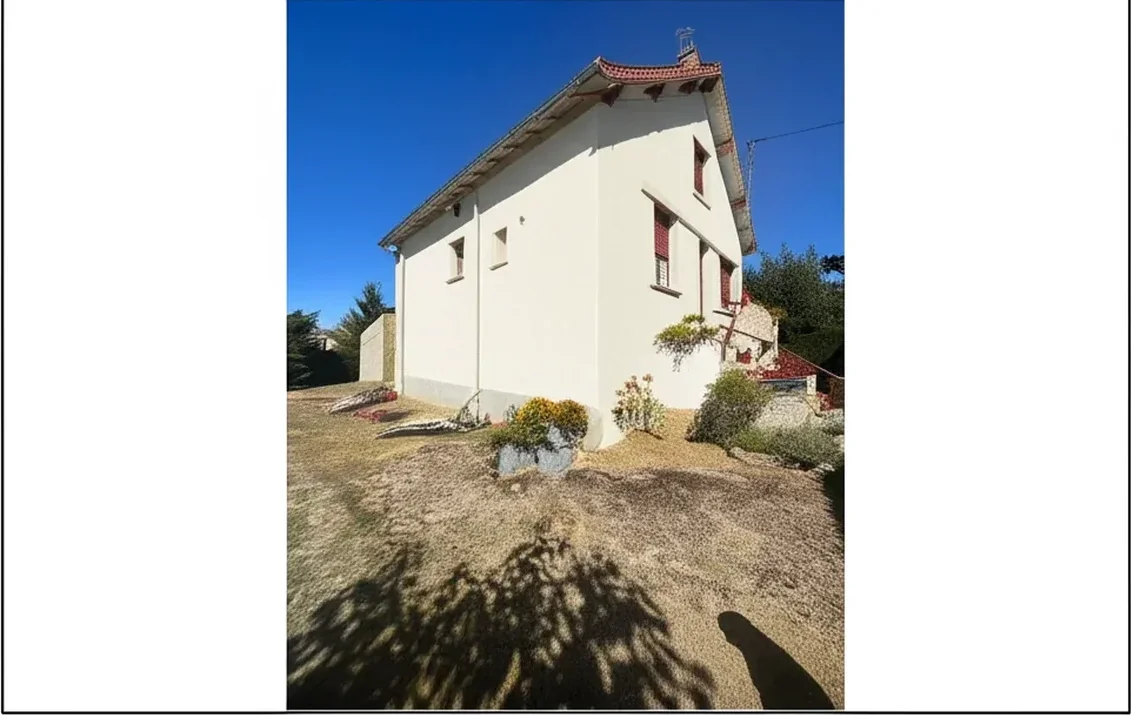
Try it on your house

FacadeColorizer is a free AI exterior visualiser used by UK homeowners and trade decorators across England, Wales, Scotland and Northern Ireland. This is the complete 2026 guide to the Johnstones masonry colour palette, spec sheet, coverage, BS EN 1062 classification and realistic project budget for British weather conditions.
Unlike a brand catalogue page, this guide walks the full decision journey for johnstones masonry paint colours: estimating litres needed for a British semi or terrace, costing the full shopping basket in pounds sterling, decoding the Stormshield Smooth versus Stormshield Textured tin against the rest of the Johnstone Trade range, comparing against Dulux Weathershield, Sandtex 365 Exterior and Crown Trade Clearguard 365, and previewing the top thirty Johnstones masonry shades on your own elevation before committing to two 10L tins. Pricing is in GBP, units are metric, and the regulatory frame is UK Permitted Development with Listed Building Consent carve-outs.
Official Johnstone product information lives on johnstonestrade.com. Comparable exterior ranges are documented at dulux.co.uk, sandtex.co.uk and crownpaintspec.co.uk. For planning and consent rules on exterior repainting in Conservation Areas see planningportal.co.uk.
The Johnstones masonry paint range in 2026: what is actually on the shelf
The johnstone masonry paint colours sit primarily in two ranges in 2026: the retail-facing Johnstones Stormshield line aimed at homeowner DIY and the more specified Johnstone Trade exterior portfolio aimed at professional decorators. Both share the same underlying acrylic copolymer technology and the same Manchester-based formulation roots, but the Trade tins ship in 5L and 10L sizes with a wider colour-mix base library and slightly higher film build claims. The retail Stormshield tins ship through Wickes, selected B and Q Warehouse stores in the Midlands and North, and a handful of larger independent decorating centres in Birmingham, Leeds, Manchester and Glasgow.
Inside the Johnstones Stormshield retail range the two hero products are Stormshield Smooth Masonry for smooth render and previously painted brick, and Stormshield Textured Masonry for pebbledash, roughcast and heavily textured render where the homeowner wants to preserve or replicate a textured finish. The Smooth tin is positioned against Dulux Weathershield Smooth Masonry and Sandtex 365 Exterior Smooth Masonry. The Textured tin is positioned against Dulux Weathershield Textured Masonry and Sandtex Textured Masonry Microseal. Pricing in 2026 sits at GBP 38 to 52 for a 10L Stormshield Smooth tin in white and ready-mixed colours, and GBP 44 to 58 for a 10L Stormshield Textured tin.
In the Johnstone Trade exterior portfolio the equivalent specifications are Stormshield Smooth Masonry Trade, Stormshield Textured Masonry Trade, Stormshield Pliolite Masonry (solvent-based for low-temperature application in autumn and early winter), Stormshield Tex Masonry for heavy texture, and Stormshield Anti-Carbonation Masonry for reinforced concrete facades and balcony soffits. Trade tins are typically GBP 4 to 10 cheaper per 10L than the retail Stormshield equivalent when bought through a Johnstone Decorating Centre or a Brewers Decorator Centres branch on a trade card. For a side-by-side technical comparison see our exterior paint brands UK comparison.
Johnstones masonry paint colours: the 2026 palette explained
The Johnstones Stormshield ready-mixed retail palette in 2026 carries roughly 32 shades, plus a tinted colour-mix service through Johnstone Decorating Centres that maps to about 2,200 mixable shades across the wider Johnstone Trade colour card library. The ready-mixed retail hero shades are organised in four families: whites and off-whites, greys (the dominant family in British weather), warm creams and stones, and a smaller heritage greens and reds bracket aimed at Victorian and Edwardian period property repaints.
The table below maps the most-stocked johnstone masonry paint colours on the 2026 Stormshield retail shelf to their typical use case, indicative coverage on smooth render and an honest weather-suitability note based on visualiser feedback from the 16,983 preview dataset. Coverage figures are quoted at one coat on a primed smooth substrate.
| Stormshield colour | Family | Typical use | Coverage m2/L | Notes for UK weather |
|---|---|---|---|---|
| Pure Brilliant White | White | Render on cavity-wall semis | 12 to 14 | Shows soot fast on busy roads |
| Magnolia | Warm cream | 1950s to 1970s estate semis | 12 to 13 | Forgiving on north-facing walls |
| Buttermilk | Warm cream | Cotswold and Yorkshire cottages | 12 to 13 | Reads as honey-stone in afternoon light |
| Cool Grey | Grey | 1990s to 2010s new-build estates | 11 to 13 | Cooler tone than Dulux Gallant Grey |
| Pewter | Mid grey | Modernist render facades | 11 to 12 | Reads as charcoal under Manchester overcast |
| Stone | Stone | Edwardian render terraces | 12 to 13 | Pairs well with sash window white trim |
| Cornish Stone | Stone | South-west cottages and bungalows | 12 to 13 | Sympathetic to coastal Cornwall light |
| Sandstone | Stone | 1930s suburban semis | 12 to 13 | Goes muddy on north-facing walls |
| Chiltern | Stone | Buckinghamshire and Oxfordshire | 12 to 13 | Heritage tone for Conservation Areas |
| Iron Grey | Dark grey | Contemporary urban renovations | 10 to 12 | Reads near-black; needs Conservation Area check |
| Apple Green | Heritage green | Cornish coastal cottages | 11 to 12 | Period feature elevations only |
| Cottage Red | Heritage red | Devon and Kent vernacular | 10 to 12 | Fades faster than greys; expect re-coat in 6 to 8 years |
Try it on your house
No photo? Try a sample
The heritage greens and reds skew toward cottages in Cornwall, Devon, the Cotswolds and rural Kent; the darker greys skew toward London terraces and Manchester urban renovations. For other heritage tone selection see our Cotswold, Yorkshire and Cornwall cottage colours guide.
Johnstones Stormshield project cost: full GBP basket in 2026
The realistic johnstones masonry paint project budget includes the Stormshield tins themselves, a Johnstones masonry stabiliser primer for chalky or bare patches, a fungicidal wash for moss and algae on north-facing walls, roller and brush kit, masking, drop sheets and either ladder hire or a tower scaffold rental for two-storey properties. The Health and Safety Executive at hse.gov.uk publishes guidance on safe working at height and discourages homeowners from extension ladders above single-storey for full-elevation work.
The table below maps a typical Johnstones Stormshield Smooth Masonry shopping basket for the three most common British property types in 2026. Prices are quoted in pounds sterling at indicative shelf or Johnstone Decorating Centre prices in the English Midlands and North. Lower band uses Stormshield retail tins in white or ready-mixed greys; upper band uses Johnstone Trade Stormshield Smooth Masonry in a bespoke mixed colour.
| Basket line | Mid-terrace GBP | Three-bed semi GBP | Four-bed detached GBP |
|---|---|---|---|
| Stormshield Smooth (2 coats, smooth render) | 75 to 145 | 115 to 210 | 175 to 345 |
| Stormshield Textured (2 coats, pebbledash) | 115 to 195 | 175 to 285 | 265 to 445 |
| Johnstone masonry stabiliser primer (2.5 to 5L) | 22 to 36 | 28 to 48 | 38 to 68 |
| Fungicidal wash (1L concentrate) | 12 to 18 | 12 to 22 | 22 to 36 |
| Long-pile masonry roller and brush kit | 28 to 42 | 36 to 52 | 42 to 68 |
| Drop cloths, masking, scuttle | 12 to 22 | 18 to 28 | 22 to 38 |
| Tower scaffold rental (1 week) | 0 to 95 | 85 to 125 | 125 to 195 |
| TOTAL DIY budget (smooth render) | 175 to 395 | 295 to 510 | 425 to 770 |
A homeowner painting a Manchester three-bed smooth-render semi in Stormshield Cool Grey lands at roughly GBP 295 to 360 in total basket cost without scaffold, and GBP 380 to 510 with a one-week tower scaffold rental. The same property in pebbledash painted in Stormshield Textured Sandstone climbs to GBP 410 to 580 because the texture eats more litres on the first coat. By comparison a decorator-quoted job for the same three-bed semi smooth-render in Johnstone Trade Stormshield typically lands at GBP 1,650 to 2,450 labour-and-materials inclusive across Manchester, Leeds, Birmingham and Bristol. DIY at Johnstone Decorating Centres or a Wickes click-and-collect counter saves GBP 1,150 to 1,950 against the trade quote but costs four to six weekends of homeowner time.
Johnstones masonry paint colours vs Dulux Weathershield, Sandtex 365 and Crown Trade
Against the full field, Stormshield's published figures (rain resistant after 20 minutes, up to 17 square metres per litre, application from 2 to 35 degrees) are the strongest weather-window numbers of the six brands in our guide to the best masonry paint for UK walls; Sandtex and Weathershield answer with ready-mixed colour ranges and alkali protection.
The fair head-to-head test for johnstones masonry paint colours is against the three other dominant UK exterior masonry brands: Dulux Weathershield Smooth Masonry, Sandtex 365 Exterior, and Crown Trade Clearguard 365. All four sit broadly in the same BS EN 1062 performance bracket on cavity-wall stock built after 1930. The differentiators in practice are colour palette breadth, real-world weather durability in Atlantic westerlies and freeze-thaw cycles, and merchant availability in your specific town.
Johnstones Stormshield Smooth Masonry claims up to 15 years weather protection on the tin. The realistic British performance is 10 to 12 years on a south-facing rendered semi and 8 to 10 years on a north-facing wall exposed to driving rain off the Atlantic or the Pennines. The ready-mixed palette is narrower than Dulux Weathershield (around 32 shades versus 60-plus) but the Trade colour-mix library is broader and more decorator-recognisable in the Midlands and North.
Dulux Weathershield Smooth Masonry also claims up to 15 years protection. The Dulux palette skews softer and more heritage-friendly, particularly the Dulux Heritage Roman White, Dulux Heritage Wrought Iron and Dulux Trade range. Coverage on smooth render runs slightly higher than Stormshield at 13 to 15 square metres per litre on the first coat versus 12 to 14 for Stormshield. The Dulux brand has stronger awareness with London homeowners than Stormshield.
Sandtex 365 Exterior Smooth Masonry targets the same up to 15 year window. The Sandtex palette is the broadest of the four in true ready-mixed retail (60-plus shades through Wickes, B and Q and independents), with hero colours like Plymouth Grey, Pure Brilliant White and Mid Stone. Sandtex 365 is widely seen as the default Wickes and B and Q ready-mixed choice for homeowners who do not want to walk into a Johnstone Decorating Centre.
Crown Trade Clearguard 365 sits as the professional-trade-favoured alternative, particularly in Scotland and the North-East. Crown Trade Decorating Centres in Glasgow, Edinburgh, Newcastle and Sunderland stock the full Crown Trade colour-mix library and the Clearguard 365 tinted in 2,000-plus bespoke shades. The retail brand awareness is lower than Dulux or Sandtex with London homeowners, but trade decorator preference for Crown in Scotland is strong. For the deep comparison see our Crown vs Dulux exterior comparison and the Sandtex vs Dulux Weathershield comparison.
BS EN 1062 classification on Johnstones masonry paint tins
Every legitimate johnstones masonry paint tin in 2026 carries a BS EN 1062 classification on the back label. BS EN 1062-1 is the British/European standard governing exterior masonry coatings and breaks the spec down into seven performance categories. The two that matter most for British weather are vapour permeability (V class, V1 high permeability through V3 low) and liquid water permeability (W class, W1 high through W3 low). A breathable masonry paint suitable for solid-wall Victorian or Edwardian terraces should sit at V1 or V2 with W2 or W3.
The Johnstones Stormshield Smooth Masonry retail tin in 2026 is classified V2 W3 E3 A1 - medium vapour permeability, low liquid water uptake, medium film build and Class 1 crack-bridging. The Stormshield Textured Masonry tin sits at V2 W3 E4 A2 - thicker film build for textured substrates and slightly higher crack-bridging for hairline movement up to about 0.5 mm. The Stormshield Anti-Carbonation Trade tin moves to V2 W3 E5 A2 C2 with a CO2 permeability classification specifically targeted at reinforced concrete facades and balcony soffits where carbonation of the steel reinforcement is the deterioration mechanism.
For pre-1930 solid-wall Victorian and Edwardian properties where breathability is critical to avoid trapping moisture in the wall fabric, a V1 mineral silicate or lime-based paint from a specialist supplier is a safer specification than any standard johnstone masonry paint colours tin in the Stormshield range. The same caveat applies to Dulux Weathershield, Sandtex 365 and Crown Trade Clearguard - none of the standard acrylic masonry tins on the British retail or trade shelf in 2026 meet a V1 breathability classification. Our damp-proof exterior paint UK guide covers the solid-wall vs cavity-wall specification question in depth.
Before you order two 10L tins of Stormshield - preview the colour on your own wall
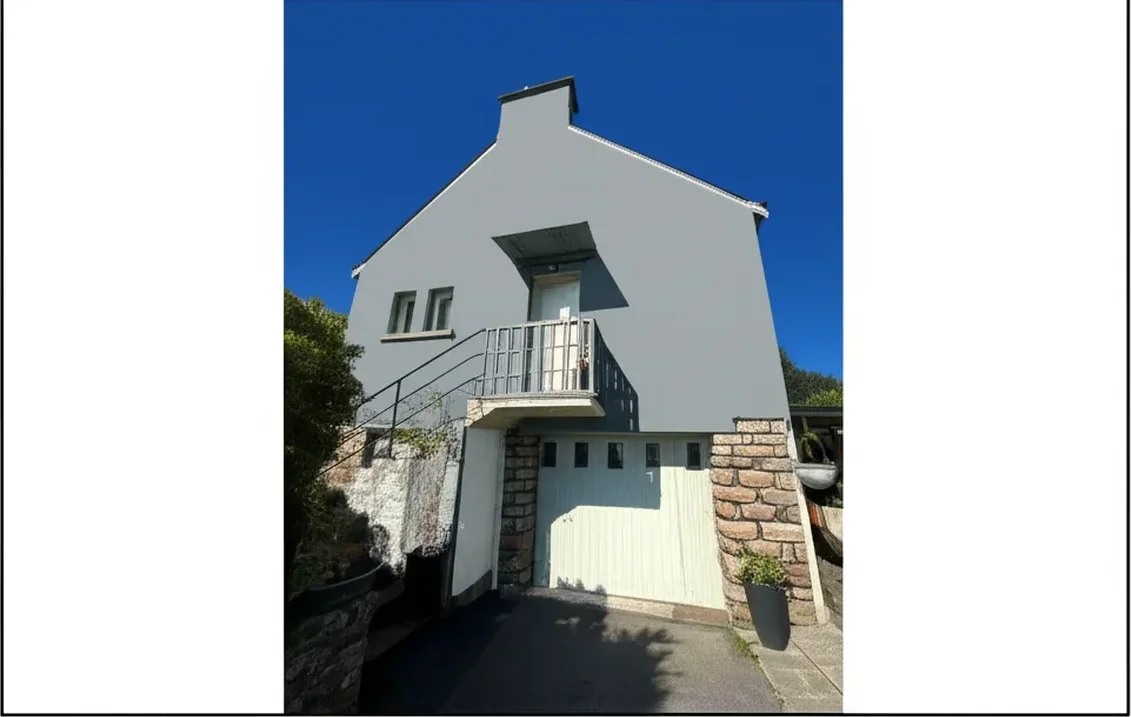
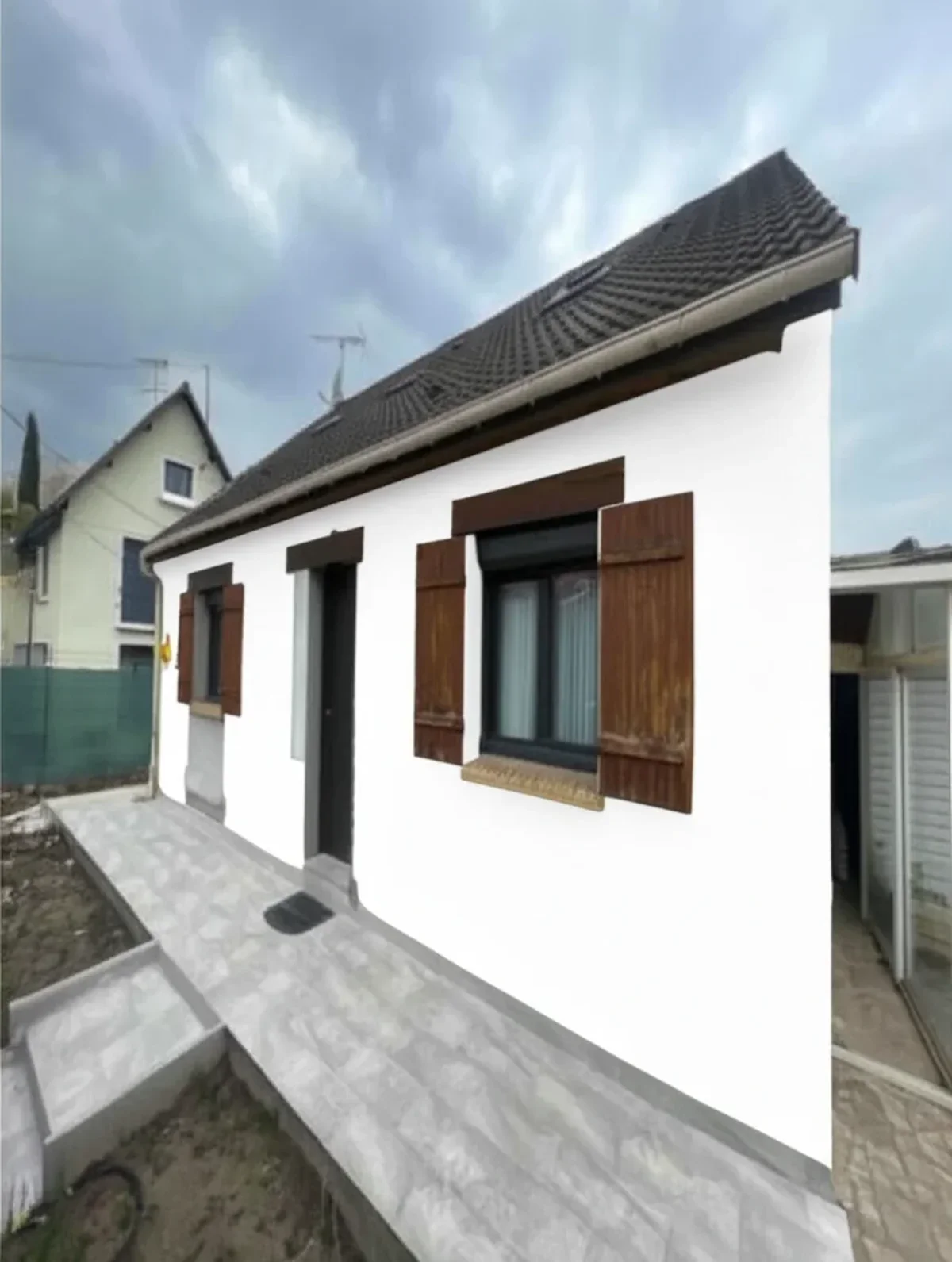
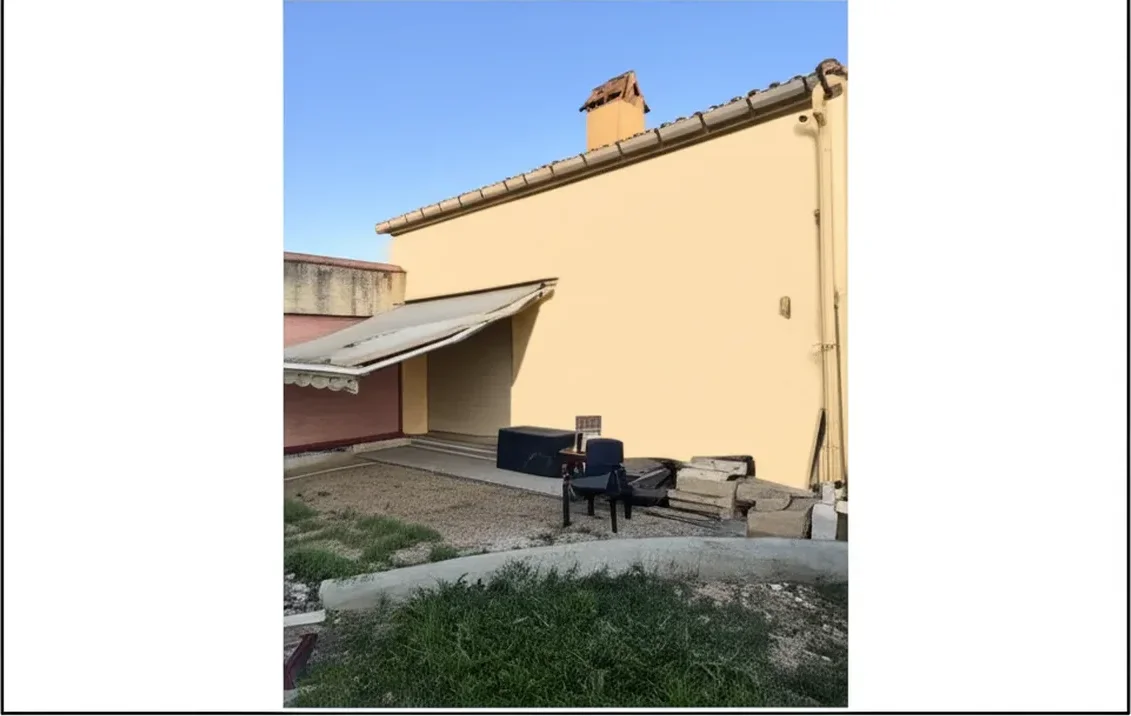
The most expensive Johnstones masonry mistake is committing to two 10L tins in a shade that lands wrong on the wall under British overcast light. Upload a photo of your own home and try Stormshield Cool Grey, Magnolia and Stone side by side on your actual elevation before walking into the Johnstone Decorating Centre or Wickes click-and-collect counter. 1 HD preview plus 3 free variations, no card required.
Open the free visualiserConservation Areas, Listed Buildings and Planning Permission for Johnstones masonry
Before applying any johnstone masonry paint colours tin to a Victorian terrace, a Cotswold cottage or a Georgian townhouse, check whether the property is in a Conservation Area or is itself a Listed Building. Painting the external walls of a Listed Building usually requires Listed Building Consent, even if the wall has previously been painted. In a Conservation Area an Article 4 Direction may restrict exterior colour changes without Planning Permission, particularly in towns with strong heritage profiles such as Bath, Cambridge, York, Chester and central Edinburgh. The starting point for status checking is planningportal.co.uk; in Scotland the equivalent is gov.scot historic environment.
For most cavity-wall semis and terraces built after 1948 that are not Listed and not in a Conservation Area, repainting an already-painted exterior in any Stormshield ready-mixed shade falls under Permitted Development and needs no formal consent. New-build properties under developer covenants on housing estates built since 2010 may have private restrictive covenants on exterior colour - check the title deeds with HM Land Registry at gov.uk Land Registry before opening the 10L tin of Stormshield Iron Grey or Pewter. Our Conservation Area painting rules guide walks through the consent process step by step.
A real case from our 2026 dataset. A homeowner on a Conservation Area street in York ordered three 10L tins of Stormshield Iron Grey to repaint a rendered Edwardian terrace in late 2025 without consulting the council. The local planning authority issued an Article 4 enforcement notice requiring the elevation be repainted in a "heritage tone agreed with the conservation officer". The eventual remedial repaint used Stormshield Chiltern at a total project cost of GBP 1,850 including scaffold rental. A 10-minute phone call to the council's conservation officer before placing the order would have flagged Iron Grey as inappropriate for the street character and saved roughly GBP 1,400.
Where to buy Johnstones masonry paint in 2026: merchant guide
The johnstones masonry paint range in 2026 is sold through three principal merchant channels: the Johnstone Decorating Centre network (around 180 branches across England, Wales, Scotland and Northern Ireland), Wickes stores (full Stormshield range across most large-format branches), and a handful of larger B and Q Warehouse outlets and independents in the Midlands and North. The retail Stormshield range is not stocked by Screwfix or Homebase as standard in 2026, though Screwfix carries the comparable Dulux Trade Weathershield range that decorators frequently substitute.
The fastest fulfilment route for a planned weekend project is Wickes click-and-collect on a Stormshield ready-mixed shade. Order Wednesday or Thursday, collect Friday afternoon, paint Saturday and Sunday if the Met Office forecast at metoffice.gov.uk shows three consecutive dry days above 8 degrees Celsius. For a bespoke mixed Stormshield Trade colour, the Johnstone Decorating Centre route is faster than the trade home-delivery route because the colour kiosk mixes the tin while you wait. Trade card holders get 8 to 12% off list price ex-VAT at most Johnstone Decorating Centres in 2026.
Geographic stocking patterns matter. The Stormshield range is strongest in the Midlands and North (Birmingham, Leeds, Manchester, Sheffield, Newcastle) reflecting the brand's Manchester roots. London has thinner Stormshield retail stock than Sandtex 365 or Dulux Weathershield; central-London homeowners often order through Brewers Decorator Centres or independent Westminster paint merchants for the Johnstone Trade range. Scotland has solid Stormshield stocking through Johnstone Decorating Centres in Glasgow, Edinburgh and Aberdeen, though Crown Trade Clearguard 365 is often the trade-decorator first choice in Scotland.
How to test it on your own home before you buy
No third-party report replaces your own walls: the same colour reads differently on a north elevation and a south one, next to red brick or a grey roof, under morning and evening light. Take a daylight photo, upload it to the free AI paint visualiser, and run two or three candidates on the same image so the comparison is fair. Keep the one or two that survive the side-by-side, buy a tester pot of each, and brush them out on the actual surface in the actual light before you order the full quantity.
Frequently asked questions about johnstone masonry paint colours UK 2026
Below are the questions UK homeowners and decorators ask most often about johnstone masonry paint colours, drawn from a mix of decorator forum threads, Johnstone Decorating Centre counter conversations, Wickes community pages and our own visualiser feedback. For wider exterior planning see the best paint for pebbledash walls UK guide and the best exterior paint colours UK 2026 guide.
Disclaimer: Johnstones, Johnstone Trade, Stormshield, Dulux, Weathershield, Sandtex, Crown, Crown Trade, Clearguard, Farrow and Ball, Little Greene, B and Q, GoodHome, Wickes, Brewers, Sherwin-Williams and Benjamin Moore are trademarks of their respective owners. Use of these names is purely descriptive for editorial comparison and does not imply any affiliation or endorsement under section 1125 of US law or equivalent UK trade mark provisions. Prices, coverage figures and BS EN classifications are indicative for 2026 and may vary by retailer, region, batch and stock cycle.
Trademarks mentioned (Sherwin-Williams, Benjamin Moore, Behr, Caparol, Brillux, Sto, Alpina, Valspar, PPG, Glidden, Dulux, Crown Trade, Sandtex, Farrow & Ball, Johnstone's, Leyland) are property of their respective owners. FacadeColorizer is independent and not affiliated with any of them. Nominative fair use under Lanham Act §1125.