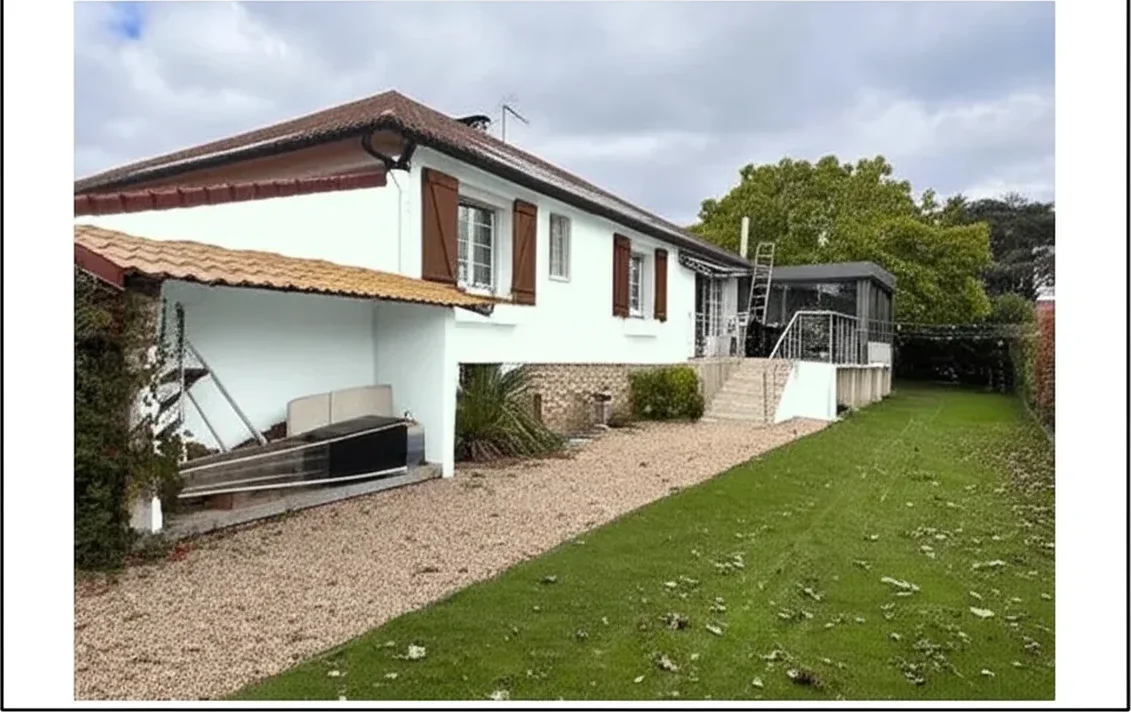
Try it on your house

Board and batten is the single most photographed exterior siding pattern in the United States right now, and it is not a passing trend. Vertical wide boards joined by narrow battens have been used on American barns, churches, and farmhouses since the 1840s, but the 2026 version is engineered, color-coded, and feeding the modern farmhouse boom that has dominated best exterior paint colors 2026 reporting for the last five years.
This guide walks through the architectural style, the top eight paint colors for 2026, your two main siding choices (James Hardie and LP SmartSide), how to use vertical lines as a visual accent, application step by step, and the eight questions homeowners send us most often. Whether you are designing a full board and batten elevation or adding it as a gable accent, the color decisions below will keep you out of the most common repaint regrets.
Board and batten: where the style comes from and why it is everywhere again
Board and batten construction is a vertical siding system: wide planks (the boards, typically 8 to 12 inches wide) are installed flush against the wall, and narrow strips (the battens, typically 1.5 to 3 inches wide) are nailed over the seams. Originally a practical solution for hand-sawn planks that warped and gapped, the look was preserved through American history because it reads honest, sturdy, and humble. Wright used it on Prairie homes, Joseph Eichler used it on California mid-century moderns, and Joanna Gaines essentially relaunched it for the 2010s farmhouse wave.
Try it on your house
No photo? Try a sample
The 2026 board and batten resurgence is being driven by three forces. First, the modern farmhouse aesthetic refuses to die: see our top 15 modern farmhouse exterior paint colors 2026 for the broader color story. Second, engineered siding products from James Hardie and LP have made the look durable in real climates without the rot risk of true wood. Third, the verticality reads tall and elegant on the small-lot infill homes that now dominate new construction in the Sun Belt and Midwest. For weather-tested Midwest combinations, our farmhouse paint colors Midwest 2026 guide pairs sage, oxblood, and warm whites with vertical siding on Iowa, Ohio, and Wisconsin farmhouses.
The top 8 board and batten paint colors for 2026
Every combination below is sourced from real 2026 specs we have seen pass through our visualizer, cross-checked against Sherwin-Williams, Benjamin Moore, and Behr fan decks, and verified for ColorPlus or ExpertFinish factory availability where applicable.
1. Polar Bear (Behr 75) + Cracked Pepper (Behr PPU18-01)
The default 2026 farmhouse. Polar Bear is a warm soft white with a barely-there cream undertone, Cracked Pepper is the matte true black that has overtaken Tricorn Black and Iron Ore in Behr-loyal markets. Pair Polar Bear on the boards and battens, then run Cracked Pepper on window trim, soffit fascia, and front door. The contrast reads crisp from 50 yards and timeless from the curb. Behr Marquee in this combination holds 12 to 15 years before fade in moderate climates. For the deep dive on this specific combination, see our Cracked Pepper vs Iron Ore exterior comparison and the Behr Polar Bear 75 complete guide.
Preview Polar Bear and Cracked Pepper on your home in 30 seconds
2. Hale Navy (Benjamin Moore HC-154) + Simply White (Benjamin Moore OC-117)
The coastal classic. Hale Navy is the deep, blue-gray navy that does not photograph too purple at dusk and does not flatten to black in direct sun. Body in Hale Navy, battens and trim in Simply White, copper-finish hardware. Works beautifully on a two-story farmhouse with a metal gable roof. This is the combination you see on Cape Cod, Charleston, and Lake Michigan board and batten builds.
3. Iron Ore (Sherwin-Williams SW 7069) + Alabaster (SW 7008)
The high-contrast modern farmhouse. Iron Ore is the soft black-gray that reads almost charcoal in shade and near-black in full sun. Battens and trim in Alabaster, the warm off-white that dominated farmhouse interiors and is now claiming the exteriors. White Dove is a slightly softer alternative if your roof is asphalt charcoal. Reverse the formula (Alabaster body, Iron Ore battens) for a lighter overall feel. For brick alternatives that pair beautifully with vertical siding accents, see our painted brick exterior complete guide 2026.
4. Evergreen Fog (Sherwin-Williams SW 9130) + Pure White (SW 7005)
The sage farmhouse. Evergreen Fog was SW Color of the Year and remains the dominant sage of 2026: muted, slightly gray, and reads green only in side light. Body in Evergreen Fog, battens in Pure White, black metal accents. Especially strong in tree-shaded lots in the Pacific Northwest, the Midwest, and the Appalachian foothills where saturated greens get lost. For James Hardie ColorPlus alternatives in sage, browse our James Hardie color options 2026 forward guide.
5. Tricorn Black (Sherwin-Williams SW 6258) + Snowbound (SW 7004)
The bold modern farmhouse. A full Tricorn Black body with crisp Snowbound battens and trim is the look popularized by Magnolia and the Joanna Gaines build crews. Reads dramatic, masculine, and architectural. The dark body absorbs more heat (run premium reflective paint and consider it only if your HOA allows full-black exteriors). For complete commitment, see our white house black trim guide 2026.
6. Naval (Sherwin-Williams SW 6244) + Extra White (SW 7006)
The saturated navy farmhouse. Naval is a darker, more saturated navy than Hale Navy with a slight black undertone that handles direct southern sun without going purple. Body in Naval, battens and trim in Extra White, oil-rubbed bronze fixtures. Reads confident and grounded on tall two-story elevations. For vinyl-clad alternatives that mimic this look on a budget, see our vinyl siding color options guide 2026.
See Naval and Hale Navy side by side on your board and batten
7. Urbane Bronze (Sherwin-Williams SW 7048) + Shoji White (SW 7042)
The warm modern. Urbane Bronze is the warm-brown deep neutral that anchors a board and batten without the harshness of true black. Body in Urbane Bronze, battens and trim in Shoji White, cedar accent posts. Especially strong in arid Western and Mountain West climates where the bronze ties to natural earth tones. For more on cedar pairings, see our cedar shake siding paint colors 2026 guide.
8. Rookwood Sash Green (Sherwin-Williams SW 2810) + Marshmallow (SW 7001)
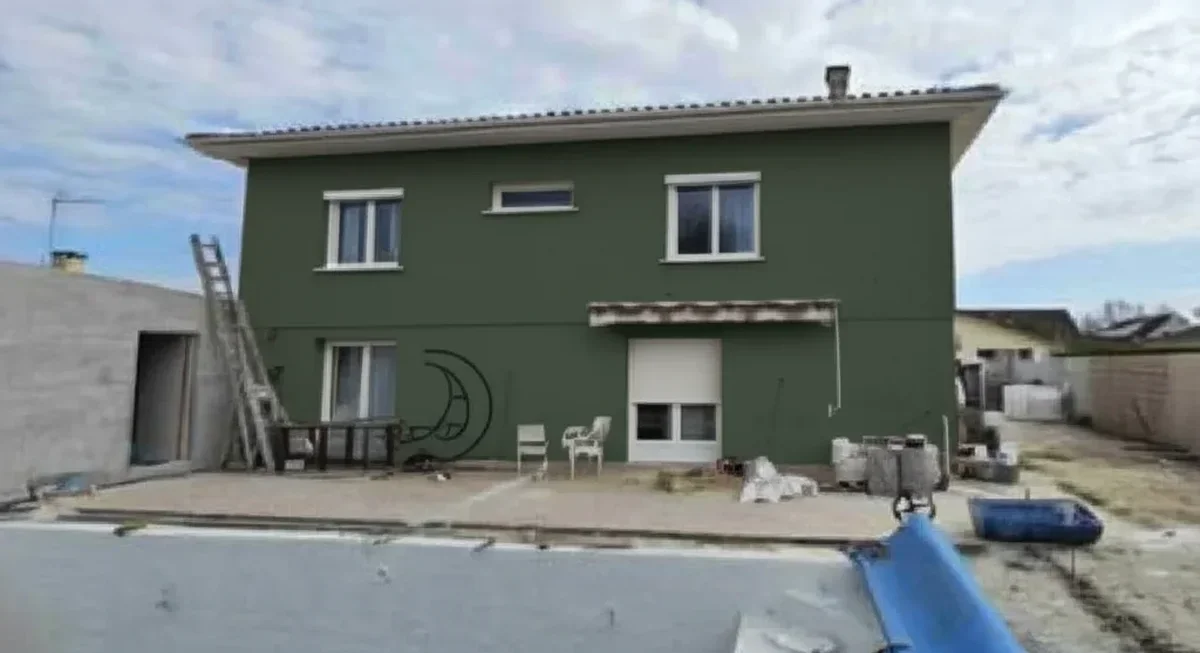
The heritage farmhouse. Rookwood Sash Green is a deep, slightly muted hunter green that nods to 19th-century American farmhouses without slipping into theme-park territory. Body in Rookwood Sash Green, battens in Marshmallow (a warmer off-white than Pure White), black shutters. Strongest on rural lots with mature trees and barn outbuildings.
Preview all 8 board and batten color combinations on your actual home in 30 seconds
Modern farmhouse schemes often pair white board and batten with a white brick base or chimney. The brick half follows different rules from the siding: see our white painted brick house guide for the system and the whites that hold up on masonry.
Hardie vs LP SmartSide: which engineered board and batten holds paint better?
Both James Hardie and LP SmartSide make engineered board and batten systems that have effectively replaced solid wood for new construction and remodels. The two products behave differently and accept paint differently, so the choice matters before you finalize a color. For the full head-to-head, see our HardieBoard vs LP SmartSide 2026 comparison.
James Hardie HardiePanel + HardieTrim battens
James Hardie sells a 4x8 or 4x10 vertical fiber cement panel (HardiePanel) with a smooth or cedarmill texture, paired with 1.5-inch or 2.5-inch HardieTrim battens nailed over the seams. The factory ColorPlus Technology finish covers 20+ curated colors with a 15-year limited warranty on the finish and 30-year limited warranty on the substrate. For field paint, HardiePanel arrives factory-primed and accepts 100% acrylic exterior paint cleanly. Expect 10 to 15 years between repaints in moderate climates, 7 to 10 years in Gulf Coast humidity or Mountain West UV. James Hardie publishes installation specs on jameshardie.com.
LP SmartSide vertical panel + trim battens
LP SmartSide makes a vertical engineered wood panel with a true wood texture and matching SmartSide trim battens. The factory ExpertFinish coating runs 16+ colors with a 5/50 prorated finish warranty. Field-painted LP SmartSide holds paint well when all six sides (front, back, top, bottom, and both cut ends) are primed and painted before install. Typical repaint cycle is 7 to 12 years. LP runs cheaper than Hardie by $2 to $3 per square foot installed and outperforms in hail and freeze-thaw climates.
Verdict for board and batten: Hardie if your priority is paint hold, fire resistance, or Gulf Coast humidity. LP if your priority is budget, hail resistance, or freeze-thaw cycling. For the broader siding color question, our vinyl siding painting cost guide 2026 covers the budget alternative.
Compare HardiePanel and LP SmartSide color libraries on your home
The vertical line accent strategy: how to use board and batten without overdoing it
The single most expensive board and batten mistake is wrapping the entire house in vertical siding. Done wrong, it reads like a 1970s gas station or a roadside motel. Done right, the vertical lines focus the eye, lengthen the elevation, and break up large horizontal masses. Three placement strategies dominate the 2026 design playbook.
Strategy 1: Full elevation with horizontal accents
Wrap the entire body of the home in board and batten, but use horizontal lap or shake siding on a single feature: typically the gable peak, a porch frieze, or a watertable band at the foundation. This is the most photographed look on Instagram farmhouses and reads strongest on two-story elevations 24 feet wide or larger. Color tip: keep battens, gable accent, and trim in the same off-white to avoid four-color overload.
Strategy 2: Gable-only board and batten
Run horizontal lap siding on the main wall, then switch to vertical board and batten in the gable peaks only. This is the favorite of suburban builders who want the modern farmhouse cue without the cost of full vertical siding (board and batten installs about 15 to 20% slower than lap). Color tip: contrast the gable, do not match it. A Polar Bear gable over a Cracked Pepper lap body reads architectural; a matched gable disappears.
Strategy 3: Accent walls (entry and rear)
Apply board and batten only to the front entry tower or a rear elevation, leaving side walls in lap or panel. Most cost-efficient and increasingly common on tract homes that need a custom look without custom labor. Color tip: pick your boldest combination (Hale Navy, Naval, Tricorn Black) for the accent wall and keep the rest of the home neutral.
For broader exterior combinations across all siding types, browse our roundup of exterior house color combinations 2026.
Application: how to paint board and batten correctly
Whether you are painting factory-primed Hardie or LP SmartSide, freshly installed real cedar, or repainting an aged elevation, the steps are similar. Skipping any of them is the reason most board and batten repaints fail within 5 years.
Step 1: Inspect and prep
Walk every batten joint and look for hairline gaps, missing caulk, or popped fasteners. Replace failed caulk with a paintable polyurethane sealant (Sherwin-Williams Sherflex, Sashco Big Stretch, or DAP Dynaflex Ultra). Set any proud nails. On older homes, scrape any peeling paint with a carbide scraper and feather-sand the edges with 80 grit.
Step 2: Wash
Pressure wash at 1,500 to 2,000 PSI with a 25-degree tip held 12 inches from the surface. Mix in a deck wash or sodium hypochlorite solution to kill mildew, especially on north elevations. Allow 48 hours of dry weather before priming.
Step 3: Prime
Factory-primed Hardie or LP that has been exposed more than 90 days needs a fresh coat of acrylic bonding primer (Sherwin-Williams Loxon, Zinsser Peel Stop, or Benjamin Moore Fresh Start). Bare cedar or aged surfaces need a full prime coat. Skip this on factory-finished ColorPlus or ExpertFinish, only touch-up paint is required there.
Step 4: Two finish coats, vertical strokes
Use a 100% acrylic exterior paint in flat, satin, or low-sheen finish. Premium recommendations: Sherwin-Williams Emerald Exterior, Benjamin Moore Aura Exterior, Behr Marquee, or PPG Timeless. Apply with a 1/2-inch nap roller on the wide boards, then immediately back-brush every batten with a 2.5-inch sash brush to lay the finish into the corners. Always work vertical strokes, never horizontal, the directional brush marks should align with the siding grain.
Step 5: Trim and accent
Paint window trim, door casings, soffits, and fascia in your trim color last. Use a higher-sheen formulation (satin or semi-gloss) for trim to set up a subtle texture contrast against the matte body. For deep accent details, our exterior house color combinations guide shows 30+ tested pairings.
Test board and batten colors on your home before you buy a single gallon
2026 board and batten color popularity (from our visualizer data)
Board and batten specifically represented 22% of farmhouse uploads, behind only horizontal lap (38%) and ahead of cedar shake (18%), stucco (12%), and brick veneer (10%). The single most popular combination in 2026 was Polar Bear with Cracked Pepper trim, run on 2,184 unique homes.
Quick board and batten color cheat sheet for 2026
- Safe default: Polar Bear body, Cracked Pepper trim
- Coastal: Hale Navy body, Simply White battens
- Bold modern: Tricorn Black body, Snowbound battens
- Sage farmhouse: Evergreen Fog body, Pure White battens
- Heritage: Rookwood Sash Green body, Marshmallow battens
- Warm modern: Urbane Bronze body, Shoji White battens
Outbound references and inspiration galleries
For broader inspiration beyond our visualizer galleries, jameshardie.com publishes a free Color Tool with HardiePanel vertical samples on real-home photos. HGTV board and batten coverage tracks the trend in interior and exterior applications. Better Homes and Gardens board and batten coverage documents historical American precedent and modern farmhouse styling.
Frequently asked questions
What is the most popular board and batten color in 2026?
Polar Bear (Behr 75) with Cracked Pepper (Behr PPU18-01) trim is the single most popular board and batten combination of 2026, applied to 2,184 unique uploads in our visualizer first-half data. Alabaster (SW 7008) with Tricorn Black (SW 6258) trim is the close runner-up in Sherwin-Williams-loyal markets. Both deliver the high-contrast modern farmhouse look that drives the trend.
Should board and batten battens be the same color as the boards?
Yes, in 95% of cases. Painting battens a contrasting color reads busy and dates quickly to the 2010s rustic farmhouse trend. The clean look that dominates 2026 keeps battens and boards in one body color, then uses window trim, door casings, and fascia to introduce the contrast. The only exception is intentional period-correct restorations on Victorian or early-American homes where contrasting battens were historically accurate.
Can you paint board and batten in dark colors without warping?
On engineered siding (James Hardie HardiePanel or LP SmartSide), yes. Both products are dimensionally stable and rated for dark exterior colors without thermal warping. On real cedar or pine board and batten, dark colors increase surface temperature by 20 to 30 degrees Fahrenheit on south elevations and can accelerate checking and cupping. If you want Tricorn Black or Naval on solid wood, specify radiata pine or vertical-grain cedar and prime all six sides.
How long does board and batten paint last before repainting?
Factory-finished James Hardie ColorPlus board and batten holds 12 to 18 years before meaningful fade, LP SmartSide ExpertFinish runs 10 to 14 years, and field-painted board and batten in 100% acrylic exterior paint typically goes 8 to 12 years between repaints. Dark colors (Tricorn Black, Naval, Hale Navy) fade slightly faster on south and west elevations due to UV exposure, plan for the lower end of each range if your home faces full afternoon sun.
Is board and batten more expensive to paint than lap siding?
Yes, by about 15 to 25%. Board and batten requires back-brushing every batten edge to lay paint into the corners, which adds roughly 0.25 hours per 100 square feet of labor over flat lap siding. On a 2,500 sq ft exterior, expect $400 to $700 in additional labor cost compared to a horizontal lap repaint. Factory-finished panels eliminate this premium because they arrive painted from the plant.
What sheen should board and batten exterior paint be?
Flat or low-sheen (eggshell, velvet) on the body, satin on the trim. Flat hides surface imperfections in older homes and reads softer in photographs, which is critical for the modern farmhouse aesthetic. Reserve satin and semi-gloss for window trim, door casings, and fascia where a subtle sheen contrast adds depth. Avoid full gloss on exterior board and batten, it reads commercial and shows every nail head.
Does board and batten work on small or single-story homes?
Yes, but use it strategically. Full board and batten on a one-story ranch reads boxy because the vertical lines have nowhere to go. The better approach on small homes is gable-only or entry-only board and batten, which lengthens the perceived height of the elevation. On homes under 1,500 sq ft, limit board and batten to 30 to 40% of the visible facade and lean on horizontal lap or shake for the rest.
Can I add board and batten to an existing house without re-siding the whole home?
Yes, this is the fastest growing remodel in 2026. Board and batten accents can be installed directly over existing lap siding using a furring strip system, or as a freestanding entry feature with new sheathing. Typical cost runs $8 to $15 per square foot installed including paint, far cheaper than a full re-side. Most homeowners apply it to the front gable, entry tower, or porch wall for maximum curb appeal impact at minimum spend.
Board and batten is the most photogenic siding pattern of 2026, but the color decision matters more than the boards themselves. Polar Bear with Cracked Pepper, Hale Navy with Simply White, and Evergreen Fog with Pure White are the three combinations our 16,983 first-half simulations confirm work across every region of the United States. Before you finalize a color, preview it on your actual home with our free AI paint visualizer. Sources: James Hardie product literature, LP SmartSide installer documentation, Sherwin-Williams 2026 ColorMix, Benjamin Moore Color Trends 2026, Behr Color Studio 2026.
Trademarks mentioned (Sherwin-Williams, Benjamin Moore, Behr, Caparol, Brillux, Sto, Alpina, Valspar, PPG, Glidden, Dulux, Crown Trade, Sandtex, Farrow & Ball, Johnstone's, Leyland) are property of their respective owners. FacadeColorizer is independent and not affiliated with any of them. Nominative fair use under Lanham Act §1125.