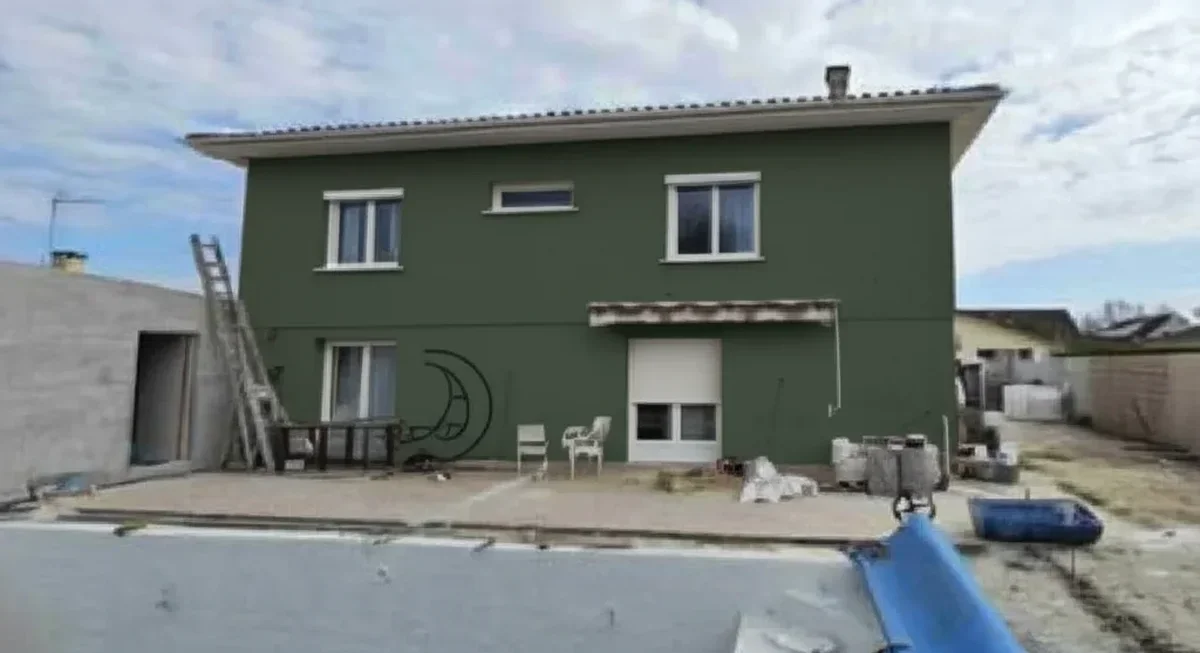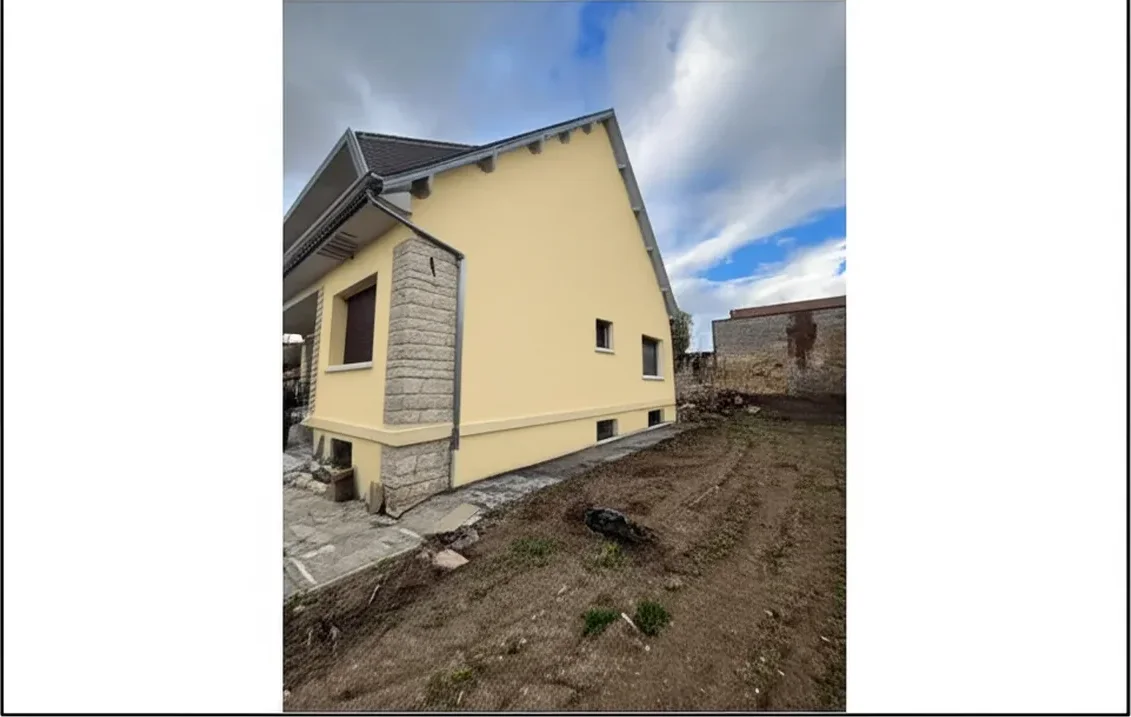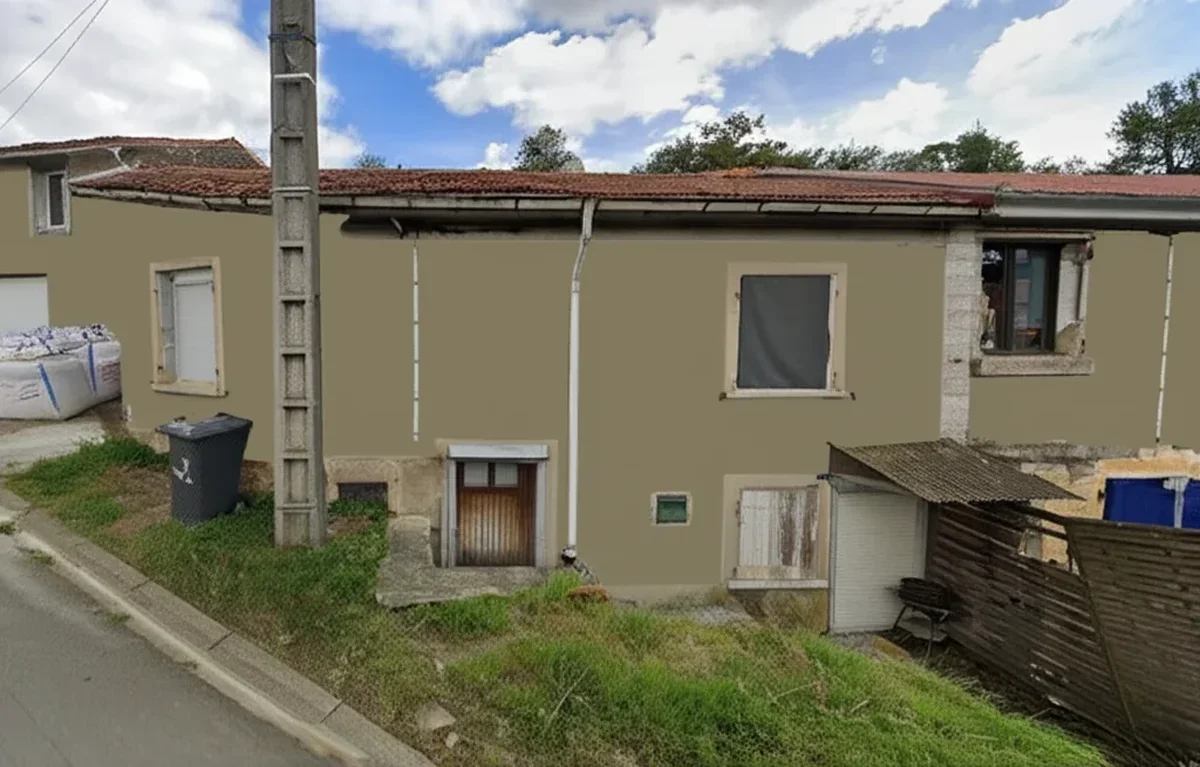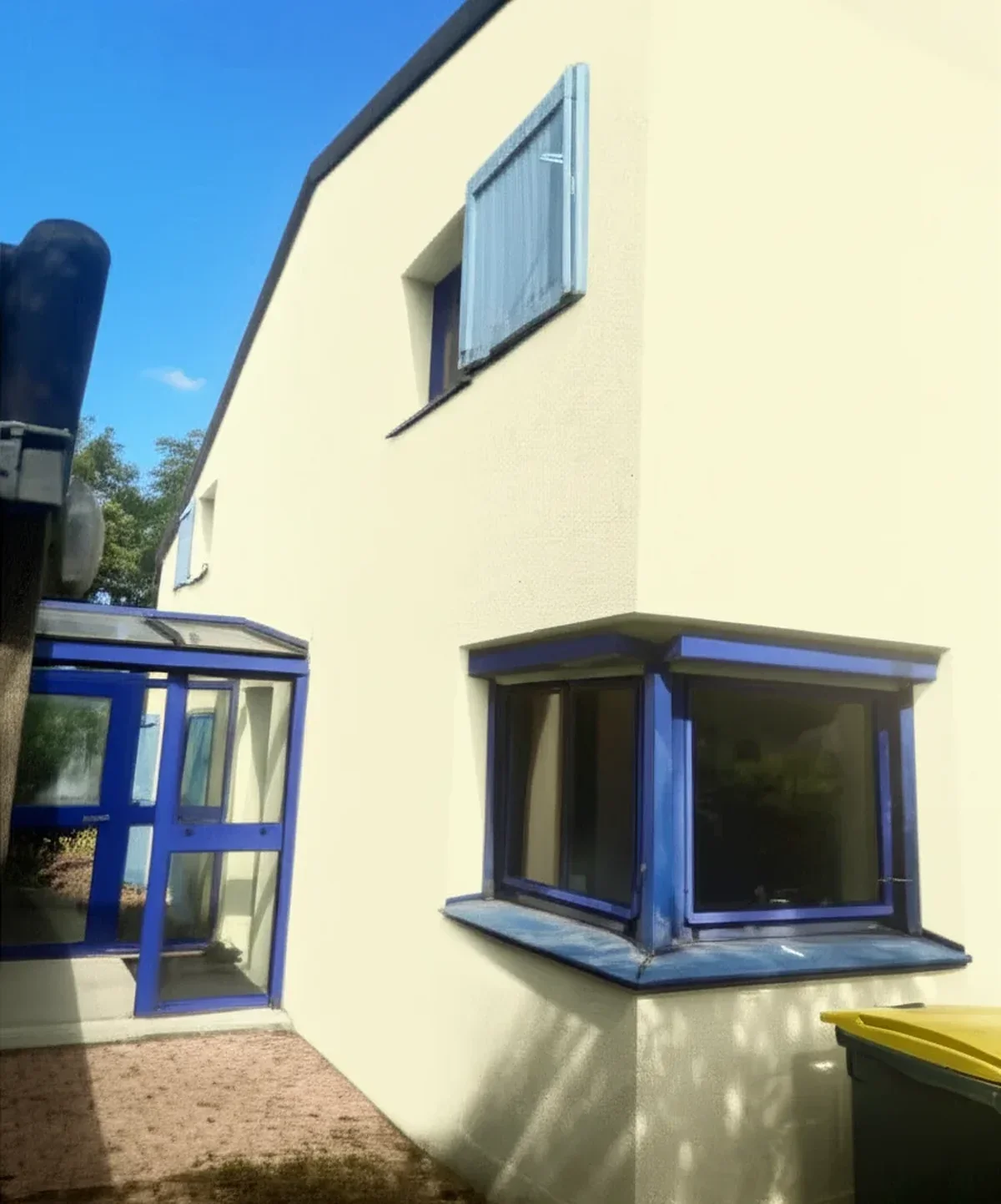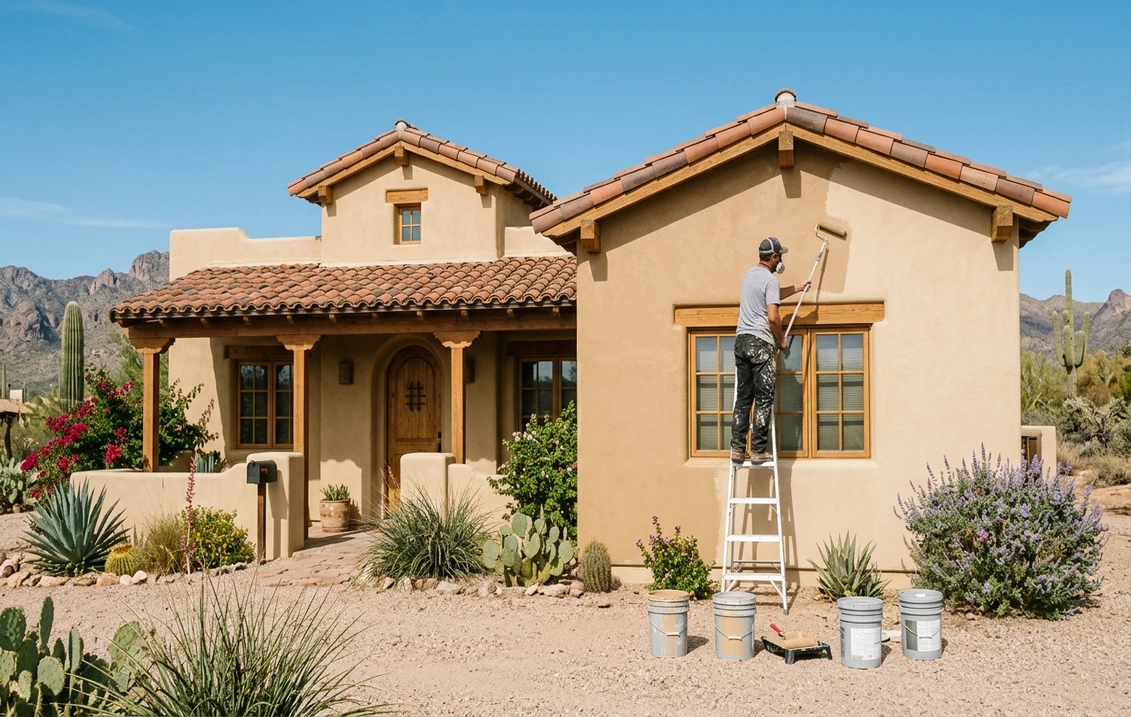
Try it on your house

"Best paint for stucco" is really two questions, and the brand is the second one. The first is whether your stucco needs an acrylic masonry paint or an elastomeric coating: a sound, sealed wall that you want to recolor wants acrylic, while a wall with hairline cracks, water intrusion or bare, never-sealed stucco wants an elastomeric that bridges the cracks and sheds wind-driven rain. Get that wrong and the best brand in the world fails, either by cracking along the old lines or by trapping moisture behind a film too thick to breathe. This guide takes the acrylic-versus-elastomeric decision first, using contractors' numbers and the manufacturers' own product pages, then puts the three brands most Americans can actually buy for stucco, Sherwin-Williams, Behr and Dunn-Edwards, side by side on what they claim rather than on a test we did not run.
Short version: sound stucco, repaint, color change: a 100 percent acrylic masonry paint in flat (Behr Masonry, Stucco & Brick; Sherwin-Williams Loxon XP; Dunn-Edwards' acrylic masonry lines). Cracked, bare or leaking stucco: an elastomeric (Behr Premium Elastomeric; Dunn-Edwards Enduralastic 10), applied at the full film thickness the data sheet demands, and only after the wall is dry. Flat sheen, always. Dark colors last longer in acrylic than in elastomeric.
Acrylic vs elastomeric: the decision that matters more than the brand
Both are acrylic chemistries; the difference is film thickness and stretch. The Florida contractor A New Leaf Painting puts the numbers plainly in its elastomeric versus acrylic comparison: elastomeric goes on at "typically 10 to 20 mils per coat compared to 2 to 3 mils for traditional acrylic", so "a gallon of elastomeric covers around 100 square feet on stucco" while "a gallon of premium acrylic covers 250 to 300 square feet on the same surface". That thickness is what lets elastomeric "bridge small cracks that would split open a thinner acrylic film", and it is also why it is "less breathable than acrylic", so that "trapped moisture in the wall can become a problem" if the stucco is not fully dry. Elastomeric "typically runs significantly more than premium acrylic for the same square footage", and "darker elastomeric colors fade faster than premium acrylic darks" under strong sun.
The same contractor's rule for choosing is the one most professionals use: elastomeric "earns its higher cost when the project priorities are waterproofing", on bare or never-sealed stucco, hairline cracking and block; premium acrylic "is the better choice in more situations than most homeowners realize", on repaints over sound surfaces, mixed exterior materials and darker colors. Breathability is the number behind the argument. The stucco contractor who writes as The Stucco Guy explains that acrylic "has a higher permeability value when compared to an elastomeric product", that "any coating that has a rating of 10 perms or higher is considered a breathable coating", and that in his experience most elastomeric failures come "due to the lack of the recommended mil thickness" (The Stucco Guy, what paint to use on exterior stucco). Half-thickness elastomeric is the worst of both worlds: too thin to bridge cracks, still too tight to breathe.
| Criterion | 100% acrylic masonry paint | Elastomeric coating |
|---|---|---|
| Film per coat (contractor figures) | 2 to 3 mils | 10 to 20 mils |
| Coverage on stucco | 250 to 300 sq ft per gallon | About 100 sq ft per gallon |
| Hairline cracks | Telegraph through; patch first | Bridged, when applied at full thickness |
| Breathability | Higher; the safe choice on walls that get damp | Lower; wall must be dry before coating |
| Dark colors | Hold better | Fade faster under strong sun |
| Best use | Repaints over sound, sealed stucco; color changes | Bare or cracked stucco, waterproofing, block |
Try it on your house
No photo? Try a sample
Sheen: flat, and the reason is not taste
Stucco is a textured surface, and any sheen turns that texture into a map of every trowel mark and patch. The Stucco Guy's position is unambiguous: "There really is only one type of sheen you should be using (in my opinion) for exterior stucco and that is a FLAT SHEEN"; satin and eggshell suit other sidings but "not stucco", and semi-gloss "may highlight imperfections and reflect too much light". The manufacturers agree in practice: Sherwin-Williams sells Loxon XP in flat and satin, Behr sells its masonry paint in flat and satin, and the satin exists for block and concrete, not for a stucco house. If a quote specifies satin on stucco, ask why.
Sherwin-Williams: Loxon XP, the high-build masonry coating
Sherwin-Williams' stucco product is not one of its house paints but a masonry coating. Its Loxon XP page describes "a direct-to-concrete and masonry high-build coating" with "outstanding resistance to wind-driven rain in just two coats", "highly resistant to alkali and efflorescence", that "may be applied to a surface with a pH from 6 to 13", needs "no primer", can go onto "fresh concrete (at least 7 days old)", is "mildew resistant" and is "recommended for tilt-up, precast or poured-in-place concrete, CMU and stucco", in flat and satin. Two things in that list matter for a homeowner. The pH tolerance and the seven-day figure mean Loxon XP is the Sherwin-Williams answer for new or recently patched stucco, where ordinary paint would burn on the alkaline surface. And "high-build" places it between a thin acrylic and a true elastomeric: thicker than a house paint, without the crack-bridging claim of an elastomeric. For a sound stucco house being recolored, Sherwin-Williams' regular exterior lines also work over a masonry primer; our Sherwin-Williams exterior paint guide ranks them.
Behr: the acrylic masonry paint and the elastomeric, both at The Home Depot
Behr sells the two products this guide separates under one family name. Behr Masonry, Stucco & Brick Paint (flat or satin) is described by Behr as a high-quality acrylic latex paint with hiding properties that is self-priming and mildew resistant, with coverage listed at 250 to 400 square feet per gallon: that is the acrylic option, for sound stucco. Behr Premium Elastomeric Masonry, Stucco & Brick is the other camp: an exterior, flexible high-build coating designed to expand and contract, bridging hairline cracks on vertical masonry, with elongation listed at up to 600 percent, a limited lifetime guarantee, and a 100 percent acrylic film that Behr describes as breathable. Behr is the only one of the three sold in a big-box store, which is its real advantage: evening hours, no account, and both products on the same aisle. Our review of Behr Masonry, Stucco & Brick goes through the acrylic line in detail.
Dunn-Edwards: Enduralastic, the Southwest's elastomeric
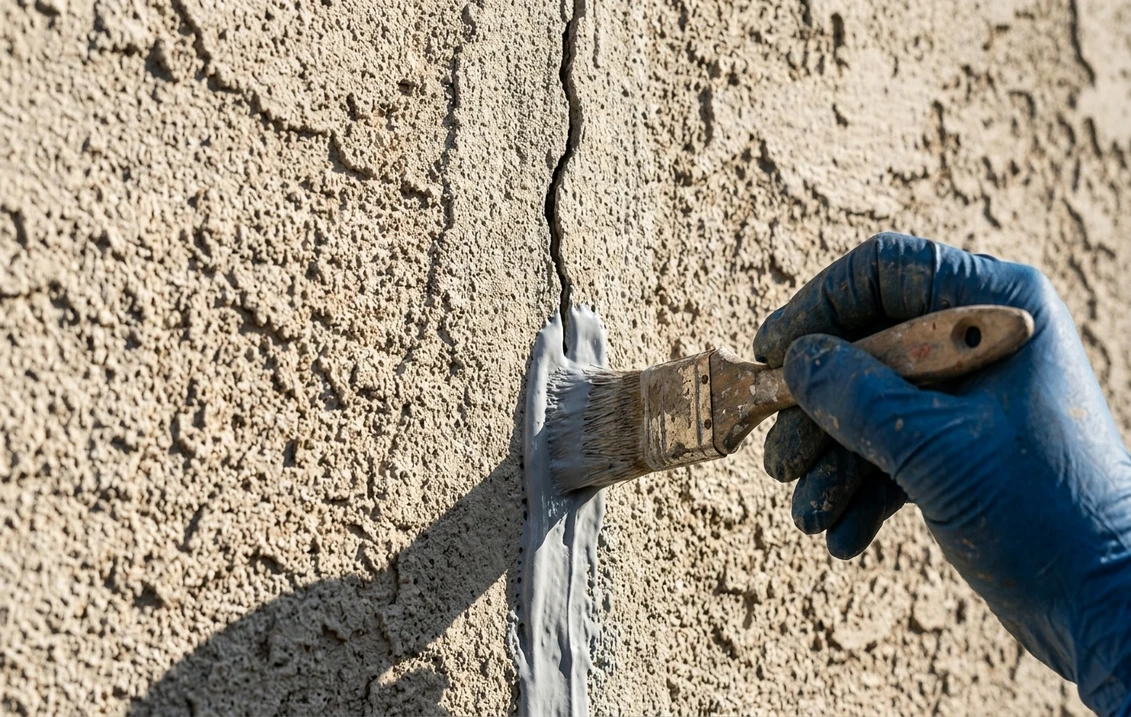
Dunn-Edwards is the regional brand of the stucco belt, from Southern California to Arizona and Texas, and its stucco product is an elastomeric. The Enduralastic 10 page calls it an "ultra-premium specialty 100% acrylic elastomeric wall coating designed for use on exterior surfaces" that "provides outstanding waterproofing protection against wind-driven rain by bridging hairline cracks" and "excellent adhesion and outstanding alkali and efflorescence resistance on properly prepared masonry", with "superior elasticity and elongation" and "great dirt pick-up resistance". Dunn-Edwards also publishes its accelerated-weathering method on that page: panels cured seven days, then cycled in a QUV machine that "reproduces the damaging effects of sunlight by using fluorescent UV lamps" and "a hot condensation mechanism", with the manufacturer's conclusion that its product "clearly beats the Regional and National Brands" on chalking and binder degradation. That is a manufacturer's own test, so read it as a claim; it is nonetheless more than most brands publish. For contractors, the company's guide to working with elastomeric coatings describes the Enduralastic lines as providing "exceptional flexibility, chalking and dirt pick-up resistance" and bridging hairline cracks. For sound stucco in the same region, Dunn-Edwards' 100 percent acrylic exterior lines are the acrylic alternative.
Upload one photo, try two or three colors, free for the first simulation.
The three brands at a glance, on their own claims
| Product | Type | Manufacturer's key claims | Sheens | Where to buy |
|---|---|---|---|---|
| Sherwin-Williams Loxon XP | High-build masonry coating | Wind-driven rain resistance in two coats; alkali and efflorescence resistance; pH 6 to 13; no primer; fresh concrete at 7 days; mildew resistant | Flat, Satin | Sherwin-Williams stores |
| Behr Masonry, Stucco & Brick | Acrylic masonry paint | Self-priming, mildew resistant, 250 to 400 sq ft per gallon | Flat, Satin | The Home Depot |
| Behr Premium Elastomeric | Elastomeric | Bridges hairline cracks, elongation up to 600 percent, breathable film, limited lifetime guarantee | Flat | The Home Depot |
| Dunn-Edwards Enduralastic 10 | Elastomeric | Bridges hairline cracks, wind-driven rain, alkali and efflorescence resistance, dirt pick-up resistance, published QUV testing | Flat | Dunn-Edwards stores (Southwest) |
Benjamin Moore, PPG, Valspar and Kelly-Moore all sell masonry and elastomeric lines as well; they are not in the table because their stucco-specific product pages do not add claims the three above do not already make, and because availability by region decides more than brand. The Stucco Guy's own summary of thirty years of brands is worth repeating: he has used Behr, Benjamin Moore and Sherwin-Williams on stucco and the choice "didn't make a huge difference" to him. The product type, the film thickness and the preparation did.
New stucco, patched stucco, old painted stucco: three different jobs
Where the house is matters as much as the product: in San Diego County, for instance, the air district's amended Rule 67.0.1 has limited architectural coatings to low-VOC formulations since 2022, and the 2026 trend colors land on stucco in full sun. Our San Diego exterior painting guide covers both.
New stucco is alkaline and still curing; ordinary paint applied too soon saponifies and peels. Products built for the job state their tolerance, as Loxon XP does with its pH 6 to 13 range and seven-day figure for fresh concrete; for a plain acrylic house paint, the usual rule is a masonry primer and the curing time the stucco contractor specifies. Patched stucco drinks paint unevenly: The Stucco Guy's advice is to prime the patched area with "a primer that's suitable for stucco surfaces" before the finish coat, or the patches read as flat spots through two coats. Old painted stucco in sound condition is the easy case, an acrylic repaint over a cleaned surface; old stucco with hairline cracks is the elastomeric case, and old stucco that is damp at the base is neither until the moisture source is fixed, because a film of any kind over a wet wall blisters. Our stucco and siding cost guide covers what the preparation adds to a quote.
Climate: where elastomeric earns its cost and where acrylic wins
In the stucco belt the climate decides. Florida and the Gulf coast, with wind-driven rain and humid walls, are elastomeric country for cracked or bare stucco, with the caveat that darker elastomeric colors "fade faster than premium acrylic darks under Florida sun", in A New Leaf Painting's words from Tampa. Arizona, Nevada and inland California have the opposite problem: intense UV and heat on walls that are rarely wet, where a breathable premium acrylic holds color longer and an elastomeric adds cost without adding much protection unless the wall is cracked. Coastal California, with fog and salt, sits between: elastomeric on the weather side if the stucco is cracked, acrylic elsewhere. Whatever the region, a dark color on stucco runs hot and shows chalking sooner; our guide to stucco color options explains how light reflectance changes the choice.
What the data sheets ask for, and why most failures are application failures
- Film thickness. Elastomeric must go on at the wet mils the sheet specifies, usually by spray and back-roll on rough stucco; a roller-only coat at half thickness is the most common failure The Stucco Guy reports.
- Dry wall. Any coating, elastomeric above all, over damp stucco blisters. Fix leaks, gutters and grade first, then wait for the wall to dry.
- Clean surface. Pressure-wash chalk, dust and mildew; chalky stucco needs a masonry conditioner or primer under acrylic.
- Cracks. Hairline cracks are bridged by elastomeric; anything wider is patched with elastomeric patching compound before any coating, as the Loxon system sheets also specify a separate patch product.
- Weather window. Masonry coatings cure slowly in cold and flash in heat; follow the sheet's temperature range and avoid painting a west wall in the afternoon sun.
- Two coats. Every product above lists two coats for its waterproofing claim; one coat voids it.
Color: choose it on your own wall, in your own light
Stucco texture changes color more than any flat siding: the same beige reads lighter on smooth stucco and darker on a heavy dash, and a sample chip never shows that. Photograph the house at midday, apply two or three candidates to the stucco on the photo, compare them against the roof tile and the trim, then buy a quart of the winner and paint a square yard on the sunniest wall. For the brands above, the color libraries are interchangeable in practice: any of them will tint to a Sherwin-Williams or Benjamin Moore color, and the film type matters more than the fan deck. Our Emerald Exterior review covers the premium acrylic that many painters put on sound stucco when color retention is the priority.
Then pick acrylic or elastomeric with your contractor.
Sources and references
- A New Leaf Painting, Elastomeric Paint vs Acrylic Paint for Stucco: film thickness, coverage, breathability, cost and crack-bridging comparison from a Florida contractor.
- The Stucco Guy, What kind of paint do I use on exterior stucco: permeability, the 10-perm rule, flat sheen, priming patches, brand experience.
- Sherwin-Williams, Loxon XP Waterproofing Masonry Coating: product claims, pH range, fresh concrete, substrates, sheens.
- Behr, Masonry, Stucco & Brick Paint and Behr Premium Elastomeric at The Home Depot: acrylic and elastomeric product claims.
- Dunn-Edwards, Enduralastic 10 and Working with elastomeric coatings: product claims and the manufacturer's QUV weathering method.
Frequently asked questions
What is the best paint for stucco, acrylic or elastomeric?
Which brand makes the best stucco paint?
What sheen should stucco paint be?
Can you paint new stucco right away?
Trademarks mentioned (Sherwin-Williams, Benjamin Moore, Behr, Caparol, Brillux, Sto, Alpina, Valspar, PPG, Glidden, Dulux, Crown Trade, Sandtex, Farrow & Ball, Johnstone's, Leyland) are property of their respective owners. FacadeColorizer is independent and not affiliated with any of them. Nominative fair use under Lanham Act §1125.