Try it on your room

The hardest wall in most living rooms is the one with the fireplace and a 65-inch TV bolted above it. I have stood in front of dozens of them holding a fan deck, and the problem is always the same: a black rectangle floating on a beige wall, with a heat source underneath and nowhere good for the eye to land. The fix is almost never new furniture. It is treating that whole plane as one feature. Done right, an accent wall with a fireplace pulls the TV, the mantel, and the firebox into a single composition instead of three competing objects. Here are 16 designs that actually do that, plus the heat and finish rules that keep them from peeling.
One thing up front, because it saves people money: you do not need a built-in or a stone mason to make this work. Paint carries most of these ideas, and the single most effective move is going dark behind the screen. This guide sits inside our wider accent wall color strategy, and pairs with our broader living room accent wall ideas. This one stays narrow: the fireplace and TV plane only.
Upload your actual living room and preview black, navy, or charcoal behind your TV in about 30 seconds, free.
Why the fireplace wall wants to be the accent wall
A fireplace already is a focal point. The chimney breast usually projects from the wall, the mantel draws a horizontal line, and the firebox is a dark void even when it is off. Your eye goes there whether you want it to or not. So this is the one wall in the room where an accent finish is working with the architecture, not fighting it. That is also why a random accent wall on a blank side wall so often falls flat: there is nothing for the color to anchor to.
The mounted TV changes the math. A glossy black screen sitting on a light wall has maximum contrast, which is exactly what makes it the loudest object in the room. Put a deep color (or real material) behind it and the contrast drops. The screen stops shouting. This is the core trick behind nearly every good fireplace accent wall and the best accent TV wall ideas I have seen: lower the contrast between the screen and the wall, and the whole arrangement reads calmer.
16 fireplace and TV accent wall designs
Paint-only ideas (lowest cost, biggest payoff)
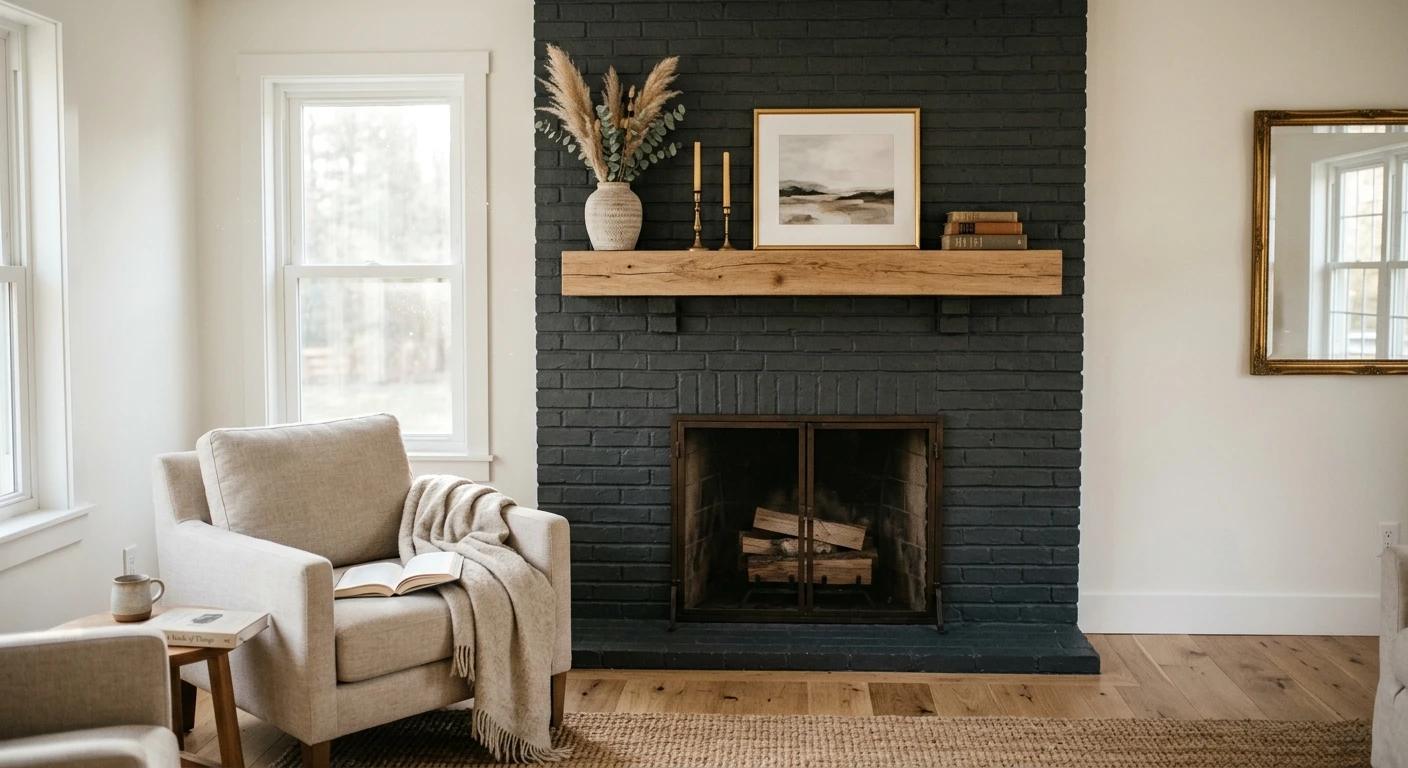
- 1. Full black plane: paint the entire fireplace wall a near-black like SW Tricorn Black (LRV 3). The TV and firebox both disappear into it after dark. The most dramatic, cleanest look on this list.
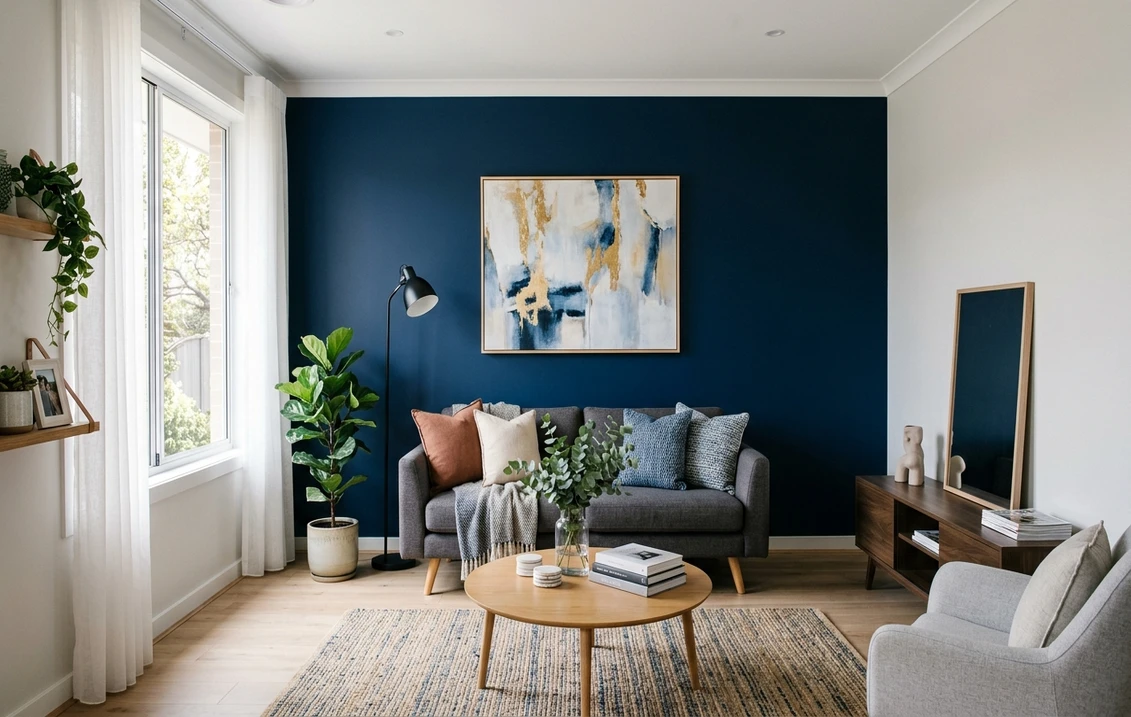
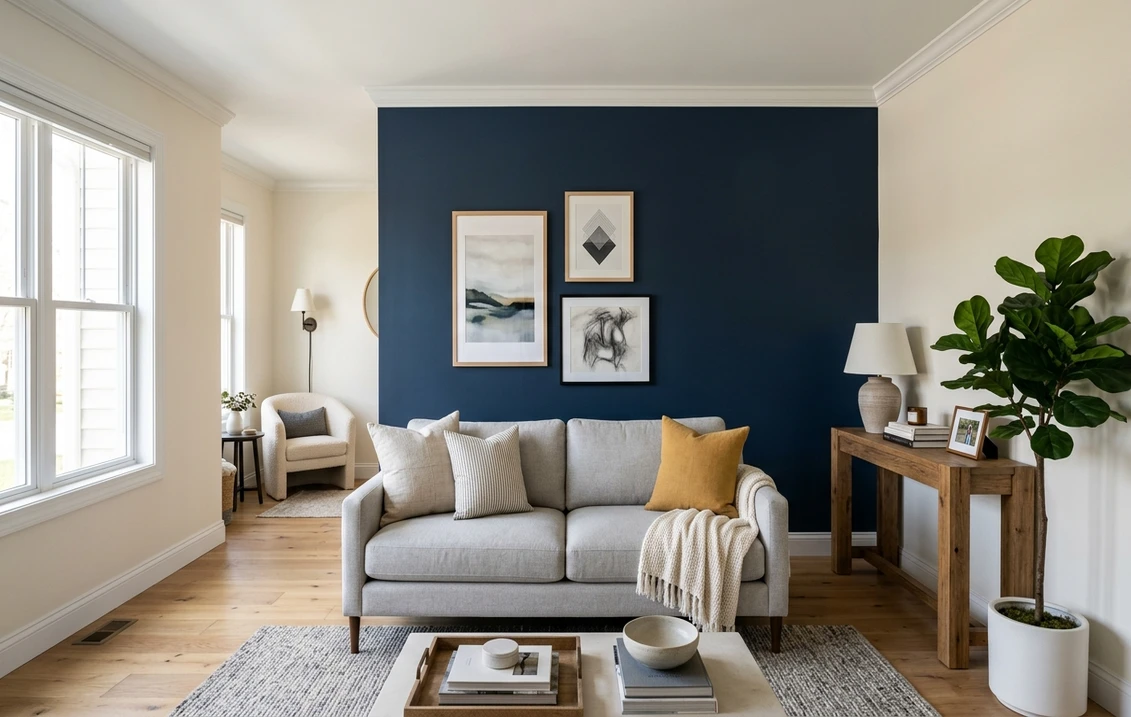
- 2. Deep navy backdrop: Benjamin Moore Hale Navy (HC-154, LRV 8) is the warm-leaning alternative to flat black. It still swallows the screen but adds color depth.
- 3. Soft charcoal: SW Iron Ore (LRV 6) reads black at night under lamp light and softens to charcoal by day. My pick when true black feels too hard.
- 4. Muted green: Evergreen Fog (LRV 31) for people who want the focal effect without going dark. It frames the firebox and mantel beautifully but hides a TV less, so it suits rooms where the screen is smaller.
- 5. Color-matched firebox: paint a tired brass or dated brick surround the same dark color as the wall (high-heat paint on metal). The firebox stops competing and the mantel becomes the line you read.
- 6. Two-tone ledger: dark wall up to the mantel, lighter wall above. Grounds the fireplace and keeps the ceiling feeling tall.
Material and texture ideas
- 7. Vertical shiplap, painted dark: board-and-batten or shiplap run floor to ceiling, then painted out in one deep color. Texture plus low contrast. A favorite of mine for hiding a big TV.
- 8. Limewash over brick: a mineral limewash gives an old-world matte mottle that no flat paint can fake, and it is genuinely breathable on masonry. For an opaque color instead, from warm white to soft black, the ten shades in the painted brick fireplace guide come with their LRV and the prep that keeps paint on brick.
- 9. Stacked stone, full height: the classic mountain-modern move. Pick a stone with enough tonal range that the TV bezel does not stand out against a flat field.
- 10. Large-format tile or slab: a single porcelain slab (marble or stone look) running floor to ceiling reads modern and seamless. Costly, but the most architectural option here.
- 11. Microcement / plaster: a troweled lime or Roman-clay plaster in a warm greige gives a soft, handmade surface. If your fireplace is already brick, our guide to whitewashing an interior brick fireplace gets you a similar matte, mottled finish without a full re-clad.
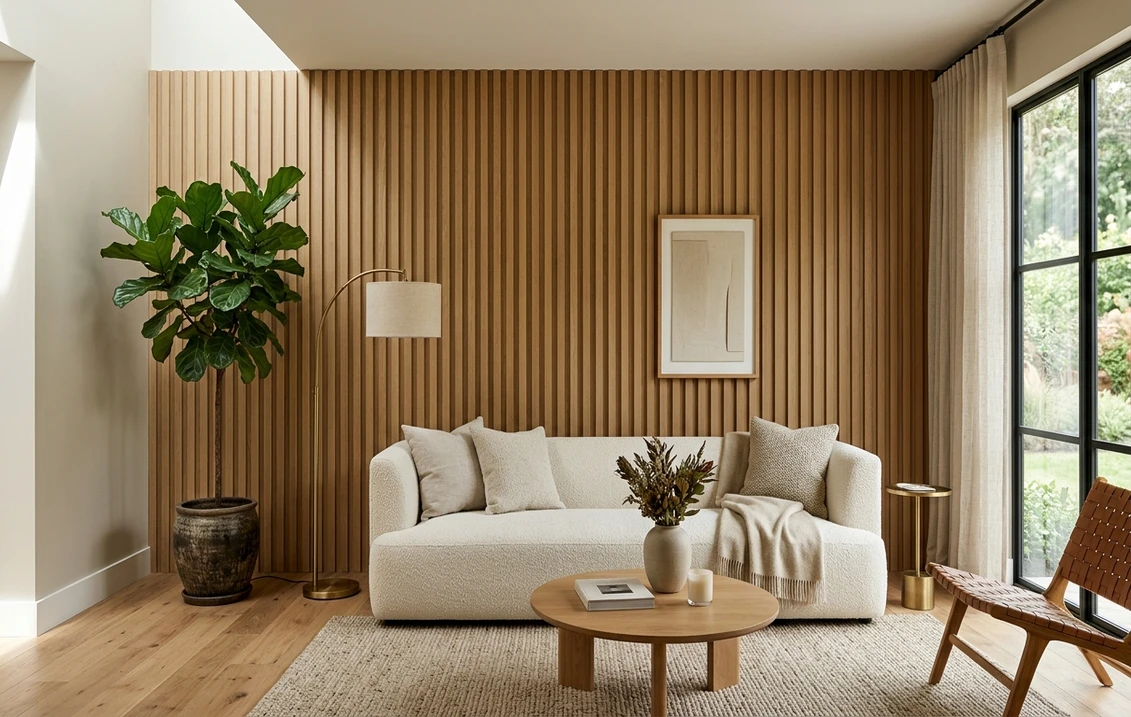
- 12. Wood slat screen: thin vertical wood slats across the upper wall. The TV peeks between or sits proud, and the rhythm of the slats carries the eye.
Built-in and layout ideas
- 13. Flanking built-ins, dark interiors: cabinets either side of the fireplace with the back panels painted the wall color. The TV nests in the center recess.
- 14. Floating shelves over dark paint: two or three slim shelves beside the TV break up the rectangle and give the screen company.
- 15. Inset niche for the TV: recess the screen into a framed niche painted darker than the surround. The frame turns the TV into intentional joinery.
- 16. Off-center fireplace, balanced wall: when the firebox is not centered, paint the whole wall dark and let furniture re-center the room. The single color hides the asymmetry better than any trim can.
If you want to see how these ideas translate to other rooms and color families before committing, our gallery of accent wall ideas and designs is a wider map, and the whole-room palettes in our top living room paint colors for 2026 roundup show what surrounds a dark fireplace wall well.
Free AI visualizer. Compare two fireplace-wall colors on your real walls before buying a sample.
Which color actually hides a mounted TV?
This is the question I get most, so here is the honest hierarchy. The darker the wall, the more the black screen blends in when the TV is off. LRV is the number to watch: lower means darker. Anything under about LRV 10 makes a powered-off screen nearly vanish. Above LRV 30 the screen starts to read as a distinct rectangle again.
| Color | LRV | Hides a black TV? | Best for |
|---|---|---|---|
| SW Tricorn Black (6258) | 3 | Yes, fully | Maximum drama, large screens |
| SW Iron Ore (7069) | 6 | Yes, softer | Warm rooms, near-black without the hardness |
| BM Hale Navy (HC-154) | 8 | Mostly | Color depth, traditional and coastal rooms |
| SW Evergreen Fog (9130) | 31 | Partly | Focal effect without going dark, smaller TVs |
| A warm greige (LRV 55+) | 55+ | No | Stone or tile feature where the surface, not the paint, does the work |
Try it on your house
No photo? Try a sample
Sources: Sherwin-Williams SW 6258, SW 7069, SW 9130 color data 2026; Benjamin Moore HC-154 color data 2026; designer field reports compiled by FacadeColorizer.
Heat, finish, and the rules that stop it peeling
A fireplace wall is not a normal wall, and ignoring that is how people end up repainting in a year. Three rules I do not break:
- Standard wall paint is fine on the wall, not on hot metal. The chimney breast and the painted plane around the firebox stay well under any temperature that bothers paint. But the firebox surround, a metal insert face, or anything that gets hot needs high-heat appliance paint (rated to several hundred degrees). Do not put ordinary latex on a hot surface.
- Go matte or eggshell, never high gloss. A dark wall in a room with side light shows every roller mark and wall flaw under a sheen. A flat or matte finish hides imperfections and reads richer. Reserve gloss for trim and the mantel only.
- Prime dark over light, and plan two coats minimum. Deep blacks and navies have low hide. Use a gray-tinted primer, then cut in carefully around the mantel and ceiling, and budget two full coats (often a third on the cut-in edges). Skimping on the second coat is why a black wall can look patchy and streaky at dusk.
One more, on TVs specifically: mount the screen so the bottom edge sits close above the mantel, not floating high. A TV mounted too high forces the room to look up and breaks the calm you just built. If the mantel runs hot when the fire is going, keep a few inches of clearance and check the manufacturer's heat guidance for your set.
See the whole plane, mantel, TV, and firebox, in one preview, free.
Color choices that disappoint (say it plainly)
Not every popular idea works on a fireplace and TV wall. A few I steer people away from:
- A mid-tone gray that splits the difference. Something around LRV 40 is too light to hide the screen and too dark to feel like a clean backdrop. It reads as indecision. Go genuinely dark or stay light and let a material be the feature.
- A cool blue-gray in a north room. With only cool indirect light, a blue-gray fireplace wall can look cold and gloomy at night. Hale Navy or Iron Ore hold their warmth better in that light. For the navy itself, our Benjamin Moore Hale Navy HC-154 review covers exactly how it shifts by room.
- High-gloss black. It looks great in a showroom and terrible in a real living room, where it mirrors the TV's reflections and shows every flaw. The matte version of a near-black like Iron Ore is the better call; our SW Iron Ore undertones and best rooms guide explains where it sits next to true black.
Frequently asked questions
What is the best color for an accent wall with a fireplace?
A deep color does the most work: SW Tricorn Black (LRV 3), SW Iron Ore (LRV 6), or Benjamin Moore Hale Navy (HC-154, LRV 8). Each one lowers the contrast between the wall and a mounted black TV, so the screen and firebox blend in and the mantel becomes the line you read. If you want a focal effect without going dark, a muted sage like Evergreen Fog (LRV 31) frames the fireplace while leaving a smaller TV more visible.
Does painting the wall dark really hide a mounted TV?
Yes, when the TV is off and the wall is dark enough. The black screen has maximum contrast against a light wall, which is what makes it stand out. Paint the wall under about LRV 10 (a black, charcoal, or deep navy) and a powered-off screen nearly disappears into it. Above roughly LRV 30 the screen starts to read as a distinct rectangle again, so mid-tones do not hide it well.
Can I use regular wall paint around a fireplace?
On the wall itself, yes. The chimney breast and the painted plane around the firebox stay well below any temperature that affects standard latex paint. The exception is hot metal: a firebox surround or insert face that heats up needs high-heat appliance paint rated to several hundred degrees. Do not put ordinary latex on a surface that gets hot, and keep a few inches of TV clearance above a mantel that runs warm.
What finish should I use on a fireplace accent wall?
Matte or eggshell, not high gloss. A dark wall with side light shows every roller mark and flaw under a sheen, and a glossy black wall also mirrors the TV's reflections. A flat or matte finish hides imperfections and reads richer and deeper. Keep gloss for the trim and mantel only, and plan a gray-tinted primer plus at least two coats, since deep blacks and navies have low hide.
Should the TV go above the fireplace?
It can, if you mount it low. The most common mistake is hanging the TV too high to clear the mantel, which forces the room to look up and breaks the calm composition. Mount the bottom edge close above the mantel, treat the whole plane as one dark feature so the screen blends in, and check your set's heat guidance, since a mantel can get warm when the fire is running.
Preview black, navy, charcoal, or sage behind your TV on your actual walls before buying a single sample.
Disclaimer: Sherwin-Williams, Tricorn Black (SW 6258), Iron Ore (SW 7069), and Evergreen Fog (SW 9130) are trademarks of The Sherwin-Williams Company. Benjamin Moore and Hale Navy (HC-154) are trademarks of Benjamin Moore & Co. FacadeColorizer is an independent paint visualization service and is not affiliated with, endorsed by, or sponsored by Sherwin-Williams or Benjamin Moore. Always use high-heat appliance paint on hot firebox metal, follow your TV manufacturer's heat and mounting guidance, and confirm any color with a manufacturer sample under your own light before purchase. Color reproduction on screens approximates the manufacturer's chip. Sources: Sherwin-Williams SW 6258, SW 7069, and SW 9130 color data 2026, Benjamin Moore HC-154 color data 2026, designer field reports compiled by FacadeColorizer.
Trademarks mentioned (Sherwin-Williams, Benjamin Moore, Behr, Caparol, Brillux, Sto, Alpina, Valspar, PPG, Glidden, Dulux, Crown Trade, Sandtex, Farrow & Ball, Johnstone's, Leyland) are property of their respective owners. FacadeColorizer is independent and not affiliated with any of them. Nominative fair use under Lanham Act §1125.