Try it on your room

The first textured wall I ever installed was a horizontal accent wall shiplap run behind a client's bed, and it taught me the lesson every Pinterest photo hides: flat color is forgiving, texture is not. A shadow line a sixteenth of an inch off level reads crooked across the room, and glossy paint turns every groove into a glare strip. Get the depth, spacing, and sheen right, though, and a textured wall does what a painted one cannot: it throws its own shadows and keeps changing all day. This guide walks the four materials people actually build, shiplap, board and batten, brick, and wood trim, with the honest version of what each one takes.
Texture is a separate decision from color and placement. Which wall to feature sits in our accent wall color strategy guide, and the wider gallery of painted, slat, and molding looks lives in our accent wall ideas and designs roundup. This page stays on the textured builds and the paint that makes them look like architecture.
Upload a photo of your actual room and preview the paint color on your wall under your own light in about 30 seconds, free.
Texture vs flat paint: when the extra work pays off
A painted accent wall costs a quart and an afternoon. A textured one costs material, a miter saw, caulk, filler, and usually a full weekend. So the honest first question is whether your wall earns it. It does when the wall is already a focal point (behind a bed, around a fireplace) and the room is otherwise quiet. It does not when you are using texture to rescue a wall with too much going on.
The real payoff is shadow. Flat paint has no relief, no line; shiplap, board and batten, and brick all cast micro-shadows that give depth a roller cannot fake. That is why a same-color, low-sheen finish so often beats a bold contrast color: let the shadows talk, not the hue. Brick is the extreme case: its joints cast the deepest shadows of the three, which is why a painted brick fireplace reads darker than its chip and why the painted brick fireplace guide tests every color on a full brick before committing.
The four textured walls, compared
Here is the at-a-glance version. Difficulty assumes a single 10 to 12 foot wall and a competent DIYer:
| Material | Look | DIY difficulty | Best finish / sheen | Best rooms |
|---|---|---|---|---|
| Shiplap (horizontal) | Clean coastal / farmhouse grooves | Moderate | Satin or eggshell, warm white | Bedroom, entry, living room |
| Board and batten | Tailored grid, architectural | Moderate to hard | Satin, white or deep color | Dining, hallway, mudroom |
| Brick (real or veneer) | Warm, rugged, textural | Hard (veneer) / existing (easy) | Matte limewash or flat | Living room, fireplace, kitchen |
| Wood trim / picture-frame molding | Subtle classic relief | Moderate | Satin, tone-on-tone | Bedroom, office, formal room |
Try it on your house
No photo? Try a sample
Sources: This Old House and Family Handyman trim-install coverage; manufacturer finish data for limewash and interior paint sheen; installer notes compiled by FacadeColorizer.
Free AI visualizer. Test the paint color on your real wall before buying a single board.
Shiplap accent walls: the coastal-farmhouse workhorse
Shiplap is the most popular textured wall, and for good reason: the horizontal grooves read clean and current, and it is the most beginner-friendly install of the four. Real shiplap has rabbeted edges that self-space the reveal; most DIY walls use 1/4-inch plywood "nickel-gap" planks or MDF spaced with a coin, fine indoors as long as the gaps stay consistent.
Where shiplap goes wrong is sheen and color. The number-one mistake I see is high-gloss white shiplap, which turns every groove into a glare line and looks plastic. Use a satin or eggshell, never semi-gloss, and lean warm: a soft white like Benjamin Moore White Dove (OC-17) lets the grooves cast a faint shadow, while a deep near-black such as SW Iron Ore (SW 7069) keeps a dark wall from reading as a flat void.
- Direction: horizontal widens a narrow room; vertical raises a low ceiling. Pick for the flaw you want to hide.
- Cut in the gaps: a roller skips the grooves. Brush them first, then roll the faces, or they read as dark stripes.
- Second coat is non-negotiable: raw MDF and cut edges drink paint. Prime, then plan two finish coats minimum.
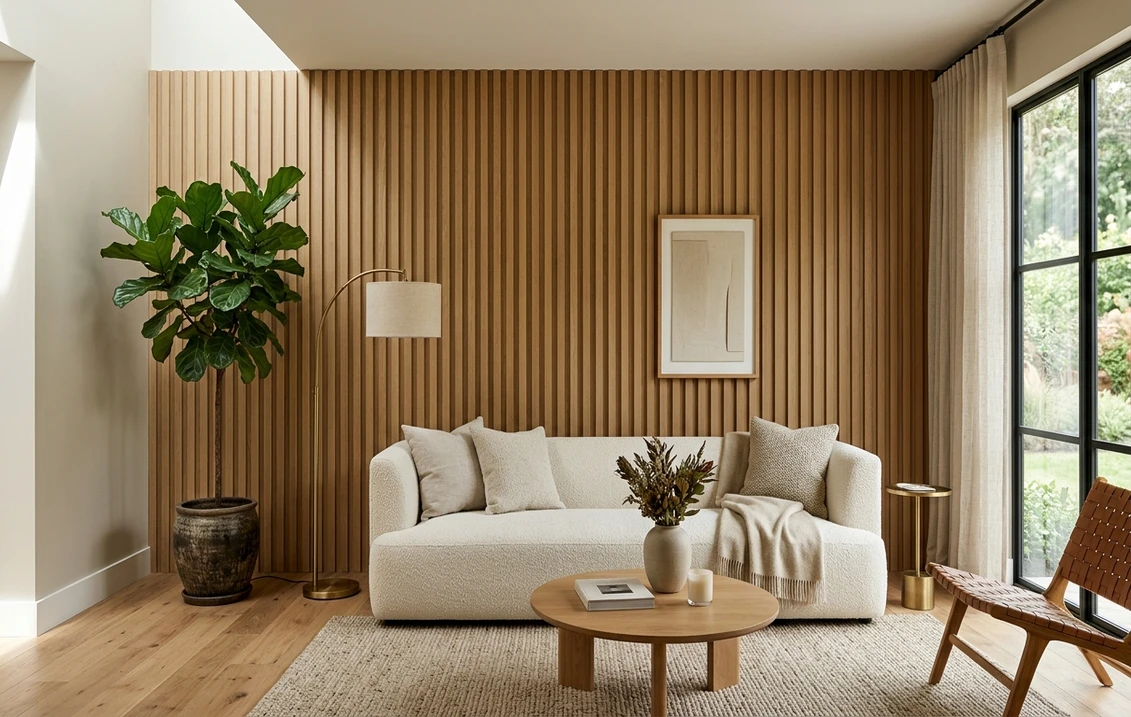
Want stained boards or a natural-wood plank look instead of painted shiplap? Our guide to wood-tone accent wall colors and pairings covers slat and plank treatments and the colors that flatter natural grain.
Board and batten accent walls: the tailored grid
A board and batten accent wall is the dressier sibling. Instead of horizontal planks, you apply vertical battens over the drywall to make a raised grid, then caulk and paint it one color so it reads as solid millwork. Done well, it looks architectural. Done carelessly, the seams telegraph and it looks like trim glued to a wall, because that is what it is.
Craft matters most here. Battens must be plumb, spacing equal, and the gaps caulked so the grid reads as one surface. Standard spacing runs 12 to 16 inches on center, or a single top rail at 40 to 60 inches for a half-wall. Because the whole assembly gets one color, board and batten takes color best: white keeps it traditional, a deep saturated color is more interesting.
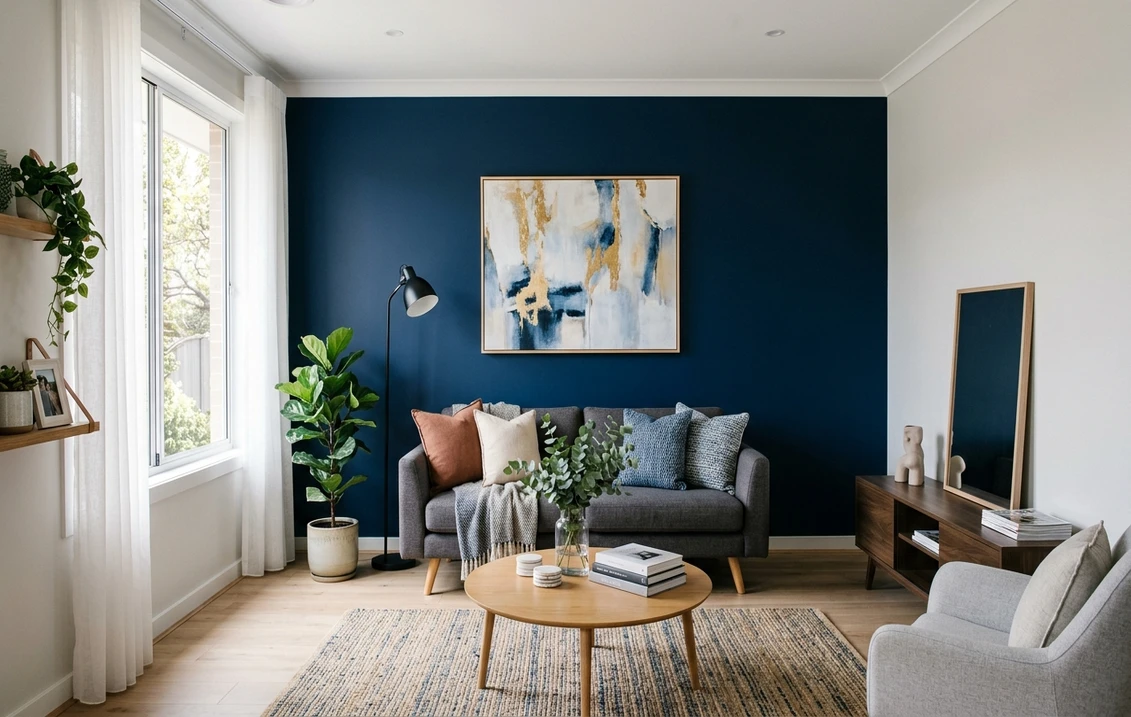
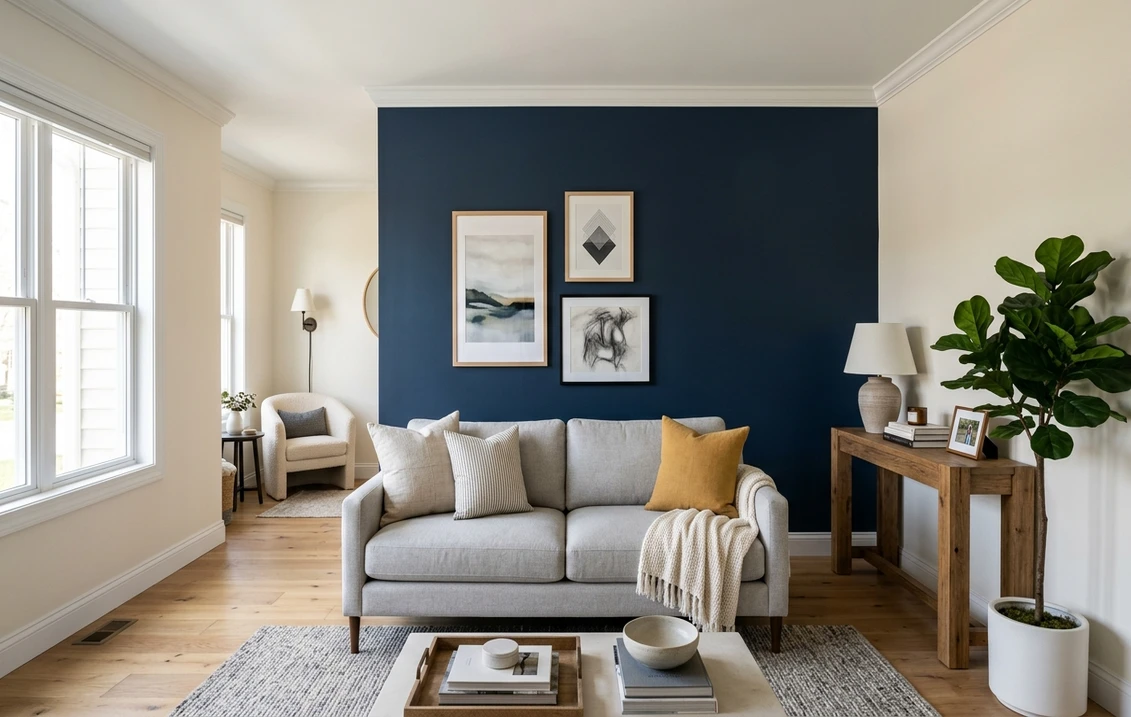
My favorite move is a deep navy like Benjamin Moore Hale Navy (HC-154) or a muted sage-gray such as SW Evergreen Fog (SW 9130) on the full grid, trim and wall together, in satin. For the placement logic, lean on our room-by-room accent wall paint guide.
- Caulk is the finish: paintable caulk along every batten edge hides the seams. Skip it and the grid looks bolted on.
- Fill the nail holes: spackle, sand flush, then prime. Under a deep satin, an unfilled hole shows as a dimple.
- Mind the outlets: battens that land on a switch look like a mistake. Lay the grid out from the center so they fall in the gaps.
See navy, sage, and warm white on your real wall together in one preview, free.
Brick accent walls: warmth with the most weight
A brick accent wall brings the most texture and warmth here, and it splits into two different jobs. If you already have exposed brick (a fireplace surround, a chimney breast), cleaning and treating it is easy. Adding brick to drywall is another story, thin brick veneer is real masonry work, with mortar, spacers, and grout, and it is the hardest build on this list.
The honest opinion on finish: do not put glossy paint on brick. Brick is matte by nature and a sheen fights it. To lighten existing brick without burying the texture, a limewash or thinned whitewash is the right tool: it soaks in, stays matte, and lets the relief show through. We walk the full process in our companion piece on how to whitewash an interior brick fireplace.
For a dark, dramatic fireplace wall, a flat black like SW Iron Ore over brick is striking, but commit knowing it is close to permanent: paint sinks into the pores and is brutal to reverse. For raw red brick you want to warm the room around, our earthy, warm interior paint colors guide helps you pick the surrounding wall and trim so the brick reads intentional.
Wood trim and picture-frame molding: the quiet upgrade
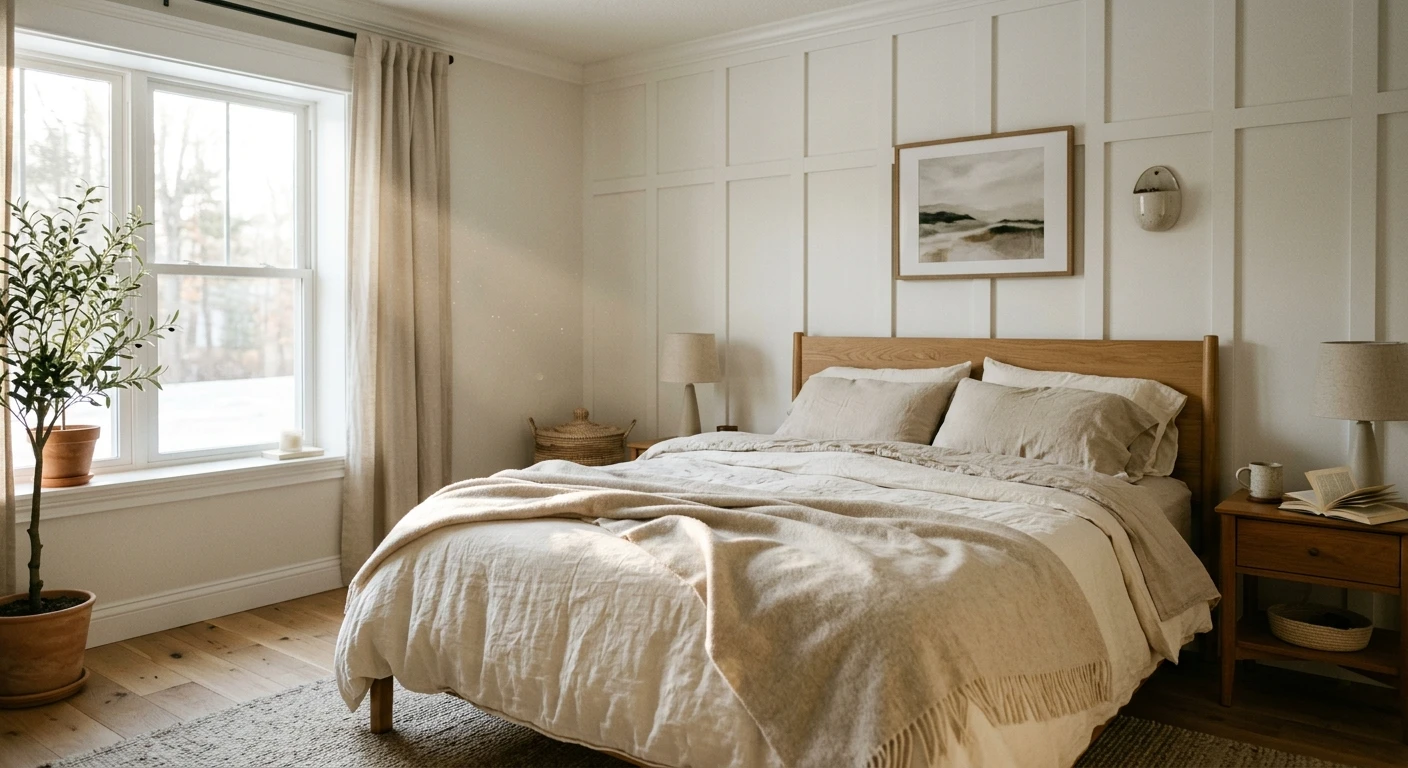
The subtlest textured wall is an accent wall with wood trim: applied moldings arranged as picture-frame boxes, then painted to match the wall (tone-on-tone). The relief is shallow, so it reads as restrained classic detail, which makes it the easiest texture to live with long term.
Because the frames match the wall, color is forgiving and the effect comes entirely from shadow. A soft satin in a warm white or quiet greige is ideal: glossy paint flattens the shadow lines and kills the point. This is the move for a formal bedroom, a home office, or a stair wall where you want quiet architecture, not drama. Running up a stairwell, picture-frame molding on an accent wall staircase draws the eye up the flight and makes a tall, awkward wall feel composed; lay the boxes out to follow the stair's rake so the frames step evenly.
- Symmetry sells it: measure equal margins around every box. Picture-frame molding is unforgiving of a frame that is half an inch off center.
- 45-degree miters: the corners must close cleanly. A sloppy miter with a gap is the giveaway that this was a quick job.
- Tone-on-tone, satin: matching the molding to the wall in a satin finish is what makes it read as built-in trim instead of applied decoration.
Painting a textured wall: the part people underestimate
Whatever material you pick, the paint step is harder than on a flat wall, and rushing it separates a built look from a DIY one. A few rules hold across all four:
- Prime first, always. Raw MDF, new wood, and bare brick need primer or the finish coat goes blotchy and the LRV never shows up true.
- Cut in the grooves and corners by hand. A roller skips the recesses in shiplap and board and batten. Brush those first, then roll the flats.
- Plan two finish coats. Texture means more surface area and thirstier edges. One coat looks thin and patchy in raking light.
The cheapest way to avoid an expensive mistake is to preview the color before you commit to the material. Texture amplifies undertone: a warm white can read cream in the grooves, a navy can look black in shadow, so seeing it on your wall under your light matters more here than on flat drywall. For the repaint budget, see our interior house painting cost guide.
Preview a warm white, a navy, and a near-black on your real wall, side by side, free.
Frequently asked questions
Should a shiplap accent wall be horizontal or vertical?
Horizontal shiplap is the classic coastal-farmhouse look and visually widens a narrow room, which is why most walls run horizontal. Vertical shiplap draws the eye up and makes a low ceiling feel taller. Pick the direction that fixes the flaw you most want to downplay, and keep the gap spacing consistent either way, since uneven reveals are what make a shiplap wall look amateur.
What paint finish is best for a textured accent wall?
Stay low-sheen. Use satin or eggshell on shiplap, board and batten, and wood trim, because gloss turns every groove into a hard glare strip and makes the wall look plastic. On brick, go matte: a limewash or flat finish keeps the masonry texture visible. Always prime first and plan on two finish coats, since textured surfaces and cut edges drink far more paint than flat drywall.
Is board and batten harder to install than shiplap?
Generally yes. Shiplap planks are forgiving because the boards self-space and small gaps read as part of the look. A board and batten accent wall depends on plumb battens, equal spacing, and caulked seams, so it is less tolerant of mistakes. Both are doable for a confident DIYer with a miter saw, but board and batten rewards careful layout, especially planning the grid so battens do not land on outlets.
Can I do a textured accent wall on a staircase?
Yes, and a stairwell is one of the best places for it because the wall is tall and usually underused. Picture-frame molding or board and batten on an accent wall staircase draws the eye up the flight and makes an awkward two-story wall feel composed. The key is laying the boxes or battens out to follow the stair's rake, so the frames step evenly with the treads instead of clashing with the diagonal.
What color works best on a brick accent wall?
To lighten existing brick without losing texture, a white or off-white limewash or thinned whitewash is the best choice: it soaks in, stays matte, and lets the relief show through. For drama, a flat near-black like a warm charcoal works, but it is close to permanent because paint sinks into the pores. If you are keeping the brick raw and red, focus on the surrounding wall and trim; warm neutrals and soft greens flatter natural brick best.
Preview the paint color on your actual wall under your own light before buying a single board or quart.
Disclaimer: Benjamin Moore, White Dove (OC-17), and Hale Navy (HC-154) are trademarks of Benjamin Moore & Co. Sherwin-Williams, Iron Ore (SW 7069), and Evergreen Fog (SW 9130) are trademarks of The Sherwin-Williams Company. FacadeColorizer is an independent paint visualization service and is not affiliated with, endorsed by, or sponsored by Benjamin Moore or Sherwin-Williams. Color reproduction on screens approximates the manufacturer's chip, and texture changes how a color reads in shadow, so always confirm with a manufacturer sample on your own wall under your own light before purchase. Build steps are general guidance, not a substitute for a licensed contractor where structural or masonry work is involved. Sources: This Old House and Family Handyman trim and shiplap install coverage, manufacturer finish data for limewash and interior paint sheen, installer notes compiled by FacadeColorizer.
Trademarks mentioned (Sherwin-Williams, Benjamin Moore, Behr, Caparol, Brillux, Sto, Alpina, Valspar, PPG, Glidden, Dulux, Crown Trade, Sandtex, Farrow & Ball, Johnstone's, Leyland) are property of their respective owners. FacadeColorizer is independent and not affiliated with any of them. Nominative fair use under Lanham Act §1125.