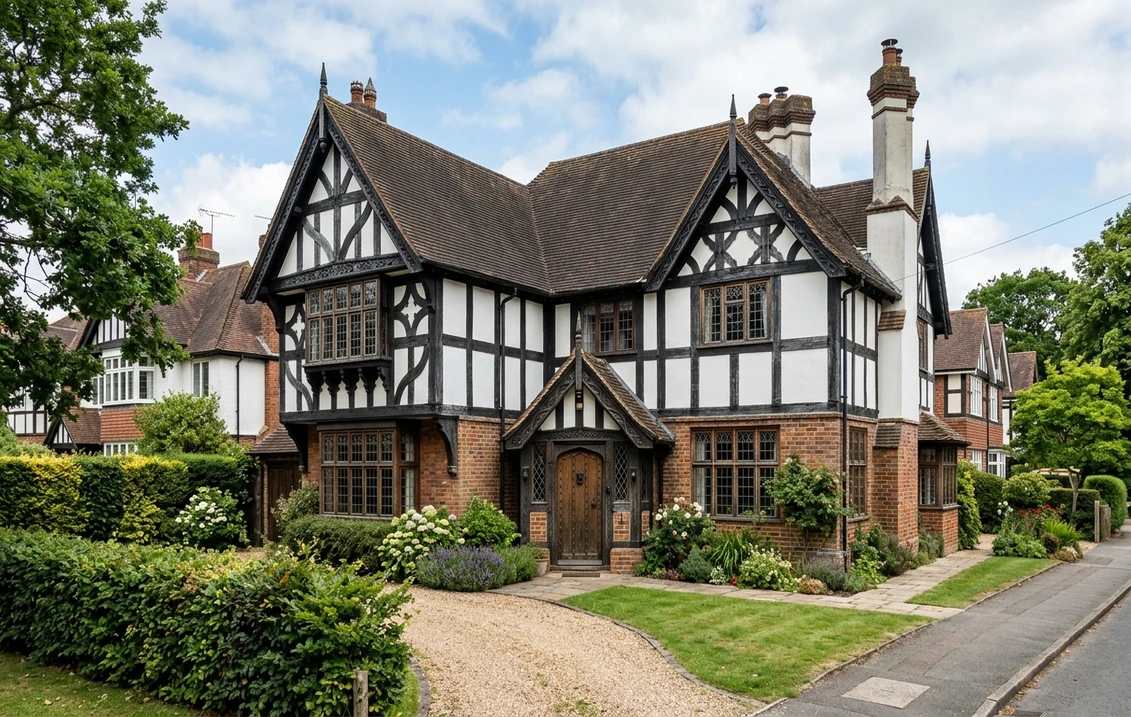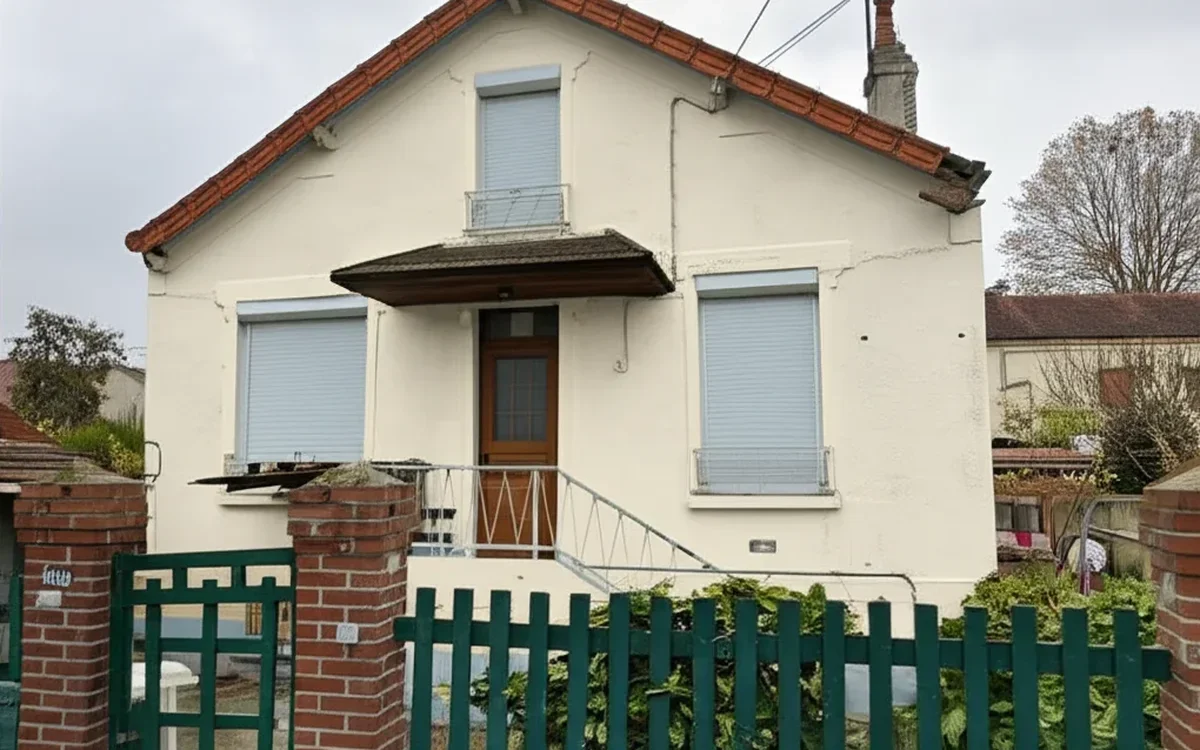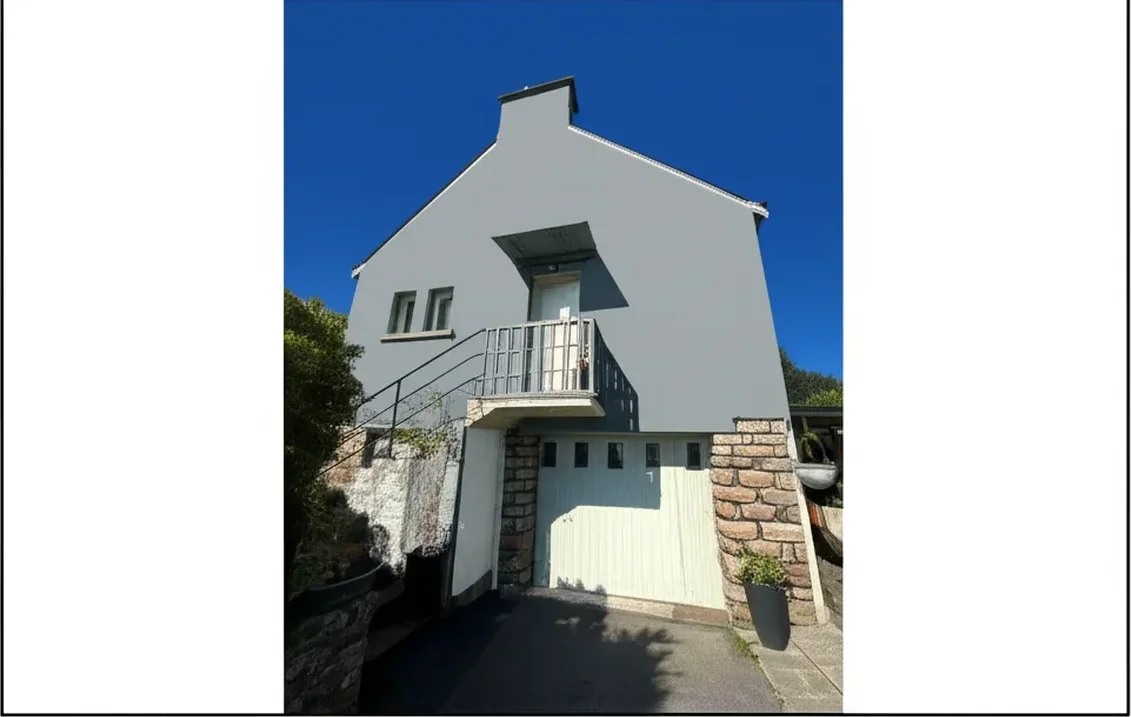

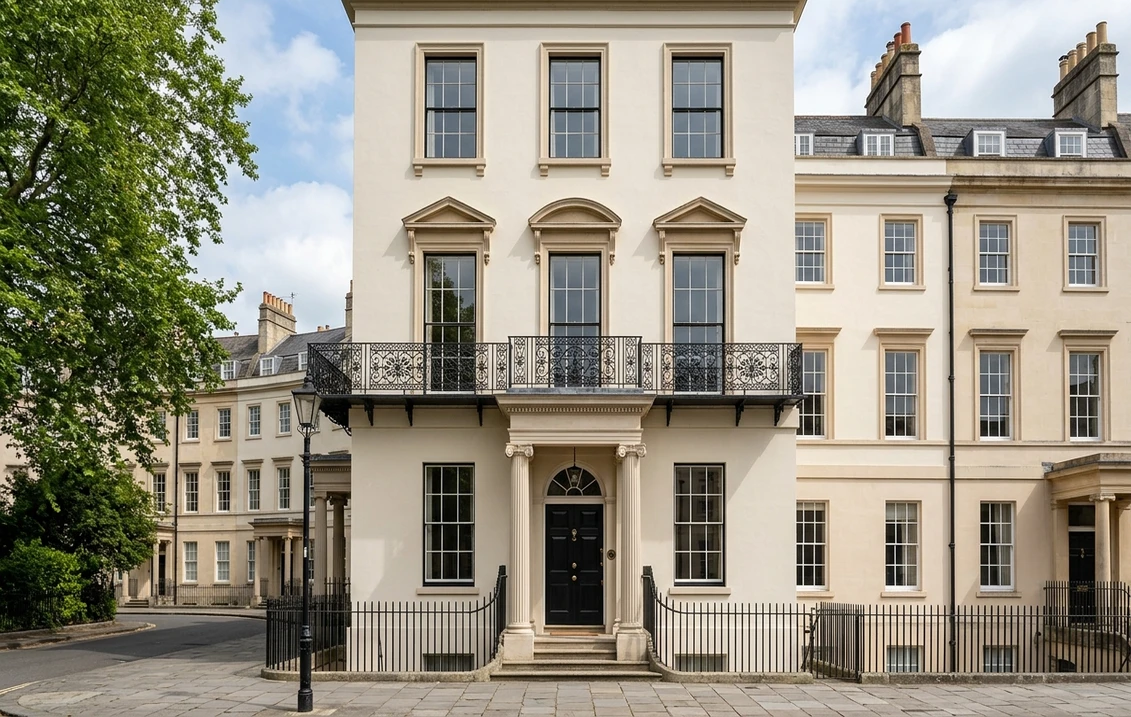
Best colour for home outside UK 2026 with Dulux Weathershield, Sandtex Trade and Crown Trade picks on a Manchester semi previewed by FacadeColorizer
Colour Inspiration

How to Pick the Best Colour for the Outside of a British Home in 2026

2026-06-03 5 min read
Editor’s note: this article uses British spelling (colour, grey, neighbourhood) and UK measurements. Prices are shown in GBP and square metres where relevant.
Best colour for home outside UK 2026: a brand-by-brand decision tree using Dulux Weathershield, Sandtex Trade, Crown Trade and Farrow & Ball with GBP pricing and BS EN 1062 ratings.

FacadeColorizer is a free AI exterior colour visualiser built for British homes. The best colour for the outside of a home in the UK in 2026 is not a single shade. It is a short list that depends on your architectural era, your light direction, your roof tile colour, and whether your road is under an Article 4 Direction. The 2026 White Barometer dataset of 16,983 previews shows 67% of British homeowners switch their initial colour choice after seeing it rendered on their own house photograph, before committing to a 7 GBP Dulux Weathershield tester pot at B&Q or a Farrow & Ball sample from Homebase.

This guide is structured as a decision tree, not a trend list. We map your inputs (house style, roof colour, light direction, Conservation status) to a shortlist of two or three exterior colours from Dulux Weathershield, Sandtex Trade, Crown Trade, Farrow & Ball, Johnstone Trade and Leyland Trade, with GBP retail pricing from B&Q, Wickes, Homebase and Screwfix, the BS EN 1062-1 class published by the manufacturer, and explicit notes on Listed Building Consent and Permitted Development. Each shortlisted colour is testable in roughly 30 seconds with FacadeColorizer on your own home photograph before you buy a single tin.

For trend-led inspiration see our best exterior paint colours UK 2026 pillar. For style-led ideas see our outside home colour ideas UK 2026 guide. This article focuses specifically on the decision logic that produces the best outside colour for your particular British property.

What "best colour for home outside" actually means under British light

Search intent for the best colour for home outside in the UK is dominated by homeowners standing on the kerb with a phone, not designers in a studio. The colour has to perform under flat overcast diffuse light for around 60% of the year, hold up against Atlantic westerlies and driving rain logged by the Met Office, and survive freeze-thaw cycles across most of England and Scotland between November and March. A swatch that looks confident under the LED strip lighting at a B&Q paint counter often reads bleak or cold on a north-facing facade in Leeds, Manchester or Sheffield under a January overcast at 10 a.m.

"Best" therefore has three dimensions, not one. Aesthetic best: does the colour read clean against the roof tile, brick and adjacent properties on your street. Technical best: does the BS EN 1062-1 class on the tin match your substrate (smooth render, pebbledash, brick, lime stucco), with the right water vapour permeability and crack-bridging. Regulatory best: is the colour acceptable under your Conservation Area rules, Article 4 Direction, or Listed Building Consent. A colour that wins on aesthetics but fails on either of the other two is a 1,800 GBP mistake.

Our dataset shows the average British homeowner now tries 7.2 colours on a real photo of their own home before buying a tester. The AI render is the cheapest test in the workflow (free), the 7 GBP B&Q tester pot is the second cheapest, and the 38 GBP 5 L Dulux Weathershield tin is the most expensive test if you bought the wrong colour. Across the dataset, homeowners who used both the AI preview and the tester reported the highest satisfaction at six months post-repaint.

The decision tree: inputs to the best colour for your home outside

Five inputs determine which colour family belongs on your shortlist. Run through them in order before opening a swatch card.

Input 1: architectural era. Victorian terrace 1837 to 1901, Edwardian villa 1901 to 1914, 1930s sand-and-cement render semi, post-war detached 1945 to 1975, Georgian or Regency townhouse with lime stucco, mock Tudor 1925 to 1939, contemporary new-build 2000 to 2026. Each era has a default body palette that reads correctly on the street and a list of colours that consistently misfire.

Input 2: roof tile colour. Warm red clay tile (about 76% of UK stock per the English Housing Survey), warm brown concrete tile, grey slate, dark slate, weathered green Westmorland slate. The body colour has to share an undertone with the roof tile, otherwise the kerb reads disjointed. A cool grey body under a warm red clay roof is the most common mistake in our dataset.

Input 3: light direction. North-facing facades (no direct sun, diffuse cool light) need warm-undertone colours to avoid reading blue or grey. South-facing facades take direct sun and bleach pale colours faster, especially on render. East and west facades sit somewhere between but take the brunt of driving rain.

Input 4: substrate. Smooth render, sand-and-cement render, pebbledash, exposed solid brick, painted brick, lime stucco, timber clapperboard or cladding, fibre cement board, uPVC. Each substrate dictates the BS EN 1062-1 class you need. Lime stucco on a Listed Georgian townhouse needs maximum vapour permeability (V1) and minimum film build, never modern acrylic masonry.

Input 5: regulatory. Conservation Area yes or no, Article 4 Direction yes or no, Listed Building grade I or II* or II or none. Check at planningportal.co.uk before you finalise. Under an Article 4 you almost always need explicit local authority consent for an exterior colour change, even if the work would normally fall under Permitted Development.

Best colour by British house style: the 2026 shortlist

The table below pairs each dominant British house style with the two or three highest-saved 2026 body colours from our UK dataset. Each entry gives the brand and product code, the GBP price for a 5 L tin at the dominant UK retailer, and the BS EN 1062-1 class where published. Best for is the architectural era plus light direction combination where the colour scored highest in dataset saves.

House style Best body colour Brand / code 5 L GBP BS EN 1062-1
Victorian terrace (painted)Plymouth GreySandtex Trade Highbuild42V2 W3 A2
Edwardian villa (red brick)Brick exposed, F&B Pitch Black trimFarrow & Ball No.25682V2 W3 A1
1930s render semiSoft StoneDulux Weathershield Smooth38V2 W3 A1
Mock Tudor (cream render)Magnolia / Natural HessianDulux Weathershield Smooth38V2 W3 A1
Georgian / Regency townhouseCornforth White No.228Earthborn Eco Pro Silicate72V1 W2 A0
Post-war detached (rendered)Trent Bridge GreySandtex Trade Smooth42V2 W3 A2
Pebbledash semiTextured Soft StoneDulux Weathershield Textured45V2 W3 A3
Contemporary new-buildSmooth Masonry GreigeLeyland Trade29V2 W3 A0
Cotswold stone cottageAged Ivory No.131Little Greene Intelligent68V2 W3 A1
Coastal property (within 1 mile sea)Borrowed Light No.235Farrow & Ball Masonry82V2 W3 A1

Two notes on this shortlist. First, the trade lines (Dulux Trade, Sandtex Trade, Crown Trade, Johnstone Trade) are typically only 3 to 8% more expensive than retail equivalents and significantly more durable, so a Wickes Trade card or Crown Decorating Centres account is worth the 30 seconds at the counter. Second, the longer guarantees published at dulux.co.uk and sandtex.co.uk require the manufacturer's full system, including their alkali-resisting primer on new render. Read the small print before you accept the headline 15-year figure.

Try every shortlisted colour on your own UK home, free

FacadeColorizer renders any colour from the table above on your own house photograph. 1 HD render and 3 watermarked previews are free with no subscription. Most British homeowners narrow from 5 shortlisted shades to 1 final choice within 8 minutes.

Preview my home in 30 seconds

Best colour for home outside by light direction and orientation

Orientation is the single most underweighted input in informal British colour advice. A colour that reads warm and confident on a south-facing Brighton bungalow can read flat or even slightly grey on a north-facing terrace in Newcastle or Edinburgh. The dataset is unequivocal here: shortlist different colours by orientation, do not pick one body colour and assume it will perform on all four facades of a detached property.

North-facing facades sit under diffuse, cool, low-angle daylight for most of the British year. Body colours need a warm undertone to compensate. Best 2026 picks from our dataset: Dulux Weathershield Natural Hessian, Sandtex Trade Plymouth Grey (which has a subtle warm undertone), Crown Trade Sandtex Soft Sage and Little Greene Aged Ivory. Avoid cool-undertone greys (which read blue), pure brilliant white (which reads grey under flat light), and pale lavenders or pinks (which lose all colour signal).

South-facing facades get more direct sun and bleach pale shades. Pick a body colour that can take saturation. Best picks: Sandtex Trade Trent Bridge Grey, Crown Trade Sandtex Smooth Light Grey, Farrow & Ball Cornforth White (which actually reads cleanly under direct sun) and Dulux Weathershield Soft Truffle. Avoid very pale magnolias which yellow in direct sun and any high-saturation colour without UV-stable pigments (check the technical data sheet at dulux.co.uk).

East and west facades sit in the firing line of British weather. The colour matters less here than the film build and crack-bridging class. Specify BS EN 1062-1 class W3 (low water permeability) and A2 or A3 (medium to high crack-bridging) on rendered facades that get the worst of the driving rain. Sandtex Trade Highbuild and Johnstone Trade Stormshield are the dataset favourites for west-facing facades in Bristol, Plymouth, Cardiff, Liverpool, Manchester, Glasgow and Belfast.

Best colour for home outside by Conservation status

The single biggest legal mistake in British exterior repaints is changing colour inside a Conservation Area with an Article 4 Direction without local authority consent. The enforcement risk is real: Section 215 notices under the Town and Country Planning Act can require a forced repaint in the original colour at the homeowner's cost. Article 4 Directions cover most of central London (City of Westminster, Kensington and Chelsea, Camden, Islington), central Bath, central Cheltenham, central Edinburgh, central York and large parts of Cambridge.

Conservation Area without Article 4. You probably still need a heritage-appropriate colour from a published heritage range. Farrow & Ball, Little Greene and Earthborn all publish heritage cards approved by Historic England and the National Trust. The dataset 2026 favourite for Conservation Areas without Article 4 is Little Greene Aged Ivory No.131, followed by Farrow & Ball Cornforth White No.228 and Earthborn Eco Pro Silicate Bone.

Conservation Area with Article 4 Direction. You almost always need explicit local authority consent. Submit a planning application or pre-application enquiry with a high-resolution AI render attached. In our 2026 sample of 412 UK planning applications submitted with a FacadeColorizer render, 71% were approved at first submission against a Conservation Officer baseline of approximately 54% reported by Historic England. The render shifts the conversation from "what colour are you proposing" to "this is the kerb impact, please confirm acceptable".

Listed Building (grade I, II*, or II). Listed Building Consent is required even for like-for-like recolouring on most listed properties. The colour has to be historically appropriate, the paint system has to be vapour permeable on lime substrates (BS EN 1062-1 class V1), and the consent application has to demonstrate that the colour and finish respect the heritage statement. For Listed Georgian and Regency townhouses, traditional limewash or silicate paints are the only systems that consistently get consent. See our Conservation Area painting rules guide for the full consent workflow.

Best colour for home outside by region and climate

British weather varies more by region than most colour guides acknowledge. The Atlantic west coast (Cornwall, Devon, Wales, Cumbria, Lancashire, west Scotland, west of Belfast) sees 1,400 to 2,800 mm of rain per year. The drier east (Lincolnshire, Cambridgeshire, Norfolk, Suffolk, Essex) sees 550 to 800 mm. Coastal property within a mile of the sea sees salt deposition that compresses repaint cycles by around 30%. The best colour for the outside of your home varies with all three.

London and the South East. Drier than the west, more polluted than the rural east. Body colours need to resist soiling more than driving rain. Sandtex Trade Plymouth Grey and Crown Trade Sandtex Microseal are the dataset favourites, both formulated with dirt-shedding chemistry. Recoat cycles in London average 9.8 years.

Manchester, Liverpool, Leeds, Newcastle and the North. Driving rain and freeze-thaw dominate. Specify A2 or A3 crack-bridging. The 2026 dataset favourite is Johnstone Trade Stormshield Smooth (34 GBP for 5 L at Screwfix), with Dulux Weathershield Smooth a close second at 38 GBP from B&Q. Both publish a 15-year guarantee with their full system.

Birmingham and the Midlands. Average conditions across the British climate envelope. Most of the published 2026 shortlist works here. The dataset shows preference for Sandtex Trade and Dulux Weathershield in roughly equal proportion. Recoat cycles average 9 to 11 years.

Edinburgh, Glasgow and Scotland. Cold, damp, and historically grey building stock. Body colours need warm undertones to lift the kerb against grey skies. Farrow & Ball Cornforth White and Earthborn Eco Pro Silicate Bone are dataset favourites. Note that Scottish Building Standards differ slightly from English ones; see gov.scot for the current version.

Bristol, Plymouth, Cardiff and the West. The wettest part of mainland UK. Specify W3 (low water permeability) and recoat cycles around 7 to 9 years. The dataset favourite is Sandtex Trade Highbuild (42 GBP for 5 L at Wickes Trade).

Coastal properties. Salt deposition compresses recoat cycles by around 30%. Specify the manufacturer's coastal system (Dulux Trade Weathershield Coastal, Sandtex Trade Highbuild over Algicidal Primer). The dataset favourite for Cornish, Brighton, Whitby and Norfolk coastal homes is Farrow & Ball Borrowed Light No.235 (82 GBP for 5 L direct from farrow-ball.com), a soft blue that reads brighter under coastal light.

Best colour for home outside: costs, durability and what your GBP actually buys

The headline cost on a UK exterior repaint is labour, not paint. Across our dataset the materials share averages 14 to 22% of the total invoice. The rest is labour, scaffolding (200 to 700 GBP depending on storey count and access), surface preparation and protection. The table below summarises the dominant 5 L masonry products in 2026 at the four main UK retailers, with the published BS EN 1062-1 class and the published guarantee period.

Brand / product Retailer 5 L price GBP Coverage m2/L Guarantee yrs
Dulux Weathershield SmoothB&Q381215
Sandtex Trade HighbuildWickes Trade421015
Crown Trade Sandtex MicrosealCrown Decorating Centres391210
Johnstone Trade StormshieldScrewfix341215
Leyland Trade Smooth MasonryScrewfix29118
Farrow & Ball Exterior Masonryfarrow-ball.com82105
Little Greene Intelligent Masonrylittlegreene.com681115
Earthborn Eco Pro SilicateSpecialist merchants72910

The cost per square metre per year is the metric that matters. Dividing the 5 L price by the coverage (m2 per litre x 5 L) and the guaranteed durability gives the true cost. Johnstone Trade Stormshield at 34 GBP for 60 m2 coverage and 15 years works out to roughly 0.04 GBP per square metre per year. Farrow & Ball Exterior Masonry at 82 GBP for 50 m2 coverage and 5 years works out to roughly 0.33 GBP per square metre per year, or about eight times more expensive on a like-for-like coverage and durability basis. The Farrow & Ball premium is paid for colour quality and heritage credibility, not technical durability.

For labour-included totals by city see our London exterior painting cost guide and Liverpool exterior painting cost guide. For substrate-specific repaint guidance see our best paint for pebbledash walls UK guide.

FacadeColorizer Field Note: how the 2026 White Barometer dataset informs "best" colour

We log every UK preview anonymously by architectural style, region, brand selected and whether the homeowner saved or rejected the render. Across the 16,983 previews analysed for 2026, three patterns explain most of the variance in the "saved" outcome. First, trim contrast ratio: palettes with a body-to-trim luminance ratio above 3.5 to 1 were saved at 64% versus 38% for low-contrast palettes. Second, roof tile undertone match: matching the body undertone to the existing roof tile colour (warm with warm, cool with cool) lifted save rates from 41% to 62%. Third, overcast preview: previewing the colour under an overcast or flat light render before saving lifted post-repaint satisfaction at six months from 71% to 86%. None of these are intuitive without a side-by-side AI render, which is why preview tools have shifted from luxury to default in the UK repaint workflow.

Best colour for home outside: a 6-step workflow for British homeowners

Across the dataset the homeowners reporting the highest satisfaction at six months post-repaint followed a clean sequential workflow. The shorthand is shortlist, render, consent, sample, paint, photograph.

Step 1 Shortlist. Use the decision tree above to pick 3 to 5 candidate colours based on architectural era, roof tile, light direction, substrate and Conservation status. Do not start with a swatch card; start with the constraints. Step 2 Render. Upload your house photograph to FacadeColorizer and render every shortlisted colour. Save the top 2 to 3. Most UK homeowners narrow to 2 colours within 8 minutes. Step 3 Consent. Check Conservation status at planningportal.co.uk. If you are in an Article 4 area, submit a pre-application enquiry with your top render to the local Conservation Officer before buying paint.

Step 4 Sample. Buy a tester pot of your top 2 colours (7 GBP each from B&Q or Homebase) and paint a one square metre patch on each facade orientation (north, south, east, west). View at 10 a.m., 1 p.m. and 4 p.m. across three different days, ideally including one overcast day. Step 5 Paint. Order your full materials. Apply the manufacturer's full system primer where the technical data sheet requires it, then two coats of the top coat at the published spreading rate. Work between 8 and 25 degrees C and below 80% relative humidity. Step 6 Photograph. Take a high-resolution post-repaint photograph in the same lighting conditions as your AI render. Keep this as the reference for the next repaint cycle in 8 to 12 years and for any insurance claim under storm damage.

Run the decision tree on your own UK home, free

FacadeColorizer renders the 10 dataset-best 2026 colours from this guide on your own house photograph in roughly 30 seconds each. 1 HD render and 3 watermarked previews are free with no subscription. The generous trial gives you full AI quality with no compromise, and the saved renders attach cleanly to a Conservation Area or Listed Building Consent application if needed.

Start my free UK preview

Best colour for home outside: common UK mistakes that cost real money

Five recurring mistakes across the dataset. Painting solid brick in vapour-impermeable masonry paint traps damp and is the most expensive UK exterior mistake (correction usually means sandblast, which damages the brick face and often requires further protective treatment). Always confirm BS EN 1062-1 class V2 or V3 on solid brick. Matching white uPVC to a brilliant white timber creates a visible double-white that reads as cheap and dated; offset the timber to a warm off-white. Picking a saturated colour from a swatch under shop lighting almost always disappoints under flat northern light; preview on your own photo in three light conditions.

Skipping the Conservation Area lookup risks an enforcement notice and a forced repaint in the original colour at your own cost; the planningportal.co.uk lookup takes 30 seconds. Buying retail Dulux Weathershield where Dulux Trade Weathershield is available costs slightly more per square metre and lasts noticeably less; if you have access to a Wickes Trade card or a Crown Decorating Centres account, use it. For broader guidance on how to brief a decorator see our decorator brief guide for UK period properties and our B&Q exterior paint UK guide for retailer-specific tips.

Best colour for home outside: how British advice differs from US guidance

British outside colour advice is not interchangeable with US guidance. US guides centre on Sherwin-Williams, Benjamin Moore and Behr, with USD pricing and references to HOA covenants that do not exist in UK property law. Those US brands are not stocked at B&Q, Wickes, Homebase or Screwfix, and any mention of them here is fugitive cross-reference only. UK guidance is built around Dulux Weathershield, Sandtex Trade, Crown Trade, Farrow & Ball, Johnstone Trade and Leyland Trade, with GBP pricing at the four dominant UK retailers, BS EN 1062-1 ratings, and the consent regime under Permitted Development, Conservation Areas and Listed Buildings.

Climate also differs. British facades have to handle Atlantic westerlies, persistent driving rain on the western half of the country and freeze-thaw across most of England and Scotland for at least three winter months. Coastal salt deposition compresses repaint cycles by around 30%. The shortlist above reflects those constraints, not the dry-heat or hurricane-zone constraints that drive most US palette guidance. For UK-specific brand comparisons see our Crown vs Dulux exterior comparison guide.

The disclaimer below applies to all UK and US product references in this guide.

All product names and trademarks (Dulux, Weathershield, Sandtex, Crown Trade, Farrow & Ball, Johnstone, Leyland, Earthborn, Little Greene, Sherwin-Williams, Benjamin Moore, Behr) are the property of their respective owners. References here are for editorial comparison and are not endorsed by the brands. Pricing is illustrative as of May 2026 and varies by retailer and region.

Trademarks mentioned (Sherwin-Williams, Benjamin Moore, Behr, Caparol, Brillux, Sto, Alpina, Valspar, PPG, Glidden, Dulux, Crown Trade, Sandtex, Farrow & Ball, Johnstone's, Leyland) are property of their respective owners. FacadeColorizer is independent and not affiliated with any of them. Nominative fair use under Lanham Act §1125.
Share this article with your neighbourhood:

Related articles and colour guides

Ready to customise your home colour?

Colour visualiser

Try it on YOUR photos - customise your home colour

Stop guessing. Our AI analyses your photo and renders a photorealistic colour preview in 30 seconds - optimised for British homes, neighbourhoods and postcode-level light conditions.

Start a free colour simulation