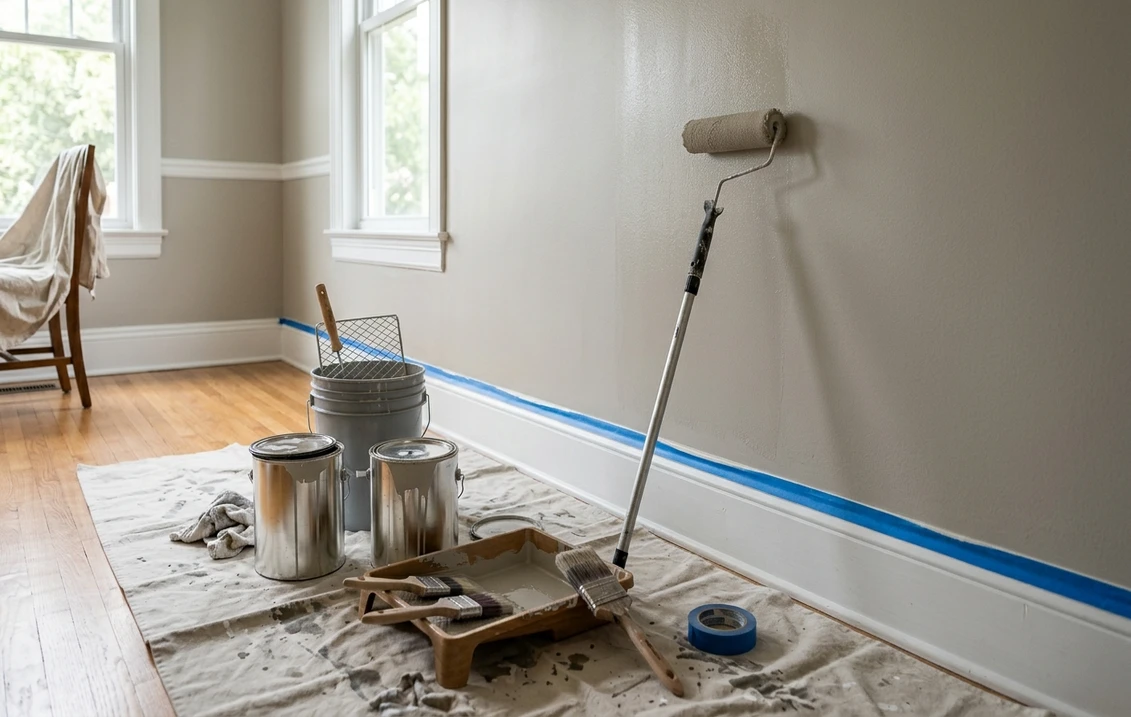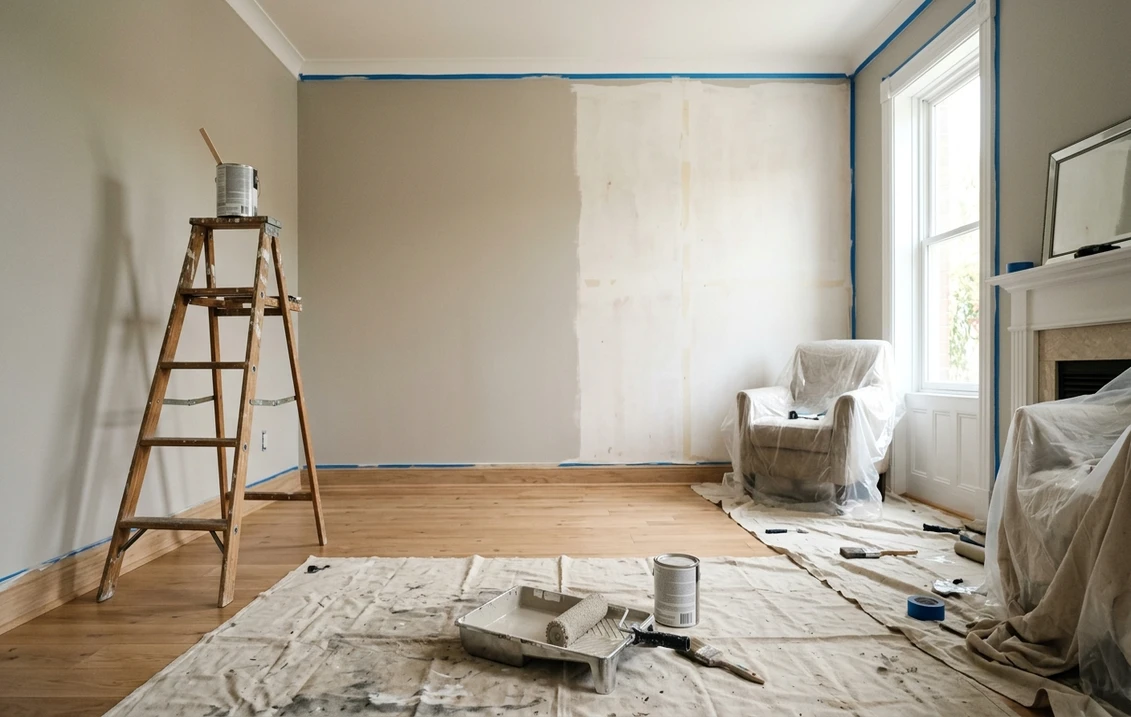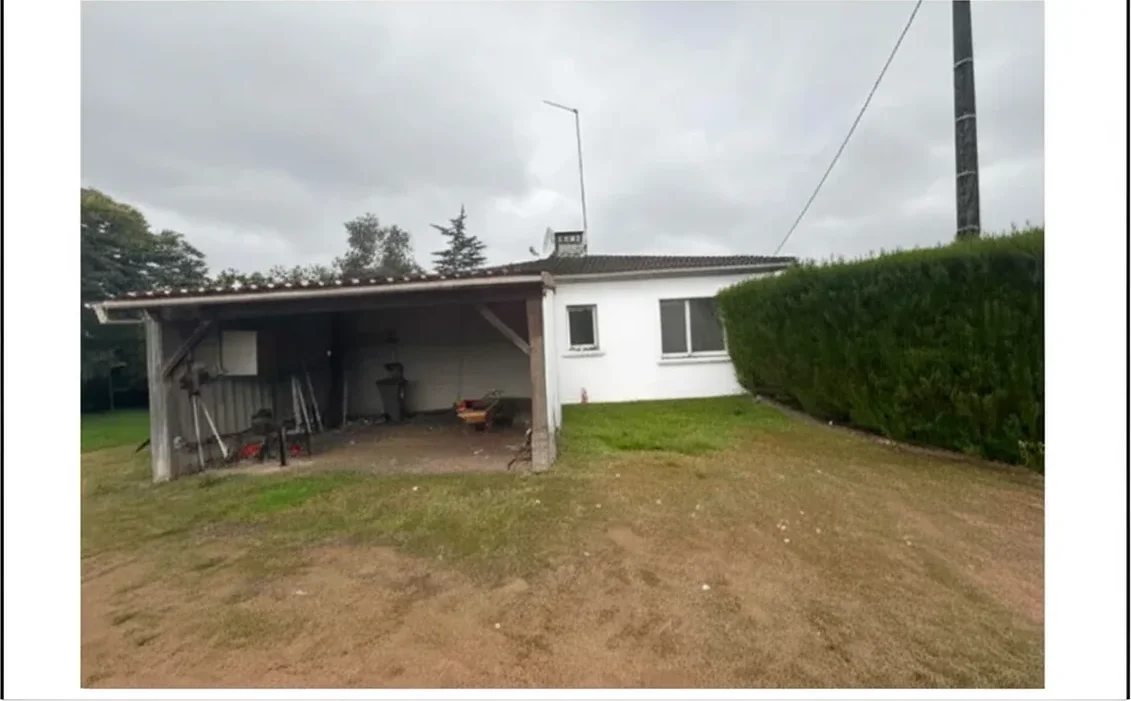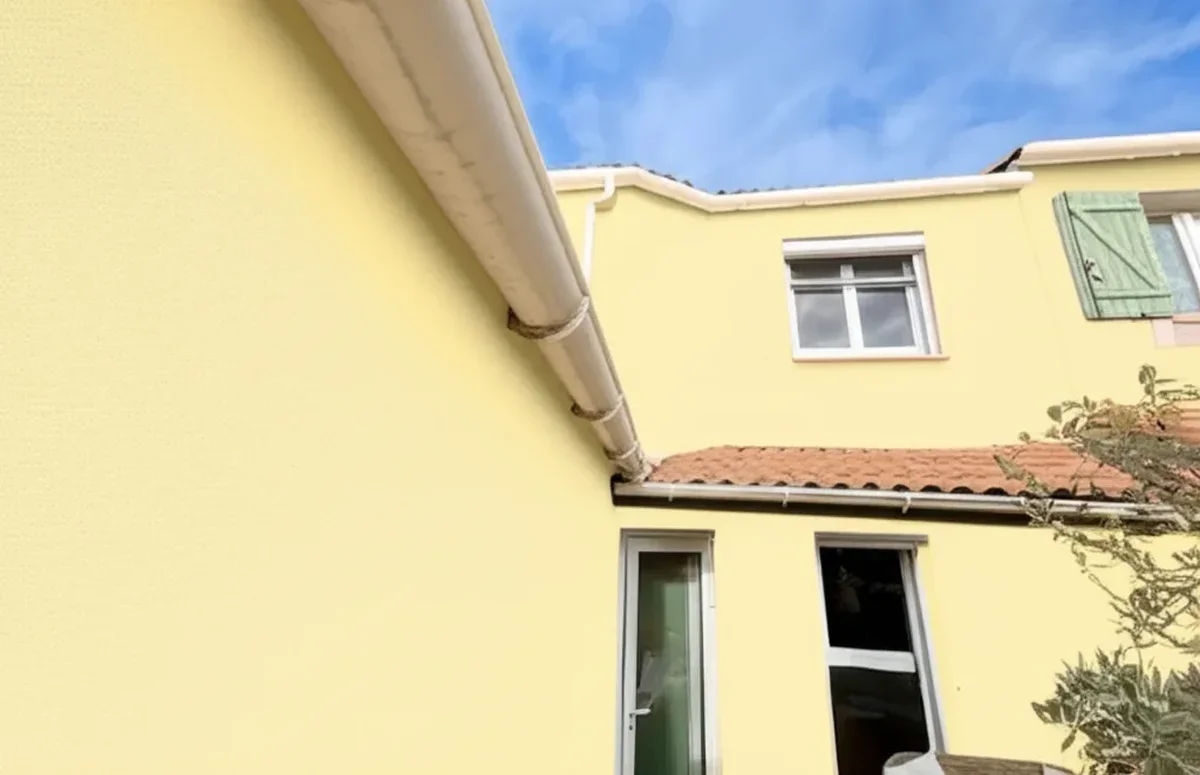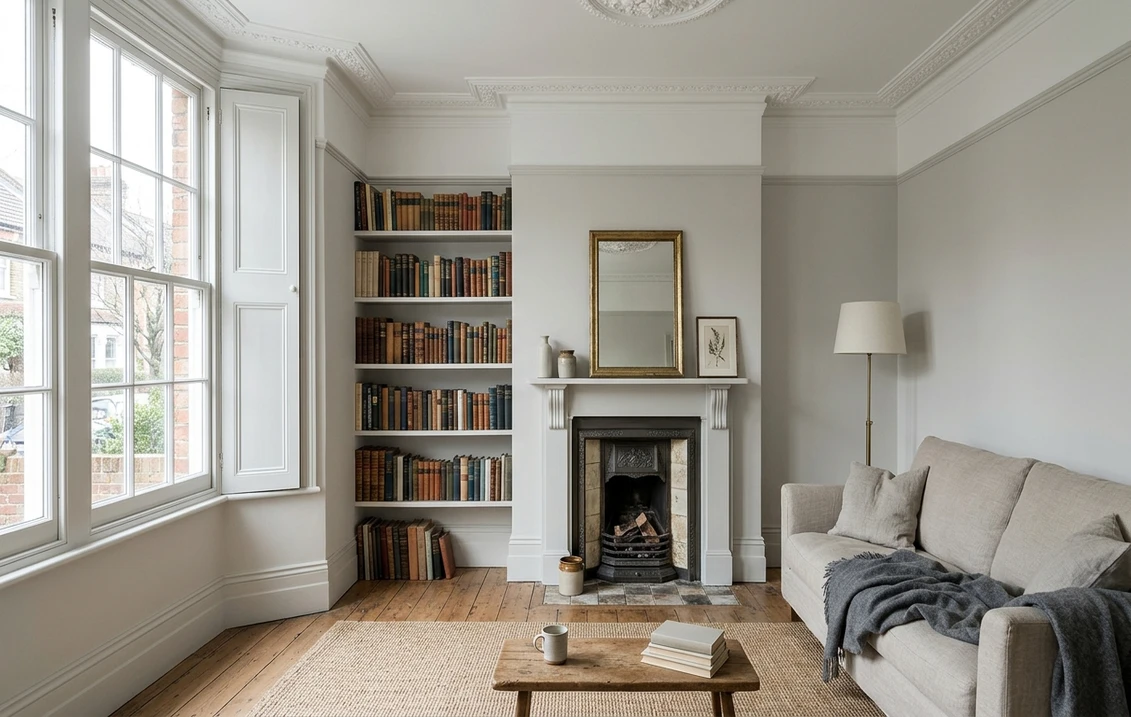
Try it on your room

Farrow & Ball Ammonite No. 274 is a light, understated grey that the maker describes as "neither too warm nor too cool". It sits in the Relaxed Neutrals (Wevet, Ammonite, Cornforth White and Purbeck Stone, from lightest to strongest) and its complementary white is Wevet No. 273. On our lightness index, calculated from the swatch and not an official LRV, it scores about 67 out of 100, the same depth as Skimming Stone (warmer) and Dimpse (cooler). It is easiest in south-, east- and west-facing rooms; in a north-facing room it reads greyer, and Farrow & Ball's light guide advises against light, grey-based shades there. Estate Emulsion costs £61 for 2.5 litres and £103 for 5 litres; a 100 ml sample pot is £5.95.
Descriptions, pairings and prices come from the Farrow & Ball and Dulux UK websites, read on 29 October 2026. Farrow & Ball prints no light reflectance value (LRV): the lightness and undertone figures here are our own calculations from the published swatches.
See Ammonite on your own walls first
Upload a photo of your room and repaint the walls in Ammonite, Cornforth White or Skimming Stone before you order sample pots. How it works: our interior paint visualiser.
Try Ammonite on my wallsWhat colour is Farrow & Ball Ammonite?
Ammonite is named after the fossils found on the Dorset coast, Farrow & Ball's home county. Its colour page calls it a naturally understated grey with a hushed, calming feel for homes old and new, and suggests All White to bring out its light grey quality.
We converted the published swatch (#D8D6CF) to CIELAB, the colour space that measures red against green and yellow against blue. Ammonite's tint is tiny (a chroma of about 3.7, where a strong colour scores 50 or more), and what there is sits on the yellow side with a hair of green, nothing on the blue side. Hence a true light grey rather than a stony beige or a cold silver.
Does it look blue? Not on its own, but it takes on the light around it: in cool northern light or under cool white bulbs it looks flatter and cooler than the sample card, and in warm light it looks softer and slightly warmer (more on light below).
Ammonite in the Relaxed Neutrals family
Farrow & Ball sorts its neutrals into groups that share an undertone. Its Relaxed Neutrals page calls this one neither too grey nor too creamy, easy to live with in any architectural style and direction of light, and suggests two or three shades for walls, ceilings and floors, such as Purbeck Stone walls with Cornforth White and Ammonite accents.
| Shade | How Farrow & Ball describes it | Lightness index | Yellow tint (b*) | Complementary white |
|---|---|---|---|---|
| Wevet No. 273 | A delicate white with a hint of grey | 83 | 1.1 | Cornforth White |
| Ammonite No. 274 | A naturally understated grey, neither too warm nor too cool | 67 | 3.7 | Wevet |
| Cornforth White No. 228 | The mid tone of the group, between Ammonite and Purbeck Stone | 60 | 4.0 | Wevet |
| Purbeck Stone No. 275 | A clean, understated mid grey, the strongest of the group | 50 | 5.0 | Wevet |
| Worsted No. 284 | A rich mid grey between Purbeck Stone and Mole's Breath | 34 | 3.1 | Ammonite |
| Mole's Breath No. 276 | A moody grey, the most versatile of the stronger accents | 23 | 3.1 | Ammonite |
Try it on your room
No photo? Try a sample
The lightness index is the relative luminance of the on-screen swatch, from 0 (black) to 100 (white): not an LRV, but it ranks colours in the right order. The yellow tint is the CIELAB b* value: 0 is neutral, and every grey here stays under 6.
Ammonite to Cornforth White is a small step (about 7 points), so together they give a barely-there, tone-on-tone look; for a contrast you can see across the room, pair Ammonite with Purbeck Stone (17 points) or Mole's Breath (44). Despite its name, Cornforth White is a grey, darker than Ammonite.
Ammonite vs Cornforth White, Skimming Stone, Dimpse and Pavilion Gray
The last column is the CIEDE2000 difference from Ammonite's swatch: around 1 is hard to tell apart, 2 to 3 visible side by side, above 5 clearly different.
| Shade | Farrow & Ball group and description | Lightness index | Yellow tint (b*) | Difference from Ammonite |
|---|---|---|---|---|
| Ammonite No. 274 | Relaxed Neutrals; balanced light grey | 67 | 3.7 | 0 |
| Skimming Stone No. 241 | Contemporary Neutrals; a warm light grey | 67 | 6.2 | 2.3 |
| Dimpse No. 277 | Architectural Neutrals; cool, subtle blue undertones | 66 | 1.0 | 2.5 |
| Cornforth White No. 228 | Relaxed Neutrals; the group's mid tone | 60 | 4.0 | 2.7 |
| Strong White No. 2001 | Contemporary Neutrals; a cool, grey-based white | 76 | 3.2 | 2.8 |
| Pavilion Gray No. 242 | Architectural Neutrals; cool mid grey, subtle blue undertones | 53 | 3.3 | 5.1 |
| Purbeck Stone No. 275 | Relaxed Neutrals; the group's strongest shade | 50 | 5.0 | 6.5 |
Ammonite or Cornforth White?
Same balanced character, but Cornforth White is about 7 points darker. Ammonite keeps a small or dim room light; Cornforth White gives more colour in a large, bright room where a pale grey can wash out. Farrow & Ball makes the same point about Lamp Room Gray, which it says looks surprisingly strong in smaller rooms but softens in larger, well-lit spaces.
Ammonite or Skimming Stone?
Same lightness, so the choice is warmth. Skimming Stone carries clearly more yellow (b* 6.2 against 3.7); Farrow & Ball calls it a warm light grey, and its guide to grey paint names it a clever choice for counteracting the cooler light of north-facing rooms. It belongs to the Contemporary Neutrals, with Strong White and Elephant's Breath: our warm greige paint colours guide covers that family.
Ammonite, Dimpse or Pavilion Gray?
Dimpse and Pavilion Gray belong to the cooler Architectural Neutrals: Farrow & Ball gives each subtle blue undertones, and Blackened, its coolest white, as complementary white. Dimpse matches Ammonite's depth with almost no yellow, so it looks crisper; Pavilion Gray is about 14 points deeper. Choose Ammonite for grey without blue, Dimpse for a cooler, more architectural look.
Which white goes with Ammonite?
The official answer is Wevet No. 273, named after an old Dorset word for a spider's web: a delicate white with a hint of grey that Farrow & Ball suggests for ceilings and woodwork alongside cooler greys. It sits about 16 points above Ammonite on our index, enough to frame the walls without the jump of a brilliant white.
For a fresher contrast the maker suggests All White No. 2005, which contains no pigment but white and so lacks the cold blue undertone of a brilliant white. The Ammonite page also shows three schemes:
- Tonal and deeper: Ammonite walls, Purbeck Stone as the accent, Mole's Breath on the trim.
- Soft and balanced: Ammonite walls, Strong White as the accent, Cornforth White on the trim.
- Light and fresh: Ammonite walls, All White as the accent, Wevet on the trim.
Ammonite also works as the pale partner to a deep colour. Farrow & Ball lists it as the complementary white for Mole's Breath, Worsted, Stiffkey Blue (an inky navy it says works wonderfully against Ammonite) and Oval Room Blue, so it can go on the ceiling and woodwork of a room painted in one of them. Deep green suits it too: see our guide to colours that go with dark green.
Ammonite in British light: north, south, east and west
With a colour this neutral, the light does most of the work. Dulux's guide to the best shades for north, south, east or west-facing rooms and Farrow & Ball's guide on how light affects colour describe the four aspects the same way:
| Room faces | What the light does | How Ammonite behaves | If it disappoints |
|---|---|---|---|
| North | Cool, weaker, brings out cooler tones | Reads greyer and flatter; test it first | Skimming Stone for warmth at the same depth, or go dark |
| South | Strong and clear all day | Light and soft; too little yellow to turn creamy | Cornforth White if it looks too pale |
| East | Bright mornings, cooler evenings | Fresh in the morning, greyer by evening | Check the sample after dark under your own bulbs |
| West | Cooler mornings, warm late afternoons | Balanced; Farrow & Ball shows it in a west-facing scheme | Purbeck Stone for more depth |
North-facing rooms are the real test. Farrow & Ball says northern light brings out the cooler tones in a colour, so a lighter tone there should avoid a blue or grey base; it points to yellow-based colours (Yellow Ground, New White, White Tie) or to dark walls in Railings or Down Pipe. Dulux's advice on decorating a north-facing room calls that light blue-tinged and recommends warm neutrals. Ammonite is a light grey: the Relaxed Neutrals page says the group copes with any light, but in a dim north room it may look colder than you expect, so sample it beside Skimming Stone.
A British detail: in many terraced and semi-detached houses the front and back rooms face opposite ways, so a knocked-through living room shows Ammonite in two lights at once; sample both ends. Bulbs matter too: Farrow & Ball says halogen bulbs warm wall colours, cool white bulbs cool them and a neutral white bulb is truest, while Dulux warns that compact fluorescents wash out subtle neutrals.
Room by room: where Ammonite works
- Living rooms. Ammonite walls with Wevet or All White woodwork, or the tonal scheme with Purbeck Stone and Mole's Breath. More in our living room paint colours guide.
- Bedrooms. Its calm, hushed quality suits a bedroom, and in a small one it keeps the walls light without the starkness of white. See our bedroom paint colours guide and small bedroom colours guide.
- Kitchens and bathrooms. Use a mould-protected finish (Modern Emulsion or Dead Flat), not Estate Emulsion. See our kitchen paint colours guide, our bathroom paint colours guide and, for rooms with a history of black mould, our anti-mould paint guide.
- Hallways and stairs. A light grey shows scuffs: choose Modern Emulsion or Dead Flat, perhaps with a lower wall in Worsted or Mole's Breath, which both take Ammonite as their complementary white. See our hallway paint colours guide.
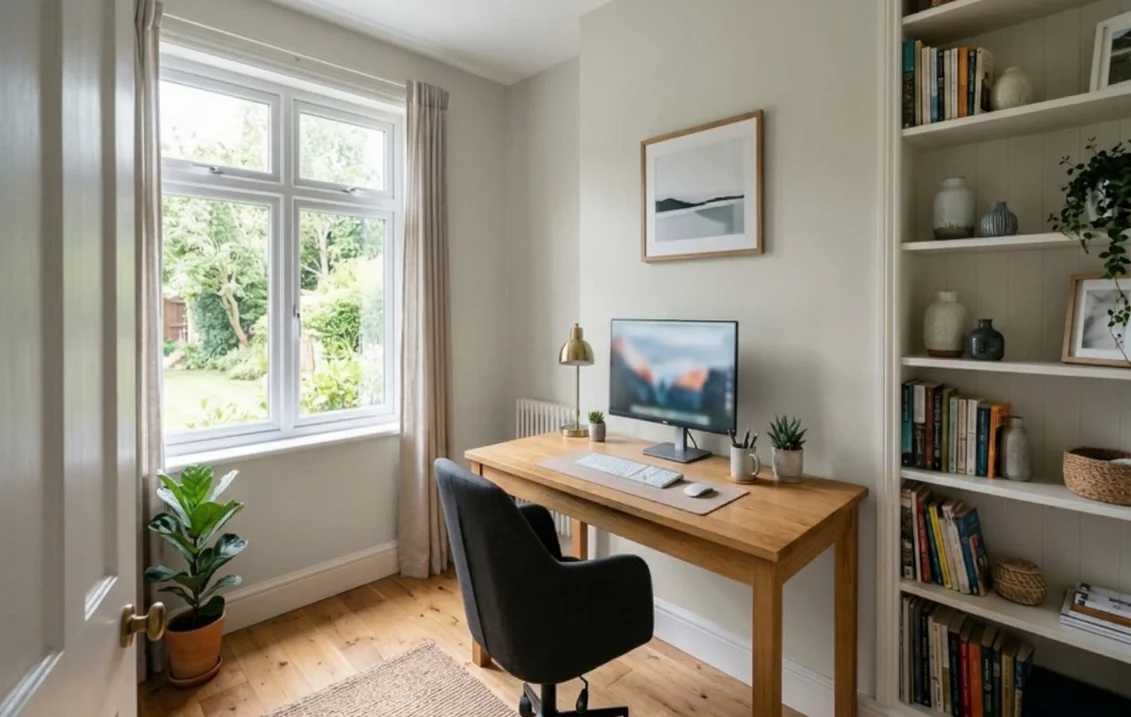
- Home offices. The image above shows a navy study repainted in Ammonite; more ideas in our home office paint colours guide.
- Utility and boot rooms. Our utility room colours guide uses Ammonite above a darker Mole's Breath lower panel.
- Period houses. Ammonite also comes in Casein Distemper (breathable, for plaster walls and ceilings), Soft Distemper (for cornices and plasterwork, easily removed) and Limewash. Read our period property interior colours guide and interior limewash guide first.
Dulux colours closest to Ammonite (not official matches)
The closest Dulux colours on screen, by CIEDE2000 between the swatches on each maker's website. They are not official equivalents: compare sample pots side by side on your wall.
| Farrow & Ball | Closest Dulux on screen | Difference | What changes |
|---|---|---|---|
| Ammonite No. 274 | Chalk Mark; Thimble Case and Gentle Moon show the same swatch | 1.3 | A touch darker and very slightly pinker |
| Cornforth White No. 228 | Pale Taupe | 0.7 | Almost identical on screen |
| Purbeck Stone No. 275 | Pebble Sea | 1.8 | Noticeably more yellow |
| Wevet No. 273 | Sloe Flower; then Nordic Bliss | 0.7; 0.9 | Sloe Flower a hair darker; Nordic Bliss a touch warmer |
Dulux files Chalk Mark and Thimble Case as Cool Neutrals but Gentle Moon, with the same swatch, as a White: this depth sits on the border between off-white and light grey, which is why Ammonite can look almost white in a sunny room.
On LRV: in Dulux's colour notation system, the middle number of a Trade code is the light reflectance value. Dulux Trade 30YY 68/024, whose code gives an LRV of about 68, shows the same swatch as Chalk Mark, and our index gives that swatch 66: Ammonite, at 67, sits in the same band. That checks our method; it is not Ammonite's LRV, which Farrow & Ball does not publish.
For ranges, finishes and prices side by side, see our Dulux Heritage vs Farrow & Ball comparison.
Ammonite finishes, prices and quantities
Specifications from each finish page; prices as shown for Ammonite on 29 October 2026.
| Finish | Use and character | Sheen | Coverage | Ammonite price |
|---|---|---|---|---|
| Estate Emulsion | Walls and ceilings in low-traffic rooms; chalky, wipeable but not washable | 2% | Up to 14 m²/L | 2.5 L £61; 5 L £103 |
| Modern Emulsion | Walls and ceilings; washable, scuff-resistant, mould protected | 7% | Up to 12 m²/L | 2.5 L £66; 5 L £111 |
| Dead Flat | Walls, woodwork and metal; washable, mould protected | 2% | Up to 12 m²/L | 750 ml £34; 2.5 L £81; 5 L £132 |
| Casein Distemper | Plaster walls and ceilings; highly breathable, brush only | 2% | Up to 13 m²/L | 2.5 L £82; 5 L £139 |
| Soft Distemper | Interior plasterwork; powdery, easy to remove, no recoat needed | 2% | Up to 13 m²/L | 5 L £109 |
| Modern Eggshell | Skirting, doors, kitchen cabinets, floors; washable | 40% | Up to 12 m²/L | 750 ml £36.50; 2.5 L £88; 5 L £141 |
Ammonite also comes in Full Gloss (750 ml £35, 2.5 L £85), Flat Eggshell, Limewash and exterior finishes. Sheen changes how a colour looks, so sample in the finish you will use.
Worked example: a 4.0 m by 3.5 m living room with a 2.4 m ceiling has 36 m² of wall, about 32.6 m² after a door and a window, so 65 m² for two coats. That is about 4.7 litres of Estate Emulsion (one 5 litre tin, £103) or 5.4 litres of Modern Emulsion (5 L plus 2.5 L, £177). Coverage figures are maximums on smooth, primed walls. For comparison, Dulux lists Dulux Matt at £27 for 2.5 litres and £45 for 5 litres (up to 14 m²/L), and Easycare Washable & Tough Matt at £33 and £56 (up to 13 m²/L). Hiring a decorator? See our UK interior decorator cost guide.
On solvents, interior matt wall and ceiling paints sold in the UK are capped at 30 grams of VOC per litre by the Volatile Organic Compounds in Paints, Varnishes and Vehicle Refinishing Products Regulations 2012. Farrow & Ball states that all its finishes are water based and rated A+ for indoor air quality.
How to test Ammonite before you commit
A 100 ml sample pot is £5.95, and the Ammonite page suggests sampling it with Cornforth White and Purbeck Stone to go darker, or with Strong White and Wevet to go lighter. A method for light greys:
- Compare undertones, not just depth: Ammonite (balanced), Skimming Stone (warmer) and Dimpse (cooler) share a lightness and show which way your room pulls.
- Paint two coats on card or lining paper, at least A3, with a white border so the old wall colour does not distort it.
- Move the samples around: beside the window, opposite it and in the darkest corner, in the morning, afternoon and after dark.
- Hold them against what stays: floor, sofa, worktop. A balanced grey beside orange pine or cream carpet can look cooler than it is.
Our guide on how to test paint colours before buying explains how to read a sample through the day.
Ammonite, Cornforth White or Skimming Stone?
Compare them on a photo of your own room before ordering pots: the tool repaints only the walls, so you judge each grey against your floor, furniture and daylight. More on the tool: interior paint visualiser for UK homes.
Compare light greys on my roomSources and references
- Farrow & Ball, Ammonite No. 274: description, name origin, complementary white, suggested schemes and samples, recommended primer, swatch colour, finishes and prices.
- Farrow & Ball, colour pages for Wevet, Cornforth White, Purbeck Stone, Worsted, Mole's Breath, Skimming Stone, Dimpse, Pavilion Gray, Strong White, All White, Stiffkey Blue and Oval Room Blue: descriptions, neutral groups, complementary whites, swatch colours.
- Farrow & Ball, Relaxed Neutrals, How Light Affects Colour and Our Guide to Grey Paint: the group, light by aspect, bulbs.
- Farrow & Ball, finish pages for Estate Emulsion, Modern Emulsion, Dead Flat, Casein Distemper, Soft Distemper and Modern Eggshell: use, sheen, coverage, washability.
- Dulux UK, colour pages for Chalk Mark, Thimble Case, Gentle Moon, Pale Taupe, Pebble Sea, Sloe Flower and Nordic Bliss: colour families and swatch colours.
- Dulux UK, Best shades for north, south, east or west-facing rooms and How to decorate a north-facing room: light by orientation, effect of bulbs.
- Dulux UK, Dulux Matt and Easycare Washable & Tough Matt: coverage and prices.
- Dulux Trade Paint Expert, 30YY 68/024, and ICI Paints, The Colour Palette notation system: swatch colour and the LRV carried in the code.
- legislation.gov.uk, VOC Regulations 2012, Schedule 2: VOC limit for interior matt wall and ceiling paints.
- Lightness index, CIELAB tint and colour differences: FacadeColorizer calculation (relative luminance, CIELAB, CIEDE2000) from the hex values on the makers' colour pages, 29 October 2026.
Frequently asked questions
What colour is Farrow and Ball Ammonite?
Is Ammonite a warm or cool grey?
What white goes with Farrow and Ball Ammonite?
Is Ammonite lighter than Cornforth White?
Does Ammonite work in a north-facing room?
What is the LRV of Farrow and Ball Ammonite?
Is there a Dulux equivalent of Ammonite?
Trademarks mentioned (Sherwin-Williams, Benjamin Moore, Behr, Caparol, Brillux, Sto, Alpina, Valspar, PPG, Glidden, Dulux, Crown Trade, Sandtex, Farrow & Ball, Johnstone's, Leyland) are property of their respective owners. FacadeColorizer is independent and not affiliated with any of them. Nominative fair use under Lanham Act §1125.