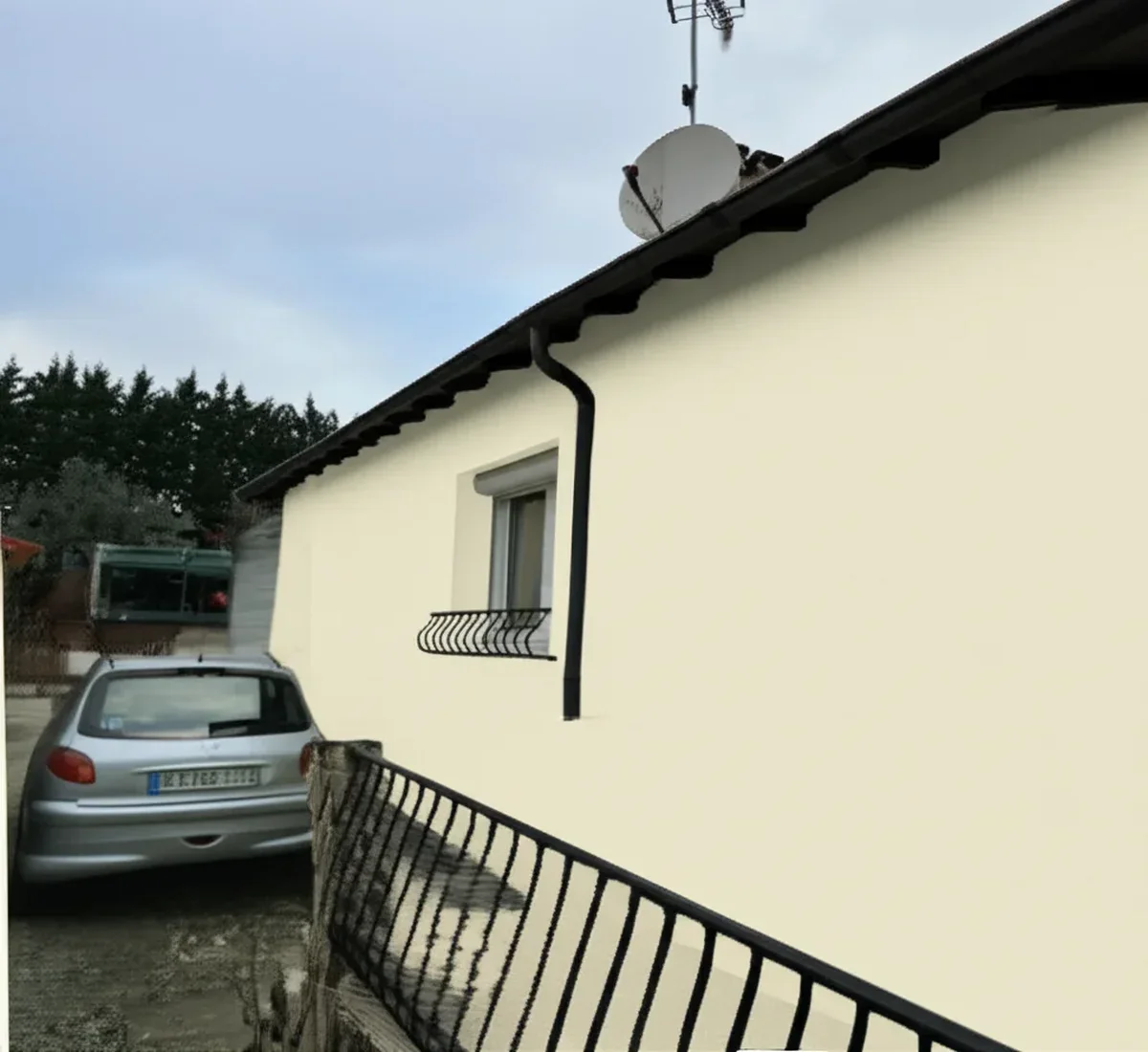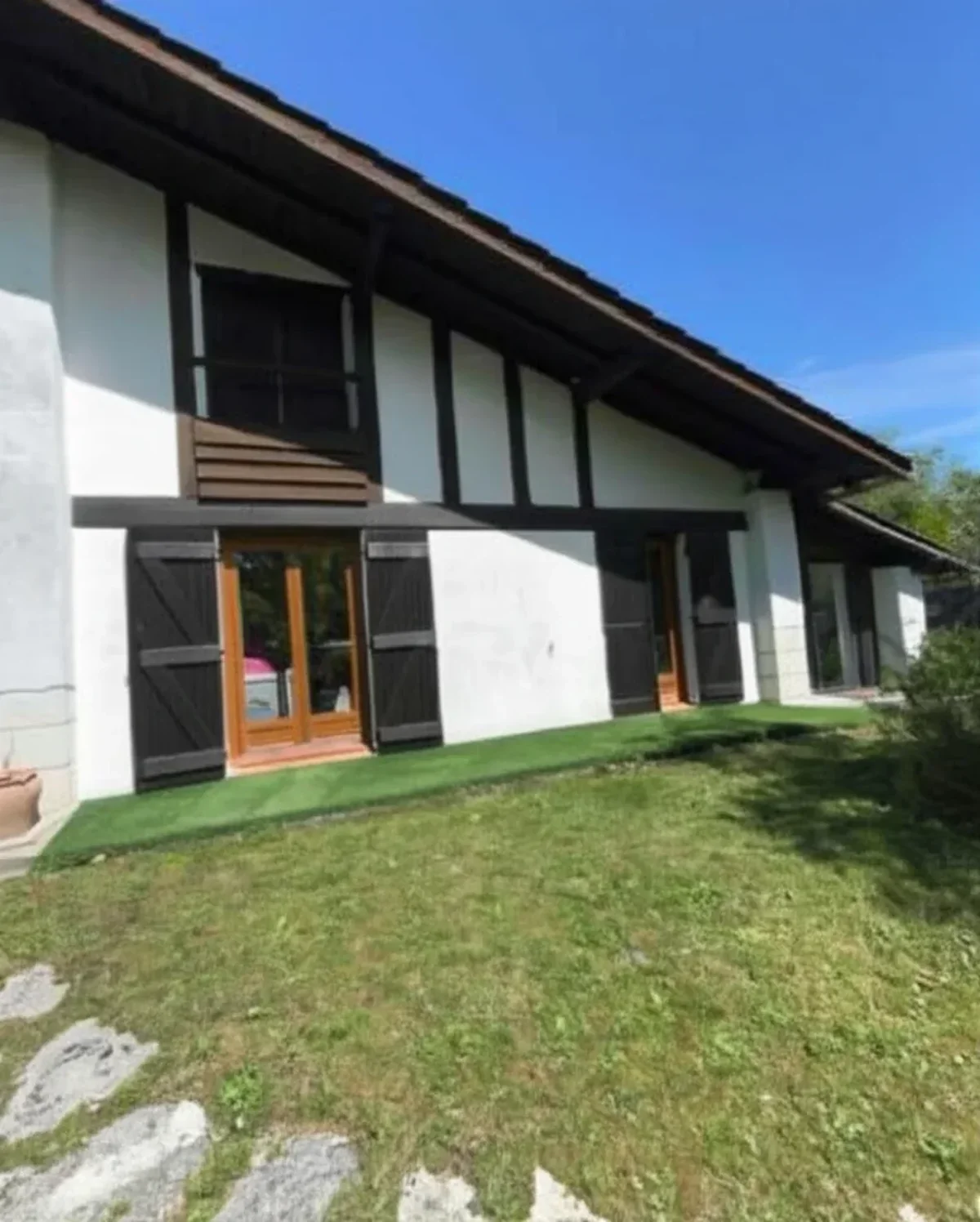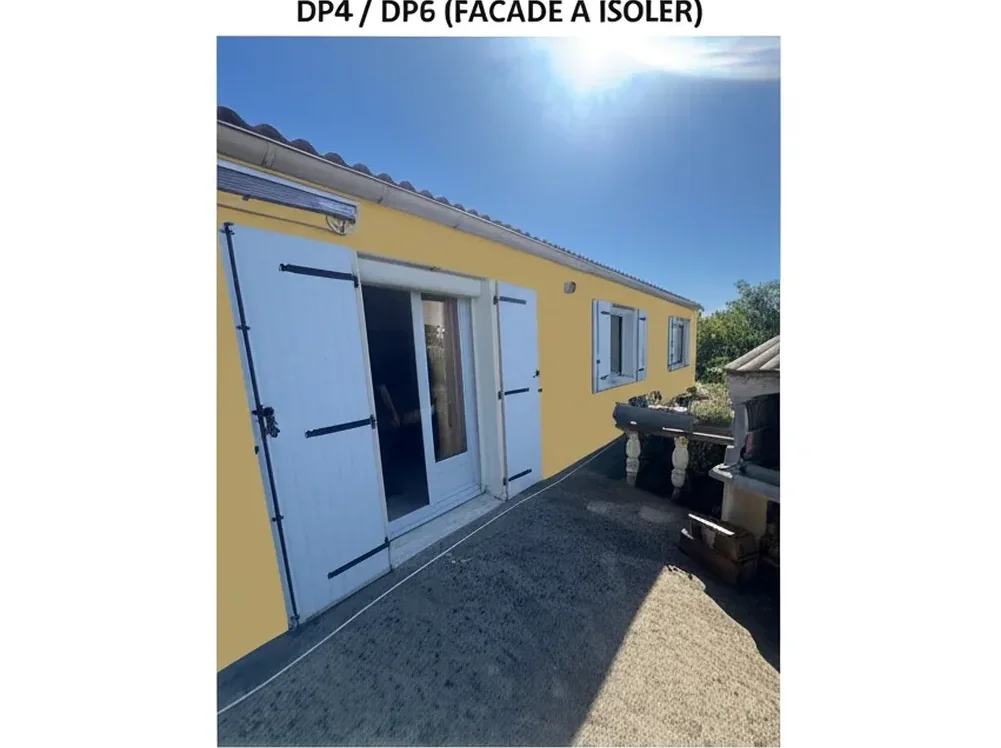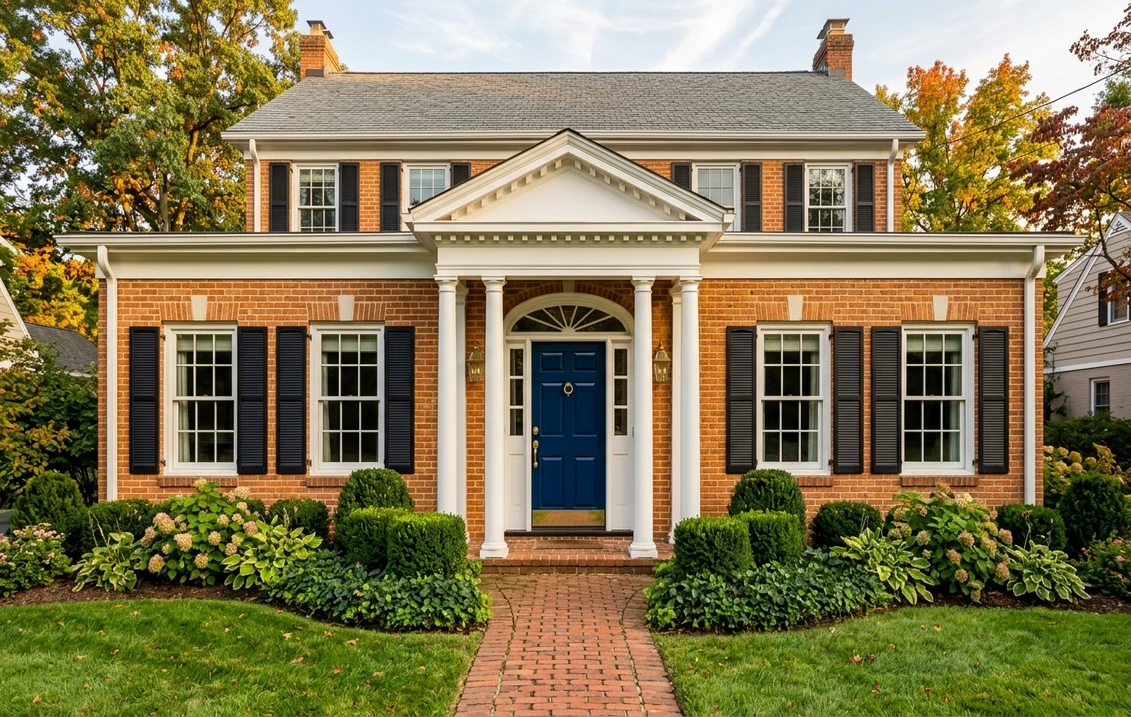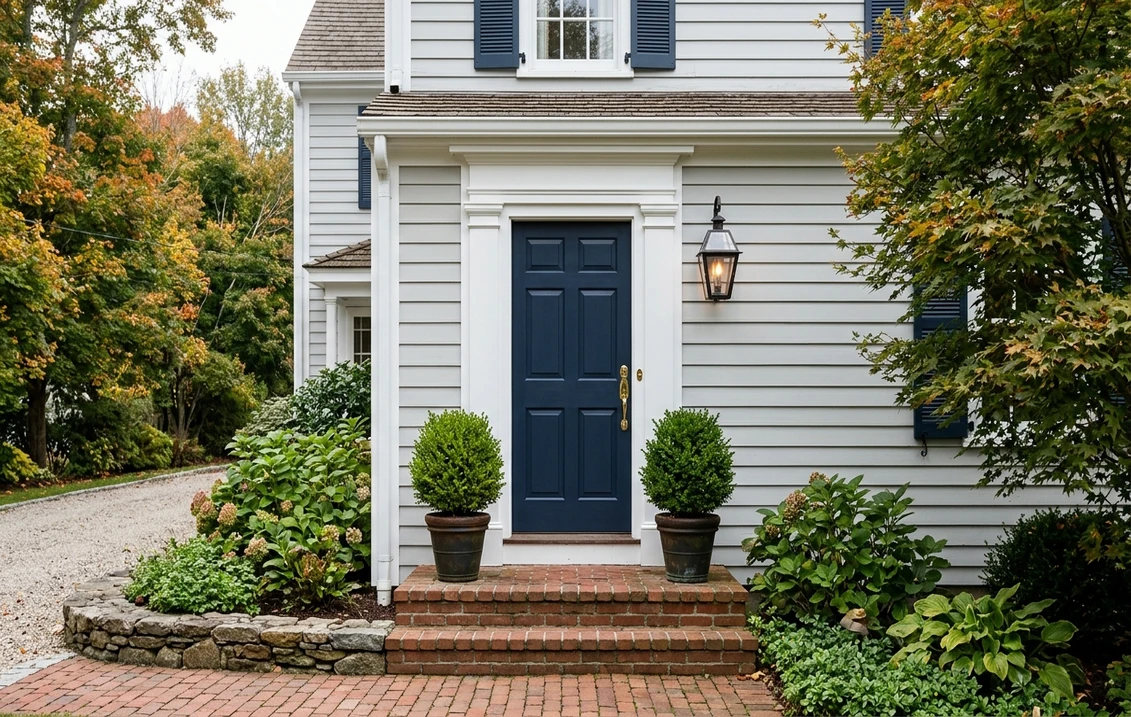
Try it on your house

The Sherwin-Williams front door colors the brand itself recommends are Tricorn Black SW 6258, Iron Ore SW 7069 and In the Navy SW 9178 for a classic entry, Sun Dried Tomato SW 7585 and Coral Clay SW 9005 for a bolder one, and Hunt Club SW 6468, Retreat SW 6207, Urbane Bronze SW 7048 and Antiquarian Brown SW 0045 for a nature-inspired look. Eight of those nine have a light reflectance value (LRV) below 21, so they read as deep accents against almost any siding. For the paint, Sherwin-Williams points door projects to Emerald Urethane Trim Enamel and SnapDry Door & Trim. This guide gives every shade with its code, LRV and in-store location number, the historic door colors Sherwin-Williams files under each house era, a spec comparison of the two door paints, and the prep rules that keep a dark door from failing.
Upload one photo of your entry and compare shades on your own siding in about 30 seconds, free.
Sherwin-Williams' own front door picks, with codes and LRV
On its front door paint colors page, Sherwin-Williams sorts its recommendations into three families: timeless, vibrant and nature-inspired. It files the timeless trio under "What is the most popular color for a front door?" but publishes no sales figures, so read the list as an editorial selection, not a ranking. The page also pictures Rookwood Amber, Forsythia and a "shared from real homes" gallery. LRV values come from Sherwin-Williams' own color data, rounded to one decimal; the location number is the chip's place on the in-store color wall.
| Color | Code | LRV | Location | SW family | Where Sherwin-Williams says it works |
|---|---|---|---|---|---|
| Tricorn Black | SW 6258 | 2.8 | 251-C1 | Timeless | Nearly any exterior, from white siding to red brick |
| Iron Ore | SW 7069 | 5.6 | 251-C7 | Timeless | Gray or cool-toned exteriors; a softer alternative to black |
| In the Navy | SW 9178 | 3.7 | 253-C3 | Timeless | Light-colored homes and natural wood; contrast with brick or stone |
| Sun Dried Tomato | SW 7585 | 4.9 | 275-C4 | Vibrant | Colonial, Victorian and modern farmhouse homes |
| Coral Clay | SW 9005 | 26.0 | 114-C4 | Vibrant | Light or neutral siding |
| Hunt Club | SW 6468 | 6.5 | 160-C7 | Nature-inspired | Homes with natural landscaping |
| Retreat | SW 6207 | 20.9 | 217-C5 | Nature-inspired | Rustic, farmhouse and craftsman homes |
| Urbane Bronze | SW 7048 | 8.1 | 245-C7 | Nature-inspired | A rich, warm neutral |
| Antiquarian Brown | SW 0045 | 16.3 | Historic wall | Nature-inspired | A rich, warm neutral |
| Rookwood Amber | SW 2817 | 28.9 | Historic wall | Header photo | No written advice |
| Forsythia | SW 6907 | 63.0 | 131-C4 | Header photo | No written advice |
| Hazel | SW 6471 | 49.9 | 169-C2 | Real homes | Customer photo, no written advice |
| Youthful Coral | SW 6604 | 52.1 | 108-C2 | Real homes | Customer photo, no written advice |
| Nugget | SW 6697 | 46.4 | 137-C4 | Real homes | Customer photo, no written advice |
Try it on your house
No photo? Try a sample
Two details save time at the store. First, the timeless trio spans only 2.8 to 5.6 LRV, yet Iron Ore reflects about twice as much light as Tricorn Black, which is why it reads as charcoal in daylight while Tricorn Black reads as black. Our Tricorn Black exterior guide and Iron Ore exterior guide cover both on full facades. Second, Tricorn Black, Caviar and Iron Ore all sit on strip 251, and In the Navy, Naval and Salty Dog all sit on strip 253, so one stop at the color wall gives you the whole comparison in your hand.
Eight more Sherwin-Williams door colors in the same families
The Sherwin-Williams list leaves gaps: no mid charcoal, no bright red, nothing between Retreat and Hunt Club. These eight fill them. Three have a history: Naval was the Sherwin-Williams 2020 Color of the Year, Urbane Bronze the 2021 pick and Evergreen Fog the 2022 pick, according to the brand's Color of the Year archive.
| Color | Code | LRV | Location | How it differs from the SW pick |
|---|---|---|---|---|
| Caviar | SW 6990 | 3.0 | 251-C2 | Next chip to Tricorn Black, a hair lighter |
| Peppercorn | SW 7674 | 9.7 | 236-C7 | A mid charcoal for a door that should read gray, not black |
| Naval | SW 6244 | 4.5 | 253-C6 | Same strip as In the Navy, slightly lighter |
| Salty Dog | SW 9177 | 4.7 | 253-C2 | Same strip, a clearer blue at the same depth |
| Rookwood Red | SW 2802 | 4.8 | Historic wall | A deep brick red at the depth of Sun Dried Tomato, tagged Victorian |
| Positive Red | SW 6871 | 10.9 | 101-C7 | A brighter, cleaner red for a modern facade |
| Pewter Green | SW 6208 | 11.8 | 217-C6 | The next chip down from Retreat on the same strip |
| Evergreen Fog | SW 9130 | 30.4 | 215-C4 | A gray-green light enough to stand out on a dark body |
Naval and Urbane Bronze have full facade guides of their own: see the Naval exterior guide for the blue and the Urbane Bronze exterior guide for the bronze, both useful when the door color is meant to repeat on shutters or a garage door. If you are still choosing between brands, the same exercise for the other big name sits in our Benjamin Moore front door colors guide.
How dark is too dark for a front door? LRV, heat and warranties
LRV runs from 0 for absolute black to 100 for a perfect white, and it doubles as a rough heat gauge: the lower the number, the more sunlight the door absorbs. Door makers draw their own line. In a December 2024 announcement, Simpson Door stated that "any paint with an LRV less than 55 is considered a dark paint color for exterior products", that most dark-painted wood, fiberglass or PVC surfaces absorb more heat than lighter ones, and that it now warrants dark paint only on its Nantucket Collection (77000 series) doors made in Accoya, with a 10-year warranty.
Apply that 55 threshold to the Sherwin-Williams page and the result is striking: every color it shows for front doors except Forsythia (63.0) counts as dark, including the soft-looking Hazel (49.9) and Youthful Coral (52.1). Color alone is not the problem; heat is, when a sunny door sits behind a full-glass storm door. The fiberglass door maker Therma-Tru says in its project center FAQ that a properly installed and properly vented storm door will not void its door system warranty, while it does not cover damage the storm door itself causes. The practical order is: read your own door maker's warranty, check whether the storm door is vented or can take a screen panel in summer, then pick the shade. Our dark exterior paint colors guide covers the same trade-off for siding.
Matching a Sherwin-Williams door color to your siding
A front door works when it contrasts with the body in lightness, not only in hue. The table uses the brand's own pairing notes where it gives them.
| Body color | Sherwin-Williams door picks | Why |
|---|---|---|
| White or off-white (Alabaster SW 7008, LRV 82.2; Pure White SW 7005, LRV 84.0) | Tricorn Black, In the Navy, Sun Dried Tomato, Hunt Club | Maximum lightness gap; SW names white siding for Tricorn Black and light-colored homes for In the Navy |
| Light to mid gray | Iron Ore, In the Navy, Sun Dried Tomato, Positive Red | SW recommends Iron Ore for gray or cool-toned exteriors; a red adds warmth to a cool body |
| Red brick | Tricorn Black, In the Navy, Hunt Club | SW names red brick for Tricorn Black and brick or stone for In the Navy's contrast; a red door competes with the brick |
| Natural wood, stone, rustic or craftsman | In the Navy, Retreat, Urbane Bronze, Antiquarian Brown | SW pairs In the Navy with natural wood and Retreat with rustic, farmhouse and craftsman homes |
| Dark body (navy, charcoal, bronze) | Evergreen Fog, Coral Clay, Nugget, Forsythia | On a body under LRV 10, the door needs a much higher LRV to stand out |
Each row has a deeper guide. Gray houses are covered in our front door colors for a gray house roundup and, for the boldest version, in gray house with a red front door. Brick has its own red brick front door guide, and the dark-body case is worked through in navy blue house with a yellow door. For whole-house trios built from Sherwin-Williams shades, see the Sherwin-Williams exterior color combinations.
Historic Sherwin-Williams door colors by house era
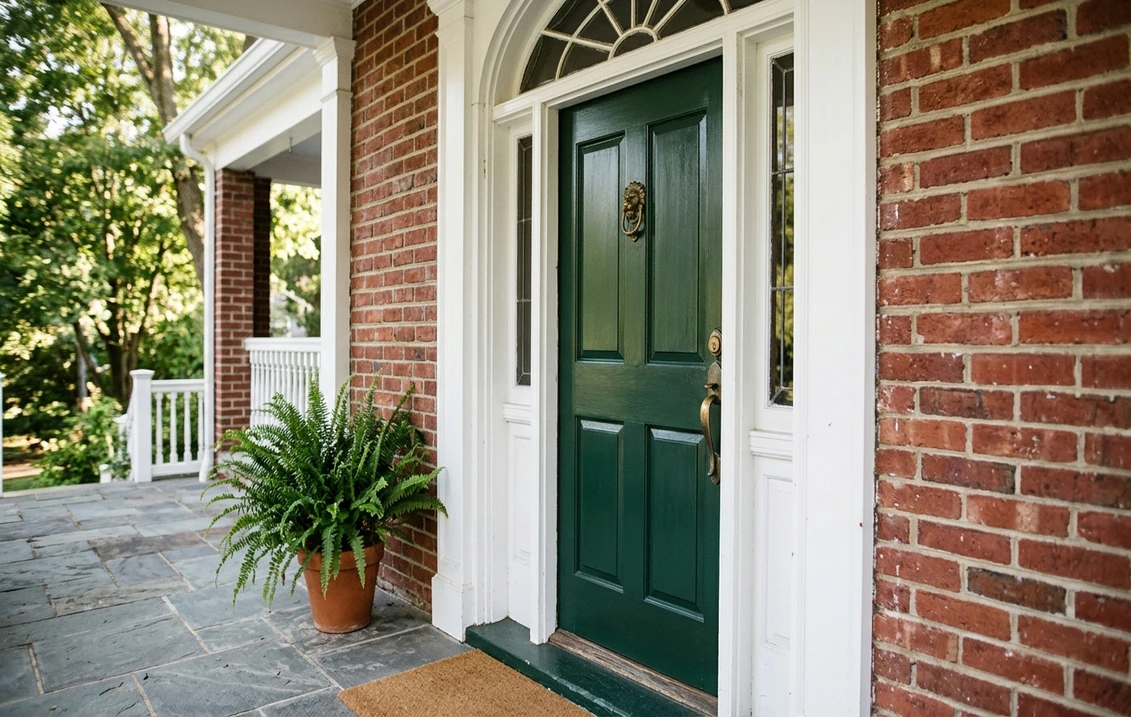
Owners of older houses often want a door color that belongs to the period. Sherwin-Williams' Historic Paint Colors collection says its palettes are "scrupulously curated from Sherwin-Williams own historical archives" and splits them into seven eras. Because a front door usually carries the deepest color on the house, the table lists the darkest shades Sherwin-Williams tags to each era in its color data, with their LRV.
| Era (Sherwin-Williams label) | Deepest shades in the era group (LRV) |
|---|---|
| The Classics (1800s-1860s) | No deep shade: the darkest is Silver Gray SW 0049 (44.5), so a door usually borrows black or a deep green from outside the group |
| Colonial Revival (1870s-1900s) | Needlepoint Navy SW 0032 (12.7) |
| Victorian (1830s-1910s) | Rookwood Dark Red SW 2801 (3.2), Rookwood Shutter Green SW 2809 (4.1), Rookwood Red SW 2802 (4.8) |
| Arts & Crafts (1880s-1910s) | Polished Mahogany SW 2838 (2.7), Roycroft Bottle Green SW 2847 (4.6), Dard Hunter Green SW 0041 (6.1) |
| The Jazz Age (1920s) | Blue Peacock SW 0064 (5.8), Chinese Red SW 0057 (11.0) |
| The Streamlined Years (1930s-1950s) | Deep Maroon SW 0072 (6.6), Vogue Green SW 0065 (8.6) |
| Suburban Modern (1950s) | Fairfax Brown SW 2856 (7.2), Caribbean Coral SW 2854 (25.3) |
These era labels are a manufacturer's grouping, not a preservation standard: in a local historic district, the commission's approved list governs. They are still a sound starting point. A Colonial Revival house reads well with Needlepoint Navy, a Victorian with one of the Rookwood reds or greens, and a bungalow with Roycroft Bottle Green or Polished Mahogany. Our style guides go further on the body and trim colors that surround the door: colonial home exterior colors, craftsman house exterior colors and Queen Anne Victorian paint colors.
Which Sherwin-Williams paint for a front door: Emerald Urethane or SnapDry
The color decides the look; the product decides how long it lasts on a surface that gets slammed, grabbed and rained on. The Sherwin-Williams door page recommends two dedicated door and trim paints, and their product data sheets give the numbers that matter. The figures below come from the Emerald Urethane Trim Enamel data sheet (gloss version) and the SnapDry Door & Trim data sheet (semi-gloss version), plus the two product pages for sheens and sizes.
| Spec | Emerald Urethane Trim Enamel | SnapDry Door & Trim |
|---|---|---|
| Resin | Waterbased urethane modified alkyd | Acrylic latex |
| Sheens | Satin, semi-gloss, gloss | Satin, semi-gloss |
| Exterior scope on the data sheet | Doors, trim and other small areas of wood or metal; not the main body of a structure | Doors, trim, windows and shutters |
| Coverage | 350 to 400 sq ft per gallon | 350 to 400 sq ft per gallon |
| Dry to touch (77°F, 50% RH) | 2 hours | 1 hour |
| Recoat | 4 hours | 2 hours |
| Application conditions | Above 50°F | Surface, air and substrate 50 to 90°F; humidity 40 to 70% |
| Vinyl doors and shutters | Not addressed on the data sheet | VinylSafe palette of 100 colors, with a limited choice of darker shades |
| Sizes | Quart, gallon, 5 gallons | Quart, gallon, 5 gallons (5 gallons in Satin Extra White only) |
| Warranty | Lifetime limited | Lifetime limited |
The decision rule follows from the dry times. Choose SnapDry when the door has to close tonight: Sherwin-Williams says it lets doors "be closed without marring/sticking the same day as painted". Choose Emerald Urethane Trim Enamel when you want the harder, oil-like enamel the data sheet describes as delivering "the look, feel and durability of an oil based enamel", and when the door can stay propped open longer. The door page also lists Emerald Rain Refresh Exterior Acrylic Latex, a self-cleaning house paint.
Sheen is the other choice, and the door page is silent on it. Semi-gloss is the usual compromise: it wipes clean and sharpens panel shadows. Gloss deepens Tricorn Black but shows every dent and brush mark, so it suits a smooth fiberglass or steel slab; satin forgives a weathered wood door. For how these door paints sit inside the whole Sherwin-Williams exterior range, see our Sherwin-Williams exterior paint guide.
How much paint a front door needs
A standard exterior door is 36 by 80 inches, or 20 square feet per face, and about 1 3/4 inches thick, so its four edges add roughly 2.8 square feet. The calculation below uses the 350 to 400 square feet per gallon that both data sheets publish, two coats, and adds the outside casing (about 4.9 square feet for a 3 1/2 inch casing). Raised panels add a little profile area, so round up.
| What you paint | Area per coat | Two coats | Paint needed |
|---|---|---|---|
| Outside face and four edges | 22.8 sq ft | 45.6 sq ft | 0.11 to 0.13 gallon, about half a quart |
| Both faces and edges | 42.8 sq ft | 85.6 sq ft | 0.21 to 0.24 gallon, just under one quart |
| Both faces, edges and outside casing | 47.7 sq ft | 95.4 sq ft | 0.24 to 0.27 gallon, buy two quarts |
One quart therefore covers the most common job, the outside face in two coats, with enough left for touch-ups. Deep colors are mixed in Deep or Ultradeep base, and both data sheets recommend the matching P-Shade primer "to optimize hide and color development", adding that a primer coat improves hiding whenever the repaint is a drastic color change. Going from white to Tricorn Black or Hunt Club is exactly that case, so budget one primer coat plus two topcoats.
Prep that keeps a dark door from failing
A failed door finish is usually an adhesion problem, not a color problem. The two data sheets and the Therma-Tru FAQ give a checklist by material.
- Wood doors. Sand exposed wood to a fresh surface, fill holes and prime every patch with Exterior Oil-Based Wood Primer or Exterior Latex Wood Primer, the two primers both data sheets name. On cedar or redwood, spot-prime tannin stains with the oil-based primer.
- Steel doors. Remove rust with sandpaper or a wire brush and prime bare steel the same day with All Surface Enamel Latex Primer, the steel primer both data sheets list.
- Fiberglass doors. Therma-Tru says its Classic-Craft and Fiber-Classic doors should be "primed and painted with a high quality acrylic, alkyd or oil-based exterior house paint", that its smooth Smooth-Star doors take a high quality exterior latex or acrylic paint, and that paints whose major ingredients are vinyl polymers or polyvinyl acetate may not adhere. It also requires fiberglass door systems to be finished within 6 months of installation to keep the warranty, and asks for all exposed sides, edges and ends to be finished.
- Previously painted doors. Sand peeling paint to a sound surface and glossy paint dull, as both data sheets require, and remove mildew first or it grows through the new coat.
- Timing. The SnapDry data sheet advises painting in early morning or late afternoon, out of direct sun, opening the door into the house if needed, and letting any quick-dry primer dry at least 4 hours first.
Houses built before 1978 add one more step. The EPA Renovation, Repair and Painting program notes that worn lead-based paint on surfaces subject to constant friction, such as doors and window sills, produces hazardous chips and dust, and requires anyone paid to disturb paint in pre-1978 housing to be certified. Homeowners working on their own home are generally exempt, but the hazard is the same, and both Sherwin-Williams data sheets open their prep sections with a lead dust warning. Our pre-1978 lead paint guide explains how to test an old door before sanding it.
A six-step plan from shortlist to painted door
- Shortlist three shades: one safe dark (Tricorn Black, Iron Ore or In the Navy), one with personality (Sun Dried Tomato, Hunt Club or Coral Clay), one from the historic list.
- Photograph your entry straight on and render the three shades against your real siding, roof and trim.
- Order samples of the two finalists (Sherwin-Williams offers 2 by 3 inch chips and 8 by 8 inch peel-and-stick samples online) and view them morning and evening.
- Check the door maker's warranty if the winner is below LRV 55 and the door sits in sun behind a storm door.
- Pick the product and sheen, then buy one quart for one face or two for both.
- Prep by material, prime, and apply two topcoats inside the data sheet's temperature window.
See Tricorn Black, In the Navy or Hunt Club on your own front door before you buy a quart.
Sources and references
- Sherwin-Williams, Front Door Paint Colors: the brand's door picks, pairing notes and recommended door paints.
- Sherwin-Williams color pages and color data: names, codes, LRV and location numbers.
- Sherwin-Williams, Color of the Year archive: Naval (2020), Urbane Bronze (2021), Evergreen Fog (2022).
- Sherwin-Williams, Historic Paint Colors: the seven era groups used in the house-era table.
- Sherwin-Williams, Emerald Urethane Trim Enamel product data sheet: coverage, dry times, temperature, exterior scope, primers and prep.
- Sherwin-Williams, SnapDry Door & Trim product data sheet: coverage, dry times, temperature window, VinylSafe colors, tips.
- Simpson Door Company, Paint It Black (December 19, 2024): dark color defined as LRV under 55, heat, and dark-paint warranty terms.
- Therma-Tru, Project Center FAQs: fiberglass door paints, 6-month finishing rule, vented storm doors.
- U.S. EPA, Lead Renovation, Repair and Painting Program: pre-1978 housing, contractor certification, doors as friction surfaces.
Frequently asked questions
What is the most popular Sherwin-Williams front door color?
What Sherwin-Williams paint is best for a front door?
What sheen should a front door be painted?
Is Tricorn Black or Iron Ore better for a front door?
Can a front door behind a storm door be painted a dark color?
How much paint do I need for a front door?
Trademarks mentioned (Sherwin-Williams, Benjamin Moore, Behr, Caparol, Brillux, Sto, Alpina, Valspar, PPG, Glidden, Dulux, Crown Trade, Sandtex, Farrow & Ball, Johnstone's, Leyland) are property of their respective owners. FacadeColorizer is independent and not affiliated with any of them. Nominative fair use under Lanham Act §1125.