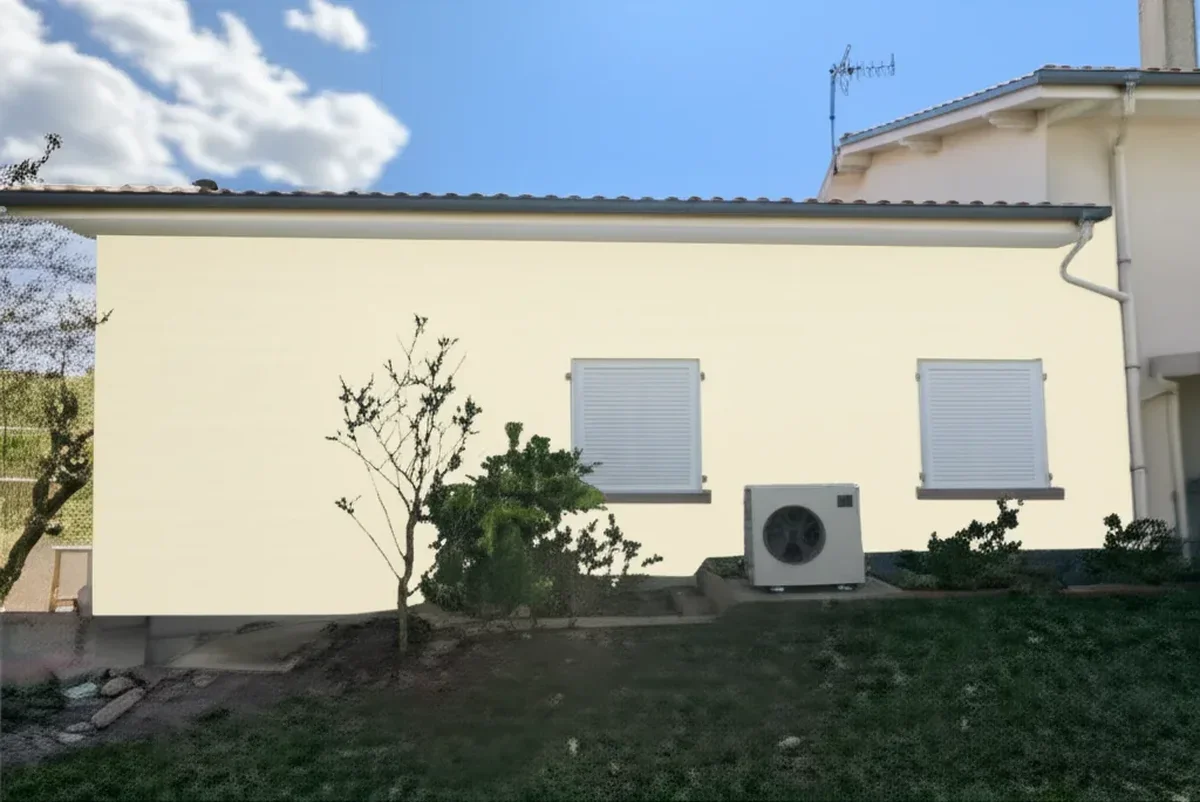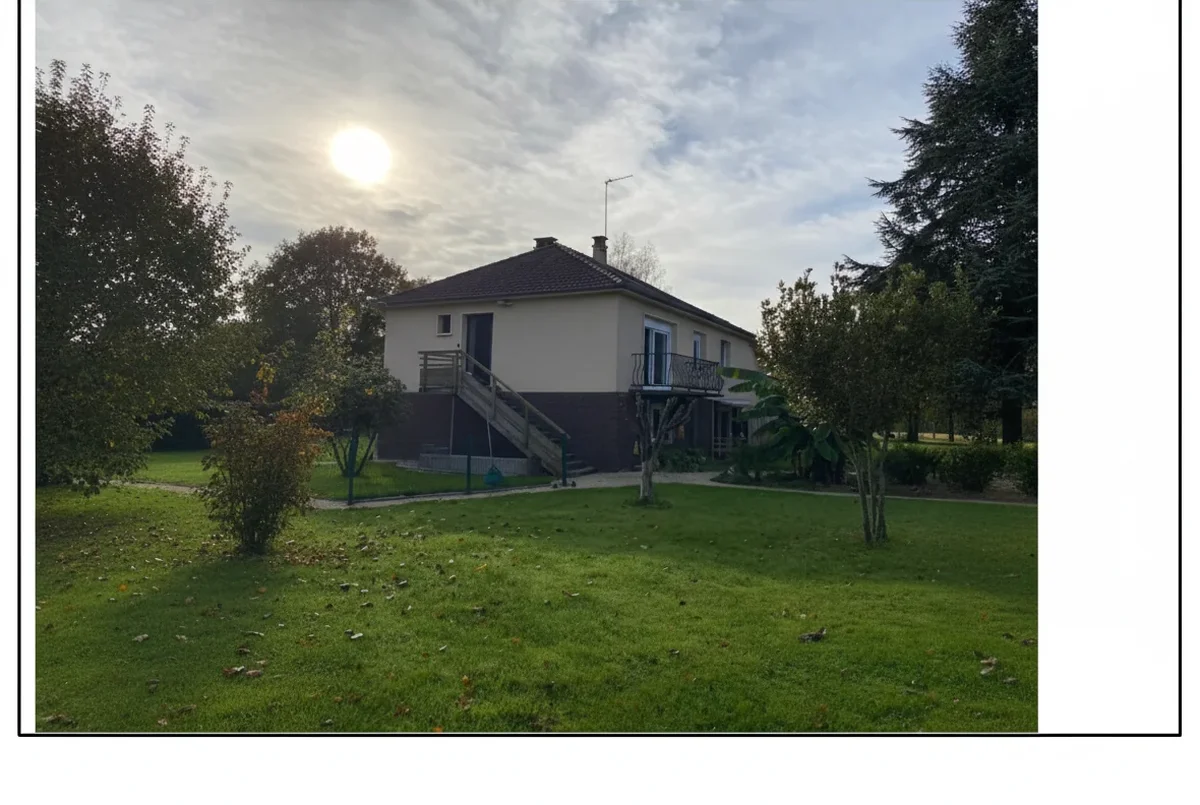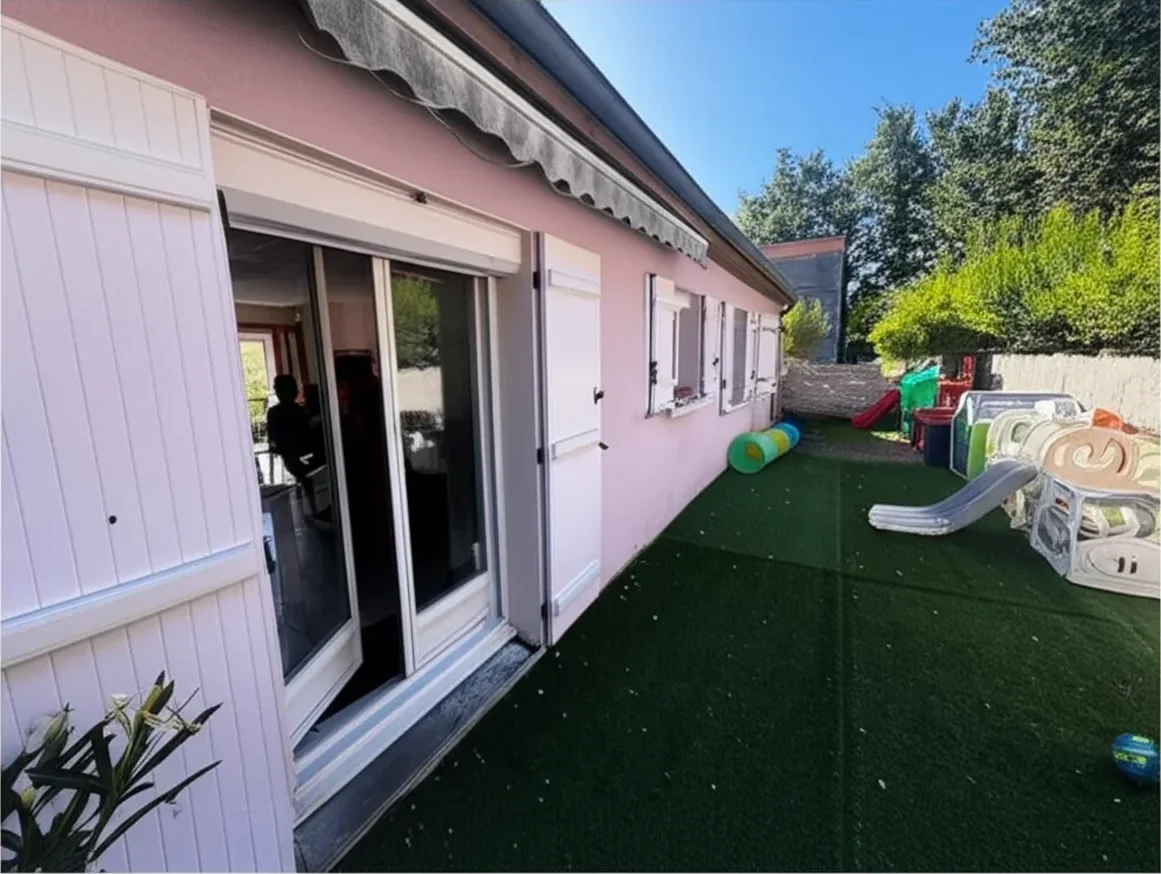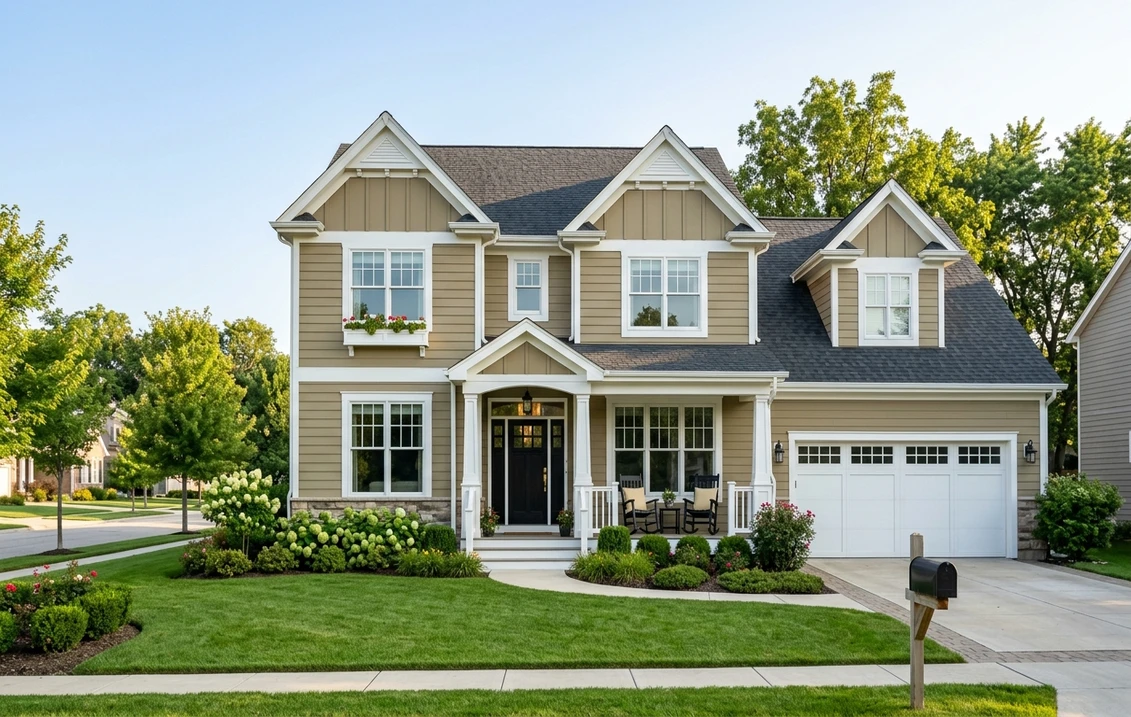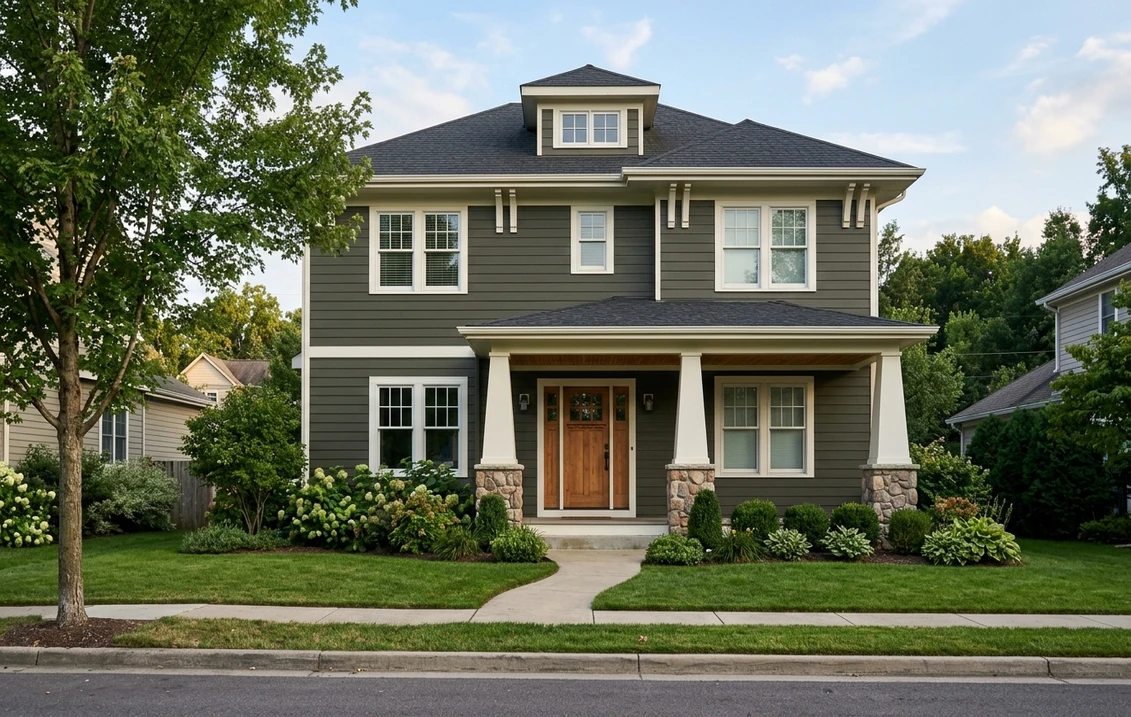
Try it on your house

Sherwin-Williams Ripe Olive (SW 6209) is a very deep olive green-gray, close enough to black that it can pass for charcoal until it sits next to a true neutral. Sherwin-Williams publishes an LRV of 6.162, an RGB of 68, 72, 61 (hex #44483D), rates it for interior and exterior use, files it in its Green family and places it at 217-C7, the darkest step of the strip that starts with Sea Salt. Outside, it works as a full body color on wood, fiber cement and stucco, and as a door, shutter or garage accent on a light house. The one place it does not belong is vinyl: at an LRV far below 56, it falls outside the rule Sherwin-Williams prints on its exterior data sheets, and it has no counterpart in the VinylSafe palette.
Color values come from the makers' own pages and data. Color differences, chroma, LRV gaps and gallon counts are our calculations, and the roof, brick and landscape advice is our color reasoning.
The link opens the exterior tool with Ripe Olive preselected on the siding. How it works: our exterior paint visualizer.
Ripe Olive at a glance: the numbers Sherwin-Williams publishes
These values come from the color's page (Sherwin-Williams, SW 6209 Ripe Olive) and Sherwin-Williams' public color data, which gives the same figures. Hex and RGB are an approximate digital rendering, not a tinting formula.
| Attribute | Ripe Olive SW 6209 |
|---|---|
| LRV | 6.162 (flagged as a dark color in the color data) |
| RGB | 68, 72, 61 |
| Hex (screen approximation) | #44483D |
| Lab (Sherwin-Williams color data) | L 29.91, a −4.00, b +6.04 |
| Color family | Green |
| Use | Interior and exterior |
| Color strip location | 217-C7, the bottom of a strip that starts at Sea Salt (C1) |
| Coordinating colors listed | Spare White SW 6203, Oyster White SW 7637, Green Onyx SW 9128 |
| Collection tags in the color data | 2020 Alive, Rejuvenation |
Try it on your house
No photo? Try a sample
Olive, charcoal or green? What the numbers say
The Lab values explain why Ripe Olive gets called both olive and charcoal. The L value of 29.91 puts it in the same lightness band as Iron Ore. The a value of −4.00 leans to green, and the b value of +6.04 leans to yellow, which together make olive rather than forest or hunter green. The chroma, by our calculation, is only about 7.2, where 0 is a perfectly neutral gray. In plain terms: enough color to read as olive in daylight, little enough that it reads as near-black in shade or at dusk.
| Color | LRV | Lab a / b (Sherwin-Williams) | Chroma (our calculation) | Reads as |
|---|---|---|---|---|
| Iron Ore SW 7069 | 5.55 | −0.44 / +1.21 | 1.3 | Soft black, almost no color |
| Urbane Bronze SW 7048 | 8.12 | +0.43 / +4.11 | 4.1 | Brown-gray, warm |
| Pewter Green SW 6208 | 11.83 | −3.42 / +4.58 | 5.7 | Lighter, grayer green |
| Ripe Olive SW 6209 | 6.16 | −4.00 / +6.04 | 7.2 | Near-black olive |
| Rookwood Dark Green SW 2816 | 10.08 | −6.00 / +9.58 | 11.3 | Lighter and clearly greener |
What to expect outdoors, as a matter of color logic rather than measurement:
- Full sun, south or west wall. The olive comes forward: a deep khaki-green with a visible yellow side. This is where it looks most like the name.
- North wall, deep porch, evening. The color drops toward charcoal. Next to Iron Ore at dusk, the two can be hard to tell apart.
What an LRV of 6.16 means on a house
Light Reflectance Value runs from 0 (black) to 100 (a perfect white). At 6.16, Ripe Olive reflects about 6% of the visible light that reaches it and absorbs the rest. It is in the same range as Iron Ore (5.55) and Tricorn Black (2.85) rather than with the mid-tone greens. Our guide to reading LRV explains the scale.
Two practical consequences follow. First, a very dark wall in direct sun gets warmer than a light one (LRV covers visible light only, so it does not give a surface temperature). Second, Sherwin-Williams' Duration Exterior data sheet says not to paint in direct sun: plan each wall for when it is in shade. A dark body also makes every light element stand out, from white gutters to a mismatched siding board.
The same data sheet sets the hard limit for vinyl, covered in its own section below: no color darker than the original and no LRV under 56 unless VinylSafe colors are used, because the vinyl may warp.
Whole house or accents: where Ripe Olive works
Ripe Olive can carry a whole house or stay in the background as an accent. Our reading, case by case:
| Use | Works well on | Watch out for |
|---|---|---|
| Full body color | Craftsman and bungalow lap siding, board and batten, cedar shingle, modern boxes in fiber cement or stucco, houses set among trees | Small houses on bare lots can look heavy; vinyl siding is excluded |
| Front door | White, cream or light gray houses; a traditional alternative to black | On a dark gray house the door can disappear |
| Shutters | Wood or composite shutters on a light body | Vinyl shutters fall under the same LRV 56 rule |
For more ideas built around this family of colors, our pages on colors that go with olive green and on an olive green house with white trim cover the wider olive range, while this page stays on the one Sherwin-Williams color.
Strip 217: from Sea Salt down to Ripe Olive
Ripe Olive is the darkest of seven steps on Sherwin-Williams strip 217, the same strip that carries Sea Salt at the top. The colors share a gray-green base, so a house can take two or three of them without an undertone clash. Values from Sherwin-Williams' color data, all rated for exterior use:
| Location | Color | LRV | Outside, use it for |
|---|---|---|---|
| 217-C1 | Sea Salt SW 6204 | 63.23 | A pale green-gray body, porch ceiling |
| 217-C2 | Comfort Gray SW 6205 | 53.79 | Body color, light gables |
| 217-C3 | Oyster Bay SW 6206 | 44.12 | Mid-tone body |
| 217-C4 | Acacia Haze SW 9132 | 32.20 | Body or soft trim |
| 217-C5 | Retreat SW 6207 | 20.87 | Deep body, shutters |
| 217-C6 | Pewter Green SW 6208 | 11.83 | Dark body, shutters, door |
| 217-C7 | Ripe Olive SW 6209 | 6.16 | Darkest body, door, shutters, foundation band |
Two one-strip schemes follow from the table. Light house: Sea Salt or Comfort Gray on the siding with Ripe Olive on the door and shutters, a gap of about 47 to 57 points. Dark house: Ripe Olive on the siding with Oyster Bay on a porch ceiling or gable. See our Sea Salt SW 6204 exterior guide for the top of the strip.
Trim, door and accent colors with a Ripe Olive body
Sherwin-Williams' own coordinating colors are the first three rows. The gap is the LRV difference against the body; LRVs from Sherwin-Williams' color data.
| Role | Color | LRV | Gap | Effect |
|---|---|---|---|---|
| Trim (coordinating) | Spare White SW 6203 | 77.31 | 71 | A cool, slightly green white from the same family; crisp but not stark |
| Trim (coordinating) | Oyster White SW 7637 | 72.49 | 66 | A warmer, softer off-white; the gentlest frame of the three |
| Accent (coordinating) | Green Onyx SW 9128 | 31.42 | 25 | A lighter sage-olive for porch ceilings, lattice or a gable |
| Trim (warm white) | Alabaster SW 7008 | 82.22 | 76 | Strong, warm contrast |
| Trim (crisp white) | Pure White SW 7005 | 83.96 | 78 | The brightest outline; every line of trim shows |
| Windows, door, railings | Tricorn Black SW 6258 | 2.85 | −3 | Almost no value gap: a tone-on-tone dark look, modern and low-key |
| Door, accents | Urbane Bronze SW 7048 | 8.12 | +2 | A brown-gray of the same depth; reads as a material change more than a color change |
As we read these gaps, any white trim on Ripe Olive is high contrast; the choice is warm (Oyster White, Alabaster), which brings out the olive, or cool (Spare White, Pure White), which pushes the body toward charcoal. For the door, our Sherwin-Williams front door colors page compares more options, and the Oyster White SW 7637 exterior guide covers that trim color in detail.
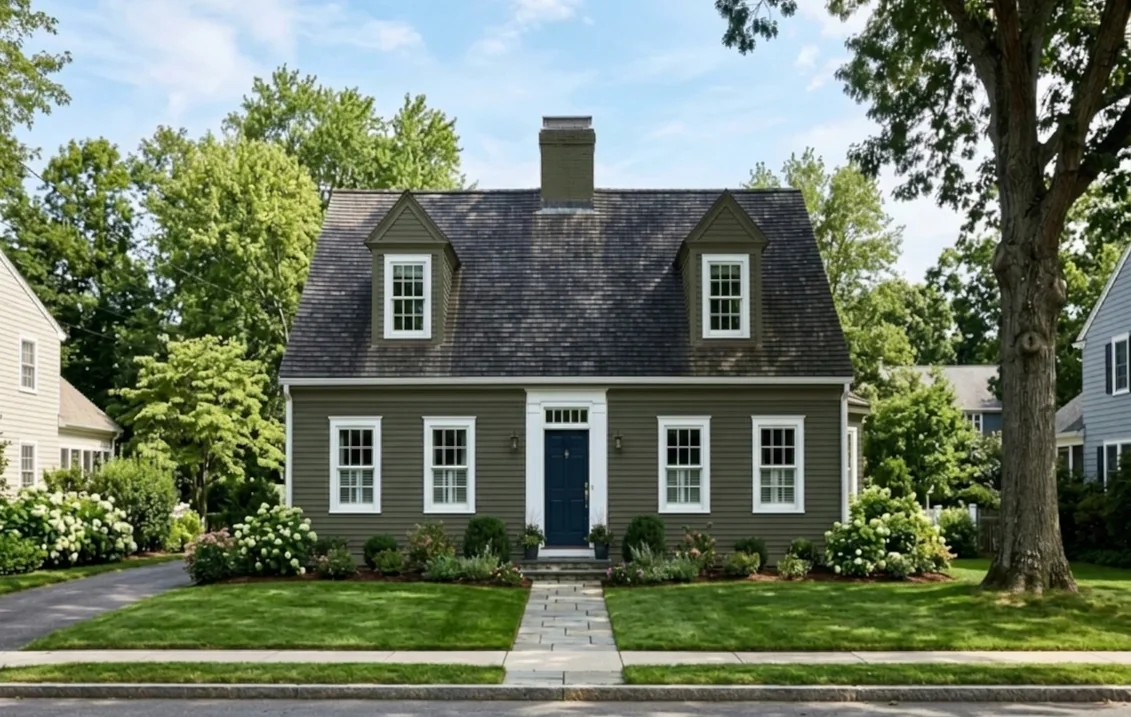
Ripe Olive vs Iron Ore, Urbane Bronze, Pewter Green and Rookwood Dark Green
The usual dark alternatives. LRVs come from Sherwin-Williams; the color difference (ΔE2000) is our calculation from its published Lab values. A value under about 2 is hard to tell apart on a wall; above 5 is clearly a different color.
| Color | LRV | ΔE2000 vs Ripe Olive (our calculation) | How it differs |
|---|---|---|---|
| Iron Ore SW 7069 | 5.55 | 6.0 | Same depth, but neutral: the olive is gone |
| Urbane Bronze SW 7048 | 8.12 | 6.9 | A little lighter, turns brown instead of green |
| Rookwood Dark Green SW 2816 | 10.08 | 7.3 | Lighter and more saturated; a Historic Color, tagged Victorian (1830s to 1910s) in the color data |
| Pewter Green SW 6208 | 11.83 | 9.2 | One step up the same strip; almost twice the reflectance, grayer |
In short: Ripe Olive is Iron Ore's depth with a green lean; Pewter Green is its lighter sibling and Rookwood Dark Green the greener, historic option. Our Iron Ore exterior guide, Urbane Bronze exterior guide and Urbane Bronze vs Iron Ore comparison cover the neutral side of the choice.
Sherwin-Williams' data also lists colors it considers similar. By our ΔE2000 calculation, the closest are Laurel Woods SW 7749 (LRV 6.28, ΔE 0.8), practically the same color, and Foxhall Green SW 9184 (LRV 6.67, ΔE 1.4).
Vinyl siding and vinyl shutters: why Ripe Olive is off the table
The Duration data sheet and the SnapDry Door & Trim data sheet, which lists vinyl trim and shutters among its surfaces, carry the same warning: do not paint vinyl with any color darker than the original or with an LRV under 56 unless VinylSafe colors are used. Ripe Olive, at 6.16, is about 50 points below that line, so on vinyl siding or vinyl shutters it is outside Sherwin-Williams' own guidance whatever the original color.
The VinylSafe palette is a separate collection, coded SWVS, that Sherwin-Williams presents as 100 color options, including a limited selection of darker colors formulated to resist warping or buckling on sound, stable vinyl. Ripe Olive is not in it, and nothing in it comes close. By our calculation from the hex values the page shows, the nearest swatch is Tattoo SWVS 421 at about ΔE 9.8, followed by Cobweb SWVS 410 (about 11.3). Tattoo sits about ΔE 1.0 from Pewter Green, so on vinyl the darkest olive-gray within reach is roughly Pewter Green depth, a full step lighter than Ripe Olive.
On a vinyl-sided house, use Ripe Olive only on parts that are not vinyl, such as a wood, steel or fiberglass front door or wood porch posts, each checked against its maker's guidance. Departing from the siding maker's painting guidelines may also void its warranty. Our VinylSafe guide walks through the palette.
Benjamin Moore colors near Ripe Olive
There is no official cross-brand equivalent. These are the closest by our calculation from the screen color published on Benjamin Moore's pages; the LRVs are Benjamin Moore's.
| Benjamin Moore color | LRV | LRV gap vs Ripe Olive | ΔE2000 (our calculation) | Note |
|---|---|---|---|---|
| Topsoil CC-692 | 7.56 | +1.40 | 1.1 | Designer Classics; the closest screen color, slightly lighter on paper |
| Fatigue Green 2140-10 | 7.98 | +1.82 | 2.6 | A touch browner and lighter |
| Waller Green CW-510 | 6.14 | −0.02 | 4.8 | Williamsburg collection; the same LRV but a darker-looking, cooler screen color |
A screen match and an LRV match are two different things: Waller Green has the same LRV but looks further away. Treat all three as starting points for a painted sample.
Ripe Olive with your roof, brick, stone and planting
A body this dark changes how everything around it reads. These notes are our color reasoning, not a manufacturer's rule.
| Roof or masonry | What happens | What to do |
|---|---|---|
| Charcoal or black shingle, dark metal roof | Walls and roof merge into one dark mass | Let a light trim and fascia draw the line between them; that is what keeps the house from looking like a single block |
| Red or orange brick, unpainted | Olive and brick red are a classic earthy pair | Pick the trim from the mortar color, and keep large areas of both apart with a trim line |
| Gray fieldstone, buff stone veneer | The stone reads much lighter than the siding | Good contrast; a stained wood door ties stone and siding together |
Against Ripe Olive, pale flowers and light gravel stand out, while dark shrubs against the wall vanish into it. If your community has an architectural review board, check the HOA color rules guide before you order, since review boards can restrict body colors. For green options across brands, see our green exterior paint colors guide.
Which Sherwin-Williams product, and when to paint
Figures from the product data sheets:
| Product | Use | Application conditions | Recoat | Coverage per gallon |
|---|---|---|---|---|
| Duration Exterior | Siding: wood, fiber cement, stucco, masonry (not vinyl in Ripe Olive) | 35°F minimum, at least 5° above the dew point | 4 h above 45°F; 24 to 48 h at 35 to 45°F | 250 to 300 sq ft |
| SnapDry Door & Trim | Doors, trim, windows, shutters | 50 to 90°F, relative humidity 40 to 70% | 2 h | 350 to 400 sq ft |
The Duration data sheet also says not to apply if temperatures may drop below 35°F within 48 hours, asks for 2 coats on new, bare substrates and 1 coat for a repaint, and requires a high pH-resistant primer such as Loxon on any surface above pH 9. The SnapDry sheet adds two points that matter for a deep color on a door: use the recommended P-Shade primer to optimize hide and color development, and for a drastic color change, a coat of primer improves the hiding of the topcoat. More detail: the Duration Exterior guide and the SnapDry door and trim guide.
If the house was built before 1978, assume the old paint may contain lead. Under the EPA's Renovation, Repair and Painting Program, anyone paid to disturb painted surfaces in that housing must be certified. The rule generally does not apply to homeowners working on their own pre-1978 home, with exceptions such as rentals and home childcare, but the EPA still recommends lead-safe practices.
How much Ripe Olive do you need?
Our arithmetic from the coverage figures above. A move from a light color to a near-black one is a full color change, so plan on two coats even where the data sheet allows one for a repaint:
- Whole body, two-story house. Take 1,800 sq ft of siding after subtracting windows and doors. Two coats make 3,600 sq ft; at 250 to 300 sq ft per gallon that is 12 to 14.4 gallons, so about three 5-gallon buckets with paint left for touch-ups.
- Front door and shutters only. A 21 sq ft door and eight shutters of about 5.5 sq ft each come to roughly 65 sq ft per side. Two coats on both sides of the shutters and the door's outer face stay under 220 sq ft: one gallon of SnapDry.
How to test Ripe Olive before you commit
- Paint two coats on a 2 by 2 ft board, with a strip of your trim color along one edge.
- Look at it on the sunniest and shadiest walls, at noon and at dusk, from the street.
- Put Iron Ore beside it to see how much olive you really want, and Pewter Green beside it if the board looks too heavy.
- Try the whole scheme, body, trim and door, on a photo of your own house before buying a single gallon.
See Ripe Olive on your own siding
Upload a photo of your house, compare Ripe Olive with Iron Ore or Pewter Green, then order samples of the winner.
Try Ripe Olive on my houseFor the wider Sherwin-Williams exterior range, start with our Sherwin-Williams exterior paint guide and the Sherwin-Williams exterior color combinations. For a dark neutral without the green, see our Tricorn Black SW 6258 exterior guide.
Sources and references
- Sherwin-Williams, SW 6209 Ripe Olive: LRV, RGB, hex, family, use, strip location, coordinating colors.
- Sherwin-Williams, color pages for Iron Ore SW 7069, Urbane Bronze SW 7048, Rookwood Dark Green SW 2816 and Pewter Green SW 6208: values of the comparison colors.
- Sherwin-Williams, VinylSafe colors for vinyl siding: palette, swatches and how the darker colors are presented.
- Sherwin-Williams, product data sheets for Duration Exterior and SnapDry Door & Trim: vinyl rule, application conditions, recoat, coverage, primer notes.
- Benjamin Moore, color pages for Topsoil CC-692, Fatigue Green 2140-10 and Waller Green CW-510: LRV, collection and screen color.
- U.S. Environmental Protection Agency, Lead Renovation, Repair and Painting Program: pre-1978 homes, certification and homeowner exceptions.
Frequently asked questions
What color is Sherwin-Williams Ripe Olive?
Is Ripe Olive a good exterior color?
Can you paint vinyl siding Ripe Olive?
What trim color goes with Ripe Olive?
What is the difference between Ripe Olive and Iron Ore?
Is Ripe Olive darker than Pewter Green?
What is the Benjamin Moore equivalent of Ripe Olive?
How much paint does it take to paint a house Ripe Olive?
Trademarks mentioned (Sherwin-Williams, Benjamin Moore, Behr, Caparol, Brillux, Sto, Alpina, Valspar, PPG, Glidden, Dulux, Crown Trade, Sandtex, Farrow & Ball, Johnstone's, Leyland) are property of their respective owners. FacadeColorizer is independent and not affiliated with any of them. Nominative fair use under Lanham Act §1125.