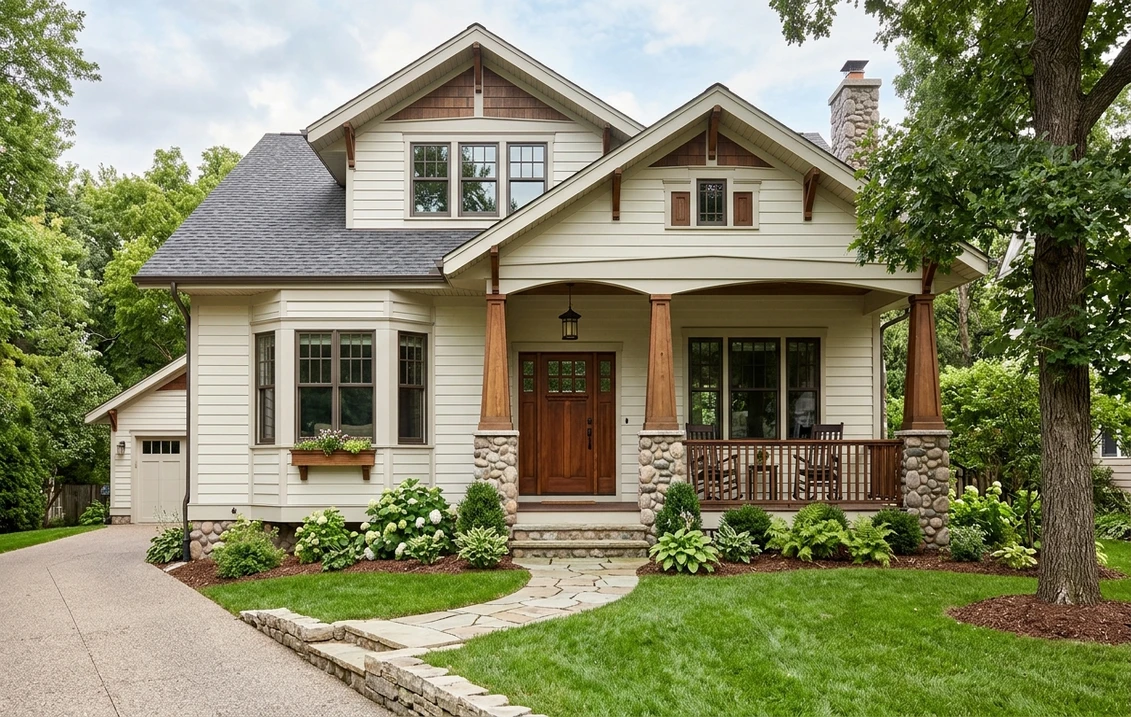
Try it on your house

Sherwin-Williams Oyster White (SW 7637) is a light, softly warm off-white with a faint gray-green cast. Sherwin-Williams publishes an LRV of 72.491, an RGB of 226, 221, 208 (hex #E2DDD0), rates it for interior and exterior use, files it in its White & Pastel family and places it at 254-C7, the deepest step on its strip of warm whites. On a house, that makes it a body color that reads as a soft white in daylight rather than a beige, a gentler alternative to bright whites such as Pure White on siding, stucco or painted brick, and a quiet trim color for darker bodies. On vinyl siding it clears the LRV 56 limit in Sherwin-Williams' data sheets, but it can still be darker than the siding's original white, which the same rule does not allow without VinylSafe colors.
All color values below come from the color pages and color data of Sherwin-Williams, Benjamin Moore and RAL. The color-difference figures between look-alikes are our calculations from Sherwin-Williams' published values and are labeled as such.
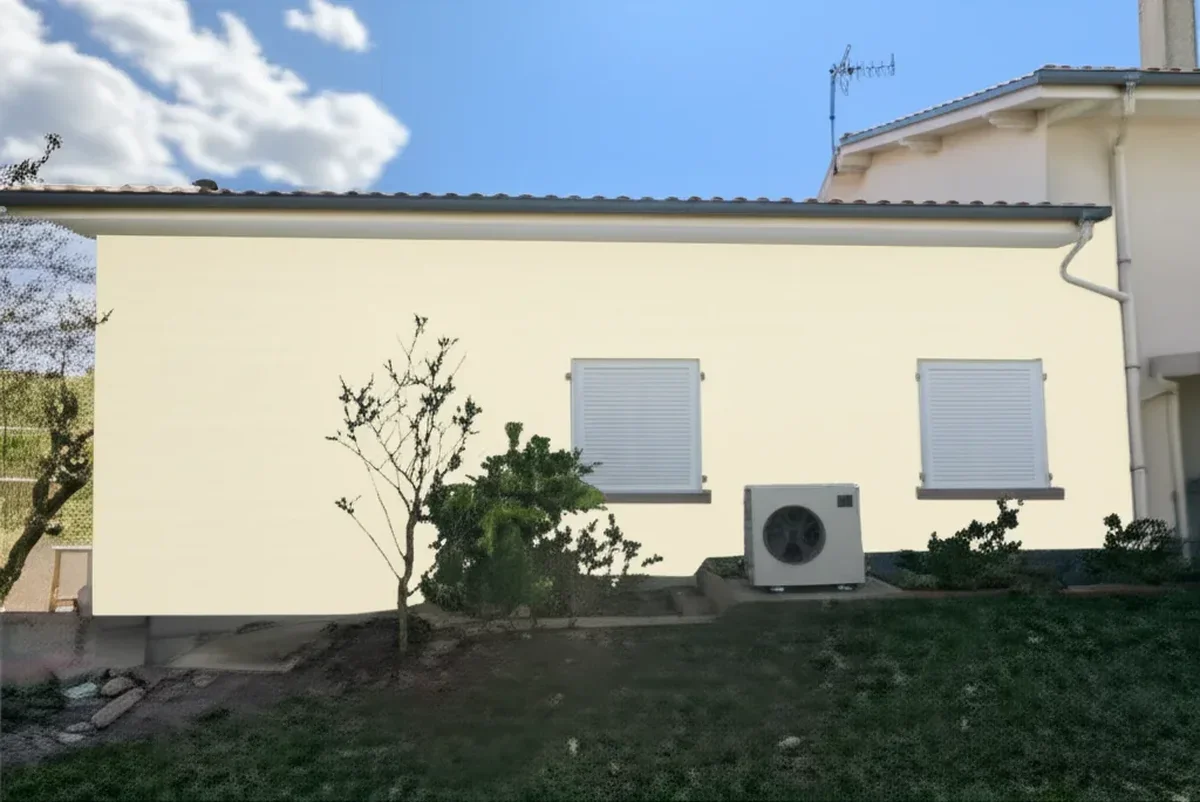
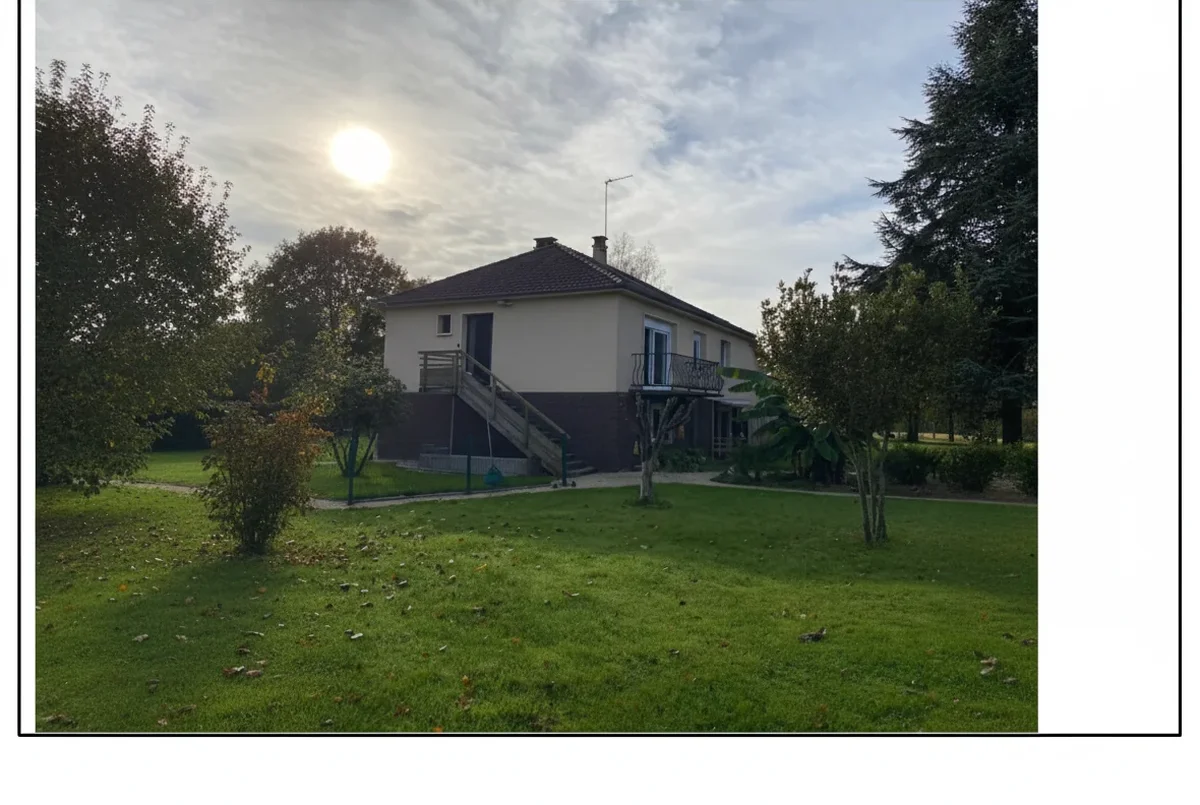
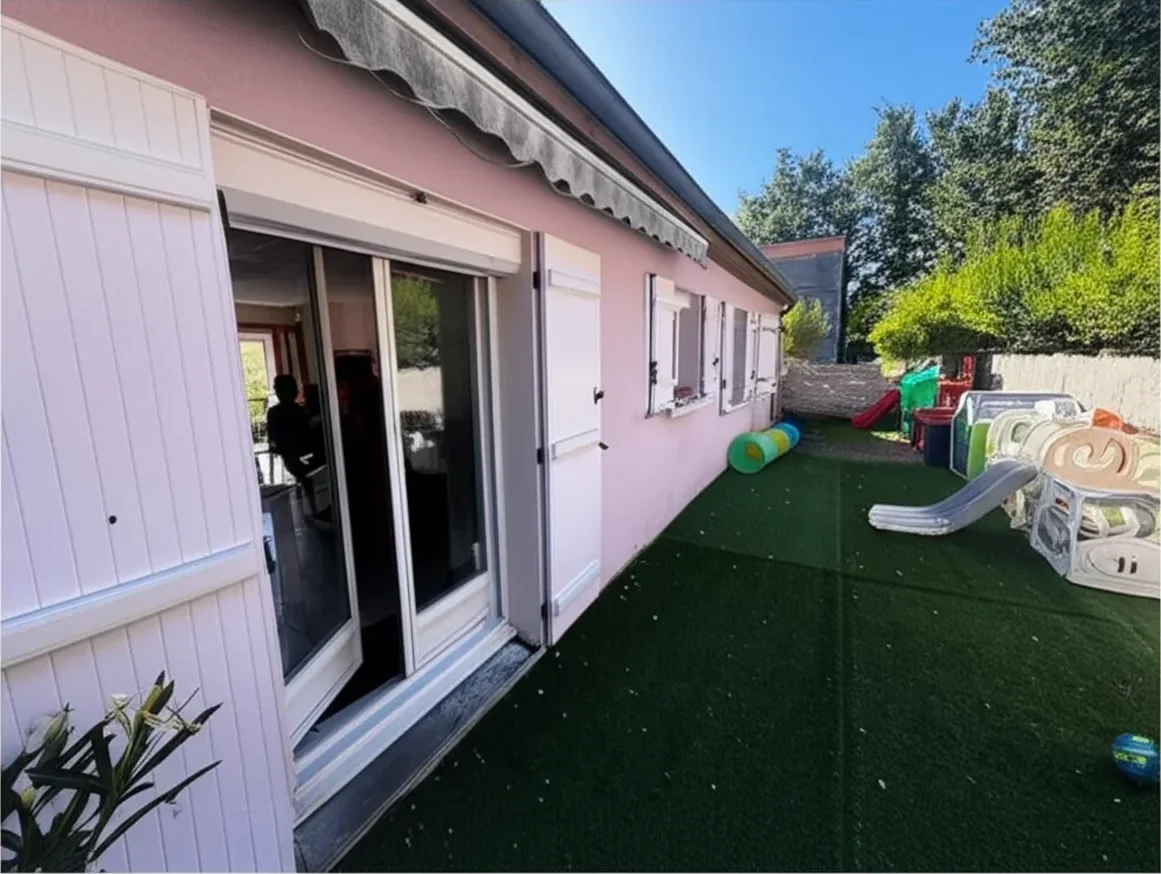
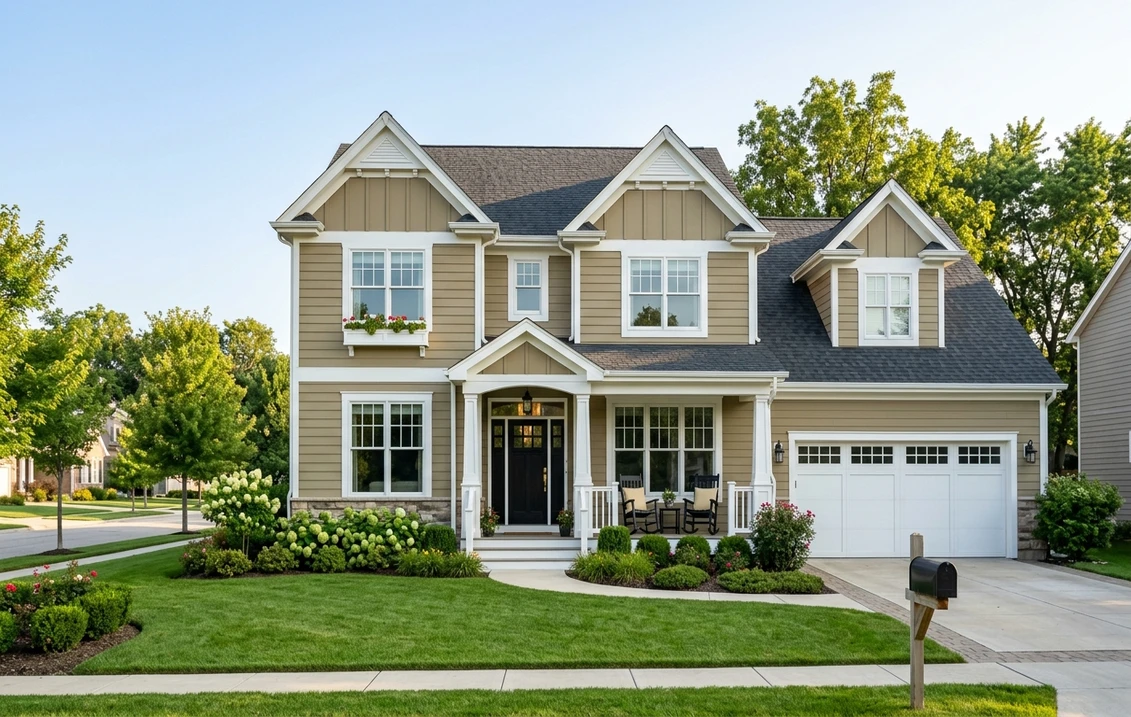
The link opens the exterior tool with Oyster White preselected on the siding. How it works: our exterior paint visualizer.
Oyster White at a glance: the numbers Sherwin-Williams publishes
These values come from the color's page (Sherwin-Williams, SW 7637 Oyster White) and from the same company's color data. Hex and RGB describe how the color is drawn on a screen, not a tinting formula, so treat them as an approximate digital rendering and make the final call on a painted sample outdoors.
| Attribute | Oyster White SW 7637 |
|---|---|
| LRV | 72.491 (Sherwin-Williams rates it "light") |
| RGB | 226, 221, 208 |
| Hex (screen approximation) | #E2DDD0 |
| Hue and saturation on the page | Hue 43.3, saturation 0.08 |
| Lab values (Sherwin-Williams color data) | L 88.18, a -0.53, b 6.97 |
| Color family | White & Pastel |
| Use | Interior and exterior |
| Color strip location | 254-C7 (the deepest color on its strip) |
| Coordinating colors listed | Analytical Gray SW 7051, Brassy SW 6410 |
| Collections (Sherwin-Williams color data) | Top 50 Exterior Colors, Finest Whites, Timeless White |
Try it on your house
No photo? Try a sample
Both coordinating colors are rated for exterior use: Analytical Gray (LRV 47.474) is a mid greige for shutters or a second body color, and Brassy (LRV 23.665) a muted gold that Sherwin-Williams files under yellow, a front door idea.
What an LRV of 72.5 means on a house
Light Reflectance Value runs from 0 (absolute black) to 100 (a perfect white). At 72.5, Oyster White reflects a little under three quarters of the light that hits it: clearly a light color, but not a bright white. Sherwin-Williams' popular exterior whites sit about 10 to 13 points higher: Alabaster SW 7008 at 82.215, Pure White SW 7005 at 83.957 and Extra White SW 7006 at 85.861. Our guide to LRV and how to read it explains the scale.
Daylight outdoors is far stronger than the light in a paint store, so an off-white usually looks lighter on a facade than on a chip held indoors; Oyster White's extra depth keeps it from turning stark in full sun. It is also soft next to bright trim (Pure White sits only about 11 points above it), while Iron Ore SW 7069 (LRV 5.55) or Tricorn Black SW 6258 (2.849) sit 67 to 70 points below it, which is why black windows on an Oyster White house read so graphic.
Warm, gray or green? The undertone in the numbers
Sherwin-Williams' Lab values explain how Oyster White behaves. L 88.18 says it is light. The b value of +6.97 sits on the yellow side of neutral: that is its warmth. The a value of -0.53 sits a hair on the green side, and that tiny shift is the faint gray-green cast people notice when Oyster White is next to creamier whites. Shoji White SW 7042 (a +0.33) and Creamy SW 7012 (a +0.16) sit a hair on the red side instead. Antique White SW 6119 makes the point clearly: it has almost exactly the same LRV (72.45) but nearly twice the yellow (b 12.27), so it reads as a real cream where Oyster White reads as a muted off-white. The page's saturation of 0.08 confirms how little color there is overall.
- North-facing wall or overcast sky. It looks grayer, close to a pale greige, and the green cast is easiest to see.
- Full sun on a south or west elevation. It brightens to a soft white and the warmth comes forward.
- Next to bright white vinyl windows, gutters or a white garage door. It looks darker and more beige by comparison. Hold a sample against them before you decide.
- Against red brick or warm stone. The warm masonry makes it read cleaner and whiter.
Strip 254: Oyster White and the whites above it
Oyster White is the last and deepest color on Sherwin-Williams strip 254, a strip of warm off-whites. Values come from Sherwin-Williams' color data; the color difference (ΔE2000) is our calculation from those published values, where a figure under about 2 is hard to tell apart on a wall and a figure above 5 is clearly a different color.
| Location | Color | LRV | ΔE2000 vs Oyster White (our calculation) | Outside, use it for |
|---|---|---|---|---|
| 254-C1 | Greek Villa SW 7551 | 84.223 | 3.5 | A brighter warm white for trim |
| 254-C2 | Pearly White SW 7009 | 77.327 | 1.9 | A slightly lighter body |
| 254-C3 | Ivory Lace SW 7013 | 78.79 | 2.1 | Lighter and a touch creamier |
| 254-C4 | Shoji White SW 7042 | 74.345 | 1.4 | Nearly the same, without the green cast |
| 254-C5 | White Duck SW 7010 | 74.005 | 0.7 | Nearly the same, a shade lighter |
| 254-C6 | Natural Choice SW 7011 | 72.947 | 0.5 | Practically interchangeable |
| 254-C7 | Oyster White SW 7637 | 72.491 | 0 | The deepest step, with the faint gray-green cast |
The strip is not in strict LRV order (Ivory Lace at C3 is lighter than Pearly White at C2), so read the numbers, not the position. The bottom four are so close that on a whole house the choice comes down to your light, roof and windows; they are too close for a two-tone scheme, so for a subtle body-and-trim step inside the strip, pair Oyster White with Greek Villa.
Oyster White vs Alabaster, Pure White, Snowbound and the greiges
These are the Sherwin-Williams colors people most often weigh against Oyster White for a house. LRVs come from Sherwin-Williams; the ΔE2000 is our calculation from the same data.
| Color | LRV | ΔE2000 vs Oyster White (our calculation) | How it differs |
|---|---|---|---|
| Oyster White SW 7637 | 72.491 | 0 | Soft off-white, faint gray-green cast |
| Egret White SW 7570 | 69.642 | 1.8 | A little darker and grayer: the step if Oyster White looks too white |
| Alabaster SW 7008 | 82.215 | 3.2 | Lighter, cleaner creamy white |
| Agreeable Gray SW 7029 | 60.386 | 4.4 | Darker greige: a body color, not a white |
| Pure White SW 7005 | 83.957 | 4.6 | Brighter, cleaner white |
| Snowbound SW 7004 | 82.771 | 4.6 | Brighter and cooler |
| Accessible Beige SW 7036 | 57.67 | 5.5 | Darker and clearly beige |
The usual comparison is Alabaster: about 10 LRV points lighter and a clean, creamy white, where Oyster White reads more muted, closer to a whisper of greige. Next to bright white vinyl windows, Alabaster blends in while Oyster White lets them stand out. Our Alabaster exterior guide and Pure White exterior guide cover the brighter side; the Snowbound exterior guide covers the cooler one. If Oyster White feels too light and you want an actual color, Agreeable Gray on a house and Accessible Beige outside are the next steps down in depth.
RAL 1013 is also called Oyster White: a different color
In the European RAL CLASSIC system, RAL 1013 is Perlweiß in German and Oyster white in its official English name. RAL's own table of light reflectance values for RAL CLASSIC gives RAL 1013 an LRV of 71.1, so it is almost exactly as deep as SW 7637. By our calculation from RAL's on-screen swatch, though, the two are about 3 ΔE apart: RAL 1013 is creamier and more yellow. Window frames, garage doors and powder-coated metal made for Europe are often specified by RAL code, so check which system an "oyster white" product refers to. The same goes for our own Facade Color Barometer 2026: the oyster white that the largest share of clients settled on there is RAL 1013, not SW 7637.
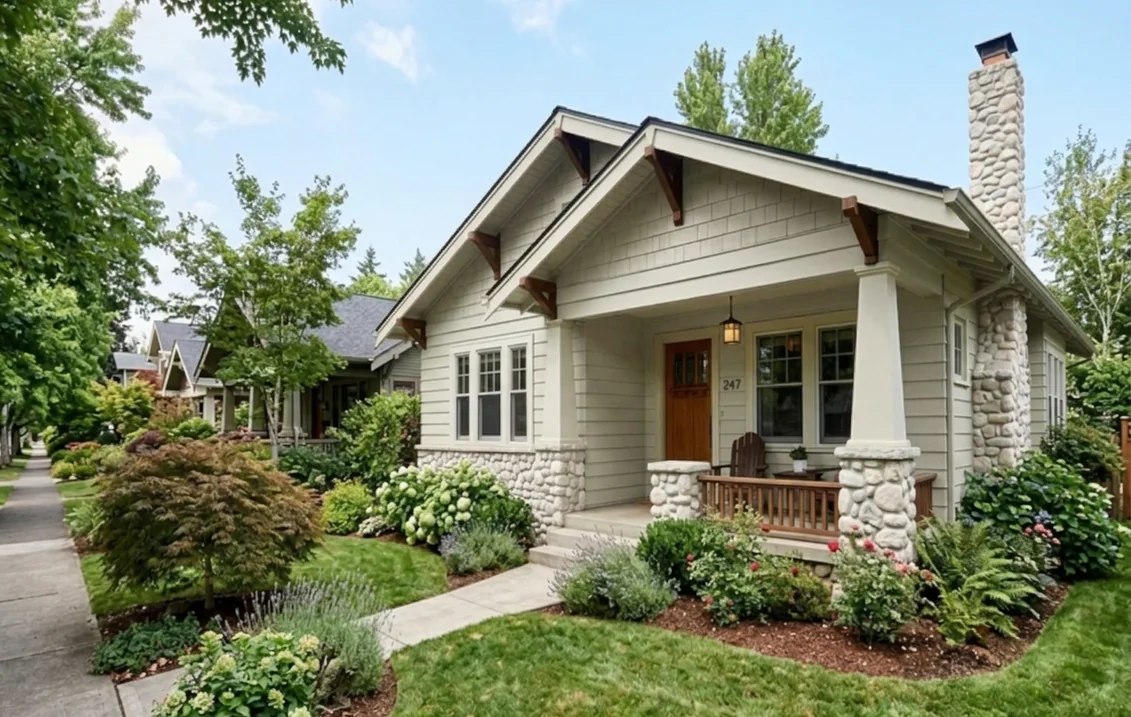
Benjamin Moore colors near Oyster White
There is no official cross-brand equivalent. These four Benjamin Moore colors from its Off White Collection sit closest to Oyster White on screen in our color library; the LRVs are read on Benjamin Moore's own color pages.
| Benjamin Moore color | LRV | LRV gap vs Oyster White | How Benjamin Moore describes it (paraphrased) |
|---|---|---|---|
| Ballet White OC-9 | 71.97 | -0.52 | An off-white with a little more color than a plain white |
| Fog Mist OC-31 | 70.15 | -2.34 | An off-white with warm greige notes |
| Classic Gray OC-23 | 73.67 | +1.18 | A very light gray that can serve as an off-white |
| Pale Oak OC-20 | 68.64 | -3.85 | A neutral with warm gray undertones |
Ballet White is the closest in depth, Fog Mist and Pale Oak are a little darker, Classic Gray a little lighter. Treat them as starting points for a side-by-side sample, never as a guaranteed match.
Where Oyster White works on a house
- Body color on lap siding, fiber cement or stucco. On a Craftsman, farmhouse or Colonial it gives the look of a white house without the glare of a bright white.
- Whole-house monochrome. Body and trim in Oyster White, the trim in satin or gloss so the light catches the edges; it suits board-and-batten with black windows.
- Trim on a darker body. Softer than Pure White around the windows of a charcoal, bronze, navy or sage house; see our Urbane Bronze exterior guide and Naval exterior guide for two bodies that take a soft white trim well.
- Painted brick and vinyl. Both possible, with the conditions below.
Oyster White with roofs, brick and stone
| Fixed element | How Oyster White reads | Accents that follow |
|---|---|---|
| Black or charcoal shingles, dark standing-seam metal | Whiter and crisper by contrast | Black or bronze windows, black gutters |
| Weathered wood or brown shingles | Warmer, closer to cream | Brown or bronze trim, stained wood door |
| Light or mid gray shingles | Calm; the gray-green cast harmonizes with the roof | Analytical Gray shutters |
| Red brick base or chimney | Reads whiter and cooler next to the brick | Dark trim keeps it from looking washed out |
| Fieldstone, river rock or limestone | Picks up the warm and gray tones of the stone | Stained wood columns and doors |
A brown roof pulls Oyster White toward cream, so test it there first; our guide to paint colors for brown roof houses lists alternatives. Natural stone is usually best left unpainted next to it.
Painting the brick itself is a bigger decision than picking the color. The Brick Industry Association's Technical Note 6, Changing the Appearance of Brick Masonry (2024) warns that paint is very difficult to remove from brick without damage and that painted brick may need regular repainting. It asks to fix moisture problems first, to let new or repaired masonry cure for at least 30 days, to favor treatments that keep the wall's water vapor permeance, to avoid heavy coats of acrylic latex, and to approve a sample panel first. Our painted brick exterior guide covers the method, and white painted brick houses compares the whites.
Oyster White on vinyl siding: above the LRV line, but check your original color
Sherwin-Williams' Duration Exterior product data sheet sets two conditions in the same sentence: do not paint vinyl with any color darker than the original color, or with an LRV below 56, unless you use VinylSafe colors, because the vinyl may warp. It adds that ignoring the vinyl maker's painting guidelines may void the warranty.
Oyster White, at 72.5, clears the LRV 56 line; the original color is the condition to check. Over beige, tan or gray vinyl it is lighter and allowed; over bright white vinyl it is very likely darker, and not allowed. It is not in the VinylSafe palette, a separate collection of 100 colors formulated to resist warping and buckling on sound vinyl; before VinylSafe, vinyl could only be repainted the same color or lighter. Our VinylSafe guide covers the palette and the products it comes in.
Trim, door and shutter colors with an Oyster White body
| Role | Color | LRV | Effect |
|---|---|---|---|
| Trim (monochrome) | Oyster White in satin or gloss | 72.491 | The quietest option; the sheen does the outlining |
| Trim (soft step) | Alabaster SW 7008 | 82.215 | Warm, low contrast, keeps the house creamy |
| Trim (crisp step) | Pure White SW 7005 | 83.957 | Cleaner outline; the body looks a little deeper next to it |
| Trim or windows (dark) | Tricorn Black SW 6258 | 2.849 | The modern farmhouse look |
| Trim (dark, warmer) | Iron Ore SW 7069 or Urbane Bronze SW 7048 | 5.55 / 8.121 | Softer than black, still graphic |
| Shutters or second body color | Analytical Gray SW 7051 | 47.474 | Sherwin-Williams' own coordinating pick |
| Front door | Brassy SW 6410 | 23.665 | The other coordinating pick: a muted gold door |
White trim on Oyster White is a gap of 10 to 11 points and the house reads as one soft mass; black or bronze trim is a gap of 64 to 70 points and every window is drawn in ink. Naval SW 6244 or stained wood also make good front doors. For the dark side, see our Tricorn Black exterior guide and Iron Ore exterior guide.
Which Sherwin-Williams product, and when to paint
Taking Duration Exterior as the example, its data sheet gives: self-priming, two coats on new bare substrates or one for a repaint, 250 to 300 sq ft per gallon. Air, surface and material must be above 35°F and 5° above the dew point, with no rain within 2 to 3 hours and no risk of dropping below 35°F within 48 hours. Above 45°F, recoat after 4 hours; between 35 and 45°F, after 24 to 48 hours. In late fall that means a mild, dry week and an early finish. Going from a darker color to Oyster White often needs a second coat to look even, so price the job both ways. Our Duration Exterior guide and the comparison of SuperPaint vs Emerald go deeper on the product lines.
If the house was built before 1978, assume the old paint may contain lead. Under the EPA's Renovation, Repair and Painting Program, contractors paid to disturb painted surfaces in pre-1978 homes must be certified and follow lead-safe work practices; the rule generally does not apply to homeowners working on their own home, but the same precautions protect your family.
How much Oyster White do you need?
- Repaint over a similar light color. Take 1,800 sq ft of siding after subtracting windows and doors. One coat at 250 to 300 sq ft per gallon is 6 to 7.2 gallons: one 5-gallon pail and two or three single gallons.
- Color change or bare wood. Two coats make 3,600 sq ft, which is 12 to 14.4 gallons: three 5-gallon pails. Rough cedar, stucco and split-face block can push it higher.
- Monochrome trim. Measure trim as surface: a 6-inch board is half a square foot per running foot.
How to test Oyster White before you commit
- Paint two coats on a 2 by 2 ft board, not a chip: off-whites shift a lot between a small swatch and a wall.
- Look at it on each side of the house in the morning, at noon and in the evening, and once on an overcast day.
- Hold it against your windows, gutters and garage door, and against the roof and any brick or stone.
- Put White Duck, Alabaster and Egret White next to it if you are unsure whether you want lighter, creamier or deeper.
- Try it on a photo of your own house before buying a single gallon.
See Oyster White on your siding or trim
Upload a photo of your house and compare Oyster White with Alabaster, White Duck or Pure White in a few seconds, then order samples only for the one that works with your roof, windows and masonry.
Try Oyster White on my trimFor the wider Sherwin-Williams exterior range, start with our Sherwin-Williams exterior paint guide; for a dark counterpart from the same brand, our Smoky Blue SW 7604 exterior guide follows the same format.
Sources and references
- Sherwin-Williams, SW 7637 Oyster White: LRV, RGB, family, strip, use, coordinating colors.
- Sherwin-Williams, color pages for White Duck SW 7010, Shoji White SW 7042, Analytical Gray SW 7051 and Brassy SW 6410: LRVs and strip positions.
- Sherwin-Williams, Duration Exterior product data sheet: vinyl rule, coats, coverage, temperatures, dry times.
- Sherwin-Williams, VinylSafe colors for vinyl siding: the 100-color palette.
- Benjamin Moore, color pages for Ballet White OC-9, Fog Mist OC-31, Classic Gray OC-23 and Pale Oak OC-20: LRVs and descriptions.
- RAL gGmbH, RAL 1013 Oyster white and RAL CLASSIC light reflectance values (2026): official name and LRV 71.1.
- Brick Industry Association, Technical Note 6, Changing the Appearance of Brick Masonry (2024): painting brick.
- U.S. Environmental Protection Agency, Lead Renovation, Repair and Painting Program: pre-1978 homes.
Frequently asked questions
What color is Sherwin-Williams Oyster White?
Is Oyster White a good exterior color?
What is the difference between Oyster White and Alabaster?
Can I paint vinyl siding Oyster White?
What trim color goes with Oyster White?
Is Sherwin-Williams Oyster White the same as RAL 1013 Oyster White?
What is the Benjamin Moore equivalent of Oyster White?
Trademarks mentioned (Sherwin-Williams, Benjamin Moore, Behr, Caparol, Brillux, Sto, Alpina, Valspar, PPG, Glidden, Dulux, Crown Trade, Sandtex, Farrow & Ball, Johnstone's, Leyland) are property of their respective owners. FacadeColorizer is independent and not affiliated with any of them. Nominative fair use under Lanham Act §1125.