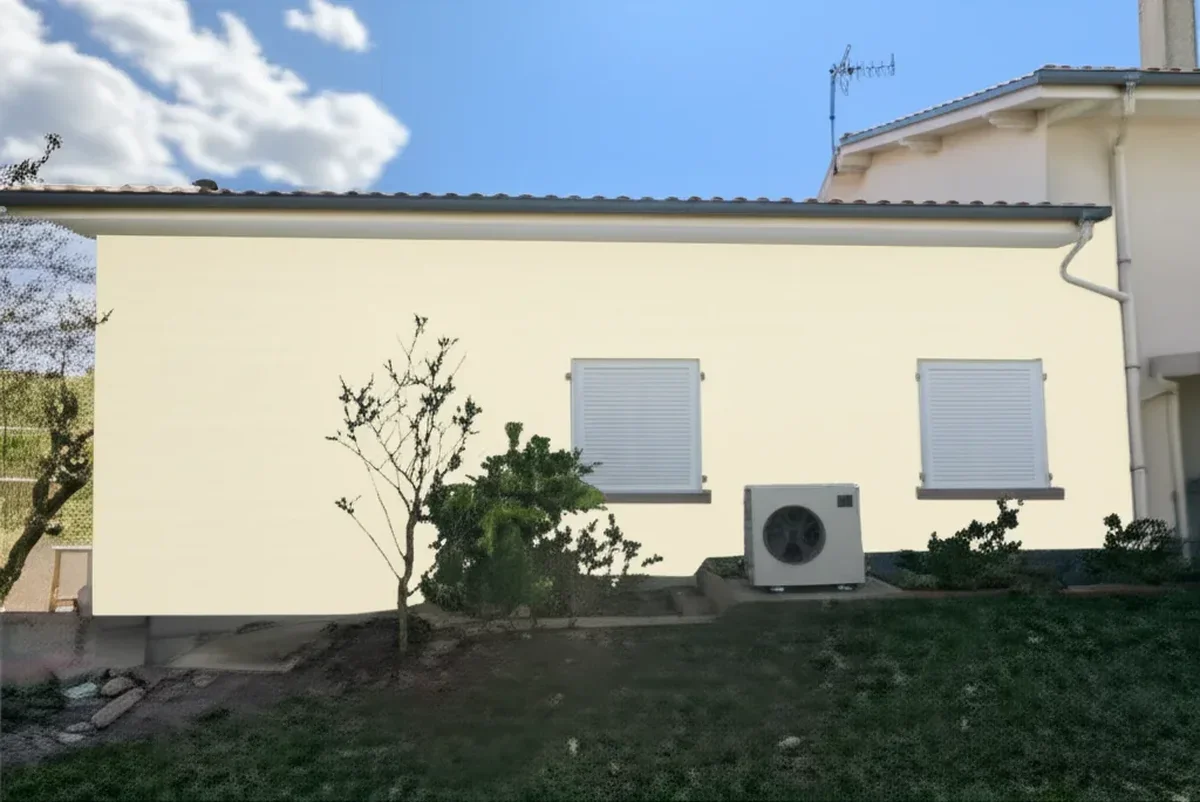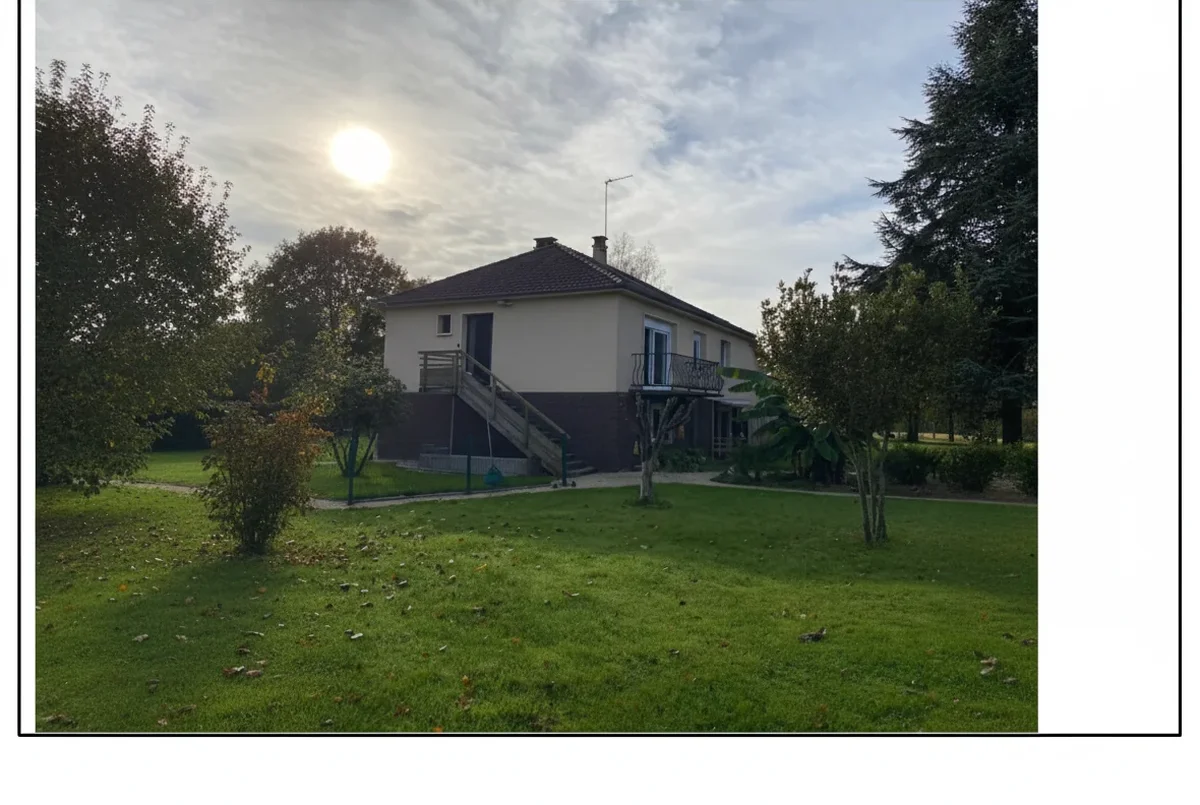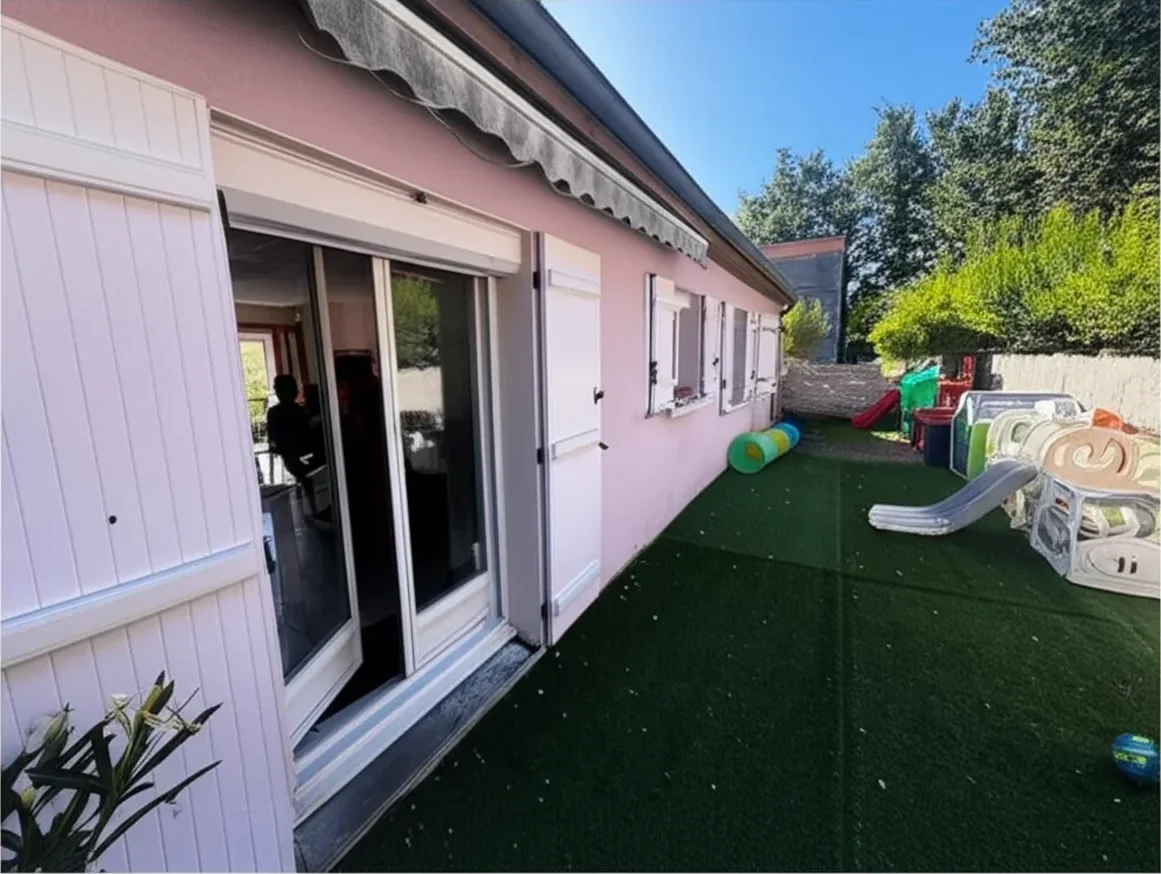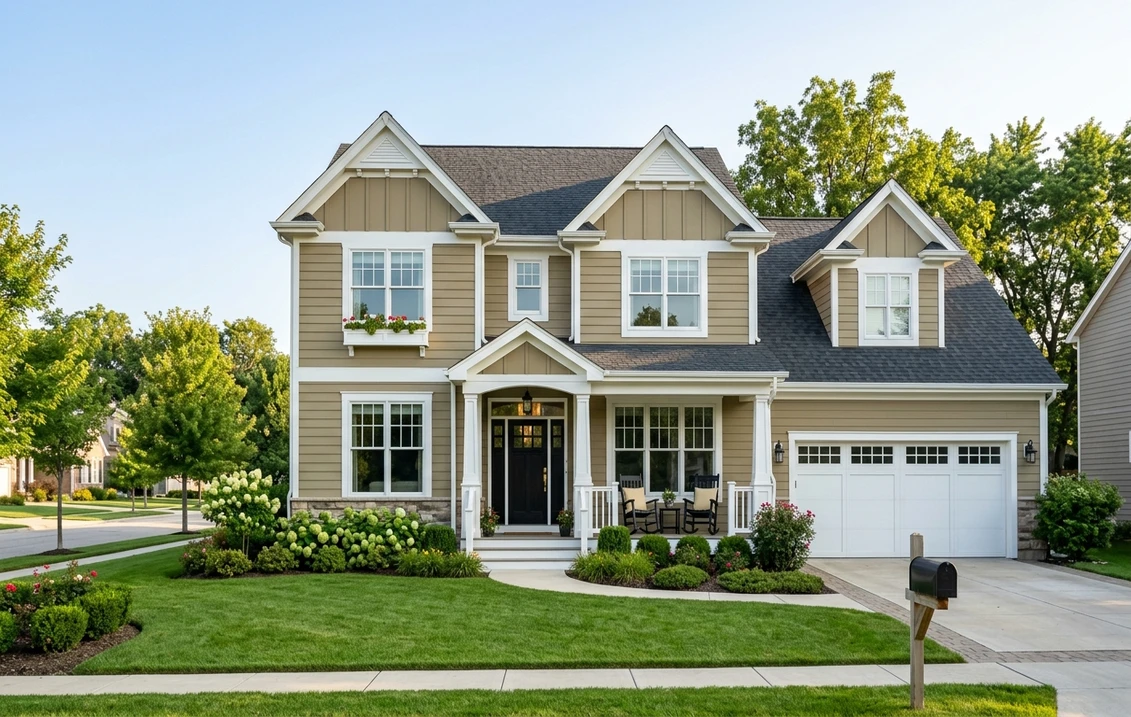
Try it on your house

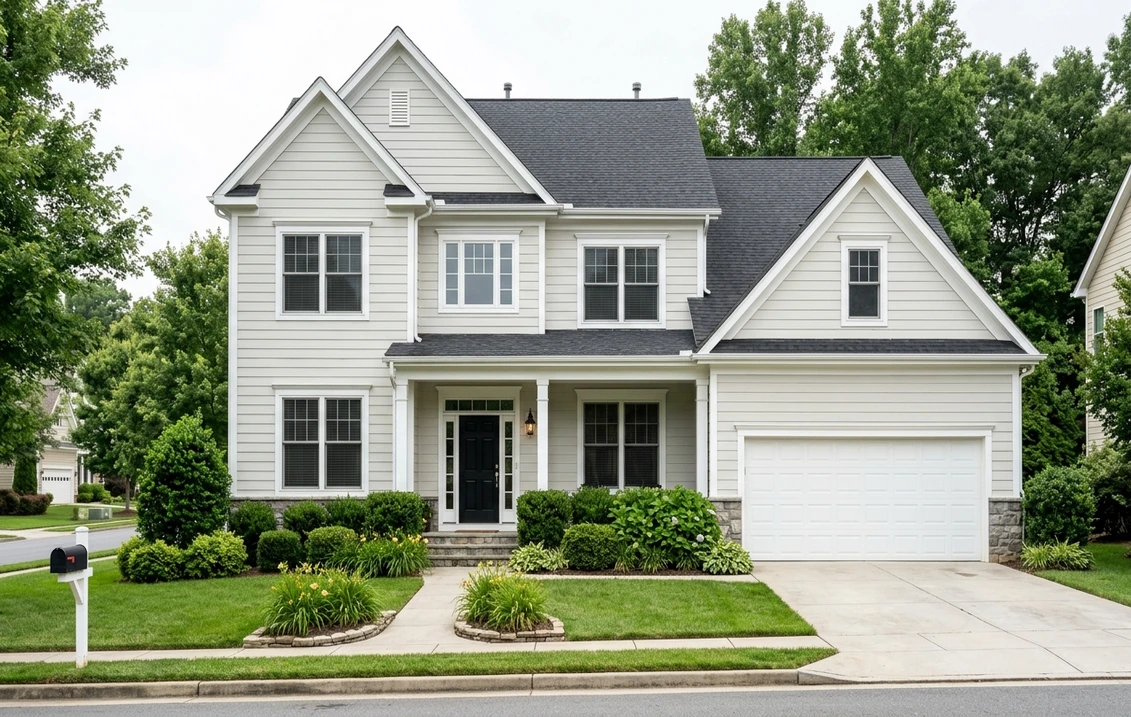
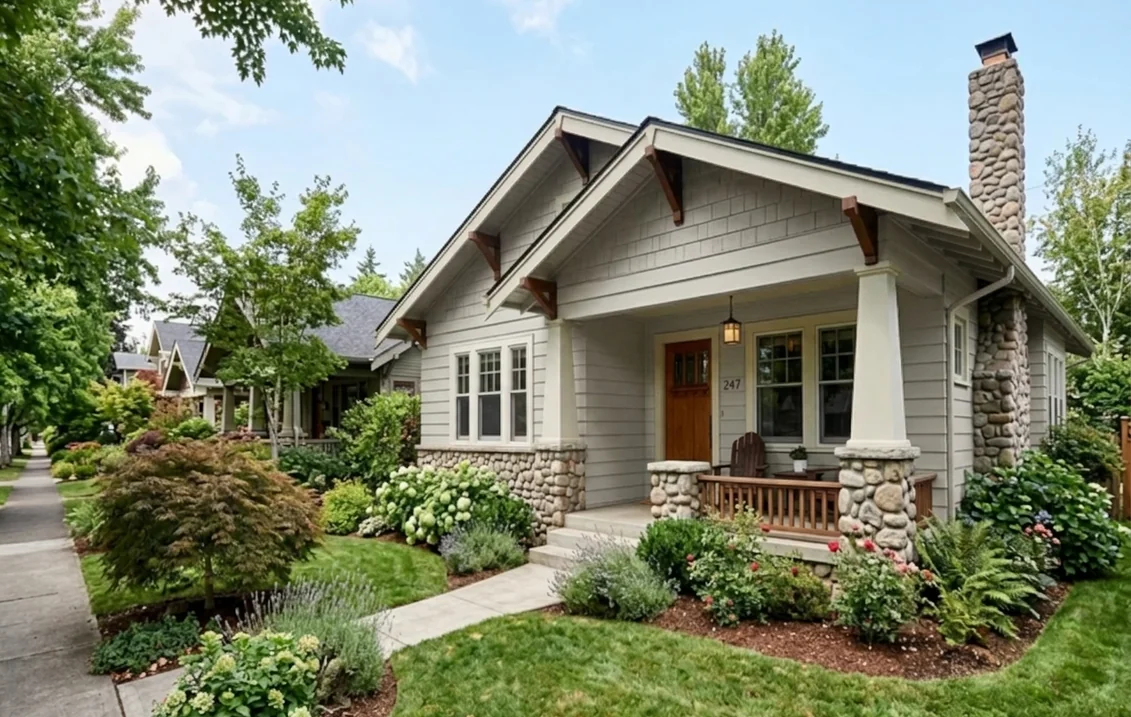
Sherwin-Williams On the Rocks (SW 7671) is a light, almost neutral gray with a faint warm cast: lighter than Repose Gray, grayer than Agreeable Gray, one step deeper than Crushed Ice. Sherwin-Williams publishes an LRV of 61.609 (usually rounded to 62), an RGB of 208, 206, 200 (hex #D0CEC8), files it in its White & Pastel family, rates it for interior and exterior use and places it at 255-C7 on its color strips, with Extra White, Greek Villa and Almond Roca as coordinating colors. Outside, it works as a body color on wood and fiber cement siding, stucco and painted brick, and its LRV sits above the 56 line Sherwin-Williams sets for vinyl siding. In full sun it washes toward off-white; facing north it reads as a clear light gray. Its limit is contrast: white trim is only about 22 to 24 LRV points lighter, so the dark accents (door, shutters, roof) do most of the outlining.
Color values come from the makers' pages and color data. Color differences, chroma, hue angles, LRV gaps and gallon counts are our calculations; advice on orientation and pairings is our color reasoning, not a manufacturer's rule.
The link opens the exterior tool with On the Rocks preselected on the walls; trim, front door and garage door are one tap away. How it works: our exterior paint visualizer.
On the Rocks at a glance: the numbers Sherwin-Williams publishes
These values come from the color's page (Sherwin-Williams, SW 7671 On the Rocks) and from Sherwin-Williams' public color data, which gives the same figures. Hex and RGB are an approximate digital rendering, not a tinting formula.
| Attribute | On the Rocks SW 7671 |
|---|---|
| LRV | 61.609 (noted as a light color on the page) |
| RGB | 208, 206, 200 |
| Hex (screen approximation) | #D0CEC8 |
| Lab (Sherwin-Williams color data) | L 82.77, a -0.39, b 3.21 |
| Color family | White & Pastel |
| Collections in the color data | Cool Neutrals; Living Well (Reflect) |
| Use | Interior and exterior |
| Color strip location | 255-C7, the last of seven steps on a strip that starts with Pure White |
| Coordinating colors listed | Extra White SW 7006, Greek Villa SW 7551, Almond Roca SW 9105 |
| Similar colors in the color data | Big Chill SW 7648, Crushed Ice SW 7647, Front Porch SW 7651, Lattice SW 7654, among others |
Try it on your house
No photo? Try a sample
On the Rocks undertones: warm or cool?
The Lab values answer it better than adjectives. L 82.77 is high: this is a light color. The a value of -0.39 is almost zero, so there is no red or pink in it and only a trace of green. The b value of +3.21 leans slightly to yellow. By our calculation the chroma is about 3.2, very low, and the hue angle is about 97 degrees: a gray carrying a small amount of yellow with a hint of green. In practice, On the Rocks is a near-neutral light gray that is technically a touch warm. Sherwin-Williams lists it among its Cool Neutrals: next to a beige or a greige it looks cool, next to a blue-gray slightly warm. Against the neutrals it gets compared with:
| Color | LRV | Lab a / b (Sherwin-Williams) | Chroma (our calculation) | Reads as |
|---|---|---|---|---|
| Crushed Ice SW 7647 | 65.54 | -0.21 / 3.81 | 3.8 | The same hue, a step lighter |
| Big Chill SW 7648 | 61.71 | -0.21 / 2.71 | 2.7 | A near twin, a shade less yellow |
| On the Rocks SW 7671 | 61.61 | -0.39 / 3.21 | 3.2 | Light gray, faint warm cast |
| Agreeable Gray SW 7029 | 60.39 | 0.33 / 5.71 | 5.7 | A greige: clearly warmer and more beige |
| Repose Gray SW 7015 | 58.22 | -0.56 / 4.85 | 4.9 | A little darker and warmer |
With so little chroma, On the Rocks has no undertone that jumps out on a wall. In return it borrows color from its surroundings: slightly green near trees and lawn, cooler beside red brick or a tan roof.
North, south, east or west: how On the Rocks changes with orientation
An LRV of 61.6 means the wall reflects about 62 percent of the visible light that reaches it, on a scale from 0 (black) to 100 (a perfect white); our guide to reading LRV explains the scale. A color this light looks lighter still on a sunlit house than on the chip. Color logic, not measurement:
| Front wall faces | Light it gets | How On the Rocks reads | Trim advice |
|---|---|---|---|
| North | Cool skylight all day | A clear light gray, at its coolest; the trim contrast is easiest to see here | Pure White or Greek Villa keeps it from turning cold |
| South | Direct sun most of the day | Washes toward off-white at midday; the gray comes back in the shade of eaves and porches | Extra White, the brightest of the three, to keep an edge |
| East | Morning sun, afternoon shade | Pale and warm early, a true light gray after noon | Judge the trim in the afternoon |
| West | Low, strong sun late | Gray until mid afternoon, then creamy at sunset | Paint this side in the morning, out of the sun |
If the house faces south and you want it to stay visibly gray at noon, compare Repose Gray, about three LRV points lower. If it faces north and looks too gray on your board, Crushed Ice is the same hue one step up.
Siding, vinyl, stucco, brick, garage door: where On the Rocks works
Lap siding and fiber cement
Sherwin-Williams' Duration Exterior data sheet (K32 series, dated March 2026) lists wood, plywood, cement composition siding, stucco, concrete, block, aluminum siding and galvanized steel among its surfaces. New cement composition siding is tested for pH and, above 9, primed with Loxon Concrete & Masonry Primer. The sheet calls for 2 coats on new, bare substrates and 1 coat for a repaint. Over a dark or strongly colored body, plan on two anyway. On bare cedar or redwood, the sheet warns that tannin can stain the first coat, which shows more under a pale gray: a second coat evens it out, and severe spots get an oil-based wood primer first. Our Duration Exterior guide covers the product.
Vinyl siding: above Sherwin-Williams' LRV 56 line, with one condition
Under the heading "vinyl or other PVC building products", the same sheet says not to paint vinyl with any color darker than the original or with an LRV under 56 unless VinylSafe colors are used, because the vinyl may warp. On the Rocks, at 61.609, is about 5.6 points above that line, so it does not need the VinylSafe palette to pass the LRV test. The second condition still applies: it must not be darker than the vinyl's original color. Over white or cream vinyl, On the Rocks is darker than the original, so ask the siding maker first; the sheet adds that departing from the maker's painting guidelines may void its warranty. Over tan, clay or gray vinyl of equal or lower lightness, both conditions are met. Our VinylSafe guide walks through the rule.
Stucco
A light, low-chroma gray suits stucco because the texture supplies its own shadows. The Duration sheet sets the preparation: remove loose stucco, efflorescence and laitance; let new stucco cure at least 30 days, or 7 days if it is then primed with Loxon Concrete & Masonry Primer; repair cracks and voids with an elastomeric patch or sealant. Previously painted masonry that is still powdery after washing is sealed with Loxon Conditioner first. For the masonry-specific products, see our Loxon stucco paint guide; for neighboring shades, the Sherwin-Williams stucco paint colors.
Brick: painted, or left bare beside On the Rocks siding
On painted brick, a light gray such as On the Rocks brightens a dark house without turning it into a white box. The step is hard to undo. The Brick Industry Association's Technical Note 6 (August 2024) warns that paint can be very difficult to remove from brick masonry without causing damage, and that acrylic latex paint on brick becomes a recurring maintenance task. It notes that acrylic latex is typically identified as vapor semi-permeable and advises against too many coats or heavy applications, which lower the wall's permeability further. Because mortar is alkaline, it recommends an alkaline-resistant primer or a paint designated for masonry, on brickwork that has cured and dried at least 30 days if new or repaired. Left bare, red brick beside On the Rocks siding gives a warm and cool contrast. Our painted brick exterior guide covers the decision.
Garage door
Painting the garage door the body color makes it recede. Clopay's painting instructions (effective May 11, 2020) call for a 100% acrylic latex exterior paint, forbid oil-based and alkyd-modified paints and strongly recommend a bonding primer. Its dark-color limits (no color at LRV 12 or less on Coachman doors, approved solar reflective paint required from 13 to 38) do not concern On the Rocks: at LRV 61.6 it falls in the range where solar reflective paint is recommended, not required. Our garage door paint color ideas compare more options.
Trim colors with an On the Rocks body
Coordinating colors first; the gap is the LRV difference from On the Rocks (Sherwin-Williams' color data).
| Role | Color | LRV | Gap | Effect |
|---|---|---|---|---|
| Trim (coordinating) | Extra White SW 7006 | 85.86 | +24 | The brightest and coolest of the three: the sharpest outline |
| Trim (coordinating) | Greek Villa SW 7551 | 84.22 | +23 | A warmer, creamier white; softens the gray |
| Trim | Pure White SW 7005 | 83.96 | +22 | Top of the same strip: the most tonal match |
| Trim | Alabaster SW 7008 | 82.22 | +21 | The creamiest; can look yellow beside this gray in shade |
| Accent (coordinating) | Almond Roca SW 9105 | 25.33 | -36 | A warm caramel tan, close to a wood tone: door, porch ceiling, brackets |
As we read these gaps, every white is only 21 to 24 points lighter than the walls. That is a soft outline: from the street in full sun, trim and body can merge. Three answers: the brightest white (Extra White) in a higher sheen; dark elements that draw the lines (black sashes, a charcoal roof, a dark door); or a wood tone, as Almond Roca suggests, on posts, brackets and the door. Our Pure White exterior guide covers the default trim white, and the gray house and white trim pairings show the same logic on darker grays.
Front door, shutter and accent colors that go with On the Rocks
A body this light and neutral accepts almost any dark accent. The gap is the LRV difference between On the Rocks and the accent:
| Accent color | LRV | Gap to On the Rocks | Effect on a door or shutters |
|---|---|---|---|
| Tricorn Black SW 6258 | 2.85 | 59 | The crisp, graphic choice; a true neutral black |
| Iron Ore SW 7069 | 5.55 | 56 | A soft charcoal black; less stark than Tricorn |
| Naval SW 6244 | 4.46 | 57 | A navy door on a light gray house: classic |
| Urbane Bronze SW 7048 | 8.12 | 53 | A warm bronze-gray; ties in a brown roof |
| Peppercorn SW 7674 | 9.68 | 52 | A neutral dark gray: tonal, one family |
| Almond Roca SW 9105 | 25.33 | 36 | Warm tan, or simply a stained wood door |
All of these clear a 30-point gap, the level under which, in our reading, a door starts to merge with the walls. For more candidates, see the front door colors for a gray house and the Sherwin-Williams front door colors page.
The roles also reverse. On a dark body such as Iron Ore or Peppercorn, On the Rocks works as a trim or garage door color quieter than white, still more than 50 LRV points lighter than the walls.
Strip 255: from Pure White down to On the Rocks
On the Rocks is the seventh and last step of Sherwin-Williams strip 255, which opens with Pure White and Alabaster. Values from Sherwin-Williams' color data, all rated for exterior use:
| Location | Color | LRV |
|---|---|---|
| 255-C1 | Pure White SW 7005 | 83.96 |
| 255-C2 | Alabaster SW 7008 | 82.22 |
| 255-C3 | Westhighland White SW 7566 | 85.81 |
| 255-C4 | Egret White SW 7570 | 69.64 |
| 255-C5 | Pediment SW 7634 | 61.18 |
| 255-C6 | Crushed Ice SW 7647 | 65.54 |
| 255-C7 | On the Rocks SW 7671 | 61.61 |
This strip groups whites and pale neutrals instead of running from light to dark. Pure White trim and On the Rocks walls come from the same card, about 22 LRV points apart. Every color on the strip clears the LRV 56 line for vinyl, subject to the darker-than-original condition above. Egret White and Pediment are warmer (their Lab a values are positive): alternatives if On the Rocks looks too gray.
On the Rocks vs Crushed Ice, Agreeable Gray, Big Chill and Repose Gray
The color difference (ΔE2000) is our calculation from Sherwin-Williams' Lab values: under about 1 is hard to see even side by side, under about 2 hard to tell apart across a house.
| Color | LRV | ΔE2000 vs On the Rocks (our calculation) | How it differs outside |
|---|---|---|---|
| Big Chill SW 7648 | 61.71 | 0.5 | Practically the same lightness; a shade less yellow, so marginally cooler |
| Crushed Ice SW 7647 | 65.54 | 1.4 | About 4 LRV points lighter, same hue; closer to off-white in sun |
| Repose Gray SW 7015 | 58.22 | 1.9 | About 3 points darker and warmer; holds its gray better in sun |
| Agreeable Gray SW 7029 | 60.39 | 2.4 | Almost the same lightness, clearly more beige: a greige |
On the Rocks vs Crushed Ice. They are neighbors on the same strip and share a hue; the only real difference is depth. On a south wall, Crushed Ice can pass for a white; On the Rocks keeps a little more body. Choose Crushed Ice for a shaded or north-facing house, On the Rocks where the sun is strong. Our Crushed Ice SW 7647 guide covers that color room by room.
On the Rocks vs Agreeable Gray. Their LRVs are about 1.2 points apart, so they are equally light. The difference is temperature: by our calculation Agreeable Gray's chroma is about 5.7 against 3.2, nearly twice as much color, on the yellow-red side. Agreeable Gray blends with a tan roof, warm stone or red brick; On the Rocks is the cleaner match for a charcoal roof, gray stone or concrete. The Agreeable Gray SW 7029 exterior guide has the full picture.
On the Rocks vs Big Chill. A ΔE of about 0.5 means two painted boards look alike to most eyes. If your painter or HOA list has one and not the other, either will do; our Benjamin Moore equivalents of Big Chill largely carry over to On the Rocks. For a slightly darker neutral, the Repose Gray SW 7015 exterior guide is the next step, and our gray exterior paint colors page ranks the wider family.
Painting conditions and how much On the Rocks you need
The Duration data sheet sets the conditions: air, surface and material above 35°F and at least 5° above the dew point, no application if temperatures may drop below 35°F within 48 hours, no rain or snow expected within 2 to 3 hours, and no painting in direct sun. Recoat takes 4 hours above 45°F, 24 to 48 hours between 35 and 45°F. Coverage is 250 to 300 sq ft per gallon. Standard latex primers cannot be used below 50°F. Mildew must be removed before painting or it will grow through the new coat, the sheet says.
Our arithmetic at that coverage: for 2,000 sq ft of siding after windows and doors, one repaint coat over a similar light color takes 6.7 to 8 gallons; two coats, over bare siding or a darker color, take 13.3 to 16 gallons.
If the house was built before 1978, assume the old paint may contain lead. Under the EPA's Renovation, Repair and Painting Program, anyone paid to disturb paint in that housing must be certified; in general the rule does not apply to homeowners working on their own home, unless, for example, they rent out all or part of it. Under a homeowners association, check the HOA color rules guide before you order: the approved list is what counts, however neutral the color.
How to test On the Rocks before you commit
- Paint two coats on a 2 by 2 ft board, with a strip of your trim white along one edge.
- View it on the sunniest wall at noon and on the shadiest wall late in the day.
- Put Crushed Ice beside it if it looks too dark, Repose Gray if it washes out, Agreeable Gray if it looks too cool against your roof.
See On the Rocks on your own house
Upload a photo, try On the Rocks on the siding or stucco, switch the trim between Extra White and Greek Villa, and compare it with Crushed Ice and Agreeable Gray before you order samples.
Try On the Rocks on my houseFor the wider Sherwin-Williams exterior range, start with our Sherwin-Williams exterior paint guide; for full schemes, see the Sherwin-Williams exterior color combinations.
Sources and references
- Sherwin-Williams, SW 7671 On the Rocks: LRV, RGB, hex, family, use, strip, coordinating colors.
- Sherwin-Williams, color pages for Crushed Ice, Big Chill, Agreeable Gray, Extra White, Greek Villa and Almond Roca: comparison and coordinating values.
- Sherwin-Williams, Duration Exterior product data sheet (K32 series, March 2026): substrates, vinyl and PVC rule, stucco and masonry preparation, tannin staining, application conditions, coverage.
- Sherwin-Williams, VinylSafe colors for vinyl siding: purpose of the palette.
- Brick Industry Association, Technical Note 6, Changing the Appearance of Brick Masonry (August 2024): removal, maintenance, vapor permeance, primer, curing.
- Clopay, Painting your garage door (effective May 11, 2020): paint type, primer, LRV bands, solar reflective paint.
- U.S. Environmental Protection Agency, Lead Renovation, Repair and Painting Program: pre-1978 homes, certification and homeowner exceptions.
Frequently asked questions
What color is Sherwin-Williams On the Rocks?
What is the LRV of On the Rocks?
What are the undertones of On the Rocks?
Is On the Rocks warm or cool?
Is On the Rocks a good exterior color?
What colors go with On the Rocks?
What trim color goes with On the Rocks?
What is the difference between On the Rocks and Crushed Ice?
What is the difference between On the Rocks and Agreeable Gray?
Is On the Rocks the same as Big Chill?
Can you paint vinyl siding On the Rocks?
Trademarks mentioned (Sherwin-Williams, Benjamin Moore, Behr, Caparol, Brillux, Sto, Alpina, Valspar, PPG, Glidden, Dulux, Crown Trade, Sandtex, Farrow & Ball, Johnstone's, Leyland) are property of their respective owners. FacadeColorizer is independent and not affiliated with any of them. Nominative fair use under Lanham Act §1125.