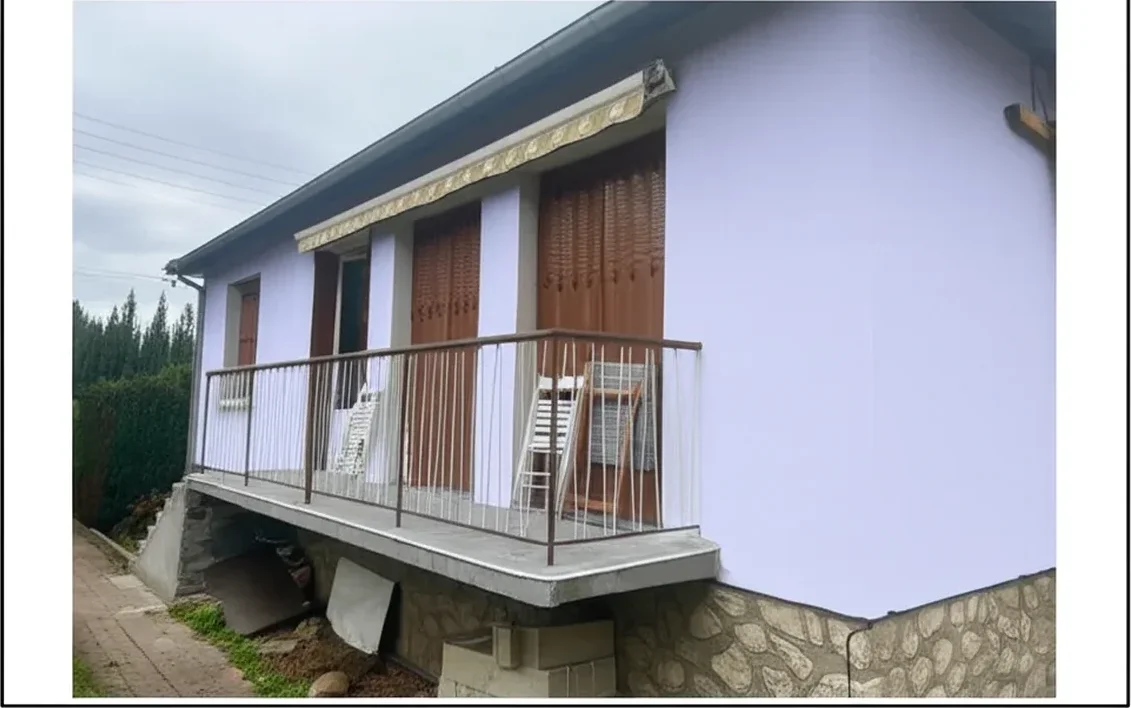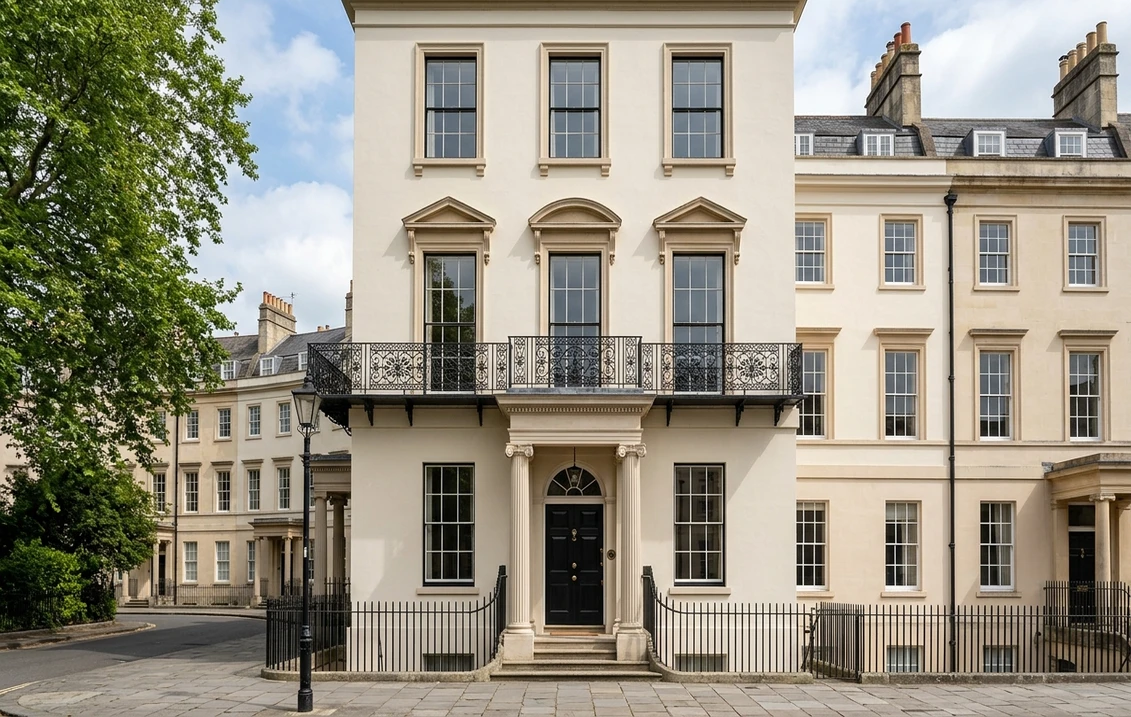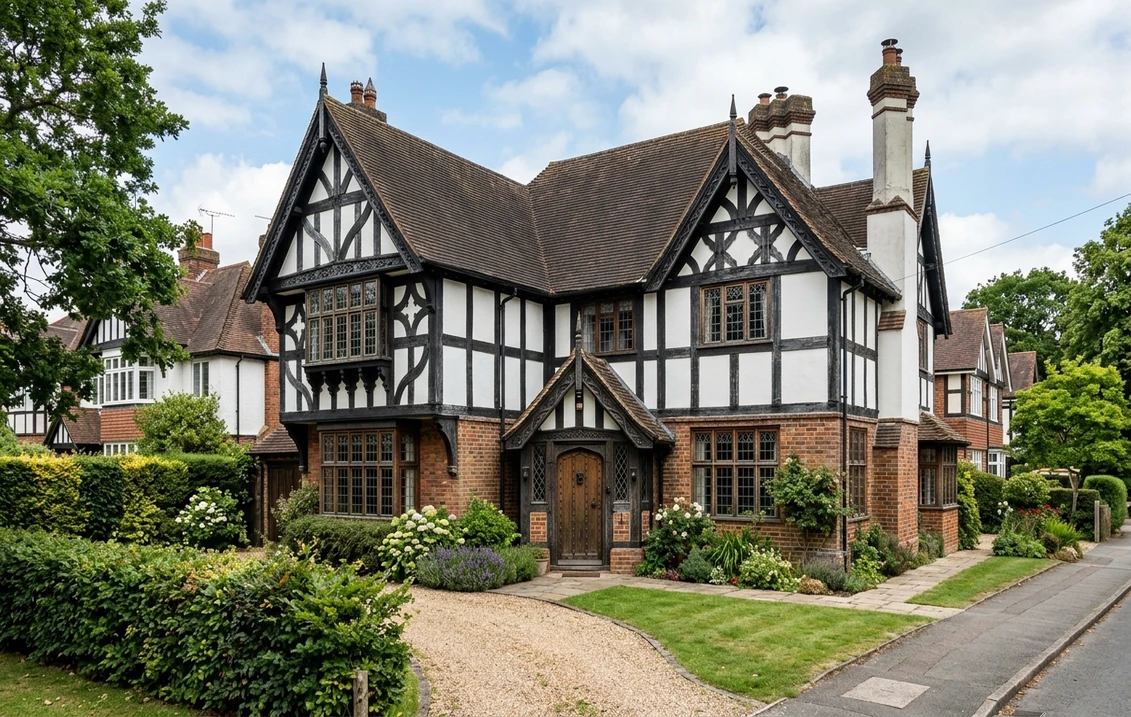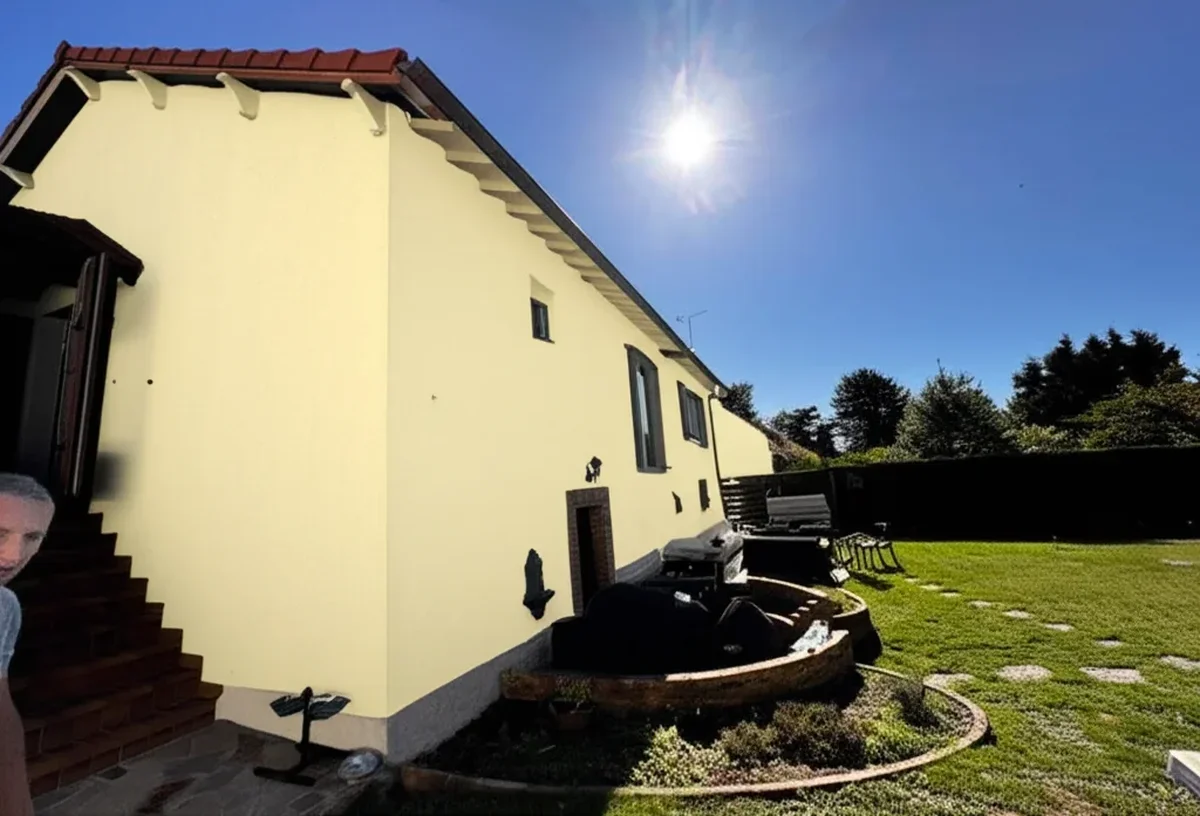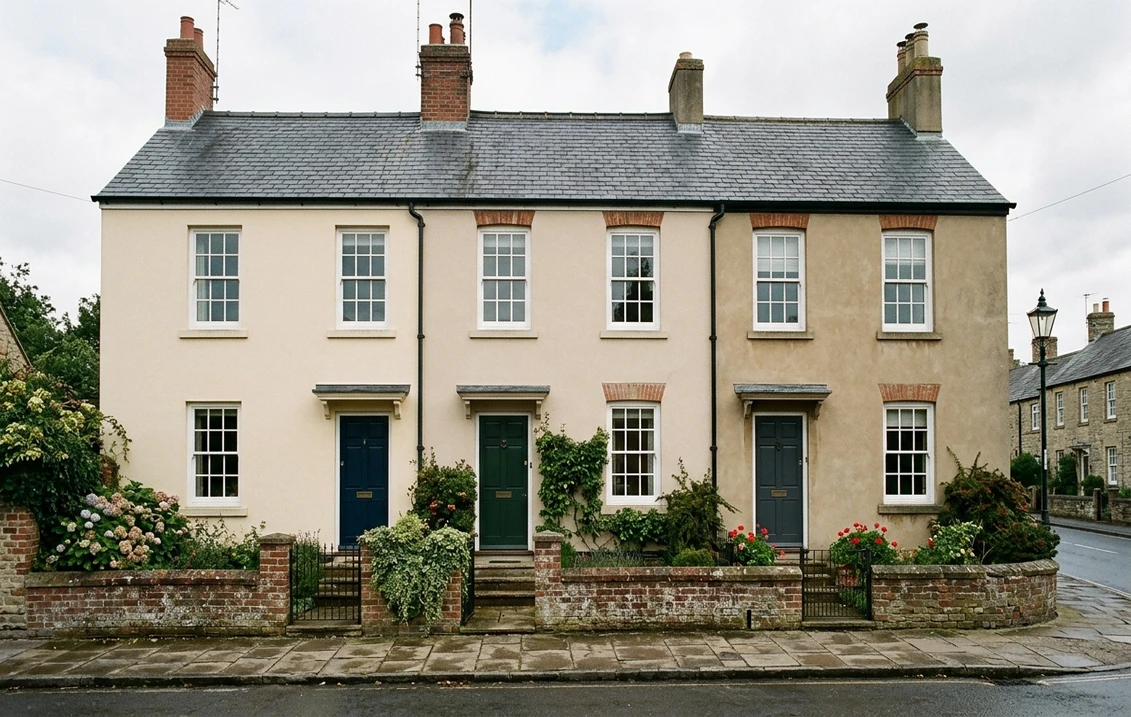
Try it on your house

Sandtex Ivory Stone is the lightest of the Sandtex stone shades, a cream with red and yellow tones and an LRV of 77; Country Stone (LRV 63) and Sandstone (LRV 60) are light beiges that sit very close together, and Mid Stone (LRV 43) is the first one that reads as a true stone colour on a wall. Darker still are Stone Harbour (31) and Dark Stone (28). All are masonry paints for render, pebbledash, masonry blocks and facing brick, not for real stone: council conservation guidance tells owners not to paint bare stonework at all. Sandtex Microseal Smooth covers 12 to 16 m² per litre, and painting a house is normally permitted development in England unless an Article 4 direction or listed status applies.
Facts read on 30 October 2026 on the websites of Sandtex, Crown Paints and Dulux, in the NBS Source entry for Johnstone's Trade, in English planning law and in council guidance. LRV (light reflectance value) runs from 0 for black to 100 for pure white. Comparisons between brands are our own calculations and are labelled as such.
See a stone shade on your own house
A 20-point LRV gap looks small on a chart and large on a wall. Upload a photo of your house and compare a light stone with a deeper one before you buy a 5 litre tin.
Try our free colour visualiserThe Sandtex stone shades, from lightest to darkest
The Sandtex Microseal Smooth page lists 39 colours. Note the spelling: searches often say "Midstone", but the tin says Mid Stone. Sandtex is a Crown Paints brand, and Crown publishes more data than Sandtex does: its professional colour library gives a code and an LRV for each name, and its consumer masonry pages give a description and an on-screen hex. The LRV figures below are Crown's. Hex values are screen approximations only.
| Shade | Crown code | LRV | Screen hex | How Crown describes it (paraphrased) |
|---|---|---|---|---|
| Ivory Stone | B5770R | 77 | #F0E2CB | Traditional cream with red and yellow tones, for rural and urban houses |
| Sandblast | B1670L | 67 | #E2D6C5 | Light cream with gentle warmth |
| Country Stone | B2630Q | 63 | #DFD0BC | Light beige with a traditional, rustic feel |
| Sandstone | A9600R | 60 | #DBCAB5 | True neutral with cream, mocha and taupe hues |
| Pebble Beach | A8500N | 50 | Not read | Listed by Sandtex; no Crown consumer page found |
| Mill House | B6450M | 45 | Not read | Listed by Sandtex; no Crown consumer page found |
| Mid Stone | B0430U | 43 | #BFAD96 | Warm, neutral beige with a hint of stone grey |
| Stone Harbour | A2310Q | 31 | Not read | Listed by Sandtex; no Crown consumer page found |
| Dark Stone | B3280P | 28 | #9C9181 | Deep, earthy grey with brown undertones |
Try it on your house
No photo? Try a sample
Three things follow from this table. First, Ivory Stone is a cream: in depth it sits next to Cornish Cream (LRV 80 on the Crown swatch) and well above the beiges. Second, Country Stone and Sandstone are 3 LRV points apart, and Crown lists each as similar to the other, so choosing between them is a question of undertone rather than depth. Third, among the four shades people search for most, the widest step is the 17 points from Sandstone to Mid Stone. If a light stone looks too pale on your photo, the next useful step down is Pebble Beach or Mid Stone, not another beige beside it.
Sandtex warns that website swatches may not match the finished wall exactly, and the same name can differ slightly between the retail and trade ranges, so treat the LRV as a guide and paint a test card from the tin you will actually use. For the full chart and the rest of the range, see our Sandtex masonry paint colour chart; for garden walls and timber, the Sandtex outdoor paint guide covers the wood and metal products.
Which Sandtex product comes in which stone shade
A colour name does not guarantee a finish, and Sandtex adds that availability varies with tin size. On the manufacturer's site, the range looks like this:
| Product | Stone shades ready mixed | Coverage | Durability claim | Re-coat, lowest temperature |
|---|---|---|---|---|
| Microseal Smooth | All in the table above | 12 to 16 m²/L | 15 years | 3 to 4 hours; 8°C |
| Microseal Fine Textured | Sandstone only (with Brilliant White, Chalk Hill, Plymouth Grey) | 3 to 6.5 m²/L | 15 years | 3 to 4 hours; 8°C |
| Trade High Cover Smooth | Mid Stone (with Oatmeal, Cornish Cream); others mixed at a stockist | Not stated on the page | 15 years | 3 to 5 hours; not stated |
| Trade 365 All Weather | None (White, Magnolia); mixed shades through a stockist | Not stated on the page | Up to 20 years | 16 hours; -10°C |
So if you want Mid Stone on rough pebbledash with a textured paint, you will not find it ready mixed in Fine Textured: Sandstone is the only stone in that product. Our guide to the best paint for pebbledash walls covers how the texture changes the choice. Sandtex does not call its 15 years a guarantee; the page words it as durability, so ask what is covered before relying on it. The two limits that catch people out are in the Microseal Smooth data sheet: it is not suitable for common, fletton or engineering bricks, and it must not go on if the temperature will drop below 8°C during drying.
Crown, Dulux Weathershield and Johnstone's: the closest neighbours
Crown. There is no separate Crown version to look for: crownpaints.com sells these same names as Sandtex Microseal Smooth Masonry, at £39.50 for 5 litres of Ivory Stone, Country Stone, Mid Stone or Sandstone when we read the page on 30 October 2026. Our Crown masonry paint guide explains how the Crown and Sandtex ranges fit together.
Dulux. Dulux's Weathershield colour guide lists 19 masonry colours, including Sandstone, County Cream, Cornish Cream, Buttermilk and Classic Cream. The Dulux Trade masonry guide also shows 19, and a different set: it adds Pocket Stone, Natural Hessian and English Elm. Dulux publishes no LRV on these pages. Weathershield All Weather Protection Smooth claims 15 years and up to 15 m²/L, with 4 hours between coats; Dulux Trade Weathershield Smooth claims 15 years (BBA approved) and up to 16 m²/L. The Weathershield Promise refunds the value of a replacement product if the paint peels or flakes, subject to registration and terms. Our Dulux masonry guide and Sandtex vs Dulux Weathershield comparison go further on the products themselves.
Johnstone's. Stormshield Smooth Masonry on NBS Source is rated at up to 17 m²/L and 15 years' life (BBA certificate 95/3146), and colours come from the Johnstone's Trade facade fandeck rather than a short list of named stones. Brewers sells it tinted to "Sandstone 08C35" and states 3,343 colours, so you mix a code rather than pick a tin. See our Johnstone's masonry paint guide.
No maker publishes an official cross-brand match. We calculated the nearest colours ourselves, using Crown's hex values and the Dulux and Johnstone's values held in our own colour library, with the CIEDE2000 colour difference (ΔE). As a rough guide, a ΔE near 1 is hard to see side by side, and above 3 most people will notice.
| Sandtex | Nearest Dulux (our calculation) | ΔE | Nearest Johnstone's exterior (our calculation) | ΔE |
|---|---|---|---|---|
| Ivory Stone | Classic Cream | 1.4 | Honey Biscuit PPG1088-2 | 1.2 |
| Sandblast | Natural Hessian (Trade) | 0.9 | Sailing Boat PPG14-21 | 0.7 |
| Country Stone | Sandstone or Natural Hessian | 2.3 | Sourdough PPG1084-3 | 0.5 |
| Sandstone | Sandstone | 0.7 | Chalkware PPG1087-4 | 1.2 |
| Mid Stone | English Elm (Trade) | 3.8 | Mountain Goat PPG1077-3 | 1.7 |
| Dark Stone | None close in the lists above | 8.9 or more | Dry Stone Wall PPG1023-5 | 1.0 |
Sandstone is the one easy swap between Sandtex and Dulux: same name, very close on screen, and Sandtex's LRV of 60 is close to the 58.7 we calculated from the Dulux value. Mid Stone has no near twin on either Dulux list, so if you need that depth from Dulux, ask about a mixed colour. These figures compare screen values, not painted walls: order a tester of each before you commit (Dulux listed its Sandstone tester at £2.90 on 30 October 2026).
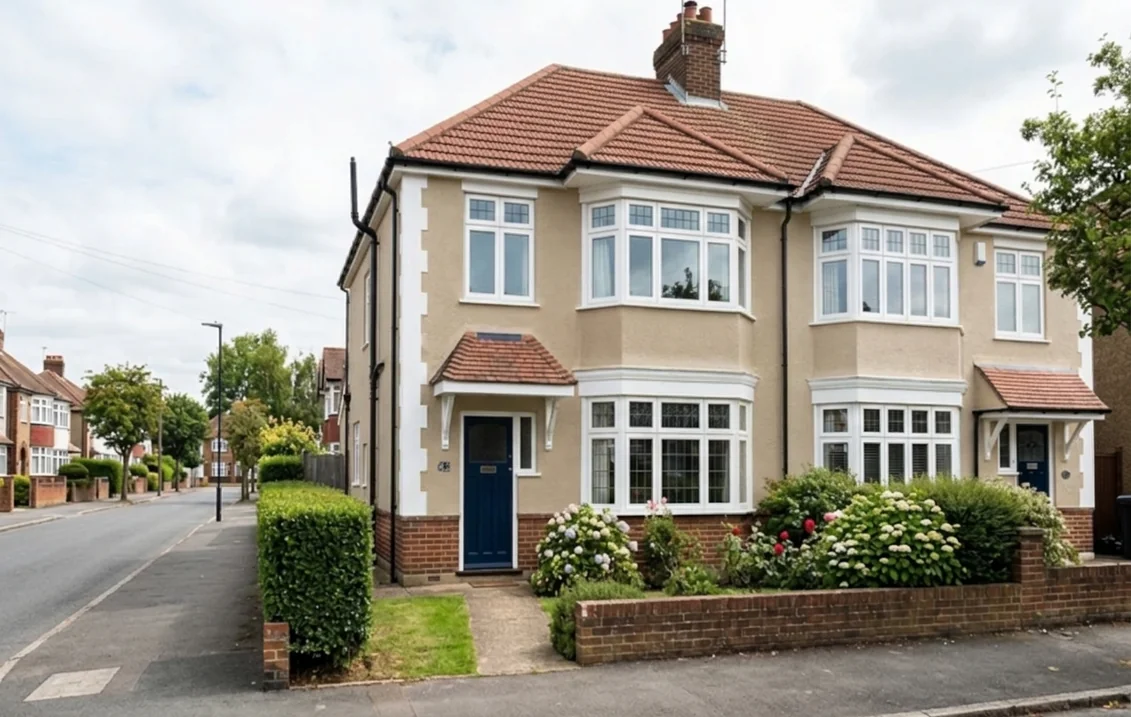
Pairing a stone shade with the roof, windows and door
The pairings in the second column come from the "goes well with" lists on Crown's colour pages. The roof and window advice is our own reading of them, not a rule from any maker.
| Wall colour | Crown's suggested partners | Where we would use it |
|---|---|---|
| Ivory Stone | Bitter Chocolate, Brick Red, Pure Brilliant White | Red or brown tile roof, red brick neighbours, dark brown door |
| Country Stone | Slate Grey, Terracotta, Pure Brilliant White | Works with either a grey slate roof or a terracotta tile: pick the door to match the roof |
| Sandstone | Mid Stone, Olive, Bitter Chocolate | Green or brown door and joinery; garden-heavy plots |
| Sandblast | Mid Stone, Olive, Slate Grey | Grey slate roof, cooler light, north-facing fronts |
| Mid Stone | Sandblast, Country Stone, Pure Brilliant White | Two-tone schemes: lighter stone above, Mid Stone on the plinth or bays, white windows |
| Dark Stone | Sandblast, Sandstone, Cotton Belt | Plinths and garden walls under a light stone |
Dulux makes a similar suggestion in its house colour lookbook, pairing Sandstone walls with a Green Glade front door. If you are also repainting frames, our window frame paint guide compares the systems for timber and uPVC, and our best exterior paint colours for UK homes cover the wider palette.
Matching local stone. A stone name tells you little about the stone in your street. Bradford Council's guide to stone elevations describes local sandstone ranging from a light cream to a rich gold, then darkening to an almost black brown after exposure to smoke. So match the weathered stone you can actually see, not a fresh sample. Sandtex's planning advice says to paint tester colours on card rather than the wall, which helps here: take the cards outside and hold them against the neighbouring stonework at different times of day. Keep real stone sills, lintels and quoins bare and let the paint meet them cleanly.
Stone-coloured paint is not for stone walls
The most common misreading of these names is that they suit stone houses. Sandtex's list of suitable surfaces (render, roughcast, pebbledash, concrete, building blocks, facing bricks and painted surfaces) does not include natural stone, and neither does the list in the Dulux Weathershield FAQs, which also rules out fletton bricks and lime render.
Bradford's guidance is blunt: "Do not paint or render stonework". It gives two reasons: paint breaks the visual unity of a bare stone town, and paint and render can trap water and cause or worsen damp. It also says existing paint should be carefully removed, and warns that cleaning done badly can cause irreversible damage. In Bath, for listed buildings, the council's stone cleaning survey requirement asks for a survey and full method details with any proposal to clean stone or remove paint.
History adds a nuance. The Cotswold Design Code notes that many vernacular buildings there were rendered, that some stonework was never meant to be exposed, and that rubble walls were traditionally limewashed in tones from white to stronger ochres. That is a case for limewash, not for acrylic masonry paint in a stone colour; our comparison of limewash and masonry paint on solid walls sets out the differences, and the cottage exterior paint colours guide looks at older houses more generally.
These colours belong on the surfaces the makers list, such as a rendered extension, a pebbledashed semi or a blockwork garden wall next to real stone. Stratford-on-Avon's design guidance says the colour of new render needs careful thought to fit its context, and is wary of partly rendering a single house. If your brick is the problem rather than the colour, see brick tinting vs painting.
Do you need permission to paint a house a stone colour?
In England, usually not (Wales, Scotland and Northern Ireland have their own systems).
- An ordinary house. Painting the exterior is permitted development under Class C of the GPDO 2015, which defines painting to include any application of colour. The Planning Portal says the same.
- An Article 4 direction. A council can remove that right. Greenwich's Ashburnham Triangle direction requires an application to paint brickwork, and Richmond's conservation area directions also list painting and rendering brickwork. Ask your council whether one covers your street.
- A listed building. Section 7 of the Planning (Listed Buildings and Conservation Areas) Act 1990 requires consent for works that would affect a listed building's character. A new wall colour can do that.
Being in a conservation area does not, by itself, remove the Class C right, but the Planning Portal says cladding a house there does need permission, so do not read paint rules as render rules. Our guides to painting in a conservation area and painting a listed building explain how to approach the council.
How much paint you need, and when you can apply it
Worked example, with our own arithmetic: a 70 m² front and side in two coats means 140 m² of coverage.
| Product | Stated coverage | Litres for 140 m² |
|---|---|---|
| Sandtex Microseal Smooth | 12 to 16 m²/L | About 9 to 12 L: two or three 5 L tins (£79 to £118.50 at Crown's 30 October price) |
| Sandtex Microseal Fine Textured | 3 to 6.5 m²/L | About 22 to 47 L |
| Dulux Weathershield All Weather Smooth | Up to 15 m²/L | 9.3 L at best |
The gap for textured paint is the figure to take seriously: rough surfaces drink paint, and our pebbledash colour ideas are worth reading if that is your wall. The Sandtex data sheet asks you to mix tins from different batches together to keep the colour even, and to treat chalky or powdery surfaces with stabilising solution first; labour and access are covered in our masonry paint cost guide.
Timing matters at this time of year. With an 8°C floor during drying and rainproofing that only starts after an hour, a late autumn or winter job on Microseal depends on a dry, mild spell. Sandtex Trade 365 All Weather is the Sandtex answer for cold weather, at down to -10°C, but it is ready mixed only in White and Magnolia, so ask a stockist whether your stone shade can be mixed in it. Otherwise, use the winter to choose the colour and paint in spring.
A quick way to narrow the choice
- You want a soft cream that lifts a dull wall: Ivory Stone.
- You want a quiet neutral that will not argue with the neighbours: Country Stone or Sandstone, whichever suits your roof.
- You want the wall to read as stone from the street: Mid Stone, with white windows.
- You are painting a plinth or garden wall: Stone Harbour or Dark Stone.
- You have rough pebbledash and want ready-mixed texture: Sandstone in Fine Textured.
- You have real stone: leave it bare, and speak to your council if it is already painted.
A photo preview helps with the first decisions, not the last one. Our visualiser shows a depth and an overall effect, but your screen, the weather and the wall's texture all change the result, so confirm the final shade with a tester. Sandtex is among the brands in the selector of our paint visualiser.
Compare Ivory Stone, Country Stone and Mid Stone on your house
Upload a photo of the front elevation and try a light, a middle and a deeper stone before you order testers.
Upload a photo of my houseSources and references
- Sandtex, Microseal Smooth Masonry Paint and its data sheet: colours, coverage, surfaces, temperature limit.
- Sandtex, Fine Textured, Trade High Cover Smooth, Trade 365 All Weather and planning advice.
- Crown Paints Professional, swatches: Ivory Stone, Sandblast, Country Stone, Sandstone, Pebble Beach, Mill House, Mid Stone, Stone Harbour, Dark Stone: codes and LRV.
- Crown Paints, masonry colours and Sandtex Microseal Smooth Masonry: descriptions, hex values, pairings, price read on 30 October 2026.
- Dulux, Weathershield colour guide, Sandstone, All Weather Protection Smooth, FAQs and house colour lookbook.
- Dulux Trade, Weathershield masonry colour guide and Weathershield Smooth.
- NBS Source, Johnstone's Trade Stormshield Smooth Masonry: coverage, life, BBA certificate. Brewers, tinted Stormshield listing.
- legislation.gov.uk, GPDO 2015, Schedule 2, Part 2, Class C and Listed Buildings Act 1990, section 7. Planning Portal, External walls.
- Royal Borough of Greenwich, Ashburnham Triangle Article 4 Direction. London Borough of Richmond upon Thames, Article 4 Directions.
- City of Bradford Metropolitan District Council, Stone Elevations. Bath & North East Somerset Council, Stone cleaning survey. Cotswold District Council, Cotswold Design Code. Stratford-on-Avon District Council, Development Requirements SPD, Part E.
Frequently asked questions
What colour is Sandtex Ivory Stone?
What is the difference between Sandtex Country Stone and Sandstone?
How dark is Sandtex Mid Stone?
What is the Dulux equivalent of Sandtex Sandstone or Mid Stone?
Can I use stone-coloured masonry paint on a real stone wall?
Do I need planning permission to paint my house a stone colour?
How long does Sandtex masonry paint last?
Trademarks mentioned (Sherwin-Williams, Benjamin Moore, Behr, Caparol, Brillux, Sto, Alpina, Valspar, PPG, Glidden, Dulux, Crown Trade, Sandtex, Farrow & Ball, Johnstone's, Leyland) are property of their respective owners. FacadeColorizer is independent and not affiliated with any of them. Nominative fair use under Lanham Act §1125.